TN Board 12th Bio Botany Important Questions Chapter 3 Chromosomal Basis of Inheritance

Students get through the TN Board 12th Bio Botany Important Questions Chapter 3 Chromosomal Basis of Inheritance which is useful for their exam preparation.

TN State Board 12th Bio Botany Important Questions Chapter 3 Chromosomal Basis of Inheritance

Very short answer questions

Question 1.
Name the scientists, who proposed the theory of chromosomal inheritance.
Answer:

  1. T. Boveri
  2. W.S.Sutton

Question 2.
Write down the chromosome numbers of j rice and potato.
Answer:

  1. Rice – 24 Nos

Question 3.
Define fossil genes.
Answer:
Fossil genes are junk DNA made up of pseudogenes, which lost their ability to make proteins.

TN Board 12th Bio Botany Important Questions Chapter 3 Chromosomal Basis of Inheritance

Question 4.
Define Linkage.
Answer:
Linkage is the type of tendency of the genes to stay together during the separation of chromosomes.

Question 5.
Explain synapsis.
Answer:
Synapsis is a phenomenon in which the homologous chromosomes are aligned side by side resulting in a pairing of a pair of homologous chromosomes.

Question 6.
What is meant Chiasmata?
Answer:
Chiasmata are the points of contact between non-sister chromatids of homologous chromosomes, forming X- shaped structures.

Question 7.
Define Terminalisation.
Answer:
Terminalisation is a process, in which the chiasma starts to move towards the terminal end of chromatids, after crossing over.

Question 8.
Define Recombination frequency (RF).
Answer:
Recombination frequency is the percentage of recombinant progeny in a cross.

TN Board 12th Bio Botany Important Questions Chapter 3 Chromosomal Basis of Inheritance

Question 9.
What is meant by genetic mapping?
Answer:
Genetic mapping is the diagrammatic representation of the position of genes and related distance between the adjacent genes.

Question 10.
Does environment play a role in sex determination in plants? Explain it with an example.
Answer:
Yes. The plants grown under favorable conditions develop as female in the Horsetail plant whereas the plants under unfavorable conditions develop into males.

Question 11.
What are the two types of mutation?
Answer:
The broad types of mutation are point mutation and chromosomal mutation.

Question 12.
Define mutagen.
Answer:
Mutagens are agents which are responsible for changes in the genetic material.

Question 13.
Mention any two physical mutagens.
Answer:

  1. X-ray
  2. U.V – ray

Question 14.
What is Rharbati Sonora?
Answer:
Sharbati Sonora is a mutant variety of wheat.
This is developed by Dr. M.S.Swaminathan ! and his team, by irradiating the Mexican I variety of wheat (Sonora 64) with gamma rays.

TN Board 12th Bio Botany Important Questions Chapter 3 Chromosomal Basis of Inheritance

Question 15.
Define hypoploidy.
Answer:
Hypoploidy is defined as a process in which the loss of one or more chromosomes from the diploid set of chromosomes in the cell takes place.

Question 16.
Name the type of polyploidy.
Answer:
The types of polyploidy are autopolyploidy and allopolyploidy.

Question 17.
Name the two organisms, in which the process of deletion is demonstrated.
Answer:

  1. Maize
  2. Drosophila

Question 18.
What are the two types of inversion?
Answer:
The two types of inversion are paracentric and pericentric inversion.

Question 19.
What has displaced duplication?
Answer:
Displaced duplication is a phenomenon in which the duplicated segment of a chromosome is located in the same chromosome, but away from the normal segment.

TN Board 12th Bio Botany Important Questions Chapter 3 Chromosomal Basis of Inheritance

Question 20.
Mention any two chemical mutagens.
Answer:

  1. Ethyl Methane Sulphonate (EMS).
  2. Formaldehyde.

Short answer questions

Question 1.
Distinguish between Mendelian factors and Chromosome behavior.
Answer:

Mendelian factorsChromosome behaviour
Alleles of a factor occur in pairs.Chromosomes occur in pairs.
During gamete formation, alleles of a factor separate from each other.During meiosis the homologous chromosomes separate.
Mendelian factors assort independently.Linked genes in the same chromosome normally do not assort independently, but paired chromosomes can separate independently.

Question 2.
When a male heterozygous Drosophila is crossed with. double recessive female, only parental phenotype individuals are produced – Justify.
Answer:

  1. The crossing over is absent in male Drosophila.
  2. The recombination of alleles does not occur.
  3. The particular genes are linked and hence they are not assorted independently.

TN Board 12th Bio Botany Important Questions Chapter 3 Chromosomal Basis of Inheritance

Question 3.
Explain the three types of synapsis.
Answer:
The three types of synapsis are as follows:

  1. Procentric synapsis: Pairing starts from the middle of the chromosome.
  2. Proterminal synapsis: Pairing starts from the telomeres.
  3. Random synapsis Pairing may start from anywhere in the chromosome.

Question 4.
List out any three importance of cross over.
Answer:

  1. Experiments on crossing over reveal that genes are placed linearly on the chromosomes. .
  2. The frequency of crossing over helps is a genetic map.
  3. The nature and mechanism of gene action can be understood through studies on crossing over.

Question 5.
Write down the uses of genetic mapping.
Answer:

  1. Dihybrid and trihybrid results can easily be predicted.
  2. It is used to determine the order of genes on the chromosome.
  3. It is useful to identify the locus of a gene and calculate the distance between genes.
  4. The overall genetic complexity of an organism can be understood by genetic mapping.

Question 6.
State the principles of sex determination in Melandrium album.
Answer:

  1. X chromosome specifies femaleness.
  2. Maleness is determined by the Y chromosome.
  3. X and Y show different segments of chromosomes.

Question 7.
Explain comutagens with an example.
Answer:
Comutagens are compounds that enhance the effects of known mutagen. They do not have mutagenic properties.
Eg: The damage caused by hydrogen peroxide can be increased by Ascorbic acid.

TN Board 12th Bio Botany Important Questions Chapter 3 Chromosomal Basis of Inheritance

Question 8.
Distinguish between Gene mutation and Chromosomal Mutation.
Answer:

Gene MutationChromosomal Mutation
Gene mutations are the genetic changes within a gene.Chromosomal mutations are the changes to chromosome region or number of chromosomes.
Gene mutation cannot be detectable microscopically.Chromosomal mutations can be detected by microscopic examination.

Question 9.
Explain chromosomal mutation with an example.
Answer:
Chromosomal mutation or chromosomal aberration is the process in which the genome of an organism can be altered on a large scale by modifying the chromosome structure or by altering the number of chromosomes.
Eg: This type of mutation has been noticed in Datura, Nicotiana, Pisum, and Oenothera.

Question 10.
Distinguish between autopolyploidy and allopolyploidy.
Answer:

AutopolyploidyAllopolyploidy
Autopolyploidy is the condition in which an organism posses two or more than two haploid sets of chromosomes, derived from within the same species.
Eg: Tomato, apple etc.
Allopolyploidy is the condition in which an organism possesses two or more sets of chromosomes derived from two different species. Eg: Radish, Cabbage etc.

Question 11.
Give a diagrammatic representation of paracentric and pericentric inversion of chromosomes.
Answer:
TN Board 12th Bio Botany Important Questions Chapter 3 Chromosomal Basis of Inheritance 1

TN Board 12th Bio Botany Important Questions Chapter 3 Chromosomal Basis of Inheritance

Question 12.
Differentiate between Aneuploidy and Euploidy.
Answer:

AneuploidyEuploidy
Aneuploidy involves individual chromosomes within a diploid set.Euploidy involves entire set of chromosomes.
Diploid number is altered either by addition or by deletion of one or more chromosomes.Euploidy is the condition in which the organism possess one or more basic sets of chromosomes.

Long answer questions

Question 1.
Given an account of the historic development of chromosome theory.
Answer:
The important scientific findings on the chromosome theory of inheritance are given below:

  1. Wilhelm Roux in 1883 found out that chromosomes of a cell are responsible for transferring heredity.
  2. Montgomery in 1901 suggested the occurrence of distinct pairs of chromosomes. He also postulated that during meiosis maternal chromosomes pair with paternal chromosomes.
  3. T.Boveri in 1902 confirmed that genetic determiners are present in the chromosomes and suggested the chromosomal theory of inheritance.
  4. W.S.Sutton in 1902 recognized a similarity between the mendelian factors and the behavior of chromosomes during gamete formation.
  5. Sutton and Boveri in 1903 independently proposed the chromosome theory of inheritance.

Question 2.
Explain the complete linkage of genes in maize with a diagram.
Answer:
The phenomenon of incomplete linkage was first reported by Hutchinson in maize. The chances of separation of genes are possible if the two linked genes are placed sufficiently apart. As a result potential and non-potential combinations are noticed. These linked genes show some crossing over and this phenomenon is called incomplete linkage.
TN Board 12th Bio Botany Important Questions Chapter 3 Chromosomal Basis of Inheritance 2

TN Board 12th Bio Botany Important Questions Chapter 3 Chromosomal Basis of Inheritance

Question 3.
Give the schematic representation of the eye color inheritance in Drosophila.
Answer:
TN Board 12th Bio Botany Important Questions Chapter 3 Chromosomal Basis of Inheritance 3

Question 4.
Draw the schematic diagram of types of crossing over with its Recombination
Answer:
TN Board 12th Bio Botany Important Questions Chapter 3 Chromosomal Basis of Inheritance 4

TN Board 12th Bio Botany Important Questions Chapter 3 Chromosomal Basis of Inheritance

Question 5.
Describe the types of point mutations.
Answer:
Point mutation refers to the changes in single base pairs of DNA or in a small number of adjacent base pairs. There are two types of point mutations namely base-pair substitution and base-pair insertion or deletion.
the substitution of base pair in the DNA is the type of mutation in which one base pair is replaced by another base pair. This can be divided into two subtypes namely transition and transversion type.
Addition or deletion mutations in which addition or deletion of nucleotide pair takes place. This is called either base pair addition or base pair deletion. They are collectively termed indel mutations.
Substitution or the indel mutations cause changes in the translation. Based on this, the mutations are classified as silent mutation, missense mutation, nonsense mutation, and frameshift mutation.
Silent mutation or synonymous mutation: It is a type of mutation in which changes in one codon for an amino acid into another codon for that same amino acid to occur.
In missense or non-synonymous mutation, the codon of one amino acid is changed into a codon of another amino acid.
A nonsense mutation is a DNA mutation in which the change of codon for one amino acid is modified into a termination or stop codon.
In frameshift mutations, the addition or deletion of single base pair of DNA changes the reading framework of the translation process. As a result, there is a complete loss of normal protein structure and function.

Question 6.
Explain different types of translocation in chromosomes with a suitable diagram.
Answer:
Translocation is a biological process in which the transfer of a segment of a chromosome to a non-homologous chromosome occurs.
There are three types of translocation namely:

  1. Simple translocation
  2. Shift translocation
  3. Reciprocal translocation

(i) Simple translocation: In this, a single break is made in only one chromosome and the broken segment gets to attach to one end of a non-homologous chromosome. In nature, it is very rare.
(ii) Shift translation: In this* the broken segment of a chromosome is inserted interstitially in a non-homologous chromosome.
(iii) Reciprocal translocation: In this, the mutual exchange of chromosomal segments between two non-homologous chromosomes. It is otherwise known as illegitimate crossing over. It is subdivided into two types namely homozygous translocation and heterozygous translocation.
(a) Homozygous translocation:
Translocation is involved between both the chromosomes of two pairs. In this, two homologous of each translocated chromosomes are identical.
(b) Heterozygous translocation:
In this type of translocation, only one of the chromosomes from each pair of two homologous chromosomes is involved in translation. The remaining chromosome is normal.
Translocation plays a vital role in the formation of new species.
TN Board 12th Bio Botany Important Questions Chapter 3 Chromosomal Basis of Inheritance 5

TN Board 12th Bio Botany Important Questions Chapter 3 Chromosomal Basis of Inheritance

Choose the correct answers.

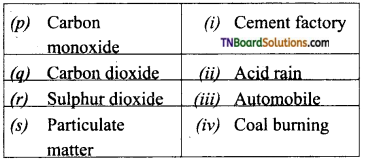
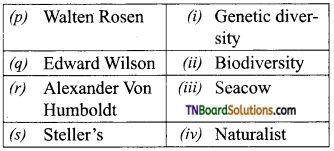
1. Match the following:
TN Board 12th Bio Botany Important Questions Chapter 3 Chromosomal Basis of Inheritance 6
(a) (p)-(iv); (q)-(iii); (r)-(ii); (s)-(i)
(b) (p)-(iii); (q) -(iv); (r)-(i); (s)-(ii)
(c) (p)-(iii); (q)-(iv); (r)-(ii); (s)-(i)
(d) (p)-(ii); (q)-(i); (r)-(iv); (s)-(iii)
Answer:
(b) (p)-(iii); (q) -(iv); (r)-(i); (s)-(ii)

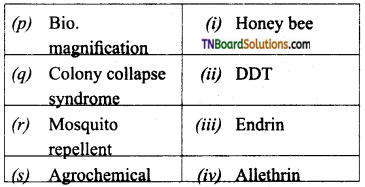
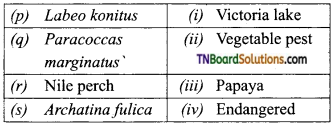
2. Match the following:
TN Board 12th Bio Botany Important Questions Chapter 3 Chromosomal Basis of Inheritance 7
(a) (p)-(iii); (q)-(iv); (r)-(i); (s)-(ii)
(b) (p)-(iv); (q)-(iii); (r)-(ii); (s)-(i)
(c) (p)-(ii); (q)-(i); (r)-(iv); (s)-(iii)
(d) (p)-(iii); (q)-(iv); (r)-(ii); (s)-(i)
Answer:
(a) (p)-(iii); (q)-(iv); (r)-(i); (s)-(ii)

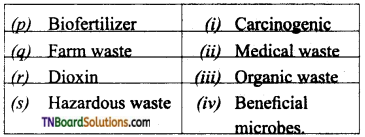
3. Match the following:
TN Board 12th Bio Botany Important Questions Chapter 3 Chromosomal Basis of Inheritance 8
(a) (p)-(iv); (q)-(iii); (r)-(ii); (s)-(i)
(b) (p)-(iv); (q)-(iii); (r)-(i); (s)-(ii)
(c) (p)-(ii); (q)-(i); (r)-(iv); (s)-(iii)
(d) (p)-(iii); (q)-(iv); (r)-(i); (s)-(ii)
Answer:
(b) (p)-(iv); (q)-(iii); (r)-(i); (s)-(ii)

TN Board 12th Bio Botany Important Questions Chapter 3 Chromosomal Basis of Inheritance

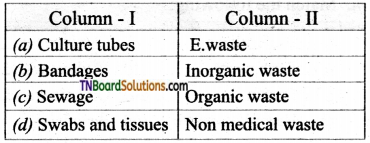
4. Match the following:
TN Board 12th Bio Botany Important Questions Chapter 3 Chromosomal Basis of Inheritance 9
(a) (p)-(iv); (q)-(iii); (r)-(ii); (s)-(i)
(b) (p)-(iv); (q)-(iii); (r)-(i); (s)-(ii)
(c) (p)-(iii); (q)-(i); (r)-(iv); (s)-(ii)
(d) (p)-(ii); (q)-(i); (r)-(iv); (s)-(iii)
Answer:
(c) (p)-(iii); (q)-(i); (r)-(iv); (s)-(ii)

5. Match the following:
TN Board 12th Bio Botany Important Questions Chapter 3 Chromosomal Basis of Inheritance 10
(a) (p)-(iv); (q)-(iii); (r)-(ii); (s)-(i)
(b) (p)-(U); (q)-(i); (r)-(iv); (s)-(iii)
(c) (p)-(iv); (q)-(iii); (r)-(i); (s)-(ii)
(d) (p)-(iii); (q)-(iv); (r)-(ii); (s)-(i)
Answer:
(d) (p)-(iii); (q)-(iv); (r)-(ii); (s)-(i)

6. Loss of a pair of chromosomes from the diploid set is called:
(a) Monosomy
(b) Nullisomy
(c) Double nullisomy
(d) Hypoploidy
Answer:
(b) Nullisomy

7. Chemical mutagenesis was first reported by:
(a) H.J.Muller
(b) T.H.Morgan
(c) C.Auerbaek
(d) M.S.Swaminathan
Answer:
(c) C.Auerbaek

8. Miller was the first to find out physical mutagen in:
(a) Maize
(b) Guineapig
(c) Nicotiana
(d) Drosophila
Answer:
(d) Drosophila

TN Board 12th Bio Botany Important Questions Chapter 3 Chromosomal Basis of Inheritance

9. Multiple alleles associated with self- sterility was found in:
(a) Maize
(b) Nicotiana
(c) Wheat
(d) Papaya
Answer:
(b) Nicotiana

10. Incomplete linkage was observed is maize by:
(a) Punnet
(b) T.H.Morgan
(c) Hutchinson
(d) C.B.Bridges
Answer:
(c) Hutchinson

11. Choose the odd man out:
(a) T.H.Morgan
(b) C.B.Bridges
(c) H.J.Muller
(d) William Bateson
Answer:
(c) H.J.Muller

12. Find out the odd one:
(a) X-ray
(b) Gamma rays
(c) Cosmic rays
(d) Nitrous oxide
Answer:
(d) Nitrous oxide

13. Identify the odd one out:
(a) Caffeine
(b) Mustard gas
(c) Enthrosine
(d) Etsy urethane
Answer:
(a) Caffeine

TN Board 12th Bio Botany Important Questions Chapter 3 Chromosomal Basis of Inheritance

14. Choose the odd man out:
(a) M.S.Swaminathan
(b) Alfred H. Sturtevant
(c) Muller
(d) Stadler
Answer:
(b) Alfred H. Sturtevant

15. Identify the odd one out:
(a) Insertion
(b) Deletion
(c) Translocation
(d) Terminalisation
Answer:
(d) Terminalisation

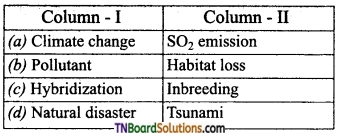
16. Which of the following in the correct pair?
TN Board 12th Bio Botany Important Questions Chapter 3 Chromosomal Basis of Inheritance 11
Answer:
(b)

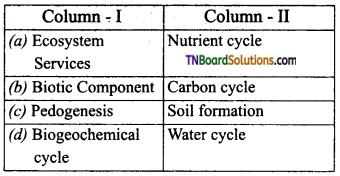
17. Identify the incorrect pair:
TN Board 12th Bio Botany Important Questions Chapter 3 Chromosomal Basis of Inheritance 12
Answer:
(c)

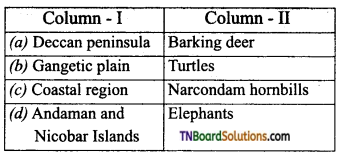
18. Which of the following in the correct pair?
TN Board 12th Bio Botany Important Questions Chapter 3 Chromosomal Basis of Inheritance 13
Answer:
(c)

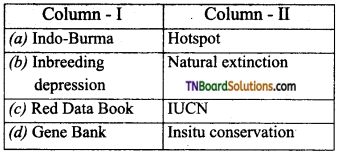
19. Find out the incorrect pair:
TN Board 12th Bio Botany Important Questions Chapter 3 Chromosomal Basis of Inheritance 14
Answer:
(d)

TN Board 12th Bio Botany Important Questions Chapter 3 Chromosomal Basis of Inheritance

20. Which of the following is the correct pair?
TN Board 12th Bio Botany Important Questions Chapter 3 Chromosomal Basis of Inheritance 15
Answer:
(b)

21. Assertion: Genes are hereditary units and they carry genetic information from one generation to the next generation.
Reason: The genes are arranged in chromosomes in linear order.
(a) Assertion is correct, Reason is the correct explanation of Assertion.
(b) Assertion is correct, Reason is not the correct explanation of Assertion.
(c) Assertion is not correct, Reason is the correct explanation of Assertion.
(d) Assertion and Reason are wrong.
Answer:
(b) Assertion is correct, Reason is not the correct explanation of Assertion.

22. Assertion: If two linked genes are sufficiently apart, the changes of their separation are possible.
Reason: If two linked genes are apart, the chances of crossing over is more.
(a) Assertion is correct, Reason is the correct explanation of Assertion.
(b) Assertion is correct, Reason is not the correct explanation of Assertion.
(c) Assertion is not correct, Reason is the correct explanation of Assertion.
(d) Assertion and Reason are wrong.
Answer:
(a) Assertion is correct, Reason is the correct explanation of Assertion.

23. Assertion: During synapsis, the homologous chromosomes are aligned side by side, resulting is pairing of homologous chromosomes.
Reason: Synaptonemal complex an organized structure of filaments are responsible for synapsis.
(a) Assertion is correct, Reason is the correct explanation of Assertion.
(b) Assertion is correct, Reason is not the correct explanation of Assertion.
(c) Assertion is not correct, Reason is the correct explanation of Assertion.
(d) Assertion and Reason are wrong.
Answer:
(a) Assertion is correct, Reason is the correct explanation of Assertion.

TN Board 12th Bio Botany Important Questions Chapter 3 Chromosomal Basis of Inheritance

24. Assertion: Crossing over results in the formation of new combination of characters in an organism.
Reason: During crossing over segments of DNA are broken and recombined to produce new combination of alleles.
(a) Assertion is correct, Reason is the correct explanation of Assertion.
(b) Assertion is correct; Reason is not the correct explanation of Assertion.
(c) Assertion is not correct, Reason is the correct explanation of Assertion.
(d) Assertion and Reason are wrong.
Answer:
(a) Assertion is correct, Reason is the correct explanation of Assertion.

25. Assertion (A): In papaya, the sex determination is controlled by four alleles of genes.
Reason (R): Sex determination is a complex process determined by genes and the hormones.
(a) Assertion is correct, Reason is the correct explanation of Assertion.
(b) Assertion is correct, Reason is not the correct explanation of Assertion.
(c) Assertion is not correct, Reason is the correct explanation of Assertion.
(d) Assertion and Reason are wrong.
Answer:
(d) Assertion and Reason are wrong.

26. Which of the following statement is true?
(a) Somatic cells of organism are derived from the zygote by meiotic cell division.
(b) These consists of two non-identical sets of chromosomes.
(c) Somatic cells of organism are derived from the zygote by repeated mitotic cell division.
(d) None of the above.
Answer:
(c) Somatic cells of organism are derived from the zygote by repeated mitotic cell division.

27. Choose the incorrect statement:
(a) Alleles of a gene occur in pairs.
(b) Chromosomes do not occur in pairs.
(c) Homologous chromosomes separate during meiosis.
(d) Chromosomes can separate independently during meiosis.
Answer:
(b) Chromosomes do not occur in pairs.

TN Board 12th Bio Botany Important Questions Chapter 3 Chromosomal Basis of Inheritance

28. Find out the correct statement.
(a) The crossing over does not take place in male Drosophila.
(b) The crossing over does not take place in female Drosophila.
(c) The crossing over frequency is more between linked genes.
(d) None of the above.
Answer:
(a) The crossing over does not take place in male Drosophila.

29. Indicate the incorrect statement.
(a) Multiple alleles of a series always occupy the same locus in the homologous chromosomes.
(b) No crossing over occurs within these alleles of a series.
(c) Multiple alleles of a series always occupy different locus of different chromosomes.
(d) All the above statements are wrong.
Answer:
(c) Multiple alleles of a series always occupy different locus of different chromosomes.

30. Indicate the correct statement.
(a) Spontaneous mutation occurs in the presence of known mutagen.
(b) Induced mutation occurs in the absence of known mutagen.
(c) Spontaneous mutation occurs in the absence of known mutagen.
(d) None of the above.
Answer:
(c) Spontaneous mutation occurs in the absence of known mutagen.

TN Board 12th Bio Botany Important Questions Chapter 2 Classical Genetics

Students get through the TN Board 12th Bio Botany Important Questions Chapter 2 Classical Genetics which is useful for their exam preparation.

TN State Board 12th Bio Botany Important Questions Chapter 2 Classical Genetics

Very short answer questions

Question 1.
Define Heredity.
Answer:
Heredity is defined as a phenomenon in which the transmission of characters from parents to offspring takes place.

Question 2.
Define Variation.
Answer:
Variationisthedifferenceinthecharacteristics of the organisms belonging to the natural population or species.

Question 3.
Name any two scientists, who re-discovered Mendel’s experiments.
Answer:

  1. Hugo de Vries
  2. Carl Correns

TN Board 12th Bio Botany Important Questions Chapter 2 Classical Genetics

Question 4.
Explain back cross.
Answer:
The back cross is the crossing of F1 hybrids with any one of the parental genotypes.

Question 5.
Enumerate the explanation for the monohybrid cross.
Answer:

  1. The expression of only one character of parental characters in F1 generation.
  2. The expression of both characters in the F2 generation.

Question 6.
Define genotype.
Answer:
Genotype is defined as the genetic constitution of an individual.

Question 7.
Mention any two characters in Pea plants selected by Mendel.
Answer:

  1. Plant height.
  2. Flower color.

TN Board 12th Bio Botany Important Questions Chapter 2 Classical Genetics

Question 8.
Explain Codominance.
Answer:
Codominance is a phenomenon in which two alleles are both expressed in the heterozygous individual.

Question 9.
Define Pleiotropy.
Answer:
Pleiotropy is defined as a phenomenon in which a single gene affects multiple characters.

Question 10.
Explain briefly dominant Epistasis.
Answer:
Dominant epistasis is a gene interaction in which two alleles of a gene at one locus interfere and suppress or mask the phenotypic expression of a different pair of alleles of another gene at another locus.

Question 11.
Give two examples of Inter-genic interaction.
Answer:

  1. Inhibitor genes
  2. Duplicate genes.

Question 12.
Mention any two examples of Incomplete dominance.
Answer:

  1. Flower colour in Mirabilis jalapa.
  2. Flower colour in snapdragon.

Question 13.
Define Lethal genes.
Answer:
A lethal gene is an allele that has the potential to cause the death of an organism.

TN Board 12th Bio Botany Important Questions Chapter 2 Classical Genetics

Question 14.
Mention any two types of lethal genes.
Answer:

  1. Conditional lethal gene
  2. Balanced lethal gene.

Question 15.
Define Molecular Genetics.
Answer:
Molecular genetics is defined as a branch of genetics, which deals with the structure and function of a gene at the molecular level.

Short answer questions

Question 1.
Distinguish between population genetics and quantitative genetics.
Answer:

Population GeneticsQuantitative Genetics
Population Genetics deals with heredity in groups of individuals for a traits, determined by a few genes.Quantitative Genetics deals with heredity of traits in groups of individuals. The traits are governed by many genes simultaneously.

Question 2.
Explain briefly about Discontinuous Variation.
Answer:
In a discontinuous variation, two or more allelic forms of one or two major genes control the characteristic of an individual within a population. These characteristics show a limited form of variations, which are genetically determined by inheritance factors. In this type of variation, the individual shows differences without an intermediate form between the parents and there is no overlapping between the two phenotypes. Environmental factors do not affect phenotypic expression. This variation is otherwise called qualitative inheritance. Eg: Style length in Primula and Plant height of garden pea.

TN Board 12th Bio Botany Important Questions Chapter 2 Classical Genetics

Question 3.
Explain Mendel’s law of heredity.
Answer:
Heredity is the process of transformation of characters from parents to offspring. Two rules on heredity were proposed by Mendel, based on the observations on monohybrid cross. The first rule is the law of dominance and the second one is the law of segregation. These rules play an important role in the history of evolution.

Question 4.
What are the types of dominant relationships?
Answer:

  1. Complete dominance
  2. Incomplete dominance
  3. Codominance
  4. Overdominance

Question 5.
Distinguish between Intragenic and intergenic gene interactions.
Answer:

IntragenicIntergenic
Intragenic gene interactions take place between the alleles of the same gene at same locus. This is otherwise known as intra allelic interactions.Intergenic gene interactions take place between alleles of different genes at different loci.
This is otherwise called as inter allelic interactions.

Question 6.
List out three plants, that exhibit codominance.
Answer:

  1. Camillia
  2. Gossypium hirsutum
  3. Gossypium sturtianum

TN Board 12th Bio Botany Important Questions Chapter 2 Classical Genetics

Question 7.
Mention three examples of non-allelic interactions.
Answer:

  1. Fruit colour in summer squash
  2. Flower colour in sweet peas
  3. Grain colour in maize

Question 8.
Give three examples of polygenic inheritance.
Answer:

  1. Skin colour in human being.
  2. Wheat kernel colour.
  3. Height of human being.

Question 9.
What is polygenic inheritance?
Answer:
Polygenic inheritance is a phenomenon in which a group of genes together determine the phenotypic expression of a single character. The polygenic inheritance was first demonstrated by H. Nilsson-Ehle in 1909 in wheat kernels.

TN Board 12th Bio Botany Important Questions Chapter 2 Classical Genetics

Question 10.
What is meant by extra chromosomal inheritance?
Answer:
Chromosomes are the location of genes, which determine the characters of the individual. But in certain traits, the DNA present in chloroplast and mitochondria decide certain characters. It is a kind of Non-Mendelian inheritance. As this involves cytoplasmic organelles like chloroplast and mitochondria, that act as inheritance vectors, it is called extrachromosomal inheritance through independent, self-replicating plasmalogens.

Long answer questions

Question 1.
Explain the analytical and empirical approach of his experiments.
Answer:
In all Mendel’s experiments, be chose two contrasting characters of a single locus. He assumed that two distinct factors exist for a single trait. The recessive trait does not disappear in the F generation and it is hidden or marked in the F1 generation and reappear in F2 generation, in which it contributes to 25% of offspring. Mendel got a 3:1 ratio in F2 generation when he crossed a homozygous dominant and recessive trait. Hence he concluded that tall and dwarf alleles of F heterozygote segregate randomly into gametes. Mendel is the first biological scientist to use quantitative analysis in biological research.

Mendel’s analytical approach is an outstanding scientific achievement. His breeding experiments are planned meticulously and precisely executed to show that the hereditary materials are transmitted from one generation to another. Though he was not aware of genes during his experiments, he attributed factors, which are responsible for deciding characters. Now the factors are called genes. His approach is empirical and the laws arrived through this approach are known as empirical laws.

Question 2.
Define test cross. Explain it with an example.
Answer:
A test cross is defined as a cross between an individual of unknown genotype with a homozygous recessive.
In F1 generation of Mendel’s monohybrid cross of tall and dwarf pea plants, he got only tall plants. In F2 generation the tall and dwarf plants were in the ratio 3:1. He self-pollinated the dwarf F2 plants and he got only dwarf plants in F3 and F4 generation so he concluded that the genotype of the dwarf plant was homozygous recessive (tt). But the genotype of tall plants TT or Tt cannot be predicted. Mendel crossed the tall plants of F2 with the homozygous recessive dwarf plant. This is known as a test cross. From the progenies of the test cross, the genotype of tall plants can easily be identified. Thus a typical test cross is to cross an organism showing dominant phenotype is crossed with the recessive parent instead of self crossing. Therefore test cross can be used to identify whether an individual is homozygous or heterozygous for the dominant character.
TN Board 12th Bio Botany Important Questions Chapter 2 Classical Genetics 1

TN Board 12th Bio Botany Important Questions Chapter 2 Classical Genetics

Question 3.
What is the molecular explanation for Mendel’s tall and dwarf planets?
Answer:
A single gene with two alleles controls the height of the pea plant. The difference in height of the plant is due to:

  1. The pea plant cells have the ability to convert a precursor molecule of gibberellins into an active form (GA1).
  2. The dominant allele of the gene (Le), which codes for a protein, a functional enzyme, which helps in the gibberellin synthesis pathway and catalyzes the production of gibberellins (GA1). When the allele is dominant even if it is double (Le Le) or single (Le le) it produces gibberellins resulting in tall plants. The dwarf pea plants, which have two recessive alleles (le le) cannot code for functional protein resulting in dwarf plants.
    TN Board 12th Bio Botany Important Questions Chapter 2 Classical Genetics 2

Question 4.
Tabulate examples of Inter-genic interaction with their F2 ratio.
Answer:
TN Board 12th Bio Botany Important Questions Chapter 2 Classical Genetics 3

TN Board 12th Bio Botany Important Questions Chapter 2 Classical Genetics

Choose the correct answers:

1. Match the following:
TN Board 12th Bio Botany Important Questions Chapter 2 Classical Genetics 4
(a) (p)-(iv); (q)-(iii); (r)-(ii); (s)-(i)
(b) (p)-(iii); (q)-(iv); (r)-(i); (s)-(ii)
(c) (p)-(iii); (q)-(ii); (r)-(iv); (s)-(i)
(d) (p)-(ii); (q)-(i); (r)-(iv); (s)-(iii)
Answer:
(b) (p)-(iii); (q)-(iv); (r)-(i); (s)-(ii)

2. Match the following:
TN Board 12th Bio Botany Important Questions Chapter 2 Classical Genetics 5
(a) (p)-(iv); (q)-(iii); (r)-(i); (s)-(ii)
(b) (p)-(iv); (q)-(iii); (r)-(ii); (s)-(i)
(c) (p)-(iii); (q)-(iv); (r)-(i); (s)-(ii)
(d) (p)-(ii); (q)-(i); (r)-(iv); (s)-(i)
Answer:
(a) (p)-(iv); (q)-(iii); (r)-(i); (s)-(ii)

3. Match the following:
TN Board 12th Bio Botany Important Questions Chapter 2 Classical Genetics 6
(a) (p)-(iv); (q)-(iii); (r)-(ii); (s)-(i)
(b) (p)-(iv); (q)-(iii); (r)-(i); (s)-(ii)
(c) (p)-(iii); (q)-(iv); (r)-(i); (s)-(ii)
(d) (p)-(ii); (q)-(i); (r)-(iv); (s)-(iii)
Answer:
(c) (p)-(iii); (q)-(iv); (r)-(i); (s)-(ii)

TN Board 12th Bio Botany Important Questions Chapter 2 Classical Genetics

4. Match the following:
TN Board 12th Bio Botany Important Questions Chapter 2 Classical Genetics 7
(a) (p)-(iv); (q)-(iii); (r)-(ii); (s)-(i)
(b) (p)-(ii); (q)-(i); (r)-(iv); (s)-(iii)
(c) (p)-(iii); (q)-(i); (r)-(iv); (s)-(ii)
(d) (p)-(ii); (q)-(iv); (r)-(i); (s)-(iii)
Answer:
(d) (p)-(ii); (q)-(iv); (r)-(i); (s)-(iii)

5. Choose the odd man out:
(a) Phenotype
(b) Homozygous
(c) Heterozygous
(d) Allele
Answer:
(a) Phenotype

6. Choose the odd one out:
(a) Complete dominance
(b) Lethal genes
(c) Multiple alleles
(d) Epistatic
Answer:
(d) Epistatic

TN Board 12th Bio Botany Important Questions Chapter 2 Classical Genetics

7. Identify the odd man out:
(a) Hugo de Vries
(b) Linnaeus
(c) Carl Correns
(d) Erich Von Tschermak
Answer:
(b) Linnaeus

8. Choose the odd one out:
(a) Codominance
(b) Complementary
(c) Supplementary
(d) Inhibitory
Answer:
(a) Codominance

9. Choose the correct pair.
TN Board 12th Bio Botany Important Questions Chapter 2 Classical Genetics 8
Answer:
(d)

10. Find out the incorrect pair.
TN Board 12th Bio Botany Important Questions Chapter 2 Classical Genetics 9
Answer:
(c)

TN Board 12th Bio Botany Important Questions Chapter 2 Classical Genetics

11. Choose the correct pair.
TN Board 12th Bio Botany Important Questions Chapter 2 Classical Genetics 10
Answer:
(b)

12. Find out the incorrect pair.
TN Board 12th Bio Botany Important Questions Chapter 2 Classical Genetics 11
Answer:
(c)

13. Male sterility in pearl maize is due to:
(a) Independent inheritance
(b) Mitochondrial inheritance
(c) Chloroplast gene inheritance
(d) Codominance
Answer:
(b) Mitochondrial inheritance

14. The polygenic inheritance was first demonstrated by:
(a) E. Baur
(b) Carl Correns
(c) Hugo de Vries
(d) H. Nilsson – Ehle
Answer:
(d) H. Nilsson – Ehle

TN Board 12th Bio Botany Important Questions Chapter 2 Classical Genetics

15. In dominant epistasis in summer squash, the F2 generation the phenotypic ratio is:
(a) 9:3:3:1
(b) 12:3:1
(c) 9:7
(d) 15:1
Answer:
(b) 12:3:1

16. In Polygenic inheritance the production of medium dark red color is due to:
(a) Four R genes
(b) Two R genes
(c) Three R genes
(d) Absence of R – gene
Answer:
(c) Three R genes

17. Intra-genic interaction includes:
(a) Dominant epistasis
(b) Duplicate genes
(c) Inhibitor genes
(d) Codominant genes
Answer:
(d) Codominant genes

18. Assertion: Two alleles of a gene at one locus suppress or mask the phenotypic expression of a different pair of alleles of another gene at another locus in dominant epistasis.
Reason: Inter locus interactions take place between the alleles at different loci i.e., between alleles of different genes.
(a) Assertion is true; Reason is wrong.
(b) Assertion is wrong; Reason is true.
(c) Both Assertion and Reason are true.
(d) Both Assertion and Reason are wrong.
Answer:
(c) Both Assertion and Reason are true.

TN Board 12th Bio Botany Important Questions Chapter 2 Classical Genetics

19. Assertion: The phenomenon in which two alleles are both expressed in the heterozygous condition is known as codominance.
Reason: Thecodominancewasdemonstrated in plants with the help of electrophoresis.
(a) The Assertion is true; the Reason is false.
(b) The Assertion is false; the Reason is true.
(c) Both Assertion and Reason are true.
(d) Both Assertion and Reason are false.
Answer:
(a) The Assertion is true; the Reason is false.

20. Assertion: In a monohybrid cross, when two homozygous dominant and recessive traits are crossed, an intermediate character is found in F1 generation:
Reason: This may be due to the codominance of two alleles.
(a) Assertion is right; the Reason is wrong.
(b) Assertion is false; the Reason is true.
(c) Both Assertion and Reason are true.
(d) Both Assertion and Reason are false.
Answer:
(d) Both Assertion and Reason are false.

21. Which of the following statement is correct?
(a) The dihybrid cross involves individuals differencing in one character.
(b) The recessive back cross helps to identify the homozygosity of the hybrid.
(c) The dihybrid cross is a genetic cross in which- individuals differing in two characters are involved.
(d) None of the above statements is correct.
Answer:
(c) The dihybrid cross is a genetic cross in which- individuals differing in two characters are involved.

22. ChoOse the incorrect statement.
(a) Two identical alleles of a gene are called heterozygous.
(b) Two different alleles of a gene are called heterozygous.
(c) Two identical alleles of a gene are called homozygous
(d) An individual with two dominant alleles is called homozygous dominant.
Answer:
(a) Two identical alleles of a gene are called heterozygous.

TN Board 12th Bio Botany Important Questions Chapter 2 Classical Genetics

23. Find out the correct statement.
(a) Mendelian experiments prove that a single gene controls more than one character.
(b) Independent assortment leads to genetic diversity.
(c) Back cross involves the cross between the F2 offspring with F1 parents.
(d) Independent assortment leads to genetic homozygosity.
Answer:
(b) Independent assortment leads to genetic diversity.

24. Which of the following statement is false?
(a) Intragenic gene interaction takes place between the alleles of the same gene.
(b) Intragenic gene interaction takes place between the alleles at the same locus.
(c) Intergenic gene interaction takes place between alleles of different locus.
(d) All the above statements are wrong.
Answer:
(d) All the above statements are wrong.

25. Choose the correct statement.
(a) Codominance type of inheritance is found in snapdragon.
(b) The inheritance of sickle cell anemia is a typical example of pleiotropy.
(c) Polygenic inheritance is seen in the flower color of pea plants.
(d) The expression of inhibitor gene leads to male sterility in plants.
Answer:
(b) The inheritance of sickle cell anemia is a typical example of pleiotropy.

TN Board 12th Bio Botany Important Questions Chapter 1 Asexual and Sexual Reproduction in Plants

Students get through the TN Board 12th Bio Botany Important Questions Chapter 1 Asexual and Sexual Reproduction in Plants which is useful for their exam preparation.

TN State Board 12th Bio Botany Important Questions Chapter 1 Asexual and Sexual Reproduction in Plants

Very short answer questions

Question 1.
Define asexual reproduction.
Answer:
Asexual reproduction is defined as the phenomenon in which the propagation of own species takes place without the involvement of gametes.

Question 2.
Mention any two methods of asexual reproduction for example.
Answer:

  1. Yeast – Budding.
  2. Bacteria – Binary fission.

TN Board 12th Bio Botany Important Questions Chapter 1 Asexual and Sexual Reproduction in Plants

Question 3.
What is meant by epiphyllous buds?
Answer:
In plants like Brydphyllum, the leaf is notched on its margin. The buds that develop on these notches are called epiphyllous buds.

Question 4.
List out two types of layering.
Answer:

  1. Mount layering.
  2. Air layering.

Question 5.
Define totipotency.
Answer:
Totipotency is defined as a phenomenon in which the genetic ability of a plant cell to produce an entire plant under suitable conditions.

Question 6.
Mention any two disadvantages of the conventional method of plant propagation.
Answer:

  1. Viral infected new plants are produced when the infected plants are used as parents.
  2. For vegetative propagation, bulky vegetative structures are needed and the storage and handling of these materials become difficult.

Question 7.
Define microsporogenesis.
Answer:
Microsporogenesis is a process in which the formation of haploid microspores is framed from diploid microspore mother cell through meiosis.

Question 8.
What is corpusculum?
Answer:
The corpusculum is a clamp or clip like sticky structure in which the pollinia are attached.

TN Board 12th Bio Botany Important Questions Chapter 1 Asexual and Sexual Reproduction in Plants

Question 9.
Mention any two allergic reactions due to pollen grains:
Answer:

  1. Asthma
  2. Bay fever

Question 10.
What is meant by chalaza?
Answer:
Chalaza is the merging part of the nucellus, the integument, and the funicle at the basal region of the ovule.

Question 11.
What is autogamy?
Answer:
The transfer of pollen on the stigma of the same flower is called autogamy. Autogamy is otherwise called self-pollination.

Question 12.
What is meant by herkogamy?
Answer:
Herkogamy is an adaptation in which die essential organs like stamens and stigmas are arranged in such a way that self-pollination becomes impossible. Eg: Hibiscus.

Question 13.
Mention any two birds, that help in pollination.
Answer:

  1. Humming birds,
  2. Sun birds.

Question 14.
Define fertilization.
Answer:
Fertilization is defined as the process in which the fusion of male and female gamete takes place.

Question 15.
Define porogamy.
Answer:
Porogamy is the process in which the pollen tube enters the ovule through the micropyle.

TN Board 12th Bio Botany Important Questions Chapter 1 Asexual and Sexual Reproduction in Plants

Short answer questions

Question 1.
List out any three scientists who worked on plant embryology.
Answer:

  1. S.C. Maheswari
  2. K.V. Krishnamurthy
  3. S. Guha.

Question 2.
Mention and three advantages of vegetative reproduction.
Answer:

  1. For the propagation of a species, only one individual plant is enough.
  2. The progenies are genetically identical.
  3. In some plants like Spinifex, vegetative reproduction enables them to spread rapidly.

Question 3.
Explain briefly about approach grafting.
Answer:
In approach grafting, the rooting occurs both in scion and stock, which is grown in a pot. The pot is brought near the scion. A small slice is cut from the stem, which is of the same thickness. The cut surfaces of both stock and scion are brought together and tied with tape in order to hold together. After 1-4 weeks, the plant is detached by cutting the tip of stock and base of the scion and grown in a separate pot.

TN Board 12th Bio Botany Important Questions Chapter 1 Asexual and Sexual Reproduction in Plants

Question 4.
Explain the term micropropagation.
Answer:
Micropropagation is a method of plant propagation in which the regeneration of a whole plant occurs from a single cell, tissue, or small piece of vegetative structures through tissue culture.

Question 5.
Mention any three functions of the tapetum.
Answer:

  1. Tapetum supplies nutrition to the developing microspores.
  2. It plays an important role in pollen wall formation.
  3. The exine proteins, responsible for rejection reaction are derived from tapetal cells.

Question 6.
Explain pollenkitt with its function.
Answer:
Pollenkitt is a yellow or orange coloured layer contributed by the tapetum. They are made up of carotenoids or flavonoids. It forms an oily, thick viscous coating over pollen surface to attract insects and to protect from damage due to UV radiation.

Question 7.
What are the types of cross-pollination? and Explain.
Answer:
The transfer of pollen on the stigma of another flower is referred as cross-pollination.
Cross-pollination is of two types.

  1. Geitonogamy: In this process, the pollen deposits on the stigma of another flower of the same plant. It usually occurs in monoecious plants. Though it is functionally cross-pollination, it is similar to autogamy because the pollen comes from the same plant.
  2. Xenogamy: When the transfer of pollen on another flower of a genetically different plant of the same species, it is called xenogamy.

TN Board 12th Bio Botany Important Questions Chapter 1 Asexual and Sexual Reproduction in Plants

Question 8.
Distinguish monoecious and dioecious plants.
Answer:

MonoeciousDioecious
Male and female flowers occur on the same plant.
Eg: coconut.
Male and female flowers occur on Afferent plants. Eg: Papaya, date palm.
In some plants caster and maize autogamy is prevented. But geitonogamy occurs.In this both autogamy and geitonogamy are prevented.

Question 9.
Explain entomophily.
Answer:
Entomophily refers to pollination by insects, which include bees, moths, butterflies wasp, and beetles. Among them, the dominant pollinators are the bees. They are the main flower visitors. The majority of angiosperm are pollinated by insects. Entomophily is the most common type of pollination.

Long answer questions

Question 1.
Describe the methods of layering.
Answer:
Layering is an artificial method of vegetative propagation, in which the stem of a parent plant is made to develop roots. When the stem develops roots, the rooted portion is cut and planted to grow as a new plant. Eg: Ixora and Jasminum. There are two types of layering.

  1. Mound layering: when plants have flexible branches, the lower branch with leaves is bent to the ground and buried in the soil. So that the tip of the branch
    is exposed above the soil. The part of the stem which is buried in the soil develops roots and a cut is made in the parent plant so that the buried part grows into a new plant.
  2. Air layering: In this method, the stem is girdled at the nodal region and root promoting hormones are applied to the girdled portion, which is covered with damp or moist soil using a polythene sheet. After 2-4 months, roots emerge in these branches. These rooted branches. are removed from the parent plant and grown in a separate pot or ground.

TN Board 12th Bio Botany Important Questions Chapter 1 Asexual and Sexual Reproduction in Plants

Question 2.
Explain tapetum and its types.
Answer:
Tapetum is the innermost layer of another wall and is derived from the peripheral wall layer and the connective tissue of another lining the anther locule. Thus, the tapetum is dual in origin and gives nourishment to the developing sporogenous tissue, microspore mother cells, and microspores. The cells of the tapetum may be uninucleate or may have more than one nucleus or polyploid nucleus. It also helps in the formation of wall material, sporopollenin, pollenkitt, tryphine and number of proteins that control incompatibility reaction. The fertility and sterility of the microspores or pollen grains are also controlled by tapetum.
Based on the behavior of tapetum, there are two types:

  1. Secretary tapetum: In this case, original position, and cellular integrity are retained and supplies nourishment to the developing microspore.
  2. Invasive tapetum: It is otherwise known as periplasmodial type of tapetum. In this type, the cells loose their inner tangential and radial walls and the protoplast of all tapetal cells coalesces to form periplasmodium.

Question 3.
Draw the different stages of the development of ovule and embryo sac of polygonum type.
Answer:
TN Board 12th Bio Botany Important Questions Chapter 1 Asexual and Sexual Reproduction in Plants 1

Question 4.
Enumerate the characteristic features of anemophilous plants.
Answer:

  1. Pendulous, catkin-like flower or spike inflorescence are present.
  2. The flowers are brought well above the leaves with an elongated axis of the inflorescence.
  3. The perianth is absent or highly reduced.
  4. The stamens are numerous with long filaments, exerted and versatile anther.
  5. Enormous quantities of pollen grains are produced compared to the number of ovules available for pollination.
  6. The pollen grains are minute, light, and dry in order to transport long-distance by the wind.
  7. In some plants like Urtica, the anthers burst violently and release the pollen into the air.
  8. Stigmas are comparatively large protruding, sometimes branched feathery, and adapted to catch the pollen grains.
  9. Generally, a single ovule is present.
  10. Flowers are produced before the new leaves appear so that the pollen can be carried by wind without any hindrance of leaves.

TN Board 12th Bio Botany Important Questions Chapter 1 Asexual and Sexual Reproduction in Plants

Question 5.
Explain the term Apomixis. Add a note on its types.
Answer:
Apomixis is the phenomenon in which reproduction does not involve the union of male and female gamete. Whereas the fertilization involving the union of male and female gametes in flowering plants is called amphimixis. Winkler in 1908 introduced the term apomixis. This is the substitution of usual sexual reproduction and this does not involve meiosis and syngamy.
Apomixis was classified into two types as Recurrent and Non-recurrent by Maheswari in 1950.
Recurrent apomixis: This induces vegetative reproduction and agamospermy. Vegetative reproduction is the propagation of plants by any part other than seeds.
Eg: Bulbs – Allium
Bulbils – Fritilaria imparialis
Runner – Mentha arvensis
Sucker – Chrysanthemum
Agamospermy refers to the processes by which embryos are formed by eliminating meiosis and syngamy.
Non-recurrent apomixis: Haploid embryo sac developed after meiosis, develops into an embryo without fertilization.

Choose the correct answers:

1. Match the following:
TN Board 12th Bio Botany Important Questions Chapter 1 Asexual and Sexual Reproduction in Plants 2
(a) (p)-(iv); (q)-(iii); (r)-(ii); (s)-(i)
(b) (p)-(iii); (q)-(iv); (r)-(i); (s)-(ii)
(c) (p)-(ii); (q)-(i); (r)-(iv); (s)-(iii)
(d) (p)-(iii); (q)-(i); (r)-(iv); (s)-(ii)
Answer:
(b) (p)-(iii); (q)-(iv); (r)-(i); (s)-(ii)

2. Match the following:
TN Board 12th Bio Botany Important Questions Chapter 1 Asexual and Sexual Reproduction in Plants 3
(a) (p)-(iv); (q)-(iii); (r)-(ii); (s)-(i)
(b) (p)-(iii); (q)-(iv); (r)-(i); (s)-(ii)
(c) (p)-(iii); (q)-(iv); (r)-(ii); (s)-(i)
(d) (p)-(ii); (q)-(i); (r)-(iv); (s)-(iii)
Answer:
(c) (p)-(iii); (q)-(iv); (r)-(ii); (s)-(i)

TN Board 12th Bio Botany Important Questions Chapter 1 Asexual and Sexual Reproduction in Plants

3. Match the following:
TN Board 12th Bio Botany Important Questions Chapter 1 Asexual and Sexual Reproduction in Plants 4
(a) (p)-(iv); (q)-(iii); (r)-(ii); (s)-(i)
(b) (p)-(iii); (q)-(i); (r)-(iv); (s)-(ii)
(c) (p)-(ii); (q)-(i); (r)-(iv); (s)-(iii)
(d) (p)-(iii); (q)-(iv); (r)-(ii); (s)-(i)
Answer:
(d) (p)-(iii); (q)-(iv); (r)-(ii); (s)-(i)

4. Match the following:
TN Board 12th Bio Botany Important Questions Chapter 1 Asexual and Sexual Reproduction in Plants 6
TN Board 12th Bio Botany Important Questions Chapter 1 Asexual and Sexual Reproduction in Plants 5
(a) (p)-(iii); (q)-(i); (r)-(iv); (s)-(ii)
(b) (p)-(iv); (q)-(ii); (r)-(iii); (s)-(i)
(c) (p)-(ii); (q)-(i); (r)-(iv); (s)-(iii)
(d) (p)-(ii); (q)-(iii); (r)-(iv); (s)-(i)
Answer:
(a) (p)-(iii); (q)-(i); (r)-(iv); (s)-(ii)

5. Match the following:
TN Board 12th Bio Botany Important Questions Chapter 1 Asexual and Sexual Reproduction in Plants 7
(a) (p)-(iv); (q)-(iii); (r)-(i); (s)-(ii)
(b) (p)-(iv); (q)-(iii); (r)-(ii); (s)-(i)
(c) (p)-(iv); (q)-(i); (r)-(ii); (s)-(iii)
(d) (p)-(ii); (q)-(i); (r)-(iv); (s)-(iii)
Answer:
(b) (p)-(iv); (q)-(iii); (r)-(ii); (s)-(i)

6. Who discovered the process of syngamy?
(a) E. Strasburger
(b) G.B. Amici
(c) Hofmeister
(d) E. Hanning
Answer:
(a) E. Strasburger

TN Board 12th Bio Botany Important Questions Chapter 1 Asexual and Sexual Reproduction in Plants

7. Vegetative propagation takes place through leaf buds in:
(a) Hibiscus
(b) Begonia
(c) Mango
(d) Malus
Answer:
(b) Begonia

8. The inner tangential wall of anther develops bands of:
(a) Polysaccharides
(b) Glycoprotein
(c) a cellulose
(d) p cellulose
Answer:
(c) a cellulose

9. Matured anther cavity is filled with:
(a) Megaspore
(b) Young microspore
(c) Embryo sac
(d) Pollen grain
Answer:
(d) Pollen grain

10. Epihydrophily type of pollination takes place in:
(a) Hydrilla
(b) Elodea
(c) Ipomea
(d) Pistia
Answer:
(b) Elodea

11. Choose the odd one out.
(a) Protogyny
(b) Cleistogamy
(c) Autogamy
(d) Homogamy
Answer:
(a) Protogyny

12. Find out the odd one:
(a) Cutting
(b) Grafting
(c) Micropropagation
(d) Air layering
Answer:
(c) Micropropagation

TN Board 12th Bio Botany Important Questions Chapter 1 Asexual and Sexual Reproduction in Plants

13. Choose the odd one.
(a) Endothecium
(b) Nucellus
(c) Tapetum
(d) Epidermis
Answer:
(b) Nucellus

14. Identify the odd one.
(a) Chalaza
(b) Endothelium
(c) Hilum
(d) Ubisch bodies
Answer:
(d) Ubisch bodies

15. Choose the odd one out.
(a) Orthotropous
(b) Microsporous
(c) Hemianatropous
(d) Campylotropous
Answer:
(b) Microsporous

16. Choose the incorrect pair.
TN Board 12th Bio Botany Important Questions Chapter 1 Asexual and Sexual Reproduction in Plants 8
Answer:
(d)

17. Choose the correct pair.
TN Board 12th Bio Botany Important Questions Chapter 1 Asexual and Sexual Reproduction in Plants 9
Answer:
(c)

TN Board 12th Bio Botany Important Questions Chapter 1 Asexual and Sexual Reproduction in Plants

18. Choose the incorrect pair.
TN Board 12th Bio Botany Important Questions Chapter 1 Asexual and Sexual Reproduction in Plants 10
Answer:
(d)

19. Identify the correct pair.
TN Board 12th Bio Botany Important Questions Chapter 1 Asexual and Sexual Reproduction in Plants 11
Answer:
(c)

20. Choose the incorrect pair.
TN Board 12th Bio Botany Important Questions Chapter 1 Asexual and Sexual Reproduction in Plants 12
TN Board 12th Bio Botany Important Questions Chapter 1 Asexual and Sexual Reproduction in Plants 13
Answer:
(d)

21. Assertion: The cells of endothecium are hygroscopic in nature.
Reason: They absorb water from air.
(a) Assertion is true and the Reason is false.
(b) Assertion is false and the Reason is true.
(c) Both Assertion and Reason are true.
(d) Both Assertion and Reason are false.
Answer:
(c) Both Assertion and Reason are true.

TN Board 12th Bio Botany Important Questions Chapter 1 Asexual and Sexual Reproduction in Plants

22. Assertion: P0llen grains are the immediate product of meiosis of the microspore mother cell.
Reason: the p0llen grains have a diploid number of chromosomes.
(a) Assertion is true and the Reason is false.
(b) Assertion is false and Reason is true.
(c) Both Assertion and Reason are true.
(d) Both Assertion and Reason are false.
Answer:
(d) Both Assertion and Reason are false.

23. Assertion: The filiform apparatus of synergids guides the pollen tube into the egg.
Reason: It helps in the absorption and conduction of nutrients.
(a) Assertion is true and the Reason is false.
(b) Assertion is false and the Reason is true.
(c) Both Assertion and Reason are true.
(d) Both Assertion and Reason are false.
Answer:
(a) Assertion is true and the Reason is false.

24. Assertion: self-p0llinati0n is possible only in those plants which bear bisexual flowers.
Reason: The availability of pollen and stigma are in the same flower for self-pollination.
(a) Assertion is true and the Reason is false.
(b) Assertion is false and the Reason is true.
(c) Both Assertion and Reason are true.
(d) Both Assertion and Reason are false.
Answer:
(c) Both Assertion and Reason are true.

25. Assertion: In some bisexual flowers, anthers and stigma mature at different times.
Reason:
This is a special adaptation in plants to prevent cross-fertilization.
(a) Assertion is true and the Reason is false.
(b) Assertion is false and the Reason is true.
(c) Both Assertion and Reason are true.
(d) Both Assertion and Reason are false.
Answer:
(d) Both Assertion and Reason are false.

TN Board 12th Bio Botany Important Questions Chapter 1 Asexual and Sexual Reproduction in Plants

26. Which of the following statement is correct?
(a) Budding is the method of asexual reproduction in spirogyra.
(b) Formation of conidia is the method of asexual reproduction in penicillium.
(c) asexual reproduction in planaria is the production of gametes.
(d) In hydra, the asexual reproduction is through the fragmentation method.
Answer:
(b) Formation of conidia is the method of asexual reproduction in penicillium.

27. Choose the incorrect statement.
(a) In mango, grafting is followed for vegetative propagation.
(b) In moringa, the stem cutting method is followed for vegetative propagation.
(c) In Hibiscus, leaf-cutting method is followed for vegetative propagation.
(d) In the Ixora plant, the layering method is followed by vegetative propagation.
Answer:
(c) In Hibiscus, leaf-cutting method is followed for vegetative propagation.

28. Find out the correct statement.
(a) Androecium and gynoecium are died essential organs for reproduction in plants.
(b) In protandrous flowers die gynoecium matures first.
(c) In protogynous flowers the androecium matures first.
(d) None of the above statements is correct.
Answer:
(a) Androecium and gynoecium are died essential organs for reproduction in plants.

29. Which of the following statement is false?
(a) The formation of haploid microspores from diploid microspore mother cell is through meiosis.
(b) The primary sporogenous cells may undergo a few meiotic divisions to form sporogenous tissue.
(c) The microspore mother cells are formed from the sporogenous tissue.
(d) All the above statements are correct.
Answer:
(b) The primary sporogenous cells may undergo a few meiotic divisions to form sporogenous tissue.

TN Board 12th Bio Botany Important Questions Chapter 1 Asexual and Sexual Reproduction in Plants

30. Choose the correct statement.
(a) Orthotropous type of ovule is present in Cactaceae.
(b) Anatropous type of ovules are found in dicots and monocots.
(c) Hemianatropous type of Ovule is present in Alismataceae.
(d) Amphitropous type of ovule is present in Cactaceae.
Answer:
(b) Anatropous type of ovules are found in dicots and monocots.

TN Board 12th Economics Important Questions Chapter 12 Introduction to Statistical Methods and Econometrics

Students get through the TN Board 12th Economics Important Questions Chapter 12 Introduction to Statistical Methods and Econometrics which is useful for their exam preparation.

TN State Board 12th Economics Important Questions Chapter 12 Introduction to Statistical Methods and Econometrics

Very short answer questions

Question 1.
What is quantitative data?
Answer:
The data are quantified on definite units of measurements.

Question 2.
What do you mean by standard deviations?
Answer:
It is the positive square root of the mean of squared deviations from the mean.

Question 3.
What is dispersion?
Answer:
Dispersion is the extent to which values in a distribution differ from the average of the distribution.

TN Board 12th Economics Important Questions Chapter 12 Introduction to Statistical Methods and Econometrics

Question 4.
Write the formulas of (i) Arithmetic mean of ungrouped data (Direct Method) and (ii) Assumed mean.
Answer:
(i) Arithmetic mean = \(\overline{\mathbf{X}}=\frac{\sum x}{N}\)
(ii) Assumed mean = \(\overline{\mathbf{X}}=\mathbf{A}+\frac{\Sigma d}{\mathbf{N}}\)

Question 5.
Calculate Arithmetic mean from the data showing marks of students in a class in an economics test (5 students) (40,50,55,78,58) marks.
Answer:
TN Board 12th Economics Important Questions Chapter 12 Introduction to Statistical Methods and Econometrics 1
The average mark of a student on the economics test is 56.2

Question 6.
What are the types of correlation?
Answer:
Correlation is commonly classified into negative and positive correlation’

Question 7.
What is the measure of dispersion?
Answer:

  1. Absolute measures of dispersion
  2. Relative measures of dispersion

Question 8.
Name the methods of studying correlation.
Answer:

  1. Scatter diagram method
  2. Graphic method
  3. Karl Pearson coefficient of correlation.
  4. Method of least squares

Question 9.
What do you mean by partial correlation?
Answer:
When there are more than two variables and if only two variables are considered keeping the other things constant, then it is known as partial correlation.

TN Board 12th Economics Important Questions Chapter 12 Introduction to Statistical Methods and Econometrics

Question 10.
What do you mean by scattering diagram?
Answer:
It is a graph observed by plotted points when each point will represent the value of X and Y.

Short answer questions

Question 1.
Write a note on Standard deviation.
Answer:
The measures of central tendency, serve to locate the center of the distribution, but they don’t reveal how the items are spread out on either side of the center. Standard deviation is one of the methods of Absolute measure of dispersion. It is denoted as a (sigma). There are two methods of calculation of Standard deviation.
(i) Deviations took from Actual mean
(ii) Deviations took from Assumed mean

Question 2.
How to calculate the standard deviation. Explain.
Answer:
Standard deviation = TN Board 12th Economics Important Questions Chapter 12 Introduction to Statistical Methods and Econometrics 2
Where \(\overline{\mathrm{X}}\) = Mean value of distribution
n = number of observations
Steps:
(i) Find out the actual mean‘of the given data ( \(\overline{\mathrm{X}}\) )
(ii) Find out deviation of each value from the mean (x = X – \(\overline{\mathrm{X}}\))
(Hi) Square the deviations and Take total of squared deviations ∑ x2.
(iv) Divided the total ∑ x2 by number of observation \(\left(\frac{\Sigma x^{2}}{n}\right)\)
(v) The square root of \(\left(\frac{\Sigma x^{2}}{n}\right)\) is standard deviation.
TN Board 12th Economics Important Questions Chapter 12 Introduction to Statistical Methods and Econometrics 3
When the size of the sample is less than 30
then variance = TN Board 12th Economics Important Questions Chapter 12 Introduction to Statistical Methods and Econometrics 4
n = number of observation

TN Board 12th Economics Important Questions Chapter 12 Introduction to Statistical Methods and Econometrics

Question 3.
Calculate the Standard deviation of the following value 5,10, 25,30,50.
Answer:
TN Board 12th Economics Important Questions Chapter 12 Introduction to Statistical Methods and Econometrics 5
The formula is TN Board 12th Economics Important Questions Chapter 12 Introduction to Statistical Methods and Econometrics 6

Question 4.
Scatter Diagram – Explain with diagram.
Answer:
Let (X1, Y1), (X2, Y2) (Xn, Yn) be the N pairs of observation of the variables X and Y. If we plot the values of X along the X-axis and the corresponding values of Y along the Y-axis, the diagram obtained is called a Scatter Diagram.
The type of Scatter diagram under a simple linear is given below.
TN Board 12th Economics Important Questions Chapter 12 Introduction to Statistical Methods and Econometrics 7

  1. If the plotted points show an upward trend, correlation is position.
  2. If the plotted points show a downward trend, the correlation is Negative.
  3. If the plotted points show no trend, the variable is said to be uncorrelated.

TN Board 12th Economics Important Questions Chapter 12 Introduction to Statistical Methods and Econometrics

Question 5.
National Sample Survey Organisation – Explain. (NSSO)
Answer:
This is also known as National Sample Survey Office where is an organization under the ministry of statistics of the Government of India conducting SocioEconomic surveys. It was established in 1950.
There is four divisions.

  1. Survey Design and Research Division (SDRD)
  2. Field Operations Division (FOD)
  3. Data Processing Division (DPD)
  4. Co-ordination and Publication Division (CPD).

Long answer questions

Question 1.
Calculate Karl Pearson’s coefficient of correlation from the following data.
TN Board 12th Economics Important Questions Chapter 12 Introduction to Statistical Methods and Econometrics 8
Answer:
TN Board 12th Economics Important Questions Chapter 12 Introduction to Statistical Methods and Econometrics 10
TN Board 12th Economics Important Questions Chapter 12 Introduction to Statistical Methods and Econometrics 9

TN Board 12th Economics Important Questions Chapter 12 Introduction to Statistical Methods and Econometrics

Question 2.
Calculate the regression coefficient and obtain the lines of regression for the following data.
TN Board 12th Economics Important Questions Chapter 12 Introduction to Statistical Methods and Econometrics 11
Answer:
TN Board 12th Economics Important Questions Chapter 12 Introduction to Statistical Methods and Econometrics 12
Regression coefficient of X on Y
TN Board 12th Economics Important Questions Chapter 12 Introduction to Statistical Methods and Econometrics 13

(i) Regression Equation X on Y
X – \(\overline{\mathrm{X}}\) = bxy (Y – \(\overline{\mathrm{Y}}\))
X – 4 = 0.929 (Y-11)
X – 4 = 0.929Y – 10.219
So the regression equation X on Y is
X = 0.929Y – 6.219
X = 0.929 – 6.219

TN Board 12th Economics Important Questions Chapter 12 Introduction to Statistical Methods and Econometrics

(ii) Regression co-efficient of Y on X
TN Board 12th Economics Important Questions Chapter 12 Introduction to Statistical Methods and Econometrics 14

(iii) Regression equation of Y on X
Y – \(\overline{\mathrm{Y}}\) = byx (X – \(\overline{\mathrm{X}}\))
Y – 11 = 0.929 (X – 4)
Y = 0.929 X – 3.716 + 11 .
Y = 0.929 X + 7.284
The Regression Equation of Y on X is
Y = 0.929X +7.284

Activity

Question 1.
Check, Count, and make a data set of the number of pages of your subject books of Economics, Commerce, History, Tamil, and English.
Answer:
Students would be benefited from the Activity, They will gain knowledge and will help them in various ways.
They are:

  1. Helps to know about facts or the number of pages needed and available.
  2. Helps to know the Quantified data for a definite unit of measurement.
  3. Helps to refer to Qualitative characteristics of a subject.
  4. Helps to know about the subject and the needed hours of study.
  5. Help the on to Evaluate, understand and work on their daily Assignments.

TN Board 12th Economics Important Questions Chapter 12 Introduction to Statistical Methods and Econometrics

Multiple choice questions

1. The first book to have statistics as its title was “contributions to vital statistics” by …………. in 1845.
(a) Adam smith
(b) Ronald fisher
(c) Francis GP Nelson
(d) Robbinson
Answer:
(c) Francis GP Nelson

2. Evidence from history proved that during the reign of ………… vital statistics existed.
(a) Asoka
(b) Kumara Gupta
(c) Chandra Gupta Maurya
(d) Chera
Answer:
(c) Chandra Gupta Maurya

3. In the modern world, it can be termed as;
(a) World of planning
(b) World of maths
(c) World of animals
(d) World of pictures
Answer:
(a) World of planning

TN Board 12th Economics Important Questions Chapter 12 Introduction to Statistical Methods and Econometrics

4. ………… is the information about facts or numbers collected.
(a) Statistics
(b) Economics
(c) Data
(d) Econometrics
Answer:
(c) Data

5. Statistics is a branch of:
(a) Commerce
(b) Economics
(c) Maths
(d) Accounts
Answer:
(c) Maths

6. The Latin word ‘status’ represents:
(a) Logic
(b) Science
(c) Economics
(d) Statistics
Answer:
(d) Statistics

7. Quantitative data deal with:
(a) History
(b) Numbers
(c) Raw data
(d) Non-numeric values
Answer:
(d) Non-numeric values

8. Grouped data can be classified into:
(a) 4
(b) 2
(c) 3
(d) 5
Answer:
(b) 2

TN Board 12th Economics Important Questions Chapter 12 Introduction to Statistical Methods and Econometrics

9. Sources of data collected for the first time is known as:
(a) Secondary data
(b) Quantitative data
(c) Primary data
(d) Qualitative data
Answer:
(c) Primary data

10. The published data are called as:
(a) Secondary
(b) Primary
(c) Raw
(d) Quantitative
Answer:
(a) Secondary

11. If the standard deviation is high, then it indicates:
(a) The scores are consistent
(b) The scores are scattered more
(c) The scores are scattered less
(d) The scores are constant
Answer:
(b) The scores are scattered more

12. By taking the ………. standard deviation can be derived deviation.
(a) Quotient
(b) Sum
(c) Square root
(d) Area
Answer:
(c) Square root

13. There are ………. basic components in time series.
(a) 2
(b) 4
(c) 3
(d) 5
Answer:
(b) 4

TN Board 12th Economics Important Questions Chapter 12 Introduction to Statistical Methods and Econometrics

14. ……….. are useful to study the trend of business and economic variable.
(a) Mean
(b) Median
(c) Standard deviation
(d) Index number
Answer:
(d) Index number

TN Board 12th Economics Important Questions Chapter 11 Economics of Development and Planning

Students get through the TN Board 12th Economics Important Questions Chapter 11 Economics of Development and Planning which is useful for their exam preparation.

TN State Board 12th Economics Important Questions Chapter 11 Economics of Development and Planning

Very short answer questions

Question 1.
What are the characteristics of UDCs?
Answer:

  1. The predominance of primary sector
  2. Low per capita income

Question 2.
What do you mean by human capital?
Answer:
Human capital means education and training that make human beings more productive resources.

TN Board 12th Economics Important Questions Chapter 11 Economics of Development and Planning

Question 3.
What do you mean by the capital accumulation?
Answer:
It is the process of adding to the existing stock of capital.

Question 4.
What are the approaches to economic development?
Answer:

  1. The traditional approach
  2. The new welfare-oriented approach

Question 5.
What are the main problems of planning in UDCs?
Answer:
The main problems are overpopulation and low capital formation.

Short answer questions

Question 1.
Explain the traditional approach to the concept of development.
Answer:
The traditional approach defines development in economic terms. The increase in GNP is accompanied by a decline in the share of agricultural output and employment. It emphasizes the importance of industrialization.

Question 2.
What is the meaning of underdevelopment?
Answer:
It is the state of an economy where levels of living of masses are extremely low due to very low levels of per capita income resulting from low levels of productivity and high growth rate of population.

TN Board 12th Economics Important Questions Chapter 11 Economics of Development and Planning

Long answer questions

Question 1.
Draw the pillars of NITI Aayog.
Answer:
TN Board 12th Economics Important Questions Chapter 11 Economics of Development and Planning 1

Multiple-choice questions

1. ………. was the first country to introduce five-year plan.
(a) UK
(b) the USA
(c) USSR
(d) France
Answer:
(c) USSR

TN Board 12th Economics Important Questions Chapter 11 Economics of Development and Planning

2. Planning in India is called as:
(a) Centralised planning
(b) Democratic planning
(c) Partial planning
(d) Indicative planning
Answer:
(b) Democratic planning

3. The planned holiday was from:
(a) 1966-69
(b) 1966-71
(c) 1966-67
(d) 1963-61
Answer:
(a) 1966-69

4. Planning is done in a democratic country.
(a) Choice
(b) Authority
(c) Inducement
(d) Market
Answer:
(c) Inducement

5. Modernisation means:
(a) Changes in education
(b) Industrialisation
(c) Rural development
(d) Structural change
Answer:
(d) Structural change

TN Board 12th Economics Important Questions Chapter 11 Economics of Development and Planning

6. National planning commission was set up in:
(a) 1940
(b) 1947
(c) 1950
(d) 1955
Answer:
(c) 1950

7. India adopts ……….. type of plan.
(a) Annual plan
(b) Structural
(c) Mid-term plan
(d) Inducement plan
Answer:
(c) Mid-term plan

8. ………… prepared people’s plan.
(a) J.Nehru
(b) Gandhi
(c) M.N.Roy
(d) Dr.B.R.Ambedkar
Answer:
(c) M.N.Roy

9. …………….. sector is given more importance in the socialist sector.
(a) Agricultural
(b) Primitive sector
(c) Industrial
(d) Service
Answer:
(c) Industrial

TN Board 12th Economics Important Questions Chapter 11 Economics of Development and Planning

10. The types of planning are:
(a) Decentralised
(b) Centralised
(c) Totalitarian
(d) Underdeveloped
Answer:
(d) Underdeveloped

11. The better we try to plan, the more planners we need was quoted by:
(a) Gandhi
(b) Nehru
(c) Adam smith
(d) Lewis
Answer:
(d) Lewis

TN Board 12th Economics Important Questions Chapter 9 Fiscal Economics

Students get through the TN Board 12th Economics Important Questions Chapter 9 Fiscal Economics which is useful for their exam preparation.

TN State Board 12th Economics Important Questions Chapter 9 Fiscal Economics

Very short answer questions
Question 1.
How is public revenue classified?
Answer:
Public revenue can be classified into two types.

  1. Tax Revenue,
  2. Non-Tax Revenue

Question 2.
Name the tax revenue sources.
Answer:
They are income tax, corporate tax, sales tax, surcharge tax, and cess.

TN Board 12th Economics Important Questions Chapter 9 Fiscal Economics

Question 3.
What do you mean by escheats?
Answer:
It refers to the claim of the state to the property of persons who die without legal heirs or documentary bills.

Question 4.
What is tax evasion?
Answer:
The burden of direct tax is so heavy that taxpayers always try to evade taxes.
This leads to the generation of black money which is harmful to the economy.

Question 5.
Write the nature of sales tax, VAT, and GST.
Answer:

  1. Sales tax was multipoint tax with cascading effect.
  2. VAT was multipoint tax without cascading effect:
  3. GST is one point tax without cascading effect.

Question 6.
What do you mean by internal public debt?
Answer:
Internal public debt is a loan taken by the Government from the citizens or from different institutions within the country. It only involves the transfer of wealth.

Question 7.
What is the budget?
Answer:
The origin of the word budget is from French which means ‘A small Leather bag’. A budget is an annual financial statement that shows the estimated income and expenditure of the Government for the forthcoming financial years.

TN Board 12th Economics Important Questions Chapter 9 Fiscal Economics

Question 8.
How are Government accounts maintained?
Answer:
They are maintained as

  1. Consolidate fund,
  2. Contingency fund and
  3. Public accounts

Question 9.
Name the accounting committee of the Government.
Answer:
Public accounts committee and the estimates committee.

Question 10.
Name the types of the budget deficit.
Answer:

  1. Revenue Deficit
  2. Budget Deficit
  3. Fiscal Deficit and
  4. Primary Deficit

Question 11.
Name the local bodies of India.
Answer:

  1. Village Panchayat
  2. District Boards or Zila Parished
  3. Municipalities and
  4. Municipal Cooperations

Question 12.
Name the source of the village panchayat.
Answer:

  1. General property tax,
  2. Tax on land,
  3. Profession tax and
  4. Tax on animals and vehicles.

TN Board 12th Economics Important Questions Chapter 9 Fiscal Economics

Question 13.
What do you mean by the fiscal policy?
Answer:
Fiscal policy means the budgetary manipulations affecting the macroeconomic variables – output, employment, saving, investment, etc.

Short answer questions

Question 1.
How does the modern state control monopoly?
Answer:
The concentration of monopoly has to be controlled by Government. So the state intervenes through control of monopolies and restrictive trade practices to curb the concentration of economic power. The Government can play three kinds of roles. They are:

  1. As per producer of goods and services
  2. As suppliers of public goods and social goods
  3. As the regulator of the system

Question 2.
Write a note on GST.
Answer:

  1. GST is an indirect tax that has replaced many indirect taxes in India. The goods and services taxes was passed in the parliament on 29th March 2017 and it came into effect on 1st July 2017. The GST in India is a comprehensive multi-stage, destination-based tax that is levied on every value addition.
  2. GST has replaced many indirect tax laws.
  3. GST is one indirect tax for the entire country.
  4. Under the GST region, the tax will be levied at the final point of sale. In the case of intrastate sales, Central GST and State GST will be charged. Inter-state sales will be chargeable to Integrated GST.

Question 3.
What are the advantages of GST?
Answer:

  1. GST will remove the cascading effect on the sale of goods and services.
    It will directly impact the cost of goods. Since the tax on tax is eliminated in this regime, the cost of goods decreases.
  2. GST is also mainly technologically driven. All activities like registration, return filing, application for a refund, and response to notice need to be done online on the GST portal. This will speed up the process.

TN Board 12th Economics Important Questions Chapter 9 Fiscal Economics

Question 4.
What are the main sources of internal public debt?
Answer:

  1. Individually purchase Government bonds and securities.
  2. Banks, both private and public, buy bonds from the Government.
  3. Non-financial institutions like UTI, LIC, GIC, etc also buy Government bonds.
  4. A central bank can lend the Government in form of a money supply. The central bank can also issue money to meet the expenditure of the Government.

Question 5.
Balanced budget vs unbalanced budget – explain.
Answer:
Balanced budget: It is a situation in which the estimated revenue of the Government during the year is equal to its anticipated expenditure.
Government’s Estimated Revenue = Government’s Proposed Expenditure.
Unbalanced budget: The Budget in which revenue and expenditure are not equal to each other is known as an unbalanced Budget. It is of two types. They are surplus and deficit budgets.

Question 6.
What is the process in the preparation of the budget?
Answer:
TN Board 12th Economics Important Questions Chapter 9 Fiscal Economics 1

Long answer questions

Question 1.
What are the classifications of public expenditure?
Answer:
I. Classification on the basis of benefit

  1. Public expenditure benefiting the entire society. Eg: Defence
  2. Public expenditure conferring a special benefit on certain people and at the same time common benefit on community Eg: Administration of justice.
  3. Public expenditure directly benefiting a particular group of persons and indirectly the entire society. Eg: Public welfare.
  4. Public expenditure conferring a special benefit to some individual. Eg: Subsidy.

TN Board 12th Economics Important Questions Chapter 9 Fiscal Economics

II. Classification basis of function

  1. Protection function: To protect from external invasion and internal disorder. Eg: defense.
  2. Commercial function: Development of trade and commerce. Eg: transport and communication
  3. Development function: Public expenditure incurred for the development infrastructure and industry.

Question 2.
Merits of direct taxes – explain.
Answer:

  1. Equity: Indirect taxes, the rate of tax varies according to the tax base.
    Eg: income tax.
  2. Certainty: It can be ensured by direct taxes Eg: income taxpayers know when and what rate he has to pay income tax?
  3. Elasticity: Direct taxes also satisfy the canon of elasticity. Income tax is income elastic in nature. As income level increases, the tax revenue to the Government also increases automatically.
  4. Economy: The cost collection of direct taxes is relatively low. The taxpayers pay the tax directly to the state.

Activity

Question 1.
Collect various bills and tabulate different rates of GST for different goods and services.
Answer:
Note: This activity is an eye-opener for the students.
It is the goods and services tax.

  1. It helps the students to know the method of taxation.
  2. It helps the students to know how and when it is levied.
  3. Helps them to identify the rate of taxation on different goods.
  4. Helps them to realize the importance of taxation.
  5. Helps them to understand the value of services and the importance of tax payment.

Multiple-choice questions

1. Fiscal economics is also known as:
(a) Public finance
(b) Public expenditure
(c) Increase expenditure
(d) Federal finance
Answer:
(a) Public finance

2. Financial operations of the Government is done by:
(a) Bill of exchange
(b) Cheques
(c) Treasury
(d) RBI
Answer:
(c) Treasury

TN Board 12th Economics Important Questions Chapter 9 Fiscal Economics

3. The term fiscal means in Greek:
(a) Flower
(b) Money
(c) Basket
(d) Tax
Answer:
(c) Basket

4. Main objectives of the public sector are to provide ………… in the economy.
(a) Demand
(b) Social benefit
(c) Supply
(d) Production
Answer:
(b) Social benefit

5. The Government has to administer fiscal policy and monetary policy to achieve ……….. goals.
(a) Micro Economic
(b) Fiscal Economic
(c) Managerial Economic
(d) Macro Economic
Answer:
(d) Macro Economic

6. ………. classified Public expenditure on the basis of functions of Government.
(a) Adam Smith
(b) Ricardo
(c) Marshall
(d) Mill
Answer:
(a) Adam Smith

7. There are more than ………. cities above one million population.
(a) 44
(b) 54
(c) 64
(d) 34
Answer:
(b) 54

TN Board 12th Economics Important Questions Chapter 9 Fiscal Economics

8. According to Dalton the term ……….. has two senses that is wide and narrow.
(a) Public debt
(b) Public expenditure
(c) Public income
(d) Public finance
Answer:
(c) Public income

9. Public revenue can be classified into ……….. types.
(a) 2
(b) 3
(c) 5
(d) 6
Answer:
(a) 2

10. Central Board of Direct Taxes (CBDT) comes under:
(a) Defence ministry
(b) Ministry of foreign affairs
(c) Ministry of finance
(d) Ministry of health
Answer:
(c) Ministry of finance

11. ………… is paid by a shopkeeper or a retailer.
(a) Excise duty
(b) Sales Tax
(c) Custom duty
(d) Entertainment tax
Answer:
(b) Sales Tax

12. GST is ………. tax.
(a) Road tax
(b) Direct tax
(c) Custom tax
(d) Indirect tax
Answer:
(d) Indirect tax

TN Board 12th Economics Important Questions Chapter 9 Fiscal Economics

13. The GST act was passed in the parliament in the year:
(a) 2016
(b) 2017
(c) 2001
(d) 2018
Answer:
(b) 2017

14. During ………. period private investment is lacking.
(a) Inflation
(b) War
(c) Depression
(d) Business cycle
Answer:
(c) Depression

15. The process of repaying a public debt is called:
(a) Budgetary surplus
(b) Redemption
(c) Capital levy
(d) Conversion
Answer:
(b) Redemption

16. Sinking fund was first introduced in:
(a) Lebanon
(b) the USA
(c) England
(d) India
Answer:
(c) England

TN Board 12th Economics Important Questions Chapter 9 Fiscal Economics

17. Performance budget is also known as:
(a) Union budget
(b) Outcome budget
(c) State budget
(d) Deficit budget.
Answer:
(b) Outcome budget

18. The performance budget was first made in:
(a) London
(b) the USA
(c) USSR
(d) India
Answer:
(b) the USA

Pick the odd one out.

1. Right to print currency involves ………….. of currency.
(a) Creation
(b) Deposit
(c) Distribution
(d) Monitoring
Answer:
(b) Deposit

2. Public finance future investment include:
(a) Building of schools
(b) Banks
(c) Hospitals
(d) Infrastructure
Answer:
(b) Banks

3. It is the duty of the state to make provisions for:
(a) Inflation
(b) Education
(c) Health
(d) Sanitation
Answer:
(a) Inflation

TN Board 12th Economics Important Questions Chapter 9 Fiscal Economics

4. Protection function is to protect the citizen:
(a) defense
(b) police
(c) watchman
(d) court
Answer:
(c) watchman

5. The Government has been providing subsidies on a number of items like:
(a) Fertilisers
(b) Exports
(c) Banks
(d) Education
Answer:
(c) Banks

6. The Government has been tender taking ……….. various development projects is:
(a) Irrigation
(b) Machinery
(c) Human resource
(d) Telecommunication
Answer:
(c) Human resource

7. Fine is imposed on an individual for violation of law example:
(a) Traffic rules
(b) Payment of income tax
(c) Payment after the stipulated time
(d) Illiteracy
Answer:
(d) Illiteracy

8. Non-financial institution is like:
(a) UTI
(b) LIC
(c) Moneylender
(d) GIC
Answer:
(c) Moneylender

TN Board 12th Economics Important Questions Chapter 9 Fiscal Economics

9. The main source of external public debt are:
(a) IMF
(b) IDA
(c) HDFC
(d) ADB
Answer:
(c) HDFC

10. Revenue expenditure includes:
(a) Defence expenditure
(b) Subsidies
(c) Interest payment on debt
(d) Foreign currency
Answer:
(d) Foreign currency

TN Board 12th Economics Important Questions Chapter 8 International Economic Organisations

Students get through the TN Board 12th Economics Important Questions Chapter 8 International Economic Organisations which is useful for their exam preparation.

TN State Board 12th Economics Important Questions Chapter 8 International Economic Organisations

Very short answer questions

Question 1.
Write a note in TRIMs.
Answer:
Trade-related investment measures are related to conditions or restrictions in respect of Foreign investment in the country. It introduces equal treatment for Foreign companies on par with National Companies.

Question 2.
What is MFA?
Answer:
The Multi Fibre Agreement Governed by the World Trade in textile and garments since 1974.

TN Board 12th Economics Important Questions Chapter 8 International Economic Organisations

Question 3.
Why was the SDR created?
Answer:

  1. To be the World Reserve Currency.
  2. To create Global liquidity.

Question 4.
How is SDR Valued?
Answer:
The value of SDR was initially defined as equivalent to 0.888671 grams of fine gold – which at the time was also equivalent to one US Dollar.

Question 5.
What is World Bank’s lending procedure?
Answer:
The bank advances loans to members in three ways.

  1. Loans out of its own fund
  2. Loans out of borrowed capital and
  3. Loans through Bank’s guarantee

Question 6.
What are the development activities of the World Bank in rural areas?
Answer:

  1. Spread of education among rural people.
  2. Development of roads in rural areas.
  3. Electrification of the villages.

TN Board 12th Economics Important Questions Chapter 8 International Economic Organisations

Question 7.
Write a note on WTC. (WORLD TRADE CENTRE).
Answer:
WTC Headquarters located in New York, USA. Landmark is Twin Towers. It brings together businesses involved in International Trade from around the Globe.

Question 8.
Write a note on TRIPs – Trade-Related Intellectual Property Rights.
Answer:
TRIPs was established in 1995. It changes the face of International Intellectual property (IP) Law and Policymaking. The TRIPs agreement helps ease trade tensions about IP issues.

Question 9.
Write a note on (CRA).
Answer:
Contingent Reserve Arrangement has further defended and consolidated the partnership of its members in the Economic – Financial area.

Question 10.
Write a short note on BRICS.
Answer:
BRICS is the acronym for an association of five major emerging National Economics. Like Brazil, Russia, India, China, and South Africa. It was coined in 2001. BRICS members are known for their significant influence on Regional Affairs.

Short answer questions

Question 1.
How are the IMF functions grouped?
Answer:

  1. Financial: Assistance to correct the short and medium-term deficit in BOP
  2. Regulatory: Code of conduct
  3. Consultative: Counseling and technical consultancy.

TN Board 12th Economics Important Questions Chapter 8 International Economic Organisations

Question 2.
What are the objectives of the world bank?
Answer:

  1. Reconstruction and Development
  2. Encouragement to Capital Investment
  3. Encouragement to International Trade
  4. Establishment of Peace – Time Economy
  5. Environmental Protection.

Question 3.
What are the major functions of WTO?
Answer:

  1. Administering WTO Trade Agreements.
  2. Forum for Trade Negotiations.
  3. Handling trade disputes.
  4. Monitoring National Trade Policies.
  5. Technical Assistance and Training for Developing Countries.
  6. Co-operation with other International Organizations.

Question 4.
What are the facts about BRICS?
Answer:
BRICS countries make up 21% of Global GDP. They have increased the share of global GDP threefold in the past 15 years. BRICS are home to 43% of the World’s population. The countries have combined foreign reserves of an estimated $4.4 trillion.

Question 5.
How did India benefit from WTO?
Answer:
By reducing tariff rates on raw materials components and capital goods it was able to import more for meeting her developmental requirements. It also gets market access in several countries without any bilateral agreement.

Long answer questions

Question 1.
Explain the achievements of the IMF.
Answer:

  1. Establishment of monetary reserve fund: It achieved sizeable stock of National Currencies of different countries. To meet the foreign exchange requirements of the member nations. IMF uses its stock to help the member nations to meet foreign exchange requirements.
  2. Monetary discipline and co-operation: The IMF has shown keen interest in maintaining monetary discipline and cooperation among the member countries. To achieve this objective, it has provided assistance only to those countries which make sincere efforts to solve their problems.
  3. Special interest in the problems of UDCs: The notable success is the maintenance of special interest in the acute problems of developing countries. The fund has provided Financial Assistance to solve the Balance of Payment problem of UDCs and the developed countries have achieved Substantial Growth.

TN Board 12th Economics Important Questions Chapter 8 International Economic Organisations

Question 2.
Explain the achievements of the World Bank.
Answer:
It has achieved the primary objectives of reconstructions and the development of war-ravaged nations.

  1. IBRD has 189 member countries now.
  2. World Bank grants medium and long-term loans for re-construction and development purposes for its member countries.
  3. Now World Bank loans mainly directed towards poor masses of the developing countries.
  4. The World Bank grants loans to member countries only for productive purposes, particularly for agriculture, irrigation, power, and transport.
  5. The International Development Association IDA – Provides loans to UDCs at a very low rate of interest.

Question 3.
Explain India and World Bank.
Answer:
The IBRD was first suggested by India to the drafting committee. From that time they have developed a close relationship with each other framing policies of economic development in India. The World Bank has given large financial assistance to India for Economic Development. Especially for the development of infrastructure like Electric power, Transport, etc.
The World Bank has assisted a number of projects in India. The IFC has identified five priority areas namely capital market development, direct Foreign investments in new and expanding companies, and infrastructure. The World Bank has also assisted India in poverty alleviation programs and Economic development.

TN Board 12th Economics Important Questions Chapter 8 International Economic Organisations

Activity

Question 1.
The students are asked to go through the World map thoroughly to understand the location of Countries and their Capital.
Answer:
Practice and identification of map and location of places in the World Map.

  1. Develops map marking skills of the student.
  2. Helps to know the location of different countries of the world.
  3. Helps to develop tourism among students.
  4. Helps to create knowledge globally.
  5. Helps to enhance their worldly knowledge.

Question 2.
The students may go to relevant websites to understand the international economic organizations and their events.
Answer:

  1. Helps to have knowledge of computer applications.
  2. Helps to know about world affairs.
  3. Encourages to know the day-to-day happenings around the world.
  4. Helps to understand clearly that economics is much a part of human life.

Multiple choice questions

1. The GATT was transformed into WTO on:
(a) 1995
(b) 1996
(c) 1997
(d) 1998
Answer:
(a) 1995

TN Board 12th Economics Important Questions Chapter 8 International Economic Organisations

2. The IMF headquarters are in:
(a) Geneva
(b) Hong kong
(c) the USA
(d) Washington DC
Answer:
(d) Washington DC

3. The Bretton wood conference proposed, IMP World Bank and ITO in:
(a) 1934
(b) 1944
(c) 1954
(d) 1964
Answer:
(b) 1944

4. At present the IMF have ………… members.
(a) 189
(b) 179
(c) 159
(d) 149
Answer:
(a) 189

5. A member can borrow from IMF fund in a year equal to ………… % of its quota.
(a) 50
(b) 75
(c) 100
(d) 25
Answer:
(d) 25

TN Board 12th Economics Important Questions Chapter 8 International Economic Organisations

6. The buffer stock financing facility was started in:
(a) 1949
(b) 1959
(c) 1969
(d) 1979
Answer:
(c) 1969

7. The IMF established SAF to provide:
(a) Loans
(b) Cheques in total
(c) Additional BOT
(d) Additional BOP
Answer:
(d) Additional BOP

8. IBRD is otherwise called as:
(a) IMF
(b) RBI
(c) World bank
(d) Central bank
Answer:
(c) World bank

9. The WTO was established in:
(a) 1995
(b) 1935
(c) 1925
(d) 1965
Answer:
(a) 1995

TN Board 12th Economics Important Questions Chapter 8 International Economic Organisations

10. The first SAARC summit was held at:
(a) China
(b) Nepal
(c) Pakistan
(d) Dhaka
Answer:
(d) Dhaka

11. SAARC meets once in ……… years.
(a) 4
(b) 3
(c) 2
(d) 1
Answer:
(c) 2

12. In 2018 ………… SAARC summit was hosted.
(a) 5
(b) 20
(c) 15
(d) 10
Answer:
(b) 20

Pick the odd one out.

1. The Nation of BRICS is:
(a) Brazil
(b) Russia
(c) Israel
(d) China
Answer:
(c) Israel

TN Board 12th Economics Important Questions Chapter 8 International Economic Organisations

2. World Bank group:
(a) IBRD
(b) IFC
(c) RBI
(d) IDA
Answer:
(c) RBI

3. WTO conference held in:
(a) Geneva
(b) Hong kong
(c) Doha
(d) Arabia
Answer:
(d) Arabia

4 are the member countries of ASEAN.
(a) Indonesia
(b) Singapore
(c) the Philippines
(d) Bangkok
Answer:
(d) Bangkok

5. The Financial Institutions are:
(a) IMF
(b) IBRD
(c) BOP
(d) IFC
Answer:
(c) BOP

TN Board 12th Economics Important Questions Chapter 8 International Economic Organisations

6. The IFC has identified priority areas as:
(a) Capital market
(b) FDI
(c) Access to foreign market
(d) Profit and loss account
Answer:
(d) Profit and loss account

7. Intellectual property rights include:
(a) Copyright
(b) Trademarks
(c) Patents
(d) Advertisements
Answer:
(d) Advertisements

8. BENELVX is:
(a) Belgium
(b) Netherland
(c) Libia
(d) Luxembourg
Answer:
(c) Libia

9. SAARC was established in 1985 for:
(a) Social Development
(b) Economic Development
(c) Cultural Development
(d) Production Development
Answer:
(d) Production Development

TN Board 12th Economics Important Questions Chapter 8 International Economic Organisations

10. ASEAN dialogue partners are:
(a) China
(b) Tamil Nadu
(c) Japan
(d) Australia
Answer:
(b) Tamil Nadu

TN Board 12th Economics Important Questions Chapter 7 International Economics

Students get through the TN Board 12th Economics Important Questions Chapter 7 International Economics which is useful for their exam preparation.

TN State Board 12th Economics Important Questions Chapter 7 International Economics

Very short answer questions

Question 1.
What is the Foreign exchange rate?
Answer:
It is a rate at which the currency of one country can be exchanged for the currency of another country.

Question 2.
Write about the equilibrium in the Foreign exchange market.
Answer:
Equilibrium in a free fluctuating foreign exchange market is brought out by the interaction of forces of demand and supply of foreign exchange.

TN Board 12th Economics Important Questions Chapter 7 International Economics

Question 3.
What is parity value?
Answer:
In a fixed exchange rate system, the value of the currency will be fixed in terms of other currencies or in terms of gold. This value is known as the parity value of the currency.

Question 4.
When is there a deficit in BOT?
Answer:
When the value of exports is less than the value of imports, then there will be a deficit in BOT.

Question 5.
What are the components of BOT?
Answer:
Export of goods and import of goods.

Question 6.
Name four items of the current account of BOT.
Answer:

  1. Export and import of goods.
  2. Export and import of services.
  3. Unilateral transfers.
  4. Investment income.

Question 7.
Name the two accounts of the BOP account.
Answer:
The current account and the capital account.

Question 8.
What is meant by disequilibrium in BOP?
Answer:
It means that there is either surplus or deficit in a BOP.

TN Board 12th Economics Important Questions Chapter 7 International Economics

Question 9.
Write the causes for disequilibrium in a BOP.
Answer:

  1. Large imports due to large-scale development expenditure.
  2. High domestic prices
  3. New sources of supply and new substitutes
  4. Political instability
  5. Changes in taste, fashion, and preference.

Question 10.
Write various forms of capital account transactions.
Answer:

  1. Private transactions
  2. Official transactions
  3. Direct investment
  4. Portfolio investment

Question 11.
Define comparative cost advantage.
Answer:
According to Ricardo, “a country can gain from trade when it produces at relatively lower costs. Even when a country enjoys an absolute advantage in both goods; the country would specialize in the production and export of goods of those goods which are relatively more advantageous.”

Question 12.
What is Foreign exchange?
Answer:
Forex is Foreign currencies. It is a mechanism through which payments are effected between two countries having different currency systems.

Question 13.
What do you mean by exchange control?
Answer:
It means that the state intervention in the Forex market. It is a popular method used to influence the BOP position in the country.

Question 14.
What is import control?
Answer:
Imports may be controlled by imposing import duties, restricting imports through import quotas. Licensing and even prohibition of import of certain unimportant products would encourage smuggling.

TN Board 12th Economics Important Questions Chapter 7 International Economics

Question 15.
What is the meaning of trade?
Answer:
It is expressed as the relationship between export prices and import prices. Term of trade improves when the average price of exports is higher than the average price of imports.

Short answer questions

Question 1.
Name the major sectors that benefitted from FDI in India.
Answer:

  1. Financial sector
  2. Insurance
  3. Telecommunication
  4. Hospitality and tourism
  5. Pharmaceuticals and
  6. Software and information technology.

Question 2.
Which are the industrial sectors where FDI is not permitted?
Answer:

  1. Arms and ammunition
  2. Atomic energy
  3. Railways
  4. Coal and lignite and
  5. Mining of iron, manganese, etc.

Question 3.
What are the measures to correct BOP disequilibrium?
Answer:

  1. Depreciation
  2. Devaluation
  3. Import control
  4. Export promotion
  5. Exchange control
  6. Production of import substitutes
  7. Monetary policy
  8. Capital import

Question 4.
What are the determinates of exchange rates?
Answer:
Differentials in inflation, the differential in interest rates, current account deficit, public debt, terms of trade, political and economic stability, recession, and speculation.

Question 5.
Define (a) NEER, (b) REER and (c) RER.
Answer:

  1. NEER is the measure of the average relative strength of a given currency without eliminating the effect of price change.
  2. REER is an effective exchange rate based on real exchange rates instead of nominal rates.
  3. RER is the exchange rate that is based on constant prices to eliminate the effect of price changes.

Question 6.
Distinguish between BOP and BOT.
Answer:
BOP: It is the difference between nations’ total payment to foreign countries and its receipts from them during a period of time.
BOT: It is the difference between the money value of imports and exports of material goods only. Whereas BOP is the difference between a country’s receipts and payments in Foreign exchange.

TN Board 12th Economics Important Questions Chapter 7 International Economics

Long answer questions

Question 1.
Explain the gains from international trade.
Answer:
The gains from international trade may be categorized under four heads.
(a) Efficient productions: International specialization gives the gains of

  1. Better utilization of resources.
  2. The concentration of production of advantageous goods.
  3. Saving in time.
  4. Perfection of skills in production.
  5. Improvements in the techniques of production.
  6. Increased production.
  7. A higher standard of living in the trading countries.

(b) Equalization of prices between countries: International trade may help to equalize prices in all the trading countries.

  1. Prices of goods are equalized between the countries.
  2. The difference in cost of transportation.
  3. Prices of factors of production are also equalized.

(c) Equitable distribution of scarce materials: It may help the trading countries to have equitable distribution of scarce resources.
(d) General advantages of international trade:

  1. Availability of a variety of goods for consumption.
  2. Generation of more employment opportunities.
  3. Industrialization of backward nations.
  4. Improvement in the relationship among countries.
  5. Divisions of labour and specialization.
  6. Expansions in transport facilities.

TN Board 12th Economics Important Questions Chapter 7 International Economics

Question 2.
Balance of payment – disequilibrium correction explain, (or) Explain the flow chart of the balance of payment disequilibrium.
Answer:
TN Board 12th Economics Important Questions Chapter 7 International Economics 1

Question 3.
What are the advantages of FDI?
Answer:

  1. It increases the investment level and in course and employment in the country.
  2. It facilitates the transfer of technology to the recipient country.
  3. It brings revenue to the country by tax profits and royalties from concession agreements.
  4. Expansions, modernization, or development of industries are part of the profit from FDI.
  5. Through professional management, a managerial revolution is created.
  6. The export is increased and import is reduced through foreign capital.
  7. The social returns are greater than the private returns on foreign investment if FDI adds more value to output.
  8. It helps to increase competition and break domestic monopolies.
  9. By bringing capital and foreign exchange, FDI may help in filling the earnings gap in order to achieve the goal of national economic development.
  10. It stimulates domestic enterprises to invest in ancillary industries.
  11. It also encourages its entrepreneurs to invest.

Question 4.
What are the disadvantages of FDI – Explain.
Answer:
The disadvantages are:

  1. Private foreign capital tends no flow to the high-profit areas rather than to the priority sectors.
  2. The technologies brought in by the foreign investor may not be appropriate to the consumption needs.
  3. Foreign investment has a sometimes unfavorable effect on the balance of payment.
  4. It sometimes interferes in national politics.
  5. Foreign investors sometimes engage in unethical trade practices.
  6. Foreign investment in some cases leads to the destructions or weakening of small and medium enterprises.
  7. Sometimes foreign investment can result in the dangerous situations of minimizing competitions and creation of monopolies.
  8. Often there are several costs associated with encouraging foreign investment.

TN Board 12th Economics Important Questions Chapter 7 International Economics

Activity

Question 1.
Students may be brought to any firm or industry which is involved in foreign trade to make them know the different procedures followed and activities done.
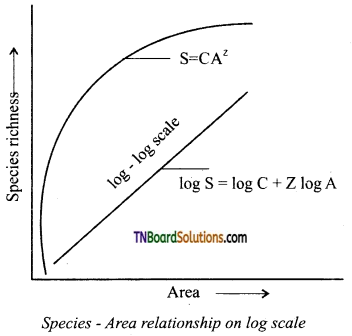
Answer:

  1. This activity helps to analyze how people are involved in foreign trade.
  2. Helps to develop a deep understanding of the industry and foreign trade procedures.
  3. Helps to understand the difference between internal and international trade.
  4. Helps to know the procedures involved in foreign trade.
  5. Helps to know about the economy and how foreign trade is practiced in India.

Question 2.
Students may be grouped as countries and directed to have a look at some available goods to be exchanged between them as if they involve in foreign trade.
Answer:

  1. Helps in interpersonal relationships.
  2. Helps to take decisions in life.
  3. Helps to develop a deep understanding of one’s own country and to do a comparison.
  4. Helps to understand the difference between the barter system and money usage.
  5. Helps in self-assessment and self-learning.

Multiple choice questions

1. …………. is one of the powerful force of economic integration.
(a) BOP
(b) BOT
(c) Trade
(d) FDI
Answer:
(c) Trade

2. International trade refers to exchange of goods and services between countries.
(a) Two or more
(b) Four
(c) Five
(d) Three
Answer:
(a) Two or more

TN Board 12th Economics Important Questions Chapter 7 International Economics

3. …………… in 1776 developed the theory of absolute cost advantage.
(a) Alfred Marshall
(b) Adam Smith
(c) David Ricardo
(d) J.S. Mill
Answer:
(b) Adam Smith

4. The modern theory of international trade was developed by economist Eli Heckscher.
(a) German
(b) French
(c) Sweedish
(d) American
Answer:
(c) Sweedish

5. If for a given quantity of export, more quantity of import can be consumed by a country, then one can say that terms of trade are:
(a) Correct
(b) Favourable
(c) Not correct
(d) Unfavourable
Answer:
(b) Favourable

6. The income terms of trade was given by in 1948.
(a) Adam Smith
(b) J.S.Mill
(c) G.S.Dorrance
(d) Ricardo
Answer:
(c) G.S.Dorrance

7. ………….. has devised another concept called the single factoral terms of trade.
(a) Viner
(b) G.S. Dorrance
(c) Ricardo
(d) Marshall
Answer:
(a) Viner

TN Board 12th Economics Important Questions Chapter 7 International Economics

8. Gross barter terms of trade was an improvement over:
(a) Balance of trade
(b) Balance of payment
(c) Net terms of trade
(d) Factoral terms of trade
Answer:
(c) Net terms of trade

9. BOP and BOT are two different concepts in the subject of:
(a) Internal Trade
(b) External Trade
(c) International Trade
(d) Home Trade
Answer:
(c) International Trade

10. Export and imports of commodities are also known as:
(a) Invisible trade
(b) Direct trade
(c) Visible trade
(d) Indirect trade
Answer:
(c) Visible trade

11. BOP is to be favourable that is:
(a) R/P > 1
(b) R/P < 1 (c) R/Q > 1
(d) R/Q < 1 Answer: (a) R/P > 1

12. World trade shrinks during:
(a) Equilibrium
(c) Inflation
(b) Disequilibrium
(d) Depression
Answer:
(d) Depression

13. Structural disequilibrium is called in ………… economics.
(a) Traditional
(b) Developing
(c) Underdeveloped
(d) Capitalistic
Answer:
(b) Developing

TN Board 12th Economics Important Questions Chapter 7 International Economics

14. Deficit in the balance of payment of developing countries is caused by:
(a) Veblen effect
(b) Demonstration effect
(c) Giffen effect
(d) Income effect
Answer:
(b) Demonstration effect

15. When the market forces of demand and supply are allowed to play freely ……….. will be restored.
(a) Demand
(b) Supply
(c) Market
(d) Equilibrium
Answer:
(d) Equilibrium

16. ……… is responsible for high imports and how exports.
(a) High domestic price level
(b) High domestic income level
(c) High domestic supply level
(d) High domestic exchange level
Answer:
(a) High domestic price level

17. …………. means a deliberate reduction of the official rate
(a) Inflation
(b) Deflation
(c) Devaluation
(d) Price discrimination
Answer:
(c) Devaluation

18. Exchange control means the state intervention in the:
(a) FOREX market
(b) Capital market
(c) Monopoly market
(d) Perfect market
Answer:
(a) FOREX market

19. ……….. is a method employed to influence the BOP in a country.
(a) Credit control
(b) Exchange control
(c) Money control
(d) Devaluation
Answer:
(b) Exchange control

TN Board 12th Economics Important Questions Chapter 7 International Economics

20. …………… refers to foreign currencies.
(a) FOREX
(b) USD
(c) GNP
(d) NDP
Answer:
(a) FOREX

21. Inflation and exchange rates are ………. related.
(a) Positively
(b) Negatively
(c) Directly
(d) Inversely
Answer:
(d) Inversely

22. RBI can influence both inflation and exchange rates by manipulating:
(a) Rate of income
(b) Rate of supply
(c) Interest rate
(d) Rate of demand
Answer:
(c) Interest rate

23. Excess demands for foreign currency ………. a country’s exchange rate.
(a) Lowers
(b) Increases
(c) Equalises
(d) Spoils
Answer:
(a) Lowers

TN Board 12th Economics Important Questions Chapter 7 International Economics

24. ……….. is part of the capital account of the BOP.
(a) FII
(b) FDI
(c) CRR
(d) FPI
Answer:
(d) FPI

25. Foreign investment takes the form of:
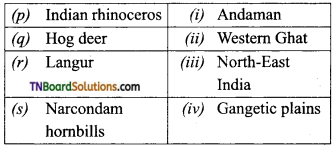
(a) Indirect investment
(b) Direct investment
(c) Induced investment
(d) Capital investment
Answer:
(b) Direct investment

26. Balance of payments of a country is a statement that records:
(a) Sources of foreign exchange
(b) Uses of foreign exchange
(c) Both (a) and (b)
(d) None of the above
Answer:
(c) Both (a) and (b)

27. The categories of transactions that are included in the current account of BOP are:
(a) Exports and imports of goods
(b) (a) + exports and imports of services
(c) (b) + income from and to abroad
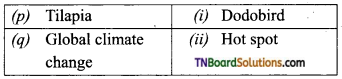
(d) (c) + Transfers from and to abroad
Answer:
(d) (c) + Transfers from and to abroad

28. Balance of trade equal:
(a) Exports less imports
(b) Exports of goods less import of goods
(c) Exports of services less import of services
(d) None of the above
Answer:
(b) Exports of goods less import of goods

TN Board 12th Economics Important Questions Chapter 7 International Economics

29. The categories of transactions that are included in the capital account of BOP are:
(a) Investments from and to abroad
(b) Borrowings and lendings from and to abroad
(c) Changes in foreign exchange reserves
(d) All the above
Answer:
(d) All the above

30. The measurement of the balance of payments deficit is based on:
(a) Autonomous transactions
(b) Accounting transactions
(c) Current account transactions
(d) Capital account transactions
Answer:
(a) Autonomous transactions

Pick the odd one out.

1. International economics consists of not only trade in goods and services but also:
(a) Capital flows
(b) Demand
(c) BOP
(d) Rate of exchange
Answer:
(b) Demand

2. The financial institutions like:
(a) IMF
(b) IBRD
(c) ICICI
(d) Moneylender
Answer:
(d) Moneylender

3. Internal trade is also known as:
(a) Domestic trade
(b) Home trade
(c) Foreign trade
(d) Intra – regional trade
Answer:
(c) Foreign trade

TN Board 12th Economics Important Questions Chapter 7 International Economics

4. Comparative cost theory was refined by:
(a) J.S.Mill
(b) Marshall
(c) Taussing
(d) Adam Smith
Answer:
(d) Adam Smith

5. The principle items shown on the credit side are:
(a) Transfer receipts in the forms of gifts
(b) FDI
(c) Borrowing from abroad
(d) Balance of trade
Answer:
(d) Balance of trade

6. The principle items on the debit side include imports of goods and services and:
(a) Transfer payment to foreigners
(b) Lending to foreign countries
(c) Gold from foreign countries
(d) Deficit payment
Answer:
(d) Deficit payment

7. The official reserve assets of a country include its:
(a) Gold stock
(b) SDR
(c) convertible foreign currencies
(d) Balance of trade
Answer:
(d) Balance of trade

8. Types of BOP disequilibrium are:
(a) Cyclical disequilibrium
(b) Secular disequilibrium
(c) Structural disequilibrium
(d) Development disequilibrium
Answer:
(d) Development disequilibrium

TN Board 12th Economics Important Questions Chapter 7 International Economics

9. The less developed countries in the early stage of development depend on developed countries for:
(a) Import of commodities
(b) Demand of commodities
(c) Capital and technology
(d) Export potential is low
Answer:
(b) Demand of commodities

10. Under free exchange the automatic adjustments of BOP can take place through changes in the variables like :
(a) Price
(b) Interest
(c) Income
(d) Supply
Answer:
(d) Supply

11. The deliberate measures may be broadly grouped into:
(a) Monetary measures
(b) Trade measures
(c) Export measures
(d) Miscellaneous measures
Answer:
(c) Export measures

12. FDI is helpful to accelerate economic growth by development programmes like:
(a) Capital goods
(b) Raw materials
(c) Rural development
(d) Others inputs
Answer:
(c) Rural development

TN Board 12th Economics Important Questions Chapter 7 International Economics

13. Fll is an investment in:
(a) Insurance companies
(b) Pension funds
(c) Bill of exchange
(d) Pension funds
Answer:
(c) Bill of exchange

14. FDI has been advantages in terms of:
(a) Improved technology
(b) Education
(c) Access to markets
(d) Free flow of capital
Answer:
(b) Education

15. FDI Firms in India have started investing in countries like:
(a) Nepal
(b) Tamilnadu
(c) Uganda
(d) Ethopia.
Answer:
(b) Tamilnadu

TN Board 12th Economics Important Questions Chapter 6 Banking

Students get through the TN Board 12th Economics Important Questions Chapter 6 Banking which is useful for their exam preparation.

TN State Board 12th Economics Important Questions Chapter 6 Banking

Very short answer questions

Question 1.
Name the Central banks established between 1921 and 1954.
Answer:

  1. The South African Reserve Bank (1921)
  2. The Central Bank of China (1928)
  3. The Reserve Bank of India (1935)
  4. The Central Bank of Ceylon (1950)
  5. The Bank of Isreal (1954)

Question 2.
Write a note on primary deposits.
Answer:
Bank makes loans and advances to its customers out of these primary deposits. The initiative is taken by the customers. These deposits are also called “Passive deposits”

TN Board 12th Economics Important Questions Chapter 6 Banking

Question 3.
What do you mean by variable portfolio ceiling?
Answer:
The system by which the Central bank fixes the ceiling or maximum amount of loans and advances for every commercial bank.

Question 4.
What is a cheque?
Answer:
A cheque is an instrument that instructs the bank to transfer funds from the cheque issuer’s account to the receiver of the cheque.

Question 5.
Which monetary system does India follow?
Answer:
India follows the paper currency standard because in India, the standard currency is made of paper.

Question 6.
Why are financial institutions like UTI, LIC is not considered banks?
Answer:
Because such financial institutions do not accept chequable deposits.

Question 7.
Why are Post office savings banks are not treated as banks?
Answer:
Because they do not perform the bank’s essential functions of leading.

TN Board 12th Economics Important Questions Chapter 6 Banking

Question 8.
How NBFI are classified?
Answer:
Non-banking financial institutions are broadly classified into two. They are

  1. Stock exchange and
  2. Other financial institutions

Question 9.
What are the objectives of ARDC?
Answer:

  1. To provide necessary funds by way of refinancing to eligible institutions like Scheduled bank etc..
  2. To subscribe to the debentures floated by the Central land development banks etc.

Question 10.
What are the main objectives of RRBs?
Answer:
To provide credit and other facilities particularly to small and marginal farmers, agricultural laborers. So as to develop agriculture, trade industry and other production activities in Rural areas.

Question 11.
Write a note on a debit card.
Answer:
A debit card is a card allowing the holder to transfer money electronically from their bank account when making a purchase.

TN Board 12th Economics Important Questions Chapter 6 Banking

Short answer questions

Question 1.
What are the concessions of RRBs?
Answer:
Regional Rural Banks are granted concessions by the Central Banks

  1. They are allowed to maintain Cash Reserve Ratio at 3% and the Statutory Liquidity Ratio at 25%.
  2. RRBs also provide refinance facilities through NABARD.

Question 2.
What is the role of NABARD in agricultural credit?
Answer:

  1. The RBI has shown keen interest in agricultural credit and has maintained a separate department.
  2. RBI has extended short-term, medium and long-term credit to agriculture through state-level cooperative banks.
  3. RBI also set up Agricultural Refinance Development Corporation (ARDC) to promote agricultural development.

Question 3.
What are the two faces of monetary policy?
Answer:
Inflation: (cheap money policy)

  1. Borrowing is easy
  2. Consumer buy more
  3. Business expands
  4. More people are employed
  5. People spend more

Recession: (dear money policy)

  1. Borrowing is difficult
  2. Consumer buy less
  3. Business postpone expansion
  4. Unemployment increases
  5. Production is reduced

TN Board 12th Economics Important Questions Chapter 6 Banking

Question 4.
Distinguish between Demand deposits and time deposits.
Answer:

Demand depositsTime deposits
Demand deposits are payable on demandTime deposits are payable on the expiry of specified period
It do not carry interestThis carry a fixed rate of interest
It is chequable depositsIt is not chequable deposits

Question 5.
Write a note on e-banking.
Answer:
Online banking also known as internet banking is an electronic payment system that enables customers of a bank. The online banking system typically connects the core banking system operated by a bank and is in contrast to branch banking which was the traditional way customers accessed banking services.

Question 6.
Differentiate between NEFT and RTGS.
Answer:
There are two systems of inter-bank transfer. These systems are maintained by RBI.

NEFTRTGS
National Electronic Fund TransferReal Time Gross Settlement
Transaction happens in batches so its slow.Transactions happens in real time so it is fast.
Timings 8 am to 6.30 pmTimings 9 am to 4.30 pm
No minimum limitMinimum amount for RTGS transfer is ?2 lakhs

Question 7.
Write a note on Paytm.
Answer:
Payment Bank in August 2015, Paytm received a license from RBI to launch a payments bank. It is a separate entity in which founder Vijay Shekar Sharma will hold 51% share once communications hold 39% and 10% will be held by a subsidiary of one 97 and Sharma.

TN Board 12th Economics Important Questions Chapter 6 Banking

Question 8.
Write a note on the credit card.
Answer:
A credit card is a payment card issued to users to enable the cardholder to pay a merchant for goods and services based on the cardholder’s promise to the card issuer to pay them for the amounts, So paid-plus the other agreed charges. Credit cards combine with payment services with extensions of the credit card industry may limit customers’ ability to shopping.

Question 9.
Write a note on NPA.
Answer:
Non-Performing Asset. Once the borrower fails to make interest or principal payment for 90 days, the loan is considered to be a Non-Performing Asset. They depend on interest payment for income. The size of NPA is around 10 lakhs cr. So the government is forced to infuse capital to the banks by using poor Taxpayers’ money. The government of India has infused Rs. 68000 cr to the banking system. So the NPAs ultimately affect the common people.

Question 10.
Write a note on the merger of banks.
Answer:
Union cabinet decides to merge all the remaining five associate banks of the State Bank group with SBI in 2017. Five associates and the Bharatiya Mahila Bank have become part of SBI on April 1, 2017. This has placed SBI among the top 50 banks in the world. The five associate banks that were merged are

  1. State Bank of Bikaner and Jaipur (SBBJ)
  2. State Bank of Hyderabad (SBH)
  3. State Bank of Mysore (SBM)
  4. State Bank of Patiala (SBP) and
  5. State Bank of Travancore (SBT).

TN Board 12th Economics Important Questions Chapter 6 Banking

Long answer questions

Question 1.
Explain industrial credit and investment Cooperation of India.
Answer:
Functions:

  1. Assistance to industries
  2. Provision of foreign currency loans
  3. Merchant banking
  4. Letter of credit
  5. Project promotions
  6. Housing loans
  7. Leasing operation

This was set up on 5th Jan 1955. The purpose is to channelize the World bank funds to the industry in India and also help to build up a Capital market. Now a very large part of its equity capital is held by Public sector Institutions such as HC, GIC. The feature of the operation of ICICI is the foreign currency loans sanctioned by this institution of industries. Since 1973, the ICICI has entered the international capital markets also for raising foreign currency loans. ICICI also borrows from IDBI and the Government sector. The major portion of its assistance has gone to the private sector.

Question 2.
Explain IDBI – Industrial Development Bank of India.
Answer:
The IDBI was a wholly-owned subsidiary of RBI till 1976 and it was delinked and made an autonomous corporation, fully owned by the Government of India. The functions are

  1. Assistance to other Financial institutions.
  2. Direct assistance to industrial concerns. It can provide refinance in respect of term loans to IFC, SFC. The special feature of IDBI is the provision for the creation of a special fund known as the Development assistance fund. It provides assistance to industries. The financing of Exports was also undertaken by IDBI till the establishment of Exim bank in 1982.

TN Board 12th Economics Important Questions Chapter 6 Banking

Question 3.
Explain the State Level Institutions.
Answer:
The Government of India passed SFC Act in 1951. It is for the development of small and medium Industries. The SFC provides loans and assistance to industrial units. The maximum amount that can be sanctioned to the industry is up to 60 lakhs. SFC depends upon the IDBI for refinancing. It can also make temporary borrowings from RBI.

Question 4.
State Industrial Development Corporation (SIDCO).
Answer:
It was set up by the state governments. They provide financial assistance to industrial concerns by way of loans, promotional activities such as surveys, project identification, and training of entrepreneurs. SIDCO takes 26%, 25% of the equity, and the rest is offered to invest public. SIDCO also administers various government incentive schemes. They also borrow through bonds and accept deposits.

Activity

Question 1.
Students are to be asked to visit the nearby commercial bank to observe the functioning of the bank. They are also instructed to submit a brief report about their learning experiences.
Answer:
Visit a Commercial Bank: To know the functions of the Bank.

  1. Helps to know and have a deep understanding of the functioning of Banks.
  2. Students can perform Banking activities of their own.
  3. Students will know and observe the day-to-day activities of a Bank.
  4. Helps to develop a deep understanding of the Banking system.
  5. Finally, students understand that Banking is much a part of human life.
  6. They also understand the essence and importance of Banking.

TN Board 12th Economics Important Questions Chapter 6 Banking

Question 2.
Students are asked to do a brief survey about the impact of the 2016 Demonetisation of currency on the general public.
Answer:
Students as the first step can take interviews with their family members. Inference of Survey:

  1. How public or the family members faced difficulties in changing 500 and 1000 Notes.
  2. What are the difficulties they faced in ATM to withdraw the money for day to expenses?
  3. The difficulties they faced in standing and waiting in front of ATMs and Banks.
  4. The difficulties they faced especially when there was a family get-together or function.
  5. The problems faced by the public during their travel.

Students will gather information from nearby areas, petty shops, and street vendors.

Multiple choice questions

1. When was the oldest Central bank in the world established?
(a) 1686
(b) 1656
(c) 1676
(d) 1666
Answer:
(b) 1656

2. Where was the international finance conference held in 1920?
(a) Russia
(b) USA
(c) South Africa
(d) Brussels
Answer:
(d) Brussels

TN Board 12th Economics Important Questions Chapter 6 Banking

3. The functions of commercial banks are broadly classified into:
(a) Three
(b) Four
(c) Two
(d) Five
Answer:
(a) Three

4. There are ……… types of deposits.
(a) 2
(b) 3
(c) 4
(d) 5
Answer:
(a) 2

5. Commercial banks help in providing foreign exchange to businessmen dealing with:
(a) Trade
(b) Money
(c) Industries
(d) Import and export
Answer:
(d) Import and export

6. Pooled savings should be allocated to various sectors of the economy with a view to increase:
(a) Consumption
(b) Production
(c) Distribution
(d) Exchange
Answer:
(b) Production

7. When was there an economic crises in US?
(a) In 2006 – 2007
(b) In 2004 – 2005
(c) In 2007 – 2008
(d) In 2001 – 2002
Answer:
(c) In 2007 – 2008

TN Board 12th Economics Important Questions Chapter 6 Banking

8. RBI has given ……….. crores to the Government of India in the year 2018 – 2019
(a) Rs. 60,000
(b) Rs. 78,000
(c) Rs. 63,000
(d) Rs. 68,000
Answer:
(d) Rs. 68,000

9. Banks provide ……….. credit for worthwhile projects.
(a) 90%
(b) 100%
(c) 80%
(d) 75%
Answer:
(b) 100%

10. RBI was Nationalized on:
(a) 1947
(b) 1949
(c) 1948
(d) 1946
Answer:
(b) 1949

11. …………. is the sole authority to issue currency.
(a) RBI
(b) SBI
(c) ICICI
(d) All the banks
Answer:
(a) RBI

12. According to sec 22 of ……….. every bank should obtain Banking License from RBI.
(a) Monetary policy
(b) Fiscal policy act
(c) Bank of India act
(d) Banking Regulation act
Answer:
(d) Banking Regulation act

TN Board 12th Economics Important Questions Chapter 6 Banking

13. RBI represents India as a member of:
(a) SBI
(b) FEMA
(c) FOREX
(d) IMF
Answer:
(d) IMF

14. Banking Regulation Act of in the basis for credit control of RBI.
(a) 1949
(b) 1959
(c) 1939
(d) 1929
Answer:
(a) 1949

15. The RBI was providing medium-term loans also for a period exceeding ……….. for reclamation of land.
(a) 15 months to 5 years
(b) 15 months to 3 years
(c) 15 months to 2 years
(d) 15 months to 5 years
Answer:
(d) 15 months to 5 years

16. RBI relating to agriculture credit has been over by ……….. since 1982.
(a) NABARD
(b) ARDC
(c) IMF
(d) ICICI
Answer:
(a) NABARD

TN Board 12th Economics Important Questions Chapter 6 Banking

17. ARDC was established on 1st July 1963.
(a) Act of RBI
(b) Act of Government
(c) Act of Parliament
(d) Act of Scheduled bank
Answer:
(c) Act of Parliament

18. NABARD gives long-term loans up to years to the state government.
(a) 20
(b) 30
(c) 10
(d) 40
Answer:
(a) 20

19. The planning commission now:
(a) NABARD
(b) RRB
(c) NITI Aayog
(d) SCB
Answer:
(c) NITI Aayog

20. IFCI was established .in:
(a) 1938
(b) 1948
(c) 1958
(d) 1968
Answer:
(b) 1948

21. Financial assistance of IFCI can be availed by any:
(a) Bank
(b) Public sector
(c) Limited company
(d) Industry
Answer:
(c) Limited company

TN Board 12th Economics Important Questions Chapter 6 Banking

22. ICICI was set up in 1955 as:
(a) Limited company
(b) Bank
(c) Public sector
(d) Joint-stock company
Answer:
(d) Joint-stock company

23. IDBI was delinked from RBI and became autonomous from the year:
(a) 1966
(b) 1976
(c) 1986
(d) 1956
Answer:
(b) 1976

24. The maximum amount that can be sanctioned to industry by SFC is:
(a) 20 lakhs
(b) 30 lakhs
(c) 60 lakhs
(d) 50 lakhs
Answer:
(c) 60 lakhs

25. ………… received Nobel prize in 1976 and introduced the doctrine of monetarism.
(a) Adam smith
(b) Alfred Marshall
(c) Lionel robbins
(d) Milton Friedman
Answer:
(d) Milton Friedman

26. ATM was introduced in:
(a) 1947
(b) 1957
(c) 1967
(d) 1977
Answer:
(c) 1967

TN Board 12th Economics Important Questions Chapter 6 Banking

27. ……… was the founder of Paytm Payments Bank.
(a) Milton Friedman
(b) Vijay Mallya
(c) Vijay Shekar Sharma
(d) Rakesh Sharma
Answer:
(c) Vijay Shekar Sharma

28. Demonetisation occurs whenever there is a change in:
(a) Government
(b) Political party
(c) Exchange rate
(d) National currency
Answer:
(d) National currency

29. Which of the following makes a financial institution a bank?
(a) Accepting deposits
(b) Lending
(c) Accepting demand deposits
(d) Accepting time deposits
Answer:
(c) Accepting demand deposits

30. Creation of money by commercial banks refer to:
(a) Creation of bank deposits
(b) Issuing currency
(c) Both (a) and (b)
(d) None
Answer:
(a) Creation of bank deposits

31. How much money are banks able to create is determined by?
(a) Initial deposits
(b) SCR
(c) CRR
(d) All the above
Answer:
(d) All the above

TN Board 12th Economics Important Questions Chapter 6 Banking

32. Given CRR=4% and SLR=16% the value of multipliers is:
(a) 25
(b) 6.25
(c) 5
(d) 8.33.
Answer:
(c) 5

33. When the Central bank sells securities in the market, the credit creation capacity of the commercial banks is like to:
(a) Rise
(b) Fall
(c) Rise or fall
(d) No effect
Answer:
(b) Fall

34. Raising Reverse Repo Rate by the central bank is likely to have the following impact on demand for goods and services in the economy:
(a) Rise
(b) Fall
(c) May rise and fall
(d) No effect
Answer:
(a) Rise

35. With lowering requirements by the central bank, the borrowing capacity of the borrowers:
(a) Rises
(b) Falls
(c) May rise and fall
(d) No effect
Answer:
(a) Rises

36. Which of the following is a bank?
(a) Post office savings bank
(b) LIC
(c) UTI
(d) IDBI
Answer:
(a) Post office savings bank

TN Board 12th Economics Important Questions Chapter 6 Banking

37. Finance is the essential breath of all economic activities:
(a) Trade
(b) Commerce
(c) Agriculture
(d) Collecting cheques
Answer:
(d) Collecting cheques

Pick the odd one out.

1. Commercial banks collect:
(a) Dividends
(b) Pensions
(c) Salaries
(d) Tax
Answer:
(d) Tax

2. Commercial banks make the payments of various obligations of customers such as:
(a) Telephone bills
(b) Rent
(c) Household equipment
(d) School fees
Answer:
(c) Household equipment

3. Commercial banks provide locker facilities to their customers for the safe custody of:
(a) Customers
(b) Jewellery
(c) Shares
(d) Debentures
Answer:
(a) Customers

TN Board 12th Economics Important Questions Chapter 6 Banking

4. Banks collect and publish statistics relating to:
(a) Population
(b) Trade
(c) Commerce
(d) Industry
Answer:
(a) Population

5. NBFs other financial institutions category comes:
(a) RBI
(b) Chit funds
(c) Unit trust
(d) Insurance companies
Answer:
(a) RBI

6. Monetary authority controls the supply of money in the economy to stabilize:
(a) Population
(b) Control inflation
(c) Banking system
(d) Exchange rate
Answer:
(a) Population

7. Statutory Liquidity Ratio is the amount which a bank has to maintain in the form of:
(a) Legal tender
(b) Cash
(c) Gold
(d) Approved securities
Answer:
(a) Legal tender

TN Board 12th Economics Important Questions Chapter 6 Banking

8. Moral suasion under this method Central bank gives ……….. to Commercial banks to co-operate.
(a) Advice
(b) Requests
(c) Persuades
(d) Notice
Answer:
(d) Notice

9. Economists are the chief exponents of Neutral money.
(a) Adam smith
(b) Wicksteed
(c) Hayek
(d) Robertson
Answer:
(c) Hayek

10. The objectives of demonetization:
(a) Removing black money from the currency
(b) Issuing the currency notes
(c) Stopping corruption
(d) Stopping terror funds
Answer:
(d) Stopping terror funds

TN Board 12th Economics Important Questions Chapter 6 Banking

11. Credit creation leads to increase:
(a) Production
(b) Public finance
(c) Employment
(d) Sales
Answer:
(b) Public finance

TN Board 12th Economics Important Questions Chapter 5 Monetary Economics

Students get through the TN Board 12th Economics Important Questions Chapter 5 Monetary Economics which is useful for their exam preparation.

TN State Board 12th Economics Important Questions Chapter 5 Monetary Economics

Very short answer questions

Question 1.
Write a note on the silver standard.
Answer:
This monetary system fixes the economic unit of account with the weight of silver. The silver standard is a monetary arrangement in which the Government allows the conversion of the currency into a fixed amount of silver.

Question 2.
Write a note on paper currency standard.
Answer:
In this system, paper currency notes are issued by the Treasury or RBI circulate as unlimited Legal Tender. It cannot be converted into metal. It is also known as a managed currency standard.

TN Board 12th Economics Important Questions Chapter 5 Monetary Economics

Question 3.
Write a note on cryptocurrency.
Answer:
A digital currency in which encryption techniques are used to regulate the generation of units of currency and verify the Transfer of Funds, operating independently of a Central Bank.

Question 4.
What are the Four alternative measures of the money supply?
Answer:
M1 = Currency coins and demand deposits.
M2 = M1 + Savings deposits with Post Office Savings banks.
M3 = M2 + Time deposits of all commercial and co-operative banks.
M4 = M3 + Total deposits with Post Offices.
M1 and M2 are known as narrow money.
M3 and M4 are known as broad money.

Question 5.
Write a note on the currency symbol.
Answer:
The new symbol was designed by D.Udaya Kumar, IIT Bombay was selected by the Union cabinet on 15* July 2010. The new symbol is an amalgamation of Devanagri ‘Ra’ and the Roman ‘R’ without the stem. It came into use in India on 15th July 2010.

Question 6.
What is Narrow money?
Answer:
M1 and M2 are narrow money because they include currency plus demand deposits in banks and other deposits.

TN Board 12th Economics Important Questions Chapter 5 Monetary Economics

Question 7.
How does money increase the productivity of capital?
Answer:

  1. Money is the most liquid form of capital.
  2. Capital in the form of money can be put to any use.

Question 8.
Write a note Wage-Price.
Answer:
The wage-Price spiral is used to explain the cause and effect relationship between rising wages and rising prices or Inflation.

Question 9.
What are the three measures to prevent and control Inflation?
Answer:

  1. Monetary measures
  2. Fiscal measures and
  3. Other measures.

Question 10.
Write a note on Monetary Economics.
Answer:
Currency is created by the RBI and union government. Bank deposits are created by commercial banks and cooperative banks. The demand for money is determined by a number of factors such as income, price level, interest rate, etc.

Short answer questions

Question 1.
What do you mean by money? – Explain.
Answer:
Money is anything that is generally accepted as payment for goods and sendees. As a medium of exchange for repayment of debts. Money is the basis for all credit. The importance of credit has increased in all countries of the world. Credit instruments are used on a large scale. The use of cheques, bills of exchange, etc., has gone up.

TN Board 12th Economics Important Questions Chapter 5 Monetary Economics

Question 2.
What is the history of the Barter system?
Answer:
The history of the Barter system starts from 6000 BC.

  1. The barter system was introduced by Mesopotamia tribes.
  2. Before money was introduced, the exchange of goods took place.
  3. Under the Barter system, buyers and sellers of commodities had to face a lot of difficulties.
  4. Phoenicians adopted (Barter) the exchange of goods with various other cities across oceans.
  5. Babylonians also developed an improved barter system (goods for goods).

Question 3.
Write a note on Money Supply.
Answer:
Money Supply is a stock variable. It plays an important role in the determination of price level and interest rates. Money supply at a point of time is stock and over a period of time, it is a Flow. So money supply is the amount of money that is in circulation in an economy at any given time.

Question 4.
What do you mean by Inflation?
Answer:
Inflation is a consistent rise in the general price level. Inflation is the rate at which the general prices for goods and services are rising and consequently, the purchasing power of currency is falling.

Question 5.
Write a Note of Deflation.
Answer:
The important features of deflation are: (a) Falling prices, (b) Reduces Money supply, (c) Unemployment. In the case of Inflation falling prices are desirable but that should not lead to a fall in the level of production and Employment. But if prices fall from the level of full employment both Income and Employment will be affected adversely.

TN Board 12th Economics Important Questions Chapter 5 Monetary Economics

Long answer questions

Question 1.
Measures to Control Inflation – Explain.
Answer:
Keynes and Milton Friedman together suggested three measures to prevent and control inflation.
They are:

  1. Monetary Measures
  2. Fiscal Measures (J.M. Keynes)
  3. Other Measures

Monetary Measures: Three measures are adopted by RBI. They are

  1. Increase in Bank rate.
  2. Sale of Government securities in the open market.
  3. Higher Cash Reserve Ratio (CRR) and Statutory Liquidity Ratio (SLR).
  4. Consumer Credit Control and
  5. Higher Margin requirements
  6. Higher Repo Rate and Reverse Repo Rate.

Fiscal Measures: This measure is considered important to handle or an instrument to handle inflationary situations.
Anti-Inflationary Fiscal Measure is:

  1. Reduction of Government Expenditure
  2. Public Borrowing and Enhancing Taxation

Other Measures: It is divided into two
(a) Short-Term Measures
(b) Long-Term Measures
(a) Short-Term Measures: It is the distribution of essential products to the public through Fair Price (Rationing) Shops. Whenever shortages occur in India for basic goods, the goods are imported to avoid Inflation.
(b) Long-Term Measures: To accelerate economic growth especially for wage goods which has a direct bearing on the general price level and the cost of living. Restrictions on present Consumption may help in improving saving and investment so that the rate of Economic growth will be accelerated in the Longrun.

TN Board 12th Economics Important Questions Chapter 5 Monetary Economics

Multiple-choice questions

1. Barlir system was introduced by:
(a) Mesopotamia Tribes
(b) Baby Lonians
(c) Russians
(d) Americans
Answer:
(a) Mesopotamia Tribes

2. Currency notes are issue by in India.
(a) SBI
(b) RBI
(c) ICICI
(d) IDBI
Answer:
(b) RBI

3. Trade cycle is classified into Phases.
(a) 1
(b) 2
(c) 3
(d) 4
Answer:
(d) 4

TN Board 12th Economics Important Questions Chapter 5 Monetary Economics

4. Marshall’s Equation is:
(a) M = PKY
(b) M = KPY
(c) MV = PT
(d) MV = M’P’
Answer:
(b) M = KPY

5. …………. is the Liquid asset.
(a) Water
(b) Milk
(c) Money
(d) All of these
Answer:
(c) Money

6. When there is an increase in price rapidly, it is called as:
(a) Recession
(b) Hyper Inflation
(c) Galloping Inflation
(d) Creeping Inflation
Answer:
(b) Hyper Inflation

7. ‘Inflation is Taxation’ without Legislation was defined by:
(a) Alfred Marshall
(b) Keynes
(c) Adam Smith
(d) Milton Friedman
Answer:
(d) Milton Friedman

8. Money supply is the total amount of money in:
(a) Sector
(b) Economy
(c) World
(d) Household
Answer:
(b) Economy

TN Board 12th Economics Important Questions Chapter 5 Monetary Economics

9. The rupee symbol came into use on:
(a) 15th July 2010
(b) 16th July 2010
(c) 20th July 2010
(d) 1st July 2010
Answer:
(a) 15th July 2010

10. The Purchasing power of money, the book was published in:
(a) 1931
(b) 1921
(c) 1911
(d) 1941
Answer:
(c) 1911

11. …………. is the general form of Equation by Fisher.
(a) MV = PT
(b) M’V’ = PT
(c) M = KPY
(d) N = P/K
Answer:
(a) MV = PT

12. Inflation will slow down during:
(a) Recession
(b) Depression
(c) Stagflation
(d) Disinflation
Answer:
(d) Disinflation

TN Board 12th Economics Important Questions Chapter 5 Monetary Economics

13. The Economic activity becomes very slow during:
(a) Boom
(b) Depression
(c) Recovery
(d) Recession
Answer:
(b) Depression

14. ………… is the Fraction of deposits of Commercial Banks with RBI.
(a) SLR
(b) CDR
(c) CRR
(d) RDR
Answer:
(c) CRR

15. …………. is the Branch of Economics which provides a framework for analyzing money.
(a) Fiscal Policy
(b) Monetary Economics
(c) Macro Economics
(d) Micro Economics
Answer:
(b) Monetary Economics

16. …………. is an alternative to the cash.
(a) Gold
(b) Silver
(c) Plastic money
(d) Cheque
Answer:
(c) Plastic money

TN Board 12th Economics Important Questions Chapter 5 Monetary Economics

17. The first Hyper Inflation of the 21st Century was:
(a) April 2009
(b) April 2008
(c) April 2006
(d) April 2007
Answer:
(d) April 2007

18. Which of the following is a must for anything to be called money:
(a) Measure of deferred Payment
(b) Medium of Exchange
(c) Store of Value
(d) Measure of Value
Answer:
(b) Medium of Exchange

19. Money is suitable for storing wealth because:
(a) It requires less space
(b) If is readily acceptable for exchange
(c) It is easily portable
(d) All the above
Answer:
(d) All the above

20. Supply of money refers to Quantity of Money:
(a) During the year only
(b) During any period of time
(c) As on 31st March only
(d) As on any point of time
Answer:
(d) As on any point of time

TN Board 12th Economics Important Questions Chapter 5 Monetary Economics

21. Money Supply refers to:
(a) Currency outside banks and all bank deposits
(b) Currency inside bank
(c) Currency outside banks and demand deposits in bank
(d) Currency outside and Inside bank
Answer:
(c) Currency outside banks and demand deposits in bank

22. Money has made possible:
(a) Borrowing and Lending
(b) Creation of Financial Institutions
(c) Keeping of accounts
(d) All the above
Answer:
(d) All the above

23. Which of the following makes a financial Institution, a Bank:
(a) Accepting Deposits
(b) Lending
(c) Accepting demand Deposits
(d) Accepting time deposits
Answer:
(c) Accepting demand Deposits

24. Creation of money by Commercial Banks refers to:
(a) Creation of Bank deposits
(b) Issuing Currency
(c) Both (a) & (b)
(d) All the above
Answer:
(a) Creation of Bank deposits

TN Board 12th Economics Important Questions Chapter 5 Monetary Economics

25. How much money are banks able to create is determined by:
(a) Initial deposits
(b) SLR
(c) CRR
(d) All the above
Answer:
(d) All the above

26. The value of money multiplier equals:
(a) 1/SLR
(b) 1/CRR
(c) 1/(SLR+CRR)
(d) None
Answer:
(c) 1/(SLR+CRR)

27. Given CRR = 4% and SLR = 16%, the value of multiplier is:
(a) 25
(b) 26
(c) 5
(d) 10
Answer:
(c) 5

28. When the central bank sells securities, in the market, the credit creation capacity of the commercial bank is likely to:
(a) Rise
(b) Fall
(c) May rise or fall
(d) No effect
Answer:
(b) Fall

TN Board 12th Economics Important Questions Chapter 5 Monetary Economics

29. Lowering of CRR by Central Bank has the following impact on credit creation:
(a) Negative
(b) Positive
(c) Neutral
(d) No Effect
Answer:
(b) Positive

30. Raising Reverse Repo Rate by the Central Bank is likely to have the following impact on demand for goods and services in the Economy: ,
(a) Rises
(b) Falls
(c) All Effects
(d) No Effect
Answer:
(b) Falls

31. With Lowering Margin requirements by the Central Government, the borrowing capacity of the borrowers:
(a) Rises
(b) Falls
(c) Both rise and fall
(d) No Effect
Answer:
(a) Rises

TN Board 12th Economics Important Questions Chapter 5 Monetary Economics

32. Which of the following is a Bank?
(a) Post Office Savings Bank
(b) SBI
(c) UTI
(d) IDBI
Answer:
(b) SBI

33. Name the instrument through which commercial bank remit money to distant places:
(a) Letter
(b) Telex
(c) Cell Phone
(d) Demand Draft
Answer:
(d) Demand Draft

34. What is the facility of drawing more money from banks by businessmen?
(a) Demand Draft
(b) Fixed Deposit
(c) Over Draft
(d) Mail Transfer
Answer:
(c) Over Draft

35. Name the institution which acts as a custodian of Foreign Exchange reserves:
(a) Central Bank
(b) RBI
(c) None
(d) Both (a) & (b)
Answer:
(d) Both (a) & (b)

TN Board 12th Economics Important Questions Chapter 5 Monetary Economics

36. Name the institution which performs the function of a clearinghouse:
(a) RBI
(b) IDBI
(c) SBI
(d) UTI
Answer:
(a) RBI