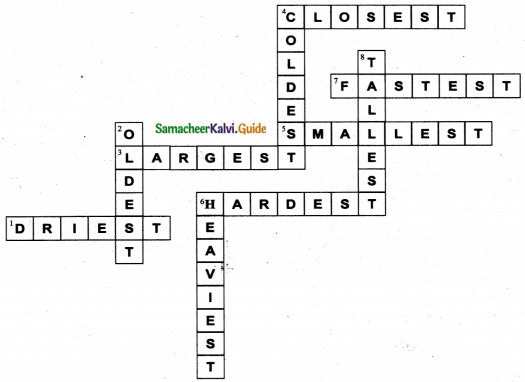
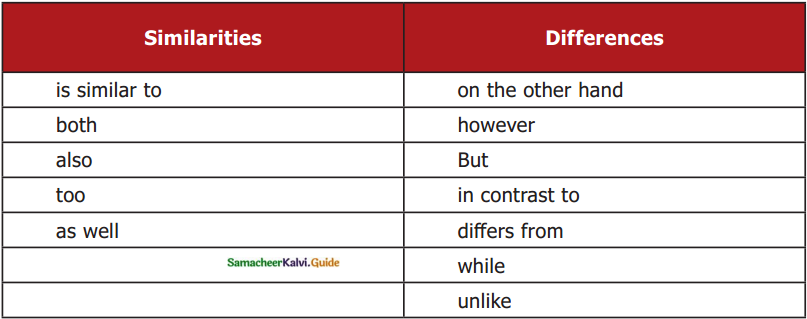
Samacheer Kalvi 7th English Guide Play Chapter 1 Jane Eyre

Tamilnadu State Board New Syllabus Samacheer Kalvi 7th English Guide Pdf Play Chapter 1 Jane Eyre Text Book Back Questions and Answers, Summary, Notes.

Tamilnadu Samacheer Kalvi 7th English Solutions Play Chapter 1 Jane Eyre

7th English Guide Jane Eyre Text Book Back Questions and Answers

Warm Up (Text Book Page No. 136)

Every child has a right to an education, a life free from poverty and protection from abuse. (Text Book Page No. 136)

Look at the picture.
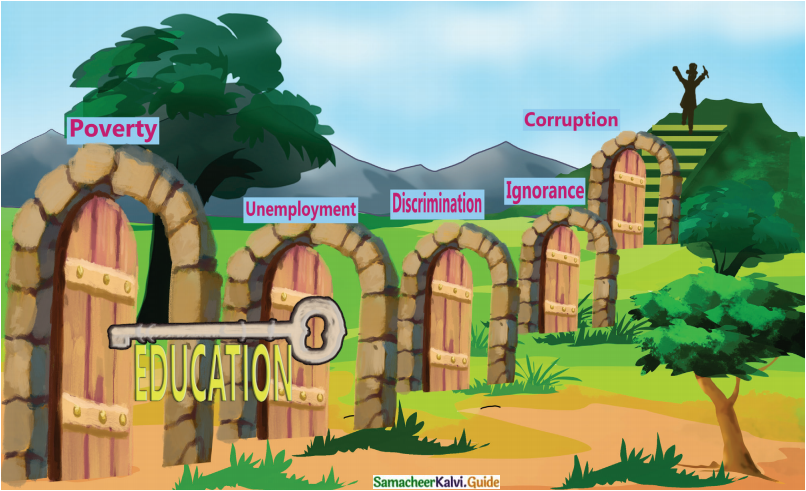
Samacheer Kalvi 7th English Guide Play Chapter 1 Jane Eyre 1

Discuss in pairs and answer:

1. What are the basic human rights?
Answer:
Right to life and liberty, freedom from slavery and torture, freedom of opinion and expression, the right to work and education right to equality, means to satisfy one’s basic needs, universal protection are basic rights.

Samacheer Kalvi 9th English Guide Prose Chapter 2 I Can’t Climb Trees Anymore

2. What is education?
Answer:
Education shall be free at least in the elementary and fundamental stages. Everyone has the right to education. Education shall be directed to the full development of the human personality and to the strengthening of respect for human rights and fundamental freedom.

3. Why do we need education?
Answer:
Every individual irrespective of race, gender, nationality, ethnic or social origin, religion or political preference age or disability, is entitled to an education. Education is very important and no one should be deprived of it, Education gives us knowledge. It develops in us the right perspective of life. It helps us build opinions and have points of view on things in life.

Think and Answer:

1. How would life be on this planet if some of the human rights are excluded?
Answer:
Life on this planet would become more difficult for the commoners if some of the human rights are excluded.

2. Are there any rights you would still like to add to the human rights list?
Answer:
Yes. Protection from sexual harassment of female children can be included as a basic right. Availability of pure drinking water, hygienic food for all children must be made basic human rights. There are thousands of street children in our country who have no protection, food, or drinking water.

Textual Exercise (Text Book Page No. 144)

1. Why does Jane want to go to school or learn anything in the first place?
Answer:
Jane wants to learn life’s lessons that shape her character as an adult.

Samacheer Kalvi 9th English Guide Prose Chapter 2 I Can’t Climb Trees Anymore

2. Why does education become such an important issue for her as a child?
Answer:
Jane was an orphan. If she had to be independent she must have her own earnings so that she could stand on her own legs.

3. What does Jane’s education at Lowood prepare her to do?
Answer:
Jane’s education at Lowood prepares her to understand the world in the teacher-student relationship

Chew on This

Try on an opinion or two and start a debate
In Jane’s childhood, education takes the place of every single one of her emotional and physical needs – food, shelter, family, and friendship. Because Jane initially learns to understand the world in terms of a teacher – student relationship, all her friendships have some master – pupil tinge to them.

Vocabulary

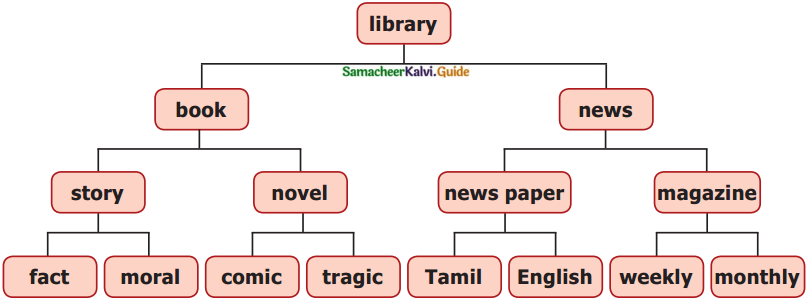
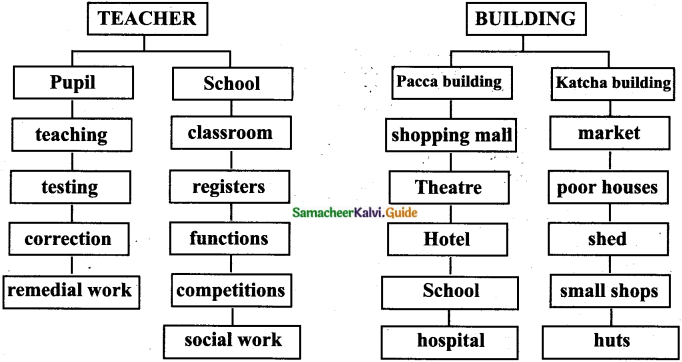
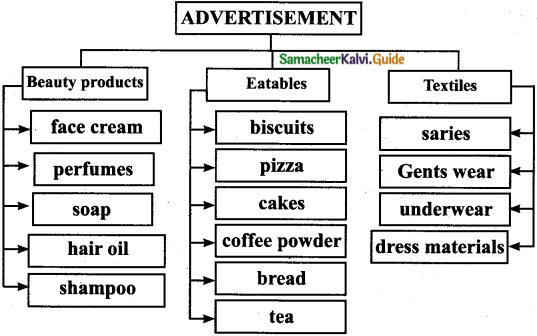
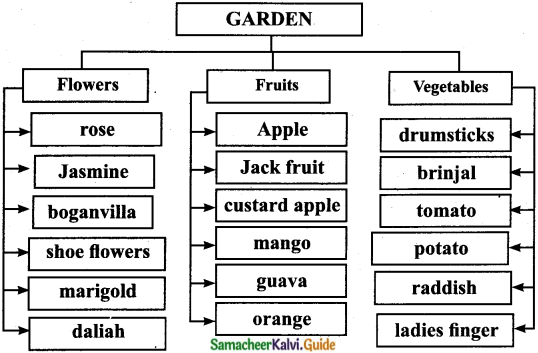
Semantic Map

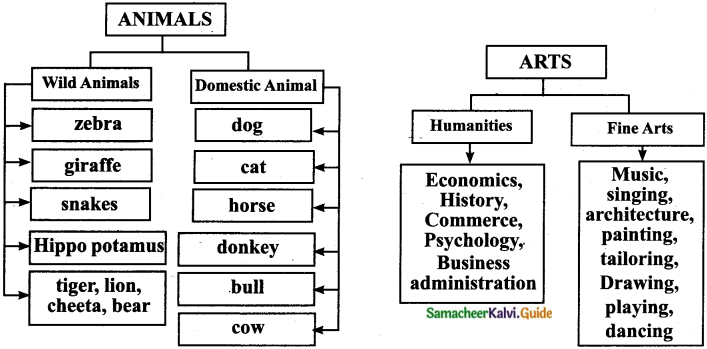
A. Read the list of words. Write down all the words related to those words. Create a “map” using a graphic organizer and discuss it in groups. One is done for you.

Samacheer Kalvi 7th English Guide Play Chapter 1 Jane Eyre 2
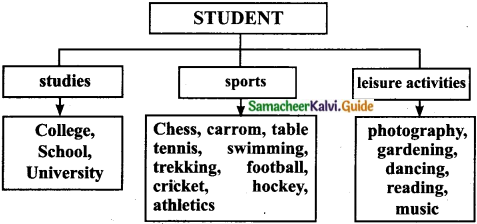
Answer:
Samacheer Kalvi 7th English Guide Play Chapter 1 Jane Eyre 3
Samacheer Kalvi 7th English Guide Play Chapter 1 Jane Eyre 4
Samacheer Kalvi 7th English Guide Play Chapter 1 Jane Eyre 5
Samacheer Kalvi 7th English Guide Play Chapter 1 Jane Eyre 6
Samacheer Kalvi 7th English Guide Play Chapter 1 Jane Eyre 7

Samacheer Kalvi 7th English Guide Play Chapter 1 Jane Eyre 8

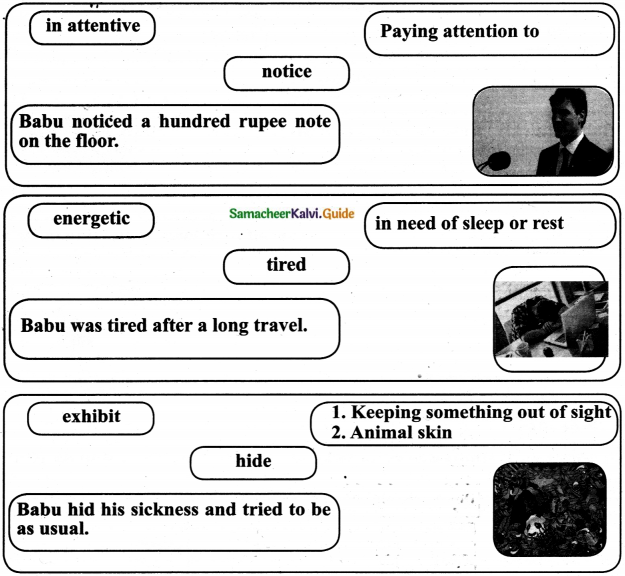
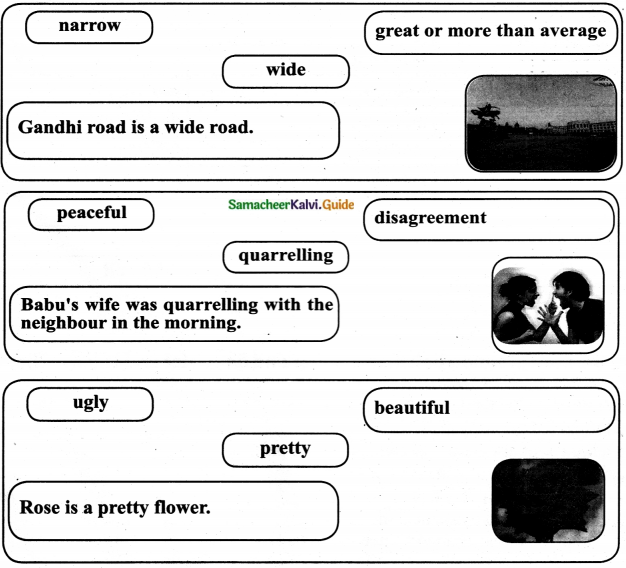
Vocabulary Frame: (Text Book Page No. 145)

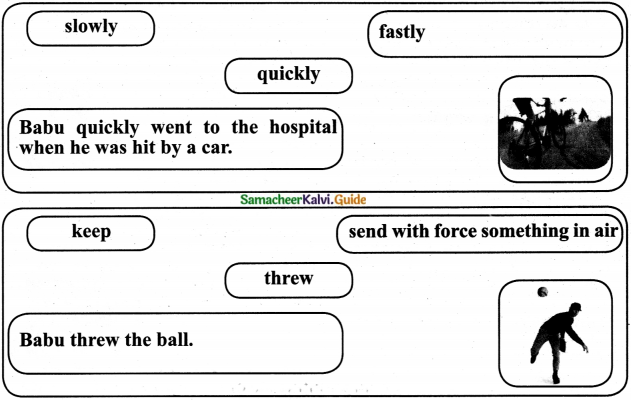
B. Look at the list of words. Read the instructions and make Vocabulary Frames.

Samacheer Kalvi 7th English Guide Play Chapter 1 Jane Eyre 9
Samacheer Kalvi 7th English Guide Play Chapter 1 Jane Eyre 10
Samacheer Kalvi 7th English Guide Play Chapter 1 Jane Eyre 11
Samacheer Kalvi 7th English Guide Play Chapter 1 Jane Eyre 12

Syllable (Text Book Page No. 145)

C. Fill in the table with monosyllabic, disyllabic and trisyllabic words from the play ‘Jane Eyre’.
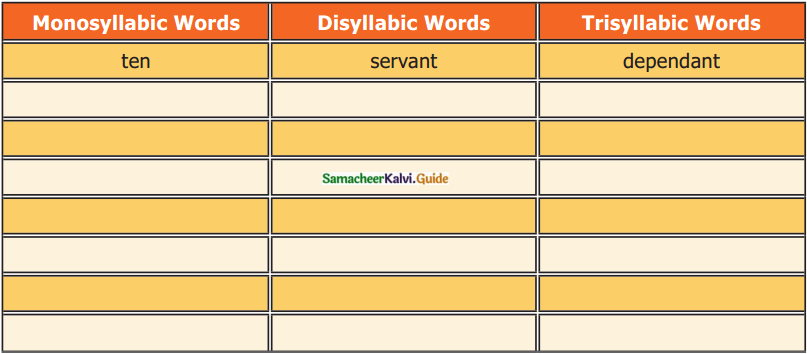
Samacheer Kalvi 7th English Guide Play Chapter 1 Jane Eyre 13

Monosyllabic WordsDisyllabic WordsTrisyllabic Words
tenservantdependant
Nomo / ney/co/llap/ses
redfa/therhes/si/tate
showchild/renmo/ni/tors
mewin/dowpro /ba/bly
goesmat/terdes/pe/rate
heremor/ningte/di/ous
waybet/teren/ter/tain
diedsup/perpre/dis/posed
wantra/thercha/ri/ty
readgi/vendif/fi/cult

Listening (Text Book Page No. 146)

D. Listen to the conversation between a father and daughter and say whether following statements are true or false.

1. Dad hasn’t been to this fishing spot since last year.
Answer:
True

2. Dad used to go fishing with his father.
Answer:
False

Samacheer Kalvi 9th English Guide Prose Chapter 2 I Can’t Climb Trees Anymore

3. Dad has talked a lot about this fishing spot in the past.
Answer:
True

4. The daughter also loves to fish.
Answer:
False

5. Dad says his daughter MUST fish.
Answer:
False

6. The daughter is going to cook the fish.
Answer:
True

7. Dad’s fishing place hasn’t changed since he was a boy.
Answer:
False

Speaking

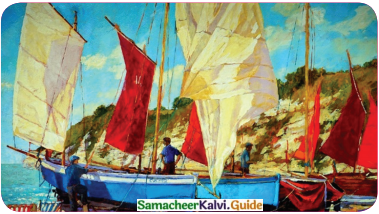
E. Imagine that below are some of the paintings of Jane Eyre. Discuss your partner and describe the paintings.

Samacheer Kalvi 7th English Guide Play Chapter 1 Jane Eyre 15
Painting (1) Tree:
In the first painting we see a single tree which has produced many beautiful flowers. Trees protect the Earth from pollution. Trees bring forth rain we need a variety of eco-system with diverse flora and fauna.
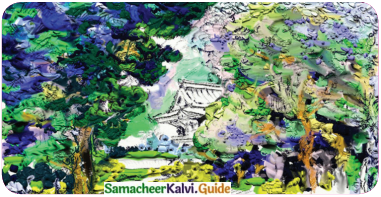
Samacheer Kalvi 7th English Guide Play Chapter 1 Jane Eyre 16
Painting (2) Snowy mountain:
The second painting of Jane Eyre shows the picture of snow capped mountains. The picture snows the scenic splendour of magical valley. This place appears to be a Paradise on Earth. While looking at the painting we can sense the pristine snowy landscape and the breath taking beauty of it. The place in the painting appears to be a blessed region with fresh air.
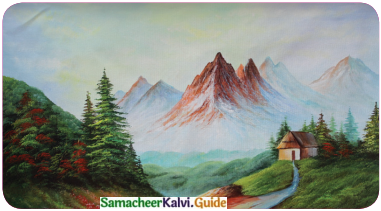
Samacheer Kalvi 7th English Guide Play Chapter 1 Jane Eyre 17
Painting (3) Land slide:
A collapse of a mass of earth or rock from a mountain or cliff is called land slide. Land slides are a type of mass wasting which denotes any down slope movement of soil and rock under the direct influence of gravity. Landslides are caused by rain, earthquakes, volcanoes or other factors that make the slope unstable.
Samacheer Kalvi 7th English Guide Play Chapter 1 Jane Eyre 18
Painting (4) Yacht in the sea:
Yacht in the painting is of old type. Yachts may be of different types. There are fishing boats, small boats, sailing yacht etc. A sailing ship uses sails mounted on one or more masts to harness the power of wind and propel the vessel.

Role Play

F. Put students into groups of three and let them act as Jane.

Student A: You are Jane. You live with the Reeds. Tell the other students about your life there.

My Parents died when I was very young. I do not even remember them. Mr. Reed has been my uncle. He liked me. He took me in his house. When he died he got a promise from Mrs. Reed to take care of me. The children of Mrs. Reed tortured me beyond the limit. They scolded me and hit me badly. Though I did nothing wrong Mrs. Reed abused me and locked me in red room. There I got frightened. I thought my uncle Mr. Reed visited me in the red room. I screamed and fainted. I became ill. The doctor told that I had been suffering with fever. Only Bessie, the servant maid showed me some concern and love. No one else. My childhood at the house of Mrs. Reed was a real hell and nothing else.

Student B: You are Jane. You have been at Lowood School for a few months. Tell the other students about your life there.

When I went to the school at Lowood I was not aware that it was charity school for orphans. I went there and met Miss. Temple and Miss. Miller, teachers of the school. Miss. Temple was really kind to me. I befriended Helen Bums. Unfortunately she got infection and died. Out of eighty students forty five of them fell ill at the same time. Half starvation and severe cold made the students ill. After this incident fell the school improved. I was there six years as a student and two years as a teacher.

Samacheer Kalvi 9th English Guide Prose Chapter 2 I Can’t Climb Trees Anymore

Student C: You are Jane. You are eighteen. You are going to work at Thornfield Hall as a teacher. Tell the other students about your hopes for your life.

After my laborious years in the school at Lowood, I became half desperate. I wanted liberty. So I advertised in The ‘Herald’ newspaper for situations. A week later I received a letter from Mrs.
Fairfax Thomfield. I left Lowood and went to Thomfield. Mrs. Fairfax was kind to me. I was anxious to see Miss. Fairfax. But Mrs. Fairfax said that she had no family. The house belonged to Mr. Rochester. His ward was Adela. Adela would be my pupil in future. Adela came running in the lawn in the morning. I saw her and talked to her. She looked beautiful. She said she liked dancing, singing and drawing. I started a new life as a governess in Thomfield.

After this, decide who is the unhappiest of the three ‘Janes’.
[Jane in the house of Mrs. Reed was the unhappiest moments of her life. Because she was too young and had no support to defend herself from violence.]

Reading (Text Book Page No. 147)

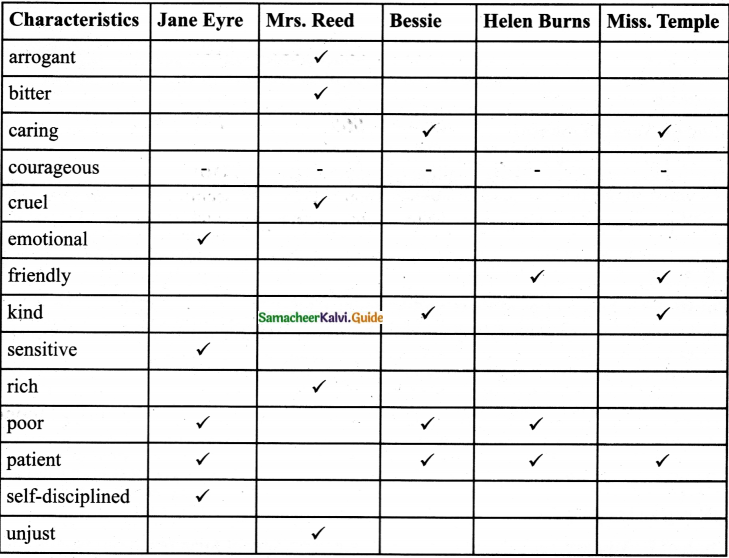
G. Read the story and fill in the grid by ticking each character’s qualities.

Discuss in pairs to rate the characteristic and give marks from 1 to 10 depending on the grade of each quality.
Justify your views in one or two sentences.
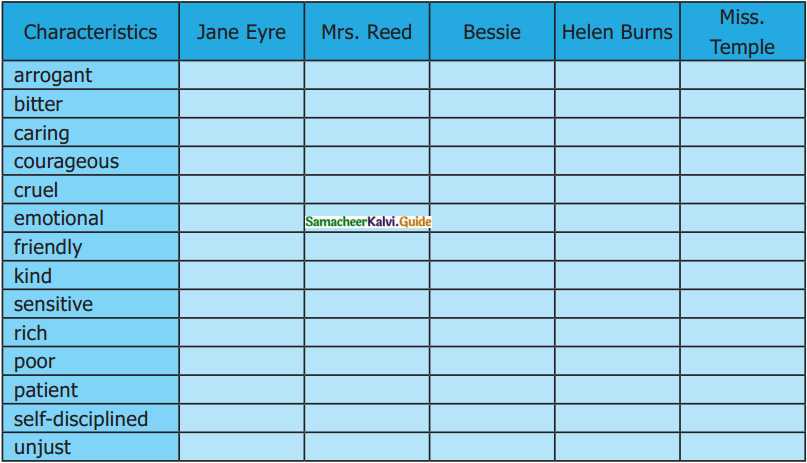
Samacheer Kalvi 7th English Guide Play Chapter 1 Jane Eyre 19
Answer:
Samacheer Kalvi 7th English Guide Play Chapter 1 Jane Eyre 20

Writing (Text Book Page No. 148)

H. Arrange the jumbled sentences and write a paragraph. Use appropriate conjunctions.

Jane Eyre had been an orphan. Mr. Reed, Jane’s uncle liked her but he died. Eventually. Jane was living with her aunt, Mrs. Reed. Mrs. Reed did not like Jane because Jane was not her, own daughter. Mr. Reed made Mrs. Reed promise to take care of Jane, but instead Mrs. Reed sent Jane away. When Jane was ten years old she was sent to Lowood school. There Jane got graduated. She stayed there as a teacher for two years. Afterwards she left for Thomfield, where she worked as a governess and she was happy there.

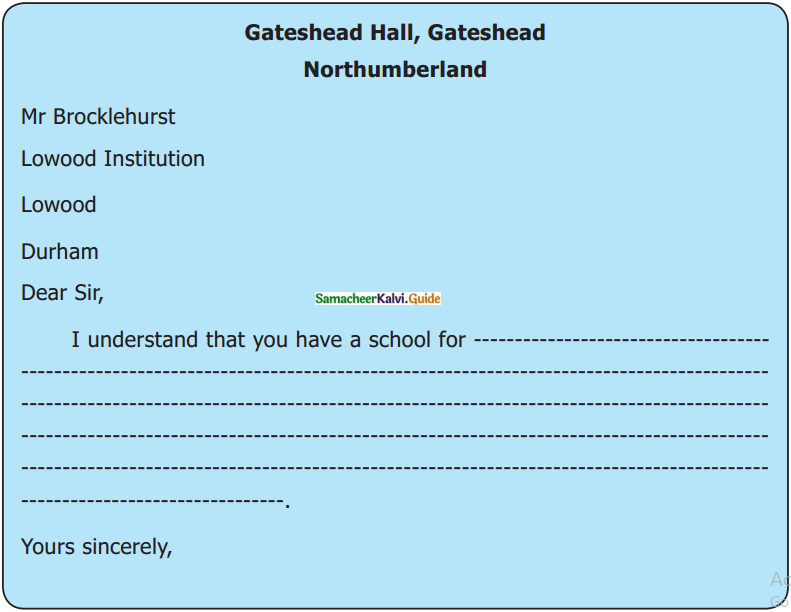
I. Read scene I. Discuss with your partner what Mrs. Reed might write about Jane in her letter to the owner of a school. Now complete her letter to Mr. Brockiehurst.
Samacheer Kalvi 7th English Guide Play Chapter 1 Jane Eyre 21
Answer:

Gateshead Hall, Gateshead
Northumberland

Mr. Brockiehurst
Lowood Institution
Lowood
Durham
Dear Sir,

I understand that you have a school for charity children at Lowood. Here we have an orphan named Jane Eyre in my custody. Kindly admit her in your school at Lowood. So that she can get education. Kindly help me and also the orphan child.

Thanking you,
Yours sincerely,
JMrs. Reed.

Grammar (Text Book Page No. 149)

J. Read the passage. Choose between a little, a lot of, a few, few, fewer, many and much to fill in the gap.

DON’T CALL US, WE’LL CALL YOU!

Two years ago, I moved to a new neighbourhood. There seemed to be very few people in this area without telephones, so I expected to get a new phone quickly. I applied for one as soon as I moved into my new house. ‘We aren’t supplying many new phones in your area’, an engineer told me. ‘A lot of people want new phones at the moment and the company is employing fewer engineers than last year so as to save money. A new phone won’t cost you much money, but it will take little time. We can’t do anything for you before December. ‘You need little patience if you’re waiting for a new phone and you need a few friends whose phones you can use as well. Fortunately, I had both. December came and went, but there was no sign of a phone. I went to the company’s local office to protest. ‘They told me I’d have a phone by December,’ I protested. ‘Which year?’ the assistant asked.

K. Read the Time Line of Harish. Write sentences using the present perfect tense.
Answer:
(for the Time Line see text book page – 149)

  • 1971 – Harish has been born in Madurai.
  • 1976 – Harish and his family have moved to Chennai.
  • 1993 – Harish has finished college and started working for Indian Oil.
  • 1996 – Harish has been promoted as a manager at Indian Oil.
  • 1997 – Harish has met Amina.
  • 2000 – Harish and Amina have got married.
  • 2001 – They have got a child.

L. Read the following passage and fill in the blanks with the correct form of the verb. (Text Book Page No. 150)

Where had I gone? What had I done?
What had I seen?

I had never seen (see) such beautiful sights before I visited Paris in 2012. I saved (save) money for five years before I booked my trip to Paris. I was very excited! Before my trip to Paris, I had never been (be) out of India.

When I went to Paris, I spent many days touring the city. The city was big. Sometimes I got lost and asked for directions. I asked for directions in French. That was easy because I had been studying (study) French for two years before I visited Paris.

By the time I left Paris, I toured (tour) many beautiful places. The Eiffel Tower, the Notre Dame Cathedral, and the Luxembourg Gardens were just a few of the places I saw. Before I visited Paris, I had only seen (see) those places on television. –

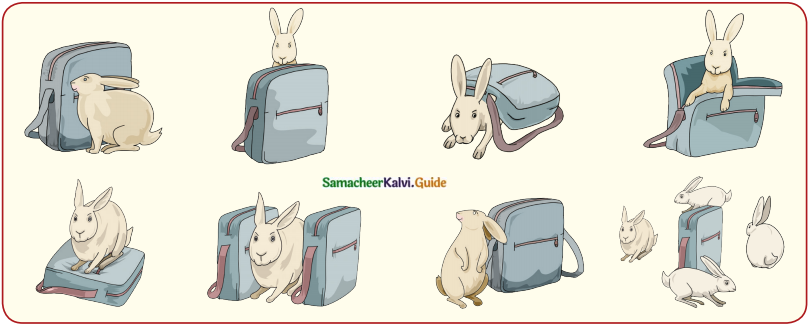
M. Look at the picture and write eight sentences using prepositions.
Where is the rabbit?
Samacheer Kalvi 7th English Guide Play Chapter 1 Jane Eyre 22

  1. The rabbit is behind the bag.
  2. The rabbit is in front of the bag.
  3. The rabbit is under the bag.
  4. The rabbit is in the bag.
  5. The rabbit is on the bag.
  6. The rabbit is in between the bags.
  7. The rabbit is beside the bag.
  8. The rabbit is around the bag.

Comparative and Superlative Survey

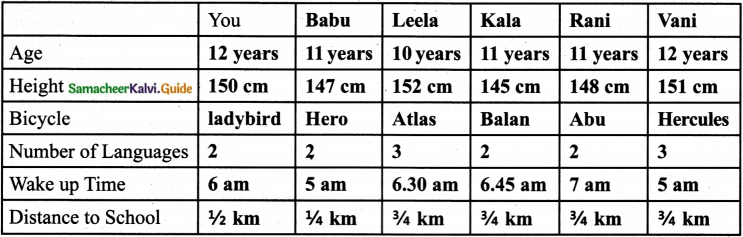
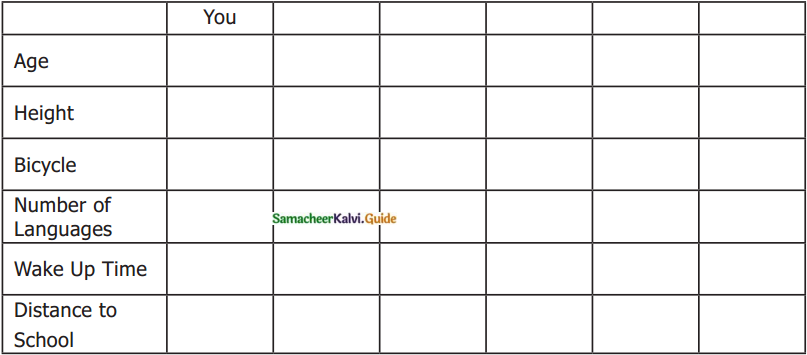
N. Answer the questions below. Write your answers in the second column of the table. (Text Book Page No. 151)

a. How old are you?
Answer:
12 years

b. How tall are you?
Answer:
5 feet

Samacheer Kalvi 9th English Guide Prose Chapter 2 I Can’t Climb Trees Anymore

c. What bicycle do you have?
Answer:
Ladybird

d. How many languages do you speak?
Answer:
2 languages

e. At what time do you usually wake up?
Answer:
6 Am

f. How far is your home from school?
Answer:
½ km
Samacheer Kalvi 7th English Guide Play Chapter 1 Jane Eyre 23
Answer:
Samacheer Kalvi 7th English Guide Play Chapter 1 Jane Eyre 24

O. Work in groups of six. Write the other students’ names at the top of the table. Interview each student using the above questions and complete the table with their answers.

When you have all the answers, use the results to write three comparative and three superlative sentences about the students in your group.

Examples:
I am the oldest in my group.
My bicycle is more colourful than Jane’s bicycle.

  1. I am older than Babu in my class.
  2. Leela is taller than Kala.
  3. Leela’s bicycle is more expensive than my bicycle.
  4. Leela speaks the highest number of languages in my class.
  5. Babu is the one who wakes up at the earliest hour in the morning.
  6. Babu’s house is the nearest house to my school.

Passive Voice (Text Book Page No. 152)

P. Read the following article about the amazing similarities between the assassination of John F. Kennedy and Abraham Lincoln; then underline the passive forms.

Abraham Lincoln was elected to Congress in 1846. Voters elected John. F. Kennedy to Congress in 1946.
Answer:
was elected

Samacheer Kalvi 9th English Guide Prose Chapter 2 I Can’t Climb Trees Anymore

Lincoln was elected president in 1860. Voters elected Kennedy president in 1960.
Answer:
was elected

Both men were particularly concerned with civil rights.
Answer:
were cocerned

Both wives lost their children while living in the White House.
Answer:
lost

Lincoln was shot on a Friday. Someone shot Kennedy on a Friday.
Answer:
was shot

Lincoln was shot in the head. The gunman shot Kennedy in the head.
Answer:
was shot

Lincoln’s secretary was called Kennedy. Kennedy’s secretary was called Lincoln.
Answer:
was called, was called

Lincoln was assassinated by a Southerner. A Southerner assassinated Kennedy.
Answer:
was assassinated

Lincoln was succeeded by a Southerner named Johnson. A Southerner named Johnson succeeded Kennedy.
Answer:
was succeeded

Andrew Johnson, who succeeded Lincoln, was born in 1808.
Answer:
was born

Lyndon Johnson, who succeeded Kennedy, was born in 1908.
Answer:
was born

John Wilkes Booth, who assassinated Lincoln, was born in 1839. Lee Harvey Oswald, who assassinated Kennedy, was born in 1939.
Answer:
was born

Both assassins were known by their three names and both names are composed of fifteen letters.
Answer:
were known, are composed

Lincoln was shot at a theatre named “Ford”. The gunman shot Kennedy in a car called a “Lincoln that the company Ford made.
Answer:
was shot

Booth ran from the theatre and was caught in a warehouse. Oswald ran from a warehouse and the police caught him in a theatre.
Answer:
was caught

Samacheer Kalvi 9th English Guide Prose Chapter 2 I Can’t Climb Trees Anymore

Booth was assassinated before his trial. Someone assassinated Oswald before his trial.
Answer:
was assassinated

Q. Reported Questions (Text Book Page No. 153)

1. Jane told Bessie that she would hide herself in the library with Uncle Reed’s book.
Answer:
Why did Jane tell Bessie that she would hide herself in the library with uncle Reed’s book?

2. John ordered Jane to come there when he called her.
Answer:
What did John order Jane?

3. Eliza asked Jane what she was doing then.
Answer:
What did Eliza ask Jane?

4. Mrs. Reed told Bessie to take her away to the red room and lock her in there.
Answer:
What did Mrs. Reed tell Bessie?

5. Miss. Temple asked Jane whether she could read and write.
Answer:
What did Miss. Temple ask Jane?

6. Miss. Miller asked Miss. Temple where she should put Jane.
Answer:
What did Miss. Miller ask Miss. Temple?

7. Jane asked Helen why they called it an institution.
Answer:
Why did they call the school an institution?

8. Helen asked Jane why she had come there.
Answer:
Why did you come here?

9. Jane asked Mrs. Fairfax whether she would have the pleasure of seeing Miss. Fairfax that night.
Answer:
Would I have the pleasure of seeing Miss. Fairfax this night?

Samacheer Kalvi 9th English Guide Prose Chapter 2 I Can’t Climb Trees Anymore

10. Miss. Adela told Jane that she could sing and dance also.
Answer:
Can you sing and dance?

Project

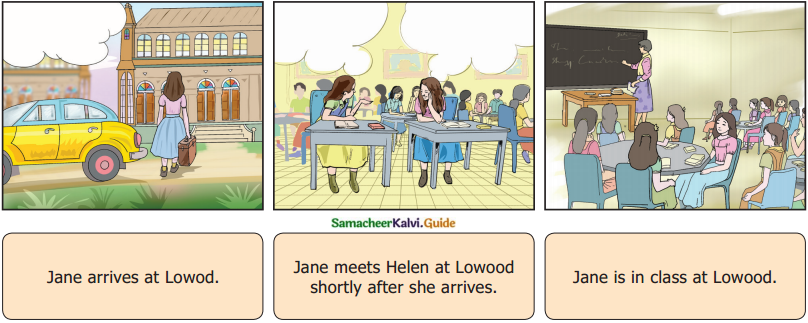
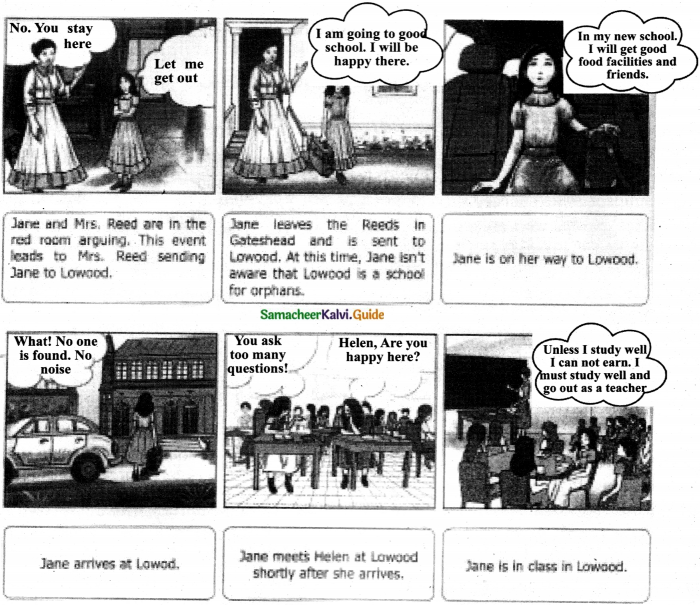
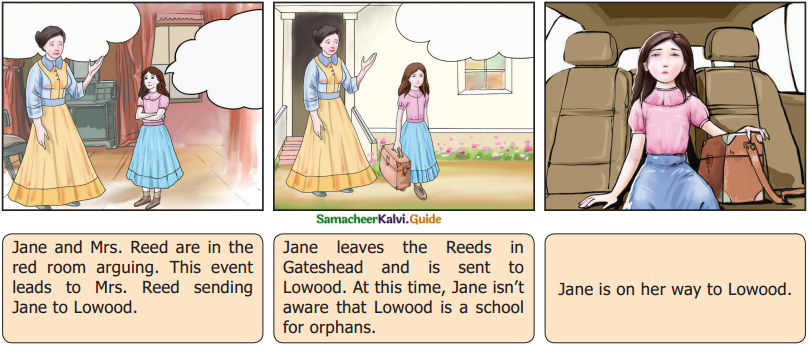
S. Look at the story board. Read the captions given under each frame. Fill the bubbles and complete the story board. (Text Book Page No. 154)
Create your own story board for the scene ’At Thornfield’.
Make a power point presentation using the story board.
Samacheer Kalvi 7th English Guide Play Chapter 1 Jane Eyre 25
Samacheer Kalvi 7th English Guide Play Chapter 1 Jane Eyre 26 Answer:
Samacheer Kalvi 7th English Guide Play Chapter 1 Jane Eyre 27

Jane Eyre Summary in English

The story of Jane Eyre tells the hardships of an orphan child who started her life as a governess in a rich family. Though she confronted with difficulties, She kept on her principles. At the end, she got a happy life to live ever after.

Jane Eyre Summary in Tamil

ஜேன் ஐயரின் கதை, அநாதையான ஒரு பெண் குழந்தையின் துயரங்கள் பற்றிக் கூறுகிறது. இந்த அநாதை பெண் ஒரு பணக்கார வீட்டில் குழந்தைகளைப் பார்த்துக் கொள்ளும் ஆயாவாக தன் வாழ்வை ஆரம்பிக்கிறாள். நிறைய துயரங்களைச் சந்திக்கிறாள். இருப்பினும் தன் நெறிமுறைகளை காத்துக் கொள்கிறாள். இறுதியில் அவளுக்கு மகிழ்ச்சியான வாழ்வு கிட்டுகிறது.

Jane Eyre About the Author in English

Jane Eyre is a novel written by an English novelist, poet, Charlotte Bronte. Her^ sisters Emily and Anne also were writers. Many of her novels including Jane Eyre had been converted to movies. The story of Jane Eyre came as a Tamil film named ‘Santhi Nilayam’.

Jane Eyre About the Author in Tamil

ஜேன் ஐயர் என்ற நாவல் ஆங்கில நாவல் ஆசிரியர், கவிஞர் சார்லட் பிரான்டியால் எழுதப்பட்டது. அவரது சகோதரிகள் எமிலி, ஆனி ஆகியோரும் எழுத்தாளர்கள் ஆவர். சார்லட்டின் நிறைய நாவல்கள் திரைப்படங்களாய் வெளிவந்துள்ளன. ஜேன் ஐயர், கதை, தமிழ் திரைப்படமாக சாந்தி நிலையம் என்ற பெயரில் வந்துள்ளது.
Samacheer Kalvi 7th English Guide Term 3 Prose Chapter 2 A Story of Self Sacrifice and Bravery

Tamilnadu State Board New Syllabus Samacheer Kalvi 7th English Guide Pdf Term 3 Prose Chapter 2 A Story of Self Sacrifice and Bravery Text Book Back Questions and Answers, Summary, Notes.

Tamilnadu Samacheer Kalvi 7th English Solutions Term 3 Prose Chapter 2 A Story of Self Sacrifice and Bravery

7th English Guide A Story of Self Sacrifice and Bravery Text Book Back Questions and Answers

Warm Up (Text Book Page No. 105)

Many people become engineers, doctors, IAS officers, film stars and soon. But few become “Human”. (Text Book Page No. 105)

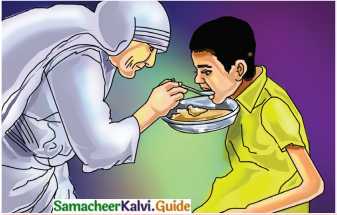
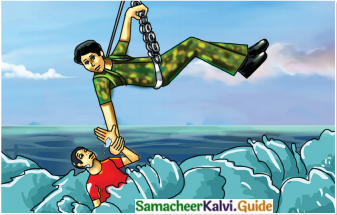
Look at the pictures.
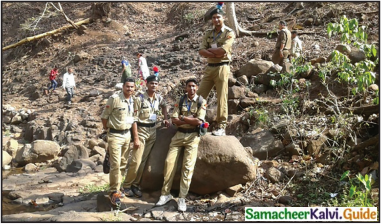
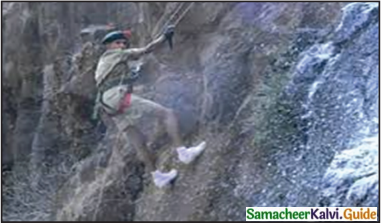
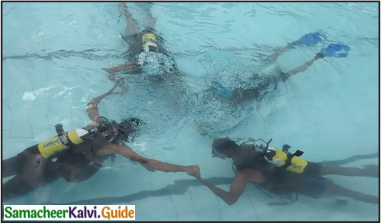
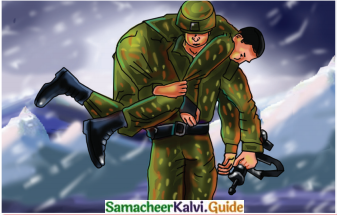
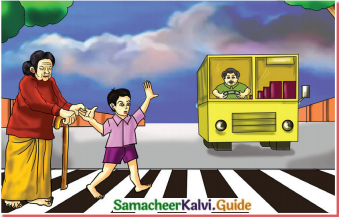
Samacheer Kalvi 7th English Guide Term 3 Prose Chapter 2 A Story of Self Sacrifice and Bravery 1Samacheer Kalvi 7th English Guide Term 3 Prose Chapter 2 A Story of Self Sacrifice and Bravery 2 Samacheer Kalvi 7th English Guide Term 3 Prose Chapter 2 A Story of Self Sacrifice and Bravery 3 Samacheer Kalvi 7th English Guide Term 3 Prose Chapter 2 A Story of Self Sacrifice and Bravery 4

Discuss and Answer.

1. What makes a personal hero?
Answer:
A hero is a person with distinguished courage and ability. He has brave deeds and noble qualities. He is selfless, good, and responsible.

2. How do heroes make a difference?
Answer:
Heroes are not bom but made. They are high achievers. They are great souls. The efforts they make keep them in the line of outstanding heroes.

Samacheer Kalvi 9th English Guide Prose Chapter 2 I Can’t Climb Trees Anymore

3. Does every hero have to fight or risk their life?
Answer:
Yes. The heroes take risks. They are selfless. They are willing to fight and bring reform. They face immense hardships. They fight against social evils and social injustice.

Think and Answer:

1. Can you think of a situation in which taking a small action would make a big difference?
Answer:
Feeding the hungry people, helping the needy men, sheltering the downtrodden people, educating the underprivileged children are small acts that can make big difference.

2. What about everyday heroes who do small but important acts?
Answer:
Firefighters, Social activists, men who help the society in natural disasters, Medical staff who treat the patients, people who guard our nation are real heroes in everyday life.

3. Are these people really heroes?
Answer:
Yes. People who create unforgettable impressions are real heroes. They work for the uplift and betterment of the nation. They risk their lives for the security of others. Such selfless people make the nation a blessed one. They are down to earth persons. They are strong but not rude. They are kind but not weak. They need not have superpowers. Still, they stand high as the makers of the nation.

Section – I

Textual Questions (Text Book Page No. 107)

Discuss and Answer:

1. How did Neerja save the Americans?
Answer:
Neerja Bhanot collected the passports of the Americans. She managed to hide their passports and discard them down the rubbish chute. With her help, 39 Americans out of 41 were saved.

Samacheer Kalvi 9th English Guide Prose Chapter 2 I Can’t Climb Trees Anymore

2. Why did Neerja alert the pilots?
Answer:
Neerja alerted the pilots using the code. The pilots made an escape. The plane could not move from its place without the pilots. So, she alerted them.

3. What happened when the terrorists lost their patience?
Answer:
The terrorists lost their cool and opened fire on the passengers.

Section – II

Textual Questions (Text Book Page No. 109)

Discuss and Answer:

1. Name the schools and colleges Neerja studied in.
Answer:
Neerja studied upto 6th std in Sacred Heart School, Chandigarh. In Mumbai, She studied at Bombay Scottish School. She got her degree in St.Xavier’s College, Mumbai.

2. Why was Neerja sent to London?
Neeija was sent to London to get training to be a purser in Pan Am airways.

Samacheer Kalvi 9th English Guide Prose Chapter 2 I Can’t Climb Trees Anymore

3. What is the duty of a purser?
Answer:
Pursers worked as managers on flights, handling passenger’s complaints, making required announcements and handling security.

Section – III

Textual Questions (Text Book Page No. 110)

Discuss and Answer:

1. Why was Neerja awarded the Asok Chakra?
Answer:
Neerja’s, bravery was acknowledged and rewarded. She was awarded the Ashok Chakra, India’s highest honour for bravery in peace time and she became the youngest civilian to receive it.

2. How was Neerja honoured by various governments?
Answer:
Indian Government gave Neerja Ashok Chakra.
American Government gave Neerja ‘Justice for Crimes Award’.
Pakistan Government gave her Tamgha-e-Insaniyat Award.

Samacheer Kalvi 9th English Guide Prose Chapter 2 I Can’t Climb Trees Anymore

3. What are the selection criteria for the Neerja Bhanot Pan Am award?
Answer:
The trust of Neerja Bhanot Pan AM gives an award to honour a flight crew member who acts beyond the call on duty. Another award is given to an Indian woman who overcomes social injustice and helps other women in similar social distress.

Think and Answer. (Text Book Page No. 111)

1. According to Neerja’s father, Neerja had well-defined principles and there was little room for compromise in that area. Do you have any principles where you don’t want to compromise?
Answer:
Yes, everyone should have his own principles, in avoiding the bad habit of telling lies, copying in the test, stealing the things of others in the class. Respecting the teachers and parents, obeying the elders must be the principles of all students.

Samacheer Kalvi 9th English Guide Prose Chapter 2 I Can’t Climb Trees Anymore

2. Virinda told the Indian Express that Neerja was a loyal friend. Are you always loyal to your friend?
Answer:
Yes. We must be loyal to our friends. We must share good books with our friends. We must help them in their needs. We must correct them if they are wrong. We must guide them when they are helpless.

3. Neerja would speak her mind, tell them the truth, according to one of her classmates Eliza. Do you always have the courage to stand for the truth?
Answer:
Mahatma Gandhi refused to say any lies in his ife. He was successful in his freedom struggle. Like him, people who are truthful will always win even if they come across some difficulty in their efforts. A truthful person has a free conscience and a brave heart. He has no fear.

Read and Understand

A. Fill in the blanks.
1. The terrorists asked Neerja to collect the passports of the passengers because …………………………
Answer:
they wanted to target the Americans

2. Neerja passed on the warning in a code to the pilots because she ………………………….
Answer:
wanted them to escape

Samacheer Kalvi 9th English Guide Prose Chapter 2 I Can’t Climb Trees Anymore

3. Neerja leapt into action when she ………………………….
Answer:
saw the danger

4. Neerja had a sour marriage due to ………………………….
Answer:
dowry harassment

5. Neerja was sent to London based on ………………………….
Answer:
performance and review

B. Think and write.

1. “I will die; but not run away” – Justify the saying of Neerja.
Answer:
Yes. Neerja Bhanot had been true to her words. She could have run away for She knew the escape routes well. But She died not ran away.

2. Why did the three governments of – India, America, and Pakistan – honour Neerja?
Neerja Bhanot had been an Indian. So the Indian government honoured her. The hijacking incident took place on the soil of Pakistan. So the Pakistan Government honoured her. Neerja Bhanot protected the Americans when the terrorists wanted to target the Americans. So the government of America honoured her.

3. How can we abolish terrorism?
Answer:
The unemployed youth are misguided to join terrorist movements. The rural youth and youth on the hill ranges have to be employed. Security in the country must be screwed up. Vigilant survillence throughout the country must get more tightened. These are some of the measures to abolish terrorism.

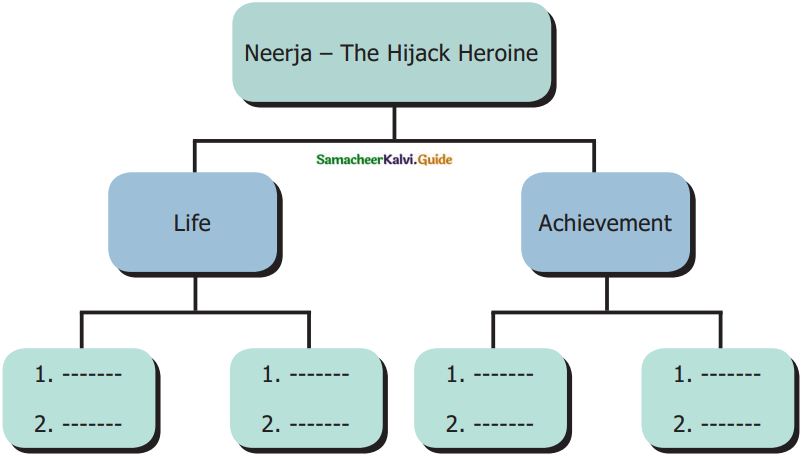
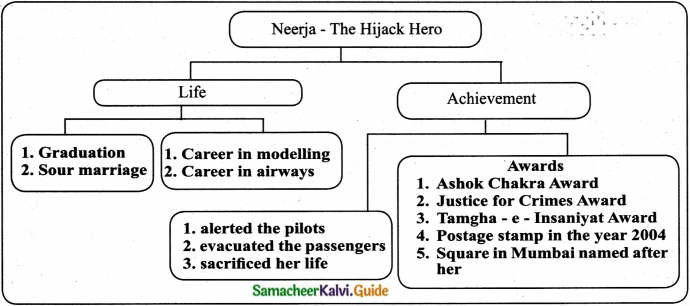
C. Read the “Story of Self Sacrifice and Bravery” Once again and complete the flow chart.
Samacheer Kalvi 7th English Guide Term 3 Prose Chapter 2 A Story of Self Sacrifice and Bravery 5

D. Write a summary based on the flow chart.
Neerja Bhanot sacrificed her life in an attempt to hijack the plane. After graduation, she had a sour marriage. So she left her husband and took her career. She had been in modelling first. Then she became the cabin manager. When the plane was hijacked she alerted the pilots to escape. The plane could not move. She tried to evacuate the passengers. The terrorists opened fire. She died with the injury inflicted by bullets. She was given Ashok Chakra Award, Justice for Crimes Award, Tamgha-e-Insaniyat Award. In the year 2004, the postage stamp was issued. A square in Mumbai was named after Neerja Bhanot.

Vocabulary

E. Fill in the blanks with appropriate airline vocabulary given in the box.
Samacheer Kalvi 7th English Guide Term 3 Prose Chapter 2 A Story of Self Sacrifice and Bravery 7

1. You must present the boarding pass at the gate.
2. It might be a turbulent ride because we are flying through a storm.
3. If you need anything just press the call flight.
4. The captain and the co-pilot set in the cockpit.
5. Gate 3B is down this hall and to your right.
6. We will be landing in Chennai in approximately ten minutes.
7. The plane almost missed the bumpy because it was such a bad storm.
8. We are next in line to touch down on this run way.
9. That was a very smooth take-off.
10. This runway should only last a few minutes.

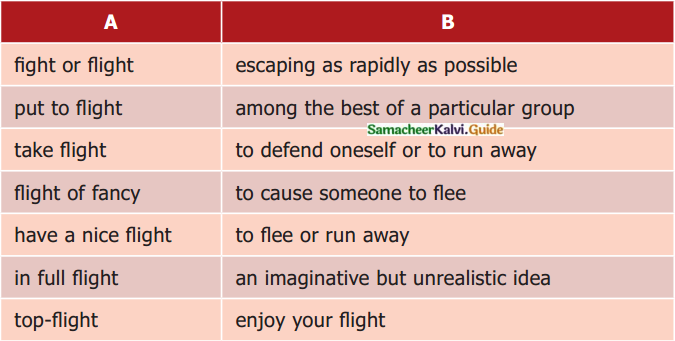
F. Match the phrasal verbs in column A with their meaning in Column B.
Samacheer Kalvi 7th English Guide Term 3 Prose Chapter 2 A Story of Self Sacrifice and Bravery 8
Answer:

AB
fight or flightto defend oneself or to run away
put to flightto cause someone to flee
take flightto flee or run away
flight of fancyan imaginative but unrealistic idea
have a nice flightenjoy your flight
in full flightescaping as rapidly as possible
top-flightamong the best of a particular group

G. Find out the anagrams. Use each pair of phrases as clues. (Text Book Page No. 114)

1. The past tense of a leap
Answer: leaped
Something to serve food on
Answer: Plate

2. A place to grow flowers
Answer: garden
Something to be careful of
Answer: danger

Samacheer Kalvi 9th English Guide Prose Chapter 2 I Can’t Climb Trees Anymore

3. Another word for under
Answer: below
A part of your arm
Answer: elbow

4. Try to hear
Answer: listen
Another word for quiet
Answer: silent

5. Another word for gift
Answer: Present
A large snake or a dragon
Answer: serpent

6. Minutes and hours
Answer: Time
A thing on a list
Answer: item

7. An organ that pumps blood
Answer: heart
The planet we live on
Answer: earth

8. Something used to water plants
Answer: hose
A thing you put on your foot
Answer: shoe

Listening

H. Listen to the announcements and answer the questions (Text for listening is in page number -155)

H. Announcement-1

1. What is the number of the flight?
Answer:
Flight 89 B is the number of flight

2. What are the things to be kept ready?
Answer:
Boarding pass and identification must be kept ready.

Samacheer Kalvi 9th English Guide Prose Chapter 2 I Can’t Climb Trees Anymore

3. When will the regular boarding begin?
Answer:
Regular boarding will begin in ten minutes.

Announcement – 2

1. For whom is the final boarding call?
Answer:
The final boarding call is for the passengers, Alex and Ruskin

2. Where should the passengers proceed?
Answer:
The passengers should proceed to gate 3 immediately.

3. Where is the flight to?
Answer:
The plane goes to New Delhi.

Announcement – 3

1. When will the flight be in the air?
Answer:
They expect the flight will be in the air in seven minutes.

2. What are the things that should be turned off?
Answer:
Cell phones, electronic devices should be. turned off while take off.

3. What is prohibited during the flight?
Answer:
Smoking is prohibited during the flight.

Speaking

J. Imagine that your are going to interview one of the survivors of the Pan Am Hijack. Discuss with your partner and write down the conversation. Then one of you play the role of the interviewer and other the survivor. You can use the sample questions given below. (Text Book Page No. 116)

1. Do you have any information regarding the suspects of the hijack?
Answer:
The hijackers wanted to fly to Israel and crash the plane against a building.

2. Which countries did the passengers belong to?
Answer:
The passengers were from many countries.
There were Indians, Germans, Americans, Pakistanis among others.
Note: There is no reference about the nationality of the hijackers in the lesson. So, this question is given wrongly.
Here we have the corrected question above.

3. What are the details of the hijacked flights?
Answer:
The aircraft Pan Am 73 was with 360 Passengers on board. It came from Mumbai. Its destination was the United States. It had been parked at Karachi airport. At that time, armed terrorists hijacked the plane.

4. How many passengers were on board?
Answer:
360 passengers were on board.

5. What happened in the last few minutes of the hijack drama?
Answer:
After 17 hours the plane ran out of power. The terrorists opened fire at the passengers. They raised hell on board. Neeija tried to evacuate the passengers.

6. Do you have information regarding the victims?
Answer:
No information of the victims is given in the book.

Samacheer Kalvi 9th English Guide Prose Chapter 2 I Can’t Climb Trees Anymore

7. Was there any recorded communication to/from the plane during the hijacking?
Answer:
Usually, the voice recorder records the communication and it is inside the black box. The black box is kept in the tail of an aircraft. From the black box, some recorded communication during the hijacking could have obtained.

8. How many terrorists were there?
Answer:
There were four terrorists. ,

9. How did you feel when you were on the flight?
Answer:
I felt terrible. I was scared and felt hell.

10. Can you recall Neerja’s role in safeguarding the passengers?
Answer:
The service of Neeija was selfless and noble. She had been heroic, fearless, alert, and sensible. The braveheart sacrifices her life in the service of others.

Use Grammar

L. Discuss with your partner and Punctuate the following. (Text Book Page No. 117)

1. the woman said to the student please help me cross the street
Answer:
The woman said to the student, “Please help me cross the street.”

2. sarathy said oh how thrilling it was
Answer:
Sarthy said, “Oh! How thrilling it was!”

Samacheer Kalvi 9th English Guide Prose Chapter 2 I Can’t Climb Trees Anymore

3. the teacher said to the students where do you want to go
Answer:
The teacher said to the students, “Where do you want to go?”

4. i am tired mohana said to her aunt
Answer:
“I am tired,” Mohana said to her aunt.

5. shankar said to his teacher madam I had prepared my project assignment but i forgot to bring it
Answer:
Shankar said to his teacher, “Madam, I had prepared my project assignment but I forgot to bring it.”

M. Complete the sentences in reported speech. (Text Book Page No. 117)

1. “It is too late,” I said that it ………………. too late.
Answer:
was

2. “I met you yesterday.” Sam told me that he had met me ………………..
Answer:
the previous day

Samacheer Kalvi 9th English Guide Prose Chapter 2 I Can’t Climb Trees Anymore

3. “I cannot come,” Mala said that ………………..
Answer:
she could not come.

4. I will pay tomorrow. “He said that he would pay ………………..
Answer:
the next day.

5. The Himalayas are the highest mountain ranges. He knew that the Himalayas ………………. the highest mountain ranges.
Answer:
are

6. I may lend you some money.” Balu Promised ………………. some money.
Answer:
to lend me

7. I have been watching a film.” He said that ………………. a film.
Answer:
he had been watching

8. I have not done it today.” I explained that I had not done it ………………. .
Answer:
that day.

9. I was with him last week.” Jimmy told that ………………. with him the previous week.
Answer:
Jimmi had been

Samacheer Kalvi 9th English Guide Prose Chapter 2 I Can’t Climb Trees Anymore

10. I will finish this picture tomorrow.” Jothi said that ………………. picture the next day.
Answer:
he would finish that

N. Read the following dialogue and report it.

Betty : What are you doing here, Kitty? I haven’t seen you since June.
Kitty : I’ve just come back from my holiday in Darjeeling.
Betty : Did you enjoy it?
Kitty : I love Darjeeling. The landscape is amazing.
Betty : Did you go to Lloyd’s Botanical Garden?
Kitty Yes, It was my first trip. I can show you some pictures. Are you doing anything tomorrow?
Betty : I must arrange a couple of things. But I am free tonight.
Kitty : You might come to my place. What time shall we meet?
Betty : I’ll be there at eight. Is it all right?

Betty asked Kitty how she was doing there. And she added she had not seen Kittv since June. Kitty explained that she had just come back from her holiday in Darjeeling. Betty asked if she enjoyed it. Kitty told her that she loves Darjeeling and that the landscape is amazing Betty wanted to know if Kittv had gone to the Lloyd’s Botanical Garden. Kitty said that it was her first trip and that she could show some pictures. And then she asked her if she was free that night Betty explained that she must arrange a couple of things. But she added that she was free that night. Kitty suggested that Betty should come to her place and asked her at what time she would be there Betty said she would be there at eight. And finally, she asked if it was all right.

Writing

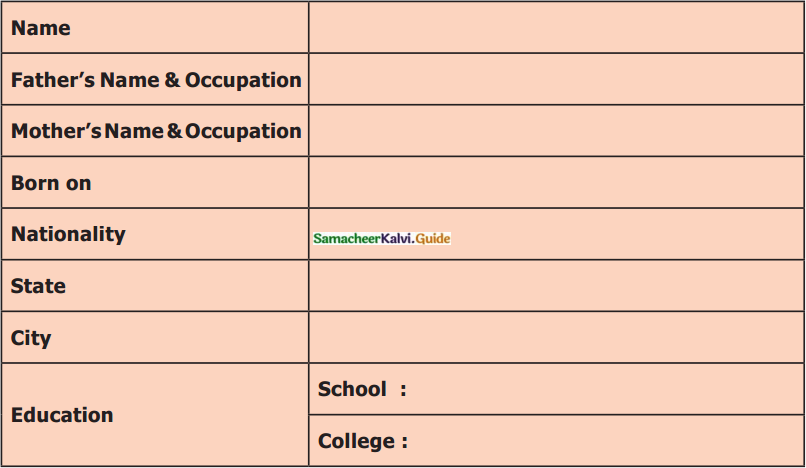
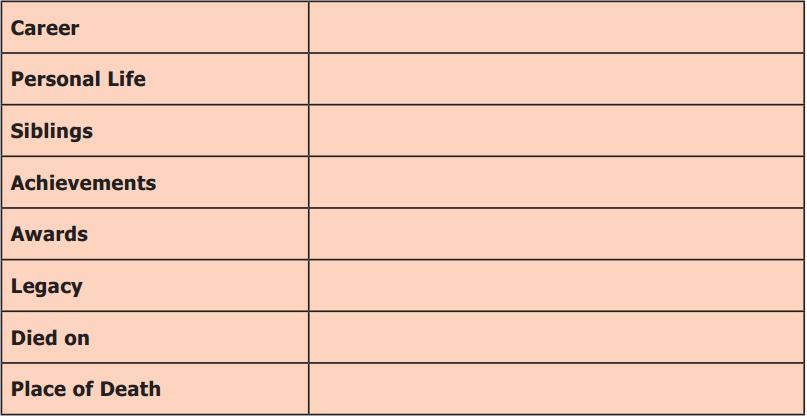
O. Read the story of Neerja Bhanot. Make notes based on the table and complete it.
Samacheer Kalvi 7th English Guide Term 3 Prose Chapter 2 A Story of Self Sacrifice and Bravery 9
Samacheer Kalvi 7th English Guide Term 3 Prose Chapter 2 A Story of Self Sacrifice and Bravery 10
Answer:

NameNeerja Bhanot
Father’s Name & OccupationHarish Bhanot, Journalist
Mother’s Name & OccupationRama Bhanot, Journalist
Born on7.9.1963
NationalityIndian
StatePunjab
CityChandigarh
EducationSchool: Sacret Heart High School, Chandigarh
College: St. Xavier’s College, Bombay Scottish School Mumbai.
CareerModelling, Purser in Pan Am air ways
Personal LifeMarriage had been a disaster – she left her husband
SiblingsShe had two brothers, named Akil, Aneesh
AchievementsShe became the senior most cabin manager in Pan Am airways
AwardsAshok Chakra, Justice for crimes award, Tamgha – e- Insaniyat award
LegacyTrust formed for two awards every year.
Died on5.9.1986
Place of DeathKarachi airport, in the hijacking tragedy

Creative Writing

P. Heroes are ordinary people who do extraordinary things.” Write an anecdote on the extraordinary deed of Jaiswal K.P. who helped in the recent Kerala Flood. Use the tips given in the box. (Text Book Page No. 120)
Samacheer Kalvi 7th English Guide Term 3 Prose Chapter 2 A Story of Self Sacrifice and Bravery 11

An anecdote is a brief, revealing account of an individual person or an incident. Consider these questions to write an anecdote.

1. Who was involved in the story?
Answer:
Jaiswal. K.P. was involved in the story.

2. What, when, where happened?
Answer:
In the year 2018 August there was severe flood in Kerala due to high rainfall. 483 people died. 140 people were said to be missing. Due to flood, there were landslides 1,50,000 people were evacuated. Several districts were isolated. Traffic became impossible. Coastel areas were submerged.

3. How is it relevant?
Answer:
J.P. Kaiswal is a resident of Tanur. He helped an elderly woman step into an, inflatable boat. The fishermen and local residents helped the victims of flood to a great extent.

A Story of Self Sacrifice and Bravery Summary in English

A Plane, PAN Am Flight 73 was hijacked at Karachi airport by the terrorists. Neerja Bhanot tried to save the people. She made the pilots escape. She evacuated many passengers. She was hit by the bullets of the terrorists and she died.

Neeraja Bhanot had a sour marriage. So she left her husband. She became the senior most cabin manager.

The act of bravery was acknowledged and rewarded by Indian, Pakistanian and American governments. She was given Ashok Chakra award. She got ‘Justice for Crimes Award’ posthumously.

She received the Tamgha – e- Insaniyat award.
A trust is formed by her parents. A postage stamp was issued in her honour. In India, a square in Mumbai was named after her –

A Story of Self Sacrifice and Bravery Summary in Tamil

PAN AM Flight 73 என்ற விமானம் கராச்சி விமான நிலையத்தில், தீவிரவாதிகள் கட்டுப்பாட்டுக்குள் வந்தது. நீரஜா பானட் பயணிகளை காக்க விரும்பினாள். பைலட்கள், வெளியேறி தப்பிக்கும்படி செய்தாள். பல பயணிகளை விமானத்திலிருந்து தப்பிக்க வைத்தாள். தீவிரவாதிகளின் துப்பாக்கி குண்டில் பலியாகி இறந்தாள்.

நீரஜா பானட்டின் திருமணம் கசப்பானது. எனவே கணவன் வீட்டை துறந்தாள். மூத்த கேபின் மானேஜராய் விமானக் கம்பெனியில் பணி புரிந்தாள்.

அவளது வீரச் செயல், இந்திய பாகிஸ்தானிய, அமெரிக்க அரசுகளால் கௌரவிக்கப்பட்டது. அவளுக்கு அசோக சக்கரா விருது கிடைத்தது. ‘குற்றங்களுக்கு நீதி’ என்ற விருதும் மரணத்திற்கு பின் கிடைத்தது. தம்கா-இ-இன்சாட் யாட் விருதும் கிடைத்தது. அவளது பெற்றோரால் ஓர் அறக்கட்டளை தொடங்கப்பட்டது. நீரஜாவை கௌரவிக்க தபால் தலை இந்தியாவில் வெளியிடப்பட்டது. மும்பையில் ஒரு சதுக்கம் அவள் பெயரால் விளங்குகிறது.

Samacheer Kalvi 7th English Guide Term 3 Prose Chapter 1 Journey by Train

Tamilnadu State Board New Syllabus Samacheer Kalvi 7th English Guide Pdf Term 3 Prose Chapter 1 Journey by Train Text Book Back Questions and Answers, Summary, Notes.

Tamilnadu Samacheer Kalvi 7th English Solutions Term 3 Prose Chapter 1 Journey by Train

7th English Guide Journey by Train Text Book Back Questions and Answers

Warm Up (Text Book Page No. 79)

Work in Pairs. Choose six items which are essential for a camp. Rank their priority and justify your answer. (Text Book Page No. 79)

Samacheer Kalvi 7th English Guide Term 3 Prose Chapter 1 Journey by Train 1
1. Wrist watch – We should keep up punctuality in the camp. Hence we need the watch.

Samacheer Kalvi 7th English Guide Term 3 Prose Chapter 1 Journey by Train 2
2. Torch light – When the current fails we need the torch.

Samacheer Kalvi 7th English Guide Term 3 Prose Chapter 1 Journey by Train 3
3. Candle – If the battery in the torch light does not help us we are in need of candle.

Samacheer Kalvi 7th English Guide Term 3 Prose Chapter 1 Journey by Train 4
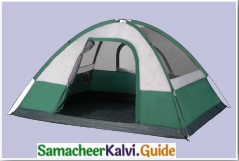
4. Tent – Tent is essential for staying in the forests.

Samacheer Kalvi 7th English Guide Term 3 Prose Chapter 1 Journey by Train 5
5. Guide book – The guide book tells us the directions to be followed in the camp. So it is essential.

Samacheer Kalvi 7th English Guide Term 3 Prose Chapter 1 Journey by Train 6
6. Stove – If we are in need of hot water for drinking and bathing we need a stove.

Samacheer Kalvi 7th English Guide Term 3 Prose Chapter 1 Journey by Train 7
7. Cellphone – When we have a cellphone we are at zero km distance with our friends and parents.-

Samacheer Kalvi 7th English Guide Term 3 Prose Chapter 1 Journey by Train 8
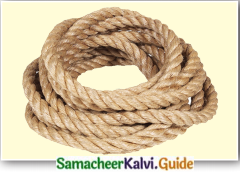
8. Rope – Rope is useful in trekking, tenting and in many other activities.

Samacheer Kalvi 7th English Guide Term 3 Prose Chapter 1 Journey by Train 9
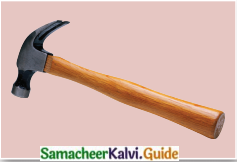
9. Hammer – If we have the hammer we can have nailing easily.

Section – II

Textual Questions (Text Book Page No. 83)

Discuss and answer

1. Why did the train stop in the middle of the forest?
Answer:
There were no railways laid for fifty miles from Kholby to Allahabad. So the train stopped.

Samacheer Kalvi 9th English Guide Prose Chapter 2 I Can’t Climb Trees Anymore

2. Why was Sir Francis angry?
Answer:
The tickets were sold covering the distance from Bombay to Calcutta. The papers also announced the opening of the railway throughout. The papers were mistaken. So, Sir Francis was angry.

Section – III

Textual Questions (Text Book Page No. 85)

Discuss and answer:

1. Which mode of transport did Fogg choose?
Answer:
Mr. Fogg chose to travel by elephant.

2. Did he hire Kiouni? Why?
Answer:
Mr. Fogg wanted to hire Kiouni. Since the owner of the elephant refused, for it. he purchased the elephant.

3. Why was the elephant owner happy with the deal?
Answer:
The owner sold the elephant at the excessive sum of 2,000 pounds. So he was happy.

Read and Understand (Text Book Page No. 86)

A. Fill in the table.
Samacheer Kalvi 7th English Guide Term 3 Prose Chapter 1 Journey by Train 10
Answer:

Problems Faced By Mr. Fogg And His Team.Solution
The train stopped in the middle of the forest.The passengers found out their own conveyance.
They couldn’t hire the elephant.The owner of the elephant refused to hire the elephant for the group of Mr. Fogg. So the elephant was purchased.
They were in need of an elephant driver.The young man offered his service as guide to Mr. Fogg.

B. Answer the questions briefly.

1. Who inhabited the jungles that the train passed through?
Answer:
Snakes, tigers, and elephants inhabited the jungles that the train passed through.

Samacheer Kalvi 9th English Guide Prose Chapter 2 I Can’t Climb Trees Anymore

2. What was the reaction of the inhabitants?
Answer:
The elephants stood gazing with sad eyes at the train as it passed. This was the reaction of the elephants.

3. What did Mr. Fogg mean by, ‘it was foreseen’?
Answer:
Mr. Fogg meant that some difficulty or the other would sooner or later arise on his route.

4. Describe the elephant driver in your own words.
Answer:
The elephant driver was a young man. He appeared to be intelligent. He voluntarily came forward to help Mr. Fogg as his guide in the forest. He was a skilled person. He equipped the elephant. His zeal was increased with the promise of a good reward from Mr. Fogg.

C. Think and Answer.

1. What qualities of Mr. Phileas Fogg are highlighted in this extract? Support your answer with suitable examples.
Answer:
Mr. Phileas Fogg was a rich, English man. He was a member of the Reform Club of London. He orders his life precisely by the clock and makes a bet with fellow club members that he can travel around the world in 80 days. He travels with his French servant Passepartout. He is a precise and intelligent man. He is perfect in his manners and is very punctual as well as particular about what he wants. This is evident in this extract when he is determined to travel to Allahabad as planned. He even goes to the extent of purchasing an elephant for 2000 pounds to continue his travel to Allahabad. These qualities of Mr: Fogg are highlighted in his extract.

Vocabulary

D. Fill in the blanks with correct travel words.
Samacheer Kalvi 7th English Guide Term 3 Prose Chapter 1 Journey by Train 11

To make travel convenient, we must book tickets well in advance. Then we have to pack our things and schedule our trip. We have to reach the railway station in time and board the train in order to reach our destination.

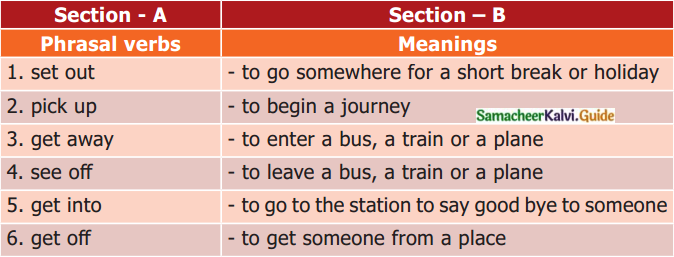
E. Match the phrasal verbs with their meanings.
Samacheer Kalvi 7th English Guide Term 3 Prose Chapter 1 Journey by Train 12
Answer:

Section – ASection – B
Phrasal VerbsMeanings
1. set out– to begin a journey
2. pick up– to get someone from a place
3. getaway– to go somewhere for a short break or holiday
4. see off– to go to the station to say goodbye to someone
5. get into– to enter a bus, a train, or a plane
6. get off– to leave a bus, a train, or a plane

F. Dictionary Task. (Text Book Page No. 87)

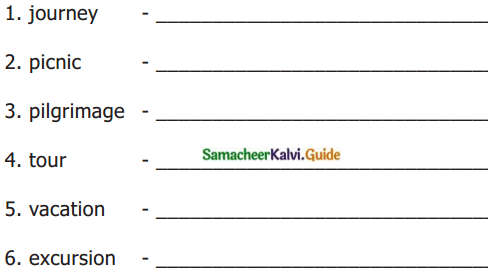
Refer to a dictionary. Find the meaning of the following words and write them down.
(Text for listening is on page number – 155)
Samacheer Kalvi 7th English Guide Term 3 Prose Chapter 1 Journey by Train 13
Answer:
1. journey – an act of travelling.
2. picnic – an occasion when a packed meal is eaten outdoor.
3. pilgrimage – Journey to a sacred place for a religious reason.
4. tour – a journey for pleasure
5. vacation – a fixed holiday period
6. excursion – a short journey took as a leisure activity.

Listening

G. Listen to the teacher reading the Weather forecast and complete the report.

Name of the Cyclone is Gaja. It may affect the places in north Tamil Nadu and Puducherry. Heavy rains are expected on Nov 14th and 15th Nov. It is 880 km away from Nagapattinam.

Speaking (Text Book Page No. 88)

H. Your family has decided to go on a tour during the vacation. You are calling a travel agency and seeking information regarding package, places of visit cost, etc. Work in pairs and role play as a receptionist and a customer.

Receptionist – Good morning Sir. How can I help you?
Customer – Good morning. I am in need of some information.
Receptionist – Well sir. Tell me
Customer – My family wants to go on a tour.
Receptionist – Fine Sir. What is your estimate for the tour?
Customer – Five thousand per head.
Receptionist – Then you can go to Bangalore and Mysore.
Customer – How many days of trip is it?
Receptionist – Three days sir. Two days at Bangalore and one full day at Mysore.
Customer – What are the places to be visited?
Receptionist – Lai Bah, Visvesraiya museum, Cubbon park, Bannerghatta, Biological Park, Hilltop sunset, Nandi Hills, Tippusultan Summer place, St. Philomena Church, Brindavan, Zoo at Mysore, Mysore Maharaja Palace, etc will be the places to be visited.
Customer – Is it a package tour?
Receptionist – Yes sir. Travelling expenses like to stay at hotels on nights, local bus fare, tickets at tourist spots all are included in the package.

Textual Grammar (Text Book Page No. 88)

I. Rewrite the story in the past tense. (Text Book Page No. 90)

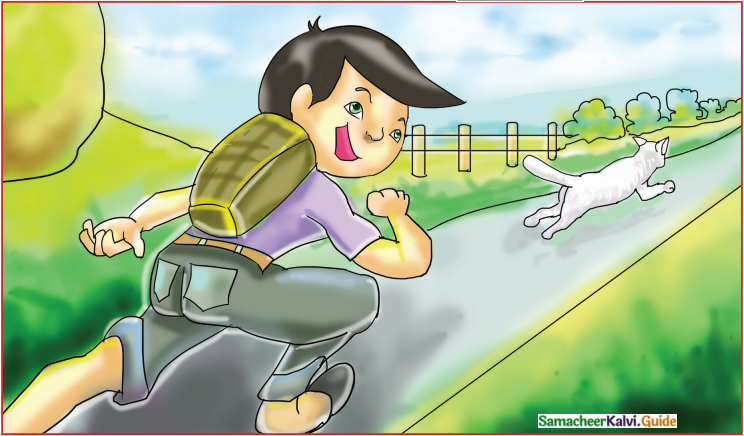
The boy chases a cat. The cat climbs up the tree and purrs from the branch of the tree. The cat jumps to another tree. The boy who is chasing the cat notices a snake under the tree. He leaves his attempt to catch the cat and he runs home screaming for help.
Samacheer Kalvi 7th English Guide Term 3 Prose Chapter 1 Journey by Train 14
Answer:
The boy chased a cat. The cat climbed UP the tree and purred from the branch of the tree. The cat jumped to another tree. The boy who was chasing the cat noticed a snake under the tree. He left his attempt to catch the cat and he ran home screaming for help.

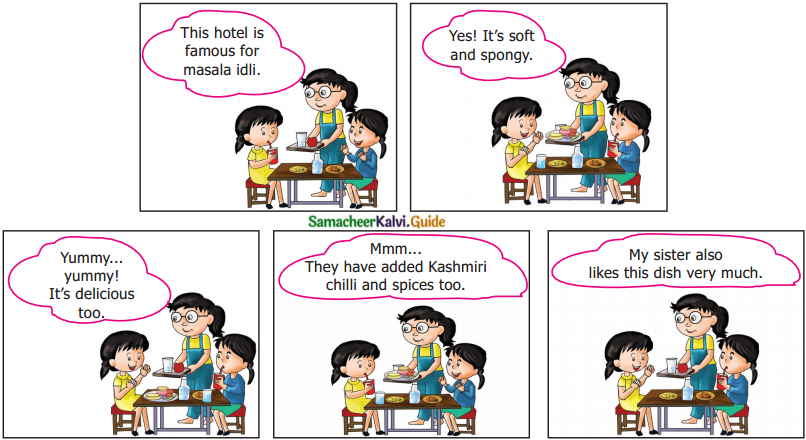
J. Look at the picture and complete the following.
Samacheer Kalvi 7th English Guide Term 3 Prose Chapter 1 Journey by Train 15

Nila told Miruthula that the hotel was famous for masala Idli. Miruthula said that the idly was soft and spongy. Nila exclaimed yummy, yummy. It was delicious too. She also said that they had added Kashmiri chili and spices too. Miruthula said that her sister also liked the dish very much.

Writing

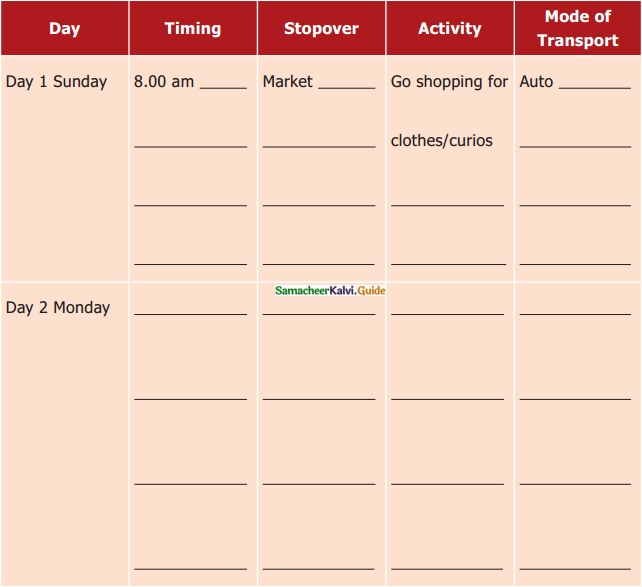
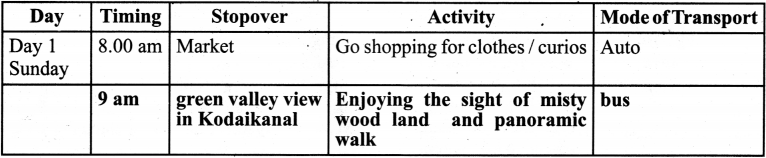
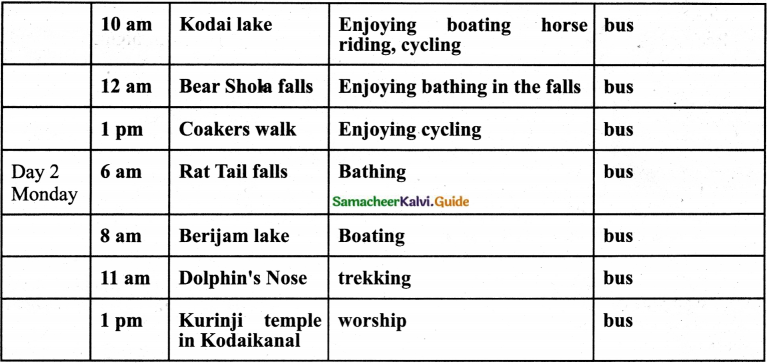
K. Your friend is coming to your city/town to spend a week with you. He/she wants to visit some tourist places and enjoy the special food items of the place. Prepare a two-day itinerary for the visit.
Samacheer Kalvi 7th English Guide Term 3 Prose Chapter 1 Journey by Train 16
Answer:
Samacheer Kalvi 7th English Guide Term 3 Prose Chapter 1 Journey by Train 17
Samacheer Kalvi 7th English Guide Term 3 Prose Chapter 1 Journey by Train 18

Creative Writing (Text Book Page No. 91)

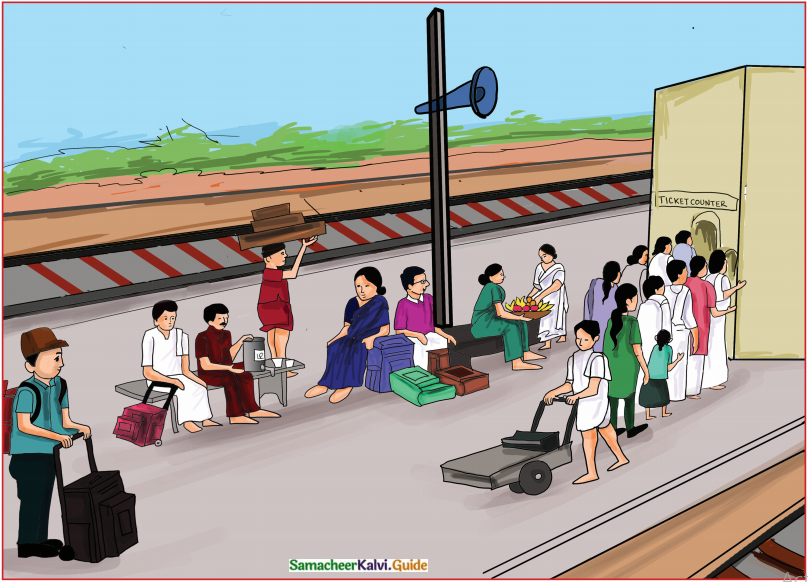
L. You are waiting to board a train at a railway station. The train is delayed by an hour. Write a paragraph about the crowded scene in the railway station based on your observation.
Samacheer Kalvi 7th English Guide Term 3 Prose Chapter 1 Journey by Train 19
Samacheer Kalvi 7th English Guide Term 3 Prose Chapter 1 Journey by Train 20

The railway station is a place of activity. We can see many people on the platform. Some wait for the train to arrive. Some stand in a queue at the ticket counter to get their train tickets. There are vendors on the platform. Here we see a fruit vendor. She sells bananas. There are porters. They help the people in carrying their luggage to the train. There are railway tracks find on either side of the platform. There is a loudspeaker to give the announcements. There is a railway worker working On the platform with his scroll board. There is a tea vendor with his tea can. Many people travel with their families. They may be going to attend marriages or some other purpose. We see piles of luggage on the platform. The modem way is to use trolley bags as our luggage.

Journey by Train Summary in English

An Englishman, Mr. Phileas Fogg, and his attendant Passepartout attempt to go round the world in eighty days, one wager of $ 20000 set by his friends at the Reform Club. They travelled on a train from Bombay to Calcutta Via Surat. The train stopped near a hamlet of Kholby. Their Co¬passenger, Sir Francis Cromarty asked for the reason for the halt. The railway lines were not yet finished. So the passengers must provide means of transportation to themselves up to Allahabad. But Mr. Fogg was cool and said that they would reach Calcutta on 22nd. They could leave Calcutta for Hong Kong on 25th.

Journey by Train Summary in Tamil

பிலியஸ் பாக் என்ற ஆங்கிலேயர் தன் உதவியாளர் பாசபார்ட் அவுட் என்பாருடன், உலகத்தை எண்பது நாளில் சுற்றி வருவதாகப் பந்தயம் கட்டுகிறார். தன் நண்பர்களுடன் பந்தயம் கட்டுகிறார். அந்த நண்பர்கள் ‘ரிபாம் கிளப்’ என்ற கிளப்பை சேர்ந்தவர்கள். 20000 டாலர் பணம் பந்தயத்தில் ஜெயித்தால் பிலியஸ் வெல்ல முடியும். எனவே, அவர்கள் புகைவண்டியில் பாம்பேயில் இருந்து கல்கத்தாவிற்கு சூரத் வழியாகச் செல்கிறார்கள். ரயில் கோல்பி என்ற ஊரின் அருகே உள்ள கிராமத்தில் நின்று விடுகிறது. அவர்களுடன் பயணம் செய்பவரான, சர். பிரான்சிஸ் சென்று காரணம் கேட்கிறார். ரயில் பாதை முடிக்கப்படாது உள்ளது என்றும் பயணிகள் தங்கள் பயண ஏற்பாட்டை தாங்களாகவே, அலகாபாத் வரை செல்ல ஏற்பாடு செய்து கொள்ள வேண்டும் என்றும் கூறப்படுகிறது. ஆனால் திரு. பாக் நிதானமாய் இருந்தார். அவர்கள் 22ம் தேதி கல்கத்தா செல்ல இயலும். 25ம் தேதி கல்கத்தாவிலிருந்து ஹாங்காங் செல்ல இயலும் என்றும் கூறினார்.

Journey by Train About the Author in English

Jules Verne was a French novelist, poet, and playwright. He was born on 8.2.1828 at Nantes in France. He has written many short stories like ‘Runners’. His stories had been made in movies too. He died on 24.3.1905 in Amiens, France. He is famed for revolutionary science fiction novels. He was a prolific French author whose writings laid much of the foundation of modem science fiction. The extract is given in section I is taken from the novel ‘Around the World in Eighty days’.

Journey by Train About the Author in Tamil

ஜூல்ஸ் வெர்னே என்ற பிரெஞ்சு ஆசிரியர் கவிஞர், நாடக ஆசிரியர், எழுத்தாளர் என்ற பன்முகதிறன் வாய்ந்தவர். 8.2.1828 அன்று பிரான்சில் உள்ள நான்டேஸ் என்ற ஊரில் பிறந்தார். ரன்னர்ஸ் போன்ற பல சிறுகதைகளை எழுதியுள்ளார். இவரது கதைகள் திரைப்படமாகவும் ஆக்கப்பட்டுள்ளன. இவர் 24.3.1905 பிரான்சில் உள்ள எமியன்சில் இறந்தார். புரட்சிகரமான அறிவியல் புதினங்கள் எழுதியமைக்காக இவர் புகழ் பெற்றார். நிறைய எழுதிய இந்த ஆசிரியரின் எழுத்துக்கள் அறிவியல் புதினங்களின் அடிப்படையை உருவாக்கின. நமக்கு கொடுக்கப்பட்ட பகுதி, ‘எண்பது நாளில் உலகத்தைச் சுற்றி’ என்ற புத்தகத்திலிருந்து எடுக்கப்பட்டது.

Samacheer Kalvi 7th English Guide Term 2 Supplementary Chapter 2 Naya – The Home of Chitrakaars

Tamilnadu State Board New Syllabus Samacheer Kalvi 7th English Guide Pdf Term 2 Supplementary Chapter 2 Naya – The Home of Chitrakaars Text Book Back Questions and Answers, Summary, Notes.

Tamilnadu Samacheer Kalvi 7th English Solutions Term 2 Supplementary Chapter 2 Naya – The Home of Chitrakaars

7th English Guide Naya – The Home of Chitrakaars Text Book Back Questions and Answers

Textual Exercise (Text Book Page No. 133)

A. Fill in the blanks choosing the words / phrases given in the box.
Samacheer Kalvi 7th English Guide Term 2 Supplementary Chapter 2 Naya – The Home of Chitrakaars 1
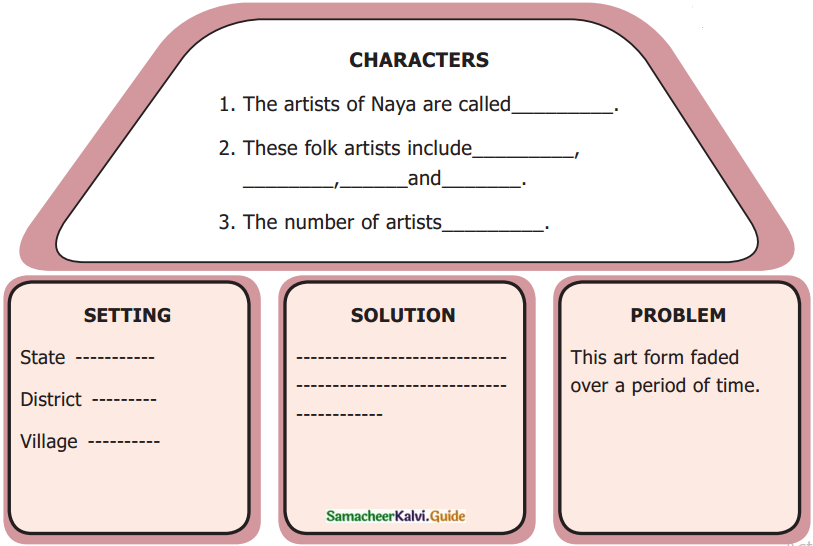
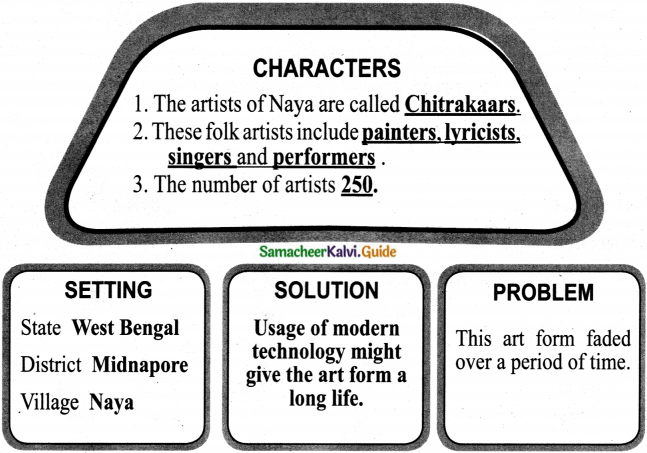
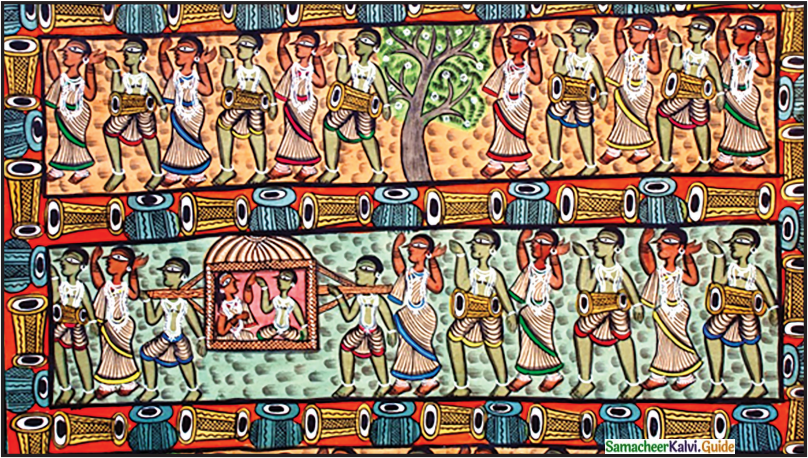
Naya is a quaint little village in West Bengal’s Midnapore district. However, it is not an ordinary village. Around 250 patuas or chitrakaars or artists live there. These folk artistes are painters, lyricists, singers and performers all rolled into one. They practise an ancient folk art called Pata Chitra. This is a type of storytelling using painted scrolls. The scrolls had stories painted on them and the artists sang the story as they unroll the scroll. This art has been practised since the 13 th century.

B. Write the apt word for the given phrases.

1. The traditional folk art of West Bengal.
Answer:
Patachitra

2. Annual festival to celebrate the success of local artists.
Answer:
Pot Maya

Samacheer Kalvi 9th English Guide Prose Chapter 2 I Can’t Climb Trees Anymore

3. The other name of story tellers.
Answer:
Patuas

4. Conservation of trees, female infanticide etc…
Answer:
Social messages

C. Fill in the details of the mindmap:
Samacheer Kalvi 7th English Guide Term 2 Supplementary Chapter 2 Naya – The Home of Chitrakaars 2
Samacheer Kalvi 7th English Guide Term 2 Supplementary Chapter 2 Naya – The Home of Chitrakaars 3

D. The process of making a Patta is in jumbled form. Read the sentences and number them in proper order. (Text Book Page No. 134)

A Patta is created by painting on a canvas.4
It is made by stitching multiple sheets of poster paper together.2
Jute fibre canvas was used in olden days.1
Plant-based colours and lamp black are mixed in coconut shells.3
The sap of the wood apple tree acts as a glue.5
A thin cotton cloth is glued to the back of the painting for long life.6
The completed scrolls are dried in the sun.7
Finally they are stored in rolled up bundles.8

E. Write a few sentences about Pot Maya festival.
Since 2010, ‘Pot Maya’ an annual three day festival has been held. In November, the local artists exhibit their colourful paintings. The villagers clean their village. They decorate the village with flowers. There are no hotels in the village. They have tents for the visitors to stay.

Project (Text Book Page No. 134)

F. Make a diary entry about your visit to a Science Exhibition.
Science exhibition – conducted on September 3rd, 2019 – at Government Higher Secondary School, Melur – models of scientific devices – various experiments – scientific fictions – science journals – informations on famous scientists – their inventions – exhibited – prizes given – talents and skills displayed – good motivation for students.
Note: Diary entry must be only

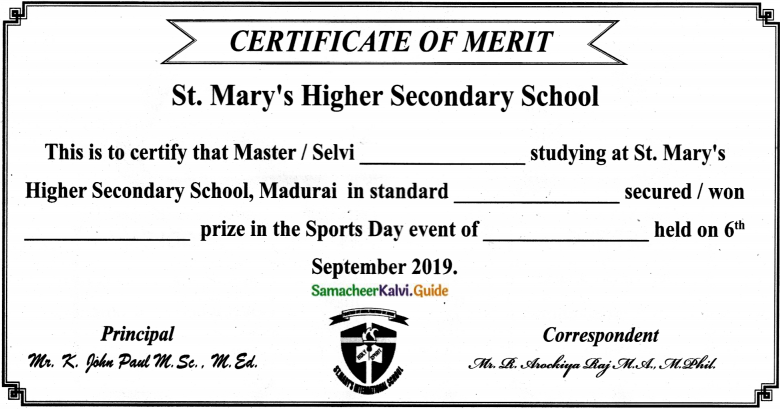
G. Design a certificate, a badge or a medal for sports day.
Samacheer Kalvi 7th English Guide Term 2 Supplementary Chapter 2 Naya – The Home of Chitrakaars 4

Connecting to Self (Text Book Page No. 134)

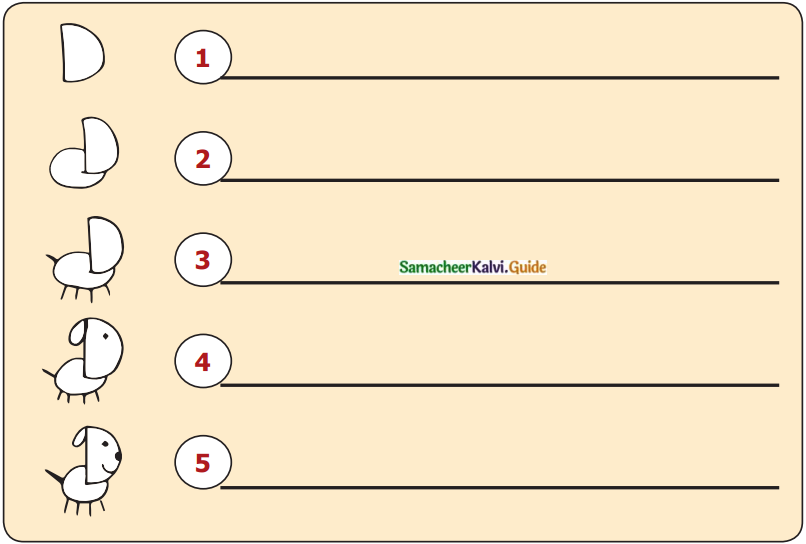
H. Draw the pictures in the given boxes using the clues.
Samacheer Kalvi 7th English Guide Term 2 Supplementary Chapter 2 Naya – The Home of Chitrakaars 5 Samacheer Kalvi 7th English Guide Term 2 Supplementary Chapter 2 Naya – The Home of Chitrakaars 6

  • The snake is next to the owl.
  • The owl is not next to the bird.
  • The kite is on the right.
  • The owl is between the snake and the kite.

Now where is the bird?
The bird must be the first in the row of the table.

I. Draw an envelope with the flap open without lifting your pen from the paper. Indicate the numbers to show how it was drawn. (Text Book Page No. 135)
Samacheer Kalvi 7th English Guide Term 2 Supplementary Chapter 2 Naya – The Home of Chitrakaars 7

Step to Success

J. Find their group name and write them in the blanks.
Samacheer Kalvi 7th English Guide Term 2 Supplementary Chapter 2 Naya – The Home of Chitrakaars 8

1. Kuchupudi, Bangra, Dandia ……………………..
Answer:
performing arts

2. prose, poetry, drama, novel …………………….
Answer:
literary arts

Samacheer Kalvi 9th English Guide Prose Chapter 2 I Can’t Climb Trees Anymore

3. photography, film making, sculpture …………………….
Answer:
visual arts

4. Karate, Kungfu, Capoeira …………………….
Answer:
martial arts

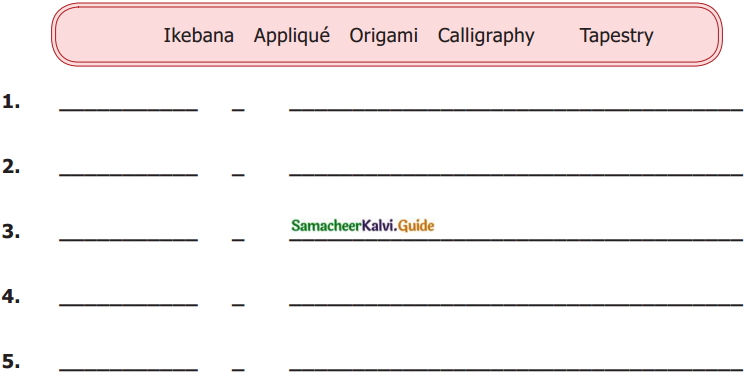
5. weaving , embroidery, carpet designing …………………….
Answer:
textile arts

Naya – The Home of Chitrakaars Summary in English

Naya, a village in Midnapore district of West Bengal state is well-known for its artistic heritage. The ancient folk art is called patachitra. It involves story telling, paintings, singing and dancing too. Pata chitra art gives livelihood for local women. They conduct an annual festival too. Pata art work are displayed for sale. Visiting this village will be a delightful experience.

Naya – The Home of Chitrakaars Summary in Tamil

மேற்கு வங்கத்தில் உள்ள மிட்னாப்பூரில் இருக்கும் நயா என்ற சிறிய கிராமம், பாரம்பரிய கலையாகிய படச்சித்திரத்திற்கு பெயர் போனது. இந்தப் புராணக்கலையில் கதை சொல்லுதல், வண்ண ஓவியக் காட்சிகள், ஆடல் பாடல் என எல்லாம் கலந்து உள்ளது. உள்ளூர் பெண்களுக்கு இக்கலை வருமானம் அளிக்கிறது. படச்சித்திரங்கள் விற்பனைக்கு வைக்கப்படுகின்றது. ஆண்டிற்கு ஒரு முறை திருவிழா போல் வைத்து இக்கலையை மேம்படுத்துகின்றனர். இந்த கிராமத்திற்கு சென்று வருவது ஒரு மகிழ்வான அனுபவமாக இருக்கும்.

Samacheer Kalvi 11th Maths Guide Book Answers Solutions

Subject Matter Experts at SamacheerKalvi.Guide have created Tamilnadu State Board 11th Maths Solutions Book Pdf Free Download New Syllabus of Volume 1 and Volume 2 in English Medium and Tamil Medium are part of Samacheer Kalvi 11th Books Solutions.

Let us look at these TN Board Samacheer Kalvi 11th Std Maths Guide Pdf Free Download of Text Book Back Questions and Answers, Notes, Chapter Wise Important Questions, Model Question Papers with Answers, Study Material, Question Bank, Formulas and revise our understanding of the subject.

Students can also read Tamil Nadu 11th Maths Model Question Papers 2020-2021 English & Tamil Medium.

Tamilnadu State Board 11th Maths Solutions Book Pdf Free Download New Syllabus

11th Maths Book Back Answers Solutions Guide

You can download Tamilnadu State Board Class 11th Maths Book Volume 1 Solutions Answers Guide Pdf and 11th Maths Book Volume 2 Answers Solutions Guide Pdf.

11th Maths Book Volume 1 Solutions Answers Guide Pdf

Tamilnadu State Board 11th Maths Solutions Book Pdf Free Download Chapter 1 Sets, Relations and Functions

11th Maths Book Volume 1 Solutions Answers Guide Pdf Chapter 2 Basic Algebra

11th Standard Maths Guide Pdf Free Download Chapter 3 Trigonometry

TN 11th Maths Guide Pdf Free Download for 11th Samacheer Kalvi Chapter 4 Combinatorics and Mathematical Induction

11th Standard State Board Maths Guide Pdf Free Download Chapter 5 Binomial Theorem, Sequences and Series

11th Std Samacheer Kalvi Maths Guide Free Download Chapter 6 Two Dimensional Analytical Geometry

11th Maths Book Volume 2 Answers Solutions Guide Pdf

11th Maths Book Volume 2 Answers Solutions Guide Pdf Chapter 7 Matrices and Determinants

11th Std State Board Maths Solution Book Pdf Chapter 8 Vector Algebra – I

Tn 11th Maths Solution Book Free Download Chapter 9 Differential Calculus – Limits and Continuity

11th Std Maths Book Solutions Samacheer Kalvi Chapter 10 Differential Calculus – Differentiability and Methods of Differentiation

Samacheer Kalvi 11th Maths Important Questions Chapter 11 Integral Calculus

Samacheer Kalvi Class 11th Maths Book Solutions Chapter 12 Introduction to Probability Theory

We hope these Tamilnadu State Board Class 11th Maths Solutions Book Volume 1 and Volume 2 Pdf Free Download New Syllabus in English Medium and Tamil Medium will help you get through your subjective questions in the exam.

Let us know if you have any concerns regarding TN Board 11th Standard Samacheer Kalvi Maths Guide Pdf Free Download of Text Book Back Questions and Answers, Notes, Chapter Wise Important Questions, Model Question Papers with Answers, Study Material, Question Bank, Formulas, drop a comment below and we will get back to you as soon as possible.

Samacheer Kalvi 7th English Guide Term 2 Supplementary Chapter 1 Alice in Wonderland

Tamilnadu State Board New Syllabus Samacheer Kalvi 7th English Guide Pdf Term 2 Supplementary Chapter 1 Alice in Wonderland Text Book Back Questions and Answers, Summary, Notes.

Tamilnadu Samacheer Kalvi 7th English Solutions Term 2 Supplementary Chapter 1 Alice in Wonderland

7th English Guide Alice in Wonderland Text Book Back Questions and Answers

Read and Understand (Text Book Page No. 109)

A. Identify the character/speaker.

1. I must find out why he’s in such a hurry!
Answer:
Alice

2. Go to my cottage and fetch my gloves and fan.
Answer:
White rabbit

3. Oh no, I’ll never get back to the right size.
Answer:
Alice

Samacheer Kalvi 9th English Guide Prose Chapter 2 I Can’t Climb Trees Anymore

4. One side makes you big, the other side makes you small.
Answer:
Caterpillar

5. I’ll see you later at the Queen’s croquet game.
Answer:
Cheshire cat

6. You may stay if you answer my riddle.
Answer:
Mad Hatter

7. Wake up. You’ve been sleeping for too long.
Answer:
Sister of Alice

Discuss and Answer. (Text Book Page No. 109)

1. Why did Alice follow the rabbit?
Answer:
Alice saw a rabbit hurrying down a rabbit’s hole. She wanted to find out why the rabbit was in such a hurry. So she followed him.

2. Do you think this was a good idea?
Answer:
Alice was curious. So, following the rabbit was a good idea for her in her dream. It may not be a good idea in reality.

3. Why can’t Alice get through the little door into the garden?
Answer:
She couldn’t get into the garden through the little door because she was too big.

4. Why does Alice drink from the bottle that says ‘DRINK ME’and why does she eat from the cake that says ‘EAT ME’?
Answer:
Out of curiosity, Alice drinks the potion from the green bottle that says ‘DRINK ME’. As she was in hungry when she sees the cake, she eats it which says ‘EAT ME’.

Samacheer Kalvi 9th English Guide Prose Chapter 2 I Can’t Climb Trees Anymore

5. How does Alice feel after all these changes?
Answer:
She felt strange and realized that she would never get back to the right size.

6. What do you think is going to happen next?
Answer:
Alice may follow the white rabbit with red eyes which she saw in her reality to have a real adventure as she had in her strange dream.

C. Think and Answer. (Text Book Page No. 109)

1. What challenges does Alice face and how does she overcome them?
Answer:
Alice goes through a variety of strange physical changes. The discomfort she feels at never being the right size acts as a symbol for the changes that occur during her adolescence. She continually finds herself in a situation in which she risks death. She gets in trouble because of her curiosity. As Alice progresses through her dream, she loses her sense of identity. At. the beginning of her journey, she was confused, anxious, and timid. Finally, she becomes a strong and confident girl, who is able to stand up for herself.

2. Have you ever had a strange dream? Share your dream in the class.
Answer:
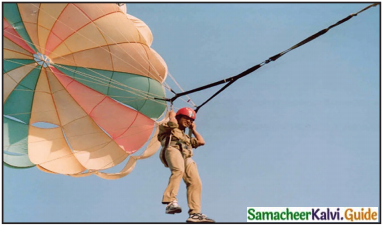
Once I had a strange dream of flying above a mountain using a parachute. From the mountain, I could see the green farms surrounding the ocean, cattle, and tall trees. It was a cheerful dream.

Project

H. Imagine you are a marketing executive for a company in a specific industry (toothpaste, soup, hair care products, automobiles, etc) and are developing a product with a brand name that refers to a character from the story. (Text Book Page No. 111)
For example You want to sell bandages that have little pictures of Don Quixote on them. Your company’s name is Kure-All and you decide to call them “Kure-All Quixote Bandages”. The slogan might be: “Had a tough day with windmills? When you take a fall, use Kure-All.” You can use exciting words, a catchy new slogan, and a jingle, among other things, to promote sales of your item.
Other examples:

  1. ‘Rush for the mushroom curry’.
  2. ‘Use soap of Sancho’.
  3. ‘Shine like Queen of Hearts’.
  4. ‘Buy sauce of Alice’.
  5. ‘Care your hair like March Hare’.

Note: Mushroom, Sancho, Queen of Hearts, Alice, March hare are all names of the characters we see in Unit I supplementary reader – Alice in Wonderland.

Step to Success

J. Look at the number pattern. Fill the blank in the middle of the series or end of the series.

1. SCD, TEF, UGH, …………………., WKL
a) CMN
b)UJI
c) VIJ
d)IJT
Answer:
c) VIJ

2. FAG, GAF, HAI, IAH, …………………..
a) JAK
b)HAL
c) HAK
d) JAI
Answer:
a) JAK

Samacheer Kalvi 9th English Guide Prose Chapter 2 I Can’t Climb Trees Anymore

3. ELFA, GLHA, ILJA, …………………., MLNA
a) OLPA
b)KLMA
c) LLMA
d) KLLA
Answer:
d) KLLA

4. CMM, EOO, GQQ, …………………., KUU
a) GRR
b) GSS
c) ISS
d)ITT
Answer:
c) ISS

5. QPO, NML, KJI, …………………., EDC
a) HGF
b) CAB
c) JKL
d)GHI
Answer:
a) HGF

Alice in Wonderland Summary in English
Samacheer Kalvi 7th English Guide Term 2 Supplementary Chapter 1 Alice in Wonderland 1

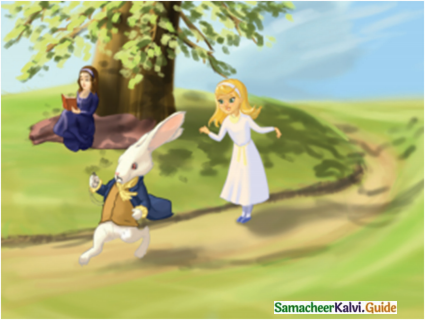
Alice sleeps and has a dream. In her dream, she sees many fantasies. She sees different characters like a white rabbit, caterpillar, March Hare, Mad Hatter, a magical tea party, Queen of Hearts, a Cheshire cat, a mock trial, etc. When she gets up she sees her sister nearby and a white rabbit running around. She realises that she had a strange dream.

Alice in Wonderland Summary in Tamil

ஆலிஸ் உறங்கும் போது கனவு காண்கிறாள். கனவில் பல மாயாஜாலத் தோற்றங்களைக் காண்கிறாள். கனவில் வெள்ளை முயல், கம்பளிப்பூச்சி, மார்ச்ஹேர், மேட்ஹேட்டர், செஷியர் பூனை, மந்திர தேநீர் விருந்து, சீட்டுக்கட்டு ராணி, வேடிக்கையான நீதிமன்ற விசாரணை போன்ற காட்சிகளைக் காண்கிறாள். எழுந்து பார்க்கும் போது ஆலிஸ் தன் அருகே தன் சகோதரியையும் ஓடித் திரியும் முயலையும் பார்க்கிறாள். தான் கண்ட காட்சி யாவும் கனவு என்று புரிந்து கொள்கிறாள்.

Samacheer Kalvi 7th English Guide Term 2 Poem 2 Wandering Singers

Tamilnadu State Board New Syllabus Samacheer Kalvi 7th English Guide Pdf Term 2 Poem 2 Wandering Singers Text Book Back Questions and Answers, Summary, Notes.

Tamilnadu Samacheer Kalvi 7th English Solutions Term 2 Poem 2 Wandering Singers

7th English Guide Wandering Singers Text Book Back Questions and Answers

Warm Up (Text Book Page No. 126)

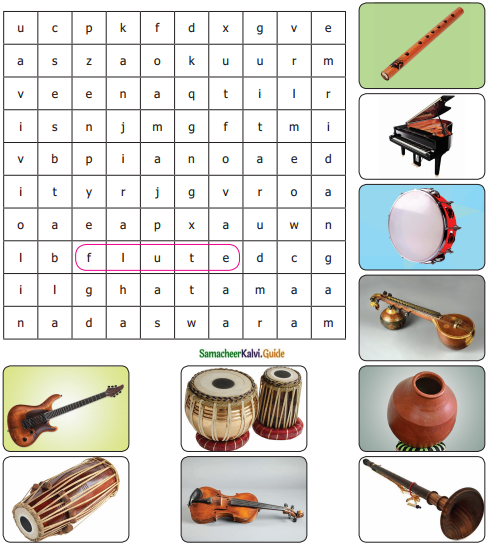
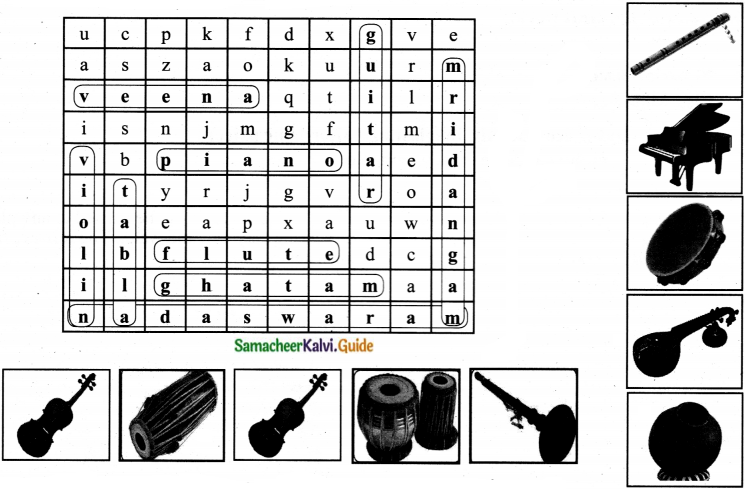
Discuss in pairs, Circle the names of musical instruments from the grid. One is done for you. (Text Book Page No. 126)
Samacheer Kalvi 7th English Guide Term 2 Poem 2 Wandering Singers 1 Samacheer Kalvi 7th English Guide Term 2 Poem 2 Wandering Singers 2
Note: For this grid, for the names of the musical instruments sitar and dhol the letters were not given in a proper way.

Textual Exercise (Text Book Page No. 128)

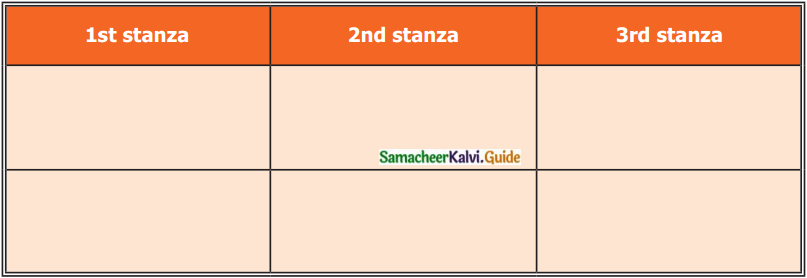
B. Pick out the rhyming pairs from the poem and fill in the table.
Samacheer Kalvi 7th English Guide Term 2 Poem 2 Wandering Singers 3
Answer:

1st stanza2nd stanza3rd stanza
roam – homeshed – deadsow – go
feet – streetkings – thingswait – fate

C. Read these lines and answer the questions given below.

1. Where the voice of the wind calls our wandering feet Whose ‘Wandering feet’ is referred to here?
Answer:
The wandering feet of the band of folk singers.

Samacheer Kalvi 9th English Guide Prose Chapter 2 I Can’t Climb Trees Anymore

2. With lutes in our hands ever-singing we roam,
All men are our kindred, the world is our home.
Who does ‘we’ refer to? What do they have in their hands? What is its name?
Answer:
‘We’ refers to the wandering singers. They have musical instruments in their hands. Its name is a lute.

How are the men in the world related to the singers?
Answer:
All the men in the world are their extended family and the world is their home.

3. Our lays are of cities whose luster is shed,
Here ‘Lays’ means
a) lying down
b) stories
c) to keep
Answer:
b) stories

4. The laughter and beauty of women long dead;
Explain the meaning of the above line.
Answer:
The songs sung by the wandering singers are about the laughter and beauty of women who were dead long ago.

Writing (Text Book Page No. 129)

D. Answer in a paragraph.

What does Sarojini Naidu say about the Wandering Singers? Write in your own words, (in about 60 words)
Answer:
Sarojini Naidu in this poem tells us about the wandering singers, their life, and their activities as well as their experiences. The wandering singers stroll here and there. They count the world as their home and all the people around are their inborn family and relatives. They hold ‘lutes’ in their hands and sing songs about ancient battles, old kings, and the beauty and laughter of women of the past.

E. Think and answer.

1. Are the singers homeless travellers? Why do you think so?
Answer:
Yes. They are homeless. They travel to different places for their livelihood.

2. Do the singers have hopes and dreams? If not, why?
Answer:
They are poor. They are homeless. So they have no hopes and dreams.

Samacheer Kalvi 9th English Guide Prose Chapter 2 I Can’t Climb Trees Anymore

3. What are the themes of the singers’ songs?
Answer:
Old battles, old kings, old cities, happy, simple, sorrowful tales of the old days are the themes of these wandering singers.

7th English Guide Wandering Singers Additional Appreciation Questions

1. Where the voice of the wind calls our wandering feet
a. Who does ‘our’ refer to?
Answer:
‘Our’ refers to the wandering singers.

b. Why do they wander?
Answer:
The singers go to different places to earn money.

2. With lutes in our hands ever-singing we roam
Why do the wandering singers have lutes in their hands?
Answer:
The lute is a musical instrument. The singers sing with that musical instrument.

3. No love bids us tarry, no joy bids us wait.
Are the wandering singers welcomed by the people? Why?
Answer:
No, they are not welcomed by the people. Because they say there is no love or joy to make them stay in a place for some time.

Samacheer Kalvi 9th English Guide Prose Chapter 2 I Can’t Climb Trees Anymore

4. The voice of the wind is the voice of our fate.
Explain the above line.
Answer:
No one can predict the direction of the wind. In the same way, the singers cannot predict the places they might visit.

Wandering Singers Summary in English

The wandering singers roam around the roads and forests. The world is their home. All men are their relatives. They sing about the old days. They have no hope or dreams. They are homeless and very poor.

Wandering Singers Summary in Tamil

நாடோடி பாடகர் குழுவினர் வீதிகளிலும், காடுகளிலும் அலைந்து திரிகின்றனர். உலகமே அவர்களது வீடு. எல்லா மனிதர்களும் அவர்களுக்கு உறவினர்கள் ஆவர். அவர்கள் பழங்காலக் கதைகள் பற்றிப் பாடித் திரிகின்றனர். அவர்களுக்கு எதிர்காலம் குறித்த நம்பிக்கையும் இல்லை. கனவுகளும் இல்லை. அவர்களுக்கு வீடுமில்லை. மிகுந்த ஏழைகளாய் உள்ளனர்.

Wandering Singers About the Author in English

Sarojini Naidu was a famous Indian poet and a major freedom fighter. She was given the sobriquet Bharat Kokila (The Nightingale of India) on account of her beautiful poems and songs.

Wandering Singers About the Author in Tamil

சரோஜினி நாயுடு சிறந்த இந்தியக் கவிஞர். அவர் ஒரு சுதந்திரப் போராட்ட வீரரும் கூட. அவர் ‘இந்தியாவின் கவிக்குயில்’ என்ற அடைமொழி உள்ளவர். அவரது அழகிய கவிதைகளுக்காகவும் பாடல்களுக்காகவும் இந்த அடைமொழி தரப்பட்டது.

Samacheer Kalvi 7th English Guide Term 2 Poem 1 The Poem of Adventure

Tamilnadu State Board New Syllabus Samacheer Kalvi 7th English Guide Pdf Term 2 Poem 1 The Poem of Adventure Text Book Back Questions and Answers, Summary, Notes.

Tamilnadu Samacheer Kalvi 7th English Solutions Term 2 Poem 1 The Poem of Adventure

7th English Guide The Poem of Adventure Text Book Back Questions and Answers

Warm-Up (Text Book Page No. 101)

Look at the pictures. Name the activities. (Text Book Page No. 101)
Samacheer Kalvi 7th English Guide Term 2 Poem 1 The Poem of Adventure 1
1. Parachuting

Samacheer Kalvi 7th English Guide Term 2 Poem 1 The Poem of Adventure 2
2. Expedition

Samacheer Kalvi 7th English Guide Term 2 Poem 1 The Poem of Adventure 3
3. Rock climbing

Samacheer Kalvi 7th English Guide Term 2 Poem 1 The Poem of Adventure 4
4. Scuba diving

Discuss and Answer.

1. What are the adventure activities of NCC?
Answer:
Mountain Treks, Parasailing, Scuba diving, Kayaking.

2. When can you join the NCC?
Answer:
We can join NCC at the school level or at the college level.

Samacheer Kalvi 9th English Guide Prose Chapter 2 I Can’t Climb Trees Anymore

3. What is the motto of NCC?
Answer:
The motto of NCC is to provide a suitable environment to motivate the youth to take up a career in the Armed forces.

Think and Answer.

1. Why do we need adventure in life?
Answer:
We need adventures so that we can learn new skills and new experiences.

2. Do you like adventures? Why?
Answer:
Yes, I like adventures because they are thrilling.

3. Why does the NCC conduct adventure activities?
Answer:
NCC conducts adventure activities in camps. Such camps force people to get out of their ordinary lives and try new things.

Read and Understand (Text Book Page No. 104)

A. Read the lines and answer the questions.

1. Deep inside the mountain the adventures hide.
a. Where do adventures hide?
The adventures hide deep inside the mountain.

2. They are of all forms and shapes
They all have an excellent ending

Samacheer Kalvi 9th English Guide Prose Chapter 2 I Can’t Climb Trees Anymore

2. Write down the alliterated words.
Stanza 2: bounce a bit
Stanza 5: defying death
Stanza 8: virture and vice; lessons to be learned

Creative Writing (Text Book Page No. 105)

Concrete Poems

E. Now read the poem and pick out the nouns. Then write your own concrete poem.
Nouns in the poem Bird;
bird, beak, steel, prey, cat, grip, barrel, roll, dragonfly, feline, claws, death
Own Concrete Poem;
Samacheer Kalvi 7th English Guide Term 2 Poem 1 The Poem of Adventure 5

7th English Guide The Poem of Adventure Additional Appreciation Questions and Answers

1. Back in the days of old
when knights were bold
How were the knights of old ages?
Answer:
The knights of old ages were very bold and chivalrous.

2. when knights were bold
who with a sword or lance
in armour sought romance.
How did the knights protect themselves?
Answer:
The knights wore swords, lance, and armour to protect themselves.

3. Oh, they would strike heavy blows
on all of their opponents and foes
Can you consider the knights to be heroes? Why?
Answer:
Yes, I consider the knights to be heroes. They never feared their enemies and fought for justice.

Samacheer Kalvi 9th English Guide Prose Chapter 2 I Can’t Climb Trees Anymore

4. It was mainly for show, love, and glory
they deemed themselves being worthy
to capture the heart of some fair maiden
which was the most desired prize laden.
Why did the knights fight?
Answer:
The knight fought for show, love, glory, religion, faith, and for their kings.

5. Yes, it was far back in those days of yore
that courage and strength came to the fore
Why do you think that the knights of the old days were more courageous than us?
Answer:
Yes, they were more courageous than us. Those days were full of life and death struggle.

The Poem of Adventure Summary in English

The adventures are hidden. They have varied forms. But they have an excellent ending. People who love adventures look at the world in a special way. In the days of old, we had bold knights. They fought for love, glory, to capture the heart of some fair maiden. Knights fought for the country, king, and faith. There is a legacy of tales on their exploits. We too must fight for a just cause.

The Poem of Adventure Summary in Tamil

வீர சாசகச் செயல்கள் மறைவானவை. அவை பல தரப்பட்டவை. ஆனால் அவற்றின் முடிவுகள் எப்போதும் அற்புதமானவை. வீரர்கள் இந்த உலகத்தைப் பார்க்கும் பார்வையே விசேஷமானது. முற்காலத்தில், தைரியமான குதிரை வீரர்கள் இருந்தனர். அவர்கள் அன்பிற்கும், பெருமைக்கும், அழகிய பெண்களின் இதயத்தில் இடம் பிடிக்கவும் போரிட்டனர். நாட்டுக்காக, தன் மன்னருக்காக, நம்பிக்கை பற்றிற்காக அவர்கள் போரிட்டனர். அவர்களின் வீரச் செயல்கள் பற்றிய கதைக் களஞ்சியமே உண்டு. நாமும், நியாயமான காரணத்திற்காகப் போராட வேண்டுமென்றால் போராடத் தான் வேண்டும்.

The Poem of Adventure About the Author in English

George Krokos was born on 30th June 1951 in Samos, Greece and now lives in Melbourne, Australia. He is an aspiring poet who has written quite a number of poems inspired by nature, science, philosophy, and the spiritual aspects of life. He has studied eastern and western religions and associated philosophy for over 35 years and has practised various forms of yoga and meditation.

The Poem of Adventure About the Author in Tamil

ஜார்ஜ் க்ரோகோஸ், கீரிஸ் நாட்டில் உள்ள சாமோஸ் என்ற இடத்தில் 1951ம் ஆண்டு ஜூன் மாதம் 30ம் நாள் பிறந்தார். இப்போது ஆஸ்திரேலியாவில் உள்ள மெல்போர்ன் நகரில் வாழ்கிறார். நிறைய கவிதைகள் அவர் எழுதியுள்ளார். இயற்கை, அறிவியல், தத்துவம், ஆன்மீகம் போன்றத் தலைப்புகளில் கவிதை எழுதியுள்ளார். கீழை நாட்டு, மேலை நாட்டு மதங்கள், அவை சார்ந்த தத்துவங்கள் குறித்து படிப்பதில் 35 ஆண்டுகளுக்கு மேலாக தன்னை ஈடுபடுத்திக் கொண்டுள்ளார். தியானம், யோகா போன்றவைகளில் பயிற்சிப் பெற்று வருகிறார்.

Samacheer Kalvi 7th English Guide Term 2 Prose Chapter 2 The Last Stone Carver

Tamilnadu State Board New Syllabus Samacheer Kalvi 7th English Guide Pdf Term 2 Prose Chapter 2 The Last Stone Carver Text Book Back Questions and Answers, Summary, Notes.

Tamilnadu Samacheer Kalvi 7th English Solutions Term 2 Prose Chapter 2 The Last Stone Carver

7th English Guide The Last Stone Carver Text Book Back Questions and Answers

Warm Up (Text Book Page No. 113)

Work in pairs.
Read the instructions given below, draw and name the picture.
Samacheer Kalvi 7th English Guide Term 2 Prose Chapter 2 The Last Stone Carver 1
Samacheer Kalvi 7th English Guide Term 2 Prose Chapter 2 The Last Stone Carver 2

Write step by step instructions for the following picture.
Samacheer Kalvi 7th English Guide Term 2 Prose Chapter 2 The Last Stone Carver 3

1. Draw the letter ‘D’.
2. Draw an elliptical circle at the bottom portion of ‘D’.
3. Draw five straight lines at the elliptical circle.
4. Have a dot as eye in the letter ‘D’
5. Draw an elliptical small ear and a big black dot for the mouth in the letter ‘D’.

Section – I

Textual Exercise (Text Book Page No. 116)

Which of the two sentences given below convey the following meaning?

1. stained by – mark made on clothes or materials
The whitewashed walls were stained by many monsoons …………………………
a) The walls were made dirty by rains.
b) The Monsoon removed the dirt from the walls.
Answer:
a) The walls were made dirty by rains.

Samacheer Kalvi 9th English Guide Prose Chapter 2 I Can’t Climb Trees Anymore

2. working for a pittance – working for very little money
I am tired of working for a pittance.
a) He didn’t want to work because he was tired.
b) He didn’t want to work as he gets low income for his work.
Answer:
b) He didn’t want to work as he gets low income for his work.

3. ashen – pale
His face was ashen.
a) He looked pale and dull.
b) He looked bright and cheerful.
Answer:
a) He looked pale and dull.

4. drenched – thoroughly wet
He is drenched to the skin.
a) He is thin and skinny.
b) He is thoroughly wet.
Answer:
b) He is thoroughly wet.

Section – II

Textual Exercise (Text Book Page No. 118)

Read the sentences and number them in the correct order.

1. The old man worked tirelessly on the sculpture.1
2. He had a strong wish to finish it in time.2
3. Over days, he felt very weak.3
4. He thought he wouldn’t be able to finish it.4
5. He wished to have Gopal with him.5
6. He realized that Gopal must learn to carve the finer details.6
7. Salim felt that it should come from within.7

Section – III

Textual Exercise (Text Book Page No. 120)

Read Section – III (para 1 and 4) and answer the following questions.
Paragraph 1

1. Who listened to the chipping sound of the chisel?
Answer:
The old man listened to the chipping sound of the chisel.

Samacheer Kalvi 9th English Guide Prose Chapter 2 I Can’t Climb Trees Anymore

2. Who was working with the hammer and chisel?
Answer:
Salim was working with the hammer and chisel.

Paragraph 4

1. Who was staring?
Answer:
The old stone carver was staring at the back of Salim who was working on the statue.

2. Who was the young stone carver?
Answer:
Salim, the servant boy was the young stone carver.

3. What was he working on?
Answer:
Salim, the servant was working on the statue of Lord Krishna.

Vocabulary (Text Book Page No. 121)

Work in pairs.
A. Arrange the words in alphabetical order, find the meaning of the words from the dictionary and fill in the blanks.
Samacheer Kalvi 7th English Guide Term 2 Prose Chapter 2 The Last Stone Carver 4

1. Applique – embroidery work
2. Calligraphy – beautiful handwriting
3. Ikebana – Japanese flower arrangement
4. Origami – Japanese paper art
5. Tapestry – cloth with designs and pictures

B. Match the tools with art forms.
Samacheer Kalvi 7th English Guide Term 2 Prose Chapter 2 The Last Stone Carver 5
Answer:

Column AColumn B
1. Hammer and chiselSculpture
2. Paintbrush and palettePainting
3. Moulds and roll pinPottery
4. Scissors and paperCollage
5. Needle and threadEmbroidery

Listening (Text Book Page No. 122)

C. Listen to the teacher reading the passage. Read the questions given below, then listen to passage again and complete the responses. (Text for listening is in page no -136)
Samacheer Kalvi 7th English Guide Term 2 Prose Chapter 2 The Last Stone Carver 6
Answer:
Samacheer Kalvi 7th English Guide Term 2 Prose Chapter 2 The Last Stone Carver 7

Speaking (Text Book Page No. 122)

D. Work in pairs. Find answers to these questions and present it to the class.

Do you have an art/craft session at your school?
Answer:
Yes, we do have art and craft session in our school.

Which session do you like – art/craft?
Answer:
I like craftwork sessions.

Samacheer Kalvi 9th English Guide Prose Chapter 2 I Can’t Climb Trees Anymore

What do you do in that session?
Answer:
We make a lot of new models.

Do you work individually or in pairs?
Answer:
We work in pairs as well as individually.

Can you do artwork or craftwork on your own?
Answer:
I can do a craft on my down. I can do a model of a house.

What qualities do you gain by doing art or craft?
Answer:
Good habits are formed. We can spend our recreation time and holidays doing art and craftwork.

Use Grammar

E. Construct meaningful sentences from the table given below. (Text Book Page No. 124)
Samacheer Kalvi 7th English Guide Term 2 Prose Chapter 2 The Last Stone Carver 8

1. Silence should be maintained in libraries, hospitals, etc.
2. Cars should not be parked in the ‘No Parking’ area.
3. Cleanliness should be practised at homes as well as in public places.
4. Cell phones should not be used in petrol bunks.
5. Junk food should be avoided as it is bad for health.
6. Sweets should be avoided as they cause cavities and toothache.

All the above sentences are in the passive voice. All these sentences have transitive verbs, that is verb + object.
For example:
1. We should not use cellphones in petrol bunks. (Active voice)
Cell phones should not be used in petrol bunks. (Passive voice)2. We must not park cars in the No Parking area. (Active voice)
Cars should not be parked in the No Parking area. (Passive voice)

F. Read the news report given below and underline the passive form of verbs.

The police had announced that the State Bank of India was robbed yesterday. Two men entered the bank at 4.30 pm with guns in their hands. Customers and bank clerks were asked to lie down on the floor, and one of the bank clerks was made to fill robbers’ bags with money. After that, the two men left the bank quickly. The police officer said that more than one lakh of rupees was stolen from the bank but nobody was injured. He also added that the robbers would be found soon.

Note: The underlined words “was robbed, were asked, was made, were stolen, was injured, would be found” are the passive form of verbs given in this passage. The main verbs “robbed, made, stolen, injured, found” are in the past participle form.

Work in Pair

G. Rani’s teacher narrates to her students about the production of paper. Read the following narration and fill in the blanks with the verbs using their passive form.
People of China produced paper from wood. They mixed water with the fibres of the wood and dried
it until they became a soft wet pulp. They used this pulp to make paper. The Chinese invented this
method of papermaking in the 2nd century BCE. Later Egyptians used papyrus plants to make paper.

1. Paper …………… (produce) from wood.
Answer:
is produced

2. The fibres of wood from trees …………… (mix) with water to make a soft wet pulp.
Answer:
are mixed

Samacheer Kalvi 9th English Guide Prose Chapter 2 I Can’t Climb Trees Anymore

3. Later, it …………… (dry) to make paper.
Answer:
is dried

4. .This method …………… (invent) in 2nd BCE in China.
Answer:
was invented

5. Papyrus plants …………… (use) by Egyptians to make paper.
Answer:
were used

H. Read the process of making soup. Use the suitable passive forms of verbs and complete the paragraph. (Text Book Page No. 125)
Samacheer Kalvi 7th English Guide Term 2 Prose Chapter 2 The Last Stone Carver 9

The packet is opened and the contents (i) …………… with 750 ml of water, without allowing it to form lumps. The mixture (ii) …………… into a heavy-bottomed vessel. It (iii) …………… in low flame for five minutes. The soup (iv) …………… into soup bowls and (v) …………… with fried corns.
Answer:
(i) are mixed
(ii) is poured
(iii) is simmered
(iv) is transferred
(v) served

Writing (Text Book Page No. 125)

I. If you are asked to choose from any one of these toys which one do you choose? Give reasons, (plastic toys, wooden toys, clay toys, metallic toys)
Answer:
If I am asked to choose toys I will choose only clay toys. Clay toys are eco-friendly. The price of them is cheap. Clay toys have been used since ancient times.

J. Your friend has presented a beautiful art piece on your birthday. Write a letter to her appreciating her artwork.

37, Jansy Road,
Madurai -19,
10. 10. 2020.

My dear Leela,

How are you? I am fine. I am studying well. Your present on my birthday was very special. I like it very much. The painting presented by you on my birthday is admired by everyone.

Thanks a lot.

Yours lovingly,
P. Kala

Address on the envelope
To
P. Leela,
C/o, Mr. Pandy,
78, S.S. Colony, Ramnad.

Creative Writing (Text Book Page No. 125)

K. You have prepared some eco-friendly craft materials like paper mache dolls, greeting cards, bookmarks, festoons, garlands, quilling jewellery, etc for an Art Mela to be conducted on your school premises. Describe in a few sentences how you made the craftwork. Include the following details in your writing.
Name of the craftwork
Answer:
Clay toy

Materials used
Answer:
Clay, salt, water

Nature (handy / eco-friendly, longlasting / affordable price)
Answer:
eco-friendly, affordable price, handy, portable

Use (place / person / time)
Answer:
It can be used by small children as well as adults. It is portable. It can be carried to any place. India has a fine tradition of making clay toys by mixing clay, salt, and water. The mixture must be poured in moulds after kneading to even consistency.

The Last Stone Carver Summary in English

The stone carver, an old man, was deserted by his son, Gopal, in the midst of his sculpting work. It was his biggest and best work. It might be his last work too. The marble statue was only half-finished. After the departure of his son Gopal, the old man felt very sad. An orphan boy named Salim was a servant to the stone carver. Salim comforted his master and provided him refreshment. The old man worked tirelessly to finish the statue of Lord Krishna by himself in time. Soon, he lost his energy and knelt down. He wished to get the help of his son Gopal to finish the statue. He also said that even Gopal had yet to learn some finer details of stone carving. The old man worked hard throughout the night. He fainted down. When he opened his eyes he found himself on a cot. The old stone carver heard the noise of chisel and hammer. He thought that Gopal had returned home. He went out to see. But, Gopal was not there. The young sculptor Salim, the servant was there. The old man was surprised and felt happy. He blessed Salim that he would be one of the country’s finest stone carvers.

The Last Stone Carver Summary in Tamil

வயதான கற்சிற்பி ஒருவரை அவரது மகன், கோபால் பிரிந்து செல்கிறான். சிற்பியின் வேலை பாதிதான் முடிந்துள்ளது. அச்சிற்பம் பெரியது. சிறந்தது. ஒருவேளை சிற்பியின் கடைசி சிற்பமாகவும் இருக்கலாம். சிலை பாதியளவே முடிவடைந்து இருந்தது. சிற்பி வருத்தமடைந்தார். தான் இந்த பெரிய வேலையை எவ்வாறு தனியே செய்யப் போகிறோம் என்று கலக்கமடைந்தார். அவரது வேலைக்காரர் சலீம், ஓர் அனாதை. தன் எஜமானரை அவன் சமாதானப்படுத்தினான். அவருக்கு உணவு அளித்து ஆதரவு தந்தான். ஸ்ரீ கிருஷ்ணனின் சிலையை முடிக்க, சிற்பி மிகப் பாடுபட்டு உழைத்தார். ஆனால் அவரது சக்தி குறைந்து கொண்டே வந்தது. நிற்கக்கூட முடியவில்லை. தன் மகன் கோபால் அவருடன் இருந்தால் நன்றாக இருக்கும் என எண்ணினார். ஆனால் கோபால் சிலை வடிவமைப்பதின் சில நுட்பங்களை இன்னும் நன்றாகக் கற்றுக் கொள்ள வேண்டும் என்று நினைத்தார். இரவு முழுவதும் உழைத்ததால் மயங்கி விழுந்தார். கண்களை விழித்தபோது ஒரு கட்டிலின் மீது படுத்திருப்பதை உணர்ந்தார். சிற்ப வேலை செய்யப் பயன்படும் சுத்தியின் ஒலியைக் கேட்டார். தன் மகன் கோபால் வீடு திரும்பிவிட்டான் என நினைத்தார். வெளியே சென்று பார்க்கையில் கோபால் அங்கு இல்லை. செதுக்கும் வேலையை சலீம் செய்து கொண்டிருந்தான். கிழவர் வியப்படைந்து மகிழ்ந்தார். சலீமை உலகத்தின் மிகச் சிறந்த சிற்பிகளில் ஒருவராக ஆகப்போகிறாய் என ஆசீர்வதித்தார்.

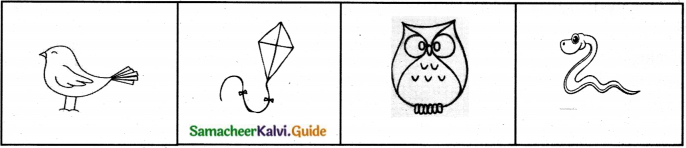
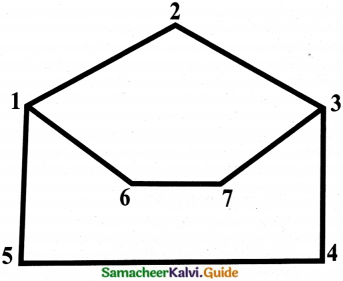

The Last Stone Carver About the Author in English

Sigrun Srivastav is an Indian author of German origin. She is a multi-faceted artist^ a writer, a sculptor, and an illustrator. As a writer, she has written over 25 books for children of all ages.

The Last Stone Carver About the Author in Tamil

சிக்ரன் ஸ்ரீவத்ஸ்தவ், ஜெர்மன் வம்சாவளியைச் சேர்ந்த இந்திய எழுத்தாளர். பன்முகத் திறமைகள் கொண்ட பெண் இவர். கலைஞர், எழுத்தாளர், சிற்பி, என எதையும் எடுத்து இயம்பும் ஆற்றல் பெற்றவர். பல்வேறு வயது உள்ள குழந்தைகளுக்காக 25 புத்தகத்திற்கு மேல் இவர் எழுதியுள்ளார்.

Samacheer Kalvi 7th English Guide Term 2 Prose Chapter 1 Adventures of Don Quixote

Tamilnadu State Board New Syllabus Samacheer Kalvi 7th English Guide Pdf Term 2 Prose Chapter 1 Adventures of Don Quixote Text Book Back Questions and Answers, Summary, Notes.

Tamilnadu Samacheer Kalvi 7th English Solutions Term 2 Prose Chapter 1 Adventures of Don Quixote

7th English Guide Adventures of Don Quixote Text Book Back Questions and Answers

Warm-Up (Text Book Page No. 82)

My Hand of Imagination
Samacheer Kalvi 7th English Guide Term 1 Prose Chapter 1 Adventures of Don Quixote 1

  1. Trace around your hand on a white paper.
  2. Make a list of your five choices.
  3. Draw a picture to indicate what would your finger becomes.
  4. Erase one finger at a time and draw your choice in its place.
  5. Write and share in the class.

If my fingers are five sweets like laddu, jilabi, I will eat them whenever I want.

Read and Understand (Text Book Page No. 91)

Answer the following questions.

1. What kinds of books did Don Quixote like to read? What were these books like?
Answer:
Don Quixote liked to read books about courageous knights and their unbelievable adventures.

Samacheer Kalvi 9th English Guide Prose Chapter 2 I Can’t Climb Trees Anymore

2. What effect do the things Don Quixote reads have on him?
Answer:
The books made Don Quixote be placed in the imaginary world of knights.

3. Why didn’t Don Quixote believe Sancho Panza when Sancho told him the ogres were actually windmills?
Answer:
As Don Quixote imagined himself placed in the world of knights, he didn’t believe Sancho.

4. Why do you think Sancho continued to journey on with Don Quixote after the windmill incident?
Answer:
Sancho was a peasant. Don Quixote promised him an island to be a reward if Sancho served him. So, Sancho might have continued to journey on with Don Quixote.

5. When Don Quixote sees the cloud of dust on the plain in the distance, what does he think causes it?
Answer:
As Don Quixote and Sancho pass a farm, they see a thick cloud of dust. Don Quixote thinks it to be a great army marching towards them.

6. Sancho sees two clouds of dust, leading him to conclude that there are two armies. What does Don Quixote think will happen next?
Answer:
Don imagined meeting the leaders and principal knights of different nations. He also imagined that he heard the neighing of steeds, the sound of trumpets, and the rattling of drums.

7. What is the reaction of the shepherds when they see that Don Quixote is attacking their sheep?
Answer:
The shepherds pelted stones at Don Quixote and soon, he fell wounded to the ground.

Discuss and Answer (Text Book Page No. 92)

To Dream the Impossible Dream
Don Quixote might be seen as not simply crazy in his refusal to see things as they really are but more like a person who wants to accomplish a greater good and so refuses to compromise his ideals. Examples of such people include Nelson Mandela, Mahatma Gandhi, and Martin Luther King Jr.

Samacheer Kalvi 9th English Guide Prose Chapter 2 I Can’t Climb Trees Anymore

Discuss (with examples and other evidence) whether or not they think Quixote deserves to be put in the company of real-world idealists or is merely delusional.
Answer:
The story of Don Quixote was written for enjoyment. This story was read largely by children and they relished the fun. So, Don Quixote cannot be put in the company of the real world idealists. He is merely

Vocabulary (Text Book Page No. 92)

A. Explain the difference between these words by making sentences. One is done for you.

1. see / sea – Can you see the birds flying over the sea?
2. knight/night – The knight came to the city at night.
3. right / write – Babu writes his rights as a citizen of India.
4. arms/alms – A beggar who did not have an arm asked for alms.
5. fair/fare – I spent rupees five as bus fare and went to the village fair.
6. here / hear – She came here to hear the sweet songs of her sister.
7. heard / herd – The herd of cattle heard the chiming of church bells.
8. our / hour – Only one hour is more to finish our test.
9. no / know – I know that no one can help me if I do not study well.
10. not/knot – I could not free the knot of the rope.

B. Read the following sentences and write the meaning of the italicised words. One is done for you.

1. The bandage was wound around the wound.
wound – injury
wound – past tense of wind

2. There is a fair Arts and Craft fair this weekend.
fair – beautiful
fair – festival

3. The woodcutter saw a huge saw in his dream.
saw – past tense of see
saw – a device to cut wood

4. Write the right answers on the right side.
right – opposite of wrong
right – opposite of left

5. The well was dug by a well-known king.
well – water source
well – good

6. We have march past in March.
march – parading of soldiers
march – the third month of the year

7. Can you get me a can?
can – auxiliary verb
can – container

8. How long will the live fish live without food?
live – alive (having life)
live – living in a place

Samacheer Kalvi 9th English Guide Prose Chapter 2 I Can’t Climb Trees Anymore

9. She has tears in her eyes as she tears old photos.
tears – salty water from eyes
tears – pulling to pieces

10. I will be second in line if I wait one more second.
second – a basic unit of time
second – coming after first in a sequence or order.

C. Divide each word by putting a slash (/) symbol between each syllable. On the space provided, write how many syllables each word has. Use a dictionary if you’re not sure where to divide the syllables.

1. adventuread / ven / ture3 syllables
2. courageouscou / ra / ge / ous4 syllables
3. incrediblein / ere / di / ble4 syllables
4. knight/ knight /1 syllable
5. hilarioushi / la / ri / ous4 syllables
6. excitementex / cite / ment3 syllables
7. peasantpea/sant2 syllables
8. imagineim / ag /ine3 syllables
9. shepherdsheph / erd2 syllables
10. entreaten /treat2 syllables

Listening (Text Book Page No. 95)

D. Listen to your teacher reading a passage on Adventure Trips. Visualize the activities. Draw the scenes in the given boxes. (Text for listening is in page number -136)
Samacheer Kalvi 7th English Guide Term 1 Prose Chapter 1 Adventures of Don Quixote 2

Speaking (Text Book Page No. 95)

F. Ask the students to tell a story. It may be a true story or an imaginative story. Choose one of the titles from the following.

  • A time I was very late
  • A funny story about my friend
  • I met someone very interesting
  • An unusual event
  • A funny story about my life

Think about your story

  • When did it happen?
  • Where were you?
  • Who was there?
  • What happened?

AN UNUSUAL EVENT

When I was rushing to my school in the morning, as usual, f saw an accident. The son of one of my neighbours was hit by a car. He fell down from his bicycle. I went to him. He was hit on his head and bleeding. 1 called an auto. I took him to a hospital nearby. I bought coffee and biscuits. I rang his parents. Within 15 minutes his parents arrived. They thanked me. Then I rushed to my school.

Use Grammar (Text Book Page No. 98)

G. Solve the crossword puzzle using superlative adjectives. (Text Book Page No. 98)
Samacheer Kalvi 7th English Guide Term 1 Prose Chapter 1 Adventures of Don Quixote 3

DownAcross
2. The oldest man ever whose age has been verified is Jiroemon Kimura.1. Deserts are the driest places on Earth.
4. Antarctica is the coldest continent in the world.3. Russia is the largest country in the world.
6. The elephant is the heaviest animal in the world.4. Mercury is the closest planet to the Sun.
8. Mount Everest is the tallest mountain in the world.5. Vatican City is the smallest country in the world.
6. Diamonds are the hardest material in the world.
7. cheetah the fastest animal in the world.

Samacheer Kalvi 7th English Guide Term 1 Prose Chapter 1 Adventures of Don Quixote 4
Samacheer Kalvi 7th English Guide Term 1 Prose Chapter 1 Adventures of Don Quixote 5

H. Put students in pairs and tell them to interview their partners. To do this they must make questions, e.g. What’s the worst storm you’ve ever seen? They can also ask follow-up questions to find out more information. Do feedback on this as a whole class. Other thematic questionnaires of this kind could be:

Emotional experiences
→ The most frightened I’ve ever been …
Which is the most frightening experience you’ve ever been?
→ The happiest moment I’ve ever had …
Which is the happiest moment you’ve ever had?
→ The most nervous I’ve ever been …
Which is the most nervous moment you’ve ever been?

Samacheer Kalvi 9th English Guide Prose Chapter 2 I Can’t Climb Trees Anymore

Musical experiences
→ The best song I’ve ever heard …
Which is the best song you’ve ever heard?
→ The worst song I’ve ever heard …
Which is the worst song you’ve ever heard?
→ The longest time I’ve ever danced …
Which is the longest time you’ve ever danced?

Places in your life
→ The most dangerous place I’ve been in …
Which one is the most dangerous place you’ve been in?
→ The cheapest restaurant I’ve eaten in …
Which is the cheapest restaurant you’ve eaten?
→ The most boring town I’ve ever visited …
Which is the boring town you’ve ever visited?

Writing (Text Book Page No. 98)

I. Write a paragraph comparing Don Quixote and Sancho Panza. The following words will help you to write a compare and contrast paragraph.
Samacheer Kalvi 7th English Guide Term 1 Prose Chapter 1 Adventures of Don Quixote 6

Don Quixote wanted an adventurous life which is similar to the life of knights of the middle ages. On the other hand, Sancho Panza was a peasant who lived in the reality. Both of them had a journey. Sancho also liked adventure. He wanted to become rich too. He also wanted to be the squire of Don. However, he saw reality in contrast to Don Quixote. In this way, he differs from Don Qtt|kd% While Don was living only in his imaginary world, Sancho was seeing the reality. Unlike Don, Sancho was a simple man. But Sancho as well as Don loved the life of adventure.

Creative Writing (Text Book Page No. 100)

J. Local Historians

  • Ask students to collect stories about their town from older people.
  • Ask them to find out how the streets were named.
  • Are there any interesting people or legends to which the street names refer?
  • Are there any local places in town about which people tell stories?
  • Any haunted houses?
  • Let students find out when the town was founded and by whom.
  • Visit a local historical society to see old photographs or artifacts.

Let student create original historical fiction:
Describe the town from the point of view of a fictitious citizen who might have lived in the town long ago. Include local issues of the time in the story. Write the story of the town from the fictionalized point of view of a resident who actually lived.

A resident in my neighbourhood named Chandran told me that my town got its name from a foreign official. That foreigner built a school, hospital, college, orphanage, and many other buildings for the welfare of the people. He donated a lot of money for constructing a dam on the river which runs around my place. Chandran got this information from his ancestors who lived in this town long ago.

Adventures of Don Quixote Summary in English

Once upon a time in Spain there lived a man named Don Quixote. He loved to read books. He read about knights and their adventures. He placed himself in the world of knights. He took Sancho Panza, a farmer as his squire. Don saw a windmill. He thought it to be a giant. He attacked it and fell down. He saw the dust made by a flock of sheep. Thinking them to be an army, Don charged into the midst of the sheep. The farmers stoned him. They laughed at him. They thought him crazy. Don returned home. Children enjoyed his fantastic stories.

Adventures of Don Quixote Summary in Tamil

ஒரு காலத்தில் ஸ்பெயின் நாட்டில், டான் குயிக்சாட் என்ற மனிதன் வாழ்ந்து வந்தான். கதைகள் வாசிப்பதை நேசித்தான். பழங்கால குதிரை வீரர்கள், அவர்களது வீரச் செயல்கள் பற்றி தொடர்ந்து வாசித்தான். அதனால் பழங்கால வீரர்கள் வாழ்ந்த உலகத்தில் தன்னையும் நிலை நிறுத்திக் கொண்டான். பக்கத்தில் உள்ள விவசாயி, சாங்கோ பான்சாவை தன் உதவியாளனாய் ஆக்கிக் கொண்டான். வழியில் உள்ள காற்றாலையைப் பார்த்து ராட்சதன் என்று எண்ணித் தாக்கி கீழே விழுந்தான். ஆட்டுமந்தையால் உருவாக்கப்பட்ட தூசிப்படலத்தைப் பார்த்து பெரும் சேனை வருவதாய் குறுக்கே புகுந்து தாக்கினான். அதைப் பார்த்த விவசாயிகள் அவனை பைத்தியம் என்று நினைத்து கல்லால் அடித்தனர். டான் வீடு திரும்பினான். குழந்தைகளுக்கு மாயாஜாலக் கதைகள் சொல்லி அவர்களை மகிழ்ச்சியுற வைத்தான்.

Adventures of Don Quixote About the Author in English

Miguel de Cervantes is the most important and celebrated figure in Spanish literature. He is best known for being the author of ‘Adventures of Don Quixote’. He was also noted for his short story collection. Cervantes was a great experimenter. He tried his hand in all the major literary genres. He was a notable short story writer. He was bom on September 29, 1547, in Alcala de Henares, Spain, and died on April 22, 1616. He was the great Spanish novelist, playwright, poet, and creator of Don Quixote.

Adventures of Don Quixote About the Author in Tamil

மிகில் டி செர்வான்டிஸ் என்பவர் ஸ்பானிஷ் இலக்கியத்தின் முக்கியமான, புகழ்பெற்ற எழுத்தாளர் ஆவார். ‘டான்குயிக்சாடின் சாகசங்கள்’ என்னும் புத்தகம் அவருக்குப் புகழை தேடிக் கொடுத்த புத்தகமாகும். அவர் சிறந்த கதை எழுத்தாளரும் ஆவார். பரிசோதனை செய்து பார்ப்பதில் அவர் வல்லவர். எல்லா விதமான இலக்கிய வடிவங்கள் கையாளுதலை அவர் முயற்சித்துள்ளார். அவர் குறிப்பிடத்தக்க சிறுகதை எழுத்தாளர் ஆவார். 1547ம் ஆண்டு செப்டம்பர் 29ம் நாள் ஸ்பெயினில் உள்ள அல்கேலா டி ஹெனாரேஸ் என்ற இடத்தில் பிறந்தார். 1616ம் ஆண்டு ஏப்ரல் 22இல் மறைந்தார். அவர் நாடக ஆசிரியர், கவிஞர் மற்றும் புதினங்கள் படைக்கும் எழுத்தாளர். டான்குயிசாட்டை உருவாக்கியவரும் இவரே.