Samacheer Kalvi 6th English Guide Term 1 Poem 3 I Dream of Spices

Tamilnadu State Board New Syllabus Samacheer Kalvi 6th English Guide Pdf Term 1 Poem 3 I Dream of Spices Text Book Back Questions and Answers, Summary, Notes.

Tamilnadu Samacheer Kalvi 6th English Solutions Term 1 Poem 3 I Dream of Spices

6th English Guide I Dream of Spices Text Book Back Questions and Answers

Textual Exercise (Text Book Page No. 148)

Read and Understand:

A. Answer the following questions.

1. Who is Raj?
Answer:
Raj is a little boy.

2. Where did Raj’s mother send him?
Answer:
Raj’s mother sent him to Muthu’s shop.

3. Who is Muthu?
Answer:
Muthu is the owner of the shop.

4. What did mother ask Raj to buy?
Answer:
Mother asked Raj to buy cinnamon, betel leaves and ginger, and garlic.

5. What did Raj buy?
Answer:
Raj bought seasame seeds, onions, tomatoes, and pickles.

B. Choose the correct answers.

1. Mother called …………………….
a) Muthu
b) Raj
c) Ram
Answer:
b) Raj

2. Mother did not ask for …………………….
a) cinnamon
b) cardamom
c) betel leaves
Answer:
b) cardamon

3. Raj did not buy …………………….
a) onions and sesame
b) ginger and garlic
c) tomato and pickles
Answer:
b) ginger and garlic

Appreciating the Poem (Text Book Page No. 148)

C. Find an example of alliteration in the poem.

Samacheer Kalvi 6th English Guide Term 1 Poem 3 I Dream of Spices 1

seasame – seeds
what – want
ginger – garlic

E. Tell the story of the poem in three or four sentences with the help of the pictures given below.

Samacheer Kalvi 6th English Guide Term 1 Poem 3 I Dream of Spices 2

1. The mother asks her son to go to the shop to buy some things.
2. The boy went to the shop.
3. But he did not buy the things his mother asked.
4. So she twisted his ear in anger.

Writing

F. Read the jumbled lines from the poem and rearrange them in correct order.
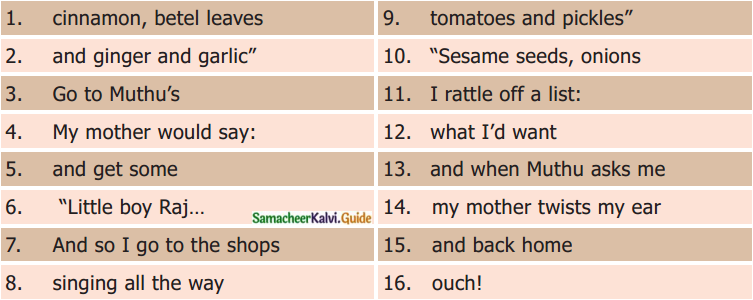
Samacheer Kalvi 6th English Guide Term 1 Poem 3 I Dream of Spices 3
Answer:

Answer
1. cinnamon, betel leaves
2. and ginger and garlic.”
3. Go to Muthu’s
4. My mother would say:
5. and get some
6. “Little boy Raj.
7. And so I go to the shops.
8. singing all the way
9. tomatoes and pickles”
10. “Sesame seeds, onions
11.1 rattle off a list:
12. what I’d want
13. and when Muthu asks me
14. My mother twists my ears
15. and back home
16. ouch!

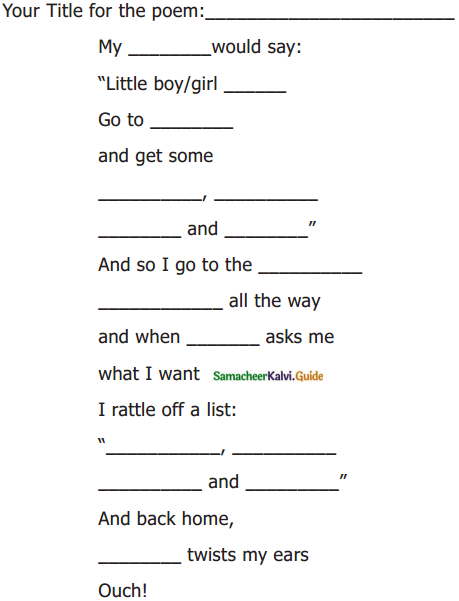
G. Fill in the blanks with different words and write your own poem. (Text Book Page No. 149)
Samacheer Kalvi 6th English Guide Term 1 Poem 3 I Dream of Spices 4

Your Title for the poem: A wonderful purchase
My grandma would say:
“Little boy/girl Raiu
Go to fruit shop
and get some
apples, oranges
grapes and bananas
And so I go to the fruit shop
Whistling all the way
and when the fruit seller asks me
what I want
I rattle off a list:
pineapple, lime
jack fruit and guava
And back home,
Grandma twists my ears
Ouch!

6th English Guide Dream of Spices Additional Appreciation Questions

Answer the questions given below:

1. My mother would say;
“Little boy Raj…
Go to Muthu’s
a. Who would say to go to the shop?
Answer:
Raj’s mother.

b. How does she call Raj?
Answer:
Little boy.

2. And so I go to the shops singing all the way
a. Who goes to shops?
Answer:
Raj goes to shops.

b. How does he go?
Answer:
He goes singing all the way.

3. When Muthu asks me what I’d want I rattle off a list;
“Seasame seeds, onions tomatoes, and pickles?
a. What does Muthu ask?
Answer:
Muthu asks Raj what he would want.

b. List the things he bought?
Answer:
Seasame seeds, onions, tomatoes, and pickles.

I Dream of Spices Summary in English

His mother says “Little boy Raj” Go to Muthu’s shop and get some cinnamom, betal leaves, ginger, and garlic. “So he goes to the shops singing all the way and when Muthu asks him what he would want, he rattle off a list. “Sesasme seeds, onions, tomatoes and pickles” and back home, mother twists his ears.

I Dream of Spices Summary in Tamil

அவரது தாயார் “குட்டிப் பையன் ராஜ்” என்று கூறுகிறார். முத்துவின் கடைக்குச் சென்று இலவங்கப்பட்டை, வெற்றிலையும், இஞ்சி, பூண்டு ஆகியவற்றை வாங்கி வா என்று என்று கூறினார். அதனால் அவன் கடைக்கு விழியெங்கும் பாடிக்கொண்டே போகிறான். முத்து வனிடம் என்ன வேண்டும் என்று கேட்டவுடன் எள் விதைகள், வெங்காயம், தக்காளி மற்றும் ஊறுகாய் என்று ஒரு பட்டியலை ஒப்புவிக்கிறான். வீட்டிற்கு திரும்புகிறான். அவன் அம்மா அவன் காதை திருகினாள்.

I Dream of Spices About the Author in English

Raj Arumugam was born in India. He now lives in Australia. He is a teacher, poet’ writter and business man. His poetry is complemented by images of traditional art from various cultures, is well known to international audiences through many poetry sites.” The bird in the bamboo Grove.” Arkad’s Gold.” A mind for life ‘Rainbow snake is some of the works of Raj Arumugam.

I Dream of Spices About the Author in Tamil

ராஜ் ஆறுமுகம் இந்தியாவில் பிறந்தார். அவர் இப்போது ஆஸ்திரேலியாவில் வசிக்கிறார். அவர் ஓர் ஆசிரியர், கவிஞர், எழுத்தாளர் மற்றும் தொழிலதிபர். அவரது கவிதை, பல்வேறு கலாச்சாரங்களிலிருந்து பாரம்பரிய கலையின் சித்திரங்களை நிரப்புவதும் பல கவிதை தளங்கள் மூலம் சர்வதேச பார்வையாளர்களுக்கு நன்கு அறிப்பட்டிருக்கிறது. “ The Bird in the Bamboo Grove,” Arkad’s Gold, “Amind for life,” Rainbow snake” ஆகியவை ராஜ் ஆறுமுகம் அவர்கள் எழுதிய நூல்களுள் சில
Samacheer Kalvi 6th English Guide Term 1 Poem 2 Trees

Tamilnadu State Board New Syllabus Samacheer Kalvi 6th English Guide Pdf Term 1 Poem 2 Trees Text Book Back Questions and Answers, Summary, Notes.

Tamilnadu Samacheer Kalvi 6th English Solutions Term 1 Poem 2 Trees

6th English Guide Trees Text Book Back Questions and Answers

Warm Up (Text Book Page No. 123)

Look at the picture. (Text Book Page No. 123)
Samacheer Kalvi 6th English Guide Term 1 Poem 2 Treees 1

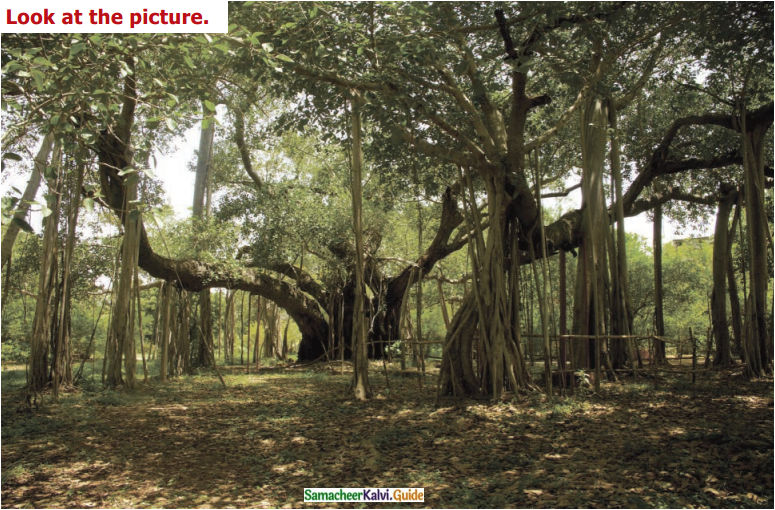
Have you seen the Adyar Banyan Tree? Would
you like to visit that place? Why?
Answer:
Yes, I have seen the Adyar Banyan Tree and I would like to visit that place because it gives shelter to many birds and animals. I also enjoy playing with my friends there.

Vocabulary (Text Book Page No. 126)

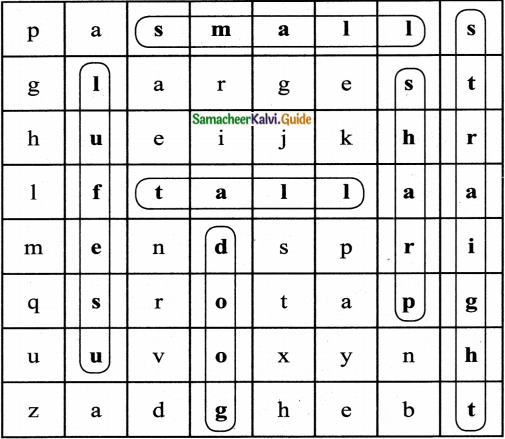
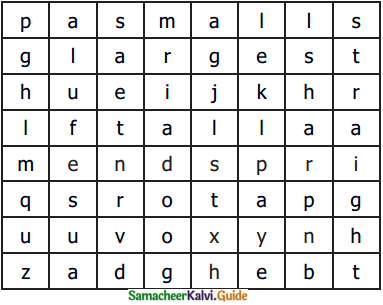
A. Find the describing words given in the poem.
Samacheer Kalvi 6th English Guide Term 1 Poem 2 Treees 2
Answer:
Samacheer Kalvi 6th English Guide Term 1 Poem 2 Treees 3

Read and Understand (Text Book Page No. 126)

B. Answer the following.

a. What does the peepul do?
Answer:
The peepul tree quivers in the breeze.

b. How does the coconut tree grow?
Answer:
The coconut tree grows very tall and straight.

c. What does the tamarind give?
Answer:
The tamarind gives us a pleasant shade.

d. What is as sharp as a blade?
Answer:
The Date’s leaf is as sharp as a blade.

e. What does the teak tree give us?
Answer:
The teak tree gives us useful wood.

Creative Writing

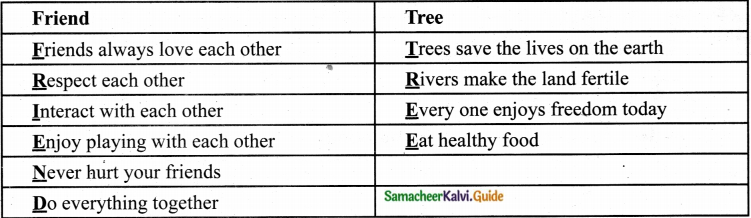
C. Read the acrostic poem on ‘Friend’. Write an acrostic poem like this on ‘Tree’.
Samacheer Kalvi 6th English Guide Term 1 Poem 2 Treees 4

Appreciating the Poem (Text Book Page No. 126)

D. Work in pairs.

A rhyme is a repetition of the same sound in two or more words. Usually, they come at the end of lines in poems and songs.
Eg. tower – power; king – sing

Discuss with your partner and pick out the rhyming words in the poem.
trees – breeze;
tall – small;
shade – blade;
wood – good

6th English Guide Trees Additional Appreciation Questions

Answer the question given below:

1. The Banyan is the largest of trees,
The peepul quivers in the breeze,
a. Which is the largest of trees?
Answer:
The banyan is the largest of trees.

b. How does the breeze affect the trees?
Answer:
The Peepul tree shakes quickly in the breeze.

2. The Peepul quivers in the breeze
a. What is the Peepul?
Answer:
The Peepul is a tree.

b. What does it do in the breeze?
Answer:
It quivers in the breeze.

3. The Coconut grows up straight and tall
a. How does the Coconut grow up? ‘ • .
Answer:
The Coconut grows up straight and tall.

4. The Date s leaf is as sharp as a blade,
a. How is the Date’s leaf?
Answer:
The Date’s leaf is very sharp.

5. The Mango gives us fruit that is good
a. What does the Mango give us?
Answer:
The Mango gives us fruit.

b. How is the fruit?
Answer:
The fruit is good.

Trees Summary in English

The Banyan is the largest of all other trees, The peepul shakes quickly in the wind, The coconut grows up straight and tall, The Neem tree’s fruits are very small in size. The Tamarind gives us enjoyable shade, The Date’s leafe is as sharp as a blade. The Teak tree gives us useful wood. The mango gives us fruit that is good.

Trees Summary in Tamil

ஆலமரம் மற்ற எல்லா மரங்களிலும் மிகப் பெரியது. அரசமரம் காற்றில் விரைவாக நடுங்குகிறது. தென்னைமரம் நேராகவும் உயரமாகவும் வளர்கிறது. வேம்பு மரத்தின் பழங்கள் அளவு மிகச் சிறியவை. புளியமரம் நமக்கு மகிழ்ச்சியான நிழலைத் தருகிறது. பேரிச்சமர இலை பிளேடு போல கூர்மையானது. தேக்கு மரம் எங்களுக்கு பயனுள்ள மரத்தை தருகிறது. மாம்பழம் நமக்கு நல்ல பழத்தை தருகிறது.

Trees About the Author in English

Sare Coleridge an English author and translator, born December 23, 1802, in the United Kingdom. She was the only daughter of Samuel Taylox Coleridge and his wife Sara Tricker. Sara took up the task of editing her father’s works, notably “Essay on Rationalism”, 2nd edition of Biographia Literaric” She died of breast cancer in London on 3 May 1852.

Trees About the Author in Tamil

ஆங்கில எழுத்தாளரும் மொழிபெயர்ப்பாளருமான சாரா கோல்ரிட்ஜ், இங்கிலாந்தில் 1802-ஆம் ஆண்டு டிசம்பர் 23 ஆம் நாள் பிறந்தார். சாமுவேல் டெய்லர் கோல்ரிட்ஜ் மற்றும் அவரது மனைவி சாரா டிரைக்கரின் ஒரே மகள் தான் இவர். சாரா தனது தந்தையின் படைப்புகளாக, குறிப்பாக “பகுத்தறிவு பற்றிய கட்டுரை”, “பயோகிராஃப்பியா லிட்ரரியா” வில் இரண்டாம் பதிப்பையும் எடிட் செய்யும் பணியை எடுத்துக் கொண்டார். இவர் லண்டனில் மார்பக புற்றுநோயால் மே 3, 1852-இல் இறந்தார்.

Samacheer Kalvi 6th English Guide Term 1 Poem 1 The Crocodile

Tamilnadu State Board New Syllabus Samacheer Kalvi 6th English Guide Pdf Term 1 Poem 1 The Crocodile Text Book Back Questions and Answers, Summary, Notes.

Tamilnadu Samacheer Kalvi 6th English Solutions Term 1 Poem 1 The Crocodile

6th English Guide The Crocodile Text Book Back Questions and Answers

Warm Up (Text Book Page No. 99)

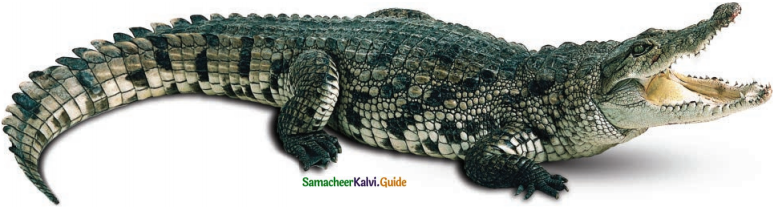
What do crocodiles eat? Talk about it. (Text Book Page No. 99)
Samacheer Kalvi 6th English Guide Term 1 Poem 1 The Crocodile 2
Crocodiles is a carnivorous reptile. They eat fishes, birds small animals, and even man. They live in the rivers, the river-dams, the lakes, etc. They live both on land and in water.

Textual Exercise (Text Book Page No. 101)

B. Choose the rhyming words from the box and write them in the correct blanks.
Samacheer Kalvi 6th English Guide Term 1 Poem 1 The Crocodile 1

1. claws, jaws, ……………………., ……………………. .
Answer:
paws, caws

2. grin, in, ……………………., ……………………. .
Answer:
din, thin

3. crocodile, Nile ……………………., ……………………. .
Answer:
file, while

4. tail, scale, ……………………., ……………………. .
Answer:
nail, mail

C. Read these lines and answer the questions given below. (Text Book Page No. 102)

1. How cheerful he seems to grin
Who does ‘he’ refer to?
Answer:
He refers to the Crocodile.

2. And pour the water of the Nile
What does the Nile refer to? Where is it?
Answer:
The Nile is a river. It flows in Egypt. Here in this poem Nile refers to the tear drops of the crocodile.

3. And welcomes little fishes in
With gently smiling jaws!
Who welcomes the fish? Why?
Answer:
The Crocodile welcomes the fish to eat it.

Which line tells you that the crocodile is hungry?
Answer:
The first line tells us that the Crocodile is hungry.

D. Work in pairs. Share your answers with your partner.

1. What is the poem about?
Answer:
The poem is about a crocodile.

2. How does the crocodile’s tail look?
Answer:
The crocodile’s tail looks shining.

3. What does ‘improve his tail’ mean?
Answer:
To become better than before.

4. How does the spread his claws?
Answer:
He spreads his claws very neatly.

5. Why does he welcome little fishes?
Answer:
He is hungry and he feeds on them. So he welcomes them.

6. Which line talks about the crocodile’s mouth and his shape?
Answer:
The last line talks about the crocodile’s mouth and its shape.

Writing

E. What does the poet say about the crocodile? Write in your own words, (in about fifty words)

The Crocodile is a large meat-eating reptile living near rivers. The little Crocodile grows and develops his bright tail. The water of the Nile is poured on every scale of the crocodile. He appears cheerful when he grins. He welcomes fishes with his jaws open. An adult crocodile is very long and powerful.

6th English Guide The Crocodile Additional Appreciation Questions

1. How cheerful he seems to grin.
How neatly spreads his claws.
a. Who spreads his claws?
Answer:

b. What is the meaning of the word cheerful?
Answer:
It means happy.

2. And pour the water of the Nile
On every golden scale!
a. Why is the scale golden?
Answer:
The scale in the tail is shining like gold because of the Nile water poured on it.

b. What is referred to as the water of the Nile?
Answer:
The tears of the crocodile are referred to as the water of the Nile.

3. How cheerful he seems to grins.
How neatly spreads his claws.
What is the poetic device used in this line? Explain your answer.
Answer:
He refers to the crocodile with the word “he” rather than the word “it”. He acknowledges that the crocodile’s tears are not the result of emotional distress, but also shows how the crocodile generates them with the intention of capturing his prey.

The Crocodile Summary in English

The poet is talking about the crocodile that lives in the River Nile. He tells us that the crocodile improves his looks by pouring water on his body which makes it shine and the scales appear golden under the rays of the sun. This will make him look very attractive to the fishes that he wants to prey on.

Moral:
People seems friendly but wait for an opportunity to strike at innocent one who may be unaware of their red malicious intentions. So the poet warns us to be very carefully while dealing with others and not yet carried away by their sweet or attractive looks.

The Crocodile Summary in Tamil

நைல் நதியில் வாழும் முதலைப் பற்றி கவிஞர் பேசுகிறார். முதலை தனது உடலில் தண்ணீ ர் ஊற்றுவதன் மூலம் தனது தோற்றத்தை மேம்படுத்துகிறது. அது பிரகாசிக்க வைக்கிறது மற்றும் சூரியனின் கதிர்களின் கீழ் செதில்கள் தங்கமாகத் தோன்றும் என்று அவர் நமக்குச் சொல்கிறார். இது அவர் வேட்டையாட விரும்பும் மீன்களுக்கு மிகவும் கவர்ச்சியாகத் தோன்றும்.

ஒழுக்கநெறி:
மக்கள் நட்பாக தோன்றுகிறார்கள். ஆனால் அவர்களின் சிகப்பு மெல்லிய நோக்கங்களை அறியாத அப்பாவி மீது தாக்குதல் நடத்தும்வரை காத்திருக்கிறார்கள். எனவே மற்றவர்களுடன் பழகும்போது கவிஞர் அவரை மிகவும் கவனமாக வெளிப்படுத்துகிறார். ஆனால் அவர்களின் பிரமிப்பு அல்லது கவர்ச்சியான தோற்றத்தால் இன்னும் விலகிச் செல்லவில்லை.

The Crocodile About the Author in English

Charles Luteridge Dodgson known by his pen name Lewis Carroll was ( 1832^s 1898) – bora in England. He is the author of the famous children’s books. “Alice’s Adventures in the Wonderland” and “ Through – the Looking-Glass”. He was excellent in Mathematics and won many prizes for his mathematical intelligence. He was an avid photographer and had written many essays, political pamphlets, and poetry. Carroll loves to entertain Children. So he had written many books for children. His “ Alice’s Adventures in the Wonderland” became the most popular children’s book in England and by 1932 it was one of the most popular in the world.

The Crocodile About the Author in Tamil

லெவிஸ் கரோல் என்ற புனைப்பெயரால் அழைக்கப்படும் சார்லஸ் லியூட்ரிட்ஜ் டாட்சன் (1832 – 1898), இங்லாந்தில் பிறந்தார். இவர் புகழ்பெற்ற குழந்தைகள் புத்தங்களான “ Alice’s Adventures in the Wonderland” மற்றும் “Through the looking – Glass” ஆகியவற்றின் ஆசிரியர் ஆவார். இவர் தன்னுடைய சிறந்த கணித அறிவிற்கு பல பரிசுகளை வென்றுள்ளார். இவர் ஒரு தீவர புகைப்படக் கலைஞர். இவர் பல கட்டுரைகள், அரசியல் துண்டு பிரசுரங்கள் மற்றும் கவிதைகளை எழுதியுள்ளார். கரோல் குழந்தைகளை மகிழ்விக்கவே பல குழந்தைகள் புத்தங்களை எழுதியுள்ளார். அவரது ‘Alice’s Adventures in the Wonderland’ புத்தகம் இங்கிலாந்தில் மிகவும் பிரபலமான புத்தமாகவும், 1932ஆம் ஆண்டில் அது உலகளவில் மிகவும் பிரபலமானதாக மாறியது.

Samacheer Kalvi 12th English Guide Book Back Answers Solutions

Subject Matter Experts at SamacheerKalvi.Guide have created Tamil Nadu State Board Samacheer Kalvi 12th English Book Answers Solutions Guide Pdf Free Download are part of Samacheer Kalvi 12th Books Solutions.

Let us look at these TN State Board New Syllabus Samacheer Kalvi 12th Std English Guide Pdf of Text Book Back Questions and Answers, Chapter Wise Important Questions, Study Material, Question Bank, Notes, and revise our understanding of the subject.

Students can also read Tamil Nadu Samacheer Kalvi 12th English Model Question Papers 2020-2021 English & Tamil Medium.

Samacheer Kalvi 12th English Book Solutions Answers Guide

Samacheer Kalvi 12th English Book Back Answers

Samacheer Kalvi 12th English Book Solutions Prose

Samacheer Kalvi 12th English Book Solutions Poem

Samacheer Kalvi 12th English Book Solutions Supplementary

We hope these Tamilnadu State Board Samacheer Kalvi Class 12th English Book Solutions Answers Guide Pdf Free Download will help you get through your subjective questions in the exam.

Let us know if you have any concerns regarding TN State Board New Syllabus Samacheer Kalvi 12th Standard English Guide Pdf of Text Book Back Questions and Answers, Chapter Wise Important Questions, Study Material, Question Bank, Notes, drop a comment below and we will get back to you as soon as possible.

Samacheer Kalvi 6th English Guide Term 1 Prose Chapter 3 A Visitor from Distant Lands

Tamilnadu State Board New Syllabus Samacheer Kalvi 6th English Guide Pdf Term 1 Prose Chapter 3 A Visitor from Distant Lands Text Book Back Questions and Answers, Summary, Notes.

Tamilnadu Samacheer Kalvi 6th English Solutions Term 1 Prose Chapter 3 A Visitor from Distant Lands

6th English Guide A Visitor from Distant Lands Text Book Back Questions and Answers

Warm Up (Text Book Page No. 132)

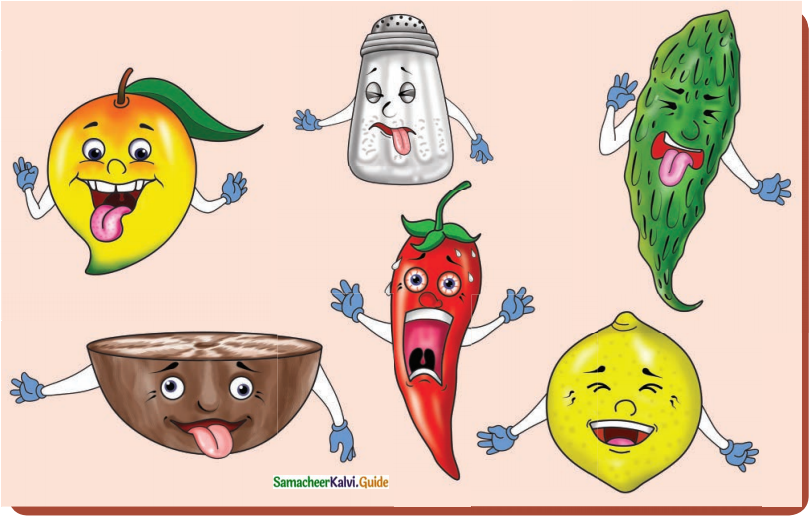
Look at the pictures. What do their expressions tell you? Fill in the blanks with the item that tastes the same. One example is given for each. (Text Book Page No. 134)
Samacheer Kalvi 6th English Guide Term 1 Prose Chapter 3 A Visitor from Distant Lands 1

  1. Sweet: sugarcane – Jackfruit, Ice-cream, Cake, Candy
  2. Sour: lime – Cheese, Orange, tamarind. Vinegar. Curd
  3. Bitter: bitter gourd – spinach, fenugreek, curry leaf
  4. Salty: salt – dry fish, Pickles, Seaweed
  5. Astringent: betel nut – gooseberry, Pomegranate
  6. Pungent: ginger – pepper, Garlic, Onion

Read and Understand (Text Book Page No. 141)

A. Work in pairs. Tick the best option.

1. When Amma said, ‘Don’t upset our foreign visitor’ she meant
a) potatoes
b) pepper
c) chilli
Answer:
c) chilli

Samacheer Kalvi 9th English Guide Prose Chapter 2 I Can’t Climb Trees Anymore

2. Selvi asked, ‘Did they come in an aeroplane?’ because she
a) was joking
b) did not understand her mother
c) thought it would be fun
Answer:
a) was joking

3. Amma bought the vegetables from the
a) shops
b) shopping mall
c) supermarket
Answer:
a) shops

B. Answer these questions. (Text Book Page No. 141)

1. Who first brought these vegetables to India?
Answer:
Some foreign merchants first brought these vegetables to India.

2. Who came to India from Portugal in search of pepper?
Answer:
Vasco da Gama came to India from Portugal in search of pepper.

Samacheer Kalvi 9th English Guide Prose Chapter 2 I Can’t Climb Trees Anymore

3. What did Amma mean when she said tomatoes, ladies’ fingers and corn came from other countries?
Answer:
Amma meant that they could not eat these vegetables as they came from other countries.

C. Read the comic strip again. Make groups of four and frame some questions on what you have read. Each group should ask a question in turns. You cannot repeat the same question. The team which asks more questions is the winner. (Text Book Page No. 141)

1. Which are the foreign vegetables mentioned?
Answer:
Com, tomatoes and ladies fingers are the foreign vegetables mentioned.

2. Why was Columbus sad?
Answer:
Columbus was looking for India and black pepper, but he found South America and the chilli So, he was sad.

D. Discuss in groups and share your views in three or four sentences with others in the class.

1. What is your favourite dish? Do you know the spices that go into it? (Text Book Page No. 141)
Answer:
My favourite dish is tomato rice. Cinnamon, pepper, chillies, mustard, ginger & garlic are the spices that go into it.

Vocabulary

E. Add ‘r’, ‘er’ or ‘or’ to get the name of the person who does the activity. Take turns in class to make sentences with the words you have formed. (Text Book Page No. 142)
Samacheer Kalvi 6th English Guide Term 1 Prose Chapter 3 A Visitor from Distant Lands 5

e.g: A teacher is a person who teaches. Teach + er – Teacher.
use+r – user;
buy+er – buyer;
sail+or – sailor;
watch+er – watcher
operat+or – operator
foreign+er – foreigner;
bake+r – baker;
write+r – writer;
govem+or – governor;
act+or – actor

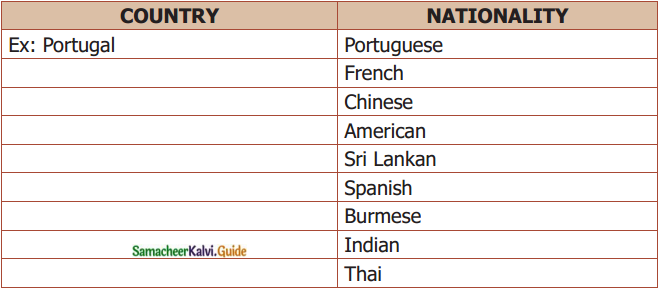
F. Complete this table with the help of the given example.

e.g: Portugal is the name of the country. People from Portugal are called the Portuguese.
Samacheer Kalvi 6th English Guide Term 1 Prose Chapter 3 A Visitor from Distant Lands 2

COUNTRYNATIONALITY
Ex: PortugalPortuguese
FranceFrench
ChinaChinese
AmericaAmerican
Sri LankaSri Lankan
SpainSpanish
BurmaBurmese
IndiaIndian
ThailandThai

Listening

G. Listen to some interesting facts about spices and choose the best option. (Listening text in on-page -157)

1. Red peppers have
a. Vitamin A
b. Vitamin C
c. Vitamin D
Answer:
b) Vitamin C

2. Red chilli is also called
a. Paprika
b. Carica
c. Pyrus
Answer:
a) Paprika

Samacheer Kalvi 9th English Guide Prose Chapter 2 I Can’t Climb Trees Anymore

3. One pound is equal to grams.
a. 480
b. 450
c. 500
Answer:
b) 450

4. Mint leaves help to cure
a. body pain
b. fever
c. upset stomach
Answer:
c) upset stomach

Speaking (Text Book Page No. 143)

H. Work in pairs. Take turns and speak about spices.

Saritha: Hi Divya, how are you?
Divya: Hi, I’m fine Saritha.
Saritha: What did you have for breakfast?
Divya: Dhosa with onion chutney.
Saritha: Do you know where onions have come from ?
Divya: Yes. I guess it is from Central Asia.
Saritha: Do you know chilli too has come from somewhere else?
Divya: Is it from South America?
Saritha: Yes, you are right.
Divya: Many of the vegetables came from other countries.

Use Grammar (Text Book Page No. 144)

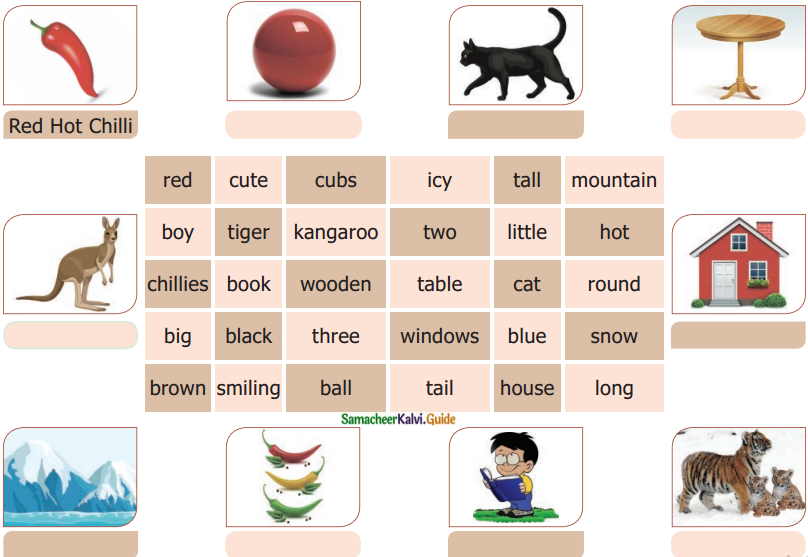
Use two or three words from the box to describe each picture.
Samacheer Kalvi 6th English Guide Term 1 Prose Chapter 3 A Visitor from Distant Lands 3
Answer:
Samacheer Kalvi 6th English Guide Term 1 Prose Chapter 3 A Visitor from Distant Lands 6

I. Correct the order of the words in bold and write them in the blanks. (Text Book Page No. 145)

1. Green little the chilli ……………. was very hot.
Ans: The little green chilli

2. Sailors many brave ……………. tried to find a sea route to India.
Answer:
Many brave sailors

3. Brown dog the big ……………. barked at the children.
Answer:
The big brown dog

4. The spice most common ……………. used today is the red chilli pepper.
Answer:
The most common spice

Samacheer Kalvi 9th English Guide Prose Chapter 2 I Can’t Climb Trees Anymore

5. The path mud long ……………. led to a beautiful lake.
Answer:
The long mud path

Writing (Text Book Page No. 145)

K. How do you cook rice in your house?
Fill in the gaps in this recipe for cooking rice. Use the words in the box.
Samacheer Kalvi 6th English Guide Term 1 Prose Chapter 3 A Visitor from Distant Lands 7

What you’ll need

  • 1 cup uncooked white rice
  • 2 cups of water
  • pinch of salt

How to make it

  1. Wash the rice until the water runs clear.
  2. Drain the water and keep it aside.
  3. In a medium-sized pan, bring water to boil.
  4. Add the salt, stir, and then add the rinsed and drained rice.
  5. Reduce the heat, cover the rice, and let it simmer on low heat for 20 minutes.
  6. Check after 15 minutes to see if all the water has evaporated. If it has, the rice is ready.
  7. If not, replace the lid and let the rice simmer for 5 more minutes.
  8. Remove from pan and serve.

Creative Writing

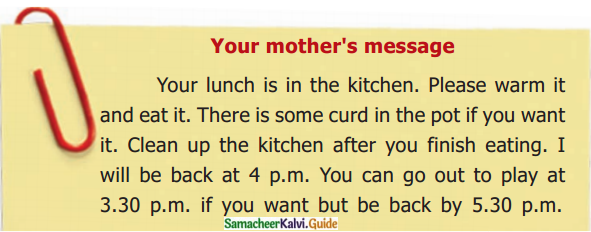
M. Your mother has written a message for you before going out. Write a message to her after finishing lunch.
Samacheer Kalvi 6th English Guide Term 1 Prose Chapter 3 A Visitor from Distant Lands 4
Answer:

  1. Mom, I had lunch.
  2. I liked the curd.
  3. I have cleaned the kitchen.
  4. I am going to play.
  5. I will back at 5.30 p.m.

Write about the following in your message.

  • You ate lunch in the kitchen
  • What you liked vegetable biryani (mention the dish).
  • You have cleaned the kitchen after you finished eating.
  • You are going out to play. I will be back by 5.30 p.m (mention when you will be back)

A Visitor from Distant Lands Summary in English

Mani’s family lived near Genjee in Villupuram district. Mani’s teacher taught about vegetables that came far from India and advised to eat locally grown vegetables. His parents said him that many merchants sailed to India in search of spices mainly black pepper. A Portugal merchant Vasco-da-Gama sailed to Kerala in search of spices and took spices from India. Like this, they also introduced many of their nature vegetables to India. Christopher Columbus sailed to South America instead of India and found the America and the chilli. Chillies were introduced to India through the Portuguese.

A Visitor from Distant Lands Summary in Tamil

மணியின் குடும்பம் விலுபுரம் மாவட்டத்தில் செஞ்சி அருகே வசித்து வந்தனர். மணியின் ஆசிரியர் இந்தியாவில் இருந்து வெகுதொலைவில் இருந்து இந்தியாவிற்கு வந்த காய்கறிகளைப் பற்றி கற்பித்தார். மேலும் உள்நாட்டில் வளர்க்கப்படும் காய்கறிகளை சாப்பிட அறிவுறுத்தினார். பல வணிகர்கள் மசாலா முக்கியமாக கருமிளகைத் தேடி இந்தியாவுக்கு பயணம் செய்ததாக அவரது பெற்றோர் சொன்னார்கள் ஒரு போர்ச்சுக்கல், வணிகர் வாஸ்கோடகாமா மசாலாவைத் தேடி கேரளாவுக்குச் சென்று இந்தியாவிலிருந்து மசாலாப் பொருட்களை எடுத்துச் சென்றார். இதுபோன்று அவர்கள் தங்கள் இயற்கைக் காய்கறிகளையும் இந்தியாவிற்கு அறிமுகப்படுத்தினர். கிறிஸ்டோபர் கொலம்பஸ் இந்தியாவிற்குப் பதிலாக தென் அமெரிக்காவுக்கு சென்று அமெரிக்காவையும் மிளகாவையும் கண்டுபிடித்தார். மிளகாய் போர்ச்சுகீசியர்கள் மூலம் இந்தியாவுக்கு அறிமுகப்படுத்தப்பட்டது.

Samacheer Kalvi 6th English Guide Term 1 Prose Chapter 2 When the Trees Walked

Tamilnadu State Board New Syllabus Samacheer Kalvi 6th English Guide Pdf Term 1 Prose Chapter 2 When the Trees Walked Text Book Back Questions and Answers, Summary, Notes.

Tamilnadu Samacheer Kalvi 6th English Solutions Term 1 Prose Chapter 2 When the Trees Walked

6th English Guide When the Trees Walked Text Book Back Questions and Answers

Warm Up (Text Book Page No. 108)

B. Discuss the Answer.

1. What are the children doing? Describe their activities.
Answer:
The children were playing and spending time happily under the banyan tree. They were playing, swinging, climbing the tree.

Samacheer Kalvi 9th English Guide Prose Chapter 2 I Can’t Climb Trees Anymore

2. Would you like to be in their place? If so what would you enjoy the most?
Answer:
Yes, I like to be in the place and enjoy the pleasant nature and play with my friends.

Section – I

Discuss and Answer (Text Book Page No. 112)

Answer the following questions:

1. When did the garden become a happy place for the author?
Answer:
The garden became a happy place for the author when his grandfather joined him.

2. What are the two reasons the author gives for the plants moving towards grandfather?
Answer:
One reason the author gives for the plants moving towards grandfather may be light and warmth. The other reason may be that the plants wanted to be near grandfather.

Samacheer Kalvi 9th English Guide Prose Chapter 2 I Can’t Climb Trees Anymore

3. Why does the writer think that the peepul tree is a great show off?
Answer:
Even when there is no breeze, their road-chested, slim-waisted leave will spin like tops determined to attract your attention and invite you into the shade.

Section -II

Discuss and Answer (Text Book Page No. 114)

1. Why do we need trees? List four reasons that Grandfather gives.
Answer:
We are planting trees for the forest and for the animals and birds. They live there and need more food and shelter. So the trees help them. Besides men need trees. We need trees to keep the desert away, to attract rain, to prevent the banks of the river from being washed away, for fruit and flowers, leaf and seed. We need timber too.

2. Why did the author help his Grandfather plant trees?
Answer:
The thought of a world without trees became a sort of nightmare to the author and so he helped his Grandfather in his tree-planting with greater enthusiasm.

Samacheer Kalvi 9th English Guide Prose Chapter 2 I Can’t Climb Trees Anymore

3. What made Grandfather plant saplings on the rocky island?
Answer:
Grandfather saw a dry river-bed on a small rocky island. The river-beds are completely dry in summer but flooded during the monsoon rains. To make that rocky island a forest he planted saplings and cuttings.

Section – III

Discuss and Answer (Text Book Page No. 116)

1. What did Grandmother feel about trees growing in the house?
Answer:
Grandmother felt that trees growing in the house made it look like a roof brought down by jungle.

2. Why did the author leave town?
Answer:
The Second World War came and so the author left the town.

3. How did my Grandfather’s dream come true?
Answer:
The island became a small green paradise.

Samacheer Kalvi 9th English Guide Prose Chapter 2 I Can’t Climb Trees Anymore

4. Describe what the author saw when he went back to the island.
Answer:
When the author went back to the island, it was like a small green paradise. He saw red blooms of the coral blossom. Then he saw squirrels living in the trees and a koel, a crow pheasant, etc, The trees seem to know the author. They seemed to beckon him nearer. So he saw a green forest on that island.

Read and Understand (Text Book Page No. 117)

A. Tick the most appropriate option.

1. According to the author the tendril was moving towards grandfather because of it ………………………….
a) needed light and warmth.
b) did not like light and warmth.
c) wanted to be near Grandfather.
d) wanted to escape from the winter.
Answer:
c) wanted to be near Grandfather

2. Grandmother had wanted the peepul tree cut down because of …………………………
a) she did not like trees.
b) she wanted to grow flowers.
c) it was an old tree.
d) it was knocking down the bricks of the outhouse.
Answer:
d) it was knocking down the bricks of the outhouse

Samacheer Kalvi 9th English Guide Prose Chapter 2 I Can’t Climb Trees Anymore

3. Grandfather helped grandma out with the gardening because he ………………………….
a) liked gardening.
b) wanted to grow flowers to attract butterflies.
c) wanted to beautify the garden.
d) wanted to make the house green.
Answer:
b) wanted to grow flowers to attract butterflies

4. The author did not want to plant saplings in the forest because ………………………….
a) no one would come to see them.
b) it was dangerous to enter the forest.
c) it would not be of any use to them.
d) no one would appreciate them.
Answer:
a) no one would come to see them

5. Grandfather felt planting trees would help the forest because ………………………….
a) he wanted to make the view beautiful.
b) the river-bed was dry.
c) animals and birds in the forest would love him.
d) the animals and birds would find it easier to live.
Answer:
d) the animals and birds would find it easier to live

Samacheer Kalvi 9th English Guide Prose Chapter 2 I Can’t Climb Trees Anymore

6. When the author returned from England to Dehradun, he found Grandfather’s dream had come true because of the ………………………….
a) old house had changed
b) river was full.
c) trees had red flowers
d) forest covered the island.
Answer:
d) forest covered the island

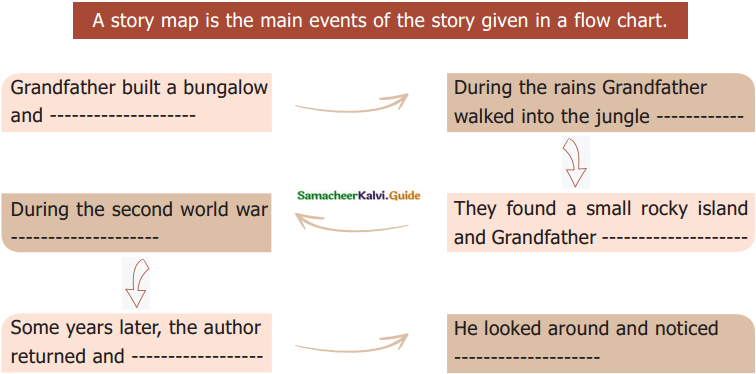
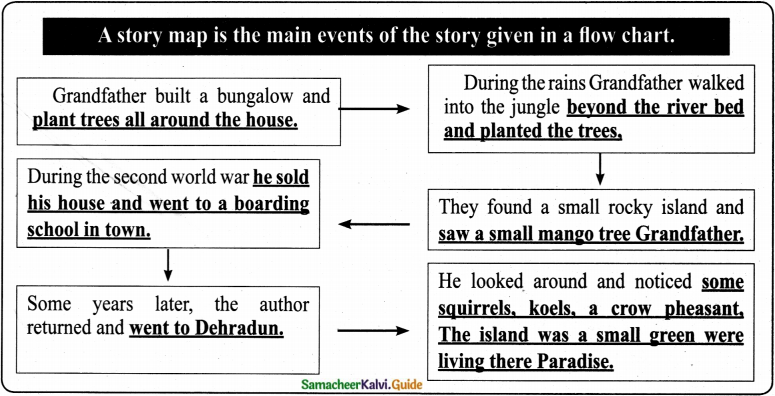
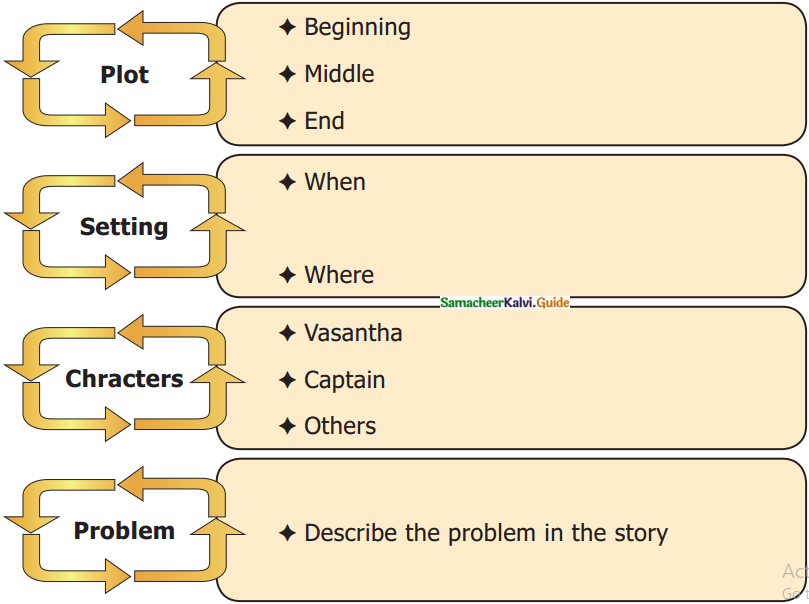
B. Read the story on your own. Discuss in a group and complete the story map below. (Text Book Page No. 118)
Samacheer Kalvi 6th English Guide Term 1 Prose Chapter 2 When the Trees Walked 2
Answer:
Samacheer Kalvi 6th English Guide Term 1 Prose Chapter 2 When the Trees Walked 3

C. Work in groups of five. Tell the story in ten sentences.

You can begin the story like this:
The author’s Grandfather served in the Indian Forest Service.
After his retirement he built
Now continue the story. Each one should say one sentence.
Answer:

  • Grandfather built a bungalow and planted trees around it.
  • During the rains grandfather walked into the jungle and planted cuttings and saplings.
  • They found a small rocky island and grandfather planted plants to improve the view.
  • During the second world war, the author was sent to a boarding school.
  • Some years later, the author returned and saw the island.
  • He looked around and noticed a beautiful small green paradise.

D. Write a summary based on the story map.

Grandfather built a bungalow and planted trees around it. During the rains grandfather walked into the jungle and planted cuttings and saplings. They found a small rocky island and grandfather planted plants to improve the view. During the second world war, the author was sent to a boarding school. Some years later, the author returned and saw the Island. He looked around and noticed a beautiful small green paradise.

Vocabulary (Text Book Page No. 119)

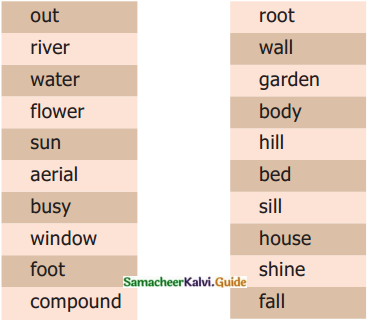
E. Look at the words in the boxes. Match the words to make as many new words as possible. One is done for you. Eg. outhouse.
Samacheer Kalvi 6th English Guide Term 1 Prose Chapter 2 When the Trees Walked 4
Answer:

New Words
outrootouthouse
riverwallriver bed
watergardenwaterfall
flowerbodyflower garden
sunhillsunshine
aerialbedaerial root
busysillbusy body
windowhousewindow sill
footshinefoothill
compoundfallcompound wall

F. Look at the words in the box. Make new words by adding ‘ly’ wherever possible. It will not be possible with all the words.
Samacheer Kalvi 6th English Guide Term 1 Prose Chapter 2 When the Trees Walked 5

Answer:
lonely, vigorously, constantly, completely, strongly, unlikely, greatly, immediately, broadly

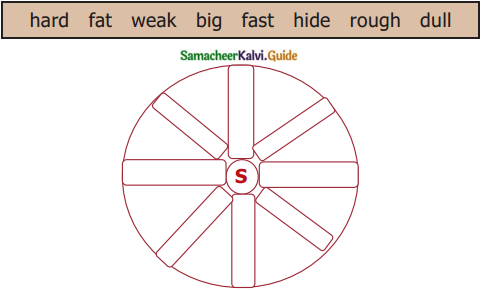
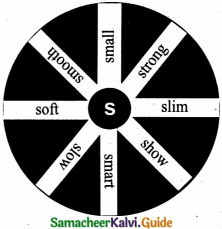
G. Look at the words in the box. Fill the wheel with their antonyms. All the words begin with ‘S’ and are from the text.
Samacheer Kalvi 6th English Guide Term 1 Prose Chapter 2 When the Trees Walked 6
Answer”
Samacheer Kalvi 6th English Guide Term 1 Prose Chapter 2 When the Trees Walked 7

  • hard × soft
  • fat × slim
  • weak × strong
  • big × small
  • fast × slow
  • hide × show
  • rough × smooth
  • dull × smart

Listening

H. Listen to your teacher read out what happened to Nandhu. Some of the statements given below are correct. Tick them (0). (Listening text is on page -157)

  • The truck went over a stone. (✗)
  • The box fell out of a truck. (✓)
  • The brass lamp was in the truck. (✗)
  • Nandhu wanted to play with the lamp. (✓)
  • It was like the lamp Nandhu had at home. (✗)
  • Nandhu pressed a button. (✓)

Speaking

I. Take something from your school bag. Describe it in three sentences. Ask the class to find out the thing you have described. (Text Book Page No. 120)

I take something from your school bag
I took out a hard device.
It was handy.
We use it for contacting others immediately.
Answer:
Computer

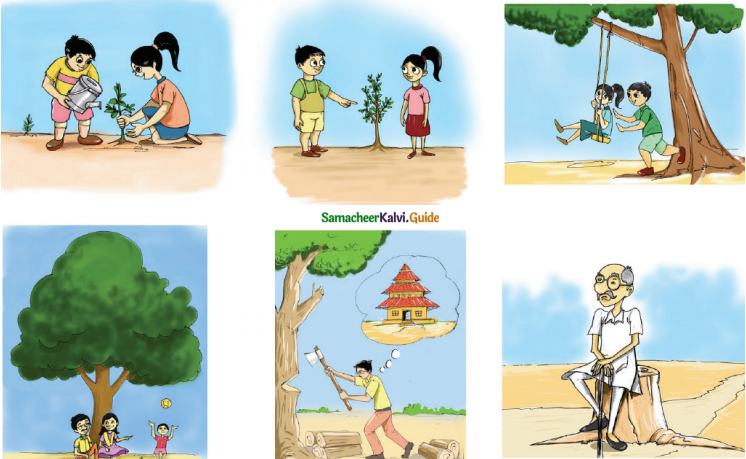
J. Discuss in groups of five. Make a story about the comic strip. Then share it in the class.
Samacheer Kalvi 6th English Guide Term 1 Prose Chapter 2 When the Trees Walked 8

Answer:
A boy and girl are planting a tree.
It started growing and became a tree.
The girl and the boy used to swing in the tree.
They took rest sitting under the tree.
One day a young man cut the tree.
When he grew old, he left very sorry for his foolishness about cutting.

Use Grammar (Text Book Page No. 121)

K. Tick the right option to fill in the blanks.

1. …………………. a beautiful flower!
a) How
b) Wow
c) What
d) Hurrah
Answer:
c) What

2. …………………. play football?
a) You can
b) Can you
c) Have you
d) You could
Answer:
b) Can you

3. …………………. did you go yesterday?
a) Which
b) Where
c) What
d) Who
Answer:
b) Where

Samacheer Kalvi 9th English Guide Prose Chapter 2 I Can’t Climb Trees Anymore

4. …………………. us go for a walk.
a) Shall
b) May
c) Let
d) Can
Answer:
c) Let

5. …………………. like to play hide and seek.
a) He
b) She
c) I
d) Muthu
Answer:
c) I

L. Look at the punctuation of these sentences. Why are they punctuated differently? Discuss in class.

1. One always felt like drawing close to him.
Answer:
Statement

2. But no one ever comes here!
Answer:
Exclamatory

3. Who’s going to see them?
Answer:
Question

Samacheer Kalvi 9th English Guide Prose Chapter 2 I Can’t Climb Trees Anymore

4. Come here.
Answer:
Statement

M. Work in pairs and say the sentences to each other. Do you hear any difference in the way it is spoken? Discuss and share with the class. Discuss the difference in the meaning of the sentence.

1. This is a banyan tree.
Answer:
It is a statement. It says that the tree is a banyan tree.

2. Is this a banyan tree?
Answer:
It is a question about the tree. It asks if the tree is a banyan tree.

3. What a beautiful banyan tree!
Answer:
It is an exclamation about the tree. It expresses that it is a beautiful banyan tree.

Samacheer Kalvi 9th English Guide Prose Chapter 2 I Can’t Climb Trees Anymore

4. Look at this banyan tree.
Answer:
It is an imperative sentence asking the person to look at this banyan tree.

N. Read these sentences from the story carefully. Do they give commands or requests or make statements? Write ‘C’ for command and ‘R’ for request and ‘S’ for a statement.

1. The tendril moved towards grandfather.
Answer:
(S)

2. I want a roof over my head.
Answer:
(S)

3. Please do not cut trees.
Answer:
(R)

4. We spent the whole day planting saplings.
Answer:
(S)

5. Will you please remove the trees growing on the wall?
Answer:
(R)

6. There was a forest on the Island.
Answer:
(S)

Samacheer Kalvi 9th English Guide Prose Chapter 2 I Can’t Climb Trees Anymore

7. Go to the river bed.
Answer:
(C)

8. The Island was a green paradise.
Answer:
(S)

9. Grow more trees to protect nature.
Answer:
(C)

10. Grandfather’s dream had come true.
Answer:
(S)

Writing

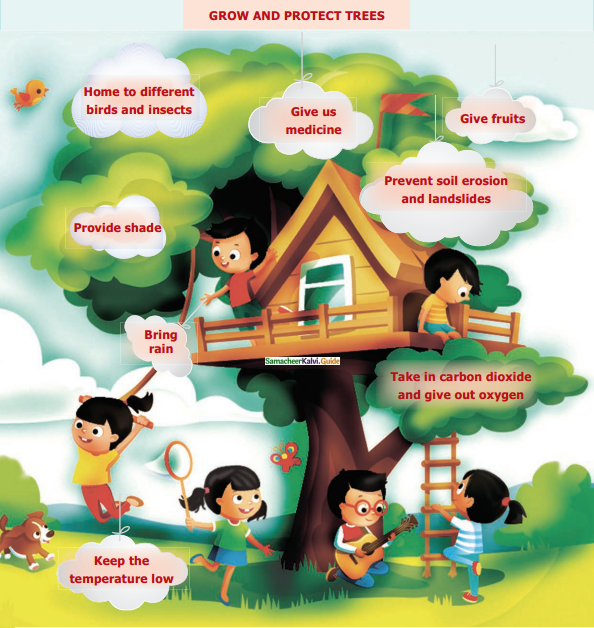
O. Look at the picture and write a paragraph using the clues in the picture.
Samacheer Kalvi 6th English Guide Term 1 Prose Chapter 2 When the Trees Walked 9

GROW AND PROTECT TREES

Trees help man, birds, and animals in many ways. They are home to different birds and insects. They give us medicine. They give fruits and provide shade. They help us build houses. Trees bring rain and prevent soil erosion and landslides. Trees take in carbon dioxide and give out Oxygen. So we get pure air to live. The trees keep the temperature.

Creative Writing

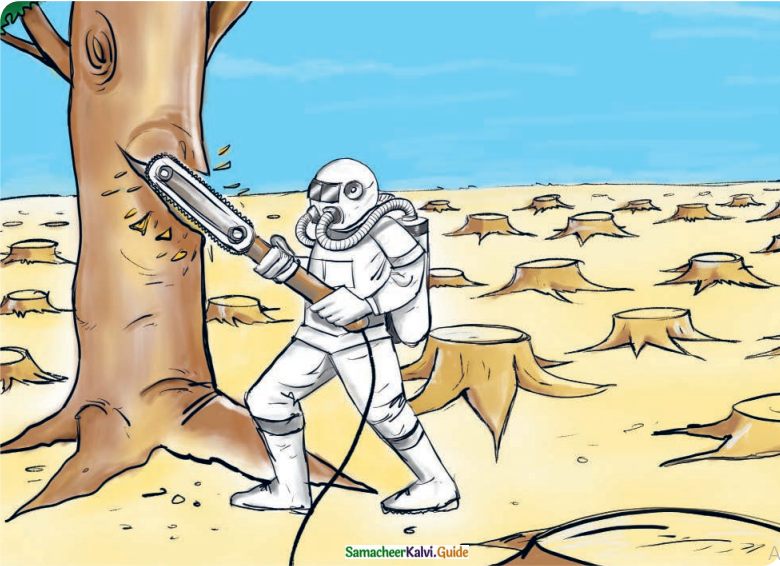
Look at the picture and write a story.
If you cut down trees Your children will pay the fees
Samacheer Kalvi 6th English Guide Term 1 Prose Chapter 2 When the Trees Walked 10

This picture tells us the importance of growing trees. Man cuts trees not knowing about its consequences in the future. Once a man lived near the forest. He began cutting the trees one by one. Finally, there were no trees. He passed away. His children found no trees and no birds. The atmosphere was very hot. Without trees, there won’t be any life. So they realized the foolishness of their parents. They started planting the trees.

When the Trees Walked Summary in English

The story is about how the author’s grandfather was very much interested in planting a number of trees. The author’s grandfather along with the others, plants many trees on a small island. During the Second World War, the author was sent away to a boarding school and later his grandparents shifted to England. The author too shifted England. The author returned back to that Island near Dehradun, He actually finds that Island turned out to be green. So, he understands the meaning of walking trees which actually means that the trees they planted got multiplied and serve a great purpose for the living beings.

When the Trees Walked Summary in Tamil

எழுத்தாளரின் தாத்தா பல மரங்களை வளர்ப்பதில் எவ்வளவு ஆர்வமாக இருந்தார் என்பது தான் கதை. ஆசிரியரின் தாத்தா மற்றொருவருடன் ஒரு சிறிய தீவில் பல மரங்களை நட்டுள்ளார். இரண்டாவது உலகப்போரின்போது ஆசிரியர் பள்ளிக்கூடத்திற்கு அனுப்பப்பட்டார். பின்னர் அவரது பெரிய பெற்றோர் இங்கிலாந்திற்கு மாற்றப்பட்டனர். ஆசிரியரும் இங்கிலாந்திற்கு மாற்றப்பட்டார். ஆசிரியர் மீண்டும் டெஹ்ராடனுக்கு அருகில் உள்ள அந்த தீவுக்குத் திரும்பினார். தீவு பசுமையாக மாறியதை அவர் உண்மையில் காண்கிறார். எனவே, நடைபயிற்சி மரங்களின் அர்த்தத்தை அவர் புரிந்து கொள்கிறார். அதாவது உண்மையில் அவர்கள் நடப்பட்ட மரங்கள் பெருகின. மேலும் உயிரினங்களுக்கு பெரும் பங்காற்றி சேவை செய்கின்றன.

When the Trees Walked About the Author in English

Ruskin Bond is an award-winning Indian author of more than 500 books, short stories, essays, and novels. He writes poetry and books for children as well as adults. He lives with his adopted family in Landour, in Mussoorie, India. He was awarded the Padma Shri in 1999 and Padma Bhushan in 2014

When the Trees Walked About the Author in Tamil

ரஸ்கின் பாண்ட் 500க்கும் மேற்பட்ட புத்தகங்கள், சிறுகதைகள், கட்டுரைகள் மற்றும் நாவல்களை எழுதி, இந்திய விருது பெற்றவர். அவர் குழந்தைகள் மற்றும் பெரியவர்களுக்கு கவிதை மற்றும் புத்தகங்களை எழுதியுள்ளார். அவர் தனது வளர்ப்பு குடும்பத்துடன் இந்தியாவின் முசோரியில் உள்ள லேண்டூரில் வசித்து வருகிறார். அவருக்கு 1999இல் பத்மஸ்ரீ விருதும், 2014இல் பத்மபூஷண் விருதும் வழங்கப்பட்டது.

Samacheer Kalvi 7th English Guide Term 3 Supplementary Chapter 2 Man Overboard

Tamilnadu State Board New Syllabus Samacheer Kalvi 7th English Guide Pdf Term 3 Supplementary Chapter 2 Man Overboard Text Book Back Questions and Answers, Summary, Notes.

Tamilnadu Samacheer Kalvi 7th English Solutions Term 3 Supplementary Chapter 2 Man Overboard

7th English Guide Man Overboard Text Book Back Questions and Answers

Textual Exercise

Read and Understand (Text Book Page No. 130)

A. Complete the following statements.

1. Everyone on the ship started to pray because
Answer:
they received a message about the formation of a storm

2. Vasantha’s imagination run wild because
Answer:
She had heard her teacher’s story of the storm

Samacheer Kalvi 9th English Guide Prose Chapter 2 I Can’t Climb Trees Anymore

3. Vasantha made a lot of noise because
Answer:
a man tumbled over the railings into the wild sea

4. Vasantha could not see the rescue operation because
Answer:
the lifeboat was too far for her to see

5. The captain presented a gift to Vasantha because…
Answer:
of her immediate action in saving a man

B. Identify the speaker/character.

1. “Don’t worry, Madam, it’s only a warning.”
Answer:
The gentleman consoled the old lady, with these words.

2. “A man fell into the sea. Please save him. ”
Answer:
Vasantha shouted these words to the captain

3. “Stop ship. Drop anchor. Quick! ”
Answer:
Captain ordered to the crew members.

Samacheer Kalvi 9th English Guide Prose Chapter 2 I Can’t Climb Trees Anymore

4. “He’ll have to be given artificial respiration and kept warm.”
Answer:
The doctor informed Vasantha with these words.

5. “Wake up, child.”
Answer:
A sailor made sleeping Vasantha to wake up with these words.

C. Book Talk!

Read the story once again and fill in the boxes.
Samacheer Kalvi 7th English Guide Term 3 Supplementary Chapter 2 Man Overboard 1 Samacheer Kalvi 7th English Guide Term 3 Supplementary Chapter 2 Man Overboard 2
Answer:
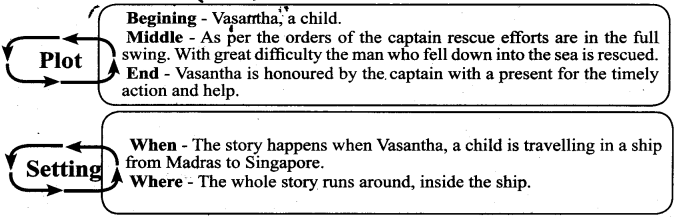
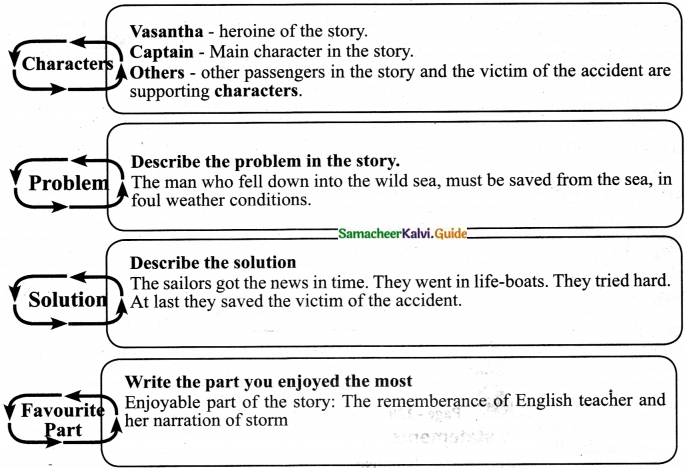
Samacheer Kalvi 7th English Guide Term 3 Supplementary Chapter 2 Man Overboard 3 Samacheer Kalvi 7th English Guide Term 3 Supplementary Chapter 2 Man Overboard 4

Project

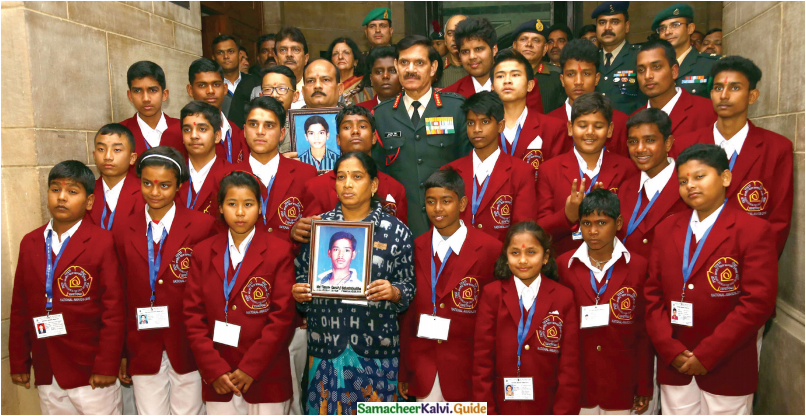
E. Look at the picture. Browse the internet with the help of your teacher to get information about the little brave hearts of India.
Samacheer Kalvi 7th English Guide Term 3 Supplementary Chapter 2 Man Overboard 5

Search for similar brave hearts in your locality.

Scan the QR. Download the nomination form for National Bravery Award. Read the instructions and fill the nomination for NBA.

Little brave hearts of India:
1. Gunjan, a young girl offered herself as a hostage to save her friends. She with her classmates were abducted in a school van in Assam. She was freed by the gunmen.
2. 17 years old Reshen Fatma’s uncle poured acid on her head when she refused to marry him. She pushed him off the car bravely. She managed to escape and went to the police station.
3. 16-year-old Monika, saw her neighbour drowning, in the Alaknanda river in Uttarkhand. She jumped in and saved him. But she was drawn in the current and sadly drowned.
4. 10 years old Vishal from Gujarat carried two 7 years old boys on his shoulders when he saw them drowning. He pulled them out.
5. Rumoh Meto, risked his own life while saving a 32-year-old man. Who was stuck to a 33 kV high voltage line? Rumoh sustained injuries and bums. His brave actions saved a life.
6. Riya a 15 years old girl from Lucknow sacrificed her life to save her father, when miscreants entered her house and attacked her family, they tried to shoot her father. Riya came in the way. and took the bullet herself. She saved her father. But Riya died on the spot.

Step to Success

F. In each question below, there is a sentence in which some parts have been jumbled up. Rearrange these parts which are labelled P, Q, R, and S to produce the correct sentence. Choose the proper sequence.

1. When he
P: did not know
Q: he was nervous and
R: heard the hue and cry at midnight
S: what to do
a. RQPS
b. QSPR
c. SQPR
d. PQRS
Answer:
a) RQPS

Samacheer Kalvi 9th English Guide Prose Chapter 2 I Can’t Climb Trees Anymore

2. They felt safer
P: to watch the mountain
Q: of more than five miles
R: as they settled down
S: from a distance
a. RPSQ
b. RSQP
c. PQSR
d. PRSQ
Answer:
b) RSQP

3. If you need help
P: promptly and politely
Q: ask for attendants
R: to help our customers
S: who have instructions
a. SQPR
b. QPSR
c. QSRP
d. SQRP
Answer:
c) QSRP

4. He knew that
P: and then to save himself
Q: was to save all the lives
R: entmsted to his care
S: the duty of a captain
a. PQRS
b. SQRP
c. SPRQ
d. QSRP
Answer:
b) SQRP

5. With her body
P: dragging her unwilling feet
Q: week and infirm
R: doubled with age
S: she persisted in her mission
a. PQRS
b. QPRS
c. RQPS
d. SRPQ
Answer:
a) PQRS

Man Overboard Summary in English

Vasantha, a child travels in the ship named S.S. Rajula, all alone. The next day, the announcement comes that there is a storm blowing in the Indian Ocean. Vasantha is not worried like others. She runs around and plays. At that time she sees a man falling into the sea, accidentally. She informs people in the ship. The man who fell down into the sea is rescued with great difficulty. Vasantha is honoured with a lovely present by the captain of the ship.

Man Overboard Summary in Tamil

வசந்தா என்ற குழந்தை ராஜீடிலா என்ற கப்பலில் தனியாகப் பயணம் செய்கிறாள். மறுநாள் ஒரு அறிவிப்பு வருகிறது. இந்தியப் பெருங்கடலில் ஒரு புயல் உருவாகி இருப்பதாக தகவல் வருகிறது. வசந்தா மற்றவரைப் போல கவலைப்படவில்லை. கப்பலைச் சுற்றி விளையாடுகிறாள். அப்போது, ஒருவர் எதிர்பாராது கடலில் விழுந்து விடுவதைப் பார்க்கிறாள். கப்பலில் உள்ளவர்களிடம் தகவல் சொல்லுகிறாள். கடலில் விழுந்தவர், மிகுந்த சிரமத்திற்கு பிறகு, மீட்கப்படுகிறார். வசந்தாவை பாராட்டி கௌரவிக்க, கப்பல் கேப்டன் அவளுக்கு அழகிய பரிசு தரு

Samacheer Kalvi 7th English Guide Term 3 Supplementary Chapter 1 Sindbad – My First Voyage

Tamilnadu State Board New Syllabus Samacheer Kalvi 7th English Guide Pdf Term 3 Supplementary Chapter 1 Sindbad – My First Voyage Text Book Back Questions and Answers, Summary, Notes.

Tamilnadu Samacheer Kalvi 7th English Solutions Term 3 Supplementary Chapter 1 Sindbad – My First Voyage

7th English Guide Sindbad – My First Voyage Text Book Back Questions and Answers

Textual Exercise (Text Book Page No. 99)

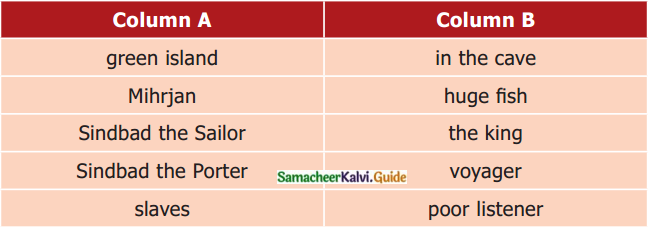
A. Match the following.
Samacheer Kalvi 7th English Guide Term 3 Supplementary Chapter 1 Sindbad – My First Voyage 1
Answer:

Column AColumn B
green islandhuge fish
Mihrjanthe king
Sindbad the Sailorvoyager
Sindbad the porterpoor listener
slavesin the cave

B. Choose the correct options from the ones. (Text Book Page No. 100)

1. Sindbad decided to sail to the ……………….. (Persian Gulf / Mexican Gulf) with some goods.
Answer:
Persian Gulf

2. He was being tossed by powerful waves and was thrown on an /a ……………….. (island/peninsula).
Answer:
island

3. The men in the cave were all ……………….. (ministers/slaves) of the king.
Answer:
slaves

Samacheer Kalvi 9th English Guide Prose Chapter 2 I Can’t Climb Trees Anymore

4. The king was a ……………….. (noble and kind/mean and cruel) person.
Answer:
noble and kind

5. The king gave many valuable ……………….. (gifts/rewards) to Sindbad.
Answer:
gifts

C. Read the passage and answer the questions given below.

One day, when I was standing on the port, I saw a ship approaching the port. It was the same ship, which had sailed further after leaving me behind, struggling in the sea. When the captain of the ship saw me, he was greatly surprised to find me alive. He and the other crew members hugged me with happiness. The captain handed over my goods to me, which had been left on the ship.
1. Where was he standing?
Answer:
Sindbad was standing on the port.

2. What did he see?
Answer:
Sindbad saw a ship approaching.

3. Whom did he meet on the ship and why was the person surprised?
Answer:
Sindbad met the captain of the ship. He was surprised to find Sindbad alive.

Samacheer Kalvi 9th English Guide Prose Chapter 2 I Can’t Climb Trees Anymore

4. What did he get back from the captain?
Answer:
Sindbad got back his goods from the captain.

D. Rearrange the following sentences in the correct order.

1. I longed to go back home.
2. I narrated my tale of sufferings and hardships to the king.
3. Our group sailed from one country to another, selling goods.
4. I saw the same ship approaching the port.
5. My father was a rich merchant.
6. I was being tossed by the frequent powerful waves.
7. Sindbad completed the tale of his voyage.
8. He presented the purse full of gold coins.
Answer:
5, 3, 6, 2,1, 4, 8, 7

E. Work in pairs and write the answers. (Text Book Page No. 101)

1. Describe the island that the ship’s crew found.
Answer:
Sindbad was thrown on an island. There was nothing to eat except a few herbs. Sindbad managed to get a few herbs. He quenched his thirst from a spring.

Sindbad met a man. The man asked Sindbad where he had come from. Sindbad poured out his misfortune to him. That man took pity on him. He took Sindbad inside a cave. There were a number of men present. They were all slaves of the king of the island. These men were kind. They served good food and drink. They treated Sindbad well – king Mihrjan was the ruler of island. These islands were under king Mihrjan.

During the stay of Sindbad he witnessed a number .of remarkable sights. The sea water around the island, contained huge and terrible fishes. A few were hundred times bigger than the largest ship. Once he saw a fish that had a head like a bull. He witnessed many unimaginable wonders.

Samacheer Kalvi 9th English Guide Prose Chapter 2 I Can’t Climb Trees Anymore

2. Did Sindbad the porter enjoy his meeting with Sindbad the sailor? Why?
Answer:
Sindbad completed the tale of his first voyage. The poor porter Sindbad was listening to the amazing tale of Sindbad, the sailor all with wonder. Sindbad the sailor, then bade good bye to the poor porter and asked him to come the next day to narrate the tale of his new voyage. But before leaving, he presented Sindbad the porter a purse full of gold coins. The unexpected riches overjoyed Sindbad, the porter.

Project

F. Brochure Making
Your school is organising an education trip. Work in a team and prepare a brochure for the trip. Include places to see, essential things to be brought, and the activities one can do on the trip.
Objective of educational trip:

  • To gain fun and information
  • To achieve motivation
  • To gain first hand experience
  • To attain rich immersion experience

Paragraph: 1

Purpose of educational trip
An educational tour is a planned site visit for school and college students. Purpose of education tour is to provide some information to students. Education trip means more than simply leaving the school ground. Educational trips should always have a major educational element, but the impact of educational trips can extend much further. The importance of educational trips includes, giving students the chance to build closer bonds with their classmates, experience in new environments and enjoy a day away from the classroom.

Paragraph: 2

Importance of educational trips:
Memories of school education trips are the most prominent memories of the formative years largely because they are impressive. The trip needs a lot of planning and preparation. Such trips make the students grow more empathetic and respectful towards others culture. Students gain knowledge of social issues. Education trips have a time honoured tradition. The experience gained in the educational trips is immeasurable.

places to see:

  • Temples
  • Educational museum
  • Archaeological sites
  • Historical monuments
  • Historical relics.
  • Diverse landscape
  • Observatory
  • Herbarium
  • Aquarium

Slogans:

  • Nature is your teacher
  • World is your classroom

Activities in the educational trip:

  • Observation
  • Collecting information
  • Recording the date
  • Taking photographs and videos
  • Documentation

Thinks to be brought:

  1. Woollen clothes if necessary
  2. trekking equipment
  3. footwear
  4. suitable clothes
  5. technology instruments like camera, phones
  6. reading materials, stationery article
  7. First aid
  8. Medicines if required

Connecting to Self

G. Road Safety
Road safety rules make our driving a better experience. As responsible citizen, we ought to obey traffic rules and pay attention to the road signs.
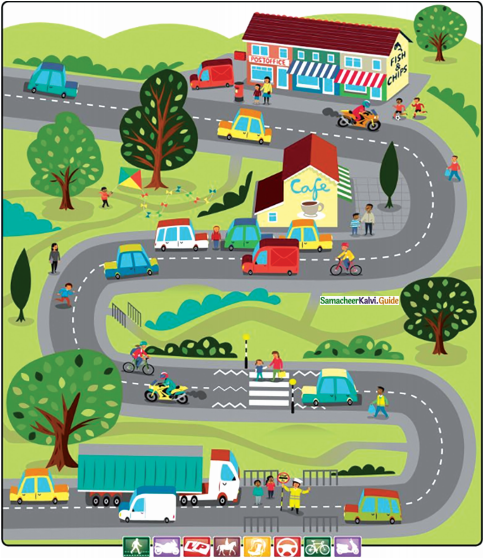
Look at the picture. Circle the dangerous actions of pedestrians on or near the road. Discuss in groups and write down the Pedestrians Road Safety Rules. (Text Book Page No. 102)

Safety rules on the road have to be followed by all of us so that no one is killed or injured.
Samacheer Kalvi 7th English Guide Term 3 Supplementary Chapter 1 Sindbad – My First Voyage 2

  1. Pedestrians must cross the road on zebra-crossing.
  2. Everyone must respect safety rules.
  3. The vehicles must stop at seeing the red light.
  4. The vehicles must get ready at seeing, yellow light.
  5. The vehicles must move forward at seeing, green light.
  6. Everyone must observe the traffic lights and act.
  7. The vehicles can not be parked at no parking area.
  8. The drivers of the vehicles must not drink and drive.
  9. The drivers should not attend the cell phones while driving.
  10. The drivers must not blow the home in silent zones such as hospitals.
  11. The drivers must keep up the speed limit.
  12. When the pedestrians cross the road they must look to the right, left then to right before crossing the road.
  13. Playing on the roadside, crossing the road carelessly must be avoided.
  14. When the vehicles go near schools, they must go slowly.

Step to Success (Text Book Page No. 103)

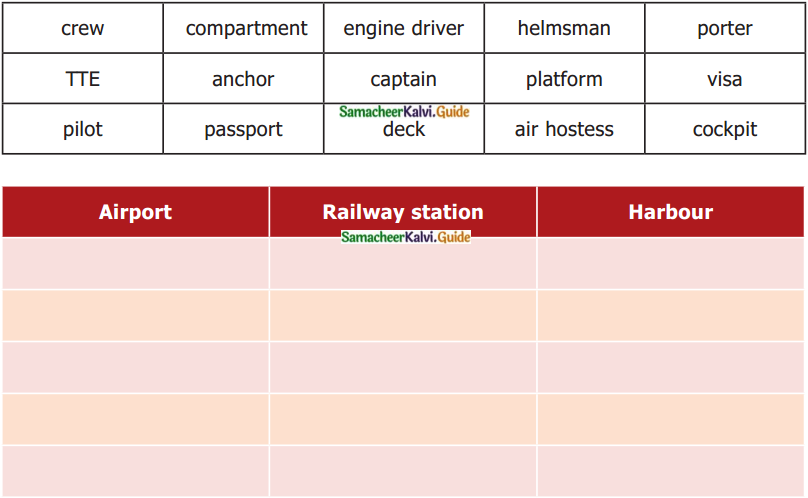
H. A set of words are given below. Categorize it under the appropriate columns.
Samacheer Kalvi 7th English Guide Term 3 Supplementary Chapter 1 Sindbad – My First Voyage 3
Answer:

AirportRailway StationHarbour
air hostessTTECaptain
crewcompartmentanchor
passportengine driverdeck
visaplatformhelmsman
pilotporter
cockpit

Sindbad – My First Voyage Summary in English

Sindbad, the hero of adventure stories, narrates the story of his first voyage. Sindbad on his first voyage missed his ship. He was thrown on an island. After some time, fortunately, Sindbad met his old ship and the crew. He presented the king of the island with some gifts. The king also gifted him with some valuables. Sindbad returned to Baghdad as a rich man.

Sindbad – My First Voyage Summary in Tamil

சிந்துபாத், வீரசாகச கதைகளின் கதாநாயகன் ஆவான். அவனது முதல் கடல் பயணக் கதையை இங்கு விவரிக்கப்படுகிறது. சிந்துபாத் தன் முதல் கடல் பயணத்தில் தன் கப்பலை தவற விட்டு விடுகிறான். ஒரு தீவின் மீது தூக்கி எறியப்படுகிறான். அதிர்ஷ்டவசமாக, சிந்துபாத் தான் பயணம் செய்து வந்த பழைய கப்பல் மாலுமிகளை திரும்ப சந்திக்கிறான். தீவின் மன்னருக்கு பரிசளிக்கிறான். மன்னரும் சில விலை உயர்ந்த பொருட்களை பரிசளித்தார். சிந்துபாத் செல்வந்தனாய் பாக்தாத் திரும்பினான்.

Samacheer Kalvi 7th English Guide Term 3 Poem 2 Courage

Tamilnadu State Board New Syllabus Samacheer Kalvi 7th English Guide Pdf Term 3 Poem 2 Courage Text Book Back Questions and Answers, Summary, Notes.

Tamilnadu Samacheer Kalvi 7th English Solutions Term 3 Poem 2 Courage

7th English Guide Courage Text Book Back Questions and Answers

Warm Up (Text Book Page No. 121)

Look at the face It chart. Discuss in small groups and tell how to face those situations.
Samacheer Kalvi 7th English Guide Term 3 Poem 2 Courage 1

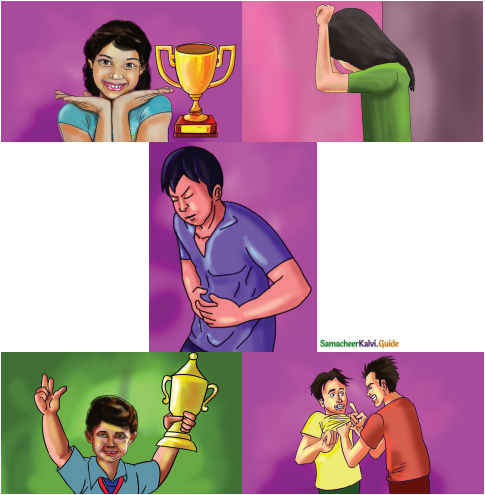
If you aspire to get the trophy on the sports day well and good. Aspiration is not enough. You have to practice for it taking painful efforts. You might get into fights, you might become sick, you might get some other problems. Still you have to target the trophy in your mind. You have to work for it. Then you will be successful surely.

Read and Understand (Text Book Page No. 123)

A. Answer the following questions.

1. Can courage be developed suddenly? Why?
Answer:
Courage is not a brilliant dash. It is not an instant thing. It is something deep in the soul of man.

2. When should we have courage?
Answer:
Courage persists in man always. It is an ingrained trait. It cannot be called in the times of danger.

Samacheer Kalvi 9th English Guide Prose Chapter 2 I Can’t Climb Trees Anymore

3. Give an example for dazzling light.
Any light however powerful it is, it flashes and passes away from sight. But Courage is a permanent thing. It dwells in the heart of brave men for ever.

4. Can a courageous man be defeated? Why?
Answer:
Yes. A courageous man also meet many defeats, but he will not give up his target due to failure. He will struggle hard to overcome defeat and hardships.

5. What is the ‘breath of life’?
Answer:
Courage is the breath of life.

6. What are the characteristics of a courageous man?
Answer:
Patience, strength, hard work, doing daring deeds, striving for distant goal are the characteristics of courageous men. They are men of planning and unwavering.

Appreciation Questions

B. Read the following lines and answer the questions.

1. It isn ’t an instantaneous thing
Born of despair with a sudden spring
a. What does ‘it’ refer to?
Answer:
Courage is not a quality that can arise in a person all of a sudden. ‘It’ refers to the quality of courage.

b. What does ‘born of despair mean’?
Answer:
A moment of despair can not bring out courage in a person. Because courage is a quality that is deep in the soul of man.

2. It’s a slow, unwavering, ingrained trait
With the patience to work and the strength to wait
a. What is an ‘ingrained trait’?
Answer:
Courage is an ingrained trait of bold man.

Samacheer Kalvi 9th English Guide Prose Chapter 2 I Can’t Climb Trees Anymore

b. Why does a courageous man need patience?
Answer:
Victory in anything does not come easily. The strong men strive hard for their distant goal with patience and hardwork.

3. It’s part of his hours, his days and his years,
Back of his smiles and behind his tears.
a. What does ‘tears’ mean?
Answer:
Hardships and trials are difficulties , we face in our struggles. Defeats and tears are obstacles in the path of strong men. Still they are courageous to do their daring deeds.

Literary Appreciation:

C. Work in pairs and answer the following. (Text Book Page No. 124)

1. Pick out the alliterated words:
1. Sudden spring,
2. daring deed,
3. serve some plan

Samacheer Kalvi 9th English Guide Prose Chapter 2 I Can’t Climb Trees Anymore

2. Pick out the rhyming words.
1. dash – flash
2. thing – spring
3. hope – rope
4. not – hot
5. goal – soul
6. sight – trait
7. blue – do
8. freed – need
9. show – go
10. defeat – meet
11. years tears
12. deed – creed

3. Write the rhyming scheme of the poem.
Answer:
The scheme of the poem runs as ab, ab, ab, ab, ab scheme in four stanze.

Creative Writing

Bio – Poem

A Bio-poem is an essay about oneself in the form of poetry.

Line 1 : Your name
Line 2 : Four adjectives that describe you.
Line 3 : Son of / daughter of… brother of / sister of.
Line 4 : Lover of three people, things, or idea.
Line 5 : Who feels (three sensations or emotion)
Line 6 : Who needs (three things)
Line 7 : Who gives (three things)
Line 8 : Who fears (three things)
Line 9 : Who would like to see (three persons or places)
Line 10: Who lives …
Line 11: your last name

Samacheer Kalvi 7th English Guide Term 3 Poem 2 Courage 2

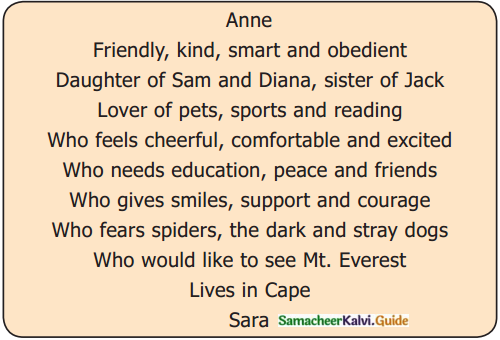
NIRMALA
Energetic, hard-working, presistent, loving
Daughter of Raj and Mary, Sister ofJohn
Lover of books, music, dance
who feels happy, bright, smart
Who needs service, training and sharing
Who gives help, care and courage
Who fears unkind words Wash judgements
and uncharitable deeds
Who would like to see Nile river
Who lives in clara India

D. Work in small groups. Pick out the adjectives and nouns that suit you using a dictionary. Read the steps given. Arrange adjectives and nouns like the given sample to construct your BioPoem. Present in the class.

Adjective in the Bio-PoemNouns in the Bio Poem
Energetic, Hard Working, Persistent, Unkind, Uncharitable, happy, bright, smartNirmala, Daughter, Raj, Mary, sister, John, lover, books, music, dance, help, care, courage, happy, bright, smart, training, sharing, words, judgement, deeds, Nile, river, India

7th English Guide Courage Additional Appreciation Questions

1. “Courage isn’t the last resort
In the work of life or the game of sport;
It isn’t a thing that a man can call ”
a. What is not a thing that a man can call according to the poet?
Answer:
Courage can not be called by man. It is not the last resort in the work of life or the game of sport.

2. “Courage was never designed for show; ”
a. What does the poet mean in this line?
Answer:
The poet tells courage is a quality. It can be seen only in action. Courage can not be exhibited in empty words or show.

Samacheer Kalvi 9th English Guide Prose Chapter 2 I Can’t Climb Trees Anymore

3. “It’s the breath of life and a strong man’s creed”
a. Why does the poet say the above line?
Answer:
Courage is an ingrained trait and it is in one’s breath and blood. It is an inborn quality. Strong men never have fear. Courage is their creed.

Courage Summary in English

Courage is in the soul of man. When a man strives for a distant goal. He must have courage with in his soul. It is part of the man. It is in victory and defeat. It is in smiles and tears. It is the breath of life.

Courage Summary in Tamil

தைரியம் என்பது மனிதனின் ஆன்மாவில் உள்ளது. மனிதன் இலட்சியத்தை நோக்கி முயற்சிக்கும் போது அவன் இதயத்தில் துணிவு இருக்க வேண்டும். துணிவு மனிதனின் இதயத்தின் ஒரு பகுதியாகும். இது வெற்றியிலும் உண்டு. தோல்வியிலும் உண்டு. புன்னகையிலும் உண்டு. கண்ணீரிலும் உண்டு. வாழ்வின் மூச்சுக் காற்றிலும் உண்டு .

Courage About the Author in English

Edgar Albert Guest (1881-1959) was a profilic England- born American poet who was popular in the first half of the 20th century and became known as the People’s poet. His poem often had an inspirational and optimistic view.

Courage About the Author in Tamil

எட்கார் ஆல்பர்ட் கெஸ்ட் என்பவர் (1881 -1959) வரை வாழ்ந்தவர். இங்கிலாந்தில் பிறந்த அமெரிக்கர். 20ஆம் நூற்றாண்டின் முன் பாதியில் பிரபலமாய் இருந்தவர். மக்களின் கவிஞர் என்று புகழ் பெற்றவர். அவரது கவிதைகள் ஆர்வமூட்டுபவை. நல்ல நம்பிக்கை ஊட்டுபவை. நம் அன்றாட வாழ்வில் உற்சாகத்தை ஊட்டுபவை.

Samacheer Kalvi 7th English Guide Term 3 Poem 1 Sea Fever

Tamilnadu State Board New Syllabus Samacheer Kalvi 7th English Guide Pdf Term 3 Poem 1 Sea Fever Text Book Back Questions and Answers, Summary, Notes.

Tamilnadu Samacheer Kalvi 7th English Solutions Term 3 Poem 1 Sea Fever

7th English Guide Sea Fever Text Book Back Questions and Answers

Warm Up (Text Book Page No. 93)

Rescue the sinking words. (Text Book Page No. 93)
Samacheer Kalvi 7th English Guide Term 3 Poem 1 Sea Fever 1
1. Sail
2. Navigate
3. explore
4. harbour
5. ship
6. wave
7. Voyage
8. Island

Textual Exercises (Text Book Page No. 93)

B. Choose the best answer.

1. The title of the poem ‘Sea Fever’ means
a) flu fever
b) the poet’s deep wish to be at sea
c) the poet’s fear of the sea
Answer:
b) the poet’s deep wish to be at sea

Samacheer Kalvi 9th English Guide Prose Chapter 2 I Can’t Climb Trees Anymore

2. The poet asks for
a) a fishing net
b) a big boat
c) a tall ship
Answer:
c) a tall ship

3. The poet wants to lead a life at sea like
a) the gulls and whales
b) the penguins and sharks
c) the pelicans and dolphins
Answer:
a) the gulls and whales

C. Read the lines and answer the questions.

1. I must go down to the sea again, to the lonely sea and the sky
Where does the poet want to go?
Answer:
The poet wants to go to the lonely sea and the sky.

2. And the wheel’s kick and the winds song and the white sail’s shaking
What according to the poet are the pleasures of sailing?
Answer:
Hearing the wheel’s kick, hearing the wind’s song and feeling the white sail’s shaking are the pleasures of sailing.

Samacheer Kalvi 9th English Guide Prose Chapter 2 I Can’t Climb Trees Anymore

3. And all I ask is a windy day with the white clouds flying
Why does the poet ask for a windy day?
Answer:
On the windy day, the white clouds fly. Spume is blown. The sea gulls cry. So the poet wants’ a windy day, when he is in the sea.

4. And all I ask is a merry yam from a laughing fellow rover.
What kind of human company does the poet want?
Answer:
The poet wants to hear a merry, imaginary story from a fellow wanderer. The poet wants to get the company of a fellow rover.

5. And quiet sleep and a sweet dream when the long trick’s over
What does the poet want to do after his voyage is over?
Answer:
When the voyage is over, the poet wants to have a quiet sleep and sweet dream.

D. Poem Appreciation.

1. Fill in the blanks with correct rhyming words from the poem.
Answer:
Sky by, knife life, rover over

2. Quote the line that has been repeated in the poem.
Answer:
I must go down to the seas again.

3. Write the poetic device which is used in the line below.
Answer:
And a grey mist on the sea’s face metaphor is the poetic device.

4. What poetic device is used for the comparison in the below line?
Answer:
‘Where the wind’s like a whetted life’ – simile is the comparison.

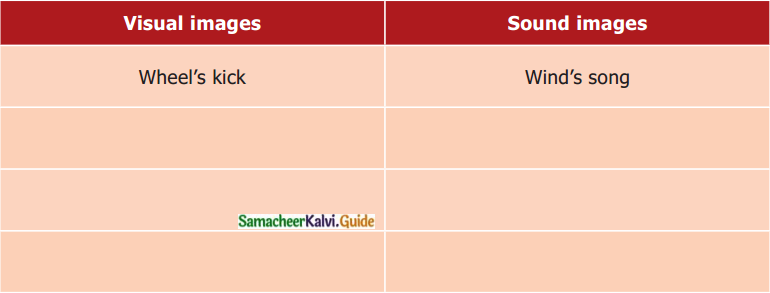
E. The poem has many visual and sound images. Complete the table with examples from the poem. The first one has been done for you.
Samacheer Kalvi 7th English Guide Term 3 Poem 1 Sea Fever 2
Answer:

Visual imagesSound images
Wheel’s kickWind’s song
whetted knifesea gulls crying
white clouds flyingcall of the running tide
blown spumelaughing of the fellow rover
grey mistappealing to the senses
lonely seabring a mood of freedom

7th English Guide Sea Fever Additional Appreciation Questions

1. I must go down to the seas again, to the lonely sea and the sky,
Why does the poet say ‘lonely sea’?
Answer:
The land is heavily populated. But the sea is always lonely due to its dangers. Only now and then ships sail on the sea. Most of the time, the sea appears to be lonely and deserted.

Samacheer Kalvi 9th English Guide Prose Chapter 2 I Can’t Climb Trees Anymore

2. And all I ask is a tall ship and a star to steer her by;
Which star is referred to in the poem?
Answer:
The North star is the pole star which tells the sailor where North is and thus they can steer the ship correctly.

3. And all I ask is a windy day with the white clouds flying,
Why does the poet ask for windy day?
Answer:
The winds help the mariners to sail smoothly in the sea. Favourable winds reduce the labour of the sailors.

Sea Fever Summary in English

I must go to the seas. I must go to the lonely sea. I need a tall ship and pole star. I must hear the wheel’s kick, wind’s song, white sail’s shaking. I must see mist and dawn. The call of the sea cannot be denied. I ask for a windy day, blowns spume, sea gulls, crying, gypsy life, cold wind, merry yam of a fellow rover, quiet sleep and sweet dreams after the voyage is over.

Sea Fever Summary in Tamil

நான் கடல் பயணத்திற்கு செல்ல வேண்டும். தனிமையான கடலும், வானமும் உள்ள கடலுக்குச் செல்ல வேண்டும். எனக்கு தேவைப்படுவது எல்லாம் ஒரு உயர்ந்த கப்பலும் துருவ நட்சத்திரமும் மட்டுமே. துருவ நட்சத்திரத்தின் துணை கொண்டு கப்பல் புறப்பட்டு, சக்கரங்களின் சப்தமும், காற்றின் இசையும், வெள்ளை நிற துடுப்புகளின் அசைவும், கடல் கன்னியின் முகத்திலே சாம்பல் நிறம் கலந்த மூடுபனியும், சாம்பல் நிறம் கலந்த காலை வெளிச்சமும் பட்டுத் தெறிப்பதை நான் உணர வேண்டும். நான் கடலுக்குச் செல்ல வேண்டும். ஆடும் அலைகளின் அழைப்பு பலத்த, தெளிவான அழைப்பு ஆக இருப்பதால் என்னால் அதனை புறக்கணிக்க முடியாது.

எனக்குத் தேவை எல்லாம் காற்று நிறைந்த நாள் மட்டுமே. காற்று வீசும் அந்நாளில் வெள்ளை மேகங்கள் பறந்தபடி இருக்க, கடல் நுரை தூக்கி எறியப்பட, கடல் பறவைகள் கத்தல் கேட்க, நான் கடல் பயணத்திற்குச் செல்ல வேண்டும். நாடோடி வாழ்வுக்கு, கடல் பறவைகளும் திமிங்கலங்களும் நடமாடும் கடலில், தீட்டப்பட்ட கத்தி போன்ற கூர்மையான குளிர்காற்று ஊடுறுவும் கடல் பயணத்திற்கு, நான் செல்ல வேண்டும். நான் விரும்புவது ஒன்றுதான். நகைத்துக் கொண்டிருக்கும் சக மாலுமியின் மகிழ்வான கதையை கேட்க வேண்டும். கடல் பயணத்தின் பின்னால், எனக்கு அமைதியான உறக்கமும் கனவுகளும் வரவேண்டும்.

Sea Fever About the Author in English

John Edward Masefield Om was an English poet and writer, and poet laureate of the United Kingdom from 1930 until 1967. Among his best known works are the children’s novels. He was bom on 1. 6. 1878 and died on 12.5.1967.

Sea Fever About the Author in Tamil

ஜான் எட்வர்ட் மேஸ் பீல்ட் ஓம் என்பார் ஆங்கிலேய கவிஞர், எழுத்தாளர், ஆஸ்தான கவிஞராக அரசவையில் 1930 இருந்து 1967ம் ஆண்டு வரை பிரிட்டனில் இருந்தார். குழந்தைகட்கான புதினங்கள் அவரது கதைகளில் பிரபலமானவை. அவர் 1.6. 1878 இல் பிறந்து 12.5.1967ம் ஆண்டு இறந்தார்.