Samacheer Kalvi 11th Maths Guide Chapter 2 Basic Algebra Ex 2.12

Tamilnadu State Board New Syllabus Samacheer Kalvi 11th Maths Guide Pdf Chapter 2 Basic Algebra Ex 2.12 Text Book Back Questions and Answers, Notes.

Tamilnadu Samacheer Kalvi 11th Maths Solutions Chapter 2 Basic Algebra Ex 2.12

Question 1.
Let b > 0 and b ≠ 1. Express y = bx in logarithmic form. Also, state the domain and range of the logarithmic function.
Answer:
Given y = bx ⇒ logby = x, x ∈ R with range (0, ∞) (-∞, ∞)

Samacheer Kalvi 11th Maths Guide Chapter 2 Basic Algebra Ex 2.12

Question 2.
Compute log9 27 – log27 9
Answer:
log927 – log279 = log9 33 – log27 32
= 3 log9 3 – 2 log27 3 —— (1)
By change of base rule [logb a = \(\frac{1}{\log _{a} b}\)]
Samacheer Kalvi 11th Maths Guide Chapter 2 Basic Algebra Ex 2.12 1

Question 3.
Solve logax + log4x + log2x = 11
Answer:
Samacheer Kalvi 11th Maths Guide Chapter 2 Basic Algebra Ex 2.12 2

Samacheer Kalvi 11th Maths Guide Chapter 2 Basic Algebra Ex 2.12

Question 4.
Solve log 4 2 8x = 2 log28
Answer:
Given log 4 28x = 2 log28
log 4 28x = 2log223
log 4 28x = 23 log22
log 4 28x = 23 = 8
28x = 48
(22)4x = 48
⇒ (4)4x = 48
⇒ 4x = 8
⇒ x = \(\frac { 8 }{ 4 }\) = 2

Question 5.
If a2 + b2 = 7ab, show that
log \(\left(\frac{a+b}{3}\right)\) = \(\frac{1}{2}\) (log a + log b)
Answer:
Given
a2 + b2 = 7ab
Adding both sides 2ab we get
a2 + b2 + 2ab = 7ab + 2ab
(a + b)2 = 9ab
Samacheer Kalvi 11th Maths Guide Chapter 2 Basic Algebra Ex 2.12 3
Taking square root on both sides
Samacheer Kalvi 11th Maths Guide Chapter 2 Basic Algebra Ex 2.12 4
Taking logarithm on both sides
Samacheer Kalvi 11th Maths Guide Chapter 2 Basic Algebra Ex 2.12 5

Samacheer Kalvi 11th Maths Guide Chapter 2 Basic Algebra Ex 2.12

Question 6.
Prove that log \(\frac{\mathbf{a}^{2}}{\mathbf{b c}}\) + log \(\frac{\mathbf{b}^{2}}{\mathbf{c a}}\) + log \(\frac{c^{2}}{a b}\) = 0
Answer:
Samacheer Kalvi 11th Maths Guide Chapter 2 Basic Algebra Ex 2.12 6

Question 7.
Prove that
Samacheer Kalvi 11th Maths Guide Chapter 2 Basic Algebra Ex 2.12 7
Answer:
Samacheer Kalvi 11th Maths Guide Chapter 2 Basic Algebra Ex 2.12 8

Samacheer Kalvi 11th Maths Guide Chapter 2 Basic Algebra Ex 2.12

Question 8.
Prove that loga2 a + logb2 b + logc2 c = \(\frac{1}{8}\)
Answer:
Samacheer Kalvi 11th Maths Guide Chapter 2 Basic Algebra Ex 2.12 9

Question 9.
Prove log a + log a2 + log a3 + ……… + log an = \(\frac{n(n+1)}{2}\) log a
Answer:
log a + log a2 + log a3 + ……… + log an
= log a + 2 log a + 3 log a + ………….. + n log a
= log a (1 + 2 + 3 + ………….. + n)
= log a × \(\frac{n(n+1)}{2}\)
= \(\frac{n(n+1)}{2}\) log a

Question 10.
If Samacheer Kalvi 11th Maths Guide Chapter 2 Basic Algebra Ex 2.12 10, then prove that xyz = 1
Answer:
Let \(\frac{\log x}{y-z}\) = k
log x = k(y – z)
log x = ky – kz ——— (1)
Similarly log y = k(z – x) = kz – kx ——(2)
log z = k(x – y) = kx – ky ——- (3)
Adding (1), (2) and (3)
log x + log y + log z = ky – kz + kz – kx + kx – ky
log (xyz) = 0 = log 1
xyz = 1

Samacheer Kalvi 11th Maths Guide Chapter 2 Basic Algebra Ex 2.12

Question 11.
Solve log2x – 3 log1/2x = 6
Answer:
Samacheer Kalvi 11th Maths Guide Chapter 2 Basic Algebra Ex 2.12 11
Samacheer Kalvi 11th Maths Guide Chapter 2 Basic Algebra Ex 2.12 12

Samacheer Kalvi 11th Maths Guide Chapter 2 Basic Algebra Ex 2.12

Question 12.
Solve log5 – x (x2 – 6x + 65) = 2
Answer:
log5 – x(x2 – 6x + 65) = 2
⇒ x2 – 6x + 65 = (5 – x)2
⇒ x2 – 6x + 65 = 25 + x2 – 10x
⇒ x2 – 6x + 65 – 25 – x2 + 10x = 0
⇒ 4x + 40 = 0
⇒ 4x = -40
⇒ x = -10

Samacheer Kalvi 11th Maths Guide Chapter 2 Basic Algebra Ex 2.13

Tamilnadu State Board New Syllabus Samacheer Kalvi 11th Maths Guide Pdf Chapter 2 Basic Algebra Ex 2.13 Text Book Back Questions and Answers, Notes.

Tamilnadu Samacheer Kalvi 11th Maths Solutions Chapter 2 Basic Algebra Ex 2.13

Question 1.
If |x + 2| ≤ 9 then x belongs to
(1) (- ∞,- 7)
(2) [- 11, 7]
(3) (-∞, – 7) ∪ [11, ∞]
(4) (-11, 7)
Answer:
(2) [- 11, 7]

Samacheer Kalvi 11th Maths Guide Chapter 2 Basic Algebra Ex 2.13

Explanation:
-x – 2 ≤ 9 x + 2 ≤ 9
-x < 9 + 2 = 11 x ≤ 9 – 2 = 7
⇒ x ≥ -11
so x ∈ [-11, 7]

Question 2.
Given that x, y and b are real numbers x < y, b > 0 then
(1) xb < yb
(2) xb > yb
(3) xb < yb
(4) \(\frac{x}{b}\) ≥ \(\frac{y}{b}\)
Answer:
(1) xb < yb

Explanation:
Given x, y and b are real numbers and b ≥ 0. x > b
Multiplying by positive real number the inequality is not affected.
∴ xb < yb

Samacheer Kalvi 11th Maths Guide Chapter 2 Basic Algebra Ex 2.13

Question 3.
If \(\frac{|x-2|}{x-2}\) ≥ 0 , then x belongs to
(1) [2, ∞)
(2) (2, ∞)
(3) (-∞, 2)
(4) (-2, ∞)
Answer:
(1) [2, ∞)

Explanation:
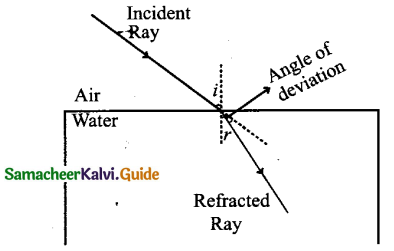
Given \(\frac{|x-2|}{x-2}\) ≥ 0
By the definition of mod function
|x – 2 | = – (x – 2) if x – 2 < 0 | x – 2 | = x – 2 if x – 2 > 0
Suppose x – 2 < 0 then
Samacheer Kalvi 11th Maths Guide Chapter 2 Basic Algebra Ex 2.13 1

Samacheer Kalvi 11th Maths Guide Chapter 2 Basic Algebra Ex 2.13

Question 4.
The solution of 5x – 1 < 24 and 5x + 1 > – 24 is
(1) (4, 5)
(2) (- 5, – 4)
(3) (- 5, 5)
(4) (- 5, 4)
Answer:
(3) (- 5, 5)

Explanation:
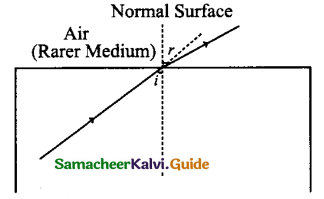
The given inequalities are
5x – 1 < 24 ——— (1)
5x + 1 > – 24 ——– (2)
(1) ⇒ 5x – 1 < 24
⇒ 5x < 24 + 1
⇒ 5x < 25 ⇒ x < 5 ——— (3)
(2) ⇒ 5x + 1 > – 24
⇒ 5x > – 24 – 1
⇒ 5x > – 25
⇒ x > – 5 ——– (4)
Combining (3) and (4), we have
-5 < x < 5
∴ x ∈ (- 5, 5)

Samacheer Kalvi 11th Maths Guide Chapter 2 Basic Algebra Ex 2.13

Question 5.
The solution set of the following inequality
|x – 1| ≥ |x – 3| is
(1) [0, 2]
(2) [2, ∞)
(3) (0, 2)
(4) (-∞, 2)
Answer:
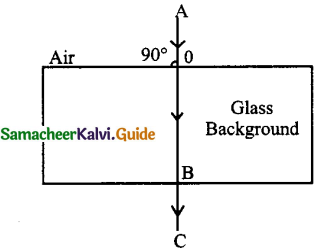
(2) [2, ∞)

Explanation:

The given inequality is |x – 1| ≥ |x – 3|
(x – 1)2 ≥ (x – 3)2
x2 – 2x + 1 ≥ x2 – 6x + 9
– 2x + 1 ≥ – 6x + 9
6x – 2x + 1 – 9 ≥ 0
4x – 8 ≥ 0 ⇒ 4x ≥ 8
⇒ x ≥ 2
∴ The solution set of the given inequality lies in the interval (2, ∞)

Samacheer Kalvi 11th Maths Guide Chapter 2 Basic Algebra Ex 2.13

Question 6.
The value of \(\log _{\sqrt{2}} 512\) is
(1) 16
(2) 18
(3) 9
(4) 12
Answer:
(2) 18

Explanation:

Samacheer Kalvi 11th Maths Guide Chapter 2 Basic Algebra Ex 2.13 2

Samacheer Kalvi 11th Maths Guide Chapter 2 Basic Algebra Ex 2.13

Question 7.
The value of \(\log _{3} \frac{1}{81}\) is
(1) – 2
(2) – 8
(3) – 4
(4) – 9
Answer:
(3) – 4

Explanation:
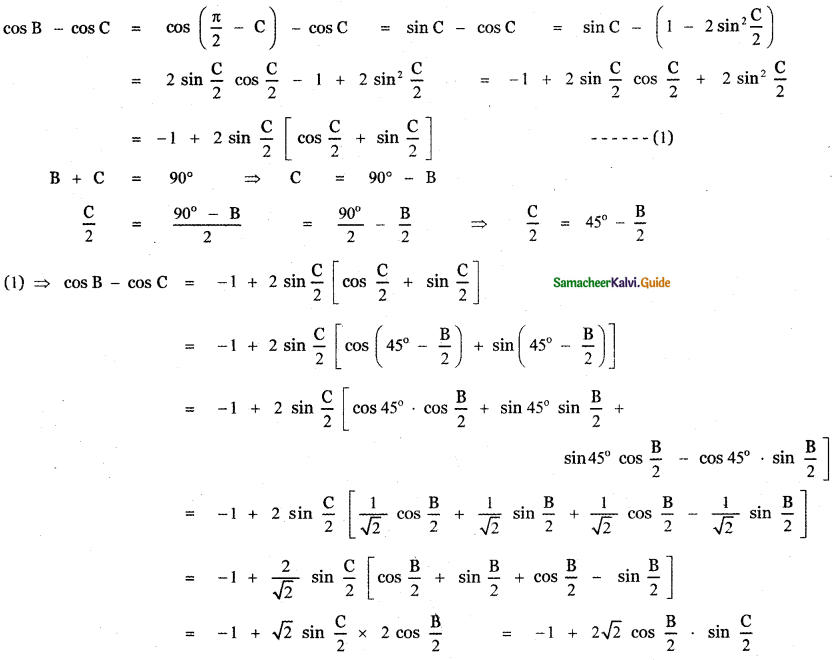
\(\log _{3} \frac{1}{81}\) = log31 – log381
= o – log3 34
= – 4 log33
= – 4 × 1
= – 4

Question 8.
If log√x0.25 = 4, then the value of x is
(1) 0.5
(2) 2.5
(3) 1.5
(4) 1.25
Answer:
(1) 0.5

Explanation:

log√x0.25 = 4
By the definition of logarithm
0.25 = \((\sqrt{x})^{4}\)
(0.5 )2 = \(\left(x^{\frac{1}{2}}\right)^{4}\)
(0.5 )2 = x2
x = 0.5

Samacheer Kalvi 11th Maths Guide Chapter 2 Basic Algebra Ex 2.13

Question 9.
The value of logab . logbc . logca is
(1) 2
(2) 1
(3) 3
(4) 4
Answer:

(2) 1

Explanation:
logab . logbc . logca = logac . logca
= logaa = 1

Question 10.
If 3 is the logarithm of 343 then, the base is
(1) 5
(2) 7
(3) 6
(4) 9
Answer:
(2) 7

Explanation:
⇒ logx343 = 3 ⇒ 343 = x3
(.i.e.,) 73 = x3 ⇒ x = 7
⇒ x = 7

Samacheer Kalvi 11th Maths Guide Chapter 2 Basic Algebra Ex 2.13

Question 11.
Find a so that the sum and product of the roots of the equation 2x2 + (a – 3 ) x + 3a – 5 = 0 are equal is
(1) 1
(2) 2
(3) 0
(4) 4
Answer:
(2) 2

Explanation:
Given quadratic equation is
2x2 + (a – 3) x + 3a – 5 = 0
Let the roots be α, β
Sum of the roots α + β = \(-\frac{(a-3)}{2}\)
Product of the roots α β = \(\frac{3 a-5}{2}\)
Given α + β = α β
∴ \(-\frac{(a-3)}{2}=\frac{3 a-5}{2}\)
– a + 3 = 3a – 5
3a + a = 5 + 3
4a = 8 ⇒ a = 2

Samacheer Kalvi 11th Maths Guide Chapter 2 Basic Algebra Ex 2.13

Question 12.
If a and b are the roots of the equation x2 – kx +16 = 0 and satisfy a2 + b2 = 32, then the value of k is
(1) 10
(2) – 8
(3) – 8, 8
(4) 6
Answer:
(3) – 8, 8

Explanation:
a + b = k ….(1) ab = 16 ….(2)
a2 + b2 = (a + b)2 – 2ab = 32 .
k2 – 32 = 32 ⇒ k2 = 64 ⇒ k = ±8

Samacheer Kalvi 11th Maths Guide Chapter 2 Basic Algebra Ex 2.13

Question 13.
The number of solutions of x2 + |x – 1| = 1 is
(1) 1
(2) 0
(3) 2
(4) 3
Answer:
(3) 2

Explanation:
The given quadratic equatiuon is
x2 + |x – 1| = 1 ——– (1)

Case(i)
By the definition of mod function if x – 1 ≥ 0, then
|x – 1| = x – 1
∴ (1) ⇒ x2 + x – 1 = 1
x2 + x – 2 = 0
x2 + 2x – x – 2 = 0
x(x + 2) – 1 (x + 2) = 0
(x – 1)(x + 2) = 0
x – 1 = 0 or x + 2 = 0
x = 1 or x = – 2
Since x – 1 ≥ 0
x = – 2 is not possible. ∴ x = 1

Case (ii)
Again by the definition of mod function if x – 1 < 0 then
|x – 1| = – (x – 1)
∴ (1) ⇒ x2 – (x – 1) = 1
x2 – x + 1 = 1
x2 – x = 0
x (x – 1 ) = 0
x = 0 or x – 1 = 0
x = 0 or x = 1
Since x < 1, x = 1 is not possible
∴ x = 0
∴ The required solution set is {0, 1}
Number of solutions = 2

Samacheer Kalvi 11th Maths Guide Chapter 2 Basic Algebra Ex 2.13

Question 14.
The equation whose roots are numerically equal but opposite in sign to the roots of 3x2 – 5x – 7 = 0 is
(1) 3x2 – 5x – 7 = 0
(2) 3x2 + 5x – 7 = 0
(3) 3x2 – 5x + 7 = 0
(4) 3x2 + x – 7 = 0
Answer:
(2) 3x2 + 5x – 7 = 0

Explanation:
The given quadratic equation is
3x2 – 5x – 7 = 0 ——— (1)
Let α and β be the roots of eqn (1)
Sum of the roots α + β = \(-\left(\frac{-5}{3}\right)\)
α + β = \(\frac{5}{3}\)
Product of the roots α β = – \(\frac{7}{3}\)
The quadratic equation whose roots are – α and – β is
x2 – (sum of the roots) x + Product of the roots = 0
x2 – (- α – β)x + (- α)(- β) = 0
x2 + (α + β)x + αβ = 0
x2 + \(\frac{5}{3}\) x – \(\frac{7}{3}\) = 0
3x2 + 5x – 7 = 0 is the required equation.

Samacheer Kalvi 11th Maths Guide Chapter 2 Basic Algebra Ex 2.13

Question 15.
If 8 and 2 are the roots of x2 + ax + c = 0 and 3, 3 are the roots of x2 + dx + b = 0 , then the roots of the equation x2 + ax + b = 0 are
(1) 1, 2
(2) -1, 1
(3) 9, 1
(4) -1, 2
Answer:
(3) 9, 1

Explanation:
Given that 8 and 2 are the roots of the equation
x2 + ax + c = 0 ———- (1)
Sum of the roots 8 + 2 = \(-\frac{a}{1}\) ⇒ a = -10
Product of the roots 8 × 2 = \(\frac{c}{1}\) ⇒ c = 16
Also given 3 , 3 are the roots of
x2 + dx + b = 0 ——— (2)
Sum of the roots 3 + 3 = – \(\frac{d}{1}\) ⇒ d = – 6
Product of the roots 3 × 3 = \(\frac{b}{1}\) ⇒ b = 9
Let a and p be roots of the equation x2 + ax + b = 0
Sum of the roots α + β = – y
α + β = -(-10)
α + β = 10 ——– (3)
Product of the roots α β = y
α β = 9 ———- (4)
(α – β) = (α + β)2 – 4αβ
= 102 – 4 × 9
= 100 – 36 = 64
α – β = 8 ——— (5)
Solving equations (3) and (5)
Samacheer Kalvi 11th Maths Guide Chapter 2 Basic Algebra Ex 2.13 3
Substituting in equation (3),
9 + β = 10
⇒ β = 10 – 9 = 1
∴ The required roots are 9, 1

Samacheer Kalvi 11th Maths Guide Chapter 2 Basic Algebra Ex 2.13

Question 16.
If a and b are the real roots of the equation x2 – kx + c = 0 , then the distance between the
points(a, 0) and (b, 0)is
(1) \(\sqrt{\mathbf{k}^{2}-4 \mathbf{c}}\)
(2) \(\sqrt{4 k^{2}-c}\)
(3) \(\sqrt{4 \mathbf{c}-\mathbf{k}^{2}}\)
(4) \(\sqrt{\mathbf{k}-8 \mathbf{c}}\)
Answer:
(1) \(\sqrt{\mathbf{k}^{2}-4 \mathbf{c}}\)

Explanation:
Given that a and b are the roots of the equation
x2 – kx + c = 0 ——— (1)
Sum of the roots a + b = \(-\frac{(-k)}{1}\)
a + b = k ———- (2)
Product of the roots ab = \(\frac{c}{1}\)
ab = c ——– (3)
Distance between the points ( a, 0) and (b, 0) is
Samacheer Kalvi 11th Maths Guide Chapter 2 Basic Algebra Ex 2.13 4

Samacheer Kalvi 11th Maths Guide Chapter 2 Basic Algebra Ex 2.13

Question 17.
If Samacheer Kalvi 11th Maths Guide Chapter 2 Basic Algebra Ex 2.13 5 then the value of k is
(1) 1
(2) 2
(3) 3
(4) 4
Answer:
(3) 3

Explanation:
Samacheer Kalvi 11th Maths Guide Chapter 2 Basic Algebra Ex 2.13 6
kx = 2x – 2 + x + 2
kx = 3x ⇒ k = 3

Question 18.
If Samacheer Kalvi 11th Maths Guide Chapter 2 Basic Algebra Ex 2.13 7, then the value of A + B is
(1) – \(\frac{1}{2}\)
(2) – \(\frac{2}{3}\)
(3) \(\frac{1}{2}\)
(4) \(\frac{2}{3}\)
Answer:
(1) – \(\frac{1}{2}\)

Explanation:
Samacheer Kalvi 11th Maths Guide Chapter 2 Basic Algebra Ex 2.13 8
1 – 2x = A (x + 1) + B(3 – x) ——— (1)
Put x = – 1 in equation (1)
1 – 2 (- 1) = A (- 1 + 1) + B (3 + 1)
1 + 2 = 0 + 4B ⇒ B = \(\frac{3}{4}\)
Put x = 3 in equation (1)
1 – 2 × 3 = A(3 + 1) + B(3 – 3)
1 – 6 = 4A + 0
– 5 = 4A
Samacheer Kalvi 11th Maths Guide Chapter 2 Basic Algebra Ex 2.13 9

Samacheer Kalvi 11th Maths Guide Chapter 2 Basic Algebra Ex 2.13

Question 19.
The number of roots of (x + 3)4 + (x + 5)4 = 16 is
(1) 4
(2) 2
(3) 3
(4) 0
Answer:
(1) 4

Explanation:
The equation is (x + 3)4 + (x + 5)4 = 16
(x + 3)4 + (x + 5)4 = 24
This is biquadratic equation. It has 4 roots.

Question 20.
The value of
log3 11 . log11 13 . log 13 15 . log 15 27 . log 27 81 is
(1) 1
(2) 2
(3) 3
(4) 4
Answer:
(4) 4

Samacheer Kalvi 11th Maths Guide Chapter 2 Basic Algebra Ex 2.13

Explanation:
log3 11 . log11 13 . log 13 15 . log 15 27 . log 27 81
= log3 13 . log 13 15 . log 15 27 . log 27 81
= log 3 15 . log 15 27 . log 27 81
= log 3 27 . log 27 81
= log 3 81
= log 334
= 4 log 33
= 4 × 1
= 4

Samacheer Kalvi 11th Maths Guide Chapter 2 Basic Algebra Ex 2.11

Tamilnadu State Board New Syllabus Samacheer Kalvi 11th Maths Guide Pdf Chapter 2 Basic Algebra Ex 2.11 Text Book Back Questions and Answers, Notes.

Tamilnadu Samacheer Kalvi 11th Maths Solutions Chapter 2 Basic Algebra Ex 2.11

Question 1.
Simplify
(a) (125)2/3
(b) 16-3/4
(c) (- 1000)-2/3
(d) (3-6)1/3
(e) \(\frac{27^{-\frac{2}{3}}}{27^{-\frac{1}{3}}}\)
Answer:
(a) (125)2/3
Samacheer Kalvi 11th Maths Guide Chapter 2 Basic Algebra Ex 2.11 1

Samacheer Kalvi 11th Maths Guide Chapter 2 Basic Algebra Ex 2.11

(b) 16-3/4
Samacheer Kalvi 11th Maths Guide Chapter 2 Basic Algebra Ex 2.11 2

(c) (- 1000)-2/3
Samacheer Kalvi 11th Maths Guide Chapter 2 Basic Algebra Ex 2.11 3

(d) (3-6)1/3
Samacheer Kalvi 11th Maths Guide Chapter 2 Basic Algebra Ex 2.11 4

(e) \(\frac{27^{-\frac{2}{3}}}{27^{-\frac{1}{3}}}\)
Samacheer Kalvi 11th Maths Guide Chapter 2 Basic Algebra Ex 2.11 5

Samacheer Kalvi 11th Maths Guide Chapter 2 Basic Algebra Ex 2.11

Question 2.
Evaluate Samacheer Kalvi 11th Maths Guide Chapter 2 Basic Algebra Ex 2.11 6
Answer:
Samacheer Kalvi 11th Maths Guide Chapter 2 Basic Algebra Ex 2.11 7

Samacheer Kalvi 11th Maths Guide Chapter 2 Basic Algebra Ex 2.11

Question 3.
If \(\left(x^{\frac{1}{2}}+x^{-\frac{1}{2}}\right)^{2}=\frac{9}{2}\) then find the value of \(\left(x^{\frac{1}{2}}-x^{-\frac{1}{2}}\right)\) for x > 1
Answer:
Samacheer Kalvi 11th Maths Guide Chapter 2 Basic Algebra Ex 2.11 8
Samacheer Kalvi 11th Maths Guide Chapter 2 Basic Algebra Ex 2.11 9

Samacheer Kalvi 11th Maths Guide Chapter 2 Basic Algebra Ex 2.11

Question 4.
Simplify and hence find the value of n:
\(\frac{3^{2 n} \cdot 9^{2} \cdot 3^{-n}}{3^{3 n}}\) = 27
Answer:
Given
Samacheer Kalvi 11th Maths Guide Chapter 2 Basic Algebra Ex 2.11 10
4 – 2n = 3
2n = 4 – 3
2n = 1
n = \(\frac { 1 }{ 2 }\)

Question 5.
Find the radius of the spherical tank whose volume is \(\frac{32 \pi}{3}\) units.
Answer:
Let r be the radius of the spherical tank.
Given volume of the spherical tank = \(\frac{32 \pi}{3}\)
\(\frac{4}{3}\)πr3 = \(\frac{32 \pi}{3}\)
4r3 = 32
r3 = \(\frac{32}{4}\) = 8
r3 = 23
r = 2
∴ Radius of the spherical tank r = 2 units.

Samacheer Kalvi 11th Maths Guide Chapter 2 Basic Algebra Ex 2.11

Question 6.
Simplify by rationalizing the denominator \(\frac{7+\sqrt{6}}{3-\sqrt{2}}\)
Answer:
\(\frac{7+\sqrt{6}}{3-\sqrt{2}}\)
Multiply the numerator and denominator by 3 + √2
Samacheer Kalvi 11th Maths Guide Chapter 2 Basic Algebra Ex 2.11 11

Samacheer Kalvi 11th Maths Guide Chapter 2 Basic Algebra Ex 2.11

Question 7.
Simplify:
Samacheer Kalvi 11th Maths Guide Chapter 2 Basic Algebra Ex 2.11 12
Answer:
Samacheer Kalvi 11th Maths Guide Chapter 2 Basic Algebra Ex 2.11 13

Samacheer Kalvi 11th Maths Guide Chapter 2 Basic Algebra Ex 2.11

Samacheer Kalvi 11th Maths Guide Chapter 2 Basic Algebra Ex 2.11 14
Samacheer Kalvi 11th Maths Guide Chapter 2 Basic Algebra Ex 2.11 15

Samacheer Kalvi 11th Maths Guide Chapter 2 Basic Algebra Ex 2.11

Question 8.
If x = √2 + √3 find \(\frac{x^{2}+1}{x^{2}-2}\)
Answer:
Samacheer Kalvi 11th Maths Guide Chapter 2 Basic Algebra Ex 2.11 16

Samacheer Kalvi 11th Maths Guide Chapter 2 Basic Algebra Ex 2.11

Samacheer Kalvi 11th Maths Guide Chapter 2 Basic Algebra Ex 2.11 17

Samacheer Kalvi 11th Maths Guide Chapter 2 Basic Algebra Ex 2.10

Tamilnadu State Board New Syllabus Samacheer Kalvi 11th Maths Guide Pdf Chapter 2 Basic Algebra Ex 2.10 Text Book Back Questions and Answers, Notes.

Tamilnadu Samacheer Kalvi 11th Maths Solutions Chapter 2 Basic Algebra Ex 2.10

Determine the region in the plane determined by the inequalities

Question 1.
x ≤ 3y, x ≥ y
Answer:
Consider the line x = 3y
When y = 0 ⇒ x = 0
When y = 1 ⇒ x = 3
When y = – 1 ⇒ x = – 3
Samacheer Kalvi 11th Maths Guide Chapter 2 Basic Algebra Ex 2.10 1
Consider the line x = y
When x = 0 ⇒ y = o
When x = 1 ⇒ y = 1
When x = – 1 ⇒ y = – 1
Samacheer Kalvi 11th Maths Guide Chapter 2 Basic Algebra Ex 2.10 2

Samacheer Kalvi 11th Maths Guide Chapter 2 Basic Algebra Ex 2.10

To find the region of x ≤ 3y: The line x = 3y divides the cartesian plane into two half planes. Consider the point (1,1) this point satisfies the inequality x < 3y. This point (1,1) lies above the line x = 3y.

Hence all points satisfying the inequality lie above the line x = 3y.

Therefore x < 3y represents the upper half plane of the Cartesian plane bounded by the line x = 3y. Since x ≤ 3y, this region also contains all the points on the straight line x = 3y.
Samacheer Kalvi 11th Maths Guide Chapter 2 Basic Algebra Ex 2.10 3
To find the region x ≥ y: The line x = y divides the cartesian plane into two half planes. Consider the point (2,1). This point (2,1) satisfies the inequality x > y and this point (2,1) lies below the line x = y. ∴ All points satisfying the inequality x > y will lie below the line x = y. Therefore x > y represents the lower half plane of the cartesian plane bounded by the line x = y. Since x > y this region also contains all the points on the straight line x = y.
Samacheer Kalvi 11th Maths Guide Chapter 2 Basic Algebra Ex 2.10 4
The required region is the region common to the regions x ≤ 3y and x ≥ y
Samacheer Kalvi 11th Maths Guide Chapter 2 Basic Algebra Ex 2.10 5

Samacheer Kalvi 11th Maths Guide Chapter 2 Basic Algebra Ex 2.10

Question 2.
y ≥ 2x, – 2x + 3y ≤ 6
Answer:
Consider the straight line y = 2x
When x = 0 ⇒ y = 2 × 0 = 0
When x = 0 ⇒ y = 2 × 1 = 2
When x = – 1 ⇒ y = 2 × – 1 = – 2
Samacheer Kalvi 11th Maths Guide Chapter 2 Basic Algebra Ex 2.10 6
Consider the line – 2x + 3y = 6
When x = 0 ⇒ – 2 × 0 + 3y = 6 ⇒ 3y = 6 ⇒ y = 2
When y = 0 ⇒ – 2x + 3 × 0 = 6 ⇒ -2x = 6 ⇒ x = – 3
Samacheer Kalvi 11th Maths Guide Chapter 2 Basic Algebra Ex 2.10 7
To find the region of y ≥ 2x: The straight line y = 2x divides the cartesian plane into two half planes. Consider the point (1, 3) satisfying the inequality y > 2x. This point (1, 3) lies above the straight line y = 2x. ∴ All points satisfying the inequality y > 2x will lie above the line y = 2x.
Samacheer Kalvi 11th Maths Guide Chapter 2 Basic Algebra Ex 2.10 8

Samacheer Kalvi 11th Maths Guide Chapter 2 Basic Algebra Ex 2.10

To find the region of -2x + 3y ≤ 6:
The straight line – 2x + 3y = 6 divides the cartesian plane into two half planes one half plane contains the origin and the other half plane does not contain the origin.

Substitute the origin (0, 0) in the inequality – 2x + 3y < 6
we get – 2 × 0 + 3 × 0 < 6 ⇒ 0 < 6
∴ (0,0) satisfies the inequality – 2x + 3y < 6
∴ The inequality – 2x + 3y < 6 represents the half plane containing the origin. Since – 2x + 3y ≤ 6, this region contains all the points on the straight line – 2x + 3y = 6.
Samacheer Kalvi 11th Maths Guide Chapter 2 Basic Algebra Ex 2.10 9
The required region is the region common to y ≥ 2x and – 2x + 3y ≤ 6
Samacheer Kalvi 11th Maths Guide Chapter 2 Basic Algebra Ex 2.10 10

Samacheer Kalvi 11th Maths Guide Chapter 2 Basic Algebra Ex 2.10

Question 3.
3x + 5y ≥ 45, x ≥ 0, y ≥ 0
Answer:
Consider the line 3x + 5y = 45
when x = 0, 3 × 0 + 5y = 45 ⇒ y = \(\frac{45}{5}\) = 9
when y = 0, 3x + 5 × 0 = 45 ⇒ x = \(\frac{45}{3}\) = 15
Samacheer Kalvi 11th Maths Guide Chapter 2 Basic Algebra Ex 2.10 11

To find the region of x ≥ 0, y ≥ 0:
x ≥ 0 and y ≥ 0 denote the first quadrant of the Cartesian plane.
Since x ≥ 0 and y ≥ 0 this region contains all the points on the lines x = 0 and y = 0.
Samacheer Kalvi 11th Maths Guide Chapter 2 Basic Algebra Ex 2.10 12

To find the region of 3x + 5y ≥ 45: The straight-line 3x + 5y = 45 divides the cartesian plane into two half-planes, one-half plane containing the origin and the other half-plane does not contain the origin.

Substitute the origin (0,0) in the inequality 3x + 5y > 45 we get 3 × 0 + 5 × 0 > 45 ⇒ 0 > 45 which is impossible. Therefore, (0, 0) does not satisfy the inequality 3x + 5y > 45 represents the half plane that does not contain the origin bounded by the straight line 3x + 5y = 45. Since 3x + 5y ≥ 45, x ≥ 0, y ≥ 0, this region contains all the points on the straight lines 3x + 5y = 45.
Samacheer Kalvi 11th Maths Guide Chapter 2 Basic Algebra Ex 2.10 13
∴ The required region is the common region bounded by x ≥ 0, y ≥ 0, and 3x + 5y ≥ 45.
Samacheer Kalvi 11th Maths Guide Chapter 2 Basic Algebra Ex 2.10 14

Samacheer Kalvi 11th Maths Guide Chapter 2 Basic Algebra Ex 2.10

Question 4.
2x + 3y ≤ 35, y ≥ 2, x ≥ 5.
Answer:
Consider the straight line 2x + 3y = 35
When x = 0, 2 × 0 + 3y = 35 ⇒ \(\frac{35}{3}\)
When y = 0, 2x + 3 × 0 = 35 ⇒ \(\frac{35}{2}\)
Samacheer Kalvi 11th Maths Guide Chapter 2 Basic Algebra Ex 2.10 15

To find the region of 2x + 3y ≤ 35: The straight-line 2x + 3y = 35 divides the cartesian plane into two half-planes, one-half plane contains the origin and the other half-plane does not contain the origin.

Substitute the origin (0, 0) in the inequality 2x + 3y < 35, we get 2 × 0 + 3 × 0 < 35 ⇒ 0 < 35. (0, 0) satisfies the inequality.

Therefore, the inequality 2x + 3y < 35 represents the half plane that contains the origin (0, 0) bounded by the straight line 2x + 3y = 35. Since 2x + 3y ≤ 35, this region contains all the points on the straight line 2x + 3y = 35.
Samacheer Kalvi 11th Maths Guide Chapter 2 Basic Algebra Ex 2.10 16

Samacheer Kalvi 11th Maths Guide Chapter 2 Basic Algebra Ex 2.10

To find the region y ≥ 2: The straight line y = 2 divides the cartesian plane into two half-planes, one-half plane contains the origin and the other half-plane does not contain the origin. Substitute the point (0, 0) in the inequality y ≥ 2 we get 0 >2 which is impossible. Hence (0, 0) does not satisfy the inequality y > 2.

∴ The inequality y > 2 represents the half-plane that does not contain the origin bounded by the straight line y = 2. Since y ≥ 2, this region contains all the points on the straight line y = 2.
Samacheer Kalvi 11th Maths Guide Chapter 2 Basic Algebra Ex 2.10 17

To find the region x ≥ 5: The straight line x – 5 divides the cartesian plane into two half-planes, one half-plane containing the origin and the other half-plane does not contain the origin.

Substitute the origin (0,0) in the inequality x > 5 we get 0 > 5 which is impossible. Hence (0, 0) does not satisfy the inequality x > 5.

∴ The inequality x > 5 represents the half-plane that does not contain the origin bounded the straight line x = 5.
Since x ≥ 5, this region contains all the points on the straight line x = 5
Samacheer Kalvi 11th Maths Guide Chapter 2 Basic Algebra Ex 2.10 18
∴ The required region is the common region bounded by 2x + 3y ≤ 35, y ≥ 2, x ≥ 5.
Samacheer Kalvi 11th Maths Guide Chapter 2 Basic Algebra Ex 2.10 19

Samacheer Kalvi 11th Maths Guide Chapter 2 Basic Algebra Ex 2.10

Question 5.
2x + 3y ≤ 6, x + 4y ≤ 4, x ≥ 0, y ≥ 0
Answer:
Consider the straight line 2x + 3y = 6
When x = 0, 2 × 0 + 3y = 6 ⇒ y = \(\frac{6}{3}\) = 2
When y = 0, 2x + 3 × 0 = 6 ⇒ x = \(\frac{6}{2}\) = 3
Samacheer Kalvi 11th Maths Guide Chapter 2 Basic Algebra Ex 2.10 20
Consider the straight line x + 4y = 4
When x = 0 ⇒ 0 + 4y = 4 ⇒ y = \(\frac{4}{4}\) = 1
When y = 0 ⇒ x + 4 × 0 = 4 ⇒ x = 4
Samacheer Kalvi 11th Maths Guide Chapter 2 Basic Algebra Ex 2.10 21
To find the region of 2x + 3y ≤ 6: The straight line 2x + 3y = 6 divides the cartesian plane into two half planes, one half plane contains the origin and the other half plane does not contain the origin. Substitute the origin (0, 0) in the inequality 2x + 3y < 6 we get 2 × 0 + 3 × 0 < 6 ⇒ 0 < 6

∴ The origin (0,0) satisfies the inequality 2x + 3y < 6. Hence the inequality 2x + 3y < 6 represents the half plane that contains the origin (0, 0). Since 2x + 3y ≤ 6, this region contains all the points on the straight line 2x + 3y = 6.
Samacheer Kalvi 11th Maths Guide Chapter 2 Basic Algebra Ex 2.10 22

Samacheer Kalvi 11th Maths Guide Chapter 2 Basic Algebra Ex 2.10

To find the region of x + 4y ≤ 4 : The straight line x + 4y = 4 divides the cartesian plane into two half planes, one half plane contains the origin and the other half plane does not contain the origin. Substitute the origin (0, 0) in the inequality x + 4y < 4, we get 0 + 4 × 0 < 4 ⇒ 0 < 4.

Therefore the origin (0, 0) satisfies the inequality x + 4y < 4. Therefore the inequality x + 4y < 4 represents the half-plane that contains the origin bounded by the line x + 4y = 4. Since x + 4y ≤ 4, this region contains all the points on the straight line.
Samacheer Kalvi 11th Maths Guide Chapter 2 Basic Algebra Ex 2.10 23

To find the region x ≥ 0, y ≥ 0: x ≥ 0 and y ≥ 0 denote the first quadrant of the cartesian plane.
Since x ≥ 0 and y ≥ 0 this region contains all the points on the lines x = 0 and y = 0.
Samacheer Kalvi 11th Maths Guide Chapter 2 Basic Algebra Ex 2.10 24
The required region is the common region bounded by 2x + 3y ≤ 6, x + 4y ≤ 4, x ≥ 0 and y ≥ 0.

Samacheer Kalvi 11th Maths Guide Chapter 2 Basic Algebra Ex 2.10

Question 6.
x – 2y ≥ 0 , 2x – y ≤ – 2 , x ≥ 0, y ≥ 0
Answer:
Consider the straight line x – 2y = 0
When x = 0
⇒ -2y = 0
⇒ y = 0

When x = 2
⇒ 2 – 2y = 0
⇒ 2y = 2
⇒ y = 1

When x = -2
⇒ – 2 – 2y = 0
⇒ -2y = 2
⇒ y = – 1
Samacheer Kalvi 11th Maths Guide Chapter 2 Basic Algebra Ex 2.10 25

Consider the line 2x – y = – 2
When x = 0 ⇒ – y = – 2 ⇒ y = 2
When y = 0 ⇒ 2x – 0 = – 2 ⇒ x = – 1
Samacheer Kalvi 11th Maths Guide Chapter 2 Basic Algebra Ex 2.10 26

To find the region of x – 2y ≥ 0: The straight line x – 2y = 0 divides the cartesian plane into two half-planes. Consider the point (3,1) satisfying the inequality x > 2y. The point (3, 1) lies below the straight line x = 2y in the cartesian plane.

∴ All the points satisfying the inequality x > 2y will lie in the half-plane below the straight line x = 2y. Since x ≥ 2y this region contains all the points on the straight line x = 2y.
Samacheer Kalvi 11th Maths Guide Chapter 2 Basic Algebra Ex 2.10 27

Samacheer Kalvi 11th Maths Guide Chapter 2 Basic Algebra Ex 2.10

To find the region of 2x – y ≤ – 2:
-(2x – y) ≥ 2 ⇒ – 2x + y ≥ 2
Consider the straight line – 2x + y = 2. This line divides the cartesian plane in to two half planes, one half plane contains the origin and the other half plane does not contain the origin. Substitute the origin (0, 0) in the inequality – 2x + y > 2 we get- 2 × 0 + 0 > 2 ⇒ 0 > 2 which is impossible. Therefore (0, 0) does not satisfy the inequality -2x + y > 2. Hence the inequality -2x + y > 2 represents the half plane that does not contain the origin bounded by the straight line. Since -2x + y > 2, this region contains all the points on the straight line -2x + y = 2
Samacheer Kalvi 11th Maths Guide Chapter 2 Basic Algebra Ex 2.10 28

To find the region of x ≥ 0, y ≥ 0: x ≥ 0 and y ≥ 0 denote the first quadrant of the cartesian plane. Since x ≥ 0 and y ≥ 0 this region contains all the points on the lines x = 0 and y = 0.
Samacheer Kalvi 11th Maths Guide Chapter 2 Basic Algebra Ex 2.10 29
∴ The required region is the region common to x – 2y ≥ 0 , 2x – y ≤ – 2 , x ≥ 0, y ≥ 0.
Samacheer Kalvi 11th Maths Guide Chapter 2 Basic Algebra Ex 2.10 30

Samacheer Kalvi 11th Maths Guide Chapter 2 Basic Algebra Ex 2.10

Question 7.
2x + y ≥ 8, x + 2y ≥ 8, x + y ≤ 6
Answer:
Consider the straight line 2x + y = 8
When x = 0 ⇒ 2 × 0 + y = 8 ⇒ y = 8
When y = 0 ⇒ 2x + 0 = 8 ⇒ x = \(\frac{8}{2}\) = 4
Samacheer Kalvi 11th Maths Guide Chapter 2 Basic Algebra Ex 2.10 31

Consider the straight line x + 2y = 8
When x = 0 ⇒ 0 + 2y = 8 ⇒ y = \(\frac{8}{2}\) = 4
When y = 0 ⇒ x + 2 × 0 = 8 ⇒ x = 8
Samacheer Kalvi 11th Maths Guide Chapter 2 Basic Algebra Ex 2.10 32

Consider the straight line x + y = 6
When x = 0 ⇒ 0 + y = 6 ⇒ y = 6
When y = 0 ⇒ x + 0 = 6 ⇒ x = 6
Samacheer Kalvi 11th Maths Guide Chapter 2 Basic Algebra Ex 2.10 33

Samacheer Kalvi 11th Maths Guide Chapter 2 Basic Algebra Ex 2.10

To find the region of 2x + y ≥ 8: The straight-line 2x + y = 8 divides the cartesian plane into two half-planes one half plane contains the origin and the other half plane does not contain the origin. Substitute the origin (0, 0) in the inequality 2x + y > 8 we get 2 × 0 + 0 > 8 ⇒ 0 > 8 which is impossible.
∴ The origin (0, 0) does not satisfy the inequality 2x + y > 8. Hence the inequality 2x + y > 8 represents the half plane that does not contain the origin bounded by the straight line 2x + y = 8. Since 2x + y ≥ 8, this region contains all the points on the straight line 2x + y = 8.
Samacheer Kalvi 11th Maths Guide Chapter 2 Basic Algebra Ex 2.10 34

To find the region of x + 2y ≥ 8: The straight line x + 2y = 8 divides the cartesian plane into two half planes, one half plane contains the origin and the other half plane doesnot contain the origin. Substitute the origin (0, 0) in the inequality x + 2y > 8 we get 0 + 2 × 0 > 8 ⇒ 0 > 8 which is impossible. ∴ The origin (0, 0) does not satisfy the inequality x + 2y > 8. Therefore, the inequality x + 2y > 8 represents the half plane that does not contain the origin bounded by the straight line x + 2y = 8. Since x + 2y ≥ 8 this region contains all the points on the straight line x + 2y = 8.
Samacheer Kalvi 11th Maths Guide Chapter 2 Basic Algebra Ex 2.10 35

To find the region of x + y ≤ 6: The straight line x + y = 6 divides the cartesian plane into two half-planes, one half-plane contains the origin and the other half-plane does not contain the origin. Substitute the origin (0, 0) in the inequality x + y < 6 we get 0 + 0 < 6 ⇒ 0 < 6 which is true.
∴ The origin (0, 0) satisfies the inequality x + y < 6. Hence, the inequality x + y < 6 represents the half plane that contains the origin bounded by the straight line x + y = 6. Since x + y ≤ 6, this region contains all the points on the straight line x + y = 6.
Samacheer Kalvi 11th Maths Guide Chapter 2 Basic Algebra Ex 2.10 36
Thus the required region is the region common to 2x + y ≥ 8, x + 2y ≥ 8, x + y ≤ 6

Samacheer Kalvi 11th Maths Guide Chapter 2 Basic Algebra Ex 2.10

Samacheer Kalvi 7th Social Science Guide Civics Term 3 Chapter 3 Road Safety

Tamilnadu State Board New Syllabus Samacheer Kalvi 7th Social Science Guide Pdf Geography Term 3 Chapter 3 Road Safety Text Book Back Questions and Answers, Notes.

Tamilnadu Samacheer Kalvi 7th Social Science Solutions Geography Term 3 Chapter 3 Road Safety

7th Social Science Guide Road Safety Text Book Back Questions and Answers

I. Choose the Correct answer:

Question 1.
Road safety is meant for
a) Passersby
b) drivers
c) public
d) all who use roads
Answer:
d) all who use roads

Samacheer Kalvi 7th Social Science Guide Civics Term 3 Chapter 3 Road Safety

Question 2.
Road accidents affect a country’s
a) improvement
b) life
c) finance
d) all the above
Answer:
d) all the above

Question 3.
Permit refers to
a) permission for driving
b) permission for carrying goods
c) certificate for drivers
d) registration of vehicles
Answer:
a) permission for driving

Question 4.
Raksha safe drive is a device useful for
a) pedestrians
b) motorists
c) car drivers
d) passengers
Answer:
c) car drivers

Samacheer Kalvi 7th Social Science Guide Civics Term 3 Chapter 3 Road Safety

Question 5.
Road safety week celebration was first imitated in India in the year
a) 1947
b) 1989
c) 1990
d) 2019
Answer:
b) 1989

II. Fill in the blanks:

1. The most useful invention of man for transport is ………………….
Answer:
wheel

2. Using …………………. is inevitable in our journey of life.
Answer:
Helmet

Samacheer Kalvi 7th Social Science Guide Civics Term 3 Chapter 3 Road Safety

3. Too many vehicles on the road cause …………………. and …………………. pollution.
Answer:
Air, Noise

4. …………………. is the monetary supporter of a family.
Answer:
Breadwinner

5. In case of emergency for medical assistance call …………………. for help.
Answer:
108

III. Match the following:

AB
1. Informatory signa) Traffic lights
2. The Legal Metrology Actb) Narrow bend sign
3. Mandatory signc) Petrol pump sign
4. Cautionary signd) License
5. Right to drive a vehiclee) walkers

Answer:

AB
1. Informatory signc) Petrol pump sign
2. The Legal Metrology Acte) walkers
3. Mandatory signa) Traffic lights
4. Cautionary signb) Narrow bend sign
5. Right to drive a vehicled) License

Samacheer Kalvi 7th Social Science Guide Civics Term 3 Chapter 3 Road Safety

IV. Consider the following statements:

Question 1.
Tick the appropriate answer:
Assertion (A) : Car pooling is the use of vehicles by turns. Reason (R) : It saves fuel, time and money and also.
a) A is correct and R is not correct
b) A is correct and R is also correct
c) A is wrong and R is correct
d) Both are wrong
Answer:
c) A is wrong and R is correct

Question 2.
Find the odd one
a) car
b) trucks
c) tempos
d) aeroplanes
Answer:
d) aeroplanes

Samacheer Kalvi 7th Social Science Guide Civics Term 3 Chapter 3 Road Safety

Question 3.
Consider the following statements and choose the correct answer from the codes given below.

a) Road safety education in the school curriculum is an additional burden for the students.
Answer:
False

b) An ounce of practice is worth more than tons of preaching.
Answer:
True

c) Hoarding on roads has to be banned.
Answer:
True

d) Following road safety rules from childhood will become a habit in future.
Answer:
True

V. Answer in one or two sentences:

Question 1.
What are the distractors while driving?
Answer:

  • This is a larger threat and the leading cause of road accidents.
  • It is the distraction of the driver, engaging in any other activity while driving.
  • It may be talking over the mobile phone or texting messages or engaging in any activities with attention diverted from driving.

Samacheer Kalvi 7th Social Science Guide Civics Term 3 Chapter 3 Road Safety

Question 2.
Mention the 2 safety gears for safe driving.
Answer:

  • Obey the traffic rules and signs.
  • Keep vehicle fit.

Question 3.
Why is not safe to drive at night?
Answer:

  • Extra alertness is needed while driving at night.
  • Uncontrolled sleep, tiredness due to the long drive, poor lighting on the road can cause fatal accidents.

Question 4.
When can a person obtain the night to drive a vehicle?
Answer:
As per Indian law, one should be eligible to get a driving license at the age of 18.

Question 5.
How can media promote road safety among the public?
Answer:
Mass media and journals could play a key role to raise awareness of road safety. In particular, they can disseminate preventive messages and promote safe behaviours, increase people’s knowledge and understanding of the gravity of the problem, and advocate for safer roads and systems.

Samacheer Kalvi 7th Social Science Guide Civics Term 3 Chapter 3 Road Safety

VI. Answer the following in detail:

Question 1.
List out the documents necessary for an Indian while driving.
Answer:
One who drives a vehicle should have undergone the training and tests to obtain a driving license.
It is compulsory to have the following documents:

  • driving license
  • registration certificate of the vehicle
  • Insurance certificate
  • Taxation certificate
  • fitness certificate and permit.

Question 2.
What is the need for including road safety education in the school curriculum?
Answer:

  • Provide Road Safety education since childhood.
  • It has to be made a part of the school curriculum, syllabus, textbook and included in competition on road safety.
  • Activities like writing slogans, essays, and paintings on this theme should be conducted for reinforcement.

Samacheer Kalvi 7th Social Science Guide Civics Term 3 Chapter 3 Road Safety

Question 3.
How can parents teach their children road safety rules?
Answer:

  • Parents and Teachers play a vital role in imparting road safety Education to young ones.
  • If a child’s parent violates the traffic rules, the child too will initiate the same in the future.
  • So the elders have to set an example for them in adhering to the safety rules and regulations.
  • Video and computer games that simulate driving should be banned by the government.
  • Help your children learn about traffic signals and rules.
  • Warn them not to run across or along the road.
  • Teach them to use the footpath while walking on the road.

HOTs:

Question 1.
Knowing the road safety rules, how will you influence your parents and relatives?
Answer:

  1. We will educate parents on following road safety rules.
  2. Explain the risk of not wearing a helmet.
  3. We will insist our parents wear a seat belt while driving a car.
  4. We will tell them not to exceed the speed limit while riding or driving.

Question 2.
If the wheel had not been invented, what might have been our mode of transport?
Answer:

  • If the wheel had not been invented, there is a need for road transport.
  • Walking would have been the only mode of transport.

Samacheer Kalvi 7th Social Science Guide Civics Term 3 Chapter 3 Road Safety

7th Social Science Guide Road Safety Additional Important Questions and Answers

I. Choose the Correct answer.

Question 1
……………….. is the world’s largest contributor to road accidents.
a) China
b) India
c) Africa
d) none
Answer:
b) India

Question 2.
India accounts for about ……………….. of road accident fatalities at worldwide.
a) 50%
b) 70%
c) 10%
d) 20%
Answer:
c) 10%

Samacheer Kalvi 7th Social Science Guide Civics Term 3 Chapter 3 Road Safety

Question 3.
……………….. failure can result in crucial collisions.
a) Brake
b) Accelerator
c) Gear
d) all of these
Answer:
a) Brake

Question 4.
The Government of India observes; Road Safety Week; awareness during ……………….. Every year.
a) December
b) January
c) November
d) none
Answer:
b) January

Question 5.
Every country celebrates ……………….. week.
a) Road safety
b) Road rules
c) Regulation
d) Traffic Signs
Answer:
a) Road safety

II. Fill in the blanks:

1. Accident occurs to the ……………….. of the driver, engaging in any other activity while driving.
Answer:
distraction

Samacheer Kalvi 7th Social Science Guide Civics Term 3 Chapter 3 Road Safety

2. ……………….. is a major traffic violation of rules.
Answer:
Reckless driving

3. Increase of ……………….. on the road create a heavy traffic jam and cause more pollution.
Answer:
vehicles
4. Impatience of ……………….. and violation of traffic rules result in accidents.
Answer:
Pedestrians

5. Avoiding the use of ……………….. for two-wheelers lead to unwanted happenings.
Answer:
helmets

6. ……………….. is a device capable of automatic crash detection.
Answer:
Raksha safe drive

7. ……………….. will reduce the number of vehicles on the road.
Answer:
Carpooling

8. Parents and Teachers play a vital role in imparting road safety Education ………………..
Answer:
young ones

Samacheer Kalvi 7th Social Science Guide Civics Term 3 Chapter 3 Road Safety

9. ……………….. is a healthy habit and reduces pollution.
Answer:
Cycling

10. ……………….. act as silent conductors of the traffic on the road.
Answer:
Traffic signs

III. Match the following

AB
1. Night drivinga) Safe instrument
2. Driving licenseb) Loss their Stability
3. Raksha drivec) Road safety week
4. Drinking alcohold) tiredness
5. January monthe) Age 18

Answer:

AB
1. Night drivingd) tiredness
2. Driving licensee) Age 18
3. Raksha drivea) Safe instrument
4. Drinking alcoholb) Loss their Stability
5. January monthc) Road safety week

Samacheer Kalvi 7th Social Science Guide Civics Term 3 Chapter 3 Road Safety

IV. Consider the following statements:

Question 1.
Assertion (A) : Reckless driving is a major traffic violation of rules.
Reason (R) : In which the driver Purposely disregards the rules of the road.
a) A is correct and R is not correct
b) A is correct and R is also correct
c) A is wrong and R is correct
d) Both are wrong
Answer:
b) A is correct and R is also correct

Question 2.
Find the odd one.
a) STOP OR SLOW DOWN
b) BUCKLE UP
c) WEAR HELMET
d) KEEP VEHICLES FIT
e) PROHIBITION the hoarding soil
Answer:
e) PROHIBITION the hoarding soil

Samacheer Kalvi 7th Social Science Guide Civics Term 3 Chapter 3 Road Safety

V. Answer in one or two sentences :

Question 1.
Define Raksha safe drive.
Answer:
Raksha safe drive is a device capable of automatic crash detection, two-way call connectivity, GPS tracking, engine health monitoring, and a smart panic button.

Question 2.
Write short notes on Carpooling.
Answer:
Carpooling is the sharing of car journeys so that more than one person travels in the car, and prevents the need for more cars to the same location.

Question 3.
Write the impact of Alcohol.
Answer:

  • Alcohol leads to fatal accidents.
  • Alcohol affects your vision, judgment, and ability to react quickly.

Samacheer Kalvi 7th Social Science Guide Civics Term 3 Chapter 3 Road Safety

VI. Answer the following in detail:

Question 1.
Explain the Golden Rules for Road Safety.
Answer:

  • Stop or slow down
  • Buckle up
  • Obey traffic rules and signs
  • Obey speed limits
  • Keep vehicle fit
  • Never use mobile while driving
  • Wear helmet
  • Never drive dangerously
  • Be courteous
  • Never mix drinking and driving.

Samacheer Kalvi 6th English Guide Term 1 Prose Chapter 1 Sea Turtles

Tamilnadu State Board New Syllabus Samacheer Kalvi 6th English Guide Pdf Term 1 Prose Chapter 1 Sea Turtles Text Book Back Questions and Answers, Summary, Notes.

Tamilnadu Samacheer Kalvi 6th English Solutions Term 1 Prose Chapter 1 Sea Turtles

6th English Guide Sea Turtles Text Book Back Questions and Answers

Warm-Up (Text Book Page No. 86)

Samacheer Kalvi 6th English Guide Term 1 Prose Chapter 1 Sea Turtles 1
1. Have you seen turtles? Where do they live?
Yes, I have seen turtles. They live in the Oceans.

2. What do you know about turtles?
Turtles spend their entire life in the sea. They are big in size.
They come ashore to lay eggs.

Samacheer Kalvi 9th English Guide Prose Chapter 2 I Can’t Climb Trees Anymore

3. Why do you think the turtles in the picture have names such as Leatherback and Hawksbill?
I think that the shells of the turtles are like leather and hawksbill.

Section – I

Textual Exercises

Put a Right(✓) for the correct and a Wrong(✗) for the incorrect statements (Text Book Page No. 89)

  1. Turtles are different from tortoises. (✓)
  2. Turtles are sea animals. (✓)
  3. There are seven kinds of sea turtles in the world. (✓)
  4. Sea turtles are very small. (✗)
  5. Turtles come ashore to lay eggs. (✓)
  6. Sea turtles come to rest on land. (✗)
  7. Olive Ridleys are the only sea turtles seen on Indian shores. (✓)

Section – II

Textual Questions

Are these statements right? Discuss with your partner and (✓) them if they are correct. Correct (✗) them if they are wrong. Share your answers in class. (Text Book Page No. 93)

  1. Female Olive Ridleys come ashore at night to lay eggs. (✓)
  2. The eggs of an Olive Ridley are in the shape and size of a cricket ball. (✗)
  3. Ridleys come to lay their eggs in the month of January. (✗)
  4. The turtles use their flippers and make a hollow for their nests. (✗)
  5. The hatchlings use a tiny egg-tooth to come out of the eggs. (✓)

Section – III

Textual Questions

Fill in the table given below: (Text Book Page No. 94)
Samacheer Kalvi 6th English Guide Term 1 Prose Chapter 1 Sea Turtles 14
Answer:

Problems faced by the hatchlingsEffect
1. PollutionReduce the usage of plastics.
2. PredatorsPrevent the predators from killing the hatchlings
3. Human ActivitiesConstruction activated must be prohibited

Read and Understand (Text Book Page No. 94)

A. Choose the correct answers. You may choose more than one answer if needed.

1. The ………………….. is a biological relative of tortoises.
a) sea turtle
b) fish
c) reptile
Answer:
a) sea turtle

2. In India’s coastal waters we can see a species of ……………………
a) tortoises
b) sea turtles
c) dolphin
Answer:
b) sea turtles

Samacheer Kalvi 9th English Guide Prose Chapter 2 I Can’t Climb Trees Anymore

3. Sea turtles come to the shore to ……………………
a) visit their birthplace
b) lay eggs
c) go back to sea
Answer:
b) lay eggs

4. It is a problem for sea turtles to come ashore because of…………………..
a) they find it difficult to walk on the sand
b) they don’t know their way to the shore
c) animals and people hunt them
Answer:
c) animals and people hunt them

5. A turtle’s flippers help it to …………………..
a) swim
b) dig a nest
c) climb
Answer:
a) swim

6. A sea turtle camouflages its nest by tossing sand on it to ……………………
a) hide its eggs from predators
b) incubate eggs in the warmth of the sun
c) keep the hatchlings safe
Answer:
b) incubate eggs in the warmth of the sun

Vocabulary (Text Book Page No. 95)

B. Find any five words related to sea from the text (Sections I & II). Write them below. Then use the words to frame sentences of your own.
eg:
Beach – We like to play on the sandy beach.
Answer:

  • Turtle – Turtle lives in India’s coastal areas.
  • Coastal water – We find turtles in India’s coastal water.
  • Ashore – The fishermen keep their boats ashore.
  • Coast – They find the coconut trees all along the sea coast.
  • Sand – Children play on the sandy beach

C. Fill in the blanks with words that convey the correct meaning of the sentences. (Text Book Page No. 95)

  1. Tiny hatchlings fall prev (pray / prey) to many predators.
  2. Sea turtles live their whole (hole/whole) life in the sea.
  3. The turtles come ashore only during the night (night/knight).
  4. The predators follow the scent (sent / scent) of the turtles to eat their eggs.
  5. The female turtles lay eggs and go back to the sea (see / sea).

D. Use the clues and fill in the crossword puzzle. (Text Book Page No. 95)

  1. This word rhymes with seen.
  2. This animal has two horns and a spotted coat.
  3. This is a huge sea animal.
  4. Sounds like hair
  5. Shines brightly
  6. Rhyme with load

Samacheer Kalvi 6th English Guide Term 1 Prose Chapter 1 Sea Turtles 2 Samacheer Kalvi 6th English Guide Term 1 Prose Chapter 1 Sea Turtles 15

Listening (Text Book Page No. 97)

E. Listen to the flash news. Read the questions given below, then listen to the flash news again and complete the responses.
Samacheer Kalvi 6th English Guide Term 1 Prose Chapter 1 Sea Turtles 3
Answer:
Samacheer Kalvi 6th English Guide Term 1 Prose Chapter 1 Sea Turtles 4 Samacheer Kalvi 6th English Guide Term 1 Prose Chapter 1 Sea Turtles 5

Speaking (Text Book Page No. 97)

F. Look at the picture. Work in groups and give a short talk about it using the words given below.
Samacheer Kalvi 6th English Guide Term 1 Prose Chapter 1 Sea Turtles 6 Samacheer Kalvi 6th English Guide Term 1 Prose Chapter 1 Sea Turtles 7

Volunteers of the Student’s Sea Turtle Conservation Network
(SSTCN) release Olive Ridley hatchlings into the sea.
The boys in the picture are the Volunteers of the Students’Sea Turtle Conservation. They are letting the Olive Ridley hatchlings into the sea. Female Olive Ridley comes ashore at night to lay eggs. They select a place away from the rough sea. The turtle scoops out a nest cavity. The turtles lay eggs in the cavity and fill the cavity with sands. The eggs are incubated under the warmth of the sun. They are hatched and come out to the surface. They hurry up to the sea. The boys enjoy in collecting the hatchlings in the basket and let them into the waves.

Use Grammar (Text Book Page No. 98)

G. Make meaningful sentences from the table given below.

A turtlelives in the sea. is huge.
have a connection with the land.
Turtlesare found in coastal waters are wonderful creatures, has flippers to swim.

A turtle is huge. It uses flippers to swim. Turtles live in the sea. They have a connection with the land. They are found in coastal waters. They are wonderful creatures.

Textual Exercise

H. Write a suitable sentence for the pictures given below. (Text Book Page No. 99)
Samacheer Kalvi 6th English Guide Term 1 Prose Chapter 1 Sea Turtles 8 Samacheer Kalvi 6th English Guide Term 1 Prose Chapter 1 Sea Turtles 9
Answer:
Samacheer Kalvi 6th English Guide Term 1 Prose Chapter 1 Sea Turtles 10

I. Match the two halves of the sentences and read them. (Text Book Page No. 99)

1. Sea turtlesa. threaten the survival of sea turtles.
2. Hatchlingsb. uses its front flippers to swim.
3. A turtlec. come ashore to lay eggs
4. Many factorsd. cut open the leathery eggshell.

Answer:

1. Sea turtlesc. come ashore to lay eggs
2. Hatchlingsd. cut open the leathery eggshell.
3. A turtleb. uses its front flippers to swim.
4. Many factorsa. threaten the survival of sea turtles.

Writing

J. Tortoises and Turtles are not the same. Read the facts given below. List the similarities and differences between them.
Samacheer Kalvi 6th English Guide Term 1 Prose Chapter 1 Sea Turtles 11
Answer:

TortoiseTurtle
reptile familyreptile family
land animalsea animal
has a long lifelives for many years
uses tiny feet to walkuses flippers to swim
eats grass, weeds and flowerseats insects and bugs
SimilaritiesDifferences
both reptile familyTortoise land animalTurtle sea animal
both has a long lifeuses tiny feet to walk.
Eats grass, weeds and flowers
use flippers to swim. Eats insects and bugs

K. Write a paragraph from the contents of the table given above. Frame sentences with these words – but, as well as, whereas. (Text Book Page No. 100)
e.g. A turtle, as well as a tortoise, belongs to the reptile family.
A Turtle as well as a tortoise belongs to the reptile family. A tortoise is a land animal whereas a turtle is a sea animal. Tortoise uses its tiny feet to walk but turtle uses its flippers to swim. Tortoise eats grass, weeds, and flowers whereas turtle eats insects and bugs. Both have a long life.

Creative Writing

L. Describe the picture in about fifty words and give a suitable title. Make use of the words/phrases given below.
Samacheer Kalvi 6th English Guide Term 1 Prose Chapter 1 Sea Turtles 12 Samacheer Kalvi 6th English Guide Term 1 Prose Chapter 1 Sea Turtles 13

There are many sea animals. There are many rare species. They live in the deep sea. Fishes living under the sea. They are in different colours and sizes. There are varieties of sea animals.

Sea Turtles Summary in English

There are seven species of turtles in the world. Five in India’s coastal water Olive Rid seen all along our coasts. Between January to March female Olive Ridleys come ashore their eggs. They will prey to crabs or birds even before they reach the water. If we systematically tackle their problem and remove the threats, we can ensure their lives.

Sea Turtles Summary in Tamil

– உலகில் ஏழு ஆமைகள் உள்ளன. இந்தியாவில் கடலோர நீரில் ஐந்தும், ஆலிவ் ரிட் நம் கடற்கரையில் முழுவதும் காணப்படுகிறது. ஐனவரி முதல் மார்ச் வரை பெண் ஆலிவ் ரிட்லீஸ் தங்கள் முட்டைகள் கரைக்கு வருகின்றன. அவை தண்ணீரை அடைவதற்கு முன்பே நண்டுகள் அல்லது பறைவகளுக்கு இரையாகும். அவைகளின் பிரச்சனைகளை நாம் முறையாகக் கையாண்டு அச்சுறுத்தல்களை அகற்றினால், அவைகளின் வாழ்க்கையை உறுதிப்படுத்த முடியும்.

Samacheer Kalvi 4th English Guide Term 3 Prose Chapter 1 The Seven Seeds

Tamilnadu State Board New Syllabus Samacheer Kalvi 4th English Guide Pdf Term 3 Prose Chapter 1 The Seven Seeds Text Book Back Questions and Answers, Summary, Notes.

Tamilnadu Samacheer Kalvi 4th English Solutions Term 3 Prose Chapter 1 The Seven Seeds

4th English Guide The Seven Seeds Text Book Back Questions and Answers

Samacheer Kalvi 4th English Guide Term 3 Prose Chapter 1 The Seven Seeds

A. Choose the correct option.

Question 1.
The kingdom was situated in the foothills of ____________
(a) Kollimalai
(b) Sirumalai
(c) Anaimalai
Answer:
(c) Anaimalai

Question 2.
The king looked for a ___________
(a) Minister .
(b) Leader
(c) Great soldier
Answer:
(b) Leader

Question 3.
The king gave __________ seeds.
(a) Five
(b) Six
(c) Seven
Ans:
(c) Seven

Question 4.
In real, the test is for ___________
(a) Testing honesty
(b) Growing wheat
(c) Growing paddy
Answer:
(a) Testing honesty

Samacheer Kalvi 4th English Guide Term 3 Prose Chapter 1 The Seven Seeds

B. Read the statement and write True or False.

Question 1.
The king shouted at Ani.
Answer:
False

Question 2.
Ani grew the seed well.
Answer:
False

Question 3.
Ani valued honesty.
Answer:
True

Samacheer Kalvi 4th English Guide Term 3 Prose Chapter 1 The Seven Seeds

C. Answer the questions.

Question 1.
How long did the competition take to reach the final?
Answer:
The competition took nearly six months to reach the final.

Question 2.
Why did the king want a leader who knows to grow a plant?
Answer:
The king wanted a leader who knew to grow a plant because his kingdom depended on agriculture.

Question 3.
Did the seeds given to Ani sprout? why?
Answer:
No, the seeds given to Ani did not sprout because they were boiled seeds which cannot grow.

Question 4.
What did Ani’s parents teach her?
Answer:
Ani’s parents taught her the value of honesty.

Question 5.
Do you think Ani will be a good leader? Why?
Answer:
Yes. Ani will be a good leader because of her honesty.

Samacheer Kalvi 4th English Guide Term 3 Prose Chapter 1 The Seven Seeds

I. Match the word with its meaning.

Question 1.
Leader – fate
Answer:
Leader – head

Question 2.
Anxious – head
Answer:
Anxious – eager

Question 3.
Destiny – eager
Answer:
Destiny – fate

Samacheer Kalvi 4th English Guide Term 3 Prose Chapter 1 The Seven Seeds

II. Link the correct opposites.

Question 1.
Open × old
Answer:
Open × close

Question 2.
end × close
Answer:
end × beginning

Question 3.
New × beginning
Answer:
New × old

Samacheer Kalvi 4th English Guide Term 3 Prose Chapter 1 The Seven Seeds

III. Fill in the blanks.

Question 1.
The king was getting old and had no __________ to take his place.
Answer:
Heir

Question 2.
Our kingdom depends on __________ so the new leader must know how to grow plants.
Answer:
Agriculture

Question 3.
The king raised his hands and __________ for silence.
Answer:
Signalled

Question 4.
The days stretched into weeks but the seeds _________ to sprout.
Answer:
Failed

Question 5.
The entire _________ was excited and anxious to see who the next king would be.
Answer:
kingdom

Samacheer Kalvi 4th English Guide Term 3 Prose Chapter 1 The Seven Seeds

IV. Read the statement and write True or False.

Question 1.
The king decided to adopt and raise a child as the minister.
Answer:
False

Question 2.
The other nine children had great success with their seeds.
Answer:
True

Question 3.
Ani feared that the king might throw her into the prison for wasting his precious seeds.
Answer:
True

Question 4.
The king gave boiled seeds and the boiled seeds can grow well.
Answer:
False

Samacheer Kalvi 4th English Guide Term 3 Prose Chapter 1 The Seven Seeds

V. Identify the character / speaker.

Question 1.
“May be you’re not destined for the throne”.
Answer:
Ani’s parents

Question 2.
“How can anyone tell if they were the same seeds?”
Answer:
Ani’s friends

Question 3.
“I am sorry, but they failed to sprout”.
Ans: Ani

Question 4.
“How can she be the right choice?”
Answer:
The people

Question 5.
“Dear people, behold my heir. The next leader of our kingdom!”
Answer:
The king

Samacheer Kalvi 4th English Guide Term 3 Prose Chapter 1 The Seven Seeds

VI. Answer the following questions.

Question 1.
What do you know about the king and his kingdom?
Answer:
The king ruled the kingdom at the foot hills of Anaimalai for 30 years. It flourished in trade and arts. The king was respected and revered by all but he had no heir.”

Question 2.
Who entered the last round of the competition? Why?
Answer:
Five boys and five girls made it to the last round of the competition because they were intelligent, strong and capable.

Question 3.
What was the last test of the competition?
Answer:
The last test of the competition was to know how to grow plants. Seven seeds of wheat were given to each to take home, plant and nurture them for six weeks. The person who does the best job of nurturing them will be the heir to the throne.

Question 4.
What did Ani do for her seeds to grow?
Answer:
Selected the soil with care, put the right manure and very dutifully watered it. She even prayed over it day and night.

Question 5.
When Ani’s seeds failed to grow why didn’t she buy new seeds and plant?
Answer:
Ani’s parents had taught her the value of honesty. She knew that using anything different from what the king gave, would be dishonest and it was wrong to cheat the king. So Ani did not buy new seeds and plant even when her seeds failed to grow.

Question 6.
Why didn’t the seeds given to Ani by the king, not grow?
Answer:
The seeds given by the king to Ani didn’t grow because the king had given boiled seeds which cannot grow.

Question 7.
Did the seeds given to the other children grow? What did they do?
Answer:
No, the seeds given to the other children did not grow. They had bought new seeds from the market and planted which grew into healthy seedlings. They had cheated the king by being dishonest.

Question 8.
What did the king actually test? Why?
Answer:
The king actually tested the character and honesty of the leader to be. Because people should be able to trust the leader.

Samacheer Kalvi 4th English Guide Term 3 Prose Chapter 1 The Seven Seeds

Let us build

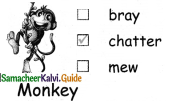
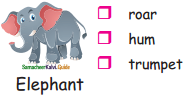
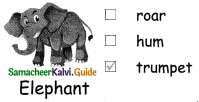
A. Match the animals with their sounds.

Question 1.
Samacheer Kalvi 4th English Guide Term 2 poem 1 The seven seeds 1
Answer:
Samacheer Kalvi 4th English Guide Term 2 poem 1 The seven seeds 2

Samacheer Kalvi 4th English Guide Term 3 Prose Chapter 1 The Seven Seeds

B. What we say?

Question 1.
Samacheer Kalvi 4th English Guide Term 2 poem 1 The seven seeds 3
Answer:
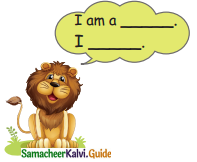
I am a Duck
I quack

Question 2.
Samacheer Kalvi 4th English Guide Term 2 poem 1 The seven seeds 4
Answer:
I am a rabbit
I squeak

Question 3.
Samacheer Kalvi 4th English Guide Term 2 poem 1 The seven seeds 5
Answer:
I am a sheep
I bleat

Question 4.
Samacheer Kalvi 4th English Guide Term 2 poem 1 The seven seeds 6
Answer:
I am a pig
I grunt

Question 5.
Samacheer Kalvi 4th English Guide Term 2 poem 1 The seven seeds 7
Answer:
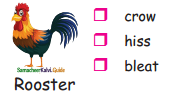
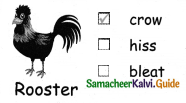
I am a rooster
I crow

Samacheer Kalvi 4th English Guide Term 3 Prose Chapter 1 The Seven Seeds

Additional Questions and Answers.

Match the sounds of animals.

Question 1.
Crows – sing
Answer:
Crows – caw

Question 2.
Doves – caw
Answer:
Doves – соо

Question 3.
Larks – соо
Answer:
Larks – sing

Question 4.
Vulture – bell
Answer:
Vulture – scream

Question 5.
Cattle – scream
Answer:
Cattle – moo

Question 6.
Tigers – moo
Answer:
Tigers – growl

Question 7.
Deers – growl
Answer:
Deers – bell

Samacheer Kalvi 4th English Guide Term 3 Prose Chapter 1 The Seven Seeds

The Seven Seeds Summary in English and Tamil

Long ago, there was a kingdom at the foothills of Anaimalai. The kingdom flourished in trade and arts under the rule of their king’s rule. He was respected and revered by all. It has been thirty years under his rule now. One day, the ageing king woke up worried. He was getting very old and had no heir to take his place. He decided to adopt and raise a child as the heir, but he knew that the adopted child must be honest.

வெகு காலத்திற்கு முன்னர், ஆனைமலையின் அடிவாரத்தில் ஒரு ராஜ்ஜியம் இருந்தது. அரசரின்ஆட்சியில் அந்த ராஜ்ஜியம் வியாபாரத்திலும் கலைகளிலும் செழித்தது. அந்த அரசர் அனைவராலும் மதிக்கப்பட்டு, மரியாதையும் செய்யப்பட்டார். அவர் அரசாள ஆரம்பித்து முப்பதுவருடங்களாகிவிட்டன. வயதான அந்த அரசர் ஒருநாள் கவலையுடன் எழுந்தார்அவருக்கு வயதாகிக் கொண்டே போவதாலும், வாரிசுகள் இல்லாததாலும் ஒரு குழந்தையை வாரிசாக தத்தெடுத்து வளர்க்க எண்ணினார். ஆனால் தத்தெடுக்கப்படும் குழந்தை நேர்மையாக இருக்க வேண்டும் என்பதும் அவருக்கு தெரியும்.

To find the child, he held a competition in his kingdom that was open to all. The competition had many levels and spanned for nearly six months. At the end of it, five boys and five girls made it to the very last round. There seemed little to separate them; each one of them was intelligent, strong and capable.

சரியான குழந்தையை கண்டுபிடிப்பதற்காக, எல்லாரும் பங்கேற்கக்கூடிய ஒரு போட்டியை அவர் நடத்தினார்.அந்த போட்டி, பல நிலைகளை கொண்டதாகவும், ஆறு மாதங்களுக்கு நீண்டதாகவும் இருந்தது. அதன் முடிவில், ஐந்து சிறுமிகளும், ஐந்து சிறுவர்களும் கடைசி சுற்றுக்கு தேர்வு பெற்றனர். ஒவ்வொருவரும் புத்திசாலியாகவும், வலிமையானவராகவும், தகுதிபெற்றவராகவும் இருந்ததால், தேர்ந்தெடுப்பது மிகவும் சிரமமாக இருந்தது.

The kina said, “I have one last test for you all. The one who passes this test will be the winner. As you all know the winner will be the heir to my throne.” He continued, “Our kingdom depends on agriculture, so the new leader must know how to grow plants. Here are seven seeds of wheat for each of you. Take them home. Plant and nurture them for six weeks. At the end of the sixth week, we shall see who has done the best job of nurturing them. That person will be the heir to the throne.”

“உங்கள் அனைவருக்கும் ஒரு கடைசி பரீட்சை உள்ளது, இதில் வெல்பவரே வெற்றியாளர் ஆவார்” எனக் கூறிய அரசர், “அவரே என் அரியணைக்குவாரிசு” என்றும் கூறினார். மேலும் “நம் ராஜ்ஜியம் விவசாயத்தை நம்பியுள்ளது, எனவே புதிய தலைவர்பயிர்களை பற்றியும்) வளர்ப்பது பற்றியும் தெரிந்திருக்க வேண்டும்” என்றார். “உங்கள் அனைவருக்கும் ஏழு கோதுமை விதைகளை அளிக்கிறேன். அவற்றை வீட்டிற்கு எடுத்துச் சென்று, நட்டு ஆறு வாரங்கள்பராமரிக்க வேண்டும். ஆறு வாரங்களின் முடிவில், யார்சரியாக அவற்றை வளர்த்து பராமரிக்கிறாரோ அவரே அரியணைக்கு வாரிசாவார்” என்றார்.

Samacheer Kalvi 4th English Guide Term 3 Prose Chapter 1 The Seven Seeds

The children took their seeds and hurried home. They all got a pot, prepared some soil and sowed their seeds. The entire kingdom was excited. They were all anxious to see who the next king would be.

குழந்தைகள் விதைகளை எடுத்துக் கொண்டு வீட்டிற்குவிரைந்தனர். அனைவரும் ஒரு தொட்டியை எடுத்து,சிறிது மண்ணை இட்டு, விதைகளை விதைத்தனர். தமது அடுத்த அரசர் யார் என அறிய மொத்த ராஜ்ஜியமும் ஆவலாக இருந்தது.

One of the finalists was Ani. The days stretched into weeks. but the seeds failed to sprout. Ani didn’t know what had gone wrong. Ani and her parents were heartbroken. She had selected the soil with care, put the right manure, and very dutifully watered it. She had even prayed over it, day and night, and yet her seeds hadn’t grown at all.

ஓர் இல்லத்தில், அனி என்ற சிறுமியும் அவளுடைய பெற்றோரும் மனமுடைந்து இருந்தனர்.நாட்கள், வாரங்களாக நீண்டன. ஆயினும், விதைகள் முளைக்கவில்லை. தவறு எங்கே நேர்ந்ததென, அனி; க்கும் புரியவில்லை . ஏனெனில், சரியானபடி மண்ணை தேர்ந்தெடுத்து, சரியான உரத்தையும் இட்டு, கடமை தவறாது நீரை ஊற்றியும் வந்தாள். அவள் இரவும், பகலுமாக பிரார்த்தனை செய்து வந்தும்அவளுடைய விதைகள் வளரவே இல்லை .

Some of her friends advised her to go and buy new seeds from the market and plant. After all, they said, “How can anyone tell if they were the same seeds?”Ani’s parents had always taught her the value of honesty. They reminded her that if the king wanted them to plant just any wheat, he would have asked them to get their seed.

அவளுடைய சில நண்பர்கள் கடைவீதிக்கு சென்று புதிய விதைகளை வாங்கி பயிரிடும்படி கூறினர். ஏனெனில் யாராலும் விதைகளை குறிப்பாக அது, இது எனகண்டுபிடிக்க இயலாது. அனியின் பெற்றோர் அவளிடம் நேர்மையின் மதிப்பை பற்றி அவளுக்கு போதித்து இருந்தனர்.

Samacheer Kalvi 4th English Guide Term 3 Prose Chapter 1 The Seven Seeds

“If you use anything different from what the king gave, that would be dishonest. I Maybe you’re not destined for the throne. If so, let it be, but it would be wrong to cheat the king,” they told her. Ani agreed.

அவர்கள் அனியிடம் “குழந்தைகள் ஏதாவது ஒரு கோதுமையைபயிரிடட்டும் என அரசர் நினைத்திருந்தால், அவர், விதைகளை நீங்களே ஏற்பாடு செய்து கொள்ளுங்கள் என்று கூறியிருப்பாரே” என்பதையும் அவளுக்கு நினைவுபடுத்தினர். “அவர் அளித்த விதைகளுக்கு மாறாக, வேறு ஒன்றை உபயோகப்படுத்தினால் அது நேர்மையற்ற செயலாகிவிடும். அரியணைக்கு நீ தேர்வாகாவிட்டாலும் பரவாயில்லை, ஆனால் அரசரை ஏமாற்றுவது தவறாகும்” என அவர்கள் கூற, அனியும்அதை ஏற்றுக்கொண்டாள்.

It had been six weeks now. The muchawaited day had come. The children returned to the palace, each of them proudly carrying a pot of healthy seedlings. It was obvious that the other nine had great success with their seeds.

ஆறு வாரங்களும் முடிந்துவிட்டன. எதிர்பார்க்கப்பட்ட நாளும் வந்தது. குழந்தைகள் அனைவரும்அரண்மனைக்கு திரும்பினர். ஒவ்வொருவரும் கையில் ஆரோக்கியமான பயிர்களை, தொட்டியில் வைத்திருந்தனர். இதன் மூலம் (அனியைத் தவிர மற்ற ஒன்பது பேரும் தங்கள் விதைகளை நடவு செய்வதில் வெற்றியடைந்திருந்தனர்.

The king arrived. He was beaming looking at the children and their pot of healthy seedlings. He began walking along the line of pots the children had kept. He asked each of them, “Is this what grew from the seeds I gave you?” And each of them responded, “Yes, your majesty.” And the king would nod and move down the line.

அவைக்கு வந்த அரசர், குழந்தைகளின் தொட்டிகளில் ஆரோக்கியமான பயிர்கள் இருப்பதை கண்டு புன்னகைசெய்தார்! குழந்தைகள் வரிசையாக வைத்திருந்த தொட்டிகளை பார்வையிட்டவர், ஒவ்வொருவரிடமும் “நான் கொடுத்த விதைகளிலிருந்தா இவை வளர்ந்தன?” என்று கேட்டார். ஒவ்வொருவரும் “ஆம், மாட்சிமை பொருந்திய அரசே” என கூறவும், அரசர் தலையசைத்து சென்றார்.

Samacheer Kalvi 4th English Guide Term 3 Prose Chapter 1 The Seven Seeds

The king finally got to the last one, Ani. The girl was shaking. She feared that the king might have thrown her into prison for wasting his precious seeds. “What did you do with the seeds I gave you?” the king asked. “Your majesty, I planted them and cared for them every day. I am sorry but, they failed to sprout,” Ani said. She hung her head in shame. “Boo!” jeered the crowd.

கடைசியாக இருந்த அனியிடம் அரசர் சென்றார். அந்த சிறுமி நடுங்கிக் கொண்டிருந்தாள். அரசர்கொடுத்தமதிப்புமிக்க விதைகளை வீணாக்கிவிட்டதற்காக, ” தன்னை அரசர் சிறையில் போட்டுவிடுவாரோ என அவள் பயந்தாள். “நான் கொடுத்த விதைகளை நீ என்ன செய்தாய்?” என அரசர் அவளிடம் கேட்டார். “மாட்சிமை பொருந்திய அரசரே, நானும் விதைகளை பயிரிட்டு தினமும் பராமரித்தேன். ஆனாலும் அவை முளைக்கவில்லை என்பதற்காக வருந்துகிறேன்” என்று அனி கூறிவிட்டு தலையை கவிழ்த்துக் கொண்டாள்.கூடியிருந்த கூட்டமும் அதற்கு தன் அதிருப்தியைக் காட்டியது.

But the king raisedhis hands and signalled for silence. Then he said “Dear people behold my heir. The next leader of our kingdom!” The people were confused, “Why that girl? How can she be the right choice?”

தன் கைகளை உயர்த்தி கூட்டத்தினரை அமைதியாக இருக்கும்படி சைகை காட்டிய அரசர், அன்பு மக்களே,இதோ நம் இராஜ்ஜியத்தின் அடுத்த தலைவர்” எனக் கூற மக்கள் குழப்பமடைந்தனர். “யார் இவளா? எப்படி இவள் சரியான தேர்வாக ஆனாள்?” எனக் குழம்பினர்.

The king took his place on his throne with Ani by his side and said, ‘I aave each of them, seven seeds. This test was not for growing wheat. It was a test of character, a test of honesty. If a leader must have one quality, it must be that he or she should be honest. People should be able to trust the leader. Only this girl passed the test. I gave boiled seeds and boiled seeds cannot grow.”

தன் ஆசனத்தில் அமர்ந்த அரசர், அனியை தன் அருகில் அமர்த்திக்கொண்டு இவ்வாறு கூறினார். “நான்ஒவ்வொருவருக்கும் ஏழு விதைகளை கொடுத்தேன். இது கோதுமை விளைவிப்பதற்கான போட்டியல்ல. இது குணத்திற்கும், நேர்மைக்குமான பரீட்லைகுணத்திற்கும், நேர்மைக்குமான பரீட்சையாகும். ஒரு தலைவர் யாராக இருப்பினும் அவருக்கு வேண்டிய தகுதி, அவர் நேர்மையானவராக இருக்க வேண்டும்என்பதே. மக்கள் நம்பும்படியாக தலைவர் இருக்க வேண்டும். அந்த தேர்வில் இந்த சிறுமியே தேறினாள். நான் (அவர்கள் அனைவருக்கும்) கொடுத்தது, வேகவைத்த விதைகள். அவை எவ்வாறு வளரும்?”.

Samacheer Kalvi 4th English Guide Term 3 Prose Chapter 1 The Seven Seeds

The Seven Seeds Glossary

Adopt – legally take and bring up
Ageing – getting old
Anxious – eager
Awaited – expected
Behold – see
Beaming – smiling broadly
Competition – contest
Destiny – fate
Dulifully – obediently doing the duty
Destined – to have an outcome
Excited – eager and enthusiastic
Flourished – developed in a healthy way
Heir – a person legally entiled to the property or rank of another person on his death
Hurried – move with haste
Kingdom – a region ruled by a king
Leader – head
Manure – animal dung used for furtilizing the land
Nurture – care, protect and grow
Nod – to move the head in acceptance
Revered – respected
Responded – say something in reply
Signalled – pass information by action or sign
Spanned – spread
Sprout – to put out shoots
Trade – buying and selling goods
Watered – to regularly pour water to grow

Samacheer Kalvi 7th Social Science Guide Civics Term 3 Chapter 1 Women Empowerment

Tamilnadu State Board New Syllabus Samacheer Kalvi 7th Social Science Guide Pdf Civics Term 3 Chapter 1 Women Empowerment Text Book Back Questions and Answers, Notes.

Tamilnadu Samacheer Kalvi 7th Social Science Solutions Civics Term 3 Chapter 1 Women Empowerment

7th Social Science Guide Women Empowerment Text Book Back Questions and Answers

Samacheer Kalvi 7th Social Science Guide Civics Term 3 Chapter 1 Women Empowerment

I. Choose the correct answer:

Question 1.
Which of the following is NOT a consequence of gender inequality?
a) Poor maternal health
b) Greater insecurity for men
c) The spread of HIV/AIDS
d) Lower literacy rates for women
Answer:
c) The spread of HIV/AIDS

Question 2.
Gender equality is an issue that is relevant to
a) Girls and women; it’s a women’s issue
b) All societies, women and men alike
c) Third world countries only
d) Developed Countries only
Answer:
b) All societies, women and men alike

Samacheer Kalvi 7th Social Science Guide Civics Term 3 Chapter 1 Women Empowerment

Question 3.
Which of the following strategies will help women become more socially and economically empowered?
a) Women working together to challenge discrimination
b) More income sources for women
c) Improved access to education
d) All of the above
Answer:
d) All of the above

Question 4.
Why are girls more likely than boys to miss out on secondary education in the developing world?
a) Because of high school fees, only boys are sent to school
b) Girls are expected to help out at home
c) Child Marriage restricts girls mobility and freedom
d) All of the above
Answer:
d) All of the above

Samacheer Kalvi 7th Social Science Guide Civics Term 3 Chapter 1 Women Empowerment

II. Fill in the blanks:

1. Jyotirao Phule is remembered as the champion of women’s education in India. He, along with his wife ………….., opened the first school for girls in 1848.
Answer:
Savitribai Phule

2. ………………… is the First Woman to hold a Union Foreign Minister’s post.
Answer:
Sushma Swaraj

3. ………………… is the first Woman Director General of Police (DGP).
Answer:
Kanchan Chaudhary Bhattacharya

Samacheer Kalvi 7th Social Science Guide Civics Term 3 Chapter 1 Women Empowerment

4. …….. is the first Indian Woman to win Booker.
Answer:
Arundhati Roy

III. Match the following:

AB
1. Sirimavo Bandaranaikea) England
2. Valentina Tereshkovab) Japan
3. Junko Tabeic) Sri Lanka
4. Charlotte Cooperd) USSR

Answer:

AB
1. Sirimavo Bandaranaikec) Sri Lanka
2. Valentina Tereshkovad) USSR
3. Junko Tabeib) Japan
4. Charlotte Coopera) England

IV. Consider the following statements:

Question 1.
Tick the appropriate answer:
Assertion (A): Now women are being integrated at all steps of humanitarian operations.
Reason (R): Women and girls suffer the most from any kind of conflict in society.
a) Both A and R, are true and R is the correct explanation of A
b)Both A and R, are true but R is not the correct explanation of A
c) If A is true but R is false
d)If A is false but R is true
Answer:
a) Both A and R, are true and R is the correct explanation of A

Samacheer Kalvi 7th Social Science Guide Civics Term 3 Chapter 1 Women Empowerment

Question 2.
Assertion: Violence against women cuts across caste, class, religion, age, and even education.
Reason: Domestic violence is manifested in the form of foeticide, infanticide, dowry murder, marital cruelty, battering, child abuse, etc.
a) Both A and R, are true and R is the correct explanation of A
b) Both A and R, are true but R is not the correct explanation of A
c) If A is true but R is false
d) If A is false but R is true
Answer:
b) Both A and R, are true but R is not the correct explanation of A

Samacheer Kalvi 7th Social Science Guide Civics Term 3 Chapter 1 Women Empowerment

V. Answer the following questions:

Question 1.
Discuss various roles played by women in Society.
Answer:
The women have the ability to face any kind of challenges in society.
The roles of women are:

  • Daughter,
  • Student,
  • Life partner,
  • Mother,
  • Good employee,
  • Grandmother.

Question 2.
What is gender equality?
Answer:
Gender equality is the state of equal ease of access to resources and opportunities regardless of gender, including economic participation and decision-making; and the state of valuing different behaviors, aspirations, and needs equally, regardless of gender.

Samacheer Kalvi 7th Social Science Guide Civics Term 3 Chapter 1 Women Empowerment

Question 3.
Explain the woman’s rights.
Answer:

  • Women’s rights are the fundamental human rights that were enshrined by the United Nations for every human being on the planet nearly 70 years ago.
  • These rights include the right to live free from violence, slavery, and discrimination; to be educated; to own property; to vote; to earn a fair and equal wage.

Question 4.
List out the essential factors of woman empowerment.
Answer:
The essential factors for empowerment are:
1. Education:
Education gives one the ability to think wisely and make thoughtful decisions.

2. Gender Discrimination:
A Society which discriminates between the two genders can never be empowered.

3. Discrimination based on caste, creed, religion, etc.

Samacheer Kalvi 7th Social Science Guide Civics Term 3 Chapter 1 Women Empowerment

Question 5.
Write an essay on the importance of a woman’s education.
Answer:
1. Increased Literacy:
Of the illiterate youth across the globe, nearly 63 percent are female. Offering all children education will prop up literacy rates, pushing forward development in struggling regions.

2. Human Trafficking:
Women are most vulnerable to trafficking when they are undereducated and poor, according to the United Nations Inter-Agency Project on Human Trafficking.

3. Political Representation:
Across the globe, women are underrepresented as voters and restricted from political involvement.

4. Thriving Babies:
According to the United Nations Girls.’ Education Initiative, children of educated mothers are twice as likely to survive past the age of five.

5. Later Marriage:
As suggested by the United Nations Population Fund, in underdeveloped countries, one in every three girls is married before reaching the age of 18.

6. Income Potential:
Education also, increases a woman’s earning capabilities.

7. Prospering GDP:

  • Gross Domestic Product also rises when both girls and boys are being offered educational opportunities.
  • When 10 percent more women attend school, GDP increases by three percent on average.

8. Poverty Reduction:
When women are provided with equal rights and equal access to education, they go on to participate in economic activity.

Samacheer Kalvi 7th Social Science Guide Civics Term 3 Chapter 1 Women Empowerment

7th Social Science Guide Women Empowerment Additional Important Questions and Answers

I.Choose the Correct answer:

Question 1.
…………….gives one the ability to think wisely and make thoughtful decisions.
a) Education
b) Gender
c) Discrimination
d) none
Answer:
a) Education

Question 2.
More than …………… years ago, the Universal Declaration of Human Rights asserted that
everyone has the “right to education”.
a) 60
b) 40
c) 20
d) 45
Answer:
b) 40

Samacheer Kalvi 7th Social Science Guide Civics Term 3 Chapter 1 Women Empowerment

Question 3.
Of the illiterate youth across the globe, nearly ……………… percent are female.
a) 53
b) 63
c) 60
d) 66
Answer:
b)63

Question 4.
As suggested by the United Nations Population Fund, in underdeveloped countries, one
in every three girls is married before reaching the age of …………..
a) 18
b) 28
c) 16
d) 28
Answer:
a) 18

Samacheer Kalvi 7th Social Science Guide Civics Term 3 Chapter 1 Women Empowerment

Question 5.
……………..was the first female teacher in the first girl’s school.
a) Savitribai Phule
b) Jyotirao Phule
c) Meira Kumar
d) Vijaya Lakshmi Pandit
Answer:
a) Savitribai Phule

Question 6.
Jyotirao Phule along with his wife Savitribai Phule opened the first school for girls in …………….
a) 1848
b) 1826
c) 1866
d) 1836
Answer:
a) 1848

Question 7.
Maharshi Karve starts First Women’s University, ie, SNDT University in Pune with five students in the year ……………….
a) 1966
b) 1926
c) 1916
d) 1936
Answer:
c) 1916

Samacheer Kalvi 7th Social Science Guide Civics Term 3 Chapter 1 Women Empowerment

Question 8.
The First Women Prime Minister of India was …………..
a) Indira Gandhi
b) Jyotirao Phule
c) Meira Kumar
d) Vijaya Lakshmi Pandit
Answer:
a) Indira Gandhi

Question 9.
The First Women President of UN General Assembly was ……………..
a) Savitribai Phule
b) Jyotirao Phule
c) Meira Kumar
d) Vijaya Lakshmi Pandit
Answer:
d) Vijaya Lakshmi Pandit

Samacheer Kalvi 7th Social Science Guide Civics Term 3 Chapter 1 Women Empowerment

Question 10.
The First woman Finance Minister of India was …………………………
a) Sushma Swaraj
b) Nirmala Sitharaman
c) Prathpa Patel
d) Indira Gandhi
Answer:
b) Nirmala Sitharaman

II Fill in the blanks:

1. You educate a woman; you educate a ……………..
Answer:
generation

2. ………..is the biological trait that societies use to assign people into the category of either male or female.
Answer:
Sex

Samacheer Kalvi 7th Social Science Guide Civics Term 3 Chapter 1 Women Empowerment

3. …………..is the biological trait.
Answer:
Sex

4. Women are most vulnerable to trafficking when they are undereducated and poor, according to the United Nations Inter-Agency Project on ……………….
Answer:
Human Trafficking

5. ……………… are underrepresented as voters.
Answer:
Women

Samacheer Kalvi 7th Social Science Guide Civics Term 3 Chapter 1 Women Empowerment

6. UNESCO stands for United Nations ……………… Scientific and Cultural Organisation.
Answer:
Educational

7. Jyotirao Phule along with his wife ……………., opened the first school for girls in 1848.
Answer:
Savitribai Phule

8. ………………..from England is the first women to win the Olympic gold.
Answer:
Charlotte Cooper

Samacheer Kalvi 7th Social Science Guide Civics Term 3 Chapter 1 Women Empowerment

9. The First Indian Women to win the Booker Prize is ……………. in 1997.
Answer:
Arundhati Roy

10. The First Women Speaker of LokSabha is ……………. in 2009.
Answer:
Meira Kumar

Samacheer Kalvi 7th Social Science Guide Civics Term 3 Chapter 1 Women Empowerment

III. Match the following:

AB
1. Gendera) Sucheta Kripalani
2. First women in Spaceb) 1848
3. First women Governorc) never be empowered
4. First women Schoold) Pune
5. First women universitye) Valentina Tereshkova

Answer:

AB
1. Genderc) never be empowered
2. First women in Spacee) Valentina Tereshkova
3. First women Governora) Sucheta Kripalani
4. First women Schoolb) 1848
5. First women universityd) Pune

IV. Answer the following questions:

Question 1.
What is Sociology?
Answer:
The sociology of gender examines how society influences our understandings and perception of differences between masculinity and femininity.

Question 2.
Write a short note on Savitribai Phule.
Answer:

  • Savitribai Phule as a tradition breaker, the first female teacher at the first girls’ school.
  • Her Husband, Jyotirao Phule is remembered as the champion of women’s education in India.
  • Jyotirao Phule along with his wife Savitribai Phule opened the first school for girls in 1848

Samacheer Kalvi 7th Social Science Guide Economics Term 3 Chapter 1 Tax and its Importance

Tamilnadu State Board New Syllabus Samacheer Kalvi 7th Social Science Guide Pdf Economics Term 3 Chapter 1 Tax and its Importance Text Book Back Questions and Answers, Notes.

Tamilnadu Samacheer Kalvi 7th Social Science Solutions Economics Term 3 Chapter 1 Tax and its Importance

7th Social Science Guide Tax and its Importance Text Book Back Questions and Answers

I. Choose the correct answer:

Question 1.
Taxes are ………………. payment.
a) Voluntary
b) Compulsory
c) a&b
d) None of the above
Answer:
b) Compulsory

Samacheer Kalvi 7th Social Science Guide Economics Term 3 Chapter 1 Tax and its Importance

Question 2.
Minimum possible amount should be spent in the collection of taxes is
a) canon of equality
b) canon of certainity
c) canon of economy
d) canon of convenience
Answer: a) canon of equality

Question 3.
This taxation is a very opposite of progressive taxation.
a) degressive
b) proportional
c) regressive
d) none
Answer:
c) regressive

Question 4.
Income tax is a
a) direct tax
b) indirect tax
c) a & b
d) degressive tax
Answer:
a) direct tax

Samacheer Kalvi 7th Social Science Guide Economics Term 3 Chapter 1 Tax and its Importance

Question 5.
Which tax is raised on provision of service.
a) wealth
b) corporate
c) wealth
d) service
Answer:
b) Compulsory

II. Fill in the blanks:

1. ………………. is a term for when a taxing authority usually a government levies or imposes a tax.
Answer:
Taxation

2. ………………. is the method, where the rate of tax is the same regardless size of the income.
Answer:
Proportional Taxation

Samacheer Kalvi 7th Social Science Guide Economics Term 3 Chapter 1 Tax and its Importance

3. ………………. is paid to the Government by the recipient of the gift depending on the value of the gift.
Answer:
Gift Tax

4. ………………. burden cannot be shifted by taxpayers.
Answer:
Indirect tax

5. Indirect tax is elastic.
Answer:
more

III. Match the following:

AB
1. Principle of taxationa) Direct Tax
2. Estate taxb) Goods and Service Tax
3. Excise Taxc) Adam Smith
4. 01.07.2017d) Less elastic
5. Direct Taxe) Indirect Tax

Answer:

AB
1. Principle of taxationa) Direct Tax
2. Estate taxb) Goods and Service Tax
3. Excise Taxc) Adam Smith
4. 01.07.2017d) Less elastic
5. Direct Taxe) Indirect Tax

Samacheer Kalvi 7th Social Science Guide Economics Term 3 Chapter 1 Tax and its Importance

IV. Odd one out:

Question 1.
Which one of the following is not an indirect tax?
a) Service tax
b) Value Added Tax(VAT)
c) Estate duty
d) Excise duty
Answer:
c) Estate duty

V. Correct one out:

Question 1.
Which one of the following tax is a direct tax?
a) Service tax
b) Wealth tax
c) Sales tax
d) Progressive tax
Answer:
d) Progressive tax

Samacheer Kalvi 7th Social Science Guide Economics Term 3 Chapter 1 Tax and its Importance

VI. Give a short answer:

Question 1.
Define tax.
Answer:
Taxes are compulsory payments to the government without expectations of direct or return or benefit to the taxpayers.

Question 2.
Why taxes are imposed?
Answer:

  • For the welfare of society, the government has to perform various functions so it requires revenue.
  • The main source of revenue is tax.

Question 3.
Write the name of taxation types and draw its diagram.
Answer:
There are three types of Taxation:

  1. Proportional Tax
  2. Progressive Tax
  3. Regressive Tax.

Samacheer Kalvi 7th Social Science Guide Economics Term 3 Chapter 1 Tax and its Importance

Question 4.
Write any three importance of tax.
Answer:

  1. Health
  2. Education
  3. Governance.

Question 5.
What are the types of tax? and explain it.
Answer:
Taxes are classified into two types. They are:
1. Direct Tax:

  • A Direct tax is paid directly by an individual or organisation to imposing an entity
  • Eg: Income tax, Wealth Tax, etc.

2. Indirect Tax:

  • Indirect Tax is a tax whose burden can be shifted to others.
  • Eg: Service tax, Value added tax, etc.

Samacheer Kalvi 7th Social Science Guide Economics Term 3 Chapter 1 Tax and its Importance

Question 6.
Write a short note on Gift Tax and Service Tax.
Answer:
Gift Tax:
It is paid to the Government by the recipient of the gift depending on the value of the gift.

Service Tax:

  • It is raised on the provision of Service.
  • This tax is collected from the service recipients and paid to the Central Government.

Question 7.
What is Goods and Service Tax?
Answer:

  • Goods and Services Tax is a kind of tax imposed on the sale, manufacturing, and usage of goods and services.
  • This is applied to achieve overall economic growth.
  • GST is particularly designed to replace indirect taxes.

Question 8.
Write a distinction between direct and indirect tax.
Answer:
Direct Tax:

  1. Burden cannot be shifted by taxpayers.
  2. Tax is imposed on personal income and corporate income.
  3. Direct tax has no inflation pressure.
  4. The impact and incidence are the same in case of direct tax.
  5. Direct tax is less elastic.

Indirect Tax:

  1. Easily be shifted to another person.
  2. Taxes imposed on various goods and services.
  3. This tax has inflation pressure.
  4. The impact and incidence are different in the case of indirect tax.
  5. Indirect tax is more elastic.

Samacheer Kalvi 7th Social Science Guide Economics Term 3 Chapter 1 Tax and its Importance

VII. Give a brief answer:

Question 1.
Write answer briefly the principles of taxation.
Answer:
Adam Smith’s principles or camions of taxation still form the basis of the tax structure of a modem state.
Adam Smith’s four Canons of Taxation:

  1. Canon of Equality
  2. Canon of Certainty
  3. Canon of Convenience
  4. Canon of Economy.

1. Canon of Equality:

  • The government should impose taxes in such a way that people have to pay according to their ability.
  • It does not mean an equal amount of tax but it means that the burden of a tax must be fair and just.

2. Canon of Certainty:
Certainty creates confidence in the taxpayer’s cost of collection of taxes and increases economic welfare because it tends to avoid all economic waste.

3. Canon of Convenience:

  • Taxes should be levied and collected in such a manner that it provides maximum convenience to the taxpayers.
  • It should always be kept in view that the taxpayers suffer the least inconvenience in payment of the tax.

4. Canon of Economy:

  • Minimum possible money should be spent in the collection of taxes.
  • The collected amount should be deposited in the Government treasury.

Question 2.
Explain the taxation types.
Answer:
There are three types of Taxation:
Samacheer Kalvi 7th Social Science Guide Economics Term 3 Chapter 1 Tax and its Importance 1

  1. Proportional Tax
  2. Progressive Tax
  3. Regressive Tax

Proportional Taxation:

  • The rate of tax is the same regardless of the size of the income.
  • The tax amount realized will vary in the same proportion as that of income.

Progressive Taxation:
The rate of tax will also increase with the increase of income of the person.

Regressive tax;

  • A regressive tax is a tax applied uniformly, taking a larger percentage of income from low-income earners than from high-income earners.
  • It is in opposition to a progressive tax.

Samacheer Kalvi 7th Social Science Guide Economics Term 3 Chapter 1 Tax and its Importance

Question 3.
Explain the importance of tax.
Answer:
Importance of Tax: Taxes are crucial because governments collect this money and use it to finance the following social projects.
Health:

  1. Without taxes, government contributions to the health sector would be impossible.
  2. Taxes go to funding health services such as social healthcare, medical research, social security, etc.

Education:

  1. Education could be one of the most deserving recipients of tax money.
  2. Governments put a lot of importance in the development of human capital and education is central in this development.

Governance:

  1. Governance is a crucial component in the smooth running of country affairs.
  2. Poor governance would have far-reaching ramifications on the entire country with a heavy toll on its economic growth.
  3. Good governance ensures that the money collected is utilized in a manner that benefits citizens of the country.

Other important sectors are infrastructure development, transport, housing, etc.

  1. Apart from social projects, governments also use money collected from taxes to fund sectors that are crucial for the wellbeing of their citizens such as security, scientific research, environmental protection, etc.
  2. Some of the money is also channeled to fund projects such as pensions, unemployment benefits, childcare, etc,

Question 4.
Explain the direct and indirect tax with examples.
Answer:
Taxes are classified into two types. They are:

1. Direct Tax:

  • A Direct tax is paid directly by an individual or organisation to an imposing entity.
  • Eg: Incometax, WealthTax,etc.

2. Indirect Tax:

  • IndirectTaxisataxwhoseburdencanbeshiftedtoothers. LSIOTT
  • Eg: Servicetax,Valueaddedtax,etc.

Direct Tax:

Gift Tax:
It is paid to the Government by the recipient of the gift depending on the value of the gift.

Estate Duty:

  • It is charged from success or of inherited property.
  • It is not desirable to avoid payment of taxes

WealthTax:
It is imposed on the property of individuals depending upon the value of the property.

Indirect Tax :

Service Tax:

  • It is raised on the provision of Service.
  • This tax is collected from the service recipients and paid to the Central Government.

Sales TaxorVAT:
It is an indirect tax on the sale of goods because the liability to collect tax is that of the shopkeeper but the burden of that tax falls on the customer.

Goods and Services Tax(GST):

  • Goods and Services Tax is a kind of tax imposed on the sale, manufacturing, and usage of goods and services.
  • This is applied to achieve overall economic growth.
  • GST is particularly designed to replace indirect taxes.

Samacheer Kalvi 7th Social Science Guide Economics Term 3 Chapter 1 Tax and its Importance

Question 5.
Why the need for a tax on people’s welfare? And explain it.
Answer:

  • The levying of taxes aims to raise revenue to fund governing or to alter prices in order
    to affect demand.
  • Some of these include expenditures on economic infrastructure like transportation, sanitation, public safety, education, health-care systems, etc., military, scientific research, culture, and the arts, public works, public insurance, etc., and the operation of government itself.
  • When expenditures exceed tax revenue, a government accumulates debt. A portion of taxes may be used to service past debts.
  • Governments also use taxes to fund welfare and public services. These services can include education systems, pensions for the elderly, unemployment benefits, and public transportation.
  • Energy, water, and waste management systems are also common public utilities.
  • The purpose of taxation is to maintain the stability of the currency, express public policy regarding the distribution of wealth, subsidizing certain industries or population groups, or isolating the costs of certain benefits, such as highways or social security.

7th Social Science Guide Tax and its Importance Additional Important Questions and Answers

I. Choose the Correct answer:

Question 1.
According to Prof. Seligman, taxes are defined as a compulsory contribution from a person to the government to defray the expenses incurred in the common interest of ail without reference to special benefits conferred.
a) Chamberlin
b) Seligman
c) Adam smith
d) Marshal
Answer:
b) Seligman

Samacheer Kalvi 7th Social Science Guide Economics Term 3 Chapter 1 Tax and its Importance

Question 2.
A regressive tax is a tax applied uniformly, taking a larger percentage of income from low-income earners than from high-income earners.
a) Progressive tax
b) Regressive tax
c) Proportional tax
d) Health
Answer:
b) Regressive tax

Question 3.
Without taxes, governments would be unable to meet the demands of their societies.
a) societies
b) Revenue
c) Economic
d) Expenditure types
Answer:
a) societies

Samacheer Kalvi 7th Social Science Guide Economics Term 3 Chapter 1 Tax and its Importance

Question 4.
Wealth tax is imposed on the property of individuals depending upon the value of the property.
a) Company
b) Gift
c) Wealth tax
d) Direct tax
Answer:
c) Wealth tax

Question 5.
The gift tax is paid to the Government by the recipient of the gift depending on the value of the gift.
a) Gift tax
b) Indirect tax
c) Direct tax
d) Service
Answer:
a) Gift tax

Question 6.
Goods and service tax is applied on services and goods at a national level with the purpose of achieving overall economic growth.
a) State
b) National
c) Rounding off
d) Town
Answer:
b) National

Samacheer Kalvi 7th Social Science Guide Economics Term 3 Chapter 1 Tax and its Importance

Question 7.
Excise tax in India is levied by the Central Government.
a) Service tax
b) VAT
c) Excise tax
d) direct tax
Answer:
b) VAT

II. Fill in the blanks:

1. …………………..is the government should impose taxes in such a way that people have to pay according to
their ability.
Answer:
Canon of Equality

2. …………………. is the taxes should be levied and collected in such a manner that it provides a maximum of convenience to the taxpayers.
Answer:
Canon of Convenience

Samacheer Kalvi 7th Social Science Guide Economics Term 3 Chapter 1 Tax and its Importance

3. …………………. is the minimum possible money should be spent in the collection of taxes.
Answer:
Canon of Economy

4. …………………. could be one of the most deserving recipients of tax money.
Answer:
Education

5. A …………….is paid directly by an individual or organisation to imposing entity.
Answer:
Direct tax

6. The central Board of Revenue act implemented in the year.
Answer:
1963

7. The tax is levied on the profit of corporations and companies is
Answer:
Corporation Tax

Samacheer Kalvi 7th Social Science Guide Economics Term 3 Chapter 1 Tax and its Importance

8. ………………… is a liability to collect tax is that of shopkeeper but the burden of that tax falls on the customer.
Answer:
VAT

9. ………………… is a kind of tax imposed on the sale, manufacturing, and usage of goods and services.
Answer:
Goods and Services Tax

10. A government’s ability to raise taxes is called its ………………….
Answer:
fiscal capacity

III. Match the following

AB
1. Adam smitha) Payment using aadhar
2. Progressive taxb) 1963
3. Digital Indiac) 2005
4. Central Board of Revenue Actd) Canon of Taxation
5. VATe) increase the income

Answer:

AB
1. Adam smithd) Canon of Taxation
2. Progressive taxe) increase the income
3. Digital Indiaa) Payment using aadhar
4. Central Board of Revenue Actb) 1963
5. VATc) 2005

IV. Odd one out:

Question 1.
a) Service Tax – Swachh Bharat cess
b) Road Development – Toll-Tax Road Tax
c) Indirect Tax – More elastic.
Answer:
a) Service Tax – Swachh Bharat cess

Samacheer Kalvi 7th Social Science Guide Economics Term 3 Chapter 1 Tax and its Importance

V. Give a short answer:

Question 1.
What was the Kalidas said about taxes?
Answer:
“It was only for the good of his subjects that he collected taxes from them, just as the Sun draws moisture from the Earth to give it back a thousandfold”.

Question 2.
What are Adam Smith’s four Canons of Taxation?
Answer:
Samacheer Kalvi 7th Social Science Guide Economics Term 3 Chapter 1 Tax and its Importance 2

  • Canon of Equality
  • Canon of Certainty
  • Canon of Convenience
  • Canon of Economy.

Question 3.
Mention some of the Wealth Taxes.
Answer:

  • Home
  • Motor Car
  • Jewellery
  • Cash
  • Urban Land
  • Yachats, Boats, Aircraft.

Samacheer Kalvi 7th Social Science Guide Economics Term 3 Chapter 1 Tax and its Importance

V. Detail

Question 1.
Explain the following
a) Toll Tax and & Road Tax
b) Swachh Bharat Cess
Answer:
a) Toll Tax and & Road Tax:
Toll tax is a tax you often pay to use any form of infrastructure developed by the government, for example, roads and bridges. The tax amount levied is rather negligible which is used for maintenance and basic upkeep of a particular project.

b) Swahh Bharat Cess:
This is a cess imposed by the government of India and was started on 15 November 2015. This tax is applicable on all taxable services arid the cess currently stands at 0.5%. Swachh Bharat cess is levied over and above the 14% service tax that is prevalent in the present times.

Samacheer Kalvi 5th English Guide Term 3 Supplementary Chapter 2 The New Start

Tamilnadu State Board New Syllabus Samacheer Kalvi 5th English Guide Pdf Term 3 Supplementary Chapter 2 The New Start Text Book Back Questions and Answers, Summary, Notes.

Tamilnadu Samacheer Kalvi 5th English Solutions Term 3 Supplementary Chapter 2 The New Start

5th English Guide The New Start Text Book Back Questions and Answers

In-Text Question:

Question 1.
Which quality makes ‘world is one and human is one’?
Answer:
We have to realize that we are all one. This quality makes ‘world is one and human is one’.

Samacheer Kalvi 5th English Guide Term 3 Supplementary Chapter 2 The New Start

A. Fill in the blanks:

Question 1.
Tenzin is from ______.
Answer:
Tibet

Question 2.
Tenzin’s family first lived in ______.
Answer:
Himachal Pradesh

Question 3.
If we didn’t have boundaries, we don’t need ______.
Answer:
weapons

Question 4.
______ fights with everyone in school.
Answer:
Nimmi

Question 5.
Miss Malliga teaches ______.
Answer:
computer

Samacheer Kalvi 5th English Guide Term 3 Supplementary Chapter 2 The New Start

B. Answer the following questions:

Question 1.
Who helped Tenzin in learning English words?
Answer:
Julie, the art and craft teacher, helped Tenzin in learning English words.

Question 2.
Name the places that Tenzin’s family lived in.
Answer:
Tenzin’s family lived in Tibet, McLeod Ganj in Himachal Pradesh, Mysore, Gurupura, Kollegal in Karnataka.

Question 3.
What are the difficulties they faced in India?
Answer:
They didn’t know how to get a house. They didn’t know the names of the food items they wanted to buy. Shopping was the most difficult job for them.

Question 4.
Why did Tenzin cried every day?
Answer:
Tenzin cried every day as he badly missed his friends and his country – Tibet.

Question 5.
Why it is important for people to live without boundaries?
Answer:
We all are humans, and we live together on Earth. We need to share and grow with each other. So, it is important to live without boundaries.

Samacheer Kalvi 5th English Guide Term 3 Supplementary Chapter 2 The New Start

C. Try your own:

Samacheer Kalvi 5th English Guide Term 3 Supplementary Chapter 2 The New Start 1
Answer:
Samacheer Kalvi 5th English Guide Term 3 Supplementary Chapter 2 The New Start 2

Samacheer Kalvi 5th English Guide Term 3 Supplementary Chapter 2 The New Start

D. Speak and win:

Samacheer Kalvi 5th English Guide Term 3 Supplementary Chapter 2 The New Start 3

Pick and support or oppose any one of the characters:

I support:

  1. Nimmie defended everyone who teased Tenzin.
  2. Binsa was a friend of Tenzin she was a Nepali. She practiced learning English.

I oppose:

  1. Nimmie fights with everyone.
  2. She was not an Indian.
  3. She did not know English. She did not have friends.

Samacheer Kalvi 5th English Guide Term 3 Supplementary Chapter 2 The New Start

Let us read aloud:

A. Read the passage 3 times and colour the dove for each time:
Samacheer Kalvi 5th English Guide Term 3 Supplementary Chapter 2 The New Start 4

A leader and his followers went to Ooty. They shared stories to forget thigh pain from their tired legs. They decided to take some rest. When they were crossing a river, the leader saw a poisonous scorpion floating in the river. It was going to die in the water. The leader wanted to save it but it bit him. Seeing this, the followers asked him the reason why he tried helping it even if it bites him. The leader said that helping others is the nature of human and biting is the nature of the insect.

Question 1.
Where were they going?
Answer:
They were going to Ooty.

Question 2.
What did the leader see on the river?
Answer:
The leader saw a poisonous scorpion floating in the river.

Question 3.
What is the main idea of the text?
Answer:
The main idea of the text is to insist that helping others is human nature.

Samacheer Kalvi 5th English Guide Term 3 Supplementary Chapter 2 The New Start

Let us write:

Question 1.
How to write a paragraph? We already know to write a paragraph, what are the parts of a paragraph?
Answer:
Topic sentence, Support sentence-1, Support sentence-2, and Conclusion.

Write a paragraph on the topic ‘Park’:

  1. Park is an area where we find trees, plants, flowers, play equipments, and keep fit equipment.
  2. People go to the park not only to relax but also to play, go for a walk, use keep fit equipments, and chat with friends.
  3. In city, we see parks maintained by the Metropolitan Corporation. Parks are found in all areas in the neighborhood.
  4. We should keep our parks clean. We must throw the waste in the bin. We must be aware of thefts and pick-pockets and be careful in the park.
  5. Apart from the regular parks, we also have special parks like – Zoological park, Amusement park, Birds’ park, etc.

Samacheer Kalvi 5th English Guide Term 3 Supplementary Chapter 2 The New Start

I can do:

A. Answer the following:
Samacheer Kalvi 5th English Guide Term 3 Supplementary Chapter 2 The New Start 5

Question 1.
Name of the object
Answer:
Refrigerator

Question 2.
In your mother tongue
Answer:
குளிர்பதனப்பெட்டி

Question 3.
Use in a sentence
Answer:
Last month my father bought a refrigerator.

Samacheer Kalvi 5th English Guide Term 3 Supplementary Chapter 2 The New Start

B. Match the clipped words:

1. Photoa. mathematics
2. Mathb. centum
3. Centc. photograph

Answer:

1. Photoa. photograph
2. Mathb. mathematics
3. Centc. centum

Samacheer Kalvi 5th English Guide Term 3 Supplementary Chapter 2 The New Start

C. Fill in the blank with the clipped word:

Question 1.
We bought a new ______.(refrigerator)
Answer:
fridge

Question 2.
He broke his ______. (spectacles)
Answer:
specs

Question 3.
We visited the ______. (zoological park)
Answer:
zoo

Samacheer Kalvi 5th English Guide Term 3 Supplementary Chapter 2 The New Start

D. Circle the pronouns:

Question 1.
An old man lived in the village. He was one of the most unfortunate people in the world. The whole village was tired of him; he was always gloomy, he constantly complained, and was always in a bad mood.

Answer:
An old man lived in the village. He was one of the most unfortunate people in the world. The whole village was tired of him; he was always gloomy, he constantly complained, and was always in a bad mood.

Samacheer Kalvi 5th English Guide Term 3 Supplementary Chapter 2 The New Start

E. Fill in the bļanks with a pronoun:

Question 1.
Every morning, I brush my teeth and stare at ______ in the mirror.
(a) himself
(b) herself
(c) myself
(d) itself
Answer:
(c) myself

Question 2.
The children made holiday decorations by ______.
(a) itself
(b) themselves
(c) theirselves
(d) ourselves
Answer:
(b) themselves

Samacheer Kalvi 5th English Guide Term 3 Supplementary Chapter 2 The New Start

5th English Guide The New Start Additional Questions and Answers

I. Choose the correct answer:

Question 1.
From Tibet, Tenzin first migrated to ______ in India.
(a) Arunachal Pradesh
(b) Himachal Pradesh
(c) Andhra Pradesh
Answer:
(b) Himachal Pradesh

Question 2.
We can fight the real evil of ______ and injustice in the world.
(a) hatred
(b) poverty
(c) greed
Answer:
(c) greed

Question 3.
Every ______ Tenzin went to the Government office to get his book signed.
(a) week
(b) month
(c) year
Answer:
(c) year

Question 4.
We all are ______ and we live together on Earth.
(a) aliens
(b) humans
(c) archaic
Answer:
(b) humans

Samacheer Kalvi 5th English Guide Term 3 Supplementary Chapter 2 The New Start

II. Match the following :

a.

1. Charlesa. baseball
2. Binsab. Nepal
3. Nimmiec. fighter
4. Motherd. happy anywhere

Answer:

1. Tenzina. computer
2. Julieb. Tibet
3. Malligac. art and craft

b.

1. Tenzina. computer
2. Julieb. Tibet
3. Malligac. art and craft

Answer:

1. Tenzina. Tibet
2. Julieb. art and craft
3. Malligac. computer

Samacheer Kalvi 5th English Guide Term 3 Supplementary Chapter 2 The New Start

III. Write True or False:

Question 1.
Beginning a new life in a new place is easy.
Answer:
False

Question 2.
Charles taught Tenzin to play baseball.
Answer:
True

Question 3.
We need to share and grow with each other.
Answer:
True

Question 4.
My mother says we cannot be happy anywhere.
Answer:
False

Question 5.
Often Tenzin thought of his friends in Tibet and cried.
Answer:
True

Samacheer Kalvi 5th English Guide Term 3 Supplementary Chapter 2 The New Start

IV. Answer the following:

Question 1.
Where did Tenzin family live in Himachal Pradesh?
Answer:
Tenzin’s family lived in a refugee camp.

Question 2.
How did the Refugee Relief Group help Tenzin?
Answer:
The Refugee Relief Group (RGB) arranged a house for Tenzin and showed him where to buy what he needed. The RRG also helped him to get admission to a school close to his house.

Question 3.
Write the names of two teachers of Tenzin.
Answer:
Ms. Julie, the art and craft teacher, and Ms. Malliga, the computer teacher.

Question 4.
List three friends of Tenzin.
Answer:
Binsa, Charles, and Nimmi.

Question 5.
Why was Tenzin displeased?
Answer:
Tenzin was displeased because he missed his home in Tibet. Many people still looked at him as an alien in India.

Question 6.
What is the difference between the eagles and people according to Tenzin?
Answer:
An eagle never needs to be saved from another eagle. But people have to be saved from other people.

Question 7.
What are the real evils in the world?
Answer:
Greed and hunger.

Question 8.
What does Tenzin want to do to the people?
Answer:
Tenzin wants to help all people realize that we are all one.

Question 9.
What should Tenzin family do every year?
Answer:
Tenzin’s family had to go to the government office every year to get their book signed for staying in India.

Samacheer Kalvi 5th English Guide Term 3 Supplementary Chapter 2 The New Start

The New Start Summary in English and Tamil

Tenzin, a boy from Tibet was forced out of his country. He writes about his experience in his journal. Let us read about his experience.

திபெத்தைச் சேர்ந்த டென்ஜின் என்ற சிறுவன் தனது நாட்டை விட்டு வெளியேற வேண்டிய கட்டாயம் ஏற்பட்டது. அவனது அனுபவம் பற்றி அவன் ஒரு பத்திரிகையில் எழுதுகிறான். அவனது அனுபவத்தைப் பற்றி நாம் படிக்கலாம்.

My name is Tenzin. I am from Tibet. From Tibet, we first migrated to Himachal Pradesh in India. While we lived in a refugee camp in India, I learnt a few words of English. From Himachal Pradesh, we moved to Karnataka.

என் பெயர் டென்ஜின். நான் திபெத்தைச் சேர்ந்தவன். நாங்கள் திபெத்திலிருந்து முதலில் இந்தியாவில் உள்ள ஹிமாச்சல பிரதேசத்துக்கு குடி போனோம். நாங்கள் இந்தியாவில் ஓர் அகதிகள் முகாமில் வாழ்ந்தபோது, நான் சில ஆங்கில வார்த்தைகளைக் கற்றுக் கொண்டேன். ஹிமாச்சல பிரதேசத்திலிருந்து நாங்கள் கர்நாடகாவிற்கு வந்தோம்.

My family had a hard time adjusting to this new country. We moved many times. We first lived in McLeod Gani, and then we moved to Mysore. And from Mysore, we went to Gurupura and then to Kollegal. I was tired and homesick. Finally, we decided to come back and settle in Gurupura.

Samacheer Kalvi 5th English Guide Term 3 Supplementary Chapter 2 The New Start

எங்கள் குடும்பத்தாருக்கு இந்த புதிய நாட்டில் அனுசரித்து வாழ்வது மிகவும் கடினமாக இருந்தது. நாங்கள் பலமுறை இடம் மாறினோம். நாங்கள் முதலில் மக்லியோட் கஞ்ச்சில் வாழ்ந்தோம், பின்னர் மைசூருக்குப் போனோம். மைசூரில் இருந்து குருபுராவிற்கும் பின்னர் கொல்லேகாள் என்ற ஊருக்கும் போனோம். நான் மிகவும் களைத்துப் போனேன். சொந்த நாட்டைப் பற்றிய நினைவு அடிக்கடி வந்தது. இறுதியில் குருபுராவிற்கே திரும்பவும் வந்து குடியேற முடிவு செய்தோம்.

Beginning a new life in a new place was not easy. We didn’t understand the system in India. We didn’t know how to get a house. Shopping for food was the most difficult job. We didn’t know the names of the items we wanted to buy.

புதிய இடத்தில் புது வாழ்க்கையை துவங்குவது என்பது எளிதானதாக இல்லை. இந்தியாவின் வாழ்க்கை முறைகள் பற்றி எங்களுக்குப் புரியவில்லை. தங்குவதற்கு ஒரு வீட்டை எப்படி பெறுவது என்று கூட எங்களுக்குத் தெரியவில்லை. கடைக்குச் சென்று உணவை வாங்குவது தான் மிகவும் கடினமான வேலை. நாங்கள் வாங்க வேண்டிய பொருட்களின் பெயர்கள் (இந்நாட்டு மொழியில் என்னவென்று எங்களுக்கு தெரியாது.

we asked the Refugee Relief Group to help us. They arranged a house for us and showed us where to buy what we needed. They even helped us get admission to the school close to our house. I started going to school. In the beginning, I didn’t understand anything. I often thought of my friends in Tibet. I would cry every day after I returned from school. I wanted to go back to my school and my friends.

அகதிகள் நிவாரணக் குழுவை எங்களுக்கு உதவுமாறு நாங்கள் கேட்டோம். அவர்கள் நாங்கள் தங்க ஒரு வீட்டை ஏற்பாடு செய்தனர். எங்களுக்குத் தேவையானதை எங்கே வாங்க வேண்டும் என்றும் காண்பித்தார்கள். எங்கள் வீட்டுக்கு பக்கத்தில் இருந்த பள்ளியில் சேரவும் எங்களுக்கு உதவி செய்தார்கள்.

நான் பள்ளிக்குச் செல்ல ஆரம்பித்தேன். ஆரம்பத்தில் எனக்கு எதுவுமே புரியவில்லை .அப்பொழுது நான் அடிக்கடி என் திபெத் நாட்டு நண்பர்களை நினைப்பேன். பள்ளியில் இருந்து திரும்பியவுடன் தினமும் நான் அழுவேன். நான் என் திபெத் பள்ளிக்கும், திபெத் நண்பர்களிடமும் திரும்பிப் போக விரும்பினேன்.

Every year we need to go to the government office and get our book signed. Mother says that, if we miss getting it sianed then we will have to leave India too.

நாங்கள் ஒவ்வொரு ஆண்டும் அரசாங்க அலுவலகத்திற்குச் சென்று, எங்கள் புத்தகங்களில் கையெழுத்து வாங்க வேண்டும். நாங்கள் கையெழுத்து வாங்கத் தவறினால், இந்தியாவை விட்டு வெளியேற வேண்டும் என்று அம்மா சொன்னார்.

Now, I have made friends here. There is Julie, my art and craft teacher. She is a very nice person. She helps me learn English words. Miss Malliga is also a wonderful teacher. She teaches me computers. I have a friend whose name is Binsa. She is from Nepal. She didn’t know English either when she came here. Now we learn and practice English together. There is Nimmi who fights with everyone who teases us. And I must not forget to mention Charles, who taught me how to play baseball.

Samacheer Kalvi 5th English Guide Term 3 Supplementary Chapter 2 The New Start

இப்பொழுது எனக்கு இங்கு நண்பர்கள் இருக்கிறார்கள். என்னுடைய ஓவிய கலை ஆசிரியை ஜூலி மிகவும் நல்லவர். நான் ஆங்கில வார்த்தைகளைக் கற்றுக் கொள்ள உதவுகிறார். செல்வி மல்லிகாவும் ஓர் அற்புதமான ஆசிரியை. அவர் எனக்கு கணினி கற்றுக் கொடுப்பார். எனக்கு பின்சா என்ற ஒரு சிநேகிதி உண்டு.

அவள் நேபாள் நாட்டைச் சேர்ந்தவள். அவளுக்கும் இங்கு வந்த புதிதில் ஆங்கிலம் தெரியாது. இப்பொழுது நாங்கள் ஒன்றாக ஆங்கிலம் படித்து பயிற்சி செய்கிறோம். எங்களைக் கிண்டல் செய்யும் எல்லாரிடமும் சண்டை போட நிம்மி இருக்கின்றாள். நான் சார்லஸ் பற்றி சொல்ல மறக்கக் கூடாது. அவன்தான் எனக்கு பேஸ் பால் விளையாடக் கற்றுக் கொடுத்தான்.

I often wonder, how would it be if I had lived in the same place all my life? I miss my home in Tibet. But that does not mean that I am not grateful to India, its people, and the government. While many people are my friends, there are still many who look at us as though we were aliens. Sometimes, I want to tell them that we are humans too. We live on Earth too, just a different part of Earth.

என் வாழ்க்கை முழுவதையும் இந்த ஒரே இடத்தில் நான் வாழ்ந்திருந்தால் எப்படி இருந்திருக்கும் என நான் நினைத்து வியந்ததுண்டு . நான் என் திபெத் வீட்டை இழந்து தவிக்கிறேன். அதற்காக நான் இந்திய மக்கள் மீதும், அரசாங்கத்திடமும் நன்றி இல்லாதவனாக இல்லை.

இங்கு பல மனிதர்கள் எனக்கு நண்பர்களாக இருந்தாலும், பலர் இன்னும் எங்களை அந்நியர்களாகவே பார்க்கிறார்கள். சில சமயம் நான் அப்படிப்பட்டவர்களிடம் “நாங்களும் மனிதர்கள் தான்” என்று சொல்ல நினைப்பேன். நாங்களும் இந்த பூமியில் தான் வாழ்கின்றோம், என்ன, பூமியின் வேறு ஒரு பகுதியில் வாழ்கிறோம்.

Our history teacher tells us that is people who made the boundaries of the countries. We drew the lines before, we draw the lines now, and we will continue to draw new lines. I think we would not stop braving likes unless we realize that we are all one! We all are humans, and we live together on Earth. We need to share and grow with each other.

Samacheer Kalvi 5th English Guide Term 3 Supplementary Chapter 2 The New Start

நாடுகளின் எல்லைகளை உருவாக்கியவர்கள் மனிதர்கள் தான் என்று எங்கள் வரலாறு ஆசிரியர் கூறுவார். எல்லைக் கோடுகளை முன்காலத்தி ல்நாம் வரைந்தோம். இப்போது நாம் வரைகிறோம். இனியும் நாம் புதிய எல்லைக்கோடுகளை தொடர்ந்து வரைவோம்.

நாம் அனைவரும் ஒன்று என்பதை நாம் உணராத வரை நாம் இந்த செயல்களை (எல்லைக் கோடு வரைவதை நிறுத்தமாட்டோம் என்று நினைக்கிறேன். நாம் எல்லாரும் மனிதர்கள். நாம் ஒன்று கூடி இந்த பூமியில் வாழ்கிறோம். நாம் நம்முடையதை மற்றவருடன் பகிர்ந்து, அவர்களுடன் சேர்ந்து வளர வேண்டும்?

Now, that I think of this. I wonder if we did not have the boundaries, will we need weapons? Will we need protection from our own people? Does an eagle ever need to be saved from another eagle? Then, why do people have to be saved from other people?

இப்போது நான் இதை நினைக்கிறேன். நம் நாடுகளுக்கிடையே எல்லைகள் இல்லாவிட்டால் நமக்கு போர் ஆயுதங்கள் தேவைப்படுமா? என நான் கேட்கிறேன். நமது சொந்த மக்களிடமிருந்தே நமக்கு பாதுகாப்பு தேவைதானா?

ஒரு கழுகுக்கு மற்றொரு கழுகிடமிருந்து தன்னைப் பாதுகாத்துக் கொள்ளவேண்டிய தேவை ஏற்படுகிறதா? (இல்லையே) அப்படி என்றால் பிறகு ஏன் மனிதர்கள் மட்டும் பிற மனிதர்களிடமிருந்து காப்பாற்றப்பட வேண்டும்.

I want to help people realise that we are all one. And that, it is up to see beyond the boundaries and connect as people. Only then we can fight the real evil of greed and injustice in the world, together. I want to end by saying that I am happy now. My mother says we can be happy anywhere. I enjoy being here. Many people are very nice and helpful. I still remember my friends and my school in Tibet. I want to visit them when I grow up to tell them that we live in a wonderful world. To tell them that the world can be united only by its people.

நாம் அனைவரும் ஒரே குலம் தான் என்று மக்கள் உணருவதற்கு நான் உதவ விரும்புகிறேன். நாம் எல்லைகளை கடந்து மக்களோடு தொடர்பு கொள்வது என்பது நம் கையில் தான் உள்ளது. அப்பொழுது தான் தான் இவ்வுலகின் உண்மையான தீய சக்திகளான பேராசை, அநியாயம், அக்கிரமம் போன்றவற்றிற்கு எதிராக நாம் ஒன்றாக போராட முடியும்.

”நான் இப்பொழுது மகிழ்ச்சியாக இருக்கிறேன் என்று கூறி முடிக்க விரும்புகிறேன். நாம் எங்கு இருந்தாலும் மகிழ்ச்சியாக இருக்கலாம் என்று என் அம்மா சொல்கிறார். நான் இங்கு இருப்பதில் சந்தோஷப்படுகிறேன்.

அநேகர் இங்கு பழக நல்லவர்களாகவும் உதவி செய்பவர்களாகவும் இருக்கிறார்கள். நான் இன்னும் என் திபெத் பள்ளியையும், என் நண்பர்களையும் நினைவில் வைத்துள்ளேன். நான் பெரியவன் ஆனவுடன் அவர்களை சந்தித்து நாம் எப்படிப்பட்ட அற்புதமான உலகில் வாழ்கின்றோம் என சொல்ல விரும்புகிறேன். இவ்வுலகில் வாழும் மக்கள் மூலமாகத்தான் இந்த உலகம் இணைக்கப்பட முடியும் என்று நான் சொல்லுவேன்.

Samacheer Kalvi 5th English Guide Term 3 Supplementary Chapter 2 The New Start

Come, join me on this journey to make this world better. A safer place. A happier place. A place with no boundaries.

வாருங்கள், இந்த உலகத்தை நாம் சிறப்பாக மேம்படுத்த இந்தப் பயணத்தில் என்னுடன் சேருங்கள். பாதுகாப்பான இடம், ஒரு மகிழ்ச்சியான இடம், எல்லையில்லாத ஓர் இடம்.