Tamilnadu State Board New Syllabus Samacheer Kalvi 11th History Guide Pdf Chapter 11 பிற்காலச் சோழரும் பாண்டியரும் Text Book Back Questions and Answers, Notes.
Tamilnadu Samacheer Kalvi 11th History Solutions Chapter 11 பிற்காலச் சோழரும் பாண்டியரும்
11th History Guide பிற்காலச் சோழரும் பாண்டியரும் Text Book Questions and Answers
1. சரியான விடையினைத் தேர்வு செய்க
Question 1.
…………………… கடல்வ ழிப் படையெடுப்புகள் ஸ்ரீவிஜயா அரசு வரை விரிவடைந்திருந்தன.
அ) மூன்றாம் குலோத்துங்கன்
ஆ) முதலாம் இராஜேந்திரன்
இ) முதலாம் இராஜராஜன்
ஈ) பராந்தகன்
Answer:
ஆ) முதலாம் இராஜேந்திரன்

Question 2.
…………… படுகையில் இருந்த சோழ அரசின் மையப்பகுதி சோழ மண்டலம் எனப்படுகிறது.
அ) வைகை
ஆ) காவிரி
இ) கிருஷ்ணா
ஈ) கோதாவரி
Answer:
ஆ) காவிரி
Question 3.
முதலாம் இராஜராஜனும் முதலாம் இராஜேந்திரனும் இணைந்து ……………… ஆண்டுகள் சோழ அரசை ஆட்சி செய்தார்கள்.
அ) 3
ஆ) 2
இ) 5
ஈ) 4
Answer:
ஆ) 2
Question 4.
…………… ஒரு கலத்துக்குச் சமம் ஆகும்.
அ) 28 கி.கி
ஆ) 27 கி.கி
இ) 32 கி.கி
ஈ) 72 கி.கி
Answer:
அ) 28 கி.கி
Question 5.
கெடா ……………… இல் உள்ள து.
அ) மலேசியா
ஆ) சிங்கப்பூர்
இ) தாய்லாந்து
ஈ) கம்போடியா
Answer:
அ) மலேசியா
Question 6.
முதலாம் இராஜராஜனின் ஆட்சியில் மாமல்லபுரம் ……………. என்று அழைக்கப்பட்ட ஒரு குழுவால் நிர்வகிக்கப்பட்டது.
அ) நாட்டார்
ஆ) மாநகரம்
இ) நகரத்தார்
ஈ) ஊரார்
Answer:
ஆ) மாநகரம்
Question 7.
பொருத்துக. (மார்ச் 2019)
1) படை முகாம் – படை வீடு
2) புறங்காவல் படைகள் – தண்டநாயகம்
3) தலைவர் – நிலைப்படை
4 ) படைத்தளபதி – படைமுதலி
அ) 1, 3, 4, 2
ஆ) 4, 2, 1, 3
இ) 2, 1, 3, 4
ஈ) 2, 3, 1, 4
Answer:
ஈ) 2, 3, 1, 4
Question 8.
……………….. இல் பெற்ற வெற்றியின் நினைவாக முதலாம் இராஜேந்திரன் கங்கைகொண்ட சோழபுரத்தைக் கட்டினார்.
அ) இலங்கை
ஆ) வட இந்தியா
இ) கேரளம்
ஈ) கர்நாடகம்
Answer:
ஆ) வட இந்தியா
Question 9.
……… பாண்டியர்களின் முதல் தலைநகரமாகும்.
அ) மதுரை
ஆ) காயல்பட்டினம்
இ) கொற்கை
ஈ) புகார்
Answer:
இ) கொற்கை
Question 10.
பொ.ஆ. 800ஐச் சேர்ந்த மானூர் கல்வெட்டு ……………. நிர்வாகம் குறித்த செய்திகளைத் தருகின்றது.
அ) மத்திய அரசு
ஆ) கிராமம்
இ) படை
ஈ) மாகாணம்
Answer:
ஆ) கிராமம்
Question 11.
வறட்சிப்பகுதியான இராமநாதபுரத்தில் பாண்டிய அரசர்கள் .. …………. ஐக் கட்டினார்கள்.
அ) அகழிகள்
ஆ) மதகுகள்
இ) அணைகள்
ஈ) ஏரிகள்
Answer:
ஈ) ஏரிகள்
கூடுதல் வினாக்கள்
Question 1.
விஜயாலயன் …………… காவிரி ஆற்றின் கழிகேப் பகுதிகளை வென்றார்.
அ) பாண்டியர்களிடமிருந்து
ஆ) பல்லவர்களிடமிருந்து
இ) முத்தரையர்களிடமிருந்து
ஈ) சேரர்களிடமிருந்து
Answer:
இ) முத்தரையர்களிடமிருந்து
Question 2.
“கடாரம் கொண்டான் ” என்ற பட்டத்தைச் சூட்டிக் கொண்ட சோழமன்னன்………….
அ) விஜயாலயன்
ஆ) முதலாம் ராஜராஜன்
இ) முதலாம் ராஜேந்திரன்
ஈ) குலோத்துங்கன்
Answer:
இ) முதலாம் ராஜேந்திரன்
Question 3.
இராஜேந்திரனின் மகனால் கல்யாணியிலிருந்து கொண்டு வரப்பட்ட துவார பலகர் சிலையைக் கும்பகோணத்திலுள்ள ………….
அ) பட்டீஸ்வரம்
ஆ) தாராசுரம்
இ) கோபிநாத பெருமாள் சுவாமி
ஈ) சோழபுரம்
Answer:
ஆ) தாராசுரம்
Question 4.
“சுங்கம் தவிர்த்த சோழன்” என்ற சிறப்புப் பெயரை பெற்ற சோழ மன்ன ன் ……………..
அ) விஜயாலயன்
ஆ ) ராஜராஜன்
இ) ராஜேந்திரன்
ஈ) குலோத்துங்கன்
Answer:
ஈ) குலோத்துங்கன்
Question 5.
நிலக்கொடை அளிக்கப்பட்ட கோயில்கள் …………….. என அழைக்கப்பட்டன.
அ) பிரம்மதேயம்
ஆ) தேவதானம்
இ) உழுகுடிகள்
ஈ) ஜெயஸ்தம்பம்
Answer:
ஆ) தேவதானம்
Question 6.
பிற்கால சோழ அரசினை நிறுவியவர் ….
அ) முதலாம் ராஜராஜசோழன்
ஆ) முதலாம் ராஜேந்திர சோழன்
இ) விஜயாலய சோழன்
ஈ) முதலாம் பராந்தக சோழன்
Answer:
இ) விஜயாலய சோழன்
Question 7.
“சோழ மண்டலம்” எனும் சொல் ஐரோப்பியர்களால் …………. என்று திரிப்படைந்தது.
அ) தஞ்சை மண்டலம்
ஆ) காவிரி மண்டலம்
இ) கோரமண்ட லம்
ஈ) கடாரம்
Answer:
இ) கோரமண்ட லம்
Question 8.
தக்காலப் போரில் தோல்வியடைந்த சோழ அரசர் ….
அ) முதலாம் ஆதித்தன்
ஆ) இரண்டாம் ராஜராஜன்
இ) விஜயாலயன்
ஈ) முதலாம் பராந்தகன்
Answer:
ஈ) முதலாம் பராந்தகன்
Question 9.
“வீர சோழியம்” என்ற நூலின் ஆசிரியர் ………..
அ) பவநந்தி
ஆ) புத்தமித்திரர்
இ) புகழேந்தி
ஈ) ஒட்டக்கூத்தர்
Answer:
ஆ) புத்தமித்திரர்
Question 10.
முதலாம் இராஜேந்திரன் அரசப் பொறுப்பேற்ற ஆண்டு ………
அ) 1013
ஆ) 1023
இ) 1033
ஈ) 1043
Answer:
ஆ) 1023
Question 11.
கோயில்கள் மற்றும் அவற்றின் சொத்துக்கள் ஆகியவற்றை நிர்வாகிப்பது ……………..
அ) நிலபிரபுக்கள்
ஆ) பிராமணர்கள்
இ) சபையார்
ஈ) குறுநில மன்னர்கள்
Answer:
இ) சபையார்
Question 12.
பேரரசு சோழ மரபை தோற்றுவித்தவர் …………..
அ) விஜயாலய சோழன்
ஆ) குலோத்துங்க சோழன்
இ) சுந்தர சோழன்
ஈ) ராஜராஜசோழன்
Answer:
அ) விஜயாலய சோழன்
Question 13.
சிதம்பரம் நடராஜர் ஆலயத்தின் கூரைக்கு பொற்கூரை வேய்ந்த வன்…………………..
அ) குலோத்துங்கன்
ஆ) பராந்தகன்
இ) விஜயாலயன்
ஈ) கரிகாலன்
Answer:
ஆ) பராந்தகன்
Question 14.
சோழர் கால உள்ளாட்சித் தேர்தல் முறையை அறிய உதவும் கல்வெட்டு ………….
அ) தாராசுரம்
ஆ) உத்திரமேரூர்
இ) அய்கோளே
ஈ) கொடும்பாளூர்
Answer:
ஆ) உத்திரமேரூர்
Question 15.
சைவ சமய நூல்களை திருமுறை என்ற பெயரில் தொகுத்த வர் …………..
அ) நம்பியாண்டார் நம்பி
ஆ) மெய்கண்ட தேவர்
இ) ஸ்ரீராமானுஜர்
ஈ) சேக்கிழார்
Answer:
அ) நம்பியாண்டார் நம்பி
Question 16.
சமய மோதல்கள் காரணமாக சோழநாட்டை விட்டு வெளியேறிய ஸ்ரீராமானுஜர் குடிபெயர்ந்த மாநிலம்………………
அ) கேரளம்
ஆ) கர்நாடகம்
இ) பாண்டிச்சேரி
ஈ) ஆந்திரம்
Answer:
ஆ) கர்நாடகம்
Question 17.
இராஜேந்திர சோழனால் கங்கை கொண்ட சோழபுரத்தில் உருவாக்கப்பட்ட பாசன ஏரி ………………..
அ) வீராணம்
ஆ) சுதர்சன ஏரி
இ) சோழகங்கம்
ஈ) கொளஞ்சல்
Answer:
இ) சோழகங்கம்
Question 18.
மணிமேகலையைச் சேர்ந்த சீத்தலை சாத்தனார் ………. சேர்ந்த வர் ஆவார்.
அ) மதுரை
ஆ) மதுரா
இ) சாஞ்சி
ஈ) காஞ்சி
Answer:
அ) மதுரை
Question 19.
களப்பிரார்களிடம் இருந்து பாண்டியர் பகுதியை மீட்டவர். ……………
அ) கூன்பாண்டியன்
ஆ) ரணதிரன்
இ) கருங்கோன்
ஈ) கொடுங்கோன்
Answer:
அ) கூன்பாண்டியன்
Question 20.
திருபுறம்பியம் போரில் அபராஜிதவர்ம பல்லவனால் தோற்கடிக்கப்பட்டவர் …………………….
அ) அரிகேசரி மாறவர்மன்
ஆ) முதலாம் வாகுணன்
இ) இரண்டாம் வாகுணன்
ஈ) இரண்டாம் ராஜசிம்ஹன்
Answer:
ஈ) இரண்டாம் ராஜசிம்ஹன்
Question 21.
பாண்டிய நாட்டுக்கு வருகைபுரிந்த ………….. நாட்டைச் சேர்ந்த .
அ) கிரேக்கம்
ஆ) மொராக் க.
இ) வெனீஸிய
ஈ) சீனா
Answer:
இ) வெனீஸிய
Question 22.
பாண்டியர்கால துறைமுகம் …………
அ) காயல்பட்டணம்
ஆ) புகார்
இ) தொண்டி
ஈ) கொற்கை
Answer:
அ) காயல்பட்டணம்
Question 23.
அரிகேசரி மாறவர்மனை சைவமதத்திற்கு மாற்றிய சைவதுறவி ……….
அ) திருநாவுக்கரசு
ஆ) மாணிக்கவாசகர்
இ) திருஞானசம்பந்தர்
ஈ) சுந்தரபாண்டியன்
Answer:
இ) திருஞானசம்பந்தர்
II. குறுகிய விடை தருக
Question 1.
சோழர் காலத்து இலக்கிய வடிவ வரலாற்று நூல்கள் எவை?
Answer:
- கலிங்கத்துப்பரணி.
- குலோத்துங்க சோழன் பிள்ளைத் தமிழ்
- மூவருலா
ஆகியவை சோழர் காலத்து இலக்கிய வடிவ வரலாற்று நூல்களாகும்.
Question 2.
சோழ மண்டலம் மும்முடிச்சோழ மண்டலம்’ என அழைக்கப்பட்டது ஏன்?
Answer:
(i) முதலாம் இராஜராஜன் சிற்றரசர்கள் மற்றும் குறுநில மன்னர்களிடமிருந்து கைப்பற்றப்பட்ட பகுதிகளை ஒருங்கிணைத்து பல மண்டலங்களாக்கினார். இவை சோழ மண்டலங்கள் என அழைக்கப்பட்டன.
(ii) பதினொன்றாம் நூற்றாண்டு வாக்கில் படையெடுப்புகள் மூலம் கொண்டை நாடு, பாண்டிநாடு, தெற்குக் கர்நாடகத்தைச் சேர்ந்த கங்கைவாடி, மலைமண்டலம் என்ற சேரியும் ஆகிய பகுதிகள் உணர விரிவுப்படுத்தினார்கள்.
(iii) கடல் கடந்த விரிவாக்கத்தின் போது, சோழர் இலங்கையின் வடகிழக்கு பகுதிகளைக் கட்டுப்படுத்தியும், அப்பகுதிகளை “மும்முடிச் சோழ மண்டலம்” என அழைத்தார்கள்.
(iv) மேலும் வரலாற்று அறிஞர் உத்பி. சிறந்த கல்வியாளர்கள் அன்சாரி, பைகாஹி போன்றோர் இவரால் ஆதரிக்கப்பட்டார்கள்.
Question 3.
முதலாம் இராஜேந்திரனுக்கான பட்டங்கள் யாவை?
Answer:
- கங்கை கொண்ட சோழன்
- கடாரம் கொண்டான்
- பாண்டிச் சோழன்
- முடிகொண்ட சோழன் போன்ற பட்டங்களை முதலாம் ராஜேந்திரன் சூட்டிக் கொண்டான்.
Question 4.
நிலத்தைக் கணக்கிடுவதற்கான வெவ்வேறு அலகுகளைக் கூறுக.
Answer:
- சோழர்கள் நிலங்களை வகைப்படுத்தி அதற்கேற்ப அளவீடு முறைகளை கொண்டு வந்தனர்
- நில அளவீடு பணியில் ஈடுபட்டவர்கள் “நாடு வகை செய்கிற” என்று அழைக்கப்பட்டார்கள்.
- அதன்படி நில அளவீடு செய்ய குழி, மா, வெளி, பட்டி, பாடகம் முதலிய அலகுகள் பயன்பாட்டில் இருந்தன.
Question 5.
சோழர் காலத்து கால்வாய்களில் அரசர்கள், அரசிகள், கடவுளரின் பெயர் சூட்டப்பட்ட கால்வாய்கள் யாவை?.
Answer:
- உத்தம சோழன் வாய்க்கால்
- பஞ்சவன் மாதேவி வாய்க்கால்
- கணபதி வாய்க்கால் ஆகியவை சோழர்கால அரசர், அரசியர் மற்றும் கடவுளின் பெயரால் அமைந்த கால்வாய்கள் ஆகும்.
Question 6.
தமிழ்ச் சங்கம் குறித்து எழுதுக.
Answer:
(i) சங்கம் என்ற சொல் கலைக்கழகம் என்ற பொருளில் பயன்படுத்தப்பட்டதாக இறையனார் அகப்பொருள் திருவிளையாடல் புராணம், பெரிய புராணம் ஆகியவற்றில் குறுப்பிடப்பட்டுள்ளது.
(ii) 1. முதல் சங்கம் – தென்மதுரை
2. கிடைச்சங்கம் – கபாடபுரம்
3. கடைச்சங்கம் – மதுரை ஆகிய மூன்று சங்கங்களையும் பாண்டியர்கள் வெவ்வேறு கால கட்டங்களில் தமிழை வளர்க்க செயல்படுத்தியதாக வரலாற்றுச் சான்றுகள் உள்ளன.
Question 7.
பாண்டிய அரசின் மீதான மாலிக்காபூரின் படையெடுப்பின் விளைவுகள் யாவை?
Answer:
மாலிக்காபூரின் மதுரை படையெடுப்பின் விளைவுகள் :
- பாண்டிய அரசின் ஆட்சிப் பொறுப்பு அரச குடும்ப உறுப்பினரால் தனித்தனியாகப் பிரித்துக் கொள்ளப்பட்டது.
- மதுரையில் தில்லி சுல்தானியத்திற்கு கட்டுப்பட்ட ஓர் அரசு 1335 வரை இருந்தது.
- மதுரையை ஆட்சி செய்த ஆளுநர் ஜலாவூதீன் அஸன்ஷா டெல்லி சுல்தானுக்குக் கட்டுப்படாமல் 1325ல் மதுரை அரசராக தன்னை அறிவித்துக் கொண்டார்.
- சொக்க நாதர் கோயில் இடிக்கப்பட்டு விலை மதிக்க முடியாத ஏராளமான பொருட்களை மாலிக் காபூர் எடுத்துச் சென்றார்.
II. கூடுதல் வினாக்கள்
Question 1.
சோழர்கால உள்ளாட்சி அமைப்பு பற்றி சுருக்கமாக கூறுக.
Answer:
- சோழர்காலத்தில் பல்வேறு உள்ளாட்சி குழுக்கள் சிறப்பாக இயங்கியுள்ளது.
- அவை ஊரார், சபையார். நகரத்தார், நாட்டார் ஆகியவை அக்குழுக்கள் ஆகும்.
- இவை ஒப்பீட்டளவில் தன்னாட்சி உரிமை கொண்டவையாக இயங்கின.
- இந்த அடித்தளத்தின் மீது தான் சோழப்பேரரசு கட்டமைக்கப்பட்டது.
Question 2.
சோழர்களின் கடல் வாணிபத்தைப் பற்றி கூறுக.
Answer:
- சோழர்காலத்தில் கடல் வாணிபம் சிறப்புடையதாக இருந்திருக்கிறது.
- இதற்குப் பயன்படுத்தப்பட்ட துறைமுகங்கள் முனைச் சந்தை , நாகப்பட்டினம், விசாகப்பட்டினம், கிருஷ்ணப்பட்டினம் ஆகியவை ஆகும்.
- ஐநூற்றுவர் என்றும் வணிகக் குழுவின் மூலம் தென்கிழக்கு ஆசிய நாடுகளுடன் வாணிபத்தில் ஈடுபட்டனர்.
- சந்தனம், அகில், சுவையூட்டும் பொருட்கள், விலையுயர்ந்த ரத்தினங்கள், மிளகு, எண்ணெய், நெல், தானியங்கள், உப்பு ஆகியவை ஆகும்.
Question 3.
பாண்டிய அரசின் எல்லைப் பரவலைப் பற்றி கூறுக.
Answer:
பாண்டியரின் ஆட்சிப்பகுதி பாண்டிய மண்டலம், தென்மண்டலம், பாண்டிய நாடு என்று அழைக்கப்பட்டது. இதன் எல்லைகள் :
மேற்கே – மேற்குத் தொடர்ச்சி மலை
கிழக்கே – வங்காள விரிகுடா
தெற்கே – இந்தியப் பெருங்கடல்
வடக்கே – புதுக்கோட்டையில் ஓடம் வெள்ளாறு ஆகியவை பாண்டியர்களின் எல்லைகளாகும்.
Question 4.
சோழப் பரம்பரையின் தோற்றம் பற்றி கூறுக.
Answer:
- சங்க காலத்துக்குப் பிறகு கிடைக்கும் ஆவணங்களின் படி, காவிரிப்பகுதியில் சோழர் பல்லவருக்கு கீழ்நிலை ஆட்சியாளராக இருந்துள்ளார்கள் என தெரிகிறது.
- விஜயாலயன் (பொ. ஆ. 850-871) முத்தலைவர்களிடம் இருந்து காவிரி ஆற்றின் கழிமுகப்பகுதிகளை வென்றார்.
- இவர் தஞ்சையிலும் நகரைக் வட்டமைத்து, 859ல் சோழ அரசை நிறுவினார்.
- பிற்கால (பேரரசு) சோழர்கள் என்று அழைக்கப்படும் இவர்கள், தாங்கள் சங்ககாலச் சிறந்த சோழ அரசன் கரிகாலனின் மரபில் வந்தவர்கள் என செப்பேடுகளில் குறிப்பிட்டுள்ளனர்.
Question 5.
குறிப்பு வரைக : கங்கை கொண்ட சோழபுரம்
Answer:
- முதலாம் ராஜேந்திரன் தமது வட இந்திய படையெடுப்பின் வெற்றியைக் கொண்டாடும் விதத்தில் “கங்கை கொண்ட சோழபுரம்’ என்ற நகரை தீர்மானித்தான்.
- அங்கு புகழ் வாய்ந்த ராஜேஸ்வர ஆலயத்தைக் கட்டினார்.
- அந்நகரின் மேற்கு பக்கம் சோழகங்கம் என்ற நீர்பாசான ஏரியையும் வெட்டினார்.
- கங்கை கொண்ட சோழபுரம் முதலாம் ராஜேந்திரனின் தலைநகராக விளங்கியது.
III. சுருக்கமான விடை தருக
Question 1.
இராஜராஜ சோழனின் கடல் வழிப்படையெடுப்புகள் குறித்து குறிப்பு வரைக.
Answer:
- சோழ அரசர்களில் சிறப்பானவர் முதலாம் இராஜராஜன் ஆவார்
- இவரது கடல் வழி படையெடுப்புகள் நாட்டின் எல்லையை விரிவுபடுத்த பெரிதும் உதவியது.
- மேற்கு கடற்கரை சோழர் கட்டுப்பாட்டில் வந்தது.
- இலங்கை வெற்றி மற்றும் மாலத்தீவுகளின் வெற்றி மிக முக்கியமானது.
Question 2.
இராஜேந்திர சோழன் “கடாரம் கொண்டான்” என அழைக்கப்படுவது ஏன்? (மார்ச் 2019)
Answer:
- இராஜேந்திரனின் கடற்படை ஸ்ரீவிஜயா (தெற்கு சுமத்ரா) மீது தாக்குதல் தொடுத்து வெற்றி
- இது தென்கிழக்கு நாடுகளில் செழித்து வளர்ந்த, கடற்படை கொண்ட ஒருபகுதியாகும்.
- இதே போன்று குறுநில மன்னரின் ஆட்சியின் கீழ் இருந்த கெடா (கடாரம்) வும் ராஜேந்திரனால் தோற்கடிக்கப்பட்டன. எனவே இராஜேந்திர சோழன் கடாரம் கொண்டான் என அழைக்கப்பட்டார்.
Question 3.
சோழர் காலத்தில் இருந்த வணிகக் குழுக்களின் பங்களிப்பு குறித்து எழுதுக.
Answer:
(i) இருவரும் இணைந்து ஐநூற்றுவர். திசை , ஆயிரத்து ஐந்நூற்றுவர், வளஞ்சியர் போன்ற பெயர்களில் வாணிபத்தில் ஈடுபட்டனர்.
(ii) உள்நாட்டு வாணிபத்தை பணிக்கிராமத்தார் மேற்கொண்டார்.
(iii) வெளிநாட்டு வாணிபத்திற்கு அஞ்சு வண்ணத்தார் என்னும் மேற்கு ஆசிரியர் குழு காணப்பட்டது.
(iv) முக்கிய ஏற்றுமதி பொருட்கள் சந்தனம் அகில், மிளகு, விலையுயர்ந்த ரத்தினங்கள், நெல், உப்பு ஆகும்.
(v) கற்பூரம், செம்பு, தகரம், பாதரசம் போன்றவை இறக்குமதி செய்யப்பட்டன.
Question 4.
சோழர் காலத்தில் வசூலிக்கப்பட்ட வரிகள் என்னென்ன?
Answer:
- சோழர் காலத்தில் வரிகள் பெரும்பாலும் பொருள்களாகவே வசூலிக்கப்பட்டன.
- அதில் முக்கிய வரி குடிமைவரி ஆகும்.
- மேலும் இறை காணி கடன், குறைகட்டின காணிகடன் கடமை போன்ற வரிகள் வசூலிக்கப்பட்டது.
- விளை பொருளாக வசூலிக்கப்படுவது இறைகட்டின நெல்லு எனப்படும்.
- பாசனக் குளங்களை பழுது பார்க்க வசூலிக்கப்படுவது ஏரி ஆயம் எனப்படும்.
Question 5.
சோழர் காலச் சமூகத்தின் படிநிலையைக் கூறுக.
Answer:
- சோழர்கால சமூகப் படிநிலையை நிர்ணயிக்கும் காரணியாக விளங்கியது வேளாண்மை ஆகும்.
- உயர் தகுதி நிலையில் இருந்தோர் ‘பிரம்மதேயகிழவர் என அழைக்கப்படும் நில உடமையாளர் ஆவர்.
- வேளாண்மை கிராமங்களின் உடமையாளர்கள் அடுத்தபடி நிலையில் இருந்தனர்.
- இவர்கள் இருவரிடமும் பணி புரியும் குத்தகைதாரர்கள் உழுகுபடி எனப்பட்டனர். அடிமட்ட உழைப்பாளிகளான ‘சமூகப்படி’ எனப்படுவோரும், பணிசெய் மக்கள் எனும் அடிமைகளும் கடை நிலையில் காணப்பட்டார்.
Question 6.
சோழர் காலத்தைச் சேர்ந்த கல்வி நிறுவனங்களைக் குறிப்பிடுக.
Answer:
- சோழ அரசர்கள் கல்விப் புரவலர்களாக விளங்கினார்கள்.
- அறக்கட்டளைகளை நிறுவி, சமஸ்கிருதக் கல்விக்குப் பெரும் ஆதரவளித்தார்கள். அப்போது – எழுத்தறிவு பரவலாக இருந்தது என்பதைக் கல்வெட்டு மூலம் அறிய முடிகிறது.
- முதலாம் இராஜேந்திரன் தென் ஆற்காடு பகுதியில் உள்ள எண்ணாயிரத்தில் வேதக் கல்லூரி ஒன்றை நிறுவினார்.
- மேலும் இரு சமஸ்கிருதக் கல்லூரிகள் தொடங்கப்பட்டன. 1048இல் புதுச்சேரிக்கு அருகிலுள்ள திருமுக்கூடலிலும் அமைந்தன.
- இந்த சமஸ்கிருத இலக்கணம், சமயம், தத்துவங்கள் ஆகியவை கற்றுத் தரப்பட்டன.
Question 7.
தொடக்க காலப் பாண்டியரால் கட்டப்பட்ட குடைவரைக்கோயில்கள் யாவை?
Answer:
- பிள்ளையார்பட்டி
- திருமயம்
- குன்றக்குடி
- திருச்செந்தூர்,
- கழுகுமலை
- கன்னியாகுமரி
- சித்தன்ன வாசல்
ஆகிய இடங்களில் தொடக்க காலப் பாண்டியர்களால் கட்டப்பட்ட குடைவரை கோயில்கள் காணப்படுகிறது.
Question 8.
பாண்டிய அரசு குறித்து வெளிநாட்டுப் பயண வரலாற்றாசிரியர்களின் குறிப்புகளைக் கூறுக?
Answer:
- மார்க்கோ போலோ, வாசஃப், இபின் பதூதா போன்ற வெளிநாட்டு பயணிகளின் வரலாற்றுக் குறிப்புகள் பாண்டியரின் அரசியல் சமூக பண்பாட்டு வளர்ச்சி குறித்து அறிய உதவுகிறது.
- வெனீஸிய பயணி மார்க்கோ போலோ பாண்டியர்களின் நேர்மையான
- நிர்வாகம் உடன்கட்டை ஏறுதல், அரசர்களின் பலதார மணமுறை குறித்து கூறியுள்ளார்.
- வாஃசப் என்பார் காயல் துறைமுகத்தில் நடைபெற்ற குதிரை வணிகம் குறித்து கூறுகையில் 10,000 குதிரைகள் இறக்குமதி செய்யப்பட்டதாகவும் ஒரு குதிரையின் விலை சராசரியாக 220 செம்பொன் தினார் இருந்ததாகவும் எனக் குறிப்பிட்டுள்ளார்.
- காயல் துறைமுகம் முக்கிய வணிகத்தளமாக திகழ்ந்ததை குறிப்பிட்டுள்ளார்.
கூடுதல் வினாக்கள்
Question 1.
சம்புவராயர்களைப் பற்றி கூறுக. (ப.எண். 193)
Answer:
- சம்புவராயர்கள் ராஜாதிராஜன், மூன்றாம் குலோத்துங்கன் ஆகிய சோழ அரசர்களின் ஆட்சிக்காலத்தில் வட ஆற்காடு, செங்கல்பட்டு பகுதிகளில் வலிமை படைத்த குறுநில மனன்ர்களாக விளங்கினர்.
- தாங்கள் சார்ந்திருந்த பேரரசுகளுக்கு ஆதரவாக போர்களில் ஈடுபட்டனர். பலசமயங்களில் தங்களுக்குள்ளும் போரிட்டுக் கொண்டனர்.
- பதிமூன்றாம் நூற்றாண்டின் பிற்பகுதியிலிருந்து பாண்டியர் ஆட்சியின் இறுதி வரை சம்புவராயர்கள் பாலாறு பகுதியில் அரசியல் செல்வாக்குடன் விளங்கினர்..
- அவர்களின் அரசு இராஜ கம்பீர ராஜ்யம் எனப்பட்டது.
- அதன் தலை நகரம் படை வீட்டில் அமைந்திருந்தது.
- சம்புவராயர்கள் உயர்ந்த பட்டங்களைச் சூட்டிக் கொண்டனர்.
Questiion 2.
மாலிக்காபூரின் தமிழக படையெடுக்க காரணம் யாது?.
Answer:
- 1302ல் இளைய மகன் வீரபாண்டியனுக்கு இளவரசர் பட்டம் சூட்டப்பட்டது.
- இதனால் கோபமடைந்த மூத்த மகன் சுந்தர பாண்டியன் தன் தந்தையைக் கொன்று பதவிக்கு வந்தார்.
- இதைத் தொடர்ந்து மூண்ட உள்நாட்டுப் போரில் வீரபாண்டியன் வென்று ஆட்சியைப் பிடித்தார்.
- சுந்தர பாண்டியன் தில்லிக்குத் தப்பிச் சென்று அலாவூதின் கில்ஜியிடம் அடைக்கலமானார். இந்த நிகழ்வுகளே மாலிக் காபூர் தமிழகப் படையெடுப்புக்கு வழிவகுத்தன.
IV. விரிவான விடை தருக
Question 1.
பின்வருவன குறித்து சிறு குறிப்பு வரைக.
1) ஊரார் 2) சபையார் 3) நகரத்தார் 4) நாட்டார்
Answer:
1. ஊரார்:
வேளாண் குடியிருப்புகளால் நிறைந்த கிராமப்பகுதி ஊர் எனப்பட்டது. இங்குள்ள நில உடமையாளர்கள் ‘ஊரார்’ எனப்படும் நிர்வாகப் பிரதிநிதியாகச் செயல்பட்டனர்.
கோயில் நிர்வாகம், குளங்களை பராமரித்தல், குளத்து நீரை மக்களின் தேவைக்கு வழங்குதல் வரி வசூல், சட்ட ஒழுங்கு பாதுகாப்பு, அரசரின் கட்டளைகளை நிறைவேற்றுதல் போன்ற நிர்வாகப் பொறுப்புகளை இவர்கள் கவனித்தனர்.
2. சபையார்: பிரம்மதேயம் எனப்படும் பிராமணர் குடியிருப்பின் மையமாக விளங்கிடும் கோயில்கள் கோயில்கள் மற்றும் அதன் பணியாகும்.
மேலும் கோயில் நிலங்களில் காணப்படும் குளங்களை பராமரித்தல் மற்றும் நதி, நீதி, நிர்வாகம் சார்ந்த பணிகளையும் சபையார் மேற்கொண்டனர்.
3. நகரத்தார் :
வணிகர்களின் குடியிருப்பு பகுதி நகரம் எனப்பட்டது. சிறந்த கைவினைஞர்கள் இங்கு வசித்தனர். இதன் பிரதிநிதிகள் நகரத்தார்’ எனப்பட்டனர்.
கோவில்களுக்கு நிதி உதவி வழங்குவதிலும் அதன் நிர்வாகத்திலும் நெருங்கிய தொடர்பு கொண்டிருந்தனர். உள்நாட்டு மற்றும் கடல் கடந்த வாணிபத்தில் பெரும் பங்கு வகித்தனர். பட்டு, பீங்கான், கற்பூரம், கிராம்பு, சந்தனக் கட்டை, ஏலக்காய் போன்றவை முக்கிய வாணிபம் பொருட்களாகும்.
4. நாட்டார் :
உள்ளாட்சி அமைப்பின் மிக முக்கிய பொறுப்பு வகித்தோர் ‘நாட்டார்’ ஆவர். அரச கட்டமைப்பின் அடிப்படை உறுப்புகளாக செயல்பட்டனர்.
அரசுக்கான நிதி, நீதி மற்றும் நிர்வாகம் சார்ந்த பணிகளை மேற்கொண்டனர். வரி வசூலித்தல் முக்கியப் பொறுப்பகளாகும்.
மரியாதை செலுத்தும் வகையில் அரசுடையான் (நில உரிமையாளர்) அரையன் (வழி நடத்துவோர்) கிழவன் (தலைவர்) போன்ற பட்டங்கள் வழங்கப்பட்டன.
Question 2.
சோழர் காலத்தில் உருவாக்கப்பட்ட பாசன, விவசாய நிர்வாகத் திட்டங்கள் அதிக வருமானத்துக்கு வழிவகுத்தன – ஆராய்ந்து எழுதுக.
Answer:
சோழர் காலத்தில் ஏற்பட்ட மிகப் பெரிய வளர்ச்சிகளில் ஒன்று வேளாண் விரிவாக்கம் மற்றும் நீர் பாசான வசதிகளை மேம்படுத்துதல் ஆகும்.
- வேளாண் விரிவாக்கம்
- நில வருவாய் மற்றும் நில அளவை முறை
- பாசன வசதிகளை மேம்படுத்துதல்
- நீர் மேலாண்மை
இவற்றின் சிறப்பான செயல்பாடுகள் அரசின் அதிக வருமானத்திற்கு எவ்வாறு வழிவகுத்தன என்பதைக் காண்போம்.
வேளாண் விரிவாக்கம்:
மக்கள் பெரும்பாலும் ஆறகள் நிறைந்த பகுதிகளில் குடி பெயர்ந்த னர். ஆறுகள், நீர்நிலைகள் இல்லாத இடங்களில் குளம், கிணறு, கால்வாய் போன்ற நீர்பாசன் வசதிகள் மேற்கொள்ளப்பட்டது.
இத்தகைய விரிவாக்கம் உணவு, தானிய உற்பத்தியில் உபரி நிலையை ஏற்படுத்தியது. இதற்கென தனி ஒரு துறை ஏற்படுத்தப்பட்டு புறவரித் திணைக்களம் என்ற பெயரில் இயங்கியது. அதன் தலைவர் புறவரி திணைக்கள நாயகம் எனப்பட்டார்.
நில வருவாய்:
நில வரியை முறைப்படுத்துவதற்காக சோழர்கள் நிலங்களை வளப்படுத்தி அதன் தரத்திற்கு ஏற்ப வரிகளை விதித்தனர்.
நிலத்தின் வளம், உரிமையாளரின் சமூக மதிப்பைப் பொறுத்து வரி நிர்ணயிக்கப்பட்டது. ஊர் மட்டத்தில் வரி வசூல் செய்திட நாட்டாரும் நியமிக்கப்பட்டுள்ளனர்.
முக்கிய வரிகளாக குடிமை வரி, இறை, காணிகடன், இறைகட்டின காணி கடன், கடமை ஒப்படி, இறை கட்டின நெல்லு போன்றவை விளங்கின.
நில அளவை முறை: நிலத்தை அளவிடுவதற்கு குழி, மா, வெளி, பட்டி, பாடகம் போன்ற அலகுகள் பயன்பாட்டில் இருந்தது. இராஜராஜன் வரி வசூலை முறைப்படுத்தி ஒரு வே (6.5 ஏக்கர்) நிலத்திற்கு 100 தளம் வரியாக வசூல் செய்தனர்.
பாசன வசதிகளை மேம்படுத்துதல்:
(i) ஏரி:
கங்கை கொண்ட சோழபுரத்தில் உள்ள ஏரியில் ஏற்படும் வெள்ளப் பெருக்கினை தடுத்திட 16 மைல் நீளமுள்ள கட்டுமானத்தை எழுப்பி அதற்கு ஜலமய ஜெயஸ்தம்பம் எனப் பெயரிட்டார். முதலாம் இராஜேந்திரன், வடி வாய்க்கால் போன்ற பாசன முறைகள் மூலம் விவசாய நிலங்களுக்கு நீரானது சுழற்சி முறையில் வழங்கப்பட்டது.)
ii) கால்வாய்கள்:
கு உத்தமச் சோழன் வாய்க்கால், பஞ்சவன் மாதேவி வாய்க்கால், கணபதி வாய்க்கால் என பல்வேறு கால்வாய்கள் அரசர், அரசியர் மற்றும் கடவுளின் பெயரில் கட்டப்பட்டது. பாசனத்திற்கு பெரிதும் உதவியது. அனைத்து பாசன ஏரிகளையும் அனைத்து பருவங்களிலும், பராமரிப்பு மற்றும் பராமத்து பணிகள் செய்திட வெட்டி, ஆஞ்சி ஆகிய வடிவங்களில் மக்கள் ஊதியமில்லா உழைப்பு தரும் வழக்கம் இருந்தது.
(iii) நீர் மேலாண்மை :
கிணறுகள், ஏரிகளிலிருந்து பெறும் நீரினை முறைப்படுத்திட பல வகையான நீர் உரிமைகள் விளங்கின. நீரைப் பங்கீடு செய்வதற்கு அம்முறைப்படுத்தப்பட்டு குமிழ் (மதகு) தலைவாய் (தலையிடை) வழியாக திறந்து விடப்பட்டது, இதனை தலைவாயர், தலைவாய்ச் சான்றோர், ஏரி அரையர்கள் எனப்படும் சிறப்புக் குழுக்கள் நிர்வகித்தனர்.
நீராதாரத்தினை ஆக்கிரமித்தல் அரசுக்கு எதிரான செயல்கள் என அரசு அணைகள் எச்சரித்தன குளங்கள் குளத்தார்’ எனும் மக்கள் குழுவால் நிர்வகிக்கப்பட்டது.
இவ்வாறு சோழ அரசு பல்வேறு நீர்பாசனத் திட்டங்களையும், புதிய ஏரிகள் மற்றும் கால்வாய்கள் உருவாக்கி சிறந்த முறையில் நடைமுறைப்படுத்த நிர்வாக அமைப்பையும் உருவாக்கிய நாட்டின் வருமானம் பெருகிட வழிவகுத்தது.
Question 3.
சோழர் காலக் கட்டுமானக் கலையின் சிறப்புகளை எழுதுக.
Answer:
சோழர்கள் அதிக எண்ணிக்கையிலான கோயில்களை எழுப்பி கட்டடக் கலையின் மேன்மையை உலகிற்கு உணர்த்தினர் இவர்களின் கோயில் கட்டுமான சிறப்பினை.
- தஞ்சாவூர்
- கங்கை கொண்ட சோழபுரம்
- தாராசுரம்
ஆகிய இடங்களில் எழுப்பப்பட்டுள்ள கோயில்களின் சிற்பம், ஓவியம், சிலைகள் மூலம் நாம் அறியலாம்.
தஞ்சை பெருவுடையார் (பிரகதீஸ்வரர்) கோயில்: (மார்ச் 2019)
Answer:
இராஜராஜேஸ்வரம் பெருவுடையார் மற்றும் பிரகதீஸ்வரர் கோயில் என்றெல்லாம் சிறப்புப் பெயர்களில் அழைக்கப்படும் இக்கோயில் கருவறை கோபுரத்தின் மீது காணப்படும் விமானம் 80 டன் எடை கொண்ட ஒரே கல்லால் அமைக்கப்பட்டதாகும்.
கருவறையின் வெளியில் உள்ள சுவர்களின் காணப்படும் இலட்சம், விஷ்ணு (அர்த்த நாதீஸ்வரர்) பிச்சாடனர் (பிச்சை ஏற்கும் கோலத்தில் உள்ள சிவன்) உருவங்கள் இதன் சிறப்பு அம்சங்களாகும். மேலும் புராணங்கள், காவியங்கள் போன்றவை சுவரோவியங்களாக காட்சிப்படுத்தப்பட்டுள்ளமை தனிச்சிறப்பாகும்.
முதலாம் இராஜேந்திரன் வட இந்திய வெற்றியின் நினைவாக தஞ்சை பெரிய கோயிலின் வடிவில் கட்டப்பட்ட கோயிலாகும்.
இங்கு நீர் பாசானத்திற்கான “இராஜேந்திர சோழகங்கம்” என்ற புதிய பாசன ஏரி உருவாக்கப்பட்டது. இக்கோவிலின் வெளிச்சுவர் மாடங்களில் இடம் பெற்றுள்ள அர்த்தநாதீஸ்வரர்
துர்கா, விஷ்ணு , சூரியன், சண்டேச அனகிரக மூர்த்தி ஆகிய சிலைகள் முக்கியத்துவம் வாய்ந்தவை ஆகும்.
தாராசுரம் கோயில் :
இரண்டாம் இராஜராஜனால் கட்டப்பட்ட இக்கோயில் சோழர்களின் கட்டுமானத்திற்கு மற்றுமொரு சிறந்த உதாரணமாகும். கோயில் கருவறை சுவற்றில் பெரிய புராணம் கதை சிற்பங்களாக காணப்படுகின்றன. நாயன்மார்களின் ஒருவரான சுந்தரரின் கதையும் இங்கு சுவரோவியமாக காணப்படுகிறது.
முதலாம் இராஜேந்திரன் காலத்து வடஇந்திய படையெடுப்பில் இவர் பங்கேற்று வெற்றி பெற்றதன் நினைவாக கொண்டு வரப்பட்ட துவாரபாலகர் (வாயிற்காப்போன்) சிலையை இன்றும் இக்கோயிலில் காணலாம். இவ்வாறு சோழர்களின் கோயில்கள் அவற்றில் காணப்படும் கருவறை சிற்பங்கள், சுவரோவியங்கள் மற்றும் சிலைகள் அவர்களின் கட்டுமானக் கலையின் சிறப்பை நமக்கு பறை சாற்றுகிறது.
Question 4.
சோழர் ஆட்சியில் நிலவிய சமூக, சமய பண்பாட்டுச் சூழலைப் பதிவு செய்க. (மார்ச் 2019)
Answer:
சமூகம் – பிரம்ம தேய கிழார்:
(i) சோழர் ஆட்சிக்காலத்தில் சமூகம் பெரும் அளவில்
வேளாண்மையைச் சார்ந்திருந்தமையால் சமூக மதிப்பையும், அதிகாரப்படி நிலைமையும் நிர்ணயிக்கும் முக்கிய காரணமாக வேளாண்மை விளங்கியது.
(ii) சமூகத்தில் உயர் தகுதி நிலையில் இருந்தோர் ‘பிரம்மதேய கிழார்’ எனப்படும் நில உரிமை யாளர்கள் ஆவர்.
கிராமங்களின் உடைமையாளர்கள்:
- வேளாண்மை கிராமங்களின் உடைமையாளர்கள் அடுத்த படி நிலையில் இருந்தனர்.
- இவர்கள் இருவரிடமும் பணிபுரியும் குத்தகைத்தாரர்கள் “உழுகுடி” எனப்பட்டனர்.
- அடிமட்ட உழைப்பாளிகள் ‘சமூகப்படி” எனப்படுவோரும் பணி செய் மக்கள் எனும் ‘அடிமைகளும் கடைநிலையில் காணப்பட்டனர்.
- பிரம்மதேய குடியிருப்பு பகுதியில் வசிப்போருக்கு நில வரியிலிருந்து விலக்கு அளிக்கப்பட்டது.
சமயம்:
- சிவன், விஷ்ணு முதலான கடவுளர்கள் இக்காலத்தில் பிரபலம் அடைந்தனர்.
- அரசர்கள் தீவிர சைவர்கள். இராஜராஜனுக்கு சிவ பாத சேகரன்’ எனம் பட்டப்பயரே உண்டு
- சைவ சித்தாந்தின் அடிப்படையிலான “சிவஞானபோதம்’ மெய்கண்டரால் எழுதப் பட்டது.
- நம்பியாண்டார் நம்பி, சைவ சமய நூல்களை மீட்டெடுத்து திருமுறை என்ற பெயரில் தொகுத்து வழங்கினார்.
- திருமுறைகளை ஓதுவதற்கு கோயில்களில் ஓதுவார்கள் நியமிக்கப்பட்டனர்.
- கடவுளுக்குத் தொண்டு செய்ய பெண்கள் அர்ப்பணிக்கப்பட்டனர். அவர்களுக்கு இசையும், நடனமும் பயிற்றுவிக்க ஆசிரியர்கள் நியமிக்கப்பட்டனர்.
பண்பாடு :
- கோயில்கள் சிறந்த பண்பாட்டு கூடங்ளாகத் திகழ்ந்தன. கலை, கட்டிடக்கலை, ஓவியம், கல்வி, மக்கள் தொண்டு , சமூகப்பணி என பண்முக செயல்பாட்டுக்களமாக இவை விளங்கின.
- தஞ்சை பிரகதீஸ்வரர் ஆலயம், கங்கை கொண்ட சோழபுரம், தாராசுரம் போன்ற சோழர்கால கோயில்கள் சிறந்த பண்பாட்டு கூடங்களாகத் திகழ்ந்தன
பண்பாட்டு பரவல் :
- சோழர்களின் கடற்படை வாணிபத்தில் சிறந்து விளங்கிய ஸ்ரீ விஜயா, கெடா(கடாரம்) பகுதிகளை வென்றதன் மூலம் சீன அரசுகளுடன் வாணிபத் தொடர்பு ஏற்பட வழிவகுத்தது.
- இவர்களின் கடல் கடந்த படையெடுப்புகளின் காரணமாக இன்றும் தென்கிழக்கு ஆசிய நாடுகளில் நமது தமிழ் பண்பாட்டின் இந்து மத வழிபாட்டின் தாக்கத்தினை அறிய முடிகிறது.
Question 5.
கோயில் – ஒரு சமூக நிறுவனம் இக்கூற்றை நிறுவுக.
Answer:
சோழர் காலத்தில் கோயில்கள் சமூகம், அரசியல், பொருளாதாரம், பண்பாடு நடவடிக்கைகளுக்கான மையங்களாகக் கோயில்கள் விளங்கின.
கோயில் நிர்வாகம்:
கோயிராமர்-கோயில் கணக்கு, தேவகன்னி, ஸ்ரீவைஷ்ணவர், கண்டேசர் மற்றம் பிறர் முதல் நிலை கோயில் அதிகாரிகள் ஆவர். கோயில் கணக்கு என்பவரால் அதன் வரவு, செலவுகள் நிர்வகிக்கப்பட்டது.
சமூகப்பணி :
கோயில்கள் சமூகத்திருவிழாக் கூடமாக மாறியது. சித்திரைத்திருவிழா, கார்த்திகை, ஐப்பசி விழா ஆகியவை கொண்டாடப்பட்டன. திருவிழாக்கள் இராஜ இராஜனின் வாழ்க்கையைச் சித்தரிக்கும் இராஜ இராஜ நாடகம் தஞ்சாவூர் கோயிலில் நடத்தப்பட்டது.
கல்விப்பணி:
கோயில்களில் பாடப்பட்ட வழிபாட்டுப்பாடல்கள் வாய்மொழி கல்வியை வளர்த்ததாக கூறப்படுகிறது.
வேதம், இசை, கலைகள் ஆகியவற்றில் பயிற்சி அளித்ததால் கோயில் ஒரு கல்வி நிறுவனமாகவும் விளங்கியது.
மக்களின் தொண்டு:
மேய்ச்சலை தொழிலாகக் கொண்டவர்கள் அணையா விளக்குக்கு கால்நடைகளை தானமாக வழங்கினர்.
எண்ணெய் ஆட்டுபவர்கள் எண்ணெய் வழங்கி கோயில் அன்றாட நிகழ்வுகளில் தங்களை ஈடுபடுத்திக்கொண்டனர்.
எண்ணெய் ஆட்டுபவர்கள் சங்கபாடியார் என அழைக்கப்பட்டனர். பஞ்ச காலங்களில் கோயில்களில் தங்களை தாங்களே அடிமைகளாக உற்றுக்கொண்டனர். வங்கிகள்:
கடன் வழங்குதல், அறக்கொடைகளையும், நன் கொடைகளையும் வழங்குதல், பெறுதல் ஆகிய செயல்பாடுகளில் ஈடுபட்டதால் கோயில்கள் வங்கிகள் போன்று செயல்பட்டன. – மேற்கண்ட செய்திகளின் மூலம் கோவில்கள் வழிபாட்டுத்தலமாக மட்டும் அல்லாமல் சமூக நிறுவனமாகவும் விளங்கியது என்பது தெளிவாகிறது.
Question 6.
பாண்டியர் ஆட்சியில் வணிகத்திலும், வர்த்தகத்திலும் ஏற்பட்ட வளர்ச்சியைக் கூறுக.
Answer:
அயல்நாட்டு வணிகம் :
- பாண்டியர் ஆட்சிக் காலத்தில் அயல் நாட்டு வாணிபம் தழைத்தோங்கியது
- ஏழாம் நூற்றாண்டிலேயே அரபுக் குடியிருப்புகள் தென்னிந்திய மேற்கு கடற்கரையில் குடியேறின.
- பின் கிழக்கு கடற்கரையிலும் தங்கள் வணிகத்தை விரிவுபடுத்தினர்.
வரி விலக்கு :
(i) அரபு வணிகர்களுக்கு கிழக்கு கடற்கரை பகுதி அரசர்கள் சுங்கவரி துறைமுகக் கட்டணங்களிலிருந்து விலக்கு அளித்து வணிகத்தை ஊக்குவித்தனர்.
குதிரை வணிகம் :
- காயல் துறைமுக நகரில் அரபுத் தலைவன் மாக்கிற்கு ஒரு முகவர் நிறுவனம் தொடங்கப்பட்டது.
- பாண்டியர் காலத்தில் இத்துறைமுகம் முழுவீழ்ச்சில் குதிரை வாணிபத்தில் இயங்கியது.
- இந்நிறுவனம் பாண்டியருக்கு குதிரைகளை இறக்குமதி செய்தது.
- குதிரை வணிகர்கள் குதிரை செட்டி என அழைக்கப்பட்டனர்.
- இவர்கள் கடல் வணிகத்திலும் ஈடுபட்டனர்.
- வரலாற்று ஆசிரியர்கள் வாசஃப் தனது குறிப்புகளில் ஏறத்தாழ 10,000 குதிரைகள் இறக்குமதி செய்யப்பட்டதாக கூறியுள்ளார்.
வணிகர் குழு:
- உள் நாட்டில் நிகமத்தோர் நானாதேவி, திசை ஆயிரத்து ஐநூற்றுவர். ஐ நூற்றுவர் மணிக்கிராமத்தார், பதினென் விஷயத்தார் போன்ற வணிகர்கள் இருந்ததை கல்வெட்டுகளின் மூலம் அறியலாம்.
- வணிகக் குழுக்கள் கொடும்பளூர், பெரிய குளம் ஆகிய இடங்களில் காணப்பட்டது. முக்கிய வணிகப் பொருள்கள் :
- முக்கிய வணிகப் பொருள்கள் மிளகு , முத்து, குதிரைகள், விலையுயர்ந்த கற்கள், யானைகள், பறவைகள் ஆகும்.
தங்கம்:
- வாணிப் பரிமாற்றத்தின் ஊடகமாக தங்கம் இருந்தது.
- இதனால் தங்க நாணயங்கள் அதிகமாக புழக்கத்தில் இருந்தன.
- தங்க நாணயங்கள் காசு, பழங்காசு, கழஞ்சு, பொன் கனம் போன்ற பெயரில் அழைக்கப்பட்டன.
- வர்த்தகத்தை மேம்படுத்த சீரான இடைவெளியில் பொருட்காட்சிகள் நடத்தப்பட்டது.
- அவை தவளம் எனப்பட்டது. வணிகர்களின் குடியிருப்பு “தெரு” என அழைக்கப்பட்டது.
Question 7.
பாசனத்தை மேம்படுத்த பாண்டியர் எடுத்த நடவடிக்கைகள் என்னென்ன?
Answer:
பாசன வசதிகள் :
- பாண்டிய அரசர்கள் பெருமளவில் பாசன வளங்களை மேம்படுத்திட ஏரிகளையும், வாய்க்கால்களையும் வெட்டினர்.
- பாசன வேலைகள் மேற்பார்வையிடுதல், பராமரிப்புப்பணி ஆகியவற்றை பெரும்பாலும் உள்ளாட்சி அமைப்புகள்.
- உள்ளூர் தலைவர்கள் மற்றம் அதிகாரிகள் மேற்கொண்டனர்.
ஏரிகள் :
- அரச குடும்ப உறுப்பினர்கள் பெயரில் வாசுதேவப்பேரேரி, வீரபாண்டிய பேரேரி, ஸ்ரீ வல்லபப் பேரேரி, வீரபாண்டிய பேரேரி போன்றவை உருவாக்கப்பட்டன.
- பொது ஏரிகளுக்கு திருமால் ஏரி, கயன்ஏரி, காடன் ஏரி எனப் பெயரிடப்பட்டது.
- ஆறுகளின் கரைகளில் நீர்ப்பாசனத்திற்கான நீரை குளங்களுக்கு கொண்டு செல்ல கால்வாய்கள் வெட்டப்பட்டன.
- ஸ்ரீ மாறன் ஸ்ரீ வல்லபன் வெட்டிய ஏரி இன்றும் யன்பாட்டில் இருக்கிறது.
பாசன தொழில்நுட்பம் :
- பாசனத்தொழில் நுட்பத்தில் பல்லவர் பாணியை பின்பற்றினார்.
- ஏரிகரைகளை அமைக்கும்போது கரை மட்டத்தைச் சமமாக்க நூல் பயன்படுத்தினர்.
- உட்பகுதிகளை வலுப்படுத்த கல் அடுக்குகளைப் பயன்படுத்தியமை இவர்களின் சிறந்த தொழில்நுட்பத்திற்கு சான்றாகும்.
- வறட்சிப் பகுதியான இராமசாதபுரத்தில் பல ஏரிகள் வெட்டப்பட்டன.
- வைகை, தாமிரபரணி ஆகிய ஆறுகளின் இருகரைகளிலும் அவற்றின் நீரைப் பாசன குளங்களுக்கு கொண்டு செல்லும் கால்வாய்கள் வெட்டப்பட்டன.
- பெண்ணை ஆற்றிலிருந்து வாய்க்கால் அமைக்கப்பட்டது.
வணிகர்களும், ஏரிவெட்டுதலும் :
- வணிகர்களும் பல பாசன ஏரிகளை வெட்டினார்கள்.
- இருப்பைகுடி கிழவன் என்ற உள்ளுர் தலைவன் பல ஏரிகளை வெட்டியதுடன் பல ஏரிகளை பழுது பார்க்கும் பணியில் ஈடுபட்டனர்.
- நில உரிமையாளர்கள் பூமிபுத்திரர் எனப்பட்டனர்.
- இவர்களை நாட்டு மக்கள் என்று அழைப்பர். இவர்களின் சமுதாயக் குழசித்திர மேழி பெரியநாட்டார் என்று அழைக்கப்பட்டது.
Question 8.
சோழர், பாண்டியர் கால கட்டடக்கலையின் ஒற்றுமை, வேற்றுமைகளை ஆராய்க
Answer:
சோழர், பாண்டியர் கால கட்டிடக்கலையில் இரு அரசுகளும் :
- அரசரர்கள் புதைக்கப்படும் இடங்களில் எழுப்பும் வழக்கம் இருந்தது.
- தொடக்க கால கோயில் கட்டுமானங்களை எளிமையானவை.
- கோயில்களை பராமரிக்க நிலங்கள் தானமாக வழங்கப்பட்டன.
- வெளிப்புற கோவிலின் சுவர்கள் ஓவியங்களாலும், சிற்பங்களாலும் அலங்கரிக்கப் பட்டன.
வேற்றுமைகள் :
| சோழர்கள் | பாண்டியர்கள் |
| (i) அதிக எண்ணிக்கையில் கோயில்கள் கட்டினர் | கோவில்களை புதுப்பித்தனர். |
| (ii) குடைவரைக் கோயில்களை அமைக்கப்பட வில்லை | குடைவரைக் கோயில்களை அமைத்தனர். |
| (iii) கோவில் நடவடிக்கை அரசவையை ஒத்திருந்தது பார்த்தனர். | கோவில்களை பக்திக்கான இடமாக மட்டும் |
| (iv) தஞ்சை பெரிய கோவில், கங்கை கொண்ட சோழபுரம் போன்ற கட்டுமான கோயில்கள் . கட்டப்பட்டன | சித்தன்ன வாசல், கழுகுமலை போன்ற கோயில்கள் கட்டப்பட்டன |
கூடுதல் வினாக்கள்
Question 1.
சோழர்கால உள்ளாட்சித் தேர்தல்களைப்பற்றி உத்திரமேருர் கல்வெட்டு கூறும் செய்தியினை தொகுத்து எழுதுக.
Answer:
பொ.ஆ. 919 மற்றும் 921ல் கிடைத்த உத்திரமேருர் கல்வெட்டு மூலம் சோழர்கால உள்ளாட்சித் தேர்தல் முறையை அறிய முடிகிறது.
இவை ஒரு பிராமணக் குடியிருப்புக்கான பணிகளை மேற்கொள்வதற்கு வெவ்வேறு குழுக்களைச் சேர்ந்த உறுப்பினரை தேர்வு செய்யும் முறையைத் தெரிவிக்கின்றன.
தேர்வு செய்யும் முறை :
- கிராமம் 30 பிரிவுகளாகப் பிரிக்கப்பட்டது
- ஒவ்வொரு பிரிவிற்கும் ஓர் உறுப்பினரைத் தேர்ந்தெடுக்க வேண்டும்.
- தேர்வானவர்கள் அவைரும் சேர்ந்து வெவ்வேறு குழுக்களை உருவாக்குவார்கள்
- அவை பொதுப்பணிக்குழு , குளங்களுக்கான குழு, தங்கம் தொடர்பான குழு ஆகியனவயாகும்.
உறுப்பினராகத் தகுதிகள் :
- ஆண்கள் மட்டுமே தேர்தலில் போட்டியிட முடியும்.
- போட்டியாளர் 35 வயதுக்கு மேலும் 75 வயதுக்கு கீழும் உள்ளவராக இருக்க வேண்டும்.
- சொத்தும், சொந்த வீடும் உடையவராக இருக்க வேண்டும்.
- வேதங்களிலும், பாஷ்யங்களிலும் தேர்ச்சி பெற்றவர்களாக இருக்க வேண்டும்.
குடவோலை முறை:
- ஒரு பிரிவில் போட்டியிடக்கூடிய அனைவருடைய பெயர்களும் தனிதனிப் பனையோலைகளில் எழுதப்படும்.
- பின்னர் அவ்வோலை ஒரு பானையில் இடப்படும்.
- சபையில் வயதில் மூத்தவர் ஒரு சிறுவனை அழைத்து, பானையிலிருந்து ஓர் ஓலையை எடுக்கும்படி கூறுவர்.
- அந்த சிறுவன் எடுக்கும் ஓலையில் உள்ள பெயருக்கு உரியவரே உறுப்பினராகத் தேர்வு செய்யப்பட்டவர் ஆவார். இவ்வாறு மேற்கண்டி செய்திகள் உத்திரதேருர் கல்வெட்டில் குறிப்பிடப்பட்டுள்ளன.
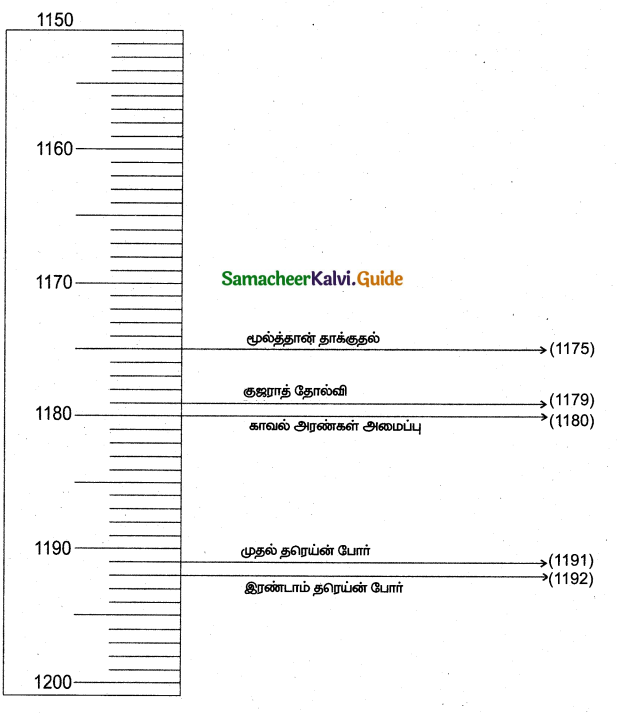
மாதிரி காலக்கோடு – 1
கோரி முகமது கால முக்கிய நிகழ்வுகள் ஏதேனும் ஐந்தினை காலக்கோடு வரைந்து சுட்டிக்காட்டுக.
Answer:
காலக்கோடு – 2
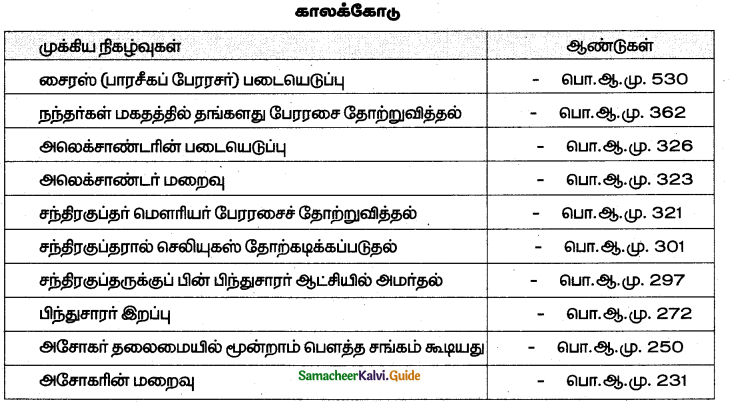
பொ.ஆ.மு. 530 முதல் பொ.ஆ.மு. 230 வரையிலான காலக்கோடு வரைக.
முக்கியமான வரலாற்று நிகழ்ச்சிகளை காலக்கோட்டில் குறிக்க.
Answer:
காலக்கோடு
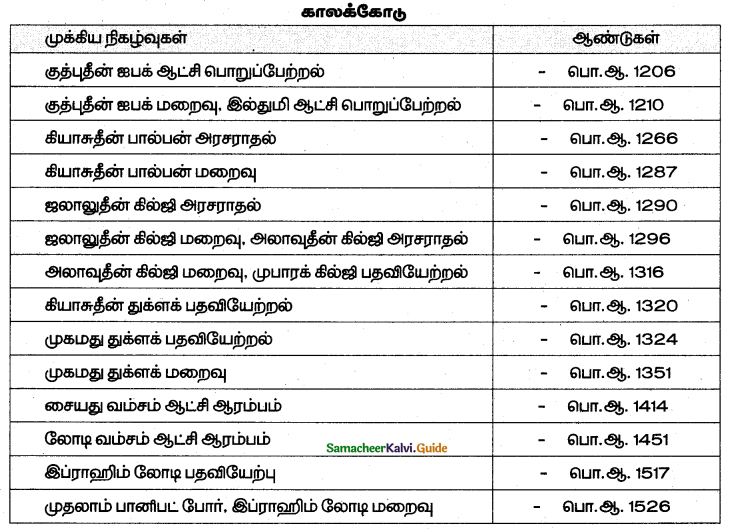
காலக்கோடு – 3
டெல்லி சுல்தானிய ஆட்சிகளின் 1206 முதல் 1526 வரையிலான காலக்கோடு வரைக. முக்கியமான வரலாற்று நிகழ்ச்சிகளை காலக்கோட்டில் குறிக்க.
Answer: