Samacheer Kalvi 8th English Guide Prose Chapter 1 The Nose-Jewel

Tamilnadu State Board New Syllabus Samacheer Kalvi 8th English Guide Pdf Prose Chapter 1 The Nose-Jewel Text Book Back Questions and Answers, Summary, Notes.

Tamilnadu Samacheer Kalvi 8th English Solutions Prose Chapter 1 The Nose-Jewel

8th English GuideThe Nose-Jewel Text Book Back Questions and Answers

WARM UP (Text Book Page No. 1)

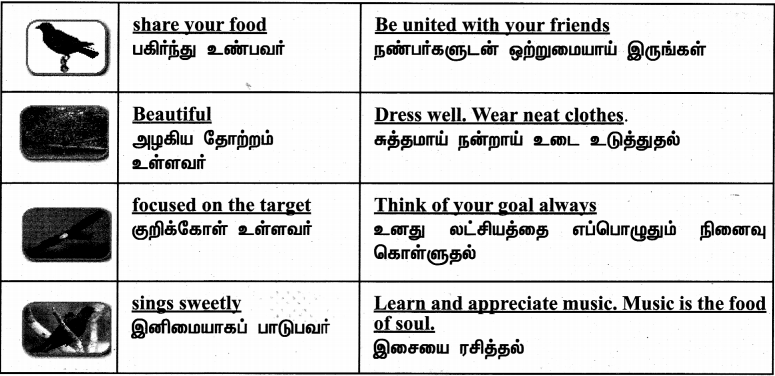
What are the life lessons that you can learn form the birds? Match the birds with the characters given in the box and fill in the blanks.
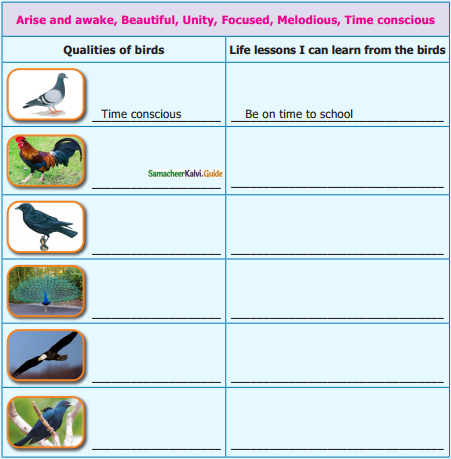
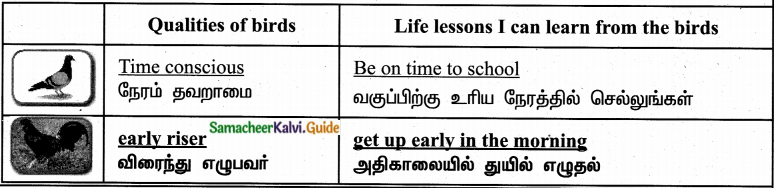
Samacheer Kalvi 8th English Guide Prose Chapter 1 The Nose-Jewel 1
Samacheer Kalvi 8th English Guide Prose Chapter 1 The Nose-Jewel 2
Samacheer Kalvi 8th English Guide Prose Chapter 1 The Nose-Jewel 3

Read and Understand (Text Book Page No. 6)

A) Choose the correct synonyms for the italicized words.

1. Nice fun indeed.
a) infact
b) doubtedly
c) fine
Answer:
a) infact

2. The poor woman is in a panic.
a) fear
b) grid
c) crash
Answer:
a) fear

3. The mother consoled her little girl.
a) pretended
b) comforted
c) left
Answer:
b) comforted

Samacheer Kalvi 9th English Guide Prose Chapter 2 I Can’t Climb Trees Anymore

4. You are always self-centered.
a) egoistic
b) generous
c) heroic
Answer:
a) egoistic

5. What is the secret you are whispering?
a) rumour
b) murmur
c) louder
Answer:
b) murmur

B) Find the antonym for the following words.

1. Delight x sorrow
2. Disgrace x honour
3. Careless x careful
4. Secret x open
5. Confine x free

C) Fill in the blanks.

1. The sparrows built their nest in the __________
Answer:
roof

2. The diamond jewel was lying in the ___________
Answer:
muck heap

3. The diamond jewel belonged to ____________
Answer:
Meenakshi Ammal

Samacheer Kalvi 9th English Guide Prose Chapter 2 I Can’t Climb Trees Anymore

4. ___________ was the servant maid of Meenakshi Ammal.
Answer:
Kuppayi

5. Ramayya and his wife lived with the fear of __________
Answer:
getting caught

D) Say the following statements are True or False:

1. Two sparrows built a nest on a treetop.
Answer:
False

2. Kuppayi swept out the diamond jewel.
Answer:
True

3. Ramayya gave the diamond jewel to the magistrate.
Answer:
False

4. Ramayya’s wife put the stud away in her box.
Answer:
True

5. The Police searched Ramayya’s home.
Answer:
False

E) Answer the following questions: (Text Book Page No. 7)

1. Where did the sparrows build the nest?
Answer:
The sparrows built the nest in a nice spot on the roof of Ramayya’s house.

2. Why did the bird drop the diamond stud?
Answer:
The female sparrow did not want the diamond stud. So the male sparrow dropped the diamond stud on the floor and went out.

Samacheer Kalvi 9th English Guide Prose Chapter 2 I Can’t Climb Trees Anymore

3. What were the words of Meenakshi Ammal to her daughter?
Answer:
Meenakshi Ammal told her daughter not to tell her father about the lost diamond nose-stud.

4. Who was suspected of stealing the diamond nose stud?
Answer:
Kuppayi, the servant’s, maid was suspected of stealing the diamond nose stud.

5. What did Ramayya’s wife do with the stud?
Answer:
Ramayya’s wife put the stud away in her box.

6. What happened to Ramayya’s wife at the end?
Answer:
Ramayya’s wife fell sick with a fever. She became bedridden. Her rest of the life was spent in fear of being caught by the police.

F) Answer the following in about 100 words.

1. Why did the sparrow throw the nose jewel into Ramayya’s house?
Answer:
One day, the male sparrow found a diamond nose-jewel in a heap. He picked it up and came to the nest with the shining stud in his beak and informed his wife about it. The female bird shouted at him and told him that the diamond jewel was not of any use to her. She asked the male sparrow to search for food for their young ones. So the bird dropped the diamond stud on the floor and went out in search of little worms for the young ones.

Samacheer Kalvi 9th English Guide Prose Chapter 2 I Can’t Climb Trees Anymore

2. Explain how Ramayya’s wife reacted when she saw the nose jewel?
Answer:
When Ramayya’s wife noticed the jewel as she was sweeping the floor, She picked it up with delight and wore it. Ramayya questioned her angrily how she got hold of the diamond stud. She replied that she found the jewel lying on the floor and she took it. That was all. Ramayya wanted to deliver the jewel to the village magistrate. If the police searched their house, it would be a disgrace. Police searched the house of Kuppayi, the servant-maid but they could find nothing in her hut. Wife of Ramayya got scared. She soon developed a severe fever and was confined to her bed. Ramayya and his wife spent the rest of their lives in fear of being caught.

Vocabulary (Text Book Page No.7)

a. Pick out the correct homophone.

1. I am not …………….. to drink soda, (aloud, allowed)
Answer:
allowed

2. The wind …………….. the leaves, (blue, blew)
Answer:
blow

3. I will …………….. my friend, (meat, meet)
Answer:
meet

4. He will play the in the second play, (role, roll)
Answer:
role

5. I have …………….. movie before, (scene, seen)
Answer:
seen

b. Choose the correct homophone. (Text Book Page No. 8)

1. Every morning my father likes to look at the …………….. on the grass.
a) due
b) dew
Answer:
a) dew

2. Chennai is the …………….. of Tamilnadu.
a) capitol
b) capital
Answer:
a) capital

3. I was very …………….. last weekend because my friends made plans that did
a) bored
b) board
Answer:
a) bored

4. The cat caught the …………….. of a mouse.
a) scent
b) cent
Answer:
a) scent

5. The …………….. rises in the east.
a) son
b) sun
Answer:
b) sun

Expand the following: (Text Book Page No. 9)
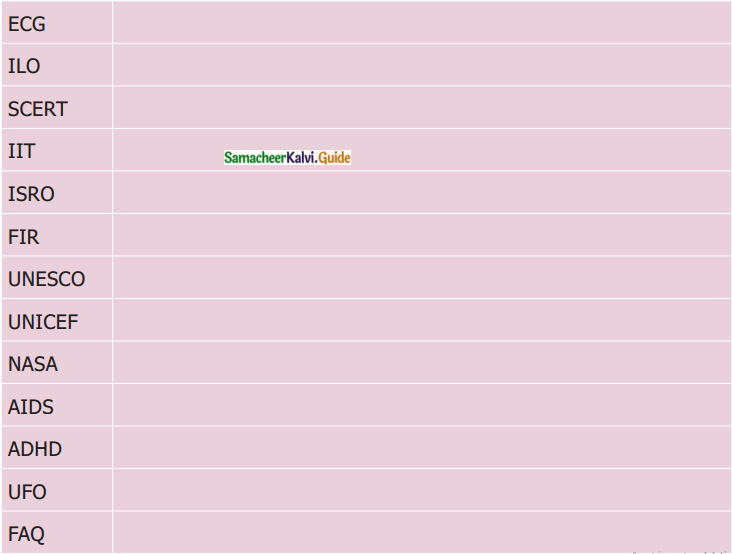
Samacheer Kalvi 8th English Guide Prose Chapter 1 The Nose-Jewel 4

ECGElectro Cardio Gram
ILOInternational Labor Organisation
SCERTState Council of Education Research and Training
IITIndian Space Research Organisation
ISROIndian Space Research Organisation
FIRFirst Information Report
UNESCOUnited Nations Educational Scientific and Cultural Organisation
UNICEFUnited Nations International Children’s Emergency Fund.
NASANational Aeronautics and Space Administration
AIDSAcquired Immuno Deficiency Syndrome
ADHDAttention Deficit Hyper Activity Syndrome
UFOUnidentified Flying Object
FAQFrequently asked Question

 Listening (Text Book Page No. 10)

C) Listen to the passage carefully and choose the right answer:
Note: The listening passage is given at page no. 226

1. Why do birds sing?
a) To locate one another
b) To warn other birds
c) To find a mate
d) All of the above
Answer:
d) All of the above

2. Birds perch very high so that …………….
a) other birds can hear them
b) other birds can see them
c) they can hide there
d) Both A and B are correct
Answer:
d) Both A and B are correct

Samacheer Kalvi 9th English Guide Prose Chapter 2 I Can’t Climb Trees Anymore

3. The health of a bird can be determined …………
a) by the length of its song
b) by the complexity of its song
c) by the volume of its song
d) Both A and B are correct.
Answer:
d) Both A and B are correct

4. Young birds perfect their songs by ………….
a) territorial songs
b) mating songs
c) warnings
d) None of the above
Answer:
c) warnings

5. Young birds perfect their songs by ………………
a) natural instinct
b) listening and interaction
c) practice
d) Both B and C are correct
Answer:
b) listening and interaction

6. Fitness is ………………
a) health
b) danger
c) a song
d) a warning
Answer:
a) health

7. How do variations in the basic song help the birds?
a) recognize other members
b) Maintain health
c) increase the length of their song
d) Communicate with one another
Answer:
a) recognize other members

Note: The Listening passage is given on page no. 226.

Writing (Text Book Page No. 14)

Using the given letter as a model, write a complaining letter on any one of the topics given below: (Text Book Page No. 15)

a) To the Police commissioner about the noise caused by the loudspeaker in a music shop near your school.

Date: XXXX

From

M. Kanishk,
S/ o. Manoj,
Nehru Nagar,
Salem – 5.

To

The Commissioner of Police,
Commissioner Office,
Salem – 5.

Respected Sir,
I am writing to notify you that I am studying standard 10th at Govt. Boys Higher Secondary School, Salem. Our school consists of 2,000 students. There is a music shop near to our school. They play the songs at the top of the voice during the class hours. It really disturbs and distracts our concentration away from studies: We have given many complaints to the authority, but no severe action has been taken by them till now.
I kindly request you to take action on them immediately for the betterment of all the students.

Yours faithfully,
M. Kanishk


Samacheer Kalvi 9th English Guide Prose Chapter 2 I Can’t Climb Trees Anymore

b) To the Postmaster General on non-receipt of book parcel.

From

M. Vinith,
13, Nehru Road,
Rajendrapuram,
Trichy-621 019.

To

The Postmaster General,
Head Post Office,
Trichy-621 001.

Respected Sir,
This is to inform you that I have sent a registered parcel to my niece Mr. R. Pravin at 132, Netha Colony, Faripur, Andhrapradesh, on 16th January 2020. My receipt no. is 3001. But the parcel has not been received by my niece so far. Ten days have passed ever since 1 sent the parcel.
1 kindly request you to look into the matter and inform us about the condition of my parcel as soon as possible.

Yours faithfully,
M. Vinith

c) To the Transport Manager, TNSTC on non-stopping of buses near your school bus stop.

From

P. Arun Kumar,
S/o. Palanichamy,
No. 6, Ukarthey Nagar,
Kodaikanal,
Dindigul.

To

The Transport Manager,
TNSTC office,
Kodaikanal,
Dindigul.

Respected Sir,
I am writing to inform you that, I am studying a higher secondary first year at St.Xavier School, Kodaikanal. Our school provides education for 1500 students. Most of the students come to school from nearby towns and villages. As the buses do not stop at our school bus stop the students suffer severely every day. It causes them to come to class very late daily.

We have given complaints to the transport office much time, but they failed to act on our complaint. I hope that you will do the needful for the goodness of the students and their education.

Yours faithfully,
P. Arunkumar

Using the given informal letter as a model, write a letter on any one of the topics given below. (Text Book Page No. 16)

a) Write letter to your father asking permission to go on an educational tour.

10, Babu Sankar Hostel,
New Colony,
Madurai – 8

Dear Father,
My class teacher has planned to go on an education tour to Tuticorin. There we will be learning details on fish culture. Everyone should attend. The fees to be paid to Rs. 500 only, it will be of two days trip. I need your permission to go on the tour. Kindly grant me permission. Send me the money too. I will let you know the other details later. With love and regards.

Your loving daughter
K. Kamala

Address on the Envelope:
To

Mr. Kathiravan,
7, Kottam Patti Main Road,
Kottam Patti,
Madurai District.

b) Write letter to you friend about your summer holidays.

10, Teachers Colony
Madurai – 10
10.1.XXXX

Dear Sankar,
I am fine. I hope and pray that you are enjoying the pink of your health. For the summer holidays, I had been to Trivandram. I visited the zoo, aquarium, Seashores, Kovalam beach, Sangu Mugam beach, etc. It was cool there. I really enjoyed my holidays. For the next summer vacation, I have planned to visit Ooty. With love and regards.

Your loving friend
K. Bala

Address on the Envelope:
To

K. Sankar,
10, Haily road, Barath Nagar Salem.

Samacheer Kalvi 9th English Guide Prose Chapter 2 I Can’t Climb Trees Anymore

c) Write a letter to your sister advising her to take part in cultural programs in school’s annual day celebration.

8, St. Marys’ hostel,
Holy Cross College
Nagercoil,
10.01.XXXX

My Dear Jovina,
I was happy to know that you have a cultural program in your school annual day celebration which will be held on 30.3.XXXX at your school. You can participate in singing, dancing, drama, recitation of poems, and rangoli decorations. It will be fun. Apart from fun, it will be a chance for you to develop your talents. Your confidence will get boost up when you are appreciated for your talent. So kindly put forth maximum participation in the cultural program. With regards.

Your loving sister,
R. Kamala

Address on the Envelope:
To

M. Jovina,
1, Babu new road,
Theni main road,
Kambam.

The Nose-Jewel Grammar (Text Book Page No. 17)

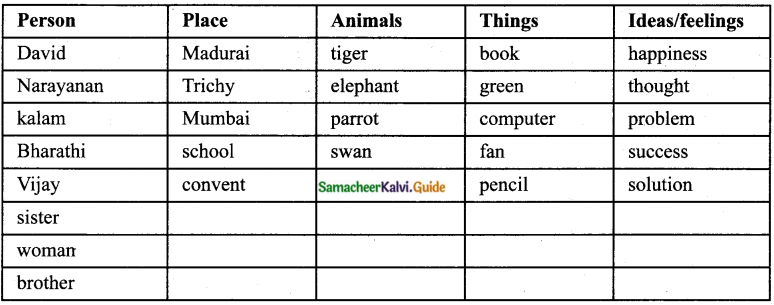
a. Pick out the words from the list and put them appropriately on the table. (Text Book Page No. 18)

David, Madurai, parrot, happiness, book, thought, green, tiger, Trichy, computer, Narayanan, fan, sister, Kalam, woman, pencil, Bharathi, problem, brother, Mumbai, swan, elephant, Vijay, solution, success, school, convent.
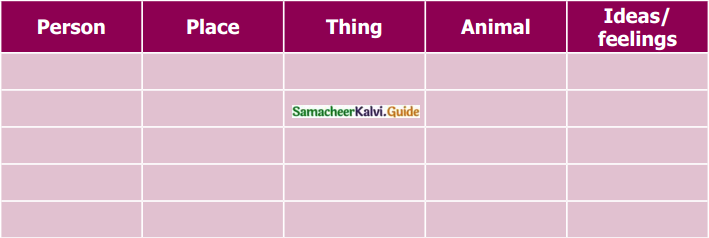
Samacheer Kalvi 8th English Guide Prose Chapter 1 The Nose-Jewel 5
Samacheer Kalvi 8th English Guide Prose Chapter 1 The Nose-Jewel 7

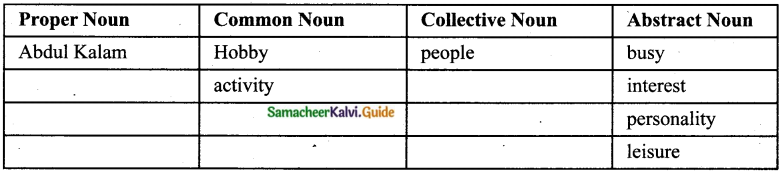
b. Read the following paragraph and pick out the different types of nouns and put them in the table.

Hobby is an activity we enjoy doing in our free time. It keeps us busy in our leisure time. People choose their hobby on the basis of their interests and personality. Do you know what Dr. A.P.J. Abdul Kalam’s hobby was?
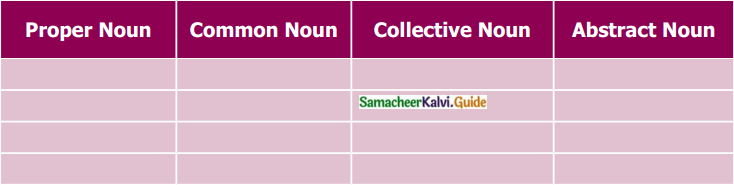
Samacheer Kalvi 8th English Guide Prose Chapter 1 The Nose-Jewel 6

c. Fill in the blanks with a suitable collective noun.
choir, shower, bowl, flock, cup, pair, swarm, bunch, herd, bottle

1. a …………. of cows.
Answer:
herd
2. a …………. of birds.
Answer:
fleet

3. a …………. of singers.
Answer:
choir

4. a …………. of milk.
Answer:
bottle

5. a …………. of tea.
Answer:
cup

6. a …………. of ants.
Answer:
swarm

7. a …………. of grapes.
Answer:
bunch

8. a …………. of rice.
Answer:
bowl

9. a …………. of shoes.
Answer:
pair

10. a …………. of rain.
Answer:
shower

Pronoun

a. Change the underlined words with a correct pronoun: (Text Book Page No. 20)
(they, he, him, it, she )
1. I saw Mr. Balu this morning and gave Mr. Balu my homework.
Answer:
him

2. Muthu likes computer games but he doesn’t play computer games very often.
Answer:
it

3. My aunt lives in Trichy but, my aunt often comes to visit my family.
Answer:
she

4. Neil Armstrong was born in 1930. Neil Armstrong landed on the moon in 1969.
Answer:
He

b. Change the possessive adjective into possessive pronoun:

1. This is my pen.
Answer:
This pen is mine

2. She missed her purse.
Answer:
The missed purse is hers

3. Her speech is nice.
Answer:
Nice speech is hers

4. My book is new.
Answer:
The new book is mine

5. My bike is costly.
Answer:
The costly bike is mine

C) VERB
The verb is a word used to express an action or state.
Transitive verbs
Transitive verbs are verbs that express
action with an object.
The object of a transitive verb can be a
noun, pronoun, or a noun clause or phrase.
Examples:
I threw the ball. (Noun as object)
We beat them. (Pronoun as object)
I think that you are correct. (Noun clause as object)

Intransitive verbs
Intransitive verbs are verbs that
express action without an object.
Examples:
I ran.
I ran swiftly.
I ran in the race

List out the transitive and intransitive verbs in the following words. (Text Book Page No. 21)

come – intransitive
buy – transitive
teach – transitive
learn – transitive
arrive – intransitive
sing – transitive
run – intransitive
draw – transitive
jump – intransitive
write – transitive

The Nose-Jewel Summary in English

Ramayya, a simple man, lived with his greedy wife. In his house, there was a sparrow nest. The male sparrow in the nest picked up a nose-jewel and dropped it on the floor. The wife of Ramayya noticed the jewel and took it. Meenakshi Ammal, the owner of the nose-jewel, gave a police complaint. She suspected Kupayi, the maid. The police came and searched for her hut. The wife of Ramayya fell sick. Ramayya and his wife lived in fear for ever.

The Nose-Jewel Summary in Tamil

ராமையா என்ற எளிய மனிதன், தன் பேராசைப் பிடித்த மனைவியுடன் வாழ்ந்து வந்தான். அவன் வீட்டில் ஒரு குருவி கூடு இருந்தது. அதில் உள்ள ஆண் குருவி, குப்பையில் கிடந்த மூக்குத்தியை தூக்கி வந்தது. பின் தரையில் எறிந்து விட்டது. ராமையாவின் மனைவி தரையில் கிடந்த மூக்குத்தியை கவனித்து எடுத்து வைத்துக் கொண்டாள். மூக்குத்திக்கு சொந்தக்காரியான மீனாட்சி அம்மாள் தன் வேலைக்காரி குப்பாயியை சந்தேகப்பட்டு போலிசிடம் புகார் அளித்தார். காவல்துறை அவள் குடிசையை சோதனையிட்டது. ராமையா மனைவி சுகவீனமாய் படுத்துவிட்டாள். அதன்பிறகு ராமையாவும் அவரின் மனைவியும் எப்பொழுதும் பயத்திலேயே வாழ்ந்து வந்தனர்.

The Nose-Jewel About the Author in English
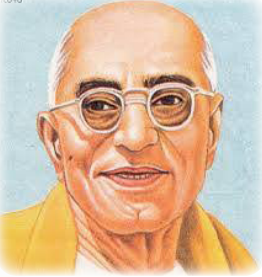
The Nose-Jewel About the Author

Chakravarti Rajagopalachari (1878-1972) informally called Rajaji, was an Indian politician, independence activist, lawyer, writer, historian, and statesman. Rajagopalachari was born in the village of Thorapalli in the Krishnagiri district. Rajagopalachari was the last Governor-General of India, as India soon became a Republic in 1950. Furthermore, he was the first Indian-born Governor-General, since before him the posts were held by British nationals. He also served as leader of the Indian National Congress, Premier of the Madras Presidency, Governor of West Bengal, Minister for Home Affairs of the Indian Union, and Chief Minister of Madras state. He was one of the first recipients of India’s highest civilian award, the Bharat Ratna.

The Nose-Jewel About the Author in Tamil

சக்கரவர்த்தி ராஜகோபாலச்சாரி சுருக்கமாய் ராஜாஜி என்பார் இந்திய அரசியல்வாதி, சுதந்திர போராட்ட வீரர், வக்கீல், எழுத்தாளர், வரலாற்று ஆசிரியர், – ஆட்சிப்பணியில் இருந்தவர் ஆவார். கிருஷ்ணகிரி மாவட்டத்தில் உள்ள தொரப்பள்ளி என்ற கிராமத்தில் 1878இல் பிறந்தார். இந்தியாவின் கடைசி கவர்னர் ஜெனரல் ஆவார். 1950இல் இந்தியா குடியரசு நாடு ஆகிவிட்டது. இவருக்கு முன்னால் ஆங்கிலேயர்களே இந்த பதவியை வகித்து வந்தனர். இவரே முதல் இந்திய கவர்னர் ஜெனரல் ஆவார். சென்னை மாகாணத்தின் இந்திய தேசிய காங்கிரஸ் தலைவராக இருந்தார். மேற்கு வங்கத்தின் கவர்னர் ஆகவும், உள்துறை அமைச்சராகவும், தமிழ்நாட்டின் முதல் மந்திரியாகவும் இருந்தார். இவருக்கு இந்தியாவின் மிக உயரிய விருதான பாரத ரத்னா விருது அளிக்கப்பட்டது.

Samacheer Kalvi 8th Social Science Guide Civics Chapter 7 The Judiciary

Tamilnadu State Board New Syllabus Samacheer Kalvi 8th Social Science Guide Pdf Civics Chapter 7 The Judiciary Text Book Back Questions and Answers, Important Questions, Notes.

Tamilnadu Samacheer Kalvi 8th Social Science Solutions Civics Chapter 7 The Judiciary

Samacheer Kalvi 8th Social Science The Judiciary Text Book Back Questions and Answers

I. Choose the correct answer.

1. The highest and final judicial tribunal of India is
a) President
b) Parliament
c) Supreme Court
d) Prime Minister
Answer:
c) Supreme Court

2. Judicial system provides a mechanism for resolving disputes between
a) Citizen
b) Citizen and the government
c) Two State governments
d) all the above
Answer:
d) all the above

3. Dispute between States of India comes to the Supreme court under
a) Original jurisdiction
b) Appellate jurisdiction
c) Advisory jurisdiction
d) none of these
Answer:
a) Original jurisdiction

4. Which of the following state/ Union territories have a common High Court?
a) Punjab and Jammu Kashmir
b) Assam and Bengal
c) Punjab, Haryana and Chandigarh
d) Uttar Pradesh and Bihar
Answer:
c) Punjab, Haryana and Chandigarh

5. The System of Public Interest Litigation has been introduced in India by
a) Supreme Court
b) Parliament
c) Political parties
d) Constitutional amendments
Answer:
a) Supreme Court

6. How many courts are there in apex level in India?
a) One
b) Two
c) Three
d) Four
Answer:
a) One

7. Supreme court is located at
a) Chandigarh
b) Bombay
c) Calcutta
d) New Delhi
Answer:
d) New Delhi

8. FI R means
a) First Information Report c) First Incident Report
Answer:
a) First Information Report

9. The court that hear criminal cases are called
a) District court
b) Sessions court
c) Family court
d) Revenue court
Answer:
a) District court

II. Fill in the Blanks.

1. The ………………… High Court is the oldest High Court in India.
Answer:
Calcutta

2. The framers of the Constitution established ………………… and ………………… judiciary in India.
Answer:
Independent, Impartial

3. ………………… a famous French philosopher propounded the idea of an independent judiciary.
Answer:
Montesquieu

4. ………………… deals with disputes over money, property and social matters.
Answer:
Civil Law

5. During ancient times, most of the Kings’ courts dispensed justice according to …………………
Answer:
dharma

III. Match the following.

1. Supreme Courta) social duties
2. High Courtb) speedy justice
3. Lok Adalatc) highest court of appeal
4. Sir Elijah Impeyd) highest court in the States
5. Smiritise) chief justice

Answer:

1. Supreme Courtc) highest court of appeal
2. High Courtd) highest court in the States
3. Lok Adalatb) speedy justice
4. Sir Elijah Impeye) chief justice
5. Smiritisa) social duties

IV. State true or false.

1. The Supreme Court of India was inaugurated on 28th January 1951.
Answer:
False

2. During the Tughlaq period, the code of procedure was written in Arabic.
Answer:
True

3. The Regulating Act of 1773 made provision for the formation of Supreme Court.
Answer:
True

4. Sadar Diwani Adalat was a Criminal court of appeal.
Answer:
False

5. The Allahabad High Court is the largest court in India.
Answer:
True

6. The Constitution of India secures justice to all its citizen.
Answer:
True

V. Choose the correct statement. 

1. Consider the following statements.
i) A law commission was setup by Macaulay.
ii) It codified the Indian Laws.
Which of the statements given above is / are correct?
a) i only
b) ii only
c) Both i and ii
d) Neither i nor ii
Answer:
c) Both i and ii

2. Consider the following statements.
i) An Indian Penal Code was prepared in 1860.
ii) The Calcutta High Court was established on 1862.
iii) The Government of India Act, 1935 created Federal Court.
Which of the statements given above is/are correct?
a) i only
b) ii, iii only
c) i,iii only
d) All the above
Answer:
d) All the above

3. Which of the following statement is not true about India’s Supreme Court?
i) The Supreme Court of India is the highest court of the land.
ii) It was established by part V under Chapter IV of Indian Constitution.
iii) Supreme court cannot transfer cases from one High court to another
iv) Its decisions are binding on all courts
a) i
b) ii c) iii
d) iv
Answer:
c) iii

4. Assertion: The Supreme Court is a Court of Record.
Reason: It maintains records of the court proceedings and its decisions are finding upon the lower courts.
a) A is correct and R is wrong.
b) Both A and R are Wrong
c) A is correct and R explains A
d) A is correct and R does not explain A
Answer:
c) A is correct and R explains A

5. Agree or disagree

a) Every citizen of India can approach the Supreme court.
Answer:
Agree

b) Rich and powerful people control the judiciary system.
Answer:
Disagree

c) Every citizen has a right to get justice through the courts.
Answer:
Agree

d) Politicians can not control judges
Answer:
Agree

VI. Answer the following in one or two sentences.

1. Why do we need a judicial system?
Answer:

  1. Judiciary plays an important role as an organ of the government.
  2. It administers justice, settles disputes, interprets laws, protects fundamental rights, and acts as guardian of the Constitution.
  3. So we need a judiciary to be efficient in order to ensure proper justice.

2. What are the different levels of courts in India?
Answer:
The different levels of courts in India are

  • Supreme Court
  • High Court ’
  • District Court
  • Subordinate Court
  • Some of the subordinate courts are Panchayat court, revenue, court, Lok Adalat Fast track court, Family court, Mobile Court, and E – Court.

3. Differentiate Law and Judiciary.
Answer:
Law: It is a system of rules imposed through a government or institution to govern people.
Judiciary: In law, the Judiciary or Judicial system is the system of courts which administers Justice in the name of the State.

4. Write a note on Lok Adalat.
Answer:

  • Lok Adalat was set up to provide speedy justice.
  • It hears and settles the disputes in the language of the people in the public presence.
  • It is presided over by a retired judge along with a lawyer and a social worker.

5. What are the advantages of mobile courts?
Answer:

  1. Mobile courts will be of great relief to the rural people.
  2. It would create greater awareness about the judicial system among the rural masses, cut costs for them and render justice at their doorstep.

VII. Answer the following in detail.

1. Write about the role of the judiciary.
Answer:
Role of Judiciary can be classified as,
1. Dispute Resolution:
Role of Judiciary can be classified as, The Judicial system provides a mechanism for resolving disputes between Citizen, Citizens and the government, Two-State governments, the Centre and the State governments

2. Judicial Review:
The Judicial has the power to declare a law unconstitutional if it believes that the law passed by the Parliament is violating the basic structure of the Constitution.

3. Upholding the Law and Enforcing Fundamental Rights:
Every citizen of India can approach the Supreme Court or High Court if they believe that their fundamental rights have been violated

Judicial Review:
Power to declare a law unconstitutional if it believes that the law passed by the Parliament. Upholding the Law and Enforcing Fundamental Rights:
Every Citizen can approach the courts if they believe that their fundamental rights have been violated.

2. Differentiate Civil Law and Criminal Law.
Answer:

Civil LawCriminal Law
Disputes over money property and social matters.Conducts or acts that the law defines as offences.
Eg: Land, rentEg: Theft, Murder
Petition to be filed before the relevant court by the affected parties.Begins with lodging of an HR with police investigation after which a case is filed in the court.
Sentences awarded in the form of money. Remuneration and as per the claimer.Punishment is awarded if proven guilty, the accused is sent to Jail.

3. Describe the Jurisdiction of the Supreme Court.
Answer:
1. Jurisdiction of Supreme Court:

  • The Supreme Court can hear disputes for the first time in that court only.
  • It is mainly concerned with disputes between the Union and one or more states and between two or more states.

2. Appellate Jurisdiction:
It can hear appeals against the decisions made by the High Court on the granting of certificates by the High Court.

3. Advisory Jurisdiction: The Court can report to the President its opinion about a question of the public importance referred to it by the President.

4. Writs Jurisdiction:
The Writs are issued by the Supreme Court under Article 32 and by the High Courts under Article 226 of the Constitution of India.

5. Court of Record:
it maintains records of the court proceedings and its decisions are binding upon the lower courts.

6. Special Powers:
it supervises the functioning of the lower courts.

VIII. Project and Activity.

1. Discuss: Is it necessary to have an independent judiciary? List two reasons.

  • Yes. it is necessary to have an independent judiciary.
  • In a democratic country judiciary is the custodian of the rights of citizens.
  • It should be independent and accountable, which exercises the judicial function in an unbiased manner (or) free from any external influence.

Samacheer Kalvi 8th Social Science The Judiciary Additional Important Questions and Answers

I. Choose the Correct answer.

1. Supreme court was established for the first time at …………….. in Kolkata.
a) Fort George
b) Fort Williams
c) Fort David
d) None of these
Answer:
b) Fort Williams

2. During the period of William Bentinck ………………….. circuit courts were abolished.
a) 4
d) 2 c) 3
d) 1
Answer:
a) 4

3. ……………….. is the guardian of the constitution.
a) High Court
b) District Court
c) Supreme Court
d) All the above
Answer:
c) Supreme Court

4. …………………. was set up for speedy Justice.
a) Revenue Court
b) Lok Adalat
c) Session Court
d) District Court
Answer:
b) Lok Adalat

5. ………………… will be of great relief to the rural people.
a) family court
b) E. Court
c) Mobile Court
d) Lok Adalat
Answer:
c) Mobile Court

6. The Supreme court was established at ………………….
a) 1801
b) 1807
c) 1809
d) 1810
Answer:
a) 1801

7. Regulating Act of ………………. made provision for the formation of the Supreme Court.
a) 1777
b) 1773
c) 1801
d) 1773
Answer:
d) 1773

8. The ……………… is presided over by a retired judge.
a) High court
b) Supreme court
c) Lok-Adalat
d) none
Answer:
c) Lok-Adalat

9. ……………….. is the largest democracy of the world.
a) India
b) Pakistan
c) China
d) none
Answer:
a) India

10. ……………….. established Mofussil Diwani Adalat.
a) Warren Hasting
b) Lord Cornwallis
c) Fauzdari
d) None
Answer:
a) Warren Hasting

II. Fill in the blanks.

1. ……………….. is the process of taking legal action.
Answer:
Litigation

2. ……………….. is the custodian of the constitution.
Answer:
Judiciary

3. ……………….. During the ancient period, was regarded as the fountainhead of justice.
Answer:
King

4. ……………….. reorganised the civil and criminal judicial system. ………………..
Answer:
Lord Corn Wallis

5. The Supreme court of India was inaugurated on ………………..
Answer:
28 Jan 1950

6. ……………….. court was found in Ganas.
Answer:
Kulika

7. ……………….. is the largest court.
Answer:
Allahabad High Court

8. In ……………….. Supreme Court was established in Madras.
Answer:
1801

9. In ……………….. Supreme Court was established in Bombay.
Answer:
1824

10. ……………….. is called the people’s court.
Answer:
Lok Adalat

11. ……………….. was established to resolve criminal disputes.
Answer:
Mofussil fauzdari Adalat

12. ……………….. is the guardian of our constitution.
Answer:
The Supreme Court

13. ……………….. abolished the District fauzdari court.
Answer:
Lord Cornwallis

14. Sadar Ditani Adalat and Nizamat Adalat were established at ………………..
Answer:
Allahabad

15. A low of commission was set up by ………………..
Answer:
Macaulay

III. Match the following.

1. District Courta) 2000
2. Sessions Courtb) Land records
3. Panchayat Courtc) Criminal cases
4. Revenue Courtd) Village level
5. Fast track courte) District Level

Answer:

1. District Courte) District Level
2. Sessions Courtc) Criminal cases
3. Panchayat Courtd) Village level
4. Revenue Courtb) Land records
5. Fast track courta) 2000

IV. State true or false.

1. The code of civil procedure during the Tughlaq period was Fiqha – e – Feroze Shahi.
Answer:
True

2. The Government of India Act 1935 created a federal court.
Answer:
True

3. PIL is unique to the Indian Judiciary.
Answer:
True

4. The E-Courts project was established in 2000.
Answer:
False

5. NALSA means the National Local Service Authority.
Answer:
False

V. Choose the correct statement.

1. i) Lok Adalat was set up to provide speedy justice. It hears and settles the disputes in the
language of the people in the public presence.
ii) The Revenue courts deal with the cases of criminal cases.
iii) The Courts that hear land records are called the Sessions Court.
Which of the statements given above is/are correct?
a) i only
b) ii, iii only
c) i, iii only
d) All the above
Answer:
a) i only

2. Consider the following statements.
i) Supreme Court of India is the highest court of India and
ii) It is located in Calcutta.
iii) The Supreme Court is the guardian of the Constitution and the highest Court of appeal,
a) i only
b) ii only
c) Both i and iii
d) Neither i nor ii
Answer:
c) Both i and iii

VI. Answer the following in one or two sentences.

1. Write a short note on NALSA.
The National Legal Service Authority has been constituted under the Legal Service Authorities Act, 1987 to provide free legal services to the weaker sections of the society and to organise Lok Adalat, for solving disputes.

2. What do you understand by Public Interest Litigation?

  • Public Interest Litigation is a litigation field in a court of law for the protection of Public interest.
  • It is a unique concept in the Indian Judiciary.
  • It was introduced by the Supreme Court.

3. Give an account of Montesquieu.
Montesquieu was the first political philosopher who propounded the idea of an independent judiciary and believed in the separation of power.

VII. Answer the following in detail.

1. Write in brief about the judiciary during the ancient period.

  • In ancient times justice was linked with religion.
  • King was the head or justice.
  • The king’s court depressed justice according to dharma, a set of conventional laws.
  • Dharmic laws governed not only the individual but and society.
  • Similarities defined the social duties of the individual.

2. What are the powers and functions of the supreme court of India.

  • The Supreme Court is the final court of Justices.
  • Its decisions are binding on all courts.
  • It can transfer judges of High Courts.
  • It can move cases from any court to itself.
  • The Supreme court can transfer cases from one high court to another.

Samacheer Kalvi 8th Social Science Guide Civics Chapter 6 Defence and Foreign Policy

Tamilnadu State Board New Syllabus Samacheer Kalvi 8th Social Science Guide Pdf Civics Chapter 6 Defence and Foreign Policy Text Book Back Questions and Answers, Important Questions, Notes.

Tamilnadu Samacheer Kalvi 8th Social Science Solutions Civics Chapter 6 Defence and Foreign Policy

Samacheer Kalvi 8th Social Science Defence and Foreign Policy Text Book Back Questions and Answers

I. Choose the correct answer.

1. The Supreme Commander of the Armed forces is our
a) President
b) Prime Minister
c) Governor
d) Chief Minister
Answer:
a) President

2. The primary mission of Indian Army is to ensure
a) National Security
b) National Unity
c) Defending the nation from external aggression
d) All the above
Answer:
d) All the above

3. The Army day is
a) 5th January
b) 1st February
c) 10th March
d) 7th October
Answer:
a) 5th January

4. Assam Rifles is under the control of
a) Ministry of Defence
b) National Security Advisor
c) PMO
d) Ministry of Home Affairs
Answer:
d) Ministry of Home Affairs

5. Indian Coast Guard was established in
a) 1976
b) 1977
c) 1978
d) 1979
Answer:
c) 1978

6. India’s foreign policy is based on several principles. One of which is
a) Satyameva Jayate
b) Panchasheel
c) both of these
d) None of these
Answer:
b) Panchasheel

7. Which of the following islands belonged to India
a) Andaman and Nicobar Islands
b) Andaman and Lakshadweep Island
c) Sri Lanka and the Maldives
d) the Maldives and Lakshadweep Island
Answer:
b) Andaman and Lakshadweep island

II. Fill in the Blanks

1. The Madras Regimental Army centre is at _____________
Answer:
Wellington

2. The Indian Navy Chief is ___________
Answer:
Admiral

3.  _____________ is first and the only officer of Indian Air Force to be promoted to Five Star rank Marshal of Indian Air Force.
Answer:
Arjan Singh

4. The Chief architect of India’s foreign policy was ______________
Answer:
Jawaharlal Nehru

5. The Word Non – Alignment was coined by ______________
Answer:
V.K Krishna Menon

III. Match the Following

1. Nelson Mandelaa) 8 members
2. National War Memorialb) Field Marshal
3. Manekshawc) Energy development
4. SAARCd) Apartheid
5. BCIMe) New Delhi

Answer:

1. Nelson Mandelad) Apartheid
2. National War Memoriale) New Delhi
3. Manekshawb) Field Marshal
4. SAARCa) 8 members
5. BCIMc) Energy development

IV. State true or false.

1. Central Armed Police Force serves under the Ministry of Defence.
Answer:
False

2. The Madras Regiment is one of the oldest infantry regiment.
Answer:
True

3. The Rapid Action Force is a specialised wing of the CRPF.
Answer:
True

4. NCC Cadets are given basic military training.
Answer:
True

5. Bangladesh is apart of India.
Answer:
False

6. Myanmar is a land bridge to ASEAN nations.
Answer:
True

V. Choose the correct statement.

1. Consider the statement related to the Armed forces.
i) The Indian Army is the land-based branch of the Armed forces.
ii) The mission of the Indian Army is not only to ensure national security but also conducts humanisation rescue operations.
a) i only
b) ii only
c) Both i and ii
d) Neither i nor ii
Answer:
a) i only

2. Assertion: The President is the Supreme Commander of the Armed forces of India.
Reason: The President is the head of the State and occupies the highest position.
a) A is correct and R explains A
b) A is correct and R does not explain A
c) A is correct and R is wrong
d) Both A and R are wrong
Answer:
a) A Is correct and R explains A

3. Assertion: India has favoured international co-operation.
Reason: She believes that all disputes among nations can be solved through friendly co-operation.
a) A is correct and R is wrong
b) Both A and R are wrong
c) A is correct and R explains A
d) A is correct and R does not explain A
Answer:
c) A is correct and R explains A

4. Which of the following statements is not true about “Apartheid?”
i) Apartheid is a policy of racial discrimination.
ii) It is against humanism.
iii) The policy of racialism is practised in India.
a) i and ii
b) ii and iii
c) ii only
d) iii only
Answer:
d) iii only

5. Find the odd one out.
a) the Maldives
b) Sri Lanka
c) Myanmar
d) Lakshadweep
Answer:
d) Lakshadweep

VI. Answer the following in one or two sentences

1. Why national security is very essential?
Answer:

  1. National security is very essential for the political, social, and economic development of any country,
  2. It is also important for the growth a country’s peace and prosperity.

2. What does the following abbreviation stand for?
Answer:

  • SFF – The Special Frontier Force
  • ICG – Indian Coastal Guard
  • BSF – The Border Security Force
  • NCC – National Cadet Corps

3. Write a short note on CRPF.
Answer:

  1. CRPF means The Central Reserve Police Force.
  2. This mission is to maintain Rule of law, Public order, and internal security effectively and efficiently.
  3. It aims to preserve national integrity and promote social harmony and development by upholding the supremacy of the constitution.
  4. Its specialized wing is The Rapid Action Force.

4. Name the founding fathers of the Non-Aligned Movement.
Answer:
The founding fathers of the Non-aligned movement are

  • Jawaharlal Nehru of India,
  • Tito of Yugoslavia,
  • Nasser of Egypt,
  • Sukarno of Indonesia and
  • Kwame Nkrumah of ghana.

5. Write the basic principles of India’s Foreign Policy.
Answer:
The basic principles of India’s foreign policy are-

  1. Preservation of national interest
  2. Achievement of world peace
  3. Disarmament
  4. Abolition of Colonialism, Racism and Imperialism
  5. Increasing the number of friendly nations

6. Name the member countries of the SAARC.
Answer:
India, Bangladesh, Pakistan, Nepal, Bhutan, Sri Lanka, Maldives, and Afghanisthan are the eight members of the SAARC.

VII Answer the following in detail.

1. Describe the structure and administration of the Indian Army.
Answer:

  • The Indian Army is the land-based branch and it the largest unicellular arm in the world
  • It is commanded by the Chief of Army Staff (COAS), who is a four-star general.
  • The primary mission of the Indian Army is to ensure national security. national unity. defending the nation from internal aggression, internal thresh.
  • The Indian Army baa a regimental system
  • It is operationally and geographically divided into seven commands.

2. Write about Paramilitary Defence Forces.
Answer:

  • The Paramilitary Defence force help in maintaining internal security protecting the coastline and assisting the army.
  • The responsibility of them into giving security to oil fields and Refineries Railway stations, Water reservoir lines.
  • They Participate in natural and man-made disasters and also protect international borders.
  • The Assam Rifles came into being in 1835 which was established by the British in Assam was called
    “Cachar Lavy”.
  • The Special Frontier Force was created in 1962. This was supervised by the Intelligence Bureau.

3. Write five principles of PanchaSheel.
Answer:
Jawaharlal Nehru, the first Prime Minister of India was the chief architect of India’s foreign policy. Nehru was a supporter of world peace. He declared the five principles of peace, known as Panchsheel. These principles included:

  1. Mutual respect for each other’s territorial integrity and sovereignty.
  2. Mutual non-aggression
  3. Mutual non-interference in each other’s internal affairs
  4. Equality and mutual benefit
  5. Peaceful co-existence.

4. India focuses on improving ties with its neighbours. How?
Answer:

  • India provides neighbours with support as needed in the form of resources, equipment and training.
  • Greater connectivity and integration is provided so as to improve the free flow of goods, people, energy capital and information.
  • Act East policy ensures a stable and multipolar balance of power through ASEAN.
  • SAARC improves brotherhood and co-operation.
  • BCIM – envisages the formation of a thriving economy, transport.
  • BIMSTEC, BBIN supports technical and economic cooperation.

VIII HOTS

1. A career in defence forces promises one of the most prestigious and respected positions in the country. State the importance.
Answer:

  1. Being a part of the defense forces is one of the most prestigious and respected positions in the country.
  2. Young aspirants who aspire to choose a career full of excitement, challenges, and adventure can join the defense forces.
  3. When it comes to lifestyle, the defense forces are unmatched. Regular exercise and proper routine key a soldier physically fit and active during his working age.
  4. Each person serves the motherland in his own way and contributes to the growth and development, but he serves his country at the cost of his life.
  5. Having a government job is the best thing for anyone in an economy.
  6. The glamor of the uniform, badges add a sense of pride in the person.
  7. The armed forces take care of the family of its men.
  8. Even after retirement, private job opportunities are there.
  9. Leadership quality is well developed with various types of experience.
  10. It is the most thrilling career in the world.

Samacheer Kalvi 8th Social Science Defence and Foreign Policy Additional Important Questions and Answers

I. Choose the correct answer.

1. Name the monument built by the government of India to honour the Indian Armed forces.
a) National War memorial
b) India Gate
c) Special Frontier force
d) All the above
Answer:
a) National War memorial

2. Rapid Action Force Day is
a) 10th March
b) 7th October
c) 4th December
d) 8th October
Answer:
b) 7th October

3. Who was the first Prime Minister of India?
a) Nelson Mandela
b) Jawaharlal Nehru
c) V.K Krishna Menon
d) Sukarno
Answer:
b) Jawaharlal Nehru

4. Which is called the worst form of racial discrimination?
a) Non-alignment
b) Apartheid
c) Panch Sheel
d) All the above
Answer:
b) Apartheid

5. Non Alignment word was coined by ……………………
a) Jawaharlal Nehru
b) V.K Krishna Menon
c) Nelson Mandela
d) All the above
Answer:
b) V.K Krishna Menon

6. …………………… of India occupies the highest position in our defence organisation.
a) President
b) Prime minister
c) Governor
d) None of these
Answer:
a) President

7. The Chief of Army Staff (COAS) is a …………………… star general.
a) Four
b) six
c) five
d) None of these
Answer:
a) Four

8. On …………………… the school was renamed as the Officers Training Academy.
a) 1st January 1978
b) 3rd January 1988
c) 1st January 1988
d) 1st October 1988
Answer:
c) 1st January 1988

9. SFF is a paramilitary special force of India created in ……………………
a) 1966
b) 1962
c) 1962
d) 1862
Answer:
c) 1962

10. The Central Industrial Security Force was set up on ……………………
a) 10th March 1969
b) 20th March 1999
c) 15th March 1996
d) 22nd March 1966
Answer:
a) 10th March 1969

II. Fill in the Blanks.

1. …………………… is a five-star general officer rank.
Answer:
Field marshal

2. The Assam Rifles came in to being in ……………………
Answer:
1835

3. The Indian Coast Guard was established in ……………………
Answer:
1978

4. …………………… was the leader of the African National Council of South Africa.
Answer:
Nelson Mandela

5. …………………… is the five Principles of peace adopted by Jawaharlal Nehru.
Answer:
Panchsheei

6. …………………… serve under the Ministry of Defence.
Answer:
Indian Armed Forces

7. …………………… are Assam Rifles and Special Frontier Force.
Answer:
Paramilitary Forces

8. …………………… serve under the authority of the Ministry of Home Affairs.
Answer:
CAPF

9. …………………… is the largest volunteer army in the world.
Answer:
The Indian Army

10. …………………… The Indian Army has a system.
Answer:
regimental

11. …………………… was the first Field Marshal of India.
Answer:
Sam Manekshaw

12. …………………… was the first and the only officer of the Indian Air Force to be promoted as mansole.
Answer:
Arjan Singh

13. …………………… is a border guarding police force in India – China border.
Answer:
ITBP

14. …………………… The is a voluntary force, tasked as an auxiliary to the Indian Police.
Answer:
Indian Home Guard

15. …………………… members are present in SAARC Association.
Answer:
8

III. Match the following.

1. 15th Januarya) Coast guard Day
2. 8th Octoberb) Rapid Action Force Day
3. 4th Decemberc) Air Force Day
4. 7th Octoberd) Navy Day
5. 1st Februarye) Army Day

Answer:

1. 15th Januarye) Army Day
2. 8th Octoberc) Air Force Day
3. 4th Decemberd) Navy Day
4. 7th Octoberb) Rapid Action Force Day
5. 1st Februarya) Coast guard Day

IV. State true or false.

1. India shares its land boundary with seven countries.
Answer:
True

2. BIMSTEC’s main objective is to strengthen and improve education.
Answer:
False

3. India has maintained a cordial relationship with all countries.
Answer:
True

4. Racialism ended in SouthAffica in 1990.
Answer:
True

5. Normal tenure of membership in home guards is three to five years.
Answer:
True

V. Choose the correct statement.

1. Find the odd one out.
a) CISF
b) ITBP
c) AR
d) SSB
Answer:
c) AR

2. Assertion: Jawaharlal Nehru, the first Prime Minister of India was the chief architect of India’s foreign policy.
Reason: He declared the five principles of peace, known as Panchsheel.
a) A is correct and R is wrong
b) Both A and R are correct
c) A is correct and R explains A
d) A is correct and R does not explain A
Answer:
b) Both A and R are correct

VI. Answer the following in one or two sentences.

1. What is BCIM?
Bangladesh – China – India – Myanmar economic corridor envisages the formation of an economic belt focussing on cross – border transport, energy, and telecommunication networks.

2. Name the neighbouring countries of India.

  • India shares a common land border with Pakistan, Nepal, Bhutan, Bangladesh, Burma, Afghanistan, and China.
  • It also shares a common sea border with Srilanka.

3. What do you know about the Madras Regiment?

  • The Madras Regiment is one of the oldest infantry regiment of the Indian army originating in the year 1758.
  • The Regimental Centre is at Wellington, Udhagamandalam, Tamilnadu in detail.

VII. Answer the following in detail.

1. Write in detail about the National Cadet Corps (NCC)

  • The National Cadet Corps is a Tri-Services organisation, Comprising the Army, Navy, and his force.
  • It is engaged in grooming the youth of the country into disciplined and patriotic citizens.
  • The NCC in India is a voluntary organisation which recruits cadets from high schools, colleges, and universities all over India.
  • The Cadets are given basic military training in small arms and parades.

2. Give a detailed account of Nelson Mandela.

  • Nelson Mandela was the leader of the African National Council of South Africa.
  • He fought against Apartheid which was the worst form of racial discrimination.
  • He served as the President of South Africa from 1994 – 1999.
  • His Political party was called the African National Congress.
  • Slavery was abolished in 1990 in South Africa.

Samacheer Kalvi 8th Social Science Guide Civics Chapter 5 Road Safety Rules and Regulations

Tamilnadu State Board New Syllabus Samacheer Kalvi 8th Social Science Guide Pdf Civics Chapter 5 Road Safety Rules and Regulations Text Book Back Questions and Answers, Important Questions, Notes.

Tamilnadu Samacheer Kalvi 8th Social Science Solutions Civics Chapter 5 Road Safety Rules and Regulations

Samacheer Kalvi 8th Social Science Road Safety Rules and Regulations Text Book Back Questions and Answers

I. Choose the correct answer:

1. At a red light
a) You can keep going if the path looks clear.
b) You must stop and wait for it turn green.
c) Quickly you can reply your friend’s text message.
d) You can attend call.
Answer:
b) You must stop and wait for it turn green

2. Pedestrians can cross the road only …………….
a) at anywhere
b) near the signals
c) at Zebra crossing
d) none
Answer:
c) at Zebra crossing

3. Road Safety Week is celebrated in the month of ……………. every year
a) December
b) January
c) March
d) May
Answer:
b) January

4. For emergency, call ……………. for ambulance service.
a) 108
b) 100
c) 106
d) 101
Arts: a) 108

5. What are the causes for the road accidents?
a) Over Speeding
b) Drunken Driving
c) Distraction to Drivers d) All of these Answer:
d) AH of these

6. The first category of traffic signs is …………….
a) Mandatory Signs
b) Cautionary Signs
c) Informatory Signs
d) None of these
Answer:
a) Mandatory Signs

7. ‘Setu Bharatam’, a program was launched in …………….
a) 2014
b) 2015
c) 2016
d) 2017
Answer:
c) 2016

8. Expand ABS:
a) Anti Brake start
b) Annual Base System
c) Anti – locking Brake System
d) None of these
Answer:
c) Anti-locking Brake System

9. Overtaking when approaching a bend is
a) permissible
b) not permissible
c) permissible with care
d) our wish
Answer:
b) not permissible

10. When the ambulance is approaching
a) allow passage if there are no vehicles from the front side
b) no preference need be given
c) allow free passage by drawing to the side of the road
d) drive behind the ambulance with great speed
Answer:
c) allow free passage by drawing to the side of the road

II. Fill in the Blanks.

1. Always keep ……………. while driving.
Answer:
to the left

2. Mandatory signs are exhibited in ……………. shape.
Answer:
circular

3. ……………. controls the speed of the vehicle.
Answer:
Brake

4. Higher the speed; ……………. the risk.
Answer:
greater

5. Use of ……………. in four-wheelers and ……………. for two-wheelers has been brought under the law.
Answer:
seat belt, helmet

III. Match the Following.

1. Pollution under control certificatea) Zebra crossing
2. One-time tax for a new carb) Comic book on road safety
3. Pedestrianc) 6 months
4. Brasilia Declarationd) 15 years
5. Swachha safere) Global conference

Answer:

1. Pollution under control certificatec) 6 months
2. One-time tax for a new card) 15 years
3. Pedestriana) Zebra crossing
4. Brasilia Declaratione) Global conference
5. Swachha saferb) Comic book on road safety

IV. State true or false.

1. The problem of accidents lies with roads only.
Answer:
False

2. Check mirrors before changing lanes.
Ans.’True

3. Flashing yellow signal indicates to slow down and proceed with caution.
Answer:
True

4. On a two-wheeler only one pillion rider is allowed.
Answer:
True

5. The roads are one of the worst inventions of man.
Answer:
False

V. Consider the following statements and tick the appropriate answer.

1. Which of the following statement is/are not correct?
i) Maintain the right distance to the vehicle in the front.
ii) Maintain speed limit, never exceed the speed limit.
iii) Wearing seat belt is not necessary while driving.
iv) Don’t slow down on bend and turn in the road.
a) i, iii only
b) ii, iv only
c) i, ii only
d) iii, iv only
Answer:
d) iii, iv only

2. Assertion: Drunken driving causes accidents.
Reason: It hampers vision due to dizziness.
a) A is correct and R is the correct explanation of A.
b) A is correct and R is not the correct explanation of A.
c) A is wrong and R is correct.
d) Both are wrong.
Answer:
a) A is correct and R is the correct explanation of A.

What is the aim of observing Road Safety Week?
Answer:
The event aimed at raising public awareness about traffic rules and ultimately reducing casualties due to road accidents. It is organised by the National Safety Council of India (NSC).

7. Write any four traffic rules.
Answer:
i) On a two-way road, the driver must drive on the left side of the road.
ii) It is mandatory for the driver to slow down at all inter junctions and pedestrian crossing.
iii) Drivers should not use the horns in prohibited areas like hospital zones, school zones, etc.,
iv) It is our responsibility to give way to emergency vehicles such as Army convoy fire engine and ambulance.

8. How does alcohol affect driving?
Answer:
Because it reduces concentration, it hampers vision due to dizziness. This may cause an accident.

VII. Answer the following in detail.

1. Explain the factors that contributed to road accidents.
Answer:

  1. Drivers – Over speeding, rash driving, violation of rules, failure, to understand signs, fatigue and consumption of alcohol.
  2. Pedestrian – Carelessness, illiteracy, crossing at wrong places, moving on roads and jaywalkers.
  3. Passengers – Projecting their body outside tie vehicle by talking to drivers, travelling on footboards, catching a running bus etc.
  4. Vehicles – Failure of brakes or steering, tyre burst, insufficient headlights, overloading and projecting loads.
  5. Road Condition – Damaged road, potholes, eroded road merging of rural road with highways, diversion and illegal speed breakers.
  6. Weather Conditions – Fog, snow, heavy rainfall, wind, storms and hail storms.

2. Describe the steps taken by the Government of India to prevent road accidents.
Answer:

  • Always keep to the left – while driving, keep to the left, and allow vehicles to pass from the opposite direction.
  • Slow down on bends and turn. A very important thing to keep in mind is to become cautious and slow down on the bends.
  • Use helmets – Make it a habit of strapping the helmet before mounting the bikes.
  • Follow the road signs – Road signs are mostly pictorial so it is not hard to comprehend.
  • For pedestrians – Cross only at Zebra crossing.

3. What are the preventive measures for road accidents?
Answer:
Safety Measures:

  1. Always keep to the left-While driving, keep to the left, and allow vehicles to pass from the opposite direction.
  2. Use helmets – Make it a habit of strapping the helmet before mounting the bikes.
  3. Never exceed the speed limit – The speed limit is related to the traffic condition of the area. To maintain the speed limit.
  4. Maintain the right distance – Collisions occur because we do not maintain adequate distance from the vehicle in the front. To maintain a safe distance from the bigger vehicles.
  5. Park the vehicles only along the designated parking bays/zones, not on the sides of the highways.
  6. Follow the road signs – Road signs are mostly pictorial so it is not hard to comprehend.
  7. Some other safety tips are – Never ever drive when drunk, never use cell phone while driving, avoid listening to too loud music, check your mirrors before changing lanes.
  8. Never cross on a red and yellow light. Take a sidewalk and avoid walking on the roads.

VIII HOTS

1. What is the requirement for a two-wheeler rider during the night?
Answer:
Few tips for Riding (Motorcycle) two-wheeler during the night:

  1. Upgrade your bike’s lightings.
  2. Increase your visibility to others on the road.
  3. Be ensured that your vision is clear.
  4. Use the lights of other vehicles equally.
  5. Ride slowly.
  6. Keep controlling your speed.
  7. Take adequate rest.
  8. Proper planning.

2. Tabulate tips for avoiding driver fatigue.

  • Many people think fatigue is only a problem for long-distance drivers, however, it is just as relevant for short-distance drives.
  • People generally don’t become fatigued from driving. Usually, they are already tired when they get behind the wheel from long hours, lack of sleep apnoea, or physically demanding roles.
  • Take a 15 minutes power nap if you feel yourself becoming drowsy.

IX. Project and Activity.

1.  Tabulate a few basic road safety rules for children.
Answer:

  1. Know your signals
  2. Stop, look and cross
  3. Pay attention – Listen
  4. Don’t Run on Roads
  5. Always use sidewalks
  6. Crossroads and Pedestrian crossing
  7. Never crossroad at bends
  8. Staying safe on a bicycle

2. Demonstrate road safety techniques.
Answer:
Road Safety Techniques

  • A day keeps the accident away
  • A constant glance at the mirrors.
  • Properly hold the steering wheel.
  • Regularly check the speed control.
  • Use Signals
  • Keep your feed on the breakers
  • Wrapping up

3. Prepare a Road Safety Awareness pocket guide and circulate in school.
Answer:
Slogan:

  • Start Early
  • Drive Slowly
  • Reach Safely.

Samacheer Kalvi 8th Social Science Road Safety Rules and Regulations Additional Important Questions and Answers

I. Choose the Correct answer.

1. For emergency calls ………….. for traffic accidents.
a) 103
b) 104
c) 102
d) 100
Answer:
a) 103

2. Totally ………….. cautionary traffic signs in our Roadways and Transport Department
a) 30
b) 40
c) 50
d) 20
Answer:
b) 40

3. In which year, the motor vehicle act came into force?
a) 1988
b) 1989
c) 1990
d) 1987
Answer:
b) 1989

4. The police will file a criminal case under this section
a) 300A
b) 302 A
c) 303A
d) 303 A
Answer:
d) 304 A

5. A multi – Pronged strategy has been adopted based on …………..
a) E
b) Three E’S
c) Four E’S
d) Two E’S
Answer:
c) Four E’S

6. The government had made of mandatory for a person who wants to obtain ………….. to be well versed in a traffic signal.
a) Bank Passbook
b) Aadhar number
c) Voters ID
d) Driving License
Answer:
c) Driving License

7. ………….. colour number plate used in the vehicle for the president of India and
Governor of states
a) Red
b) blue c) White
d) yellow
Answer:
a) Red

8. Quick response ambulances are parked in every ………….. on the National Highways.
a) 40 km
b) 50 km
c) 10 Km
d) 20 km
Answer:
b) 50 km

9. Decade of action for road safety from the year 2011 to ………….. proclaimed by the Un General Assembly.
a) 2015
b) 2020
c) 2000
d) 2010
Answer:
b) 2020

10. In which year Indian signed in
a) 2014
b) 2016
c) 2017
d) 2015
Answer:
d) 2015

II. Fill in the Blanks.

1. ……………………… is Random break test illegal and dangerous habit
Answer:
Tailgating

2. ……………………… is done to detect the consumption of alcohol.
Answer:
Random breath Test

3. The major distraction now a day is talking on ……………………… while driving.
Answer:
mobile phone

4. We are not allowed to overtake and to stay with in the lane mentioned by ………………………
Answer:
Solid white line

5. ……………………… ministry is responsible to prevent Road accidents.
Answer:
Road Transport and Highways

6. ……………………… made mandatory for two wheelers to make them more conspicuous..
Answer:
Automatic headline.

7. A set of comic books on road safety released for children are ………………………, ………………………
Answer:
Swacha, suvarshit

8. A public charitable trust that in workers to improve road safety is ………………………
Answer:
Save life foundation

9. ……………………… suggested 10 points a few Road safety.
Answer:
IPRC

10. ……………………… is for Commercial Vehicle.
Answer:
Yellow

11. The main distribution of road accident is ………………………
Answer:
adjusting mirror

12. ……………………… are mostly pictorial. so it’s easy to comprehend.
Answer:
Essential documents

13. Never ever drive when ………………………
Answer:
drunk

14. We never cross the roads when the ……………………… and lights are flashed.
Answer:
Red, yellow

15. ……………………… lines are used in areas where visibility is low.
Answer:
Single solid yellow

III. Match the Following.

1. Mandatory signsa) Triangle Shape
2. Cautionary signsb) Signalling device
3. Informatory signsc) Circular in shape
4. Traffic digitsd) Complete Stop
5. Flashing red signale) Rectangular shape

Answer:

1. Mandatory signsc) Circular in shape
2. Cautionary signsa) Triangle Shape
3. Informatory signse) Rectangular shape
4. Traffic digitsb) Signalling device
5. Flashing red signald) Complete Stop

IV. State true or false.

1. Violation of any mandatory traffic sign is an offence punishable by law by the transport Department.
Answer:
True

2. Informatory signs never provide information to the drivers in board
Answer:
False

3. On a two-wheeler only one pillion ride is allowed.
Answer:
True

4. Never exceed the speed limit
Answer:
True

5. Pedastrinas cross only at a zebra crossing
Answer:
True

V. Consider the following statements and tick the appropriate answer.

1. i) Road accidents are desired events.
ii) Wearing a helmet while drivers is not mandatory.
iii) Road safety primarily means the protection and security of all road users.
iv) The ministry of road transport and highways has taken a number of steps to prevent road accidents.
a) i and ii correct
b) i and iii correct
c) ii and iv correct
d) iii and iv correct
Answer:
d) iii and iv correct

VI. Answer the following in one or two sentences.

1. Write a Short note on -108 Emergency Response Service.
Answer:

  • It is a free emergency service providing integrated medical (ambulance), police, and fire services.
  • If you find any victims on road don’t panic.
  • Call 108 for help and 103 for traffic accidents.

2. What is the importance of Indian Penal code 304A?
Answer:
The police will file a criminal case under this section, which deals with offences relating to death due to rashness and negligence of the driver.

3. Different colour number plates used in India – explain.
Answer:
In India, four different colour number plates are used. They are

  • Red Number Plate – is used in the vehicle for the President of India and Governor of States.
  • Blue Number Plate – is given to a vehicle that is used by foreign delegates/ ambassadors.
  • White Number Plate – it means that the car belongs to a common citizen.
  • Yellow Number Plate – is for commercial vehicles.

4. What are the essential Documents Possessed by a driver?
Answer:
Driving License, Registration Certificate of the Vehicle, Taxation Certificate, Insurance Certificate, Fitness Certificate, and Permit.

5. Write Short note on Setu Bharatam.
Answer:

  • A program was launched in 2016 for building bridges for safe and seamless travel on the National Highways.
  • It aims to make all National Highways free of railway level crossing by 2019.

6. Explain – Save LIFE Foundation.
Answer:
Save LIFE Foundation is an independent, non-profit, non-governmental, and public charitable trust that is working to improve road safety and emergency medical care across India.

VII. Answer the following in Detail.

1. What are the Significances of the lines marked on Indian roads?
Answer:

  • Broken white line – basic marking on roads, you may change lanes, and are allowed to overtake a vehicle or take U-turn of it is safe to do so.
  • Solid white line – seen on areas of strategic importance. This implies that you are not allowed to overtake and to stay within the lane.
  • Single solid Yellow lines – used in areas where visibility is low. It implies that you can overtake And should drive on your side.
  • Double solid yellow lines – used on dangerous roads or for two-way traffic. It strictly prohibits anybody from crossing over into the lane. You can overtake inside your own lane.
  • Stop line – This is marked before the pedestrian crossing and sets the deadline where the car should stop before the traffic signal.
  • Solid and Broken lines – if you are driving on the side with the broken line you are allowed to overtake and if you are driving on the side of the solid line you are not.

2. What are Traffic Signals?
Answer:
Traffic signals are there to regulate traffic, warn about hazards, and to guide the road users. Importance of Traffic Signals:

  • Red: This signal indicates to stop behind the stop line.
  • Yellow: This signal indicates to stop. Do not pass through or start until green shows.
  • Green: This signal indicates you may go if the way is clear.
  • Steady Green Arrow Signal: This signal may be provided in addition to the full green signal. This indicates to proceed with caution in the direction the arrow points.
  • Flashing Red Signal: It means to come to a complete stop. Proceed only when the way is clear.
  • Flashing Yellow Signal: It indicates to slow down and proceed with caution.

Samacheer Kalvi 8th Social Science Guide Civics Chapter 4 Human Rights and UNO

Tamilnadu State Board New Syllabus Samacheer Kalvi 8th Social Science Guide Pdf Civics Chapter 4 Human Rights and UNO Text Book Back Questions and Answers, Important Questions, Notes.

Tamilnadu Samacheer Kalvi 8th Social Science Solutions Civics Chapter 4 Human Rights and UNO

Samacheer Kalvi 8th Social Science Human Rights and UNO Text Book Back Questions and Answers

I. Choose the correct answer:

1. After the Second World War ……………….. has taken several measures to protect the human rights.
a) UNO
b) Supreme Court
c) International Court of Justice
d) none
Answer:
a) UNO

2. In 1995 women from all over the world gathered at ………………..
a) Beijing
b) New York c) Delhi
d) none
Answer:
a) Beijing

3. The National Human Rights Commission was constituted in ………………..
a) 1990
b) 1993 c) 1978
d) 1979
Answer:
b) 1993

4. The UNO declared 1979 as the International year of ………………..
a) Girl Child b) Children c) women
d) none
Answer:
b) Children

5. When is Human Rights Day observed?
a) 9th December
b) 10th December .
c) 11th December
d) 12th December
Answer:
b) 10th December

6. Which one is known as modern International Magna Carta of Human rights?
a) UDHRC
b) NHRC
c) SHRC
d) International year for women
Answer:
a) UDHRC

7. Who can be appointed as the chairperson of the National Human Rights Commission?
a) Retired judge of high court
b) Any retired Chief Justice of the Supreme Court,
c) Any person appointed by the President.
d) Retired Chief Judge of any court.
Answer:
c) Any person appointed by the President

8. How many articles does the Universal Declaration of Human Rights contain?
a) 20
b) 30
c) 40
d) 50
Answer:
b) 30

9. What is the tenure of the Chairperson of the National Human Rights Commission?
a) 5 years or upto 62 years of age
b) 5 years or upto 65 years of age
c) 6 years or upto 65 years of age
d) 5 years or upto 70 years of age
Answer:
d) 5 years or upto 70 years of age

10. Where is the headquarters of the National Human Rights Commission?
a) New Delhi
b) Mumbai
c) Ahmedabad
d) Kolkata
Answer:
a) New Delhi

II. Fill in the blanks

1. Each individual has ……………….. to lead a dignified life.
Answer:
the right

2. Human Rights are ……………….. rights.
Answer:
basic

3. The State Human Rights commission was formed on ………………..
Answer:
17th April 1997

4. Article 24 of Indian Constitution prohibits ………………..
Answer:
Child Labour

5. United Nations Organisation was established in the year ………………..
Answer:
24th October,; 1945

III. Match the Following

1. Eleanor Roosevelta) world’s first charter of human rights
2. The Cyrus Cylinderb)1997
3. Eve Teasing Actc) freedom from slavery
4. Child help lined) Human Rights Commission
5. Civil righte) right to vote
6. Political rightf) 1098

Answer:

1. Eleanor Rooseveltd) Human Rights Commission
2. The Cyrus Cylindera) world’s first charter of human rights
3. Eve Teasing Actb) 1997
4. Child helplinef) 1098
5. Civil rightc) freedom from slavery
6. Political righte) right to vote

IV. State true or false.

1. Human rights and civil rights are the same.
Answer:
False

2. Declaration of the Rights of Man and of the Citizen was proclaimed in India.
Answer:
True

3. The Human Right Act of 1993 provides the creation of National Human Rights Commission.
Answer:
True

4. National Human Rights Commission has empowered to give punishment to the victims.
Answer:
False

5. Human Rights Commission was empowered to setup commission for the promotion of Human rights
at National and State level. ,
Answer:
False

V. Consider the following statements and tick the appropriate answer.

1. Find the wrong statement
a) National Human Rights Commission is a statutory body.
b) National Human Rights Commission is a constitutional body.
c) National Human Rights Commission is an independent body.
d) National Human Rights Commission is a multilateral institution.
Answer:
b) National Human Rights Commission is a constitutional body

2. Which of the following statement is not correct about the National Human Rights Commission?
a) It was established in 1993.
b) In the cases of human rights violation, the Commission has no rights to punish the culprit.
c) The Chairperson and members are of this Commission are appointed by the Supreme Court of India.
d) The Commission Sends its annual report to the Central Government and State Governments.
Answer:
c) The Chairperson and members are of this Commission are appointed by the Supreme Court of India.

3. Assertion : Human Rights day is observed on 1 Oth December.
Reason : It commemorates Eleanor RooseveTs birthday.
a) A is correct but R does not explain A
b) A is correct but R explains A
c) A and R are correct
d) A and R are Wrong
Answer:
a) A is correct but R does not explain A

4. Consider the following statements
1. The State Human Rights commission is a multi-member body.
2. The State Human Rights Commission consists of a chairperson and three members. Which of the statements given above is /are correct?
a) 1 only b) 2 only c) Both 1 and 2 d) None
Answer:
b) 2 only

VI. Answer the following in one or two sentences

1. What are Human Rights?
Answer:

  • Human Rights are rights inherent to all human beings regardless of race, sex, nationality, ethnicity, language, and religion.
  • Human rights include freedom from slavery and torture, freedom of opinion, and education.

2. Bring out the importance of UDHR.
Answer:

  • UDHR has been translated into more than 500 languages.
  • In the world it is the most translated document.
  • It describes all men are bom free and all are equal in status and right.
  • It promote the spirit of brotherhood.

3. What does Article 45 of Indian Constitution provide?
Answer:
It provides that the state shall endeavor to provide early childhood care and education for all children until they complete the age of six years.

4. Write about Right to Education Act.
Answer:
Article 21A provides that the state shall provide free and compulsory education to all children aged six to fourteen years.

5. State any three legislations passed to safeguard the welfare of women.
Answer:

  • The Hindu Marriage Act 1955 – States that the marriageable age for women is 21.
  • The Eve Teasing Act 1997 – Gives relief to women.
  • The Factory Act 1948 – Protects the women workers.

6. Mention some of the political rights.
Answer:
It includes the freedom of expression, and peaceful assembly, the right to take part in the government of one’s country, the right to vote, the freedom of speech and obtain information.

7. Name the five primary categories of Human Rights.
Answer:
i) Civil Rights
ii) Political Rights
iii) Social Rights
iv) Economic Rights
v) Cultural Rights.

VII. Answer the following.in detail.

1. Distinguish between Human rights and Civil rights.
Answer:

Human rightsCivil Rights
Human rights belong to everyone, everywhere, regardless of nationality, sexuality, gender, race, religion or age.Civil rights are those rights that one enjoys by virtue of citizenship in a particular nation or state.
Human rights are considered universal to all human beings and universal in all countries.Civil rights vary greatly from country to the country’s or government to government. It is related to the Constitution.
No nation may rightfully deprive human rights to an individual.Different nations can grant or deny different civil rights and liberties.
Human rights are basic rights inherent with birth.Civil rights are creation of the society.

2. Describe any five basic characteristics of Human rights. Basic characteristics of Human Rights:
Answer:

  • Inherent – They are not granted by any person or authority.
  • Fundamental – They are fundamental rights because without them, the life and dignity of man will be meaningless.
  • Inalienable – They cannot be taken away from the individual.
  • Indivisible – They can’t be denied even when other rights have already been enjoyed .
  • Universal – They are universal. They apply irrespective of one’s origin or status. They are enforceable.

3. What are the measures taken by the government to protect the children?
Answer:
The government has take some measures to protect the children from all kinds of exploitation and abuses. There are lows in India to Protecting the rights of the children.
i) Right to Education Act – Article 21 A.
ii) Child labour Act – Prohibition and Regulation Act 1986
iii) The Juvenile Justice Act 2000- Care and Protection of Children
iv) POCSO Act 2012 – Protection of Children from Sexual abuses
v) 1098 Childline – 24 hours emergency phone service for children.

VIII. Hots.

1. To whom does the Universal Declaration of Human Rights apply? Why is it important to you?

  • Because these are based on dignity, justice, and equality.
  • They are endowed with intelligence and concience and obliged to promote the spirit of common brotherhood amongst all men.
  • Universal Declaration of Human Rights is applicable for all men and women in the world without any discrimination.
  • So it is very important.

IX. Project and Activity

1. Make a list of 10 rights that you enjoy, and the responsibilities that you have.
Answer:
Rights:
Article 14 – Equality before law.
Article 17 – Abolition of untouchability.
Article 20 – Freedom of speech, assembly movement, residence and profession.
Article 23 – Prohibition traffic human being and forced labour.
Article 28 – Prohibition of employment of Children in factories etc.
Article 26 – Freedom to manage religious affairs
Article 27 – Freedom from payments of taxes for promotion for any religion.
Article 28 – Freedom from attending religious instruction or worship in certain education institution.
Article 29 – Protection of languages, script and culture of minorities.
Article 31 – It allows individuals to seek redressal for the violation of their fundamental rights.

Responsibilities:

  1. Tolerate all religions.
  2. Do not hurt others.
  3. To protect the environment.
  4. Respect the elders.
  5. Follow the rules of government.

Samacheer Kalvi 8th Social Science Human Rights and UNO Additional Important Questions and Answers

I. Choose the correct answer.

1. The Magna Carta of England released in the year ………………..
a) 1214
b) 1215
c) 1216
d) 1217
Answer:
b) 1215

2. A document of France Stating the Rights of all citizens declared in the year ………………..
a) 1789
b) 1790
c) 1791
d) 1792
Answer:
a) 1789

3. The US Constitution and Bill of Rights declared in the year ………………..
a) 1768
b) 1769
c) 1790
d) 1791
Answer:
d) 1791

4. UNO has declared the year ……………….. as the international year of women.
a) 1970
b) 1978
c) 1979
d) 1980
Answer:
b) 1978

5. The ……………….. is considered as an important national asset.
a) Resources
b) Education
c) Child
d) Welfare
Answer:
c) child

6. The Juvenile Justice Act implemented in the year ………………..
a) 2000
b) 2001
c) 2010
d) 2012
Answer:
a) 2000

7. The marriageable age for women is ………………..
a) 20
b) 21
c) 18
d) 22
Answer:
c) 18

8. The ……………….. appoints the chairperson and other members of National Human Rights
Commission.
a) President
b) Prime Minister
c) Chief Minister
d) Vice – President
Answer:
a) President

9. UDHR has been translated into more than ……………….. languages.
a) 500
b) 510
c) 600
d) 610
Answer:
a) 500

10. National Human Rights Commission has ……………….. divisions.
a) 4
b) 5
c) 6
d) 7
Answer:
b) 5

II. Fill in the Blanks.

1. An act for the better Securing liberty of the subject in England is ………………..
Answer:
The Habeas Corpus Act 1679

2. UNO was established on 24th October of ………………..
Answer:
1945

3. ……………….. is a milestone document in the history of Human rights.
Answer:
UDHR

4. ……………….. the first king of ancient persia, free the slaves.
Answer:
Cyrus the Great

5. The decrees were recorded on a baked clay cylinder in the ……………….. language in ……………….. Script.
Answer:
Akkadian, Cuneiform

6. ……………….. is the most translated document in the world.
Answer:
UDHR

7. ……………….. is known as modem International Magna carta.
Answer:
UDHR

8. ……………….. provides for children to develop in a healthy manner.
Answer:
Article 39(f)

9. Child helpline number is ………………..
Answer:
1098

10. An International bill of rights of women adopted in the year ………………..
Answer:
1979

11. UNIFEM has worked since ……………….. to implement the Beijing Platform for Action.
Answer:
1995

12. In ……………….. the ……………….. world conference of Women held in Beijing.
Answer:
1995, Fourth

13. ……………….. Protects the women workers.
Answer:
The factory Act

14. ……………….. rights are creations of the Society.
Answer:
Civii

15. ……………….. and ……………….. rights are human rights.
Answer:
Women and girl’s

III. Match the following.

1. The Factory Acta) 1952
2. The Plantation Labour Actb) 1961
3. The Mines Actc) 1948
4. The Maternity benefit Actd) 2005
5. Domestic violence Acte) 1951

Answer:

1. The Factory Actc)1948
2. The Plantation Labour Acte) 1951
3. The Mines Acta) 1952
4. The Maternity benefit Actb) 1961
5. Domestic violence Actd) 2005

State true or false:

1. UNO has declared 1980 as the International Year of Children.
Answer:
False

2. The Act not ensures the right to women to inherit their parental property.
Answer:
False

3. A set of basic right and freedoms has deep roots in European and American countries.
Answer:
True

4. Cyrus the Great, the first king of ancient persia, free the slaves.
Answer:
True

5. Child help line number is 109.
Answer:
False

V. Consider the following statement and tick the appropriate answer;

1. 1) The Hindu Widow Remarriage Act 1856 Legalised widow remarriage.
2) The Hindu Successian Act 1956 ensures the right to women to inherit their parental property.
3) The plantation Labour Act protects the men workers.
4) The Factory Act 1998, protects the women workers,
a) 1 only
b) 2 and 4 are correct
c) 1 and 2 are correct
d) None of these
Answer:
c) 1 and 2 are correct

2. Assertion: One of the greatest achievements of United Nations is the creation of human rights law.
Reason : To advance this goal, the UN established a commision on Human Rights, a) A is correct but R does not explain A
b) A is correct but R explains A
c) A and R are correct
d) A and R are Wrong
Answer:
c) A and R are correct

3. Consider the following statements
1. UNO has declared 1978 as International year of women.
2. UNO has declared 1979 as the International year of children.
Which of the statements given above is /are correct?
a) 1 only b) 2 only c) Both a and b d) None
Answer:
c) Both a and b

VI. Answer the following in one or two sentences

1. Define the Preamble of UDHR.
Answer:

  • All men are bom free and all are equal in status and rights.
  • They are endowed with intelligence and conscience and obliged to promote the spirit of common brotherhood amongst all men..

2. Why December 10th is celebrated as Human Rights Day?
Answer:

  • Human Rights Day is celebrated annually on 10th December every year.
  • It is to honour the United Nations General Assembly for declaring the human rights universally..

3. Explain about The Cyrus Cylinder’.
Answer:

  • Cyrus the Great, the first king of ancient Persia, free the slaves and declared that all people had the right to choose their own religion and established racial equality.
  • These and other decrees were recorded on a baked clay cylinder in the Akkadian language in cuneiform script
  • It is translated into all six official languages of the United Nations and its provisions parallel the first four Articles of the Universal Declaration of Human Rights.

4. Write short note on ‘State Human Rights Commission.
Answer:

  • The State Human Rights Commission of Tamil Nadu was formed on 17th April, 1997.
  • It functions at the state level. It consists of three members including a Chairperson.
  • A state Human Rights Commission can inquire into violation of human rights related to subjects
    covered under State list and Concurrent list. .

5. Write three Non- govermental Organisations.
Answer:
Amnesty International, Children’s Defense Fund, Human Rights Watch.

6. What are the Indian Constitution Articles for children?
Answer:

  • Article 24 – prohibits child labour.
  • Article 39(f) – provides for children to develop in healthy manner.
  • Article 45 – provides that the state shall endeavor to provide early childhood care and education for all children until they complete the age of six years.

7. Write Short notes on Welfare of parents and Senior citizen Act?
Answer:

  • This Act makes it legal obligation for children and heirs to provide maintenance to senior citizens and parents. Protection and support during old age are envisaged as human rights.
    8. What are the Legislations to protect women rights?
  • The Factory Act 1948
  • The Plantation Labour Act 1951
  • ‘ The Mines Act 1952
  • The Maternity benefit Act 1961

VII. Answer the following in detail.

1. Explain about the written Precursors of Human Rights Documents.
Answer:

  • The Magna Carta of 1215 (England) – gave people new rights and made the king subject to the law.
  • The Petition of Right 1628 (England) – set out the rights of the people.
  • The Habeas Corpus Act of 1679 (England) – an act for the better securing liberty of the subject.
  • The English Bill of Rights of 1689 – set out certain basic civil rights.
  • The French Declaration on the Rights of Man and Citizen 1789 – a document of France, stating that all citizens are equal under the law.
  • The US Constitution and Bill of Rights 1791 – safeguards the rights of the citizens..

2. Explain about National Human Rights Commission.
Answer:

  • The National Human Rights Commission (NHRC) of India was established on 12th October, 1993. It is an independent statutory, and non-constitutional body.
  • Its headquarter is located in New Delhi. NHRC is a multi- member body which consists of a Chairperson and other members.
  • The President appoints the Chairperson and other members.
  • They are appointed for 5 years or till the age of 70 years whichever is earlier.
  • NHRC has five divisions. Law Division, Investigation Division, Policy Research & Programmes Division, Training Division and Administrative Division.
    < The National Human Rights Commission is responsible for the protection and promotion of human rights in India.

3. Write an essay about women Rights.
Answer:

  • Women and girl’s rights are human rights.
  • Women are entitled to the full and equal enjoyment of all of their human rights and to be free from all forms of discrimination.
  • This is fundamental to achieve human rights, peace and security and sustainable development.
  • The Charter of the United Nations guarantees equal rights to both women and men.
  • The Convention on the Elimination of All Forms of Discrimination against Women (CEDAW), adopted in 1979 by the UN General Assembly, is described as an International bill of rights for women.
  • In 1995 the Fourth World Conference of Women, held in Beijing, developed a Platform for Action to * recognise women’s rights and improve women’s livelihood worldwide.

Samacheer Kalvi 8th Social Science Guide Civics Chapter 3 Understanding Secularism

Tamilnadu State Board New Syllabus Samacheer Kalvi 8th Social Science Guide Pdf Civics Chapter 3 Understanding Secularism Text Book Back Questions and Answers, Important Questions, Notes.

Tamilnadu Samacheer Kalvi 8th Social Science Solutions Civics Chapter 3 Understanding Secularism

Samacheer Kalvi 8th Social Science Understanding Secularism Text Book Back Questions and Answers

I. Choose the correct Answer.

1. Secularism means
a) State is against to all religions
b) State accepts only one religion
c) An attitude of tolerance and peaceful co-existence on the part of citizen belonging any religion
d) None of these
Answer:
c) An attitude of tolerance and peaceful coexistence on the part of citizen belonging any religion

2. India is a land of
a) multi-religious faith
b) multi-cultural beliefs
c) Both(l)&(2)
d) None of these
Answer:
c) Both (1) & (2)

3. The Preamble of the Constitution was amended in
a) 1951
b) 1976
c) 1974
d) 1967
Answer:
b) 1976

4. Which one of the following describes India as a secular state?
a) Fundamental Rights b) Fundamental Duty
c) Directive Principles of State Policy d) Preamble of the Constitution
Answer:
d) Preamble of the Constitution

5. Right to freedom of religion is related to
a) Judiciary b) Parliament
c) Directive principles of State Policy d) Fundamental rights
Answer:
d) Fundamental rights

6. According to Article 28, which type of education is restricted in state-aided educational institutions?
a) Religious instruction b) Moral education
c) Physical education d) None of the above
Answer:
a) religious instruction

7. The country will be considered as a secular country, if it
a) gives importance to a particular religion.
b) bans religious instructions in the state-aided educational institutions.
c) does not give importance to a particular religion.
d) bans the propagation of any religious belief.
Answer:
c) does not give importance to a particular religion

II. Fill in the blanks

1. Religion does not teach us ……………..
Answer:
animosity

2. Secularism is a part of democracy which grants ………………
Answer:
equal rights

3. …………….. is a lack of belief in god and gods.
Answer:
Atheism

4. The basic aim of our constitution is to promote …………….. and ………………
Answer:
unity & integrity

5. Article 15 …………….. prohibits on the grounds of religion, caste, sex, or place of birth.
Answer:
discrimination

III. Match the following

Column IColumn II
1. Atheisma) coined the word secularism
2. Childrenb) social reformer
3. Din-i-Illahic) lack of belief in god
4. Constitutiond) future citizen
5. Holyoakee) Divine faith
6. Rajaram Mohan Royf) 1950

Answer:

Column IColumn II
1. Atheismc) lack of belief in god
2. Childrend) future citizen
3. Din-i-Illahie) Divine faith
4. Constitutionf) 1950
5. Holyoakea) coined the word secularism
6. Rajaram Mohan Royb) social reformer

IV. State true or false.

1. There is a state religion in India.
Answer:
False

2. The term secularism has been derived from the Greek word.
Answer:
False

3. The Mughal emperor Akbar followed the policy of religious toleration. Answer:
True

4. Jainism originated in China. –
Answer:
False

5. Government of India declares holidays for all religious festivals.
Answer:
True

V, Consider the following statements and tick the appropriate answer.

1. i) Secularism is invaluable for a society like India which is characterized by religious diversity.
ii) The word secularism was not mentioned in the Constitution when it was adopted in 1950.
iii) Article 26 deals with payment of taxes for the promotion of any particular religion.
iv) Akbar’s tomb situated at Sikandara near Agra.
a) i, ii only
b) ii, iii only
c) iv only
d) i, ii, and iv only
Answer:
d) i, ii, iv only

2. Assertion (A): A foreigner can practice his own religious faith in India.
Reason (R): The freedom of religion is guaranteed by the constitution not only for Indians but
also for the aliens also.
a) A is true but R is false.
b) Both A and R are true and R is the correct explanation of A.
c) A is false but R is true.
d) Both A and R are true. R is not the correct explanation of A.
Answer:
b) Both A and R are true and R is the correct explanation of A.

3. Assertion (A): Secularism is invaluable in India.
Reason (R): India is a multi-religious and multi-cultural country.
a) A is correct and R is the correct explanation of A.
b) A is correct and R is not the correct explanation of A.
c) A is wrong and R is correct. ‘
d) Both are wrong.
Answer:
a) A is correct and R is the correct explanation of A.

4. Find out the wrong pair.
Answer:
a) Din-i-lllahi – A book
b) Khajuraho – Hindu temple
c) Ashoka – Rock Edict
d) Iqbal – Poet
Answer:
a) Din-i-Allahi – A book

VI. Answer the following in one or two sentences

1. Name some of the Indians who contributed to the spreading of secularism.
Answer:

  1. Rajaram Mohan Roy
  2. Sir Syed Ahmad Khan
  3. Rabindranath Tagore
  4. Mahatma Gandhi and
  5. B.R. Ambedkar

2. What does secularism mean?
Answer:
Secularism means an attitude of tolerance towards other religions and the peaceful co-existence of citizens belonging to different faiths.

3. State the objectives of secularism.
Answer:
Objectives of Secularism:

  1. One religious group does not dominate another.
  2. Some members don’t dominate other members of the same religious community.
  3. The state does not enforce any specific religion nor take away the religious freedom of individuals.

4. Why is it important to separate religion from the state?
Answer:

  • Because there is no state religion in India.
  • The state will neither establish a religion of its own nor confer any special patronage upon any particular religion.

5. What are the characteristic features of a secular state?
Answer:

  • Principle of Liberty – The state permits the practice of any religion
  • Principle of Equality – The state does not give preference to any religion over another.
  • Principle of Neutrality – The state remains neutral in religious matters.

6. Mention any three constitutional provisions related to secularism?
Answer:

  • Article 15 – prohibition of discrimination on grounds of religion, caste, sex or place of birth, etc.,
  • Article 16 – equality of opportunity in public employment.
  • Article 26 – Freedom to manage religious affairs.

VII. Answer the following in detail.

1. Why we need secular education?
Secular education is needed

  • to remove narrow mindedness and makes dynamic and enlightened view;
  • to develop moral and humanistic outlook;
  • to train the youth to be a good citizen;
  • to strengthen democratic values like liberty, equality, and fraternity, and co-operative living;
  • to give a wider vision towards life;
  • to develop an attitude of appreciation and understanding of others point of view;
  • to develop the spirit of love, tolerance, co-operation, equality, and sympathy;
  • to synthesize materialism and spiritualism.

2. Secularism is necessary for a country like India. Justify.

  • Yes, Secularism necessary because India is a land of multi-cultural beliefs. ’
  • It is the birthplace of four major religions.
    • Hinduism
    • Jainism
    • Buddhism
    • Sikhism
  • The main concept of secularism is aimed at creating a society in which people with religious beliefs or people who do not belong to any religion can live together in harmony and peace.

VIII. HOTS

1. Will the Government intervene if some religious group says that their religion allows them to practice human sacrifice?
Answer:
The government will definitely intervene if some religious group says that their religion allows them to practice in infanticide, Ample reason can be given in support of the answer. No religion teaches us to kill any living being, kindness is the root of all religions. Even the law of our country also declares that killing a human being is illegal. It is also against human rights.

IX. Project and Activity.

1. Look at the holidays of your school calendar. How many of them pertain to different religions? List them based on religions. What does it indicate?
June 5 – Ramzan
Sep. 2 – Ganesh Chaturthi
Dec. 25 – Christmas
It indicates we had so many religion and given as government holidays for the religious ceremonies.

Samacheer Kalvi 8th Social Science Understanding Secularism Additional Important Questions and Answers

I. Choose the correct answer.

1. Which article provides a ban on discrimination in State-aided educational institution.
a) Article-19
b) Article – 20
c) Article – 29 (2)
d) Article-16
Answer:
b) Article – 29 (2)

2. Which article provides equality of opportunity in public employment.
a) Article – 15
b) Article – 16
c) Article – 17
d) Article – 18
Answer:
b) Article -16

3. Which article guarantees the freedom of conscience and the right to process practice, and Propagate religion individually.
a) Article – 25 (1)
b) Article – 29 (2)
c) Article – 28
d) Article – 27
Answer:
a) Article -25(1)

4 is the State Permits the practice of any religion.
a) Liberty
b) Equality
c) Neutrality
d) None of these
Answer:
a) Liberty

II. Fill in the Blanks

1. The term Secularism is derived from the Latin word
Answer:
Saeculum

2 coined the term Secularism.
Answer:
George Jacob Holyoake

3. The statement ‘We are Indians and India is our home* illustrated by
Answer:
Poet Iqbal

4 states the Secularism of Ashoka.
Answer:
12th Rock Edict

5. The policy of Akbar which states that ’Peace and harmony among religions’ termed as
Answer:
Sulh-e-kul

6. The freedom of religion is not confined to its citizen alone but extends to aliens also which is pointed in 1954 case.
Islam and Hinduism.
Answer:
Akbar

9. India is the birthplace of four major religions …, and
Answer:
Hinduism, Jainism, Buddhism, and Sikhism

10. Secularism is the part of
Answer:
Indian Constitution

11. The State will not accord any
Answer:
Preferential treatment any of them.

12. provides the freedom to manage religious affairs.
Answer:
Article 26

13. Secular education needs to train the
Answer:
Youth to be good citizen.

III. Match the following

1. Secularisma) is a lack of belief in god and gods
2. Atheismb) Prohibition of religion, caste, sex
3. Article – 15c) equlity of opportunity in Public employment
4. Article -16d) ban on discrimination is State-aided Educational Institutions
5. Article – 29 (2)e) tolerance towards other religions

Answer:

1. Secularisme) tolerance towards other religions
2. Atheisma) is a lack of belief in god and gods
3. Article – 15b) Prohibition of religion, caste, sex
4. Article -16c) equlity of opportunity in Public employment
5. Article – 29(2)d) ban on discrimination is State-aided Educational Institutions

IV. State true or false

1. The Secular Indian State declares Public Holidays to mark the festivals of all religions.
Answer:
True

2. Article 15 gives equality of opportunity in public employment.
Answer:
False

3. The Mughal emperor Akbar does not follow the policy of religious toleration.
Answer:
False

4. State Permits the practice of any religion.
Answer:
True

5. Secularism is not the part of Indian Constitution.
Answer:
False

V. Consider the following statements and tick the appropriate answer.

1. i) Article 26 – Freedom to manage religious affairs.
ii) Article 16 – equality of opportunity in public employment.
iii) Article 28 – The State shall not compel any citizen to promote of any particular religion.
iv) Article 29 (2) – A ban discrimination in State-aided educational institution,
a) i, ii only b) ii, iii only
c) iv only d) i, ii and iv only
Answer:
d) i, ii, iv only

2. Assertion: There is no state religion in India.
Reason: The State will neither establish a religion of its own new confer any patronage upon any particular religion.
a) A is true but R is false.
b) Both A and R are true and R is the correct explanation of A.
c) A is false but R is true.
d) Both A and R are true. R is not the correct explanation of A.
Answer:
d) Both A and R are true. R is not the correct explanation of A.

VI. Answer the following in one or two sentences.

1. Write Short notes on – 12th Rock Edict of Ashoka.

  • Emperor Ashoka was the first great emperor to announce as early as 3rd century BC (BCE) that the state would not prosecute any religious sect.
  • In his 12th Rock Edict, Ashoka made an appeal not only for the tolerance of all religious sects but also to develop a spirit of great respect towards them.

2. How Akbar followed religious toleration?

  • The Mughal emperor Akbar followed the policy of religious toleration.
  • His propagation of Din-i-Illahi (Divine Faith) and Sulh-e-Kul (Peace and harmony among religions) were advocated for religious toleration.

3. What is the importance of the Khajuraho temple?

A 19th-century Hindu temple in Khajuraho, India incorporates a Hindu spire, a Jain cupola, a Buddhist stupa, and Muslim style dome in place of the usual shikara.

VII. Answer the following in detail.

1. Explain the characteristic features of a secular state.
Answer:

  1. A secular state is the one in which the state does not officially promote any one religion as the country’s official religion and every religion is treated equally.
  2. It gives to every citizen not only the equal right to freedom of conscience but also the right to process practice, and propagate any faith of their own choice.
  3. The state observes an attitude of neutrally and impartiality towards all religions.
  4. In a secular state, no one is given preferential treatment and the state does not discriminate any person on the basis of their religious practices and beliefs.
  5. All citizens are eligible to enter government service irrespective of their faith.
  6. There should be absolutely no religious instructions in educational institutions and no taxes to support any particular religion.

Samacheer Kalvi 8th Social Science Guide Civics Chapter 2 Citizens and Citizenship

Tamilnadu State Board New Syllabus Samacheer Kalvi 8th Social Science Guide Pdf Civics Chapter 2 Citizens and Citizenship Text Book Back Questions and Answers, Important Questions, Notes.

Tamilnadu Samacheer Kalvi 8th Social Science Solutions Civics Chapter 2 Citizens and Citizenship

Samacheer Kalvi 8th Social Science Citizens and Citizenship Text Book Back Questions and Answers

I. Choose the correct answer.

1. Which of the following is not a condition for becoming a citizen of India?
a) Birth
b) acquiring property
c) descent
d) naturalization
Answer:
b) acquiring property

2. _____________ of the Constitution of India deals with Citizenship.
a) Part II
b) Part II Article 5-11
c) Part II Article 5-6
d) Part I Article 5-11
Answer:
b) Part II Article 5-11

3. Who is called the first citizen of India?
a) The Prime Minister
b) The President
c) The Chief Minister
d) The Chief Justice of India
Answer:
b) The President

II. Fill in the blanks.

1. of a state enjoy full civil and political rights.
Answer:
Citizen

2. Our Indian Constitution provides for only citizenship.
Answer:
One

3. An Indian citizen who is residing outside India and holds an Indian passport are called
Answer:
Non-Resident Indian

4. All have a right and responsibility to citizens.
Answer:
Civic

5 is an idea enabling young people to access and participate in shaping modem society.
Answer:
Global Citizenship

III. State true or false.

1. the USA has a single citizenship.
Answer:
False

2. OCI cardholder has voting rights in India.
Answer:
False

3. Citizens of India can enjoy Fundamental Rights guaranteed by our constitution.
Answer:
True

4. Nationality can be change and citizenship can not be changed.
Answer:
False

IV. Consider the following statements. Tick the appropriate answer:

1. Indian Citizen of a person can be terminated if
a) a person voluntarily acquires the citizenship of some other country.
b) a person who has become a citizen through registration.
c) the Government of India is satisfied that citizenship was obtained by fraud.
d) a citizen who is by birth indulges in trade with an enemy country during the war.

a) I and II are correct.
b) I and III are correct
c) I, III, IV are correct.
d) I, II, III are correct.
Answer:
d) I, il, ill are correct.

2. Assertion: When Pondicherry becomes a part of India in 1962, the people who lived there became Indian citizens.
Reason: It was done by one of the provisions of the Act of 1955 – by incorporation of Territory.
a) R is the correct explanation of A
b) R is not the correct explanation of A
c) A is wrong but R is correct.
d) Both A and R are wrong.
Answer:
a) R is the correct explanation of A

V. Answer the following in one or two sentences

1. Name the types of citizens
Answer:
There are two types of citizens, Natural and Naturalised citizens.

  1. Natural citizens: are the citizens by birth.
  2. Naturalised citizens: are the one who acquires citizenship.

2. What are the Rights that a citizen can enjoy in our country?
Answer:

  • Fundamental Rights
  • Right to vote in the election to Lok Sabha and the state Legislature.
  • Right to become a Member of Parliament and State Legislature.

3. Mention any three qualities of a good citizen.
Answer:

  1. Loyalty to the Constitution.
  2. Obeys laws.
  3. Contributes to society and community and performs civic duty.
  4. Quality of goodness and justice.
  5. Respecting diversity.

4. Name the five ways of acquiring citizenship
Answer:

  • By Birth
  • By Descent
  • By Registration
  • By Naturalisation
  • By incorporation of Territory

5. What do you know about the citizenship Act of 1955?
Answer:
This act is to provide for the acquisition and termination of Indian citizenship. The citizenship Act of 1955 prescribes five ways of acquiring citizenship. They are by birth, descent, registration, naturalisation, and incorporation of territory.

VI. Answer the following

1. On what grounds that the citizenship of a person is cancelled?
Answer:
1. Renunciation:
(is a voluntary act) when a person after acquiring the citizenship of another country gives up his/her Indian citizenship.

2. Termination:
(takes place by operation of law) When an Indian citizen voluntarily acquires the citizenship of another country; he/she automatically ceases to be an Indian citizen.

3. Deprivation:
(is a compulsory termination) Citizenship is derived on the basis of an order of the Government of India in cases involving the acquisition of Indian citizenship by fraud, false representation, or being disloyal to the Constitution.

Samacheer Kalvi 8th Social Science Citizens and Citizenship Additional Important Questions and Answers

I. Choose the correct answer.

1. The word citizen is derived from the ………………… word.
a) English
b) Greek
c) Latin
d) German
Answer:
c) Latin

2. In 1962 ………………… became a part of India
a) Nepal
b) Srilanka
c) Pondicherry
d) Bangladesh
Answer:
c) Pondicherry

3. ………………… country has dual citizenship.
a) Canada
b) Switzerland
c) Australia
d) the UK
Answer:
b) Switzerland

4. ………………… are citizens by birth.
a) Natural Citizens
b) Naturalised citizens
c) Artificial Citizens
d) None of these
Answer:
a) Natural citizens

5. The citizenship act of 1955 prescribes ………………… ways of acquires citizenship.
a) Three
b) Five
c) Seven
d) Ten
Answer:
b) Five

6. A person who has married a citizen in India and he is Ordinarily resident in India for ………………… years.
a) 5
b) 6
c) 7
d) 4
Answer:
c) 7

7. An Indian citizen who is residing outside India is called as …………………
a) NRI
b) PIO
c) OCI
d) VRS
Answer:
a) NRI

8. The Government of India issued the Citizenship order in …………………
a) 1960
b) 1961
c) 1962
d) 1965
Answer:
c) 1962

9. ………………… is granted to an individual by the government of the country.
a) Nationality
b) Citizenship
c) Religionship
d) Vetics
Answer:
b) Citizenship

10. ………………… Amendment of our constitution a set of fundamental duties for all citizens.
a) 38
b) 40
c) 41
d) 42
Answer:
d) 42

II. Fill in the blanks.

1. ………………… is the study of government and duties of the citizens.
Answer:
Civics

2. ………………… of a person cannot be changed.
Answer:
Nationality

3. Indian Citizen Act passed in the year …………………
Answer:
1955

4. ………………… of 1955 provides for the acquisition and termination of Indian citizenship.
Answer:
Indian Citizenship Act

5. The knowledge of 22 languages specified in the Schedule ………………… of the constitution.
Answer:
Eighth

6. By a citizen of any country, renounce the citizenship of that country got …………………
Answer:
Naturalisation

7. Dual citizenship has given in …………………
Answer:
USA

8. A foreign citizen of Indian origin getting ………………… card.
Answer:
Overseas Citizen of India

9. The arrival of Mahatma Gandhi in India from South Africa on …………………
Answer:
January 5

10. Overseas Indian’s Day is celebrated on …………………
Answer:
January 9

III. State true or false:

1. Overseas Indian’s Day is celebrated on the 1st of January.
Answer:
False

2. Nationality of a person cannot be changed but citizenship can be changed.
Answer:
True

3. A Naturalised citizenship granted to a person if he is not a citizen of any country.
Answer:
True

4. India will get citizenship by Registration.
Answer:
False

IV. Consider the following statements. Tick the appropriate answer:

1. The Constitution of India Prescribes three ways of losing citizenship.
2. Part III of the Constitution of India Prescribes loss of citizenship.
3. A person can change Nationality.
4. A person cannot change citizenship.
Answer:
1) The Constitution of India Prescribes three ways of losing citizenship

2. Match

1.Non- Resident Indiana) DCI
2. Person of Indian originb) NRI
3. Cardholder to live in Indiac) PIO
4. A non-Citizen residing in a countryd) Immigrant
5. Granted to work Permanently in a countrye) Alien

Answer:

1. Non- Resident Indianb) NRI
2. Person of Indian originc) PIO
3. Cardholder to live in Indiaa) DCI
4. A non-Citizen residing in a countrye) Alien
5. Granted to work Permanently in a countryd) Immigrant

V. Answer the following.

1. What is citizenship?
Answer:
Citizenship is the status given to the citizens which provides them the right to legally live in a country as long as they want.

2. What is Nationality?
Answer:

  • Nationality is the status of belonging to a particular nation by origin, birth basically, it’s an ethnic and racial concept.
  • Nationality of a person cannot be changed.

3. Explain the Single Citizenship of India.
Answer:
In India, all citizens irrespective of the state in which they are born or reside enjoy the same political and civil rights of citizenship all over the country.

4. Person of Indian Origin – Explain.
Answer:

  • A person whose any ancestors was Indian nationals and who is presently holding another country’s citizenship. (other than Pakistan, Bangladesh, Sri Lanka, Bhutan, Afghanistan. China and Nepal).
  • The PIO scheme was rescinded from 09-01 -2015.

5. Explain Global Citizenship.
Answer:

  • Global citizenship is an idea that everyone, no matter where they live is part of a worldwide community rather than as the citizen of a particular nation or place.
  • All people have rights and civic responsibilities.

6. Explain – Overseas Indian’s Day.
Answer:

  • Pravasi Bharatiya Divas (PBD) Sponsored by the Ministry of External Affairs of the Government of India is celebrated once every two years, to “mark the contributions of Overseas Indian Community in the development of India”.
  • The day (January 9) commemorates the arrival of Mahatma Gandhi in India from South Africa.

VI. Answer the following.

1. Explain the Acquisition of citizenship by Descent.
Answer:

  • A person born in India on or after 26th January 1950 but before 1st July 1987 is a citizen of India by birth irrespective of the nationality of his parents.
  • A person born in India on or after st July 1987 is considered a citizen of India only if either of his parents is a citizen of India at the time of his birth.
  • Those born in India on or after 3rd December 2004 are considered citizens of India or one of whose parents is a citizen of India and the other is not an illegal migrant at the time of their birth.

Samacheer Kalvi 8th Social Science Guide Civics Chapter 1 How the State Government Works

Tamilnadu State Board New Syllabus Samacheer Kalvi 8th Social Science Guide Pdf Civics Chapter 1 How the State Government Works Text Book Back Questions and Answers, Important Questions, Notes.

Tamilnadu Samacheer Kalvi 8th Social Science Solutions Civics Chapter 1 How the State Government Works

Samacheer Kalvi 8th Social Science How the State Government Works Text Book Back Questions and Answers

I. Choose the Correct Answer:

1. The Governor of a state is appointed by
a) President
b) Vice President
c) Prime Minister
d) Chief Minister
Answer:
a) President

2. The State Council Ministers is headed by
a) The Governor
b) Chief Minister
c) Speaker
d) Home Minister
Answer:
b) Chief Minister

3. Who can summon and prorogue the sessions of the State legislature?
a) Home Minister
b) President
c) Speaker
d) The Governor
Answer:
d) Governor

4. Who does not participate in the appointment of the High Court Judge?
a) Governor
b) Chief Minister
c) Chief Justice of the High Court
d) President of India
Answer:
b) Chief Minister

5. The age of retirement of the Judges of the High Court is
a) 62
b) 64
c) 65
d) 58
Answer:
a) 62

II. Fill in the Blanks.

1. ……………. States are there in India at present.
Answer:
29

2. The tenure of the Governor is normally ……………. years.
Answer:
Five

3. The District Judges are appointed by …………….
Answer:
The Governor

4. The Governor is the ……………. Head of the State.
Answer:
Real

5. Minimum age to become an MLA is ……………. years.
Answer:
25

III. Match the Following

1.Governora) Lower House
2. Chief Ministerb) Nominal Head
3. Legislative Assemblyc) Upper House
4. Legislative Councild) Real Head

Answer:

1. Governorb) Nominal Head
2. Chief Ministerd) Real Head
3. Legislative Assemblya) Lower House
4. Legislative Councilc) Upper House

IV. State true or false:

1. Chief Minister is the chief administrator of the State.
Answer:
True

2. The Governor nominates two members of the Anglo- Indian Community to the Legislative Assembly.
Answer:
False

3. The number of judges in the High Courts is not uniform and fixed.
Answer:
True

V. Choose the correct statement

1. The State Legislative Assembly participates in the election of
(i) President
(ii) Vice-President
(iii) Rajya Sabha Members
(iv) Members of Legislative Council of the State
a) i, ii & iii are correct
b) i and iii are correct
c) i, iii, & iv are correct
d) i, ii, iii, & iv are correct
Answer:
d) i, ii, iii, & iv are correct

VI. Answer the following in one or two sentences.

1. Name the two houses of the State legislature?
Answer:
The State Legislature consists of the Governor and one or two houses. The upper house is called the Legislative Council while the lower house is called the Legislative Assembly.

2. Write the qualifications of the members of the Legislative Assembly?
Answer:

  • A person has to be at least 25 years old to contest in the election.
  • Even if a person does not belong to any political party, he can contest the election and such a candidate is called an independent candidate.

3. How is the Chief Minister appointed?
Answer:
The Governor appoints the leader of the majority party in the State Legislative Assembly as the Chief Minister. He is the head of the State Council of Ministers.

4. How is the Council of Ministers formed?
Answer:

  • In Tamil Nadu, there are 234 legislative constituencies.
  • The party with more than 118 elected candidates (MLA) are invited by the governor to form the Government.

VII. Answer the following in detail.

1. Discuss the powers and functions of the Chief Minister.
Answer:
Powers and functions:

1. The Chief Minister is the chief administrator of the State. All major decisions of the State Government are taken under his leadership.

2. The Chief Minister plays an important role in the formation of the Council of Ministers. On the advice of the Chief Minister, the Governor appoints the other Ministers.

3. The Chief Minister supervises the activities of different ministries and advises them accordingly. He also coordinates the activities of different ministries.

4. The Chief Minister plays an important role in making policies of the State Government ensuring public interest. His voice is final in the policy decisions of the State Government.

5. The Governor appoints different higher officials of the State Government on the advice of the Chief Minister and his Council of Ministers.

2. Discuss the powers and functions of the Legislative Assembly.
Answer:
The Lower house is called the Legislative Assembly.
Legislative Assembly:

  • The people who make the laws of a state government are called ‘Members of the Legislative Assembly’ (MLA).
  • MLAs are chosen from different constituencies.
  • For the election of MLA’s the entire State is divided into different constituencies
  • One MLA is chosen from each legislative constituency to represent the Legislative Assembly.

Election:

  • Different political parties compete in the election by nominating candidates from each constituency.
  • One person can stand in more than one constituency at the same time.
  • Every party has its own symbol.
  • People who are above the age of 18 can cast a vote in the legislative assembly election.
  • The meetings of the Assembly are presided over by the Speaker and in his absence, the Deputy Speaker conducts its meetings.

3. Write about the powers and functions of the High Court.
Answer:
1. The High Court has been empowered to issue writs of Habeas corpus, Mandamus, Prohibition, Certiorari, and Quo Warranto for the enforcement of the fundamental rights and for other purposes.

2. Every High Court has a general power of superintendence over all the lower courts and tribunals within its jurisdiction.

3. If a case is pending before a subordinate court and the High Court is satisfied that it involves a substantial question of the constitutional law, it can take up the case and decide it itself.

4. The High Court controls all the subordinate courts in the State.

5. Like the Supreme Court, the High Court also acts as a Court of Record.

Samacheer Kalvi 8th Social Science How the State Government Works Additional Important Questions and Answers

I. Choose the Correct Answer.

1. ………………… is a permanent house of the state legislative.
a) Lok Sabha
b) Legislative assembly
c) Legislative council
d) RajyaSabha
Answer:
c) Legislative council

2. ………………… is the eligible age to cast a vote.
a) 30
b) 25
c) 21
d) 18
Answer:
d) 18

3. ………………… cannot remove the governor from his post.
a) Prime minister
b) State Government
c) Supreme court
d) President
Answer:
State Government

4. Who presides over The Assembly by meeting?
a) Governor
b) Chief minister
c) Speaker
d) Law minister
Answer:
c) Speaker

5. If the chief minister is not a member of the state Legislative, he must be so within a period of ………………… month.
Answer:
a) 3
b) 5
c) 6
d) 10

6. ………………… stands at the apex of the State Judiciary.
a) District court
b) High court
c) Mobile court
d) Family court
Answer:
b) High court

7. The marriage age for a woman is …………………
a) 16
b) 18
c) 21
d) 23
Answer:
b) 18

8. Only ………………… states in India have a legislative council.
a) 2
b) 4
c) 6
d) 16
Answer:
c) 6

9. A Judge of the high court must have at least ………………… years of experience as an advocate.
a) 10
b) 5
c) 4
d) 3
Answer:
a) 10

10. Who plays an important role in making appointments for the state Governments?
a) Governor
b) Chief minister
c) Central Minister
d) MLAs
Answer:
b) Chief minister

II. Fill in the Blanks

1. The two sets of the government of India are …………………, …………………
Answer:
Central government, State government

2. There are ………………… state Governments in our country.
Answer:
29

3.  ………………… is a chief executive in a state.
Answer:
Governor

4. The age of Governor completed ………………… years.
Answer:
35

5. President impose emergency in the state through ………………… article.
Answer:
356

6. ………………… acts as the chancellor of State Universities.
Answer:
Governor

7. State laws derived by …………………
Answer:
members of the legislative assembly

8. There are ………………… constituency in Tamil Nadu.
Answer:
234

9. The leader of the majority party in the election is chosen as …………………
Answer:
chief minister

10. The legislative assembly meets ………………… times in a year
Answer:
2 or 3

11. The ………………… has control over the state council of ministers.
Answer:
assembly

12. ………………… is the job of the state’s council of ministers
Answer:
Executing

13. The legislative assembly of TamilNadu is located at …………………
Answer:
Chennai

14. The High court stands as the match of the …………………
Answer:
State Judiciary

15. The Chief Justice was appointed by …………………
Answer:
President

III. Match the Following

1. Lower house membera) 30 years
2. Upper house memberb) 21 years
3. Voting age limitc) 62 years
4. Men’s marriage aged) 18 years
5. Retirement age of high court Justicee) 25 years

Answer:

1. Lower house membere) 25 years
2. Upper house membera) 30 years
3. Voting age limitd) 18 years
4. Men’s marriage ageb) 21 years
5. Retirement age of high court Justicec) 62 years

IV. State true or false

1. The state governor appoints the chief justice of the high court.
Answer:
False

2. Executing laws is the job of the state’s council of ministers
Answer:
True

3. The Governor can nominate two members from the Anglo Indian community.
Answer:
False

4. The party which got majority seats in the election forms the government.
Answer:
True

5. Two houses of state legislature is present in Uttar Pradesh, Bihar.
Answer:
True

V. Consider the following statements. Tick the appropriate answer:

1. The Governor maintaining the relationship between the central government and the state government.
2. Court act as an agent of the central government.
3. The Governor is the Nominal Executive in a State.
4. Chief minister is the head of the state council of Ministers.
a) 1 and 2 c) 2,4
Answer:
d) 3, 4 correct

VI. Answer the following in one or two sentences.

1. How the Governor was appointed?
Answer:

  • The Constitution provides for the post of the Governor as the head of a state in India.
  • He is appointed by the president of India.

2. Who are the Members of the Legislative assembly?
Answer:

  • The people who make the laws of a state government are called ‘Members of the Legislative Assembly’
    (MLA).
  • MLAs are chosen from different constituencies. For the election of MLAs, the entire state is divided into different constituencies.

3. What are the legislative constitution?
Answer:

  • For the election of MLAs, the entire state is divided into different constituencies.
  • These constituencies are called the legislative constituencies. One legislative constituency may have one lakh or even more people.

VII. Answer the following in detail.

1. Discuss the powers and functions of the Governor.
Answer:

  • The Governor is the Chief Executive in a state.
  • All the executive powers of the state are vested upon him and decisions is taken in his name.
  • He appoints the chief minister and council of ministers.
  • The President imposes an emergency in a state under Article 356 on the basis of the Governor.
  • The Governor also acts as the Chancellor of state universities.
  • Money bills can be introduced in the state Legislative Assembly only with the approval of the Governor.
  • The annual budget of the state Government inlaid before the legislature with the approval of the

2. How a bill becomes an Act – Explain the states.
Answer:

  • A Bill is presented in the Legislative Assembly.
  • Debates and discussions take place on it.
  • Changes can be made in the Bill.
  • If more than half of the MLAs vote in favour of the Bill, it is said to be passed.
  • The Bill to get the assent of the Governor to become an Act.

Samacheer Kalvi 8th Social Science Guide History Chapter 8 Status of Women in India through the Ages

Tamilnadu State Board New Syllabus Samacheer Kalvi 8th Social Science Guide Pdf History Chapter 8 Status of Women in India through the Ages Text Book Back Questions and Answers, Important Questions, Notes.

Tamilnadu Samacheer Kalvi 8th Social Science Solutions History Chapter 8 Status of Women in India through the Ages

Samacheer Kalvi 8th Social Science Status of Women in India through the Ages Text Book Back Questions and Answers

I. Choose the correct answer.
1. Society is constantly changing with additions, assimilations and omissions from within and outside.
a) Human
b) Animal
c) Forest
d) Nature
Answer:
a) Human

2. The First women doctor in India was
a) Dharmambal
b) Muthulakshmi Ammaiyar
c) Moovalur Ramamirdham
d) Panditha Ramabai
Answer:
b) Muthulakshmi Ammaiyar

3. The practice of sati was abolished in.
a) 1827
b) 1828
c) 1829
d) 1830
Answer:
c) 1829

4. B.M Malabari was a
a) teacher
b) doctor
c) lawyer
d) journalist
Answer:
d) journalist

5. Which of the following was/were the reform movement(s)?
a) Brahma Samaj
b) Prarthana Samaj E
c) Arya Sama
d) all the above
Answer:
d) all the above

6. The Bethune school was founded in by J.E.D. Bethune.
a) 1848
b) 1849
c) 1850
d) 1851
Answer:
b) 1849

7. Which commission recommended to start primary schools for girls in 1882 ?
a) Wood’s
b) Welby
c) Hunter
d) Muddiman
Answer:
c) Hunter

8. Sarada’s child Marriage Bill fixing the minimum marriageable age for girls at.
a) 11
b) 12
c) 13
d) 14
Answer:
d) 14

II. Fill in the blanks.
1. ……………. society was set up by the Christian missionaries in 1819.
Answer:
Alath Pemal Juvenile

2. ……………. of Sivaganga fought bravely against the British.
Ans: Velu nachiyar

3. Servants of India Society was started by ……………..
Answer:
Gopal Krishna Gokhale

4. ……………. was one of the greatest social reformers of Tamil Nadu.
Answer:
Periyar

5. Kandukuri Veeresalingam published a journal called …………….
Answer:
Vivekavardhini

III. Match the following.

1 Theosophical societya) Italian traveler
2. Sarada Sadanb) Social evil
3. Wood’s Despatchc) Annie Besant
4. Niccolo Contid) Pandita Rama Bhai
5. Dowrye) 1854

Answer:

1. Theosophical societyc) Annie Besant
2. Sarada Sadand) Pandita Rama Bhai
3. Wood’s Despatche)1854
4. Niccolo Contia) Italian traveler
5. Dowryb) Social evil

IV. State True or False.
1. Women were honoured in Rig Vedic period.
Answer:
True

2. Devadasi system was a social evil.
Answer:
True

3. Raja Rammohan Roy, was the pioneer of the Indian social reform movement.
Answer:
True

4. Reservation of 23 percent to women envisaged an improvement in the socio-political status of women.
Answer:
False

5. The age of marriage was raised for boys and girls by the Sharda Act of 1930.
Answer:
True

V. Choose the correct statement.
1. Find out the correct pair.
a) Women’s University – Prof. D.K. Karve
b) Justice Ranade – Arya Samaj
c) Widow Remarriage Act – 1855
d) Rani Lakshmi Bhai – Delhi
Answer:
a) Women’s University – Prof. D.K. Karve

2. Find the odd one out.
a) Child marriage
b) Sati
c) Devadasi system
d) widow remarriage
Answer:
d) widow remarriage

3. Consider the following Statements
i) Begum Hazarat Mahal, Rani Lakshmi Bhai of Jhansi led an armed revolt against the British
ii) Velunachiyar of Sivaganga, Tamil Nadu fought bravely against the British
Which of the statement (s) given above is/or correct?
a) i only
b) ii only
c) i and ii
d) neither i nor ii
Answer:
c) i and ii

4. Assertion: Raja Rammohan Roy is most remembered by all Indians
Reason: He wiped out the evil practice of Sati from the Indian Society
i) A and R are wrong
ii) A is correct and R is Wrong
iii) A is correct and R explains A
iv) A is correct and R does not explain A
Answer:
iii) A is correct and R explains A

VI. Answer the following in one or two sentences.
1. Name the prominent leaders who fought for the upliftment of women.
Answer:
During the British Raj, many socio-religious reformers like Raja Rammohan Roy, Dayananda Saraswathi, Keshab Chandra Sen, Iswara Chandra Vidya Sagar, Pandita Ramabai, Dr. Muthulakshmi, Jyoti Rao Phule, Periyar E.V.R, Dr. Dharmambal were the prominent leaders who fought for the upliftment of women.

2. List out some social evils?
Answer:
Female infanticide, female foeticide, Child marriage, Sati, and Devadasi system.

3 Who were the notable women during the medieval period?
Answer:
Some of the notable women during the medieval period were Razia sultana, Queen Durgavati, Chand bibi, Nurjahan, Jahan nara, Jijabai, and Mira bai.

4. Mention the important women freedom fighters of India?
Answer:
Vellunachiyar of Sivaganga, Begum Hazarat Mahal, Rani Lakshmi Bhai of Jhansi.

5. Give a note on Sati.
Answer:

  1. Sati was a social evil that prevailed in Indian Society especially among the Rajputs.
  2. The feudal society of the time encouraged “sati” which meant self-immolation of the widow on the funeral pyre of her husband.
  3. Earlier it was a voluntary act but later by the relatives forced the widow to sit on the funeral pyre.

VII. Answer the following.
1. Trace the role of women in the freedom struggle.
Answer:

  • The spread of female education led to several other social reforms of great consequences, such as the abolition of the purdah system, participation of women in the freedom struggle.
  •  In the early anti-colonial Struggle women played major roles in various capacities,
  • Velunachiyar of Sivaganga fought violently against the British and restored her rule in Sivaganga.
  •  Begum Hazrat Mahal, Rani Lakshmi Bhai of Jhansi led an armed revolt of 1857* against the British.
  • In the freedom struggle, thousands of women came out of their homes, boycotted foreign goods, marched in processions, defied laws, received lathi charges, and Courted jails.

2. Explain the contribution of Social reformers to the eradication of social evils.
Answer:

  • The Social reformers have contributed more for the eradication of social evils.
  • Raja RamMohan Roy with the help of William Bentinck abolished Sati in 1829. Sati was declared illegal and punishable by law.
  • Ishwar Chandra Vidhyasagar founded several girl’s schools and promoted widow remarriage and polygamy was abolished.
  • Kandukuri Veeresalingam opened his first girl’s schools in 1874.
  • M. G Ranade promoted widow remarriage and B.M Malabari abolished Child marriage.
  • Gopal Krishna Gokhale worked for the spread of female education.
  • Periyar E.V.R advocated women education and widow remarriage.
  • Many women reformers also contributed to eradicate social evils.

3. Give a detailed account of the Impact of the reform movement?
Answer:

  • Significant advances were made in the field of emancipation of women.
  • It created of national awakening among the masses.
  • It created the feeling of sacrifice, service and rationalism.
  • The practice of sati and infanticide were made illegal.
  • It permitted widow remarriage.
  • The following legislations have enhanced the status of women in matters of marriage adoption and inheritance.

Legislation Provisions:

  • Bengal regulation of XXI, 1804 – Female infanticide was declared illegal
  • Regulation of XVII, 1829 – Practice of sat was declared illegal
  • Hindus Widow’s Remarriage Act, 1856 – It permitted widow remarriage
  • The Native Marriage Act, 1872 – The Child Marriage was prohibited
  • The Sharda Act, 1930 – The age of marriage was raised for boys and girls
  • Devadasi Abolition Act, 1947 – It abolished the Devadasi system

Samacheer Kalvi 8th Social Science Status of Women in India through the Ages Additional Important Questions and Answers

I. Choose the Correct answer.
1. The National Commission for women was set up on January ………………… .
a) 1992
b) 1990
c) 1991
d) 1999
Answer:
a) 1992

2. The Madras Devadasi Act was enacted on ………………… .
a) 9th Oct 1947
b) 9th Oct 1950
c) 9th Sep 1947
d) 9th Sep 1950
Answer:
a) 9th Oct 1947

3. When was the Native Marriage Act passed?
a) 1885
b) 1930
c) 1872
d) 1804
Answer:
c) 1872

4. Who raised a voice against the Devadasi system along with Dr. Muthulakshmi Ammaiyar?
a) Dr. S. Dharmabal
b) Rukumani
c) Gopal Krishna Gokhale
d) Moovalur Ramamirdham Ammaiyar
Answer:
d) Moovalur Ramamirdham Ammaiyar

5. Sati became popular during the ………………….
a) later Vedic period
b) Medieval period
c) Modem period
d) None of these
Answer:
a) later Vedic period

6. The Indian women’s university was started in ………………… by Prof. D. K Karve
a) 1990
b) 1966
c) 1916
d) 1918
Answer:
c) 1916

7. ………………… is also an in human practice which cuts across the caste, creed, class and regional boundaries,
a) Female foeticide
b) Sati
c) Female infanticide
d) Child marriage
Ans: a) Female foeticide

8. Raja Rammohan Roy published his tracts in
a) 1818-20
b) 1820-25
c) 1855 – 85
d) 1750-57
Answer:
a) 1818 – 20

9. The Child Marriage was prohibited in
a) 1827
b) 1872
c) 1882
d) 1772
Answer:
b) 1872

II. Fill in the blanks.
1. ………………. despatch an education in 1854 laid a great stress on need for female education.
Answer:
Charles Wood

2. The word Devadasi means ………………..
Answer:
Servant of God

3. The Theosophical Society was established at Chennai by ………………..
Answer:
Dr. Annie Besant

4. The National Commission for women was set up on ………………. .
Answer:
January 1992

5. The monogamy was in practice but among the ………………. was prevalent.
Answer:
rich polygamy

6. Among the Rajputs of Rajasthan, the ………………. was practiced
Answer:
Jauhar

7. ………………. established a number of female schools in Poona.
Answer:
D.K. Karve

8. ………………. was started in Delhi.
Answer:
Lady Harding Medical College

9. Female infanticide was afflicting the ………………. century Indian society.
Answer:
nineteenth

10. Akbar prohibited ………………..
Answer:
child marriage

11. ………………. the pioneer of Indian social reform movement.
Answer:
Raja Rammohan Roy

12. ………………. set an example to others by marrying a widow of his choice.
Answer:
Narayana Chandra

13. The spread of ………………. led to several other social reforms.
Answer:
female education

14. ………………. was another reformer who was very much influenced by the ideas of Periyar.
Answer:
Dr. S. Dharmambal

15. The native Marriage Act was passed in ………………..
Answer:
1872

III. Match the following.

1. Female Infanticidea) 1947
2. Satib) 1872
3. Widow remarriagec) 1829
4. Child Marriaged)1856
5. Devadasi Systeme) 1804

Answer:

1. Female Infanticidee) 1804
2. Satic) 1829
3. Widow remarriaged)1856
4. Child Marriageb) 1872
5. Devadasi Systema) 1947

IV. State True or False.
1. E. V Ramasamy was instrumental in passing the Devadasi abolition Bill
Answer:
True

2. The minimum marriageable age for a girl was only 18 years in 1846
Answer:
False

3. Niccolo Conti, who visited Vijayanagar was a French traveler.
Answer:
False

4. Female infanticide was declared illegal
Answer:
True

5. Female Foeticide was afflicting the 19th Century, Hindi Society.
Answer:
False

V. Choose the correct statement.
1. i) Mughal ruler Akbar attempted to abolish sati.
ii) Raja Rammohan Roy’s efforts led to the abolition of sati in 1829.
iii) Periyar E.V.R, crusade for the improvement in the condition of widows, led to the passing of Widow Remarriage Act in 1856.
a) i only
b) i and ii
c) ii and iii
d) iii only
Answer:
b) i and ii

2. Find the odd one out.
a) Begum Hazrat Mahal
b) Rani Lakshmi Bhai of Jhansi
c) Velunachiyar
d) Dr. S. Dharmambal
Answer:
d) Dr. S. Dharmambal

VI. Answer the following in one or two sentences.
1. State the condition of women in the Later Vedic age.
Answer:

  • The age witnessed a development in it by restricting the role of women in social life.
  • Sati was popular Patriarchial system became rigid. Women were denied to study scriptures.

2. What does the term female foeticide mean?
Answer:

  • It is an inhuman practise which cuts across the caste, creed, dan and regional boundaries.
  • In order to ban the female foeticide and sex – determination the central government passed various acts.

3. Write a short note on Madras Devadasi Act.
Answer:

  • The Madras Devadasi Act was a law that was enacted on 9th Dec 1947.
  • It gave legal right to marry and made it illegal to dedicate girls to temples.

4. Write a note on Jauhar.
Answer:
Jawhar refers to the practice of collective voluntary immolation by wives and daughters of defeated Rajput warriors, in order to avoid capture and dishonour.

5. What is the role of Akbar in Child marriage?
Answer:
Akbar prohibited child marriage and made it obligatory for the parents to obtain the approval of both male and female before marriage for which girls age was 14 and boys 16.

VII. Answer the following.
1. State the role of women in Independent India?
Answer:

  • Women of independent India participated in all activities such as education, politics, medical culture, service sector, science and technology.
  • The Constitution of India guarantees equal opportunity and equal pay for equal work.
  • The National policy for empowerment of women was passed under the National policy of education, a new programme was launched called Mahila Samakhya which empowered women.
  • Reservation of 33 % of women in the socio-political status of women.

2. State the position of women in British period.
Answer:

  • Numerous individuals reform societies and religious organisations worked hard to spread education among women, to encourage widow remarriage, to improve the living conditions of widows, to prevent marriage of young children, to bring women out of the Purdah, to enforce monogamy.
  • To enable middle-class women to take up professions or public employment.

Samacheer Kalvi 8th Social Science Guide History Chapter 7 Urban Changes During the British Period

Tamilnadu State Board New Syllabus Samacheer Kalvi 8th Social Science Guide Pdf History Chapter 7 Urban Changes During the British Period Text Book Back Questions and Answers, Important Questions, Notes.

Tamilnadu Samacheer Kalvi 8th Social Science Solutions History Chapter 7 Urban Changes During the British Period

Samacheer Kalvi 8th Social Science Urban Changes During the British Period Text Book Back Questions and Answers

I. Choose the correct answer.
1. Ancient town are
a) Harappa and Mohenjadaro
b) Delhi and Hyderabad
c) Bombay and Calcutta
d) None of the above
Answer:
a) Harappa and Mohenjadaro

2. Coastal towns developed by the British were
a) Surat
b) Goa
c) Bombay
d) All of these
Answer:
d) All of these

3. A new trend of urbanisation began in the latter half of 19th century as a result of
a) Opening of Suez Canal
b) Introduction of steam navigation
c) Construction of railways
d) All the above
Answer:
d) All the above

4. The British arrived India for
a) for trading
b) for preaching their religion
c) for working
d) for ruling
Answer:
a) for trading

5. Fort St. George was constructed by the British in
a) Bombay
b) Cuddalore
c) Madras
d) Calcutta
Answer:
c) Madras

6. Which of the following port was the East India Company’s principal settlement until 1774?
a) Fort William
b) Fort St. David
c) Fort St. George
d) None of these
Answer:
c) Fort St. George

II. Fill in the blanks.
1. The network of railroads in India was introduced in ……………. .
Answer:
1853

2. ……………. rightly regarded as the Father of Local Self – Government in India.
Answer:
Lord Ripon

3. The Government of India Act of 1919 introduced ……………. in the provinces.
Answer:
Dyarchy

4. ……………. was responsible for the formation of the corporation.
Answer:
Sis Josiah child

5. Francis Day and Andrew Cogan got permission to establish a factory cum trading post at Madrasapatnam in …………….
Answer:
1639

III. Match the following.

1. Bombaya) Religious centres
2. Cantonment townsb) Hill stations
3. Kedamathc) Ancient town
4. Darjeelingd) Seven islands
5. Maduraie) Kanpur

Answer:

1. Bombayd) Seven islands
2. Cantonment townse) Kanpur
3. Kedamatha) Religious centres
4. Darjeelingb) Hill stations
5. Maduraic) Ancient town

IV. State true or false.
1. Towns flourished since pre-historic times in India.
Answer:
True

2. British acquired political control after the Battle of Plassey.
Answer:
True

3. Fort William is in Madras.
Answer:
False

4. Army people began to live in cantonments.
Answer:
True

5. Madras was officially renamed as Chennai in 1998.
Answer:
False

V. Choose the correct statement.
1. Assertion : India became the agricultural colony of Britain.
Reason : The one-way free trade policy followed by British and the Industrial revolution destroyed Indian indigenous industries.
a) A is correct and R is Wrong
b) A is wrong and R is Correct
c) A is correct and R explains A
d) A is correct and R does not explain A
Answer:
c) A is correct and R explains A

2. Which of the following statements) is/are not true?
i) Srirangarayalu gave the English the grant of Madrasapatnam.
ii) Day and Cogan were jointly responsible for the construction of Fort St. George.
iii) In 1969 the state of Madras was rechristened as Tamil Nadu

a) i only
b) i and ii
c) ii and iii
d) iii only
Answer:
c) ii and iii

3. Assertion: British built up their alternative capitals in hilly areas.
Reason: They found the Indian summer inhospitable.
a) A is correct and R is Wrong
b) A is wrong and R is Correct
c) A is correct and R explains A
d) A is correct and R does not explain A
Answer:
c) A is correct and R explains A

VI. Answer the following in one or two sentences.
1. What is an urban area?
Answer:
An urban area is one that has a high population density engaged in occupations other than food production, living in a highly built environment.

2. Hilly areas were distinctive features of colonial urban development. Why?
Answer:
Hilly areas were few and had a small population and were often visited for specific purposes.

3. Name the three Presidency cities?
Answer:
In the late 18th century Calcutta, Bombay, and Madras rose as Presidency cities.

4. State any four reasons for the new trend of urbanization in the 19,h century.
Answer:

  • Opening of Suez Canal
  • Introduction of steam navigation
  • Banking
  • Shipping and insurance

5. Write a short note on Cantonment towns.
Answer:

  • Since the British needed strong military camps and established the cantonment towns.
  • Army people began to live in these places and gradually they were grown up in a city.
  • E.g. Kanpur and Lahore.

6. What were the regions covered in the Madras presidency during the British regime?
Answer:
Modem day Tamilnadu, the Lakshwadeep island, Northern Kerala, Rayalaseema, Coastal Andhra, Districts of Karnataka, and various districts of southern Odisha.

VII. Answer the following in detail.
1. Describe colonial urban development.
Answer:
(i) Port cities:

  • The British arrived in India for trading. Madras, Calcutta, and Bombay became the important ports. They played important role in trade. These cities became prominent commercial areas with tall European – styled buildings.
  • Fort St. George in Madras and Fort St. William in Calcutta were the best examples.

(ii) Cantonment towns:

  • The British occupied the Indian territory and political power by their military force. So they needed strong military camps and established the cantonments
  • For e.g, Kanpur, Lahore.

(iii) Hill Stations:

  • Hill stations were distinctive features of colonial urban development. Although Hill stations were not unknown, prior to their founding by the British in India, they were few and had a small population, and were often visited for a specific purpose.
  • For e.g. Srinagar was a Mughal recreational centre, Kedamath and Badrinath were Hindu religious Centres.

(iv) Railway towns:

  • Railway towns were also a type of urban settlements and were established in 1853 after the introduction of railways by the British.
  • By the nature of railway transport, all the towns were located on the plains.

2. Trace the origin and growth of Madras.
Answer:

  • The English East India Company was started in 1600.
  • When famine struck Masulipatnam English looked for a new site.
  • Francis Day chose Madrasapatnam in 1637 and set up factory.
  • In 1639 the deed was signed by Francis Day and Andrew Cogan to establish a factory aim trading port and fortified it and called fort St. George.
  • Fort St. George was called the white town and the nearby villages were called Black town which was collectively called Madras.

3. India became an agricultural colony of Britain. How?
Answer:

  1. In the beginning, the policies of the British proved harmful to the process of urbanisation.
  2. Later the economic policies followed by the British led to the rapid transformation of India’s economy into a colonial economy and the development of cities.
  3. The one-way free trade predominance of British, Indian manufacturing industries was destroyed.
  4. There was a sudden collapse of the urban handicrafts industry.
  5. Towns and cities long famed for their specialized products gazed continually shrinking market.
  6. The manufacturing towns lost their previous importance.
  7. The industrial revolution, high import duties, and other restrictions imposed on the import of Indian goods into Britain and Europe led to the decline of Indian industries.
  8. Thus, India became the agricultural colony of Britians.

Samacheer Kalvi 8th Social Science Urban Changes During the British Period Additional Important Questions and Answers

I. Choose the Correct answer.
1. ……………….. was an alternative capital for Calcutta.
a) Dehradun
b) Darjeeling
c) Shimla
d) Bombay
Answer:
b) Darjeeling

2. ……………….. was founded during the Gurkha war.
a) Dehradun
b) Delhi
c) Shimla
d) Bombay
Answer:
c) Shimla

3. ……………….. established municipal administration in the three presidency towns.
a) The Character Act of 1793
b) The Character Act of 1773
c) The Character Act of 1813
d) The Character Act of 1833
Answer:
a) The Character Act of 1793

4. The English East India Company was started in AD.
a) 1600
b) 1500
c) 1556
d) 1608
Answer:
a) 1600

5. ……………….. is the power centre of the Tamilnadu state government.
a) Fort St. George
b) Fort St. William
c) Fort St. David
d) None of these
Answer:
a) Fort St. George

6. The white and Black towns were collectively called …………………
a) Madras
b) Delhi
c) Shimla
d) Bombay
Answer:
a) Madras

7. Madras was the East India Companys principal settlement until …………………
a) 1664
b) 1774
c) 1556
d) 1600
Answer:
b) 1774

8. A town or district that has local government is …………………
a) Municipality
b) corporation
c) Panchayat
d) None of these
Answer:
a) Muncipality

9. The chief of the Masulipatnam factor,
a) Andrew cogon
b) Francis
c) David
d) Jar
Answer:
a) Andrew Cogan

10. Making of Chennai in the year …………………
a) 1640
b) 1641
c) 1638
d) 1639
Answer:
1639

II. Fill in the blanks.
1. The introduction of the railways resulted in the diversion of …………………
Answer:
trade routes

2. The Presidency cities were earlier ……………….. Villages.
Answer:
fishing and wearing

3. The port cities became prominent commercial areas with fall ……………….. buildings.
Answer:
European – styled

4. The ……………….. were an entirely new kind of urban centre.
Answer:
containment

5. ……………….. was a Mughal recreational centre.
Answer:
Srinagar

6. ……………….. and ……………….. were Hindu religious centres.
Answer:
Kedarnath, Badrinath

7. ……………….. was an alternative capital for Calcutta.
Ans: Darjeeling

8. ……………….. was an alternative for Delhi.
Answer:
Dehradun

9. ……………….. was founded during the ……………….. war.
Answer:
Simla, Gurkha

10. The chief of the Armagon factors was ……………….. .
Answer:
Francis Day

11. The Government of India 1935 introduced …………………
Answer:
Provincial Autonomy

12. The official interpreter of chandragiri was …………………
Answer:
Beri Thimmappa

13. ……………….. was well protected from monsoon winds.
Answer:
Masulipatnam .. f

14. In 1690, the English merchants founded a settlement at …………………
Answer:
Sultanate

15. Srirangarayalu issued a new grant to English in 1645 called …………………
Answer:
Srirangarayapatnam

III. Match the Following.

1. Cantonment townsa)1853
2. Port citiesb) Headquarters of principalities
3. Hill stationsc) Military forces
4. Medieval townsd) Colonial urban development
5. Railway townse) European-styled

Answer:

1. Cantonment townsc) Military forces
2. Port citiese) European-styled
3. Hill stationsd) Colonial urban development
4. Medieval townsb) Headquarters of Principalities
5. Railway townsa) 1853

IV. True or False.
1. Dalhousie Square in Chennai was close to the commercial area.
Answer:
False

2. Dyarchy is a Government by two independent authorities.
Answer:
True

3. Bombay was initially six islands.
Ans: False

4. The company established Fort William at Calcutta.
Answer:
True

5. Chennai was once a group of villages.
Answer:
True

V. Choose the correct statement.
1. Which of the following statement(s) is/are not true?
i) Harappa, Mohenjadaro, Varanasi, Allahabad, and Madurai are well- known modem towns.
ii) Delhi, Hyderabad, Jaipur, Lucknow, Agra, and Nagpur are fort city or port city.
iii) Three main cities are – Mumbai, Chennai, and Kolkatta as the administrative headquarters and trading centres.
a) i only
b) i and ii
c) ii and iii
d) iii only
Answer:
c) ii and iii

2. Assertion: The British occupied the Indian territory and political power by their military force.
Reason: They needed strong military camps and established the cantonments.
a) A is correct and R is Wrong
b) A is wrong and R is correct
c) A is correct and R explains A
d) A is correct and R does not explain A
Answer:
c) A is correct and R explains A

3. i) Bombay was initially seven islands. It was under the control of the Portuguese from 1534 onwards.
ii) Charles II of England King leased it to the East India Company.
iii) The English East India Company transferred its headquarters from Calcutta to Bombay, a) i only b) i and ii c) ii and iii d) iii only
Answer:
b) i and ii

VI. Answer the following in one or two sentences.
1. Name a few ancient towns of India.
Answer:
Harappa, Mohenjadaro, Varanasi, Allahabad, and Madurai are the ancient towns of India.

2. What are the fort cities in the Medieval towns of India.
Answer:
Delhi, Hyderabad, Jaipur, Lucknow, Agra, and Nagpur.

3. Name the coastal town which was developed first.
Answer:
Surat, Daman, Goa, and Pondicherry were developed first.

4. Mention a few manufacturing towns which lost importance because of de – industralisation
Answer:
Dacca, Murshidabad, Surat, and Lucknow

5. What are Presidency cities?
Answer:
The Britishers divided colonial India for administrative purposes into three presidency cities. There are Calcutta, Bombay, Chennai.

6. How were Hill stations useful for the Britishers?
Answer:
It became strategic places for billeting troops, guarding frontiers, and launching campaigns.

7. What does the term ‘Sanatorioums’ mean?
Answer:
‘Sanatoriums’ are places for soldiers for rest and recovery from illness.

VII. Answer the following in detail.
1. What do you know about Bombay.
Answer:

  • Bombay was initially seven islands that were under the Portuguese from 1534.
  • Portuguese king gave Bombay as dowry to Charles II, in 1661. King gave to the company.
  • The city began to grow when the company used it as its main port.
  • In 1687 the company transferred its headquarters from Surat to Bombay.

2. How did Calcutta become a Presidency city in India?
Answer:

  • In 1690, the English merchants founded a settlement at Sultanate.
  • In 1698 they secured zamindari rights over Sutanuti, Calcutta, and Gobindpur.
  • The Company established Fort William at Calcutta.
  • Thus Calcutta became president with a Governor and Council to manage its affairs.