Samacheer Kalvi 12th Computer Science Guide Chapter 12 Structured Query Language (SQL)

Tamilnadu State Board New Syllabus Samacheer Kalvi 12th Computer Science Guide Pdf Chapter 12 Structured Query Language (SQL) Text Book Back Questions and Answers, Notes.

Tamilnadu Samacheer Kalvi 12th Computer Science Solutions Chapter 12 Structured Query Language (SQL)

12th Computer Science Guide Structured Query Language (SQL) Text Book Questions and Answers

I. Choose the best answer (I Marks)

Question 1.
Which commands provide definitions for creating table structure, deleting relations, and modifying relation schemas.
a) DDL
b) DML
c) DCL
d) DQL
Answer:
a) DDL

Samacheer Kalvi 12th Computer Science Guide Chapter 12 Structured Query Language (SQL)

Question 2.
Which command lets to change the structure of the table?
a) SELECT
b) ORDER BY
c) MODIFY
d) ALTER
Answer:
d) ALTER

Question 3.
The command to delete a table is
a) DROP
b) DELETE
c) DELETE ALL
d) ALTER TABLE
Answer:
a) DROP

Question 4.
Queries can be generated using
a) SELECT
b) ORDER BY
c) MODIFY
d) ALTER
Answer:
a) SELECT

Samacheer Kalvi 12th Computer Science Guide Chapter 12 Structured Query Language (SQL)

Question 5.
The clause used to sort data in a database
a) SORT BY
b) ORDER BY
c) GROUP BY
d) SELECT
Answer:
b) ORDER BY

II. Answer the following questions (2 Marks)

Question 1.
Write a query that selects all students whose age is less than 18 in order wise.
Answer:
SELECT * FROM STUDENT WHERE AGE <= 18 ORDER BY NAME.

Question 2.
Differentiate Unique and Primary Key constraint
Answer:

Unique Key ConstraintPrimary Key Constraint
The constraint ensures that no two rows have the same value in the specified columns.This constraint declares a field as a Primary Key which helps to uniquely identify a record.
The UNIQUE constraint can be applied only to fields that have also been declared as NOT NULL.The Primary Key does not allow NULL values and therefore a field declared as Primary Key must have the NOT NULL constraint.

Question 3.
Write the difference between table constraint and column constraint?
Answer:
Column constraint:
Column constraints apply only to an individual column.

Table constraint:
Table constraints apply to a group of one or more columns.

Question 4.
Which component of SQL lets insert values in tables and which lets to create a table?
Answer:
Creating a table: CREATE command of DML ( Data Manipulation Language) is used to create a table. Inserting values into tables :
INSERT INTO command of DDL (Data Definition Language) is used to insert values into
the table.

Samacheer Kalvi 12th Computer Science Guide Chapter 12 Structured Query Language (SQL)

Question 5.
What is the difference between SQL and MySQL?
Answer:
SQL-Structured Query Language is a language used for accessing databases while MySQL is a database management system, like SQL Server, Oracle, Informix, Postgres, etc. MySQL is an RDBMS.

III. Answer the following questions (3 Marks)

Question 1.
What is a constraint? Write short note on Primary key constraint.
Answer:
Constraint:

  • Constraint is a condition applicable on a field or set of fields.
  • Constraints are used to limit the type of data that can go into a table.
  • This ensures the accuracy and reliability of the data in the database.
  • Constraints could be either on a column level or a table level.

Primary Constraint:

  • Primly Constraint declares a field as a Primary key which helps to uniquely identify a recor<}ll
  • Primary Constraint is similar to unique constraint except that only one field of a table can be set as primary key.
  • The primary key does not allow NULL values and therefore a field declared as primary key must have the NOT NULL constraint.

Samacheer Kalvi 12th Computer Science Guide Chapter 12 Structured Query Language (SQL)

Question 2.
Write a SQL statement to modify the student table structure by adding a new field.
Answer:
Syntax:
ALTER TABLE < table-name > ADD < column name >< data type >< size > ;
Example:
ALTER TABLE student ADD (age integer (3)).

Question 3.
Write any three DDL commands.
Answer:
a. CREATE TABLE Command
You can create a table by using the CREATE TABLE command.
CREATE TABLE Student
(Admno integer,
Name char(20), \
Gender char(1),
Age integer,
Place char(10),
);

b. ALTER COMMAND
The ALTER command is used to alter the table structure like adding a column, renaming the existing column, change the data type of any column or size of the column or delete the column from the table.
Alter table Student add address char;

c. DROP TABLE:
Drop table command is used to remove a table from the database.
DROP TABLE Student;

Samacheer Kalvi 12th Computer Science Guide Chapter 12 Structured Query Language (SQL)

Question 4.
Write the use of the Savepoint command with an example.
Answer:

  • The SAVEPOINT command is used to temporarily save a transaction so that you can rollback to the point whenever required.
  • The different states of our table can be saved at any time using different names and the rollback to that state can be done using the ROLLBACK command.

Example:
The following is the existing table.
Table 1:

AdmnoNameGenderAgePlace
105RevathiF19Chennai
106DevikaF19Bangalore
103AyushM18Delhi
101AdarshM18Delhi
104AbinandhM18Chennai

INSERT INTO Student VALUES (107, ‘Beena’, ‘F’, 20, ‘Cochin’);
COMMIT;
In the above table if we apply the above command we will get the following table
Table 2:

AdmnoNameGender  AgePlace
105RevathiF19Chennai
106DevikaF19Bangalore
103AyushM18Delhi
101AdarshM18Delhi
104AbinandhM18Chennai
107BeenaF20Cochin

We can give save point using the following command.
UPDATE Student SET Name = ‘Mini’ WHERE Admno=105; SAVEPOINT A;

Table 3:

AdmnoNameGenderAgePlace
105MiniF19Chennai
106DevikaF19Bangalore
103AyushM18Delhi
101AdarshM18Delhi
104AbinandhM18Chennai
107BeenaF20Cochin

INSERT INTO Student VALUES(108, ‘Jisha’, ‘F’, 19, ‘Delhi’); SAVEPOINT B;

Table 4:

AdmnoNameGenderAgePlace
105MiniF19Chennai
106DevikaF19Bangalore
103AyushM18Delhi
101AdarshM18Delhi
104AbinandhM18Chennai
107BeenaF20Cochin
108JishaF19Delhi

After giving the rollback command we will get Table 3 again.

ROLLBACK TO A;
Table 3:

AdmnoNameGenderAgePlace
105MiniF19Chennai
106DevikaF19Bangalore
103AyushM18Delhi
101AdarshM18Delhi
104AbinandhM18Chennai
107BeenaF20Cochin

Question 5.
Write a SQL statement using a DISTINCT keyword.
Answer:
The DISTINCT keyword is used along with the SELECT command to eliminate duplicate rows in the table. This helps to eliminate redundant data.

Example:
SELECT DISTINCT Place FROM Student;
will display the following data as follows :

Place
Chennai
Bangalore
Delhi

IV. Answer the following questions (5 Marks)

Question 1.
Write the different types of constraints and their functions.
Answer:
The different type of constraints are:

  1. Unique Constraint
  2. Primary Key Constraint
  3. Default Constraint
  4. Check Constraint.
  5. Table Constraint:

1. Unique Constraint:

  • This constraint ensures that no two rows have the same value in the specified columns.
  • For example UNIQUE constraint applied on Admno of student table ensures that no two students have the same admission number and the constraint can be used as:

CREATE TABLE Student:
(
Admno integer NOT NULL UNIQUE,→ Unique constraint
Name char (20) NOT NULL,
Gender char (1),
Age integer,
Place char (10)
);

  • The UNIQUE constraint can be applied only to fields that have also been declared as
    NOT NULL.
  • When two constraints are applied on a single field, it is known as multiple constraints.
  • In the above Multiple constraints NOT NULL and UNIQUE are applied on a single field Admno, the constraints are separated by a space and the end of the field definition a comma(,) is added.
  • By adding these two constraints the field Admno must take some value (ie. will not be NULL and should not be duplicated).

2. Primary Key Constraint:

  • This constraint declares a field as a Primary key which helps to uniquely identify a record.
  • It is similar to unique constraint except that only one field of a table can be set as primary key.
  • The primary key does not allow ULI values and therefore a field declared as primary key must have the NOT NULL constraint.

CREATE TABLE Student:
(
Admno integer NOT NULL PRIMARY KEY, → Primary Key constraint
Name char(20)NOT NULL,
Gender char(1),
Age integer,
Place char(10)
);

  • In the above example the Admno field has been set as primary key and therefore will
  • help us to uniquely identify a record, it is also set NOT NULL, therefore this field value cannot be empty.

3. Default Constraint:

  • The DEFAULT constraint is used to assign a default value for the field.
  • When no value is given for the specified field having DEFAULT constraint, automatically the default value will be assigned to the field.
  • Example showing DEFAULT Constraint in the student table:

CREATE TABLE Student:
(
Admno integer NOT NULL PRIMARYKEY,
Name char(20)NOT NULL,.
Gender char(1),
Age integer DEFAULT = “17”, → Default Constraint
Place char(10)
);

In the above example the “Age” field is assigned a default value of 17, therefore when no value is entered in age by the user, it automatically assigns 17 to Age.

4. Check Constraint:

  • Check Constraint helps to set a limit value placed for a field.
  • When we define a check constraint on a single column, it allows only the restricted values on that field.
  • Example showing check constraint in the student table:

CREATE .TABLE Students
(
Admno integer NOT NULL PRIMARYKEY,
Name char(20)NOT NULL,
Gender char(l),
Age integer (CHECK< =19), —> CheckConstraint
Place char(10)
);

In the above example the check constraint is set to Age field where the value of Age must be less than or equal to 19.
The check constraint may use relational and logical operators for condition.

Table Constraint:

  • When the constraint is applied to a group of fields of the table, it is known as the Table constraint.
  • The table constraint is normally given at the end of the table definition.
  • For example, we can have a table namely Studentlwith the fields Admno, Firstname, Lastname, Gender, Age, Place.

CREATE TABLE Student 1:
(
Admno integer NOT NULL,
Firstname char(20),
Lastname char(20),
Gender char(1),
Age integer,
Place char(10),
PRIMARY KEY (Firstname, Lastname) —-Table constraint ‘
);

In the above example, the two fields, Firstname and Lastname are defined as Primary key which is a Table constraint.

Samacheer Kalvi 12th Computer Science Guide Chapter 12 Structured Query Language (SQL)

Question 2.
Consider the following employee table. Write SQL commands for the questions.(i) to (v).

EMP CODENAMEDESIGPAYALLOWANCE
S1001HariharanSupervisor2900012000
PI 002ShajiOperator100005500
PI 003PrasadOperator120006500
C1004ManjimaClerk80004500
M1005RatheeshMechanic200007000

Answer:
i) To display the details of all employees in descending order of pay.
SELECT * FROM Employee ORDER BY PAY DESC;
ii) To display all employees whose allowance is between 5000 and 7000.
SELECT FROM Employee WHERE ALLOWANCE BETWEEN 5000 AND 7000;
iii) To remove the employees who are mechanics.
DELETE FROM Employee WHERE DESIG=’Mechanic’;
iv) To add a new row.
INSERT INTO Employee VALUES(/C1006,/ ‘Ram’, ‘Clerk’,15000, 6500);
v) To display the details of all employees who are operators.
SELECT * FROM Employee WHERE DESIG=’Operator’;

Question 3.
What are the components of SQL? Write the commands in each.
Answer:
Components of SQL:
The various components of SQL are

  • Data Definition Language (DDL)
  • Data Manipulation Language (DML)
  • Data Query Language (DQL)
  • Transactional Control Language (TCL)
  • Data Control Language (DCL)

Data Definition Language (DDL):

  • The Data Definition Language (DDL) consists of SQL statements used to define the database structure or schema.
  • It simply deals with descriptions of the database schema and is used to create and modify the structure of database objects in databases.
  • The DDL provides a set of definitions to specify the storage structure and access methods used by the database system.

A DDL performs the following functions:

  • It should identify the type of data division such as data item, segment, record and database file.
  • It gives a unique name to each data item type, record type, file type, and database.
  • It should specify the proper data type.
  • It should define the size of the data item.
  • It may define the range of values that a data item may use.
  • It may specify privacy locks for preventing unauthorized data entry.

SQL commands which come under Data Definition Language are:

CreateTo create tables in the database.
AlterAlters the structure of the database.
DropDelete tables from the database.
TruncateRemove all records from a table, also release the space occupied by those records.

Data Manipulation Language:

  • A Data Manipulation Language (DML) is a computer programming language used for adding (inserting), removing (deleting), and modifying (updating) data in a database.
  • In SQL, the data manipulation language comprises the SQL-data change statements, which modify stored data but not the schema of the database table.
  • After the database schema has been specified and the database has been created, the data can be manipulated using a set of procedures which are expressed by DML.

The DML is basically of two types:

  • Procedural DML – Requires a user to specify what data is needed and how to get it.
  • Non-Procedural DML – Requires a user to specify what data are needed without specifying how to get it.

SQL commands which come under Data Manipulation Language are:

InsertInserts data into a table
UpdateUpdates the existing data within a table
DeleteDeletes all records from a table, but not the space occupied by them.

Data Control Language:

  • A Data Control Language (DCL) is a programming language used to control the access of data stored in a database.
  • It is used for controlling privileges in the database (Authorization).
  • The privileges are required for performing all the database operations such as creating sequences, views of tables etc.

SQL commands which come under Data Control Language are:

GrantGrants permission to one or more users to perform specific tasks.
RevokeWithdraws the access permission given by the GRANT statement.

Transactional Control Language:

  • Transactional control language (TCL) commands are used to manage transactions in the database.
  • These are used to manage the changes made to the data in a table by DML statements.

SQL command which comes under Transfer Control Language are:

CommitSaves any transaction into the database permanently.
RollbackRestores the database to the last commit state.
SavepointTemporarily save a transaction so that you can rollback.

Data Query Language:
The Data Query Language consists of commands used to query or retrieve data from a database.
One such SQL command in Data Query Language is
Select: It displays the records from the table.

Samacheer Kalvi 12th Computer Science Guide Chapter 12 Structured Query Language (SQL)

Question 4.
Construct the following SQL statements in the student table
i) SELECT statement using GROUP BY clause.
ii) SELECT statement using ORDER BY clause.
Table: student

AdmnoName /GenderAgePlace
100AshishM17Chennai
101AdarshM18Delhi
102AkshithM17Bangalore
103AyushM18Delhi
104AbinandhM18Chennai
105RevathiF19Chennai
106DevikaF19Bangalore
107HemaF17Chennai

SELECT statement using GROUP BY clause:

GROUP BY clause:

  • The GROUP BY clause is used with the SELÆCT statement to group the students on rows or columns having identical values or divide the table into groups.
  • For example to know the number of male students or female students of a class, the GROUP BY clause may be used.
  • It is mostly used in conjunction with aggregate functions to produce summary reports from the database.

Syntax for the GROUP BY clause:
SELECT < column-names >FROM GROUP BY HAVING condition;

Example:
To apply the above command on the student table:
SELECT Gender FROM Student GROUP BY Gender;
The following command will give the below-given result:

Gender
M
F

The point to be noted is that only two results have been returned. This is because we only have two gender types ‘Male’ and ‘Female:

  • The GROUP BY clause grouped all the ‘M’ students together and returned only a single row for it. It did the same with the ‘F’ students.
  • For example, to count the number of male and female students in the student table, the following command is given:

SELECT Gender, count(*) FROM Student GROUP BY Gender;

Gendercount(*)
M5
F3

The GROUP BY applies the aggregate functions independently to a series of groups that are defined by having a field, the value in common. The output of the above SELECT statement gives a count of the number of Male and Female students.

ii) SELECT statement using ORDER BY clause.
ORDER BY clause:

  • The ORDER BY clause in SQL is used to sort the data in either ascending or descending based on one or more columns.
  • By default ORDER BY sorts the data in ascending order.
  • We can use the keyword DESC to sort the data in descending order and the keyword ASC to sort in ascending order.

The ORDER BY clause is used as :
SELECT< column – name1 > ,< column – name2 > , < FROM < table-name > ORDER BY
< column 1 > , < column 2 > ,… ASC | (Pipeline) DESC;

Example: To display the students in alphabetical order of their names, the command is used as
SELECT * FROM Student ORDER BY Name;
The above student table is arranged as follows:

AdmnoNameGenderAgePlace
104AbinandhM            „18Chennai
101AdarshM18Delhi
102AkshithM17Bangalore
100AshishM17Chennai
AdmnoNameGenderAgePlace
103AyushM18Delhi
106DevikaF19Bangalore
107HemaF19Chennai
105RevathiF19Chennai

Samacheer Kalvi 12th Computer Science Guide Chapter 12 Structured Query Language (SQL)

Question 5.
Write a SQL statement to create a table for employees having any five fields and create a table constraint for the employee table.
Answer:
Table: emp
CREATE TABLE emp
(
empno integer NOTNULL,
empfname char(20),
emplname char(20),
Designation char(20),
Basicpay integer,
PRIMARY KEY (empfname,emplname) → Table constraint
);

12th Computer Science Guide International Economics Organisations Additional Important Questions and Answers

I. Choose the best answer (1 Mark)

Question 1.
The SQL was called as …………………….. in the early 1970s.
(a) squel
(b) sequel
(c) seqel
(d) squeal
Answer:
(b) sequel

Question 2.
Which of the following language was designed for managing and accessing data in RDBMS?
a) DBMS
b) DDL
c) DML
d) SQL
Answer:
d) SQL

Samacheer Kalvi 12th Computer Science Guide Chapter 12 Structured Query Language (SQL)

Question 3.
SQL stands for
a) Standard Query Language
b) Secondary Query Language
c) Structural Query Language
d) Standard Question Language
Answer:
c) Structural Query Language

Question 4.
Expand ANSI ………………………
(a) American North-South Institute
(b) Asian North Standard Institute
(c) American National Standard Institute
(d) Artie National Standard Institute
Answer:
(c) American National Standard Institute

Question 5.
The latest SQL standard as of now is
a) SQL 2008
b) SQL 2009
c) SQL 2018
d) SQL 2.0
Answer:
a) SQL 2008

Samacheer Kalvi 12th Computer Science Guide Chapter 12 Structured Query Language (SQL)

Question 6.
In database objects, the data in RDBMS is stored
a) Queries
b) Languages
c) Relations
d) Tables
Answer:
d) Tables

Question 7.
DDL expansion is
a) Data Defined Language
b) Data Definition Language
c) Definition Data Language
d) Dictionary Data Language
Answer:
b) Data Definition Language

Question 8.
Identify which is not an RDBMS package …………………….
(a) MySQL
(b) IBMDB2
(c) MS-Access
(d) Php
Answer:
(d) Php

Question 9.
……………. component of SQL includes commands to insert, delete and modify tables in
database
a) DCL
b) DML
c) TCL
d) DDL
Answer:
b) DML

Samacheer Kalvi 12th Computer Science Guide Chapter 12 Structured Query Language (SQL)

Question 10.
…………………. command removes all records from a table and also release the space occupied by
these records.
a) Drop
b) Truncate
c) ALTER
d) Delete
Answer:
b) Truncate

Question 11.
WAMP stands for
a) Windows, Android, MySQL, PHP
b) Windows, Apache, MySQL, Python
c) Windows, APL, MySQL, PHP
d) Windows, Apache, MySQL, PHP
Answer:
d) Windows, Apache, MySQL, PHP

Question 12.
……………………….. is the vertical entity that contains all information associated with a specific field in a table
(a) Field
(b) tuple
(c) row
(d) record
Answer:
(a) Field

Question 13.
……………. is a collection of related fields or columns in a table.
a) Attributes
b) SQL
c) Record
d) Relations
Answer:
c) Record

Samacheer Kalvi 12th Computer Science Guide Chapter 12 Structured Query Language (SQL)

Question 14.
SQL standard recognized only Text and Number data type.
a) ANSI
b) TCL
c) DML
d) DCL
Answer:
a) ANSI

Question 15.
…………………… data type is same as real expect the precision may exceed 64?
a) float
b) real
c) double
d) long real
Answer:
c) double

Question 16.
………………….. column constraint enforces a field to always contain a value.
a) NULL
b) “NOT NULL”
c) YES
d) ALWAYS
Answer:
b) “NOT NULL”

Samacheer Kalvi 12th Computer Science Guide Chapter 12 Structured Query Language (SQL)

Question 17.
………………… is often used for web development and internal testing.
a) Windows
b) Google
c) WAMP
d) Google Chrome
Answer:
c) WAMP

Question 18.
To work with the databases, the command used is …………………….. database
(a) create
(b) modify
(c) use
(d) work
Answer:
(c) use

Question 19.
………………..is not a SOL TCL command.
a) Commit
b) Rollback
c) Revoke
d) Savepoint
Answer:
c) Revoke

Samacheer Kalvi 12th Computer Science Guide Chapter 12 Structured Query Language (SQL)

Question 20.
………………. provides a set of definitions to specify the storage structure used by the database system.
a) DML
b) DQL
c) DDL
d) TCL
Answer:
c) DDL

Question 21.
Which among the following is not a WAMP?
(a) PHP
(b) MySQL
(c) DHTML
(d) Apache
Answer:
(c) DHTML

Question 22.
…………… command used to create a table.
a) CREATE
b) CREATE TABLE
c) NEW TABLE
d) DDL TABLE
Answer:
b) CREATE TABLE

Question 23.
……………….. keyword is used to sort the records in ascending order.
a) ASCD
b) ASD
c) ASCE
d) ASC
Answer:
d) ASC

Samacheer Kalvi 12th Computer Science Guide Chapter 12 Structured Query Language (SQL)

Question 24.
Which command changes the structure of the database?
(a) update
(b) alter
(c) change
(d) modify
Answer:
(b) alter

Question 25.
………………… clause is used to divide the table into groups.
a) DIVIDE BY
b) ORDER BY
c) GROUP BY
d) HAVING
Answer:
c) GROUP BY

Samacheer Kalvi 12th Computer Science Guide Chapter 12 Structured Query Language (SQL)

Question 26.
……………. command is used to gives permission to one or more users to perform specific tasks.
a) GIVE
b) ORDER
c) GRANT
d) WHERE
Answer:
c) GRANT

Question 27.
How many types of DML commands are there?
(a) 1
(b) 2
(c) 3
(d) 4
Answer:
(b) 2

II. Answer the following questions (2 and 3 Marks)

Question 1.
Write a note on RDBMS?
Answer:
RDBMS stands for Relational Database Management System. Oracle, MySQL, MS SQL Server, IBM DB2, and Microsoft Access are RDBMS packages. RDBMS is a type of DBMS with a row-based table structure that connects related data elements and includes functions related to Create, Read, Update and Delete operations, collectively known as CRUD.

Samacheer Kalvi 12th Computer Science Guide Chapter 12 Structured Query Language (SQL)

Question 2.
What is SQL?
Answer:

  • The Structured Query Language (SQL) is a standard programming language to access and manipulate databases.
  • SQL allows the user to create, retrieve, alter, and transfer information among databases.
  • It is a language designed for managing and accessing data in a Relational Database Management System (RDBMS).

Question 3.
What are the 2 types of DML?
Answer:
The DML is basically of two types:
Procedural DML – Requires a user to specify what data is needed and how to get it. Non-Procedural DML – Requires a user to specify what data are needed without specifying how to get it.

Question 4.
How can you create the database and work with the database?
Answer:

  • To create a database, type the following command in the prompt:
  • CREATE DATABASE database_name;
  • Example; To create a database to store the tables:
    CREATE DATABASE stud;
  • To work with the database, type the following command.
    USE DATABASE;
  • Example: To use the stud database created, give the command USE stud;

Samacheer Kalvi 12th Computer Science Guide Chapter 12 Structured Query Language (SQL)

Question 5.
Write short notes on WAMP?
Answer:
WAMP stands for “Windows, Apache, MySQL, and PHP” It is often used for web development and internal testing, but may also be used to serve live websites.

Question 6.
Write a SQL statement to create a table for employees having any five fields and create a table constraint for the employee table. (March 2020)
Answer:
Employee Table with Table Constraint:
CREATE TABLE Employee(EmpCode Char(5) NOT NULL, Name Char(20) NOT NULL, Desig Char(1O), Pay float(CHECK>=8000), Allowance float PRIMARY KEY(EmpCode,Name));

Question 7.
Explain DDL commands with suitable examples.
Answer:
DDL commands are

  • Create
  • Alter
  • Drop
  • Truncate

Samacheer Kalvi 12th Computer Science Guide Chapter 12 Structured Query Language (SQL)

Create: To create tables in the database.

Syntax:
CREATE TABLE < table-name >
( < column name >< data type > [ < size > ]
( < column name >< data type > [ < size > ]…
);
Example:
CREATE TABLE Student
(
Admno integer NOT NULL PRIMARY KEY,
Name char(20)NOT NULL,
Gender char(1),
Age integer DEFAULT = “17” → Default
Constraint
Place char(10),
);

Alter:
The ALTER command is used to alter the table structure like adding a column, renaming the existing column, change the data type of any column or size of the column or delete the column from the table. It is used in the following way:

ALTER TABLE ADD
< data type >< size > ;

  • To add a new column <<Address>> of type to the Student table, the command is used as
    ALTER TABLE Student ADD Address char;
  • To modify, an existing column of the table, the ALTER TABLE command can be used with MODIFY clause likewise:
    ALTER < table-name > MODIFY < data type >< size >;
    ALTER TABLE Student MODIFY Address char (25);
    Drop: Delete tables from the database.
  • The DROP TABLE command is used to remove a table from” the database.
  • After dropping a table all the rows in the table is deleted and the table structure is removed from the database.
  • Once a table is dropped we cannot get it back. But there is a condition for dropping a table; it must be an empty table.
  • Remove all the rows of the table using the DELETE command.
  • To delete all rows, the command is given as;
    DELETE FROM Student;
  • Once all the rows are deleted, the table can be deleted by the DROP TABLE command in the following way:
    DROP TABLE table-name;
  • Example: To delete the Student table:
    DROP TABLE Student;
  • Truncate: Remove all records from a table, also release the space occupied by those records.
  • The TRUNCATE command is used to delete all the rows from the table, the structure remains and space is freed from the table.
  • The syntax for the TRUNCATE command is: TRUNCATE TABLE table-name;

Example:
To delete all the records of the student table and delete the table the SQL statement is given as follows:
TRUNCATE TABLE Student;
The table Student is removed and space is freed.

Samacheer Kalvi 12th Computer Science Guide Chapter 12 Structured Query Language (SQL)

Question 8.
Write a note on SQL?
Answer:

  1. The Structured Query Language (SQL) is a standard programming language to access and manipulate databases.
  2. SQL allows the user to create, retrieve, alter, and transfer information among databases.
  3. It is a language designed for managing and accessing data in a Relational Database Management System (RDBMS).

Question 9.
Write short notes on basic types of DML.
Answer:
The DML is basically of two types:

  • Procedural DML – Requires a user to specify what data is needed and how to get it.
  • Non-Procedural DML – Requires a user to specify what data is needed without specifying how to get it.

Question 10.
Explain DML commands with suitable examples.
Answer:
i) INSERT:
insert: Inserts data into a table
Syntax:
INSERT INTO < table-name > [column-list] VALUES (values); Example:
INSERT INTO Student VALUES(108, ‘Jisha’, ‘F, 19, ‘Delhi’);

ii) DELETE:
Delete: Deletes all records from a table, but not the space occupied by them. Syntax:
DELETE FROM table-name WHERE condition;
Example:
DELETE FROM Employee WHERE DESIG=’Mechanic’;

iii) UPDATE:
Update: Updates the existing data within a table.

Syntax:
UPDATE < table-name > SET column- name = value, column-name = value,..
WHERE condition;
Example:
UPDATE Student SET Name = ‘Mini’
WHERE Admno=105;

Samacheer Kalvi 12th Computer Science Guide Chapter 12 Structured Query Language (SQL)

Question 11.
What are the various processing skills of SQL?
Answer:
The various processing skills of SQL are:

  1. Data Definition Language (DDL): The SQL DDL provides commands for defining relation schemes (structure), deleting relations, creating indexes, and modifying relation schemes.
  2. Data Manipulation Language (DML): The SQL DML includes commands to insert, delete, and modify tuples in the database.
  3. Embedded Data Manipulation Language: The embedded form of SQL is used in high-level programming languages.
  4. View Definition: The SQL also includes commands for defining views of tables.
  5. Authorization: The SQL includes commands for access rights to relations and views of tables.
  6. Integrity: SQL provides forms for integrity checking using conditions.
  7. Transaction control: The SQL includes commands for file transactions and control over transaction processing.

Question 12.
Write short notes on DCL (Data Control Language).
Answer:
Data Control Language (DCL): Data Control Language (DCL) is a programming language used to control the access of data stored in a database.

DCL commands:

  • Grant Grants permission to one or more users to perform specific tasks
  • Revoke: Withdraws the access permission given by the GRANT statement.

Question 13.
Write short notes on Data Query Language(DQL).
Answer:

  • The Data Query Language consists of commands used to query or retrieve data from a database.
  • One such SQL command in Data Query Language is ‘1Select” which displays the records from the table.

Samacheer Kalvi 12th Computer Science Guide Chapter 12 Structured Query Language (SQL)

Question 14.
How will you retain duplicate rows of a table?
Answer:
The ALL keyword retains duplicate rows. It will display every row of the table without considering duplicate entries
SELECT ALL Place FROM Student;

Question 15.
What are the functions performed by DDL?
Answer:
A DDL performs the following functions :

  1. It should identify the type of data division such as data item, segment, record, and database file.
  2. It gives a unique name to each data item type, record type, file type, and database.
  3. It should specify the proper data type.
  4. It should define the size of the data item.
  5. It may define the range of values that a data item may use.
  6. It may specify privacy locks for preventing unauthorized data entry.

Question 16.
Differentiate IN and NOT IN keywords.
Answer:
IN Keyword:

  • The IN keyword is used to specify a list of values which must be matched with the record values.
  • In other words, it is used to compare a column with more than one value.
  • It is similar to an OR condition.

NOT IN keyword:
The NOT IN keyword displays only those records that do not match in the list

Question 17.
Explain Primary Key Constraint with suitable examples.
Answer:

  • This constraint declares a field as a Primary key which, helps to uniquely identify a record.
  • It is similar to a unique constraint except that only one field of a table can be set as the primary key.
  • The primary key does not allow ULI values and therefore a field declared as the primary key must have the NOT NULL constraint.

CREATE TABLE Student:
(
Admno integer
NOT NULL PRIMARYKEY,→
Primary Key constraint
Name char(20)NOT NULL,
Gender char(1),
Age integer,
Place char(10)
);

In the above example, the Admno field has been set as the primary key and therefore will help us to uniquely identify a record, it is also set NOT NULL, therefore this field value cannot be empty.

Samacheer Kalvi 12th Computer Science Guide Chapter 12 Structured Query Language (SQL)

Question 18.
Explain GROUP BY and HAVING clauses.
Syntax:
SELECT < column-names > FROM GROUP BY < column-name > HAVING condition;
The HAVING clause can be used along with the GROUP BY clause in the SELECT statement to place conditions on groups and can include aggregate functions on them.

Example:
To count the number of Male and Female students belonging to Chennai. SELECT Gender, count( *) FROM Student GROUP BY Gender HAVING Place = ‘Chennai’,

Question 19.
List the data types used in SQL.
Answer:
Data types used in SQL:

  • char (Character)
  • varchar
  • dec (Decimal)
  • Numeric
  • int (Integer)
  • Small int
  • Float
  • Real
  • double

Question 20.
Write notes on a predetermined set of commands of SQL?
Answer:
A predetermined set of commands of SQL:
The SQL provides a predetermined set of commands like Keywords, Commands, Clauses, and Arguments to work on databases.

Keywords:

  • They have a special meaning in SQL.
  • They are understood as instructions.

Commands:
They are instructions given by the user to the database also known as statements

Clauses:
They begin with a keyword and consist of keyword and argument

Arguments:
They are the values given to make the clause complete.

Samacheer Kalvi 12th Computer Science Guide Chapter 12 Structured Query Language (SQL)

Question 21.
Explain how to set a primary key for more than one field? Explain with example.
Answer:
Table Constraint:

  • When the constraint is applied to a group of fields of the table, it is known as the Table constraint.
  • The table constraint is normally given at the end of the table definition.
  • For example, we can have a table namely Studentlwith the fields Admno, Firstname, Lastname, Gender, Age, Place.

CREATE TABLE Student 1:
(
Admno integer NOT NULL,
Firstname char (20),
Lastname char(20),
Gender char(1),
Age integer,
Place char(10),
PRIMARY KEY (Firstname, Lastname) → Table constraint);

In the above example, the two fields, Firstname and Lastname are defined as Primary key which is a Table constraint.

Question 22.
Explain how to generate queries and retrieve data from the table? Explain?
Answer:

  • A query is a command given to get a desired result from the database table.
  • The SELECT command is used to query or retrieve data from a table in the database.
  • It is used to retrieve a subset of records from one or more tables.
  • The SELECT command can be used in various forms:

Syntax:
SELECT < column-list > FROM < table-name >;

  • Table-name is the name of the table from which the information is retrieved.
  • Column-list includes one or more columns from which data is retrieved.

Samacheer Kalvi 12th Computer Science Guide Chapter 12 Structured Query Language (SQL)

III. Answer the following questions (5 Marks)

Question 1.
Write the processing skills of SQL.
Answer:
The various processing skills of SQL are:

  • Data Definition Language (DDL): The SQL DDL provides commands for defining relation schemas (structure), deleting relations, creating indexes, and modifying relation schemas.
  • Data Manipulation Language (DML): The SQL DML includes commands to insert, delete, and modify tuples in the database.
  • Embedded Data Manipulation Language: The embedded form of SQL is used in high-level programming languages.
  • View Definition: The SQL also includes commands for defining views of tables
  • Authorization: The SQL includes commands for access rights to relations and views of tables.
  • Integrity: SQL provides forms for integrity checking using conditions.
  • Transaction control: The SQL includes commands for file transactions and control over transaction processing.

Question 2.
Explain ALTER command in detail.
Answer:
ALTER command:
The ALTER command is used to alter the table structure like adding a column, renaming the existing column, change the data type of any column or size of the column or delete the column from the table. It is used in the following way:
ALTER TABLE ADD < data type >< size >;

To add a new column «Address» of type to the Student table, the command is used as
ALTER TABLE Student ADD Address char;

To modify, an existing column of the table, the ALTER TABLE command can be used with MODIFY clause likewise:
ALTER < table-name > MODIFY < data type>< size>;
ALTER TABLE Student MODIFY Address char (25); The above command will modify the address column of the Student table to now hold 25 characters.
The ALTER command can be used to rename an existing column in the following way:
ALTER < table-name > RENAME oldcolumn- name TO new-column-name;

Example:

  • To rename the column Address to City, the command is used as:
    ALTER TABLE Student RENAME Address TO City;
  • The ALTER command can also be used to remove a column .or all columns.

Example:

  • To remove a-particular column. the DROP COLUMN is used with the ALTER TABLE to remove a particular field. the command can be used as ALTER DROP COLUMN;
  • To remove the column City from the Student table. the command is used as ALTER. TABLE Student DROP COLUMN City;

Samacheer Kalvi 12th Economics Guide Chapter 8 International Economic Organisations

Tamilnadu State Board New Syllabus Samacheer Kalvi 12th Economics Guide Pdf Chapter 8 International Economic Organisations Text Book Back Questions and Answers, Notes.

Tamilnadu Samacheer Kalvi 12th Economics Solutions Chapter 8 International Economic Organisations

12th Economics Guide International Economic Organisations Text Book Back Questions and Answers

PART – A

Multiple Choice questions

Question 1.
International Monetary Fund was an outcome of
a) Pandung conference
b) Dunkel Draft
c) Bretton woods conference
d) Doha conference
Answer:
c) Bretton woods conference

Question 2.
International Monetary Fund is having its headquarters at
a) Washington D. C.
b) Newyork
c) Vienna
d) Geneva
Answer:
a) Washington D. C.

Samacheer Kalvi 12th Economics Guide Chapter 8 International Economic Organisations

Question 3.
IBRD is otherwise called
a) IMF
b) World bank
c) ASEAN
d) International Finance corporation
Answer:
b) World bank

Question 4.
The other name for Special Drawing Right is
a) Paper gold
b) Quotas
c) Voluntary Export Restrictions
d) None of these.
Answer:
a) Paper gold

Samacheer Kalvi 12th Economics Guide Chapter 8 International Economic Organisations

Question 5.
The organization which provides long term loan is
a) World Bank
b) International Monetary Fund
c) World Trade Organization
d) BRICS
Answer:
a) World Bank

Question 6.
Which of the following countries is not a member of SAARC?
a) Sri Lanka
b) Japan
c) Bangladesh
d) Afghanistan
Answer:
b) Japan

Samacheer Kalvi 12th Economics Guide Chapter 8 International Economic Organisations

Question 7.
International Development Association is an affiliate of
a) IMF
b) World Bank
c) SAARC
d) ASEAN
Answer:
b) World Bank

Question 8.
………………………….. relates to patents, copyrights, trade secrets, etc.,
a) TRIPS
b) TRIMS
c) GATS
d) NAMA
Answer:
a) TRIPS

Samacheer Kalvi 12th Economics Guide Chapter 8 International Economic Organisations

Question 9.
The first ministerial meeting of WTO was held at
a) Singapore
b) Geneva
c) Seattle
d) Doha
Answer:
a) Singapore

Question 10.
ASEAN meetings are held once in every ……………….. years
a) 2
b) 3
c) 4
d) 5
Answer:
b) 3

Samacheer Kalvi 12th Economics Guide Chapter 8 International Economic Organisations

Question 11.
Which of the following is not member of SAARC?
a) Pakistan
b) Sri lanka
c) Bhutan
d) China
Answer:
d) China

Question 12.
SAARC meets once in ……………………………. years.
a) 2
b) 3
c) 4
d) 5
Answer:
a) 2

Samacheer Kalvi 12th Economics Guide Chapter 8 International Economic Organisations

Question 13.
The headquarters of ASEAN is
a) Jaharta
b) New Delhi
c) Colombo
d) Tokyo
Answer:
a) Jaharta

Question 14.
The term RRIC was coined in
a) 2001
b) 2005
c) 2008
d) 2010
Answer:
a) 2001

Samacheer Kalvi 12th Economics Guide Chapter 8 International Economic Organisations

Question 15.
ASEAN was created in
a) 1965
b) 1967
c) 1972
d) 1997
Answer:
b) 1967

Question 16.
The Tenth BRICS summit was held in July 2018 at
a) Beijing
b) Moscow
c) Johannesburg
d) Brasilia
Answer:
c) Johannesburg

Samacheer Kalvi 12th Economics Guide Chapter 8 International Economic Organisations

Question 17.
New Development Bank is associated with.
a) BRICS
b) WTO
c) SAARC
d) ASEAN
Answer:
a) BRICS

Question 18.
Which of the following does not come under ‘ six dialogue partners’ of ASEAN? .
a) China
b) Japan
c) India
d) North Korea
Answer:
d) North Korea

Samacheer Kalvi 12th Economics Guide Chapter 8 International Economic Organisations

Question 19.
SAARC Agricultural Information centre ( SAIC ) works as a central informa¬tion institution for agriculture related resources was founded on.
a) 1985
b) 1988
c) 1992
d) 1998
Answer:
b) 1988

Question 20.
BENELUX is a form of
a) Free trade area
b) Economic Union
c) Common market
d) Customs union
Answer:
d) Customs union

Samacheer Kalvi 12th Economics Guide Chapter 8 International Economic Organisations

PART-B

Answer the following questions in one or two sentences.

Question 21.
Write the meaning of Special Drawing Rights.
Answer:

  1. The Fund has succeeded in establishing a scheme of Special Drawing Rights (SDRs) which is otherwise called ‘Paper Gold’.
  2. They are a form of international reserves created by the IMF in 1969 to solve the problem of international liquidity.
  3. They are allocated to the IMF members in proportion to their Fund quotas.
  4. SDRs are used as a means of payment by Fund members to meet the balance of payments deficits and their total reserve position with the Fund.
  5. Thus SDRs act both as an international unit of account and a means of payment.
  6. All transactions by the Fund in the form of loans and their repayments, its liquid reserves, its capital, etc., are expressed in the SDR.

Question 22.
Mention any two objectives of ASEAN.
Answer:

  1. To accelerate the economic growth, social progress, and cultural development in the region.
  2. To promote regional peace and stability and adherence to the principles of the United Nations charter.

Samacheer Kalvi 12th Economics Guide Chapter 8 International Economic Organisations

Question 23.
Point out any two ways in which IBRD lends to member countries.
Answer:
The Bank advances loans to members in two ways

  1. Loans out of its own fund,
  2. Loans out of borrowed capital.

Question 24.
Define common Market.
Answer:
Common market is a group formed by countries with in a geographical area to promote duty free trade and free movement of labour and capital among its members.

Samacheer Kalvi 12th Economics Guide Chapter 8 International Economic Organisations

Question 25.
What is Free trade area?
Answer:
Free trade area is the region encompassing a trade bloc whose member countries have signed a free trade agreement.

Question 26.
When and where was SAARC secretariat established?
Answer:
South Asian Association For Regional Co-Operation (SAARC):
1. The South Asian Association for Regional Cooperation (SAARC) is an organisation of South Asian nations, which was established on 8 December 1985 for the promotion of economic and social progress, cultural development within the South Asia region, and also for friendship and cooperation with other developing countries.

2. The SAARC Group (SAARC) comprises of Bangladesh, Bhutan, India, The Maldives, Nepal, Pakistan and Sri Lanka.

3. In April 2007, Afghanistan became its eighth member.

Question 27.
Specify any two affiliates of world Bank Group. (Write any 2)
Answer:

  1. International Bank for Reconstruction and Development (IBRD)
  2. International Development Association (IDA)
  3. International Finance corporation (IFC)
  4. Multilateral Investment Guarantee Agency (MIGA)
  5. The International centre for settlement of Investment Disputes (ICSID)

PART – C

Answer the following questions in one paragraph.

Question 28.
Mention the various forms of economic integration.
Answer:
Economic integration takes the form of

  • A free Trade Area: It is the region encompassing a trade bloc whose member countries have signed a free trade agreement.
  • A customs union: It is defined as a type of trade bloc which is composed of a free trade area with no tariff among members and with a common external tariff.
  • Common market: It is established through trade pacts. A group formed by coun-tries within a geographical area to promote duty-free trade and free movement of labour and capital among its members.
  • An economic union: It is composed of a common market with a customs union.

Question 29.
What are trade blocks?
Answer:
1. Trade blocks cover different kinds of arrangements between or among countries for mutual benefit. Economic integration takes the form of Free Trade Area, Customs Union, Common Market and Economic Union.

2. A free trade area is the region encompassing a trade bloc whose member countries have signed a free-trade agreement (FTA). Such agreements involve cooperation between at least two countries to reduce trade barriers, e.g. SAFTA, EFTA.

3. A customs union is defined as a type of trade block which is composed of a free trade area with no tariff among members and (zero tariffs among members) with a common external tariff, e.g. BENELUX (Belgium, Netherland and Luxumbuarg).

4. Common market is established through trade pacts. A group formed by countries within a geographical area to promote duty free trade and free movement of labour and capital among its members, e.g. European Common Market (ECM).

5. An economic union is composed of a common market with a customs union. The participant countries have both common policies on product regulation, freedom of movement of goods, services and the factors of production and a common external trade policy. (e.g. European Economic Union).

Question 30.
Mention any three lending programmes of IMF.
Answer:
The Fund has created several new credit facilities for its members.

1. Extended Fund Facility:
Under this arrangement, the IMF provides additional borrowing facility up to 140% of the member’s quota, over and above the basic credit facility. The extended facility is limited for a period up to 3 years and the rate of interest is low.

2. Buffer Stock Facility:
The Buffer stock financing facility was started in 1969. The purpose of this scheme was to help the primary goods producing countries to finance contributions to buffer stock arrangements for the establisation of primary product prices.

3. Supplementary Financing Facility :
Under the supplementary financing facility, the IMF makes temporary arrange-ments to provide supplementary financial assistance to member countries facing payments problems relating to their present quota sizes.

Samacheer Kalvi 12th Economics Guide Chapter 8 International Economic Organisations

Question 31.
What is a Multilateral Agreement?
Answer:
Multilateral trade agreement:
It is a multinational legal or trade agreements between countries. It is an agreement between more than two countries but not many. The various agreements implemented by the WTO such as TRIPS, TRIMS, GATS, AoA, MFA have been discussed.

Question 32.
Write the agenda of BRICS summit, 2018.
Answer:
South Africa hosted the 10th BRICS summit in July 2018. The agenda for the BRICS summit 2018 includes Inclusive growth, Trade issues, Global governance, shared prosperity, International peace, and security.

Question 33.
State briefly the functions of SAARC.
Answer:
The main functions of SAARC are as follows.

  1. Maintenance of the cooperation in the region
  2. Prevention of common problems associated with the member nations.
  3. Ensuring strong relationships among the member nations.
  4. Removal of poverty through various packages of programmes.
  5. Prevention of terrorism in the region.

Samacheer Kalvi 12th Economics Guide Chapter 8 International Economic Organisations

Question 34.
List but the achievements of ASEAN.
Answer:

  • The main achievement of ASEAN has been the maintenance of an uninterrupted period of peace and stability during which the individual member countries have been able to concentrate on promoting rapid and sustained economic growth and modernization.
  • ASEAN’S modernization efforts have brought about changes in the region’s structure of production.
  • ASEAN has been the fourth largest trading entity in the world after the European Union the United States and Japan.

PART – D

Answer the following questions in about a page.

Question 35.
Explain the objectives of IMF.
Answer:
Objectives Of IMF:

  1. To promote international monetary cooperation among the member nations.
  2. To facilitate faster and balanced growth of international trade.
  3. To ensure exchange rate stability by curbing competitive exchange depreciation.
  4. To eliminate or reduce exchange controls imposed by member nations.
  5. To establish multilateral trade and payment system in respect of current transactions instead of bilateral trade agreements.
  6. To promote the flow of capital from developed to developing nations.
  7. To solve the problem of international liquidity.

Question 36.
Bring out the functions of the World Bank.
Answer:
Investment for productive purposes :
The world Bank performs the function of assisting in the reconstruction and development of territories of member nations through the facility of investment for productive purposes.

Balance growth of international trade :
Promoting the long-range balanced growth of trade at the international level and maintaining equilibrium in BOPS of member nations by encouraging international investment.

Provision of loans and guarantees :
Arranging the loans or providing guarantees on loans by various other channels so as to execute important projects.

Promotion of foreign private investment:
The promotion of private foreign investment by means of guarantees on loans and other investments made by private investors. The Bank supplements private investment by providing finance for productive purposes out of its own resources or from borrowed funds.

Technical services:
The world Bank facilitates different kinds of technical services to the member countries through staff college and exports.

Samacheer Kalvi 12th Economics Guide Chapter 8 International Economic Organisations

Question 37.
Discuss the role of WTO in India’s socio-economic development.
Answer:
WTO and India:
India is the founding member of the WTO. India favours a multilateral trade approach. It enjoys MFN status and allows the same status to all other trading partners. India benefited
from WTO on the following grounds:

  1. By reducing tariff rates on raw materials, components and capital goods, it was able to import more for meeting her developmental requirements. India’s imports go on increasing.
  2. India gets market access in several countries without any bilateral trade agreements.
  3. Advanced technology has been obtained at cheaper cost.
  4. India is in a better position to get quick redressal from trade disputes.
  5. The Indian exporters benefited from wider market information.

Question 38.
Write a note on a) SAARC b) BRICS
Answer:
(a) South Asian Association For Regional Co-Operation (SAARC):

  • The South Asian Association for Regional Cooperation (SAARC) is an organisation of South Asian nations, which was established on 8 December 1985 for the promotion of economic and social progress, cultural development within the South Asia region, and also for friendship and co-operation with other developing countries.
  • The SAARC Group (SAARC) comprises Bangladesh, Bhutan, India, The Maldives, Nepal, Pakistan, and Sri Lanka.
  • In April 2007, Afghanistan became its eighth member.
  • The basic aim of the organisation is to accelerate the process of economic and social development of member states through joint action in the agreed areas of cooperation.
  • The SAARC Secretariat was established in Kathmandu (Nepal) on 16th January 1987.
  • The first SAARC summit was held in Dhaka in the year 1985.
  • SAARC meets once in two years. Recently, the 20th SAARC summit was hosted by Srilanka in 2018.

(b) BRICS:

  • BRICS is the acronym for an association of five major emerging national economies: Brazil, Russia, India, China and South Africa.
  • Since 2009, the BRICS nations have met annually at formal summits.
  • South Africa hosted the 10th BRICS summit in July 2018.
  • The agenda for the BRICS summit 2018 includes Inclusive growth, Trade issues, Global governance, Shared Prosperity, International peace, and security.
  • Its headquarters is in Shanghai, China.
  • The New Development Bank (NDB) formerly referred to as the BRICS Development Bank was established by the BRICS States.
  • The first BRICS summit was held in Moscow and South Africa hosted the Tenth Conference at Johanesberg in July 2018.
  • India had an opportunity of hosting the fourth and Eighth summits in 2009 and 2016 respectively.
  • The BRICS countries make up 21 percent of the global GDP. They have increased their share of global GDP threefold in the past 15 years.
  • The BRICS are home to 43 percent of the world’s population.
  • The BRICS countries have combined foreign reserves of an estimated $ 4.4 trillion.

Samacheer Kalvi 12th Economics Guide Chapter 8 International Economic Organisations

12th Economics Guide International Economics Organisations Additional Important Questions and Answers

I. Choose the best Answer

Question 1.
The IMF has ……………………. member countries with Republic.
(a) 169
(b) 179
(c) 189
(d) 199
Answer:
(c) 189

Question 2.
The IMF and World Bank were started in ………
a) 1947
b) 1951
c) 1945
d) 1954
Answer:
c) 1945

Samacheer Kalvi 12th Economics Guide Chapter 8 International Economic Organisations

Question 3.
At present, the IMF has ………….member countries.
a) 198
b) 189
c) 179
d) 197
Answer:
b) 189

Question 4.
International Monetary Fund headquarters are present in …………………….
(a) Geneva
(b) Washington DC
(c) England
(d) China
Answer:
(b) Washington DC

Samacheer Kalvi 12th Economics Guide Chapter 8 International Economic Organisations

Question 5.
SDR stands for ………………
a) IMF
b) IBRD
c) Special Drawing Rights
d) World Trade Organization
Answer:
c) Special Drawing Rights

Question 6.
SDR was created on ………………….
a) 1950
b) 1951
c) 1969
d) 1967
Answer:
c) 1969

Samacheer Kalvi 12th Economics Guide Chapter 8 International Economic Organisations

Question 7.
The name “International Bank for Reconstruction and Development” was first suggested by
a) India
b) America
c) England
d) France
Answer:
a) India

Question 8.
Special Drawing called …………………….
(a) Gold
(b) Metal
(c) Paper Gold
(d) Gold Paper
Answer:
(c) Paper Gold

Samacheer Kalvi 12th Economics Guide Chapter 8 International Economic Organisations

Question 9.
The first WTO conference was held in Singapore in …………………
a) 1991
b) 1995
c) 1996
d) 1999
Answer:
c) 1996

Question 10.
It was planned to organize 12 th ministerial conference at ………………
a) Pakistan
b) Kazakhstan
c) Afghanistan
d) Washington
Answer:
b) Kazakhstan

Samacheer Kalvi 12th Economics Guide Chapter 8 International Economic Organisations

Question 11.
IBRD otherwise called the …………………….
(a) IMF
(b) SDR
(c) SAF
(d) World Bank
Answer:
(d) World Bank

Question 12.
BRICS was established in …………….
a) 1985
b) 2001
c) 1967
d)1951
Answer:
b) 2001

Samacheer Kalvi 12th Economics Guide Chapter 8 International Economic Organisations

Question 13.
The BRICS are home to …………………. percent of the world’s population.
a) 45
b) 43
c) 44
d) 21
Answer:
b) 43

Question 14.
The headquarters of SAARC is at ………………
a) Jakarta
b) Shangai
c) Washington
d) Kathmandu
Answer:
d) Kathmandu

Question 15.
The IBRD has ……………………. member countries.
(a) 159
(b) 169
(c) 179
(d) 189
Answer:
(d) 189

Question 16.
……………………. governed the world trade in textiles and garments since 1974.
(a) GATS
(b) GATT
(c) MFA
(d) TRIPS
Answer:
(c) MFA

Question 17.
Agriculture was included for the first time under …………………….
(a) GATS
(b) GATT
(c) MFA
(d) TRIMs
Answer:
(b) GATT

Samacheer Kalvi 12th Economics Guide Chapter 8 International Economic Organisations

II. Match the Following

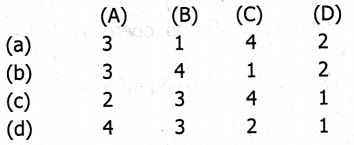
Question 1.
A) Bretton woods conference – 1) 1945
B) World Trade Organisation – 2) 1944
C) International Monetary Fünd – 3)1930
D) Great Economic Depression – 4)1995
Samacheer Kalvi 12th Economics Guide Chapter 8 International Economic Organisations 1
Answer:
a) 2 4 1 3

Question 2.
A) SAARC – 1) Washington D.C
B) ASEAN – 2) Kathmandu
C) BRICS – 3) Jakarta
D) IMF – 4) Shangai
Samacheer Kalvi 12th Economics Guide Chapter 8 International Economic Organisations 2
Samacheer Kalvi 12th Economics Guide Chapter 8 International Economic Organisations 3

Answer:
c) 2 3 4 1

Question 3.
A) Free trade area – 1) European Economic Union
B) Customs union – 2) SAFTA
C) Common market – 3) BENELUX
D) Economic union – 4) European Common Market
Samacheer Kalvi 12th Economics Guide Chapter 8 International Economic Organisations 4
Answer:
b) 2 3 4 1

III. Choose the correct pair :

Question 1.
a) SAARC – December 8, 1988
b) ASEAN – August 8, 1977
c) IBRD – 1944
d) BRIC – 2001
Answer:
d) BRIC – 2001

Question 2.
a) 189th member country of IMF – Republic of Nauru
b) Structural Adjustment facility – Paper Gold
c) First Conference of WTO – 1996, Malaysia
d) TRIPS – 1998
Answer:
a) 189th member country of IMF – Republic of Nauru

Samacheer Kalvi 12th Economics Guide Chapter 8 International Economic Organisations

Question 3.
a) SAARC preferential Trading Agreement – EFTA
b) SAARC Agricultural Information centre – SAIC
c) South Asian Development Fund – SADF
d) European Economic union – EEU
Answer:
d) European Economic union – EEU

IV. Choose the Incorrect Pair:

Question 1.
a) International Monetary Fund – Exchange rate stability
b) Special Drawing Rights – Paper Gold
c) Structural Adjustment Facility – Balance of payment assistance
d) Buffer stock Financing facility – 1970
Answer:
d) Buffer stock Financing facility – 1970

Question 2.
a) International Bank for – World Bank Reconstruction and Development
b) World Bank Group – World Trade Organisation
c) India became a member of MIGA – January 1994
d) WTO – Liberalizing trade restrictions
Answer:
b) World Bank Group – World Trade Organisation

Samacheer Kalvi 12th Economics Guide Chapter 8 International Economic Organisations

Question 3.
a) IGA, ICSID, IDA, IFC – World. Bank Group
b) Brazil, Russia, India, China, South Africa – BRICS
c) Pakistan, Nepal, Afghanistan, Bangladesh, India, Srilanka – ASEAN
d) WTO Agreements – TRIPS, TRIMS
Answer:
c) Pakistan, Nepal, Afghanistan, Bangladesh, India, Srilanka – ASEAN

V. Choose the correct Statement

Question 1.
a) The IMF and World Bank were started in 1944
b) The GATT was transformed into WTO in 1995.
c) The headquarters of the World Trade Organization is in Geneva.
d) the Republic of Nauru joined IMF in 2018.
Answer:
c) The headquarters of the World Trade organization is in Geneva.

Question 2.
a) ‘International Monetary Fund is like an International Reserve Bank’ – Milton Fried man
b) IMF established compensatory Financing Facility in 1963.
c) In December 1988 the IMF set up the Enhanced Structural Adjustment Facility (ESAF)
d) India is the sixth-largest member of the IMF.
Answer:
b) IMF established a compensatory Financing Facility in 1963.

Samacheer Kalvi 12th Economics Guide Chapter 8 International Economic Organisations

Question 3.
a) SDR is the Fiat Money of the IMF.
b) The membership in IMF is not a prerequisite to becoming a member of IBRD
c) India is a member of World Bank’s International center for settlement of Investment Disputes.
d) First investment of IFC in India took place in 1960.
Answer:
a) SDR is the Fiat Money of the IMF.

VI. Choose the Incorrect Statement

Question 1.
a) The IBRD was established to provide long-term financial assistance to member countries.
b) The IBRD has 190 member countries.
c) India become a member of MIGA in January 1994.
d) India is one of the founder members of IBRD, IDA, and IFC.
Answer:
b) The IBRD has 190 member countries.

Question 2.
a) Intellectual property rights include copyright, trademarks, patents, geographical indications, etc.
b) TRIMS are related to conditions or restrictions in respect of foreign investment in the country.
c) Phasing out of Multi Fibre Agreement (MFA) by WTO affected India.
d) It is mandatory for the Dispute Settlement Body to settle any dispute within 18 months.
Answer:
c) Phasing out of Multi Fibre Agreement (MFA) by WTO affected India.

Samacheer Kalvi 12th Economics Guide Chapter 8 International Economic Organisations

Question 3.
a) The SAARC group comprises Bangladesh, Bhutan, India, The Maldives, Nepal, Pakistan, and Sri Lanka.
b) An economic union is composed of a common market with a customs union.
c) Afghanistan joined SAARC on 3rd April 2007.
d) The 20th SAARC summit was held in Dhaka.
Answer:
d) The 20th SAARC Summit was held in Dhaka.

VII. Pick the odd one out:

Question 1.
a) Trade Association
b) Free trade Area
c) Custom union
d) Common market
Answer:
a) Trade Association

Question 2.
a) ASEAN
b) BRICS
c) SAARC
d) SDR
Answer:
d) SDR

Samacheer Kalvi 12th Economics Guide Chapter 8 International Economic Organisations

Question 3.
a) IFC
b) MIGA
c) ASEAN
d) ICSID
Answer:
c) ASEAN

VIII. Analyse the Reason

Question 1.
Assertion (A): The IBRD was established to provide long-term financial assistance to member countries.
Reason (R): World bank helps its member countries with economic reconstruction and development.
Answer:
a) Assertion (A) and Reason (R) both are true, and (R) is the correct explanation of (A).

Question 2.
Assertion (A): TRIPS Agreement provides for granting product patents instead of process patents.
Reason (R): Intellectual property rights include copyright, trademark, patents, geographical indications, etc.
Answer:
b) Assertion (A) and Reason (R) both are true, but (R) is not the correct explanation of (A).
Options:
a) Assertion (A) and Reason (R) both are true, and (R) is the correct explanation of (A).
b) Assertion (A) and Reason (R) both are true, but (R) is not the correct explanation of (A).
c) Assertion (A) and Reason (R) both are false.
d) (A) is true but (R) is false.

IX. Two Mark Questions

Question 1.
Write IMF Functions group?
Answer:
The functions of the IMF are grouped under three heads.

  1. Financial – Assistance to correct short and medium Tenn deficit in BOP;
  2. Regulatory – Code of conduct and
  3. Consultative – Counseling and technical consultancy.

Question 2.
What are the major functions of WTO?
Answer:

  1. Administering WTO trade agreements
  2. Forum for trade negotiations
  3. Handling trade disputes
  4. Monitoring national trade policies
  5. Technical assistance and training for developing countries.

Samacheer Kalvi 12th Economics Guide Chapter 8 International Economic Organisations

Question 3.
Write the World bank activities of Rural areas?
Answer:
The bank now also takes interest in the activities of the development of rural areas such as:

  1. Spread of education among the rural people
  2. Development of roads in rural areas and
  3. Electrification of the villages.

Question 4.
What is a customs union?
Answer:
A customs union is defined as a type of trade bloc which is composed of a free trade area with no tariff among members and with a common external tariff.

Question 5.
Define World Trade Organisation?
Answer:

  1. WTC headquarters located at New York, USA.
  2. It featured the landmark Twin Towers which was established on 4th April 1973.
  3. Later it was destroyed on 11th September 2001 by the craft attack.
  4. It brings together businesses involved in international trade from around the globe.

Question 6.
What are TRIPS?
Answer:
Trade-Related Intellectual Property Rights (TRIPs). Which include copyright, trademarks, patents, geographical indications, industrial designs, and the invention of microbial plants.

Samacheer Kalvi 12th Economics Guide Chapter 8 International Economic Organisations

Question 7.
What are trade blocks?
Answer:
Trade blocks are a set of countries that engage in international trade together and are usually related through a free trade agreement or other associations.

Question 8.
Who are “dialogue partners”?
Answer:
The ASEAN, there are six “dialogue partners” which have been participating in its deliberations. They are China, Japan, India, South Korea, New Zealand, and Australia.

Question 9.
In how many constituents of the World Bank group India become a member?
Answer:
India is a member of four of the five constituents of the World Bank Group.

  1. International Bank for Reconstruction and Development.
  2. International Development Association.
  3. International Finance Corporation.
  4. Multilateral Investments Guarantee Agency

Question 10.
What is SDR?
Answer:

  • SDR is the Fiat Money of the IMF.
  • A potential claim on underlying currency Basket.

Samacheer Kalvi 12th Economics Guide Chapter 8 International Economic Organisations

Question 11.
Why was the SDR created?
Answer:

  • To be “The” World Reserve Currency
  • Create Global Liquidity.

Question 12.
How is the SDR valued?
Answer:
“The value of the SDR was initially defined as equivalent to 0.888671 grams of fine gold – which, at the time was also equivalent to one US dollar.

X. 3 Mark Questions

Question 1.
Brief notes on India and IMF?
Answer:
India and IMF:

  1. Till 1970, India stood fifth in the Fund and it had the power to appoint a permanent Executive Director.
  2. India has been one of the major beneficiaries of the Fund assistance.
  3. It has been getting aid from the various Fund Agencies from time to time and has been regularly repaying its debt.
  4. India’s current quota in the IMF is SDRs (Special Drawing Rights) 5,821.5 million, making it the 13th largest quota holding country at IMF with shareholdings of 2.44%.
  5. Besides receiving loans to meet the deficit in its balance of payments, India has benefited in certain other respects from the membership of the Fund.

Question 2.
What are the achievements of IMF?
Answer:

  • Establishments of monetary reserve fund :
  • The fund has played a major role in achieving the sizeable stock of the national currencies of different countries.
  • Monetary discipline and cooperation:
  • To achieve this objective, it has provided assistance only to those countries which make sincere efforts to solve their problems.
  • Special interest in the problems of UDCs.
  • The fund has provided financial assistance to solve the balance of payment problem of UDCs.

Samacheer Kalvi 12th Economics Guide Chapter 8 International Economic Organisations

Question 3.
Explain the objectives of WTO?
Answer:

  1. To ensure the reduction of tariffs and other barriers.
  2. To eliminate discrimination in trade.
  3. To facilitate a higher standard of living.
  4. To facilitate optimal use of the world’s resources.
  5. To enable the LDCs to secure a fair share in the growth of international trade.
  6. To ensure linkages between trade policies, environmental policies, and sustainable development.

Question 4.
What are the achievements of WTO?
Answer:

  1. The use of restrictive measures for BOP problems has declined markedly.
  2. Services trade has been brought into the multilateral system and many countries, as in goods are opening their markets for trade and investment.
  3. The trade policy review mechanism has created a process of continuous monitoring of trade policy developments.

Question 5.
Explain the functions of WTO?
Answer:
The following are the functions of the WTO:

  • It facilitates the implementation, administration, and operation of the objectives of the Agreement and of the Multilateral Trade Agreements.
  • It provides the forum for negotiations among its members, concerning their multilateral trade relations in matters relating to the agreements.
  • It administers the Understanding of Rules and Procedures governing the Settlement of Disputes.
  • It cooperates with the IMF and the World Bank and its affiliated agencies with a view to achieving greater coherence in global economic policymaking.

Samacheer Kalvi 12th Economics Guide Chapter 8 International Economic Organisations

Question 6.
Explain the achievements of BRICs.

  • The establishment of the Contingent Reserve Arrangement (CRA) has further deepened and consolidated the partnership of its members in the economic-financial area.
  • A New Development Bank was established with headquarters at Shangai, China in 2015.
  • BRIC countries are in a leading position in setting the global agenda and have great influence in global governance.

XI. 5 Mark Questions
Question 1.
Explain the functions of IMF.
Answer:
1. Bringing stability to the exchange rate:

  • The IMF is maintaining exchange rate stability.
  • Emphasizes devaluation criteria.
  • Restricting members to go in for multiple exchange fates.

2. Correcting BOP disequilibrium:
IMF helps in correcting short period disequilibrium in-the balance of payments of its member countries.

3. Determining par values:

  • IMF enforces the system of determination of par value of the currencies of the member countries.
  • IMF ensures smooth working of the international monetary system in favour of some developing countries.

4. Balancing demand and supply of currencies:
The Fund can declare a currency as scarce currency which is in great demand and can increase its supply by borrowing it from the country concerned or by purchasing the same currency in exchange for gold.

5. Reducing trade restrictions:
The Fund also aims at reducing tariffs and other trade barriers imposed by the member countries with the purpose of removing restrictions on remit¬tance of funds or to avoid discriminating practices.

6. Providing credit facilities:
IMF is providing credit facilities which include basic credit facility, extended fund facility for a period of three years, compensatory financing facility, and structural adjustment facility.

Samacheer Kalvi 12th Economics Guide Chapter 8 International Economic Organisations

Samacheer Kalvi 12th Computer Science Guide Chapter 13 Python and CSV Files

Tamilnadu State Board New Syllabus Samacheer Kalvi 12th Computer Science Guide Pdf Chapter 13 Python and CSV Files Text Book Back Questions and Answers, Notes.

Tamilnadu Samacheer Kalvi 12th Computer Science Solutions Chapter 13 Python and CSV Files

12th Computer Science Guide Python and CSV Files Text Book Questions and Answers

I. Choose the best answer (1 Mark)

Question 1.
A CSV file is also known as a…………………… (March 2020)
a) Flat File
b) 3D File
c) String File
d) Random File
Answer:
a) Flat File

Samacheer Kalvi 12th Computer Science Guide Chapter 13 Python and CSV Files

Question 2.
The expansion of CRLF is
a) Control Return and Line Feed
b) Carriage Return and Form Feed
c) Control Router and Line Feed
d) Carriage Return and Line Feed
Answer:
d) Carriage Return and Line Feed

Question 3.
Which of the following module is provided by Python to do several operations on the CSV files?
a) py
b) xls
c) csv
d) os
Answer:
c) csv

Question 4.
Which of the following mode is used when dealing with non-text files like image or exe files?
a) Text mode
b) Binary mode
c) xls mode
d) csv mode
Answer:
b) Binary mode

Samacheer Kalvi 12th Computer Science Guide Chapter 13 Python and CSV Files

Question 5.
The command used to skip a row in a CSV file is
a) next()
b) skip()
c) omit()
d) bounce()
Answer:
a) next()

Question 6.
Which of the following is a string used to terminate lines produced by writer()method of csv module?
a) Line Terminator
b) Enter key
c) Form feed
d) Data Terminator
Answer:
a) Line Terminator

Question 7.
What is the output of the following program?
import csv
d=csv.reader(open(‘c:\PYPRG\chl3\city.csv’))
next (d)
for row in d:
print(row)
if the file called “city.csv” contain the following details
chennai,mylapore
mumbai,andheri
a) chennai,mylapore
b) mumbai,andheri
c) chennai,mumbai
d) chennai,mylapore
Answer:
b) mumbai,andheri

Samacheer Kalvi 12th Computer Science Guide Chapter 13 Python and CSV Files

Question 8.
Which of the following creates an object which maps data to a dictionary?
a) listreader()
b) reader()
c) tuplereader()
d) DicReader ()
Answer:
d) DicReader ()

Question 9.
Making some changes in the data of the existing file or adding more data is called
a) Editing
b) Appending
c) Modification
d) Alteration
Answer:
c) Modification

Question 10.
What will be written inside the file test, csv using the following program
import csv
D = [[‘Exam’],[‘Quarterly’],[‘Halfyearly’]]
csv.register_dialect(‘M’,lineterminator = ‘\n’)
with open(‘c:\pyprg\chl3\line2.csv’, ‘w’) as f:
wr = csv.writer(f,dialect=’M’)
wr.writerows(D)
f.close()
a) Exam Quarterly Halfyearly
b) Exam Quarterly Halfyearly
c) EQH
d) Exam, Quarterly, Halfyearly
Answer:
d) Exam, Quarterly, Halfyearly

Samacheer Kalvi 12th Computer Science Guide Chapter 13 Python and CSV Files

II. Answer the following questions (2 Marks)

Question 1.
What is CSV File?
Answer:
A CSV file is a human-readable text file where each line has a number of fields , separated by commas or some other delimiter. A CSV file is also known as a Flat File. Files in the CSV format can be imported to and exported from programs that store data in tables, such as Microsoft Excel or OpenOfficeCalc.

Question 2.
Mention the two ways to read a CSV file using Python.
Answer:
There are two ways to read a CSV file.

  1. Use the CSV module’s reader function
  2. Use the DictReader class.

Question 3.
Mention the default modes of the File.
Answer:
The default is reading in text mode. In this mode, while reading from the file the data would be in the format of strings.
The default mode of csv file in reading and writing is text mode.

ModeDescription
YOpen a file for reading, (default)
YOpen in text mode, (default)

Question 4.
What is the use of next() function?
Answer:
#using operator module for sorting multiple columns
sortedlist = sorted (data, key=operator.itemgetter(1))

Question 5.
How will you sort more than one column from a csv file? Give an example statement.
Answer:
To sort by more than one column you can use itemgetter with multiple indices.
operator.itemgetter (1,2)
Syntax:
sortedlist = sorted( data, key=operator. itemgetter( Colnumber ),reverse=True)
Example:
data = csv.reader(open(‘c:\\ PYPRG\\sample8.csv’))
next(data) #(to omit the header)
#using operator module for sorting multiple columns
sortedlist = sorted (data, key=operator. itemgetter(1,2))

Samacheer Kalvi 12th Computer Science Guide Chapter 13 Python and CSV Files

III. Answer the following questions (3 Marks)

Question 1.
Write a note on open() function of python. What is the difference between the two methods?
Answer:
Python has a built-in function open() to open a file. This function returns a file object, also called a handle, as it is used to read or modify the file accordingly.
For Example
>>> f = openf’sample.txt”) bopen file in current directory andf is file object
>>> f = open(‘c:\ \pyprg\ \chl3sample5.csv’) #specifyingfull path
You can specify the mode while opening a file. In mode, you can specify whether you want to read ‘r’, write ‘w’ or append ‘a’ to the file, you can also specify “text or binary” in which the file is to be opened.
The default is reading in text mode. In this mode, while reading from the file the data would be in the format of strings.
On the other hand, binary mode returns bytes and this is the mode to be used when dealing with non-text files like image or exe files.
f = open(“test.txt”) # since no mode is specified the default mode it is used
#perform file operations
f.close( )
The above method is not entirely safe. If an exception occurs when you are performing some operation with the file, the code exits without closing the file. The best way to do this is using the “with” statement. This ensures that the file is closed when the block inside with is exited. You need not to explicitly call the close() method. It is done internally.

Question 2.
Write a Python program to modify an existing file.
Answer:
Coding:
import csv ,
row = [‘3: ‘Meena’Bangalore’]
with opent’student.csv; ‘r’) as readFile:
reader = csv.reader(readFile)
lines = list(reader) # list()- to store each
row of data as a list
lines [3] = row
with open (student.csv, ‘w’) as writeFile:
# returns the writer object which converts the user data with delimiter
writer = csv.writer(writeFile)
#writerows()method writes multiple rows to a csv file
writer, writerows(lines)
readFile.close()
writeFile. close()

Original File:

Roll NoName

City

1Harshini,Chennai
2Adhith,Mumbai
3DhuruvBangalore
4egiste,Tirchy
5VenkatMadurai

Modified File after the coding:

Roll NoName

City

1Harshini,Chennai
2Adhith,Mumbai
3MeenaBangalore
4egiste,Tirchy
5VenkatMadurai

Samacheer Kalvi 12th Computer Science Guide Chapter 13 Python and CSV Files

Question 3.
Write a Python program to read a CSV file with default delimiter comma (,).
Answer:
Coding:
#importing csv
import csv
#opening the csv file which is in different location with read mode with opent(‘c.\\pyprg\\samplel-csv’, ‘r’) as F:
#other way to open the file is f= (‘c:\ \ pyprg\ \ samplel.csv’, ‘r’)
reader = csv.reader(F)
# printing each line of the Data row by row
print(row)
F.close()
Output:
[‘SNO’, ‘NAME’, ‘CITY’]
[‘12101’, ‘RAM’, ‘CHENNAI’]
[‘12102′,’LAV ANYA’,’TIRCHY’]
[‘12103’, ‘LAKSHMAN’, ‘MADURAI’]

Question 4.
What is the difference between the write mode and append mode?
Answer:

write modeappend mode
The write mode creates a new file.append mode is used to add the data at the end of the file if the file already exists .
If the file is already existing write mode overwrites it.Otherwise creates a new one.

Question 5.
What is the difference between reader() and DictReader() function?
Answer:

reader()DictReader() function
csv. reader and csv.writer work with list/ tuplecsv.DictReader and csv.DictWriter work with dictionary.
csv. reader and csv.writer do not take additional argument.csv.DictReader and csv.DictWriter take additional argument fieldnames that are used as dictionary keys

IV. Answer the following questions (5 Marks)

Question 1.
Differentiate Excel file and CSV file.
Answer:

Excel\ csv : /                     ‘
Excel is a binary file that holds information about all the worksheets in a file, including both content and formattingCSV format is a plain text format with a series of values separated by commas.
XLS files can only be read by applications that have been specially written to read their format, and can only be written in the same way.CSV can be opened with any text editor in Windows like notepad, MS Excel, Open Office, etc.
Excel is a spreadsheet that saves files into its own proprietary format viz. xls or xlsxCSV is a format for saving tabular information into a delimited text file with extension .csv
Excel consumes-more memory while importing dataImporting CSV files can be much faster, and it also consumes less memory

Samacheer Kalvi 12th Computer Science Guide Chapter 13 Python and CSV Files

Question 2.
Tabulate the different mode with its meaning.
Answer:

ModeDescription
Vopen a file for reading (default)
‘W’Open a file for writing. Creates a new file if it does not exist or truncates the file if it exists.
‘x’Open a file for exclusive creation. If the file already exists, the operation fails.
‘a’Open for appending at the end of the file without truncating it. Creates a new file if it does not exist.
‘t’Open in text mode, default
‘b’Open in binary mode.
‘+’Open a file for updating (reading and Writing)

Question 3.
Write the different methods to read a File in Python.
Answer:
There are two ways to read a CSV file.

  1. Use the csv module’s reader function
  2. Use the DictReader class.

csv module’s reader function:

  • We can read the contents of CSV file with the help of csv.reader() method.
  • The reader function is designed to take each line of the file and make a list of all columns.
  • Using this method one can read data from csv files of different formats like quotes (” “), pipe (|) and comma (,).

Syntax for csv.reader(): .
csv.reader( fileobject,delimiter,fmtparams)
where

  • file object: passes the path and the mode of the file
  • delimiter: an optional parameter containing the standard dilects like , | etc can be omitted. .
  • Fmtparams: optional parameter which help to override the default values of the dialects like skipinitialspace,quoting etc. can be omitted.

Program:
#importing csv
import csv
#opening the csv file which is in different
location with read mode
with opent(‘c.\ \pvprg\ \samplel-csv’, ‘r’) as F:
#other way to open the file is f= (‘c:\ \
pyprg\ \ samplel.csv’, ‘r’)
reader = csv.reader(F)
#printing each line of the Data row by row
print(row)
F.close()
Output:
[‘SNO’, ‘NAME’, ‘CITY’]
[‘12101’, ‘RAM’, ‘CHENNAI’]
[‘12102’, ‘LAVANYA’, ‘TIRCHY’]
[‘12103’, ‘LAKSHMAN’, ‘MADURAI’]

Reading CSV File into A Dictionary:

  • To read a CSV file into a dictionary can be done by using DictReader class of csv module which works similar to the reader() class but creates an object which maps data to a dictionary.
  • The keys are given by the field names as parameters.
  • DictReader works by reading the first line of the CSV and using each comma-separated value in this line as a dictionary key.
  • The columns in each subsequent row then behave like dictionary values and can be accessed with the appropriate key (i.e. fieldname).

Program:
import csv
filename = ‘c:\\pyprg\ \sample8.csv’
inputfile =csv.DictReader( opet(filename’r’))
for row in inputfile:
print(dict(row)) #dict() to print data
Output:
{‘ItemName’: ‘Keyboard ” ‘Quantity’: ’48’}
{‘ItemName ‘: ‘Monitor: ‘Quantity’: ’52’}
{‘ItemName ‘: ‘Mouse ” ‘Quantity’: ’20’}

Samacheer Kalvi 12th Computer Science Guide Chapter 13 Python and CSV Files

Question 4.
Write a Python program to write a CSV File with custom quotes.
Answer:
Coding:
import csv
csvData = [[‘SNO’,’Items’], [‘l’/Pen’],
[‘2′,’Book’], [‘3′,’Pencil’]]
csv.register_dialect (‘myDialect’, delimiter = ‘ | ‘,quotechar = quoting = csv. QUOTE_ALL)
with open(‘c:\\pyprg\\ch13\\ quote. csv’, ‘w’) as csvFile:
writer = csv.writer(csvFile, dialect=’myDialect’)
writer. writerows(csvData)
print (“writing completed”)
csvFile.close()

When you open the “quote.csv” file in notepad, We get following output:

Sl.No“Items”
1“Pen”
2“Book”
3“Pencil”

Question 5.
Write the rules to be followed to format the data in a CSV file.
Answer:
1. Each record (row of data) is to be located on a separate line, delimited by a line break by pressing enter key.
Example:
xxx.yyy↵(↵denotes enter Key to be pressed)

2. The last record in the file mayor may not have an ending line break.
Example:
ppp,qqq↵
yyy,xxx

3. There may be an optional header line appearing as the first line of the file with the same format as normal record lines. The header will contain names corresponding to the fields in the file and should contain the same number of fields as the records in the rest of the file.
Example:
field_name 1,field_name2,field_name3
zzz,yyy,xxx CRLF(Carriage Return and Line Feed)

4. Within the header and each record, there may be one or more fields, separated by commas. Spaces are considered part of a field and should not be ignored. The last field in the record must not be followed by a comma.
Example:
Red, Blue

5. Each field mayor may not be enclosed in double quotes. If fields are not enclosed with double quotes, then double quotes may not appear inside the fields
Example.
“Red”,”Blue”,”Green”↵      #Field data with” ‘
Black,White,Yellow   #Field data without double quotes

6. Fields containing line breaks (CRLF), double quotes, and commas should be enclosed in double-quotes.
Example:
Red, Blue, Green

7. If double-quotes are used to enclose fields, then a double-quote appearing inside a field must be preceded with another double quote.
Example:
“Red,” “Blue”, “Green”

12th Computer Science Guide Python and CSV Files Additional Questions and Answers

I. Choose the best answer (1 Marks)

Question 1.
CSV means ……………………… files
(a) common server values
(b) comma-separated values
(c) correct separator values
(d) constructor separated value
Answer:
(b) comma-separated values

Samacheer Kalvi 12th Computer Science Guide Chapter 13 Python and CSV Files

Question 2.
Abbreviation of CSV
a) Condition systematic values
b) Column separated values
c) Comma solution values
d) Comma-separated values
Answer:
d) Comma-separated values

Question 3.
csv files cannot be opened with ………………………..
(a) notepad
(b) MS Excel
(c) open office
(d) HTML
Answer:
(d) HTML

Question 4.
Which of the following can protect if the data itself contains commas in a CSV file?
a) ”
b) ,,
c) ” ”
d) ‘
Answer:
c) ” ”

Question 5.
In a CSV file, each record is to be located on a separate line, delimited by a line break by pressing
a) Enter key
b) ESV key
c) Tab key
d) Shift key
Answer:
a) Enter key

Samacheer Kalvi 12th Computer Science Guide Chapter 13 Python and CSV Files

Question 6.
Find the wrong statement.
(a) csv files can be opened with any text editor
(b) Excel files can be opened with any text editor
Answer:
(b) Excel files can be opened with any text editor

Question 7.
…………………… built-in function is used to open a file in Python.
a) readfn ()
b) open ()
c) reader ()
d) openfile ()
Answer:
b) open ()

Question 8.
…………… mode can be used when CSV files dealing with non-text files.
a) Write mode
b) Binary mode
c) Octal mode
d) Write mode
Answer:
b) Binary mode

Question 9.
The default file open mode is ……………….
a) rt
b) x
c) a
d) rw
Answer:
a) rt

Samacheer Kalvi 12th Computer Science Guide Chapter 13 Python and CSV Files

Question 10.
Any field containing a newline as part of its data should be given in ……………………..
(a) quotes
(b) double-colon
(c) colon
(d) double quotes
Answer:
(d) double quotes

Question 11.
…………………..function is designed to take each line of the file and make a list of all columns?
a) read ()
b) reader ()
c) row ()
d) list ()
Answer:
b) reader ()

Question 12.
…………………. describes the format of the CSV file that is to be read.
a) line space
b) dialect
c) whitespace
d) delimiter
Answer:
b) dialect

Question 13.
Find the correct statement
(I) The last record in the file may or may not have an ending line break
(II) Header is a must with the same format as record lines.
(a) (I) is true, (II) is False
(b) (I) is False, (II) – True
(c) (I), (II) – both are true
(d) (I), (II) – both are false
Answer:
(a) (I) is true, (II) is False

Samacheer Kalvi 12th Computer Science Guide Chapter 13 Python and CSV Files

Question 14.
……………. is used to add elements in CSV.
a) update ()
b) write ()
c) append ()
d) addition ()
Answer:
c) append ()

Question 15.
In CSV file,………………… function is used to sort more than one column.
a) sorter ()
b) multiplesort ()
c) itemsort ()
d) morecolumns ()
Answer:
a) sorter ()

Question 16.
In open command, file name can be represented in ………………………
(a) ” ”
(b) ”
(c) $
(d) both a & b
Answer:
(d) both a & b

Question 17.
………………… method writes a row of data into the specified CSV file.
a) rows ()
b) writerow ()
c) row_data ()
d) row_write ()
Answer:
b) writerow ()

Question 18.
……………. Action is used to print the data in dictionary form; t without order.
a) diet ()
b) dictionarys ()
c) read_dict ()
d) print_dict ()
Answer:
a) diet ()

Samacheer Kalvi 12th Computer Science Guide Chapter 13 Python and CSV Files

Question 19.
…………………method will free up the resources that were tied with the file.
a) freeup ()
b) open_res ()
c) resource_close ()
d) close ()]
Answer:
d) close ()]

Question 20.
In-text mode, while reading from the file the data would be in the format of ……………………..
(a) int
(b) float
(c) char
(d) strings
Answer:
(d) strings

Question 21.
CSV files are saved with extension
a) .CV
b) .CSV
c) .CVSC
d) .CSE
Ans :
b) .CSV

Question 22.
……………. command arranges a CSV file list value in descending order
a) listname.sort ()
b) listname.ascd ()
c) list_name. sort(reverse))
d) sorting ()
Answer:
c) list_name. sort(reverse))

Samacheer Kalvi 12th Computer Science Guide Chapter 13 Python and CSV Files

Question 23.
A ……………….. is a string used to terminate lines produced by the writer.
a) Linefeed
b) Delimiters
c) Line Terminator
d) SingleQuotes
Ans:
c) Line Terminator

Question 24.
Which format is not allowed to read data from cav files?
(a) quotes
(b) pipe
(c) comma
(d) Asterisk
Answer:
(d) Asterisk

II. Answer the following questions (2 and 3 Marks)

Question 1.
Compare text mode and binary mode.
Answer:

Text modeBinary mode
The default is reading in text mode.Binary mode returns bytes.
In this mode, while reading from the file the data would be in the format of strings.This is the mode to be used when dealing with non-text files like image or exe files

Question 2.
What is the syntax for csv.reader( )?
Answer:
The syntax for csv.reader( ) is
where csv.reader(fileobject,delimiter,fmtparams)
file object – passes the path and the mode of the file
delimiter – an optional parameter containing the standard dialects like etc can be omitted.
fmtparams – optional parameter which helps to override the default values of the dialects like skipinitialspace, quoting etc. Can be omitted.

Question 3.
What is the use of the CSV file?
Answer:

  • CSV is a simple file format used to store tabular data, such as a spreadsheet or database.
  • Since they’re plain text, they’re easier to import into a spreadsheet or another storage database, regardless of the specific software

Samacheer Kalvi 12th Computer Science Guide Chapter 13 Python and CSV Files

Question 4.
Define: Garbage collector
Answer:
Python has a garbage collector to clean up unreferenced objects but, the user must not rely on it to close the file.

Question 5.
How to read from CSV file that contains space at the beginning using register dialect() method?
Answer:

  • The whitespaces can be removed, by registering new dialects using csregister, dialect () class of csv module.
  • A dialect describes the format of the csv file that is to be r 4, In dialects the parameter “skipinitialspace” is used for removing whitespaces after the delimiter.

Question 6.
Define dialect.
Answer:

  • A dialect is a class of csv module which helps to define parameters for reading and writing CSV.
  • It allows to create, store, and re-use of various formatting parameters for data.

Question 7.
Compare: sort() and sorted ().
Answer:

  • The sorted () method sorts the elements of a given item in a specific order – ascending or descending.
  • sort () method performs the same way as sorted ().
  • Only difference, sort ( ) method doesn’t return any value and changes the original list
    itself. ‘

Question 8.
Explain How to read CSV file into a dictionary?
Answer:

  • To read a CSV file into a dictionary can be done by using DictReader class of csv module which works similar to the reader ( )class but creates an object which maps data to a dictionary.
  • The keys are given by the fieldnames as parameter.

Samacheer Kalvi 12th Computer Science Guide Chapter 13 Python and CSV Files

Question 9.
What are the different formats to create csv files?
Answer:

  1. CSV file – data with default delimiter comma (,)
  2. CSV file – data with Space at the beginning
  3. CSV file – data with quotes
  4. CSV file – data with custom Delimiters

Question 10.
Give the differences between writerow() and writerows() method.
Answer:

writerow()writerows()
The writerow() method writes one row at a time.writerows() method writes all the data at once to the new CSV file.
The writerow() method writes one-dimensional data.The writerows() method writes multi-dimensional data.

Question 11.
Define: Modification
Answer:
Making some changes in the data of the existing file or adding more data is called a modification.

Question 12.
Write a note on Line Terminator.
Answer:

  • A-Line Terminator is a string used to terminate lines produced by the writer.
  • The default value is \r or \n. We can write a csv file with a line terminator in Python by registering new dialects using csv. register_dialect () class of csv module.

Samacheer Kalvi 12th Computer Science Guide Chapter 13 Python and CSV Files

Question 13.
Explain How to write Dictionary into CSV file with custom dialects?
Answer:
Coding:
import csv
csv.registecdialect(‘myDialect’, delimiter = ‘I; quoting=csv.QUOTE_ALL)
with open(‘c:\\pyprg\\chl3\\ vgrade.
csv, ‘w’) as csvfile
fieldnames = [‘Name’, ‘Grade’]
writer = csv. Diet Writer (csvfile, fieldnames = fieldnames, dialect =”myDialect”)
writer.writeheader()
writer.writerows([{‘Grade’: ‘B’, ‘Name’: Anu’},
{‘Gra dee:’ ‘nA/ ‘Name’: ‘Beena,’}
{Grade’: ‘C: ‘Name’: ‘Tarun’}])
print(“writing completed”)

“Name”“Grade”
“Anu”“B”
“Beena”“A”
“Tarun”“C”

Question 14.
How will you create CSV in text editor?
Answer:

  • To create a CSV file in Notepad, First open a new file using
    File → New or Ctrl +N
  • Then enter the data separating each value with a comma and each row with a new line.
  • Example: consider the following details
    Topic1, Topic2, Topic3
    one, two, three
    Example1, Example2, Example3
  • Save this content in a file with the extension.csv.

Question 15.
Explain how to create a new normal CSV file to store data
Answer:

  • The csv.writer() method returns a writer object which converts the user’s data into delimited strings on the given file-like object.
  • The writerow() method writes a row of data into the specified file.
  • The syntax for csv.writer() is csv. writer(fileobject,delimiter,fmtparams)
    where,
Fileobject:passes the path and the mode of the file.
Delimiter:an optional parameter containing the standard dilects like , | etc can be omitted.
Fmtparams:optional parameter which help to override the default values of the dialects like skipinitialspace, quoting etc. can be omitted.

Coding:
import csv
csvData = [[‘Student’, ‘Age’], [‘Dhanush’, ’17’], [‘Kalyani’, ’18’], [‘Ram’, ’15’]]
with open(‘c:\ \ pyprg\ \chl3\ \ Pupil.csv’, ‘w’) as CF:
writer = csv.writer(CF)
# CF is the file object
writer.writerows(csvData)
# csvData is the List name
CF.close()

Samacheer Kalvi 12th Computer Science Guide Chapter 13 Python and CSV Files

Question 16.
Explain how to write CSV Files With Quotes
Answer:
We can write the csv file with quotes, by registering new dialects using
csv.register_dialect() class of csv module.

Coding:
import csv
info = [[‘SNO’, ‘Person’, ‘DOB’],
[‘1′,’Madhu’, ’18/12/2001′],
[‘2’, ‘Sowmya’,’19/2/1998′],
[‘3’, ‘Sangeetha’,’20/3/1999′],
[‘4’, ‘Eshwar’, ’21/4/2000′],
[‘5’, ‘Anand’, ’22/5/2001′]]
csv.register_
dialect(‘myDialect’,quoting=csv.QUOTE_ALL)
with open(‘c:\ \ pyprg\ \ chl3\ \ person, csv’, ‘w’) as f:
writer = csv.writer(f, dialect=’myDialect,)
for row in info:
writer.writerow(row)
f.close()

When you open “person.csv” file, we get following output:
” SNO”,” Person” /’DOB”
“l”,”Madhu”,”18/12/2001″
“2”,”So wmya”,”19/2/1998″
” 3″,” Sangeetha” ,”20/ 3/1999″
“4”/’Eshwar”/’21/4/2000″
“5”/’Anand”,”22/5/2001″

III. Answer the following questions (5 Marks)

Question 1.
Explain how to read a specific column in a CSV file.
Answer:
Coding for printing the selected column:
import csv
#opening the csv file which is in different location with read mode f=open(“c:\\pyprg\\13ample5.csv”/r/) #reading the File with the help of csv. reader()
readFile=csv.reader(f)
#printing the selected column
for col in readFile:
print col[0],col[3]
f.close ()

Sample5.csv File in Excel

ABCD
item NameCost-RsQuantityProfit
Keyboard480121152
Monitor52001010400
Mouse200502000

OUTPUT

item NameProfit
Keyboard1152
Monitor10400
Mouse2000

Samacheer Kalvi 12th Computer Science Guide Chapter 13 Python and CSV Files

Question 2.
Explain how to read the CSV file and store it in a list.
Answer:
Coding for reading the CSV file and store it in a list:
import csv
# other way of declaring the filename
inFile= ‘c:\\pyprg\\sample.csv’
F=open (inFile/ r’)
reader = csv.reader(F)
# declaring array
array Value = [ ]
# displaying the content of the list for row
in reader:
arr ay Value. append (row)
print(row)
F.close()
OUTPUT:
[‘Topic1’, ‘Topic2’, ‘Topic3’]
[‘ one’, ‘two’, ‘three’]
[‘Example!.’, ‘Example2’, ‘Example3’]

Question 3.
Explain how to read the CSV file and sort the data in a particular column.
Answer:
Coding for reading the CSV file and sort the data in a particular column:
# sort a selected column given by user
leaving the header column
import csv
# other way of declaring the filename
inFile= ‘c:\\pyprg\\sample6.csv’
# opening the csv file which is in the same location of this
python file
F=open(inFile:r’)
# reading the File with the help of csv. readerO
reader = csv.reader(F)
# skipping the first row(heading)
next(reader)
# declaring a list
array Value = [ ]
a = int(input (“Enter the column number 1 to 3:-“))
# sorting a particular column-cost
for row in reader:
arrayValue.append(row[ a])
array Value, sort ()
for row in arrayValue:
print (row)
Eclose ()
OUTPUT:
Enter the column number 1 to 3:- 2
50
12
10

Samacheer Kalvi 12th Computer Science Guide Chapter 13 Python and CSV Files

Question 4.
Explain how to read CSV file with a line Terminator.
Answer:
Coding:
import csv
Data = [[‘Fruit’, ‘Quantity’], [Apple, ‘5’],
[Banana, ‘7’]’ [‘Mango: ‘8’]]
csv.register_dialect(‘myfrialect; delimiter = ‘ |’, lineterminator = ‘\n’)
with open(‘ c: \ \ py pr g\ \ ch3\ \ line .csv: ‘w’) as f:
writer = csv.writer(f, dialect=’myDialect’)
writer.writerows(Data)
f.close ()
Output:

FruitQuantity
Apple5
Banana7
Mango8

Samacheer Kalvi 12th Computer Science Guide Chapter 13 Python and CSV Files

Question 5.
Write a program to set data at runtime and writing it in a CSV file.
Answer:
Coding:
import csv
with open (‘c\\pyprg\\ch13\\
vdynamicfile.csv’, ‘w’) as f:
w = csv.writer(f)
ans= ‘y’
while (ans==’y’):
name=input (” Name?:”)
date=input(“Date of birth:”)
Place=input (“Place:”)
W.writerow([name, date, place])
ans=input(“Do you want to enter more y/n?:”)
F=open(‘c:\ \ pyprg\ \ chl3\ \ dynamicfile. csv”,r’)
reader=csv.reader (F)
for row in reader:
print (row)
F.close()
OUTPUT:
Name?: Nivethitha
Date of birth: 12/12/2001
Place: Chennai
Do you want to enter more y/n?: y
Name?: Leena
Date of birth: 15/10/2001
Place: Nagercoil
Do you want to enter more y/n?: y
Name?: Padma
Date of birth: 18/08/2001
Place: Kumbakonam
Do you want to enter more y/n?: n
[‘Nivethitha’, ’12/12/2001′, ‘Chennai’]
[]
[‘Leena’, ’15/10/2001′, ‘Nagercoil’]
[]
[‘Padma’, ’18/08/2001′, ‘Kumbakonam’]

Samacheer Kalvi 12th Economics Guide Chapter 7 International Economics

Tamilnadu State Board New Syllabus  Samacheer Kalvi 12th Economics Guide Pdf Chapter 7 International Economics Text Book Back Questions and Answers, Notes.

Tamilnadu Samacheer Kalvi 12th Economics Solutions Chapter 7 International Economics

12th Economics Guide International Economics Text Book Back Questions and Answers

PART- A

Multiple Choice questions

Question 1.
Trade between two countries is known as ………………… trade.
a) External
b) Internal
c) Inter-regional
d) Home
Answer:
a) External

Question 2.
Which of the following factors influence trade?
a) The stage of development of a product.
b) The relative price of factors of productions.
c) Government
d) All of the above
Answer:
d) All of the above

Samacheer Kalvi 12th Economics Guide Chapter 7 International Economics

Question 3.
International trade differs from domestic trade because of
a) Trade restrictions
b) Immobility of factors
c) Different government polices
d) All the Above
Answer:
d) All the Above

Question 4.
In general, a primary reason why nations conduct international trade is because
a) Some nations prefer to produce one thing while others produce another
b) Resources are not equally distributed among all trading nations
c) Trade enhances opportunities to accumulate profits
d) Interest rates are not identical in all trading nations
Answer:
b) Resources are not equally distributed among all trading nations

Samacheer Kalvi 12th Economics Guide Chapter 7 International Economics

Question 5.
Which of the following is a modern theory of international trade?
a) Absolute cost
b) Comparative cost
c) Factor endowment theory
d) none of these
Answer:
c) Factor endowment theory

Question 6.
Exchange rates are determined in
a) Money Market
b) foreign exchange market
c) Stock Markét
d) Capital Market
Answer:
b) foreign exchange market

Samacheer Kalvi 12th Economics Guide Chapter 7 International Economics

Question 7.
Exchange rate for currencies is determined by supply and demand under the system of
a) Fixed exchange rate
b) Flexible exchange rate .
c) Constant
d) Government regulated
Answer:
b) Flexible exchange rate .

Question 8.
‘Net export equals ………………..
a) Export x Import
b) Export + Import
c) Export – Import
d) Exports of services only
Answer:
c) Export – Import

Samacheer Kalvi 12th Economics Guide Chapter 7 International Economics

Question 9.
Who among the following enunciated the concept of single factoral terms of trade? .
a) Jacob Viner
b) G.S.Donens
c) Taussig
d) J.S.Mill
Answer:
a) Jacob Viner

Question 10.
Terms of Trade of a country show …………..
a) Ratio of goods exported and imported
b) Ratio of import duties
c) Ratio of prices of exports and imports
d) Both (a) and (c)
Answer:
c) Ratio of prices of exports and imports

Samacheer Kalvi 12th Economics Guide Chapter 7 International Economics

Question 11.
Favirnrable trade means value of exports are ………………… than that of imports.
a) More
b) Less
c) More or Less
d) Not more than
Answer:
a) More

Question 12.
If there is an imbalance in the trade balance (more imports than exports), it can be reduced by ……………….
a) Decreasing customs duties
b) Increasing export duties
c) Stimulating exports
d) Stimulating imports
Answer:
c) Stimulating exports

Samacheer Kalvi 12th Economics Guide Chapter 7 International Economics

Question 13.
BOP includes . :
a) Visible items only
b) invisible items only
c) both visible and invisible items
d) merchandise trade only
Answer:
c) both visible and invisible items

Question 14.
Components of balance of payments of a country includes
a) Current account
b) Official account
c) Capital account
d) All of above
Answer:
d) All of above

Samacheer Kalvi 12th Economics Guide Chapter 7 International Economics

Question 15.
In the case of BOT,
a) Transactions of goods are recorded.
b) Transactions of both goods and services’ are recorded
c) Both capital and financiál accounts are included
d) All of these
Answer:
a) Transactions of goods are recorded.

Question 16.
Tourism and travel are classified in which of balance of payments accounts?
a) merchandise trade account
b) services account
c) unilateral transfers account
d) capital account
Answer:
b) services account

Samacheer Kalvi 12th Economics Guide Chapter 7 International Economics

Question 17.
Cyclical disequlibrium in BOP occurs because of
a) Different paths of business cycle.
b) The income elasticity of demand or price elasticity of demand is different.
c) long – run changes in an economy
d) Both (a) and (b).
Answer:
d) Both (a) and (b).

Question 18.
Which of the following is not an example of foreign direct investment?
a) The construction of a new auto assembly plant overseas
b) The acquisition of an existing steel mill overseas
c) The purchase of bonds or stock issued by a textile company overseas
d)The creation of a wholly owned business firm overseas
Answer:
c) The purchase of bonds or stock issued by a textile company overseas

Samacheer Kalvi 12th Economics Guide Chapter 7 International Economics

Question 19.
Foreign direct investments not permitted in India
a) Banking
b) Automatic energy
c) Pharmaceutical
d) Insurance
Answer:
b) Automatic energy

Question 20.
Benefits of FDI include, theoretically
a) Boost in Economic Growth
b) Increase in the import and export of goods and services
c) Increased employment and skill levels
d) All of these
Answer:
d) All of these

Samacheer Kalvi 12th Economics Guide Chapter 7 International Economics

PART – B

Answer the following questions.
Each question carries 2 marks.

Question 21.
What is International Economics?
Answer:

  1. International Economics is that branch of economics which is concerned with the exchange of goods and services between two or more countries. Hence the subject matter is mainly related to foreign trade.
  2. International Economics is a specialized field of economics which deals with the economic interdependence among countries and studies the effects of such interdependence and the factors that affect it.

Question 22.
Define international trade.
Answer:
It refers to the trade or exchange of goods and services between two or more countries.

Question 23.
State any two merits of trade.
Answer:

  1. Trade is one of the powerful forces of economic integration.
  2. The term ‘trade’ means the exchange of goods, wares or merchandise among people.

Samacheer Kalvi 12th Economics Guide Chapter 7 International Economics

Question 24.
What is the main difference between Adam Smith and Ricardo with regard to the emergence of foreign trade?
Answer:
According to Adam Smith, the basis of international trade was absolute cost advantage whereas Ricardo demonstrates the comparative cost Advantage.

Question 25.
Define terms of Trade.
Answer:
Terms of Trade:

  1. The gains from international trade depend upon the terms of trade which refers to the ratio of export prices to import prices.
  2. It is the rate at which the goods of one country are exchanged for goods of another country’.
  3. It is expressed as the relation between export prices and import prices.
  4. Terms of trade improve when average price of exports is higher than the average price of imports.

Question 26.
What do you mean by balance of payments?
Answer:
BOP is a systematic record of a country’s economic and financial transactions with the rest of the world over a period of time.

Samacheer Kalvi 12th Economics Guide Chapter 7 International Economics

Question 27.
What is meant by Exchange Rate?
Answer:
Meaning of Foreign Exchange (FOREX):

1. FOREX refers to foreign currencies. The mechanism through which payments are effected between two countries having different currency systems is called the FOREX system. It covers methods of payment, rules and regulations of payment and the institutions facilitating such payments.

2. “FOREX is the system or process of converting one national currency into another, and of transferring money from one country to another”.

PART -C

Answer the following questions.
Each question carries 3 marks.

Question 28.
Describe the subject matter of International Economics.
Answer:

  1. Pure Theory of Trade:
    This component includes the causes for foreign trade, and the determination of the terms of trade and exchange rates.
  2. Policy Issues:
    Under this part policy issues regarding international trade are covered.
  3. International Cartels and Trade Blocs:
    This part deals with the economic integration in the form of international cartels, trade blocs and also the operation of MNCs.
  4. International Financial and Trade Regulatory Institutions:
    The financial institutions which influence international economic transactions and relations shall also be the part of international economics.

Samacheer Kalvi 12th Economics Guide Chapter 7 International Economics

Question 29.
Compare the Classical Theory of international trade with the Modern Theory of International trade.
Answer:

Classical Theory of International Trade

Modern Theory of Internationa] Trade

1. This theory explains the phenomenon of international trade on the basis of labour theory of value.This theory explains the phenomenon of international trade on the basis of general theory of value.
2. It Presents a one factor model.It presents a multi factor model.
3. It attributes the difference in the comparative costs to differences in the productive efficiency of workers in the two countries.It attributes the differences in comparative costs to the differences in factor endowment in the two countries.

Question 30.
Explain the Net Barter Terms of Trade and Gross Barter Terms of Trade.
Answer:
Net Barter Terms of Trade and Gross Barter Terms of Trade was developed by Taussig in 1927.
Net Barter Terms of Trade: .
It is the ratio between the prices of exports and of imports is called the ” net bar-ter terms of trade”.
It is expressed as
Tn = (Px/Pm) x 100
Tn- Net Barter Terms of Trade
Px – Index number of export Prices
Pm – Index number of import prices .
Gross barter terms of trade:
It is an index of relationship between total physical quantity of imports and the total physical quantity of exports.
Tg = (Qm/ Qx) x 100
Qm – Index of import quantities
Qx – Index of export quantities

Samacheer Kalvi 12th Economics Guide Chapter 7 International Economics

Question 31.
Distinguish between Balance of Trade and Balance of Payments.
Answer:
Balance of Trade and Balance of payments are two different concepts in the sub-ject of International trade.

Balance of Trade

Balance of Payments

 1.Balance of Trade refers to the total value of a country’s exports of commodities and total value of imports of commodities. 1. Balance of payments is a systematic record of a country’s economic and financial transactions with the rest of the world over a period of time.
2. There are two types of BOT, they are favourable balance of Trade and unfavourable balance of Trade.2. There are two types of BOP’s they are favourable BOP and unfavorable BOP.

Question 32.
What are import quotas?
Answer:
Import Control: Imports may be controlled by

  1. Imposing or enhancing import duties
  2. Restricting imports through import quotas
  3. Licensing and even prohibiting altogether the import of certain non-essential items. But this would encourage smuggling.

Question 33.
Write a brief note on the flexible exchange rate.
Answer:
Under the flexible exchange rate also known as the floating exchange rate system exchange rates are freely determined in an open market by market forces of demand and supply.

Samacheer Kalvi 12th Economics Guide Chapter 7 International Economics

Question 34.
State the objectives of Foreign Direct Investment.
Answer:
FDI has the following objectives.

  1. Sales Expansion
  2. Acquisition of resources
  3. Diversification
  4. Minimization of competitive risk

PART – D

Answer the following questions.
Each question carries 5 marks.

Question 35.
Discuss the differences between Internal Trade and International Trade.
Answer:

Internal Trade

International Trade

1. Trade takes place between different individuals and firms within the same nation.Trade takes place between different individuals and firms in different countries.
2. Labour and capital move freely from one region to another.2. Labour and capital do not move easily from one nation to another.
3.There will be free flow of goods and services since there are no restrictions.3. Goods and services do not easily move from one country to another since there are a number of restrictions like tariff and quota.
4.There is only one common currency.4. There are different currencies.
5. The physical and geographical conditions of a country are more or less similar.5. There are differences in physical and geographical conditions of the two countries.
6.Trade and financial regulations are more or less the same.6. Trade and financial regulations such as interest rate, trade laws differ between countries.

Question 36.
Explain briefly the Comparative Cost Theory.
Answer:

  • David Ricardo formulated a systematic theory called’ Comparative cost Theory.
    Later it was refined by J.S.Mill, Marshall, Taussig and others.
  • Ricardo demonstrates that the basis of trade is the comparative cost difference.
  • In other words, trade can take place even if the absolute cost difference is absent but there is comparative cost difference.

Assumptions:

  •  There are only two nations and two commodities.
  • Labour is the only element of cost of production.
  • All labourers are of equal efficiency.
  • Labour is perfectly mobile within the country but perfectly immobile between countries.
  • Production is subject to the law of constant returns.
  • Foreign trade is free from all barriers.
  • No change in technology.
  • No transport cost.
  • Perfect Competition.
  • Full employment.
  • No government intervention.
    Samacheer Kalvi 12th Economics Guide Chapter 7 International Economics 1

Country

ClothWheat

Domestic Exchange Ratios

America1001201 Wheat = 1.2 cloth
India90*801 Wheat = 0.88 cloth

Illustration:

  • Ricardo’s theory of comparative cost can be explained with a hypothetical example of production costs of cloth and wheat in America and India.
  • However, India should concentrate on the production of wheat in which she enjoys a comparative cost advantage. \((80 / 120 \leq 90 / 100)\)
  • For America the comparative Cost disadvantage is lesser in cloth production. Hence America will specialize in the production of cloth and export it to India is exchange for wheat.
  • With trade, India can get I unit of cloth and I unit of wheat by using its 160 labour units. Otherwise, India will have to use 170 units of labour, America also gains from this trade.

With trade, America can get 1 unit of cloth and one unit of wheat by using its 200 units of labour. Otherwise, America will have to use 220 units of labour for getting 1 unit of cloth and 1 unit of wheat.

Criticism:

  1. Labour cost is a small portion of the total cost. Hence, theory based on labor cost is unrealistic.
  2. Labourers in different countries are not equal in efficiency.

Samacheer Kalvi 12th Economics Guide Chapter 7 International Economics

Question 37.
Discuss the Modern Theory of International Trade.
Answer:
Introduction:
The Modern theory of international trade was developed by Swedish economist Eli Heckscher and Bertil Ohlin in 1919.
The Theory:
This model was based on the Ricardian theory of international trade. This theory says that the basis for international trade is the difference in factor endowments. It is otherwise called as ‘Factor Endowment’
This Theory attributes international differences in comparative costs to

  1. The difference in the endowments of factors of production between countries, and
  2. Differences in the factor proportions required in production.

Assumptions:

  •  There are two countries, two commodities and two factors.
  • Countries differ in factor endowments.
  • Commodities are categorized in terms of factor density.
  • Countries use same production technology.
  • Countries have identical demand conditions.
  • There is perfect competition.

Explanation:
According to Heckscher – Ohlin, a capital-abundant country will export capital-intensive goods, while the labour-abundant country will export the labor-intensive goods’.

Illustration:

Particulars

India

America

Supply of Labour5024
Supply of Capital4030
Capital – Labour Ratio40/50 = 0.830/24 = 1.25

In the above example, even though India has more capital in absolute terms, America is more richly endowed with capital because the ratio of capital in India is 0.8 which is less than that in America where it is 1.25. The following diagram illustrate the pattern of World Trade.
Samacheer Kalvi 12th Economics Guide Chapter 7 International Economics 2
Limitations:

  • Factor endowment of a country may change over time.
  • The efficiency of the same factor may differ in the two countries.

Question 38.
Explain the types of Terms of Trade given by Viner.
Answer:
Terms of Trade related to the Interchange between Productive Resources:

1. The Single Factorial Terms of Trade:
Viner has devised another concept called “the single factor terms of trade” as an improvement upon the commodity terms of trade. It represents the ratio of the export price index to the import-price index adjusted for changes in the productivity of a country’s factors in the production of exports. Symbolically, it can be stated as
Tf = (Px / Pm ) Fx
Where Tf stands for single factorial terms of trade index. Fx stands for productivity in exports (which is measured as the index of cost in terms of quantity of factors of production used per unit of export).

2. Double Factorial Terms of Trade:
Viner constructed another index called “Double factorial terms of Trade”. It is expressed as
Tff = (Px / Pm )(Fx / Fm)
which takes into account the productivity in the country’s exports, as well as the productivity of foreign factors.
Here, Fm represents the import index (which is measured as the index of cost in terms of quantity of factors of production employed per unit of imports).

Samacheer Kalvi 12th Economics Guide Chapter 7 International Economics

Question 39.
Bring out the components of the balance of payments account.
Answer:
The components of the BOP account of a country are:

  • The current account
  • The capital account
  • The official Reserve assets Account

The Current Account:
It includes all international trade transactions of goods and services, international service transactions, and international unilateral transfers.

The Capital Account:
Financial transactions consisting of direct investment and purchase of interest-bearing financial instruments, non-interest bearing demand deposits and gold fall under the capital account.

The official Reserve Assets Account:
Official reserve transactions consist of movements of international reserves by governments and official agencies to accommodate imbalances arising from the current and capital accounts.
The official reserve assets of a country include its gold stock, holdings of its convertible foreign currencies and Special Drawing Rights and its net position in the International Monetary Fund.

Question 40.
Discuss the various types of disequilibrium in the balance of payments.
Answer:
Types BOP Disequilibrium:
There are three main types of BOP Disequilibrium, which are discussed below.

  1. Cyclical Disequilibrium,
  2. Secular Disequilibrium,
  3. Structural Disequilibrium.

1. Cyclical Disequilibrium:
Cyclical disequilibrium occurs because of two reasons. First, two countries may be passing through different phases of business cycle. Secondly, the elasticities of demand may differ between countries.

2. Secular Disequilibrium:
The secular or long-run disequilibrium in BOP occurs because of long-run and deep-seated changes in an economy as it advances from one stage of growth to another. In the initial stages of development, domestic investment exceeds domestic savings and imports exceed exports, as it happens in India since 1951.

3. Structural Disequilibrium:
Structural changes in the economy may also cause balance of payments disequilibrium. Such structural changes include the development of alternative sources of supply, the development of better substitutes, exhaustion of productive resources or changes in transport routes and costs.

Question 41.
How the Rate of Exchange is determined? Illustrate.
Answer:
The equilibrium rate of exchange is determined in the foreign exchange market in accordance with the general theory of value ie, by the interaction of the forces of demand and supply. Thus, the rate of exchange is determined at the point where demand for forex is equal to the supply of forex.
Samacheer Kalvi 12th Economics Guide Chapter 7 International Economics 3
In the above diagram, Y-axis represents the exchange rate, that is the value of the rupee in terms of dollars. The X-axis represents demand and supply for forex. E is the point of equilibrium where DD intersects SS. The exchange rate is P2.

Question 42.
Explain the relationship between Foreign Direct Investment and economic development.
Answer:

  1. FDI is an important factor in the global economy.
  2. Foreign trade and FDI are closely related. In developing countries like India
  3. FDI in the natural resource sector, including plantations, increases trade volume.
  4. Foreign production by FDI is useful to substitute foreign trade.
  5. FDI is also influenced by the income generated from the trade and regional integration schemes.
  6. FDI is helpful to accelerate the economic growth by facilitating essential imports needed for carrying out development programmes like capital goods, technical know-how, raw materials, and other inputs, and even scarce consumer goods.
  7. FDI may be required to fill the trade gap.
  8. FDI is encouraged by the factors such as foreign exchange shortage, desire to create employment, and acceleration of the pace of economic development.
  9. Many developing countries strongly prefer foreign investment to imports.
  10. However, the real impact of FDI on different sections of an economy.

12th Economics Guide International Economics Additional Important Questions and Answers

One mark

Question 1.
Foreign trade means ………………………..
(a) Trade between nations of the world
(b) Trade among different states
(c) Trade among two states
(d) Trade with one nation
Answer:
(a) Trade between nations of the world

Question 2.
Inter-regional trade is otherwise called as …………………………
a) Domestic trade
b) International trade
c) Internal trade
d) Trade
Answer :
b) International trade

Samacheer Kalvi 12th Economics Guide Chapter 7 International Economics

Question 3.
‘Principles of Political Economy and Taxation’was published by ……………………
a)J.S.Mill
b) Marshall
c) Taussig
d) E)avid Ricardo
Answer:
d) David Ricardo

Question 4.
The exports of India are broadly classified into ……………………….. categories.
(a) Two
(b) Three
(c) Four
(d) Five
Answer:
(c) Four

Question 5.
Net Barter Terms of Trade was developed by …………………..
a) Torrance
b) Taussig
c) Marshall
d) J. S.tMill
Answer:
b) Taussig

Question 6.
Favourable Balance of payment is expressed as …………..
a) R/P = 1
b) R/P < 1
c) R/P > 1
d)R/P# l
Answer:
c) R/P > 1

Samacheer Kalvi 12th Economics Guide Chapter 7 International Economics

Question 7.
Flexible Exchange Rate is also called as ……………
a) Nominal Exchange Rate
b) Pegged Exchange Rate
c) Floating Exchange Rate
d) Fixed Exchange Rate
Answer:
c) Floating Exchange Rate

Question 8.
The New Export-Import policy was implemented in ………………………..
(a) 1990 – 1995
(b) 1991 – 1996
(c) 1992 – 1997
(d) 1993 – 1998
Answer:
(c) 1992 – 1997

Samacheer Kalvi 12th Economics Guide Chapter 7 International Economics

Question 9.
Inflation and exchange rates are ……………….. related
a) Positive
b) directly
c) inversely
d) negatively.
Answer:
c) inversely

Question 10.
FPI is part of capital account of ………………
a) BOT
b) BOP
c) FDI
d) FIT
Answer:
b) BOP

Samacheer Kalvi 12th Economics Guide Chapter 7 International Economics

Question 11.
……………………….. items means the imports and exports of services and other foreign transfer transactions.
(a) Invisible
(b) Visible
(c) Exports
(d) Imports
Answer:
(a) Invisible

Question 12.
Single Factorial Terms of Trade was devised by …………………
a) Marshall
b) David Ricardo
c) Jacob viner
d) Taussig
Answer:
c) Jacob Viner

II. Match the following

Question 1.
a) Internal trade – 1) Interregional trade
b) International trade – 2) David Ricardo
c) Absolute Cost Advantage – 3) Intraregional trade
d) Comparative cost Advantage – 4) Adam smith
Samacheer Kalvi 12th Economics Guide Chapter 7 International Economics 4
Answer:
c) 3 1 4 2

Question 2.
a) Net Barter Terms of Trade – 1) Tf = (Px / Pm) Fx
b) Gross Barter Terms of Trade – 2) Tf = (Px / Pm) Qx
c) Income Terms of Trade – 3) Tg = (Qm / Qx) x 100
d) Single factoral terms of Trade – 4) Tn = (Px / Pm) x 100

Samacheer Kalvi 12th Economics Guide Chapter 7 International Economics 5
Samacheer Kalvi 12th Economics Guide Chapter 7 International Economics 6
Answer:
d) 4 3 2 1

Question 3.
a) Fixed Exchange Rate – 1) NEER
b) Flexible Exchange Rate – 2) REER
c) Nominal Effective Exchange Rate – 3) Pegged exchange rate
d) Real Effective Exchange Rate – 4) Floating exchange rate
Samacheer Kalvi 12th Economics Guide Chapter 7 International Economics 7
Answer:
a) 3 4 12

III. Choose the correct pair

Question 1.
a) Inflation, Exchange Rate – Directly related
b) Interest rate, Exchange Rate – Inversely related
c) Public Debt – reduces inflation
d) Inflation – The exchange rate will be lower
Answer:
d) Inflation – The exchange rate will be lower

Question 2.
a) Foreign Exchange – FOREX
b) Foreign Direct Investment – FII
c) Foreign Portfolio Investment – FDI
d) Foreign Institutional Investment – FPI
Answer:
a) Foreign Exchange – FOREX

Samacheer Kalvi 12th Economics Guide Chapter 7 International Economics

Question 3.
a) Economic Reforms – 1992
b) Unfavourable BOP – R / P > 1
c) Favourable BOP – R/P<1
d) Devaluation of Indian currency – 29th September 1949
Answer:
d) Devaluation of Indian currency – 29th September 1949

IV. Choose the Incorrect pair

Question 1.
a) Demonstration Effect – Propensity to import
b) Cyclical Disequilibrium – Elasticities of demand remain constant
c) Secular Disequilibrium – Domestic investment exceeds domestic savings
d) Structural Disequilibrium – exhaustion of productive resources.
Answer:
b) Cyclical Disequilibrium – Elastic cities of demand remain constant

Question 2.
a) Absolute cost Advantage – Adam smith
b) Comparative cost Advantage – Ricardo
c) International product life cycle – J.S.Mill
d) Factor Endowment theory – Heckscher and Ohlin
Answer:
c) International product life cycle – J.S.Mill

Samacheer Kalvi 12th Economics Guide Chapter 7 International Economics

3. a) Net Barter Terms of Trade – Taussig
b) Income Terms of Trade – Taussig
c)The single factorial terms of trade – Viner
b) International product life cycle – Ray Vernon
Answer:
b) Income Terms of Trade – Taussig

V. Choose the correct statement

Question 1.
a) International Economics is concerned with the exchange of goods and services between the people.
b) Absolute cost Advantage theory is based on the assumption of two countries and single commodity.
c) David Ricardo published the book ‘Principles of Political Economy and Taxation’.
d) Heckscher – ohlin theory of international trade is called as classical theory of international trade.
Answer:
c) David Ricardo published the book ‘Principles of Political Economy and Taxation’.

Question 2.
a) The gains from international trade depend upon the terms of trade.
b) Gerald M. Meier classified Terms of trade into four categories.
c) Gross barter terms of trade is named as commodity terms of trade by Viner.
d) The single Factoral Terms of Trade was devised by Taussig.
Answer:
a) The gains from international trade depend upon the terms of trade.

Samacheer Kalvi 12th Economics Guide Chapter 7 International Economics

Question 3.
a) When receipts exceed payments, the BOP is said to be unfavourable.
b) When receipts are less than payments, the BOP is said to be favourable.
c) The BOP is said to be balanced when the receipts and payments are just equal.
d) Cyclical disequilibrium is caused by structural changes.
Answer:
c) The BOP is said to be balanced when the receipts and payments are just equal.

VI. Choose the incorrect statement:

Question 1.
a) Demonstration effects raise the propensity to import causing adverse balance of payments.
b) A rise in interest rate reduces foreign investment.
c) Devaluation refers to a reduction in the external value of a currency in the terms of other currencies.
d) The mechanism through which payments are effected between two countries having different currency systems is called FOREX system.
Answer:
b) A rise in interest rate reduces foreign investment.

Question 2.
a) FOREX refers to foreign currencies.
b) Exchange rate may be defined as the price paid in the home currency for a unit of foreign currency.
c) The equilibrium exchange rate is that rate, which over a certain period of time, keeps the balance of payments in equilibrium. .
d) Flexible Exchange Rate is also known as pegged exchange rate.
Answer:
d) Flexible Exchange Rate is also known as pegged exchange rate.

Samacheer Kalvi 12th Economics Guide Chapter 7 International Economics

Question 3.
a) Terms of Trade refers to the ratio of export prices to import prices.
b) International Economics is concerned with the exchange of goods and services between two or more countries.
c) Terms of trade is the rate at which the goods of one country are exchanged for goods of another country.
d) Indian rupee was devalued four times since 1947.
Answer:
d) Indian rupee was devalued four times since 1947

VII. Pick the odd one out:

Question 1.
a) Nomina] Exchange rate
b) Flexible Exchange rate .
c) Real Exchange rate
d) Nominal Effective Exchange rate
Answer:
b) Flexible Exchange rate

Question 2.
a) The major sectors that benefited from FDI in India are:
a) atomic energy
b) Insurance
c) telecommunication
d) Pharmaceuticals.
Answer :
a) atomic energy

VIII. Analyse the Reason:
Question 1.
Assertion (A): Foreign investment mostly takes the form of direct investment,
Reason (R): FDI may help to increase the investment level and thereby the income and employment in the host country.
Answer:
b) Assertion (A) and Reason (R) both are true, but (R) is not the correct explanation of (A).

Question 2.
Assertion (A) : Terms of trade refers to the ratio of export prices to import prices.
Reason (R) : The gains from international trade depend upon the terms of trade.
Answer:
a) Assertion (A) and Reason (R) both are true and (R) is the correct explanation of (A)

Question 3.
Assertion (A) : Trade between countries can take place even if the abso¬ lute cost difference is absent but there is the comparative cost difference.
Reason (R) : A country can gain from trade when it produces at relatively lower costs.
Answer:
b) Assertion (A) and Reason (R) both are true, but (R) is not the correct explanation of (A).
Options:
a) Assertion (A) and Reason (R) both are true and (R) is the correct explanation of (A).
b) Assertion (A) and Reason (R) both are true, but (R) is not the correct explanation of (A).
c) Assertion (A) is true, Reason (R) is false.
d) Both (A) and (R) are false.

IX. 2 Mark Questions

Question 1.
Define “Domestic Trade”?
Answer:

  1. It refers to the exchange of goods and services within the political and geographical boundaries of a nation.
  2. It is a trade within a country.
  3. This is also known as ‘domestic trade’ or ‘home trade’ or ‘intra-regional trade’.

Question 2.
Name the types of trade.
Answer:

  1. Internal Trade
  2. International Trade.

Samacheer Kalvi 12th Economics Guide Chapter 7 International Economics

Question 3.
What is meant by Internal trade?
Answer:
Internal Trade refers to the exchange of goods and services within the political and geographical boundaries of a nation.

Question 4.
State Adam smith’s theory of Absolute cost Advantage.
Answer:
Adam smith stated that all nations can be benefited when there is free trade and specialisation in terms of their absolute cost advantage.

Question 5.
Write Modern Theory of International Trade Limitations?
Answer:
Limitations:

  1. Factor endowment of a country may change over time.
  2. The efficiency of the same factor (say labour) may differ in the two countries.
  3. For example, America may be labour scarce in terms of number of workers. But in terms of efficiency, the total labour may be larger.

Question 6.
Give note on Income Terms of Trade.
Answer:
Income terms of trade is the net barter terms of trade of a country multiplied by its exports volume index.

Samacheer Kalvi 12th Economics Guide Chapter 7 International Economics

Question 7.
What is Balance of Trade?
Answer:
Balance of Trade refers to the total value of a country’s exports of commodities and total value of imports of commodities.
8. Give note on Balance of Payments Disequilibrium.
The BOP is said to be balanced when the receipts (R) and Payments (P) are just equal.
R/P = 1

Samacheer Kalvi 12th Economics Guide Chapter 7 International Economics

Question 8.
Write favourable and unfavourable balance of payments and equations?
Answer:
Favourable BoP: When receipts exceed payments, the BoP is said to be favourable. That is, R / P > 1.
Unfavourable BOP: When receipts are less than payments, the BoP is said to be unfavourable or adverse. That is, R / P < 1.

Question 9.
Define Equilibrium Exchange Rate.
Answer:
The equilibrium exchange rate is that rate, which over a certain period of time, keeps the balance of payments in equilibrium.
X. 3 Mark Questions

Question 1.
What are the factors determining Exchange Rate?
Answer:

  1. Differentials in Inflation
  2. Differentials in Interest Rates
  3. Current Account Deficits
  4. Public Debt
  5. Terms of Trade
  6. Political and Economic stability
  7. Recession
  8. Speculation.

Samacheer Kalvi 12th Economics Guide Chapter 7 International Economics

Question 2.
Write Ricardo’s Theory of Comparative Cost Advantage Assumptions/
Answer:
Assumptions:

  1. There are only two nations and two commodities (2 × 2 models)
  2. Labour is the only element of the cost of production.
  3. All labourers are of equal efficiency.
  4. Labour is perfectly mobile within the country but perfectly immobile between countries.
  5. Production is subject to the law of constant returns.
  6. Foreign trade is free from all barriers.
  7. No change in technology.
  8. No transport cost.
  9. Perfect competition.
  10. Full employment.
  11. No government intervention.

Question 3.
Name the Industrial sectors of India where FDI is not permitted.
Answer:

  • Arms and ammunition
  • Atomic energy
  • Railways
  • Coal and lignite
  • Mining of iron, manganese, chrome, gypsum, sulphur, gold, diamond, copper etc.

XI. 5 Mark Questions

Question 1.
Explain Adam Smith’s Theory of Absolute Cost Advantage.
Answer:
Adam Smith explained the theory of absolute cost advantage in 1776.
Adam Smith argued that all nations can be benefited when there is free trade and specialisation in terms of their absolute cost advantage.

Adam smith’s theory:
According to Adam Smith, the basis of international trade was absolute cost advantage. Trade between two countries would be mutually beneficial when one country produces a commodity at an absolute cost advantage over the other country which in turn produces another commodity at an absolute
cost advantage over the first country.

Assumptions:

  • There are two countries and two commodities
  • Labour is the only factor of production
  • Labour units are homogeneous
  • The cost or price of a commodity is measured by the amount of labour required to produce it.
  • There is no transport cost.

Illustration:
Samacheer Kalvi 12th Economics Guide Chapter 7 International Economics 9
Samacheer Kalvi 12th Economics Guide Chapter 7 International Economics 8
From the illustration, it is clear that India has an absolute advantage in the production of wheat over china and china has an absolute advantage in the production of cloth over India.
Therefore India should specialize in the production of wheat and import cloth from china. China should specialize in the production of cloth and import wheat from India and China.

Question 2.
Briefly explain the Gains from International Trade Categories?
Answer:
Gains from International Trade:

  1. International trade helps a country to export its surplus goods to other countries and secure a better market for it.
  2. Similarly, international trade helps a country to import goods which cannot be produced at all or can be produced at a higher cost.
  3. The gains from international trade may be categorized under four heads.

I. Efficient Production:

  1. International trade enables each participatory country to specialize in the production of goods in which it has absolute or comparative advantages.
  2. International specialization offers the following gains.
    • Better utilization of resources.
    • Concentration in the production of goods in which it has a comparative advantage.
    • Saving in time.
    • Perfection of skills in production.
    • Improvement in the techniques of production.
    • Increased production.
    • Higher standard of living in the trading countries.

II. Equalization of Prices between Countries:
International trade may help to equalize prices in all the trading countries.

  1. Prices of goods are equalized between the countries (However, in reality, it has not happened).
  2. The difference is only with regard to the cost of transportation.
  3. Prices of factors of production are also equalized (However, in reality, it has not happened).

III. Equitable Distribution of Scarce Materials:
International trade may help the trading countries to have equitable distribution of scarce resources.

IV. General Advantages of International Trade:

  1. Availability of a variety of goods for consumption.
  2. Generation of more employment opportunities.
  3. Industrialization of backward nations.
  4. Improvement in the relationship among countries (However, in reality, it has not happened).
  5. Division of labour and specialisation.
  6. Expansion in transport facilities.

Samacheer Kalvi 12th Economics Guide Chapter 7 International Economics

Samacheer Kalvi 12th Computer Science Guide Chapter 14 Importing C++ Programs in Python

Tamilnadu State Board New Syllabus Samacheer Kalvi 12th Computer Science Guide Pdf Chapter 14 Importing C++ Programs in Python Text Book Back Questions and Answers, Notes.

Tamilnadu Samacheer Kalvi 12th Computer Science Solutions Chapter 14 Importing C++ Programs in Python

12th Computer Science Guide Importing C++ Programs in Python Text Book Questions and Answers

I. Choose the best answer (1 Marks)

Question 1.
Which of the following is not a scripting language?
a) JavaScript
b) PHP
c) Perl
d) HTML
Answer:
d) HTML

Question 2.
Importing C++ program in a Python program is called
a) wrapping
b) Downloading
c) Interconnecting
d) Parsing
Answer:
a) wrapping

Samacheer Kalvi 12th Computer Science Guide Chapter 14 Importing C++ Programs in Python

Question 3.
The expansion of API is
a) Application Programming Interpreter
b) Application Programming Interface
c) Application Performing Interface
d) Application Programming Interlink
Answer:
b) Application Programming Interface

Question 4.
A framework for interfacing Python and C++ is
a) Ctypes
b) SWIG
c) Cython
d) Boost
Answer:
d) Boost

Samacheer Kalvi 12th Computer Science Guide Chapter 14 Importing C++ Programs in Python

Question 5.
Which of the following is a software design technique to split your code into separate parts?
a) Object oriented Programming
b) Modular programming
c) Low Level Programming
d) Procedure oriented Programming
Answer:
b) Modular programming

Question 6.
The module which allows you to interface with the Windows operating system is
a) OS module
b) sys module
c) csv module
d) getopt module
Answer:
a) OS module

Question 7.
getopt() will return an empty array if there is no error in splitting strings to
a) argv variable
b) opt variable
c) args variable
d) ifile variable
Answer:
c) args variable

Question 8.
Identify the function call statement in the following snippet.
if_name_ ==’_main_’:
main(sys.argv[1:])
a) main(sys.argv[1:])
b) _name_
c) _main_
d) argv
Answer:
a) main(sys.argv[1:])

Samacheer Kalvi 12th Computer Science Guide Chapter 14 Importing C++ Programs in Python

Question 9.
Which of the following can be used for processing text, numbers, images, and scientific data?
a) HTML
b) C
c) C++
d) PYTHON
Answer:
d) PYTHON

Question 10.
What does _name_ contains ?
a) C++ filename
b) main() name
c) python filename
d) os module name
Answer:
c) python filename

II. Answer the following questions (2 Marks)

Question 1.
What is the theoretical difference between Scripting language and other programming languages?
Answer:
The theoretical difference between the two is that scripting languages do not require the 228 compilation step and are rather interpreted. For example, normally, a C++ program needs to be compiled before running whereas, a scripting language like JavaScript or Python needs not to be compiled. A scripting language requires an interpreter while a programming language requires a compiler.

Samacheer Kalvi 12th Computer Science Guide Chapter 14 Importing C++ Programs in Python

Question 2.
Differentiate compiler and interpreter.
Answer:
Compiler:

  1. It converts the whole program at a time
  2. It is faster
  3. Error detection is difficult. Eg. C++

Interpreter:

  1. line by line execution of the source code.
  2. It is slow
  3. It is easy Eg. Python

Question 3.
Write the expansion of (i) SWIG (ii) MinGW
Answer:
i) SWIG – Simplified Wrapper Interface Generator
ii) MINGW – Minimalist GNU for Windows

Question 4.
What is the use of modules?
Answer:
We use modules to break down large programs into small manageable and organized files. Furthermore, modules provide reusability of code. We can define our most used functions in a module and import it, instead of copying their definitions into different programs.

Samacheer Kalvi 12th Computer Science Guide Chapter 14 Importing C++ Programs in Python

Question 5.
What is the use of cd command? Give an example.
Answer:

  • cd command is used to change the directory.
  • cd command refers to the change directory and absolute path refers to the coupling path.

Syntax:
cd<absolute path>
Example:
“cd c:\program files\open office 4\program”

III. Answer the following questions (3 Marks)

Question 1.
Differentiate PYTHON and C++
Answer:
PYTHON:

  1. Python is typically an “interpreted” language
  2. Python is a dynamic-typed language
  3. Data type is not required while declaring a variable
  4. It can act both as scripting and general-purpose language

C++:

  1. C++ is typically a “compiled” language
  2. C++ is compiled statically typed language
  3. Data type is required while declaring a variable
  4. It is a general-purpose language

Samacheer Kalvi 12th Computer Science Guide Chapter 14 Importing C++ Programs in Python

Question 2.
What are the applications of a scripting language?
Answer:

  • To automate certain tasks in a program
  • Extracting information from a data set
  • Less code-intensive as compared to traditional programming language
  • Can bring new functions to applications and glue complex systems together

Question 3.
What is MinGW? What is its use?
Answer:
MinGW refers to a set of runtime header files, used in compiling and linking the code of C, C++ and FORTRAN to be run on the Windows Operating System.

MinGw-W64 (a version of MinGW) is the best compiler for C++ on Windows. To compile and execute the C++ program, you need ‘g++’ for Windows. MinGW allows to compile and execute C++ program dynamically through Python program using g++.

Python program that contains the C++ coding can be executed only through the minGW-w64 project run terminal. The run terminal opens the command-line window through which the Python program should be executed.

Question 4.
Identify the modulo operator, definition name for the following welcome.display()
Answer:
Samacheer Kalvi 12th Computer Science Guide Chapter 14 Importing C++ Programs in Python 1

Samacheer Kalvi 12th Computer Science Guide Chapter 14 Importing C++ Programs in Python

Question 5.
What is sys.argv? What does it contain?
Answer:
sys.argv is the list of command-line arguments passed to the Python program, argv contains all the items that come along via the command-line input, it’s basically an array holding the command-line arguments of the program.
To use sys.argv, you will first have to import sys. The first argument, sys.argv[0], is always the name of the program as it was invoked, and sys.argv[l] is the first argument you pass to the program (here it is the C++ file).
For example:
main(sys.args[1]) Accepts the program file (Python program) and the input file (C++ file) as a list(array). argv[0] contains the Python program which is need not to be passed because by default _main_ contains source code reference and argv[l] contains the name of the C++ file which is to be processed.

IV. Answer the following questions (5 Marks)

Question 1.
Write any five features of Python.
Answer:

  • Python uses Automatic Garbage Collection
  • Python is a dynamically typed language.
  • Python runs through an interpreter.
  • Python code tends to be 5 to 10 times shorter than that written in C++.
  • In Python, there is no need to declare types explicitly
  • In Python, a function may accept an argument of any type, and return multiple values without any kind of declaration beforehand.

Question 2.
Explain each word of the following command.
Python < filename.py > – < i >< C++ filename without cpp extension >
Answer:
Python < filename.py > -i < C++ filename without cpp extension >

PythonKeyword to execute the Python program from command-line
filename.pyName of the Python program to execute
– iinput mode
C++ filename without CPP extensionName of C++ file to be compiled and executed

Example: Python pycpp.py -i pali

Question 3.
What is the purpose of sys, os, getopt module in Python. Explain
Answer:
Python’s sys module:
This module provides access to some variables used by the interpreter and to functions that interact strongly with the interpreter.

Python’s OS module:

  • The OS module in Python provides a way of using operating system dependent functionality.
  • The functions that the OS module allows you to interface with the Windows operating system where Python is running on.

Python getopt module:

  • The getopt module of Python helps us to parse (split) command-line options and arguments.
  • This module provides two functions to enable command-line argument parsing.

Question 4.
Write the syntax for getopt( ) and explain its arguments and return values
Answer:
Syntax of getopt():
, =getopt.
getopt(argv,options, [long options])
where

i) argv:
This is the argument list of values to be parsed (splited). In our program the complete command will be passed as a list.

ii) options:
This is string of option letters that the Python program recognize as, for input or for output, with options (like or ‘o’) that followed by a colon (r), Here colon is used to denote the mode.

iii) long_options :
This parameter is passed with a list of strings. Argument of Long options should be followed by an equal sign C=’). In our program the C++ file name will be passed as string and ‘I’ also will be passed along with to indicate it as the input file.

  • getopt( ) method returns value consisting of two elements.
  • Each of these values are stored separately in two different list (arrays) opts and args.
  • opts contains list of splitted strings like mode, path.
  • args contains any string if at all not splitted because of wrong path or mode.
  • args will be an empty array if there is no error in splitting strings by getopt().

Samacheer Kalvi 12th Computer Science Guide Chapter 14 Importing C++ Programs in Python

Example:
opts, args = getopt. getopt
(argv, “i:”, [‘ifile=’])

where opts contains[(‘-i’, /c:\\pyprg\\p4′)]
-i:-option nothing but mode should be followed by:
c:\\pyprg\ \p4′value – the absolute path of C++ file.        ,

In our examples since the entire command line commands are parsed and no leftover argument, the second argument argswill be empty [ ].
If args is displayed using print () command it displays the output as [].

Question 5.
Write a Python program to execute the following C++ coding?
#include <iostream>
using namespace std;
int main( )
{ cout«“WELCOME”;
return (0);
}
The above C++ program is saved in a file welcome.cpp
Python program
Type in notepad and save as welcome.cpp
Answer:
#include<iostream>
using namespace std;
int main( )
{
cout<<“WELCOME”;
retum(0);
}
Open Notepad and type python program and save as welcome.py
import sys,os,getopt
def main(argv):
cppfile =”
exefile = ”
opts, args = getopt.getopt(argv, “i:”, [ifile = ‘])
for o,a in opts:
if o in (“_i”,” ifile “):
cpp_file = a+ ‘.cpp’
exe_file = a+ ‘.exe’
run(cpp_file, exe_file)
def run(cpp_file, exe_file):
print(“compiling” +cpp_file)
os.system(‘g++’ +cpp_file + ‘_o’ + exe_file)
print(“Running” + exe_file)
print(“………………………….”)
print
os.system(exe_file)
print
if — name — == ‘–main –‘;
main(sys.argv[1:])
Output:
——————-
WELCOME
——————-

12th Computer Science Guide Importing C++ Programs in Python Additional Questions and Answers

I. Choose the best answer (1 Marks)

Question 1.
Which one of the following language act as both scripting and general-purpose language?
(a) python
(b) c
(c) C++
(d) html
Answer:
(a) python

Samacheer Kalvi 12th Computer Science Guide Chapter 14 Importing C++ Programs in Python

Question 2.
_______ can act both as scripting and general-purpose language.
a) Python
b) C
c) C++
d) Html
Answer:
a) Python

Question 3.
Identify the script language from the following.
(a) Html
(b) Java
(c) Ruby
(d) C++
Answer:
(c) Ruby

Question 4.
language use automatic garbage collection?
a) C++
b) Java
c) C
d) Python
Answer:
d) Python

Question 5.
is required for the scripting language.
a) Compiler
b) Interpreter
c) Python
d) Modules
Answer:
b) Interpreter

Samacheer Kalvi 12th Computer Science Guide Chapter 14 Importing C++ Programs in Python

Question 6.
How many values can be returned by a function in python?
(a) 1
(b) 2
(c) 3
(d) many
Answer:
(d) many

Question 7.
is an expansion of MinGW
a) Minimalist Graphics for windows
b) Minimum GNU for windows
c) Minimalist GNU for Windows
d) Motion Graphics for windows
Answer:
c) Minimalist GNU for Windows

Question 8.
………….. is not a python module.
a) Sys
b) OS
c) Getopt
d) argv
Answer:
d) argv

Question 9.
Which of the following language codes are linked by MinGW on windows OS?
(a) C
(b) C++
(c) FORTRAN
(d) all of these
Answer:
(d) all of these

Samacheer Kalvi 12th Computer Science Guide Chapter 14 Importing C++ Programs in Python

Question 10.
is both a python-like language for writing C extensions.
a) Boost
b) Cython
c) SWIG
d) Ctypes
Answer:
b) Cython

Question 11.
refers to a set of runtime header files used in compiling and linking the C++ code to be run or window OS.
a) SWIG
b) MinGW
c) Cython
d) Boost
Answer:
b) MinGW

Question 12.
Which is a software design technique to split the code into separate parts?
a) Procedural programming
b) Structural programming
c) Object-Oriented Programming
d) Modular Programming
Answer:
d) Modular Programming

Samacheer Kalvi 12th Computer Science Guide Chapter 14 Importing C++ Programs in Python

Question 13.
Which refers to a file containing python statements and definitions?
a) Procedures
b) Modules
c) Structures
d) Objects
Answer:
b) Modules

Question 14.
Which symbol inos. system ( ) indicates that all strings are concatenated and sends that as a list.
a) +
b) .
c) ()
d) –
Answer:
a) +

Question 15.
The input mode in the python command is given by ………………………….
(a) -i
(b) o
(c) -p
Answer:
(a) -i

Question 16
the command is used to clear the screen in the command window.
a) els
b) Clear
c) Clr
d) Clrscr
Answer:
a) els

Samacheer Kalvi 12th Computer Science Guide Chapter 14 Importing C++ Programs in Python

Question 17.
The keyword used to import the module is
a) Include
b) Input
c) Import
d) None of these
Answer:
c) Import

Question 18.
Which in os.system( ) indicates that all strings are concatenated?
(a) +
(b) –
(c) #
(d) *
Answer:
(a) +

II. Answer the following questions (2 and 3 Marks)

Question 1.
Define wrapping.
Answer:
Importing a C++ program in a Python program is called wrapping up of C++ in Python.

Question 2.
Explain how to import C++ Files in Python.
Answer:
Importing C++ Files in Python:

  • Importing a C++ program in a Python program is called wrapping up of C++ in Python.
  • Wrapping or creating Python interfaces for C++ programs is done in many ways.

The commonly used interfaces are

  • Python-C-API (API-Application Programming Interface for interfacing with C programs)
  • Ctypes (for interfacing with c programs)
  • SWIG (Simplified Wrapper Interface Generator- Both C and C++)
  • Cython (Cython is both a Python-like language for writing C-extensions)
  • Boost. Python (a framework for interfacing Python and C++)
  • MinGW (Minimalist GNU for Windows)

Samacheer Kalvi 12th Computer Science Guide Chapter 14 Importing C++ Programs in Python

Question 3.
Define: g++
Answer:
g++ is a program that calls GCC (GNU C Compiler) and automatically links the required C++ library files to the object code.

Question 4.
Write a note on scripting language?
Answer:
A scripting language is a programming language designed for integrating and communicating with other programming languages. Some of the most widely used scripting languages are JavaScript, VBScript, PHP, Perl, Python, Ruby, ASP, and Tel.

Question 5.
What is garbage collection in python?
Answer:

  • Python deletes unwanted objects (built-in types or class instances) automatically to free the memory space.
  • The process by which Python periodically frees and reclaims blocks of memory that no longer are in use is called Garbage Collection.

Samacheer Kalvi 12th Computer Science Guide Chapter 14 Importing C++ Programs in Python

Question 6.
Define: GNU C compiler.
Answer:
g++ is a program that calls GCC (GNU C Compiler) and automatically links the required C++library files to the object code

Question 7.
Explain how to execute a C++ program through python using the MinGW interface? Give example
Answer:
Executing C++Program through Python: C:\Program Files\OpenOffiice 4\
Python.
cd<absolute path>

Question 8.
Write a note on

  1. cd command
  2. els command

Answer:

  1. cd command: The cd command refers to changes directory and absolute path refers to the complete path where Python is installed.
  2. els command: To clear the screen in the command window.

Question 9.
Define: Modular programming
Answer:

  • Modular programming is a software design technique to split your code into separate parts.
  • These parts are called modules. The focus for this separation should have modules with no or just a few dependencies upon other modules.

Samacheer Kalvi 12th Computer Science Guide Chapter 14 Importing C++ Programs in Python

Question 10.
Define

  1. sys module
  2. OS module
  3. getopt module

Answer:

  1. sys module provides access to some variables used by the interpreter and to functions that interact with the interpreter.
  2. OS module in Python provides a way of using operating system-dependent functionality.
  3. The getopt module of Python helps you to parse (split) command-line options and arguments.

Question 11.
Explain how to import modules and access the function inside the module in python?
Answer:

  • We can import the definitions inside a module to another module.
  • We use the import keyword to do this.
  • Using the module name we can access the functions defined inside the module.
  • The dot (.) operator is used to access the functions.
  • The syntax for accessing the functions from the module is < module name >

Example:
>>> factorial.fact(5)
120
Where
Factorial – Module name. – Dot Operator fact (5) – Function call

Samacheer Kalvi 12th Computer Science Guide Chapter 14 Importing C++ Programs in Python

Question 12.
Explain Module with suitable example
Answer:

  • Modules refer to a file containing Python statements and definitions.
  • A file containing Python code, for e.g. factorial.py, is called a module and its module name would be factorial.
  • We use modules to break down large programs into small manageable and organized files.
  • Modules provide reusability of code.
  • We can define our most used functions in a module and import it, instead of copying their definitions into different programs.

Example:
def fact(n): f=l
if n == 0:
return 0
elif n == 1:
return 1
else:
for i in range(l, n+1):
f= f*i
print (f)
Output:
>>>fact (5)
120

Question 13.
Write an algorithm for executing C++ program pali_cpp.cpp using python program.pall.py.
Answer:
Step 1:
Type the C++ program to check whether the input number is palindrome or not in notepad and save it as “pali_cpp.cpp”.
Step 2:
Type the Python program and save it as pali.py
Step 3:
Click the Run Terminal and open the command window
Step 4:
Go to the folder of Python using cd command
Step 5:
Type the command Python pali.py -i pali_ CPP

Question 14.
Explain _name_ is one such special variable which by default stores the name of the file.
Answer:

  • _name_ is a built-in variable which evaluates the name of the current module.
  • Example: if _name_ == ‘_main _’: main

Samacheer Kalvi 12th Computer Science Guide Chapter 14 Importing C++ Programs in Python

Question 15.
How Python is handling the errors in C++.
Answer:
Python not only execute the successful C++ program, but it also helps to display even errors if any in C++ statement during compilation.
Example:
// C++ program to print the message Hello
/ / Now select File—^New in Notepad and type the C++ program #include using namespace std; int main()
{
std::cout«/,hello// return 0;
}
/ / Save this file as hello.cpp
#Now select File → New in Notepad and type the Python program as main.py
#Program that compiles and executes a .cpp file
The output of the above program :

Samacheer Kalvi 12th Computer Science Guide Chapter 14 Importing C++ Programs in Python

III. Answer the following questions (5 Marks)

Question 1.
a) Write a Python code to display all the records of the following table using fetchmany().

Reg No.NameMarks
3001Chithirai353
3002Vaigasi411
3003Aani374
3004Aadi289
3005Aavani407
3006Purattasi521

Python Program:
import sqlite3
connection = sqlite3.connect(” Academy.db”) cursor = connection.cursorQ student_data = [(‘3001″,”Chithirai”,”353″),
(‘3002″ ,”Vaigasii”,”411″),
(‘3003″,” Aani”,”374″),
(‘3004″,” Aadi”,”289″),
(‘3005″,”Aavanii”,”507″),
(‘3006″,”Purattasi”,”521″),]
for p in student_data:
format_str = “””INSERT INTO Student (Regno, Name, Marks) VALUES (“{regno}”,”{name}”,”{marks}”);”””
sql_command = format_str.format(regno=p[0], name=p[l], marks = p[4])
cursor.execute(sql_command)
cursor.execute(“SELECT * FROM student”)
result = cursor. fetchmany(6)
print(*result,sep=:”\n”) connection.commit() connection.close()

b) Write a Python Script to display the following Pie chart.
Samacheer Kalvi 12th Computer Science Guide Chapter 14 Importing C++ Programs in Python 2
Answer:
(Pie chart not given in question paper, Let us consider the following pie chart)
import matplotlib.pyplot as pit sizes = [89, 80, 90,100, 75]
labels = [“Tamil”, “English”, “Maths”, “Science”, “Social”]
plt.pie (sizes, labels = labels, autopet = “%.2f “)
plt.axes().set_aspect (“equal”)
plt.show()

Question 2.
Write a C++ program to check whether the given number is palindrome or not. Write a program to execute it?
Answer:
Example:- Write a C++ program to enter any number and check whether the number is palindrome or not using while loop.
/*. To check whether the number is palindrome or not using while loop.*/
//Now select File-> New in Notepad and type the C++ program
#include <iostream>
using namespace std; intmain( )
{
int n, num, digit, rev = 0;
cout << “Enter a positive number:”;
cin>>num;
n = num;
while(num)
{ digit=num% 10;
rev= (rev* 10) +digit;
num = num/10;
cout << “The reverse of the number is:”<<rev <<end1;
if (n ==rev)
cout<< “The number is a palindrome”;
else
cout<< “The number is a palindrome”;
return 0;
}
//save this file as pali_cpp.cpp
#Now select File → New in Notepad and type the Python program
#Save the File as pali.py.Program that complies and executes a .cpp file
import sys, os, getopt
def main(argv);
cpp_file=”
exe_file=”
opts.args = getopt.getopt(argv, “i:”,[‘ifile-])
for o, a in opts:
if o in (“-i”, “—file”):
cpp_file =a+ ‘.cpp’
exe_file =a+ ‘.exe’
run(cpp_file, exe_file)
def run(cpp_file, exe_file):
print(“Compiling” + eppfile)
os.system(‘g++’ + cpp_file +’ -o’ + exe file)
print(“Running” + exe_file)
print(“——————“)
print
os.system(exefile)
print
if_name_==’_main_’: #program starts executing from here
main(sys.argv[1:])
The output of the above program:
C:\Program Files\OpenOffice 4\program>Python c:\pyprg\pali.py -i c:\pyprg\pali_cpp
Compiling c:\pyprg\pali_cpp.cpp
Running c:\pyprg\pali_cpp.exe
———————————–
Enter a positive number: 56765
The reverse of the number is: 56765
The number is a palindrome
C:\Program Files\OpenOffice 4\program>Python c:\pyprg\pali.py -i c:\pyprg\pali_cpp Compiling c:\pyprg\pali_cpp.cpp Running c:\pyprg\pali_cpp.exe
Enter a positive number: 56756
The reverse of the number is: 65765
The number is not a palindrome
————————

Samacheer Kalvi 12th Computer Science Guide Chapter 15 Data Manipulation Through SQL

Tamilnadu State Board New Syllabus Samacheer Kalvi 12th Computer Science Guide Pdf Chapter 15 Data Manipulation Through SQL Text Book Back Questions and Answers, Notes.

Tamilnadu Samacheer Kalvi 12th Computer Science Solutions Chapter 15 Data Manipulation Through SQL

12th Computer Science Guide Data Manipulation Through SQL Text Book Questions and Answers

I. Choose the best answer (I Marks)

Question 1
Which of the following is an organized collection of data?
a) Database
b) DBMS
c) Information
d) Records
Answer:
a) Database

Samacheer Kalvi 12th Computer Science Guide Chapter 15 Data Manipulation Through SQL

Question 2.
SQLite falls under which database system?
a) Flat file database system
b) Relational Database system
c) Hierarchical database system
d) Object oriented Database system
Answer:
b) Relational Database system

Question 3.
Which of the following is a control structure used to traverse and fetch the records of the database?
a) Pointer
b) Key
c) Cursor
d) Insertion point
Answer:
c) Cursor

Samacheer Kalvi 12th Computer Science Guide Chapter 15 Data Manipulation Through SQL

Question 4.
Any changes made in the values of the record should be saved by the command
a) Save
b) Save As
c) Commit
d) Oblige
Answer:
c) Commit

Question 5.
Which of the following executes the SQL command to perform some action?
a) execute()
b) Key()
c) Cursor()
d) run()
Answer:
a) execute()

Question 6.
Which of the following function retrieves the average of a selected column of rows in a table?
a) Add()
b) SUM()
c) AVG()
d) AVERAGE()
Answer:
c) AVG()

Samacheer Kalvi 12th Computer Science Guide Chapter 15 Data Manipulation Through SQL

Question 7.
The function that returns the largest value of the selected column is
a) MAX()
b) LARGE ()
c) HIGH ()
d) MAXIMUM ()
Answer:
a) MAX()

Question 8.
Which of the following is called the master table?
a) sqlite_master
b) sql_master
c) main_master
d) master_main
Answer:
a) sqlite_master

Question 9.
The most commonly used statement in SQL is
a) cursor
b) select
c) execute
d) commit
Answer:
b) select

Question 10.
Which of the following clause avoid the duplicate?
a) Distinct
b) Remove
c) Wher
d) Group By
Answer:
a) Distinct

Samacheer Kalvi 12th Computer Science Guide Chapter 15 Data Manipulation Through SQL

II. Answer the following questions (2 Marks)

Question 1.
Mention the users who use the Database.
Answer:
Users of databases can be human users, other programs, or applications.

Question 2.
Which method is used to connect a database? Give an example.
Answer:

  • Connect()method is used to connect a database
  • Connecting to a database means passing the name of the database to be accessed.
  • If the database already exists the connection will open the same. Otherwise, Python will open a new database file with the specified name.

Example:
import sqlite3
# connecting to the database
connection = sqlite3.connect (“Academy.db”)
# cursor
cursor = connection. cursor()

Samacheer Kalvi 12th Computer Science Guide Chapter 15 Data Manipulation Through SQL

Question 3.
What is the advantage of declaring a column as “INTEGER PRIMARY KEY”
Answer:
If a column of a table is declared to be an INTEGER PRIMARY KEY, then whenever a NULL will be used as an input for this column, the NULL will be automatically converted into an integer which will one larger than the highest value so far used in that column. If the table is empty, the value 1 will be used.

Question 4.
Write the command to populate record in a table. Give an example.
Answer:

  • To populate (add record) the table “INSERT” command is passed to SQLite.
  • “execute” method executes the SQL command to perform some action.

Example:
import sqlite3
connection = sqlite3.connect
(“Academy.db”)
cursor = connection.cursor()
CREATE TABLE Student ()
Rollno INTEGER PRIMARY KEY,
Sname VARCHAR(20), Grade CHAR(1),
gender CHAR(l), Average DECIMAL
(5,2), birth_date DATE);”””
cursor.execute(sql_command)
sqLcommand = “””INSERT INTO Student (Rollno, Sname, Grade, gender, Average, birth_date)
VALUES (NULL, “Akshay”, “B”, “M”, “87.8”, “2001-12-12″);”””
cursof.execute(sql_ command) sqLcommand .= “””INSERT INTO Student \ (Rollno, Sname, Grade, gender, Average, birth_date)
VALUES (NULL, “Aravind”, “A”, “M”, “92.50”,”2000-08-17″);””” cursor.execute (sql_ command)
#never forget this, if you want the changes to be saved:
connection.commit()
connection.close()
print(“Records are populated”)
OUTPUT:
Records are populated

Samacheer Kalvi 12th Computer Science Guide Chapter 15 Data Manipulation Through SQL

Question 5.
Which method is used to fetch all rows from the database table?
Answer:
Displaying all records using fetchall( )
The fetchall( ) method is used to fetch all rows from the database table
result = cursor.fetchall( )

III. Answer the following questions (3 Marks)

Question 1.
What is SQLite? What is its advantage?
Answer:

  • SQLite is a simple relational database system, which saves its data in regular data files or even in the internal memory of the computer.
  • SQLite is designed to be embedded in applications, instead of using a separate database server program such as MySQL or Oracle.
  • SQLite is fast, rigorously tested, and flexible, making it easier to work.

Samacheer Kalvi 12th Computer Science Guide Chapter 15 Data Manipulation Through SQL

Question 2.
Mention the difference between fetchone() and fetchmany().
Answer:

fetchone()fetchmany()
The fetchone() method returns the next row of a query result setfetchmany() method returns the next number of rows (n) of the result set. .
Example: r=cursor. fetchoneQExample: r=cursor. fetchmanyQ)

Question 3.
What is the use of the Where Clause? Give a python statement Using the where clause.
Answer:

  • The WHERE clause is used to extract only those records that fulfill a specified condition.
  • The WHERE clause can be combined with AND, OR, and NOT operators.
  • The AND and OR operators are used to filter records based on more than one condition.

Example:
import sqlite3
connection = sqlite3.
connect(“Academy, db”)
cursor = connection. cursor()
cursor, execute (“SELECT DISTINCT (Grade) FROM student where gender=’M'”)
result = cursor. fetchall()
print(*result, sep=”\n”)
OUTPUT:
(‘B’,)
(‘A’,)
(‘C’,)
(‘D’,)

Samacheer Kalvi 12th Computer Science Guide Chapter 15 Data Manipulation Through SQL

Question 4.
Read the following details. Based on that write a python script to display department wise records.
Database name: organization, db
Table name: Employee
Columns in the table: Eno,
EmpName,
Esal, Dept

Contents of Table: Employee

EnoEmpNameEsalDept
1001Aswin28000IT
1003Helena32000Accounts
1005Hycinth41000IT

Coding:
import sqlite3
connection = sqlite3. connect
(” organization, db”)
cursor = connection, cursor ()
sqlcmd=””” SELECT *FROM
Employee ORDER BY Dept”””
cursor, execute (sqlcmd)
result = cursor, fetchall ()
print (“Department wise Employee List”)
for i in result:
print(i)
connection. close()
Output:
Department wise Employee List
(1003,’Helena’,32000, ‘Accounts’)
(1001,’Aswin’,28000,’IT’)
(1005,’Hycinth’,41000,’IT’)

Samacheer Kalvi 12th Computer Science Guide Chapter 15 Data Manipulation Through SQL

Question 5.
Read the following details.Based on that write a python script to display records in desending order of Eno
Database name : organization.db
Table name : Employee
Columns in the table : Eno, EmpName, Esal, Dept
Contents of Table: Employee

EnoEmpNameEsalDept
1001Aswin28000IT
1003Helena32000Accounts
1005Hycinth41000IT

Coding:
import sqlite3
connection = sqlite3 . connect
(“organization, db”)
cursor = connection, cursor ()
cursor, execute (“SELECT *
FROM Employee ORDER BY Eno DESC”)
result = cursor, fetchall ()
print (“Department wise
Employee List in descending order:”)
for i in result:
print(i)
connection.close()
Output:
Department wise Employee List in descending order:
(1005,’Hycinth’,41000,’IT’)
(1003,’Helena’,32000, ‘Accounts’)
(1001,’Aswin’,28000,’IT’)

IV. Answer the following questions (5 Marks)

Question 1.
Write in brief about SQLite and the steps used to use it.
Answer:
SQLite is a simple relational database system, which saves its data in regular data files or even in the internal memory of the computer. It is designed to be embedded in applications, instead of using a separate database server program such as MySQL or Oracle. SQLite is fast, rigorously tested, and flexible, making it easier to work. Python has a native library for SQLite. To use SQLite,
Step 1 import sqliteS
Step 2 create a connection using connect ( ) method and pass the name of the database File
Step 3 Set the cursor object cursor = connection.cursor( )

  1. Connecting to a database in step2 means passing the name of the database to be accessed. If the database already exists the connection will open the same. Otherwise, Python will open a new database file with the specified name.
  2. Cursor in step 3: is a control structure used to traverse and fetch the records of the database.
  3. Cursor has a major role in working with Python. All the commands will be executed using cursor object only.

To create a table in the database, create an object and write the SQL command in it.
Example:- sql_comm = “SQL statement”
For executing the command use the cursor method and pass the required sql command as a parameter. Many commands can be stored in the SQL command can be executed one after another. Any changes made in the values of the record should be saved by the command “Commit” before closing the “Table connection”.

Question 2.
Write the Python script to display all the records of the following table using fetchmany()

IcodeItemNameRate
1003Scanner10500
1004Speaker3000
1005Printer8000
1008Monitor15000
1010Mouse700

Answer:
Database : supermarket
Table : electronics
Python Script:
import sqlite3
connection = sqlite3.connect
(” supermarket. db”)
cursor = connection.cursor()
cursor.execute
(“SELECT * FROM electronics “)
print(“Fetching all 5 records :”)
result = cursor.fetchmany(5)
print(*result,sep=” \ n”)
Output:
Fetching all 5 records :
(1003,’Scanner’ ,10500)
(1004,’Speaker’,3000)
(1005,’Printer’,8000)
(1008,’Monitor’,15000)
(1010,’Mouse’,700)

Samacheer Kalvi 12th Computer Science Guide Chapter 15 Data Manipulation Through SQL

Question 3.
What is the use of HAVING clause. Give an example python script.
Answer:
Having clause is used to filter data based on the group functions. This is similar to WHERE condition but can be used only with group functions. Group functions cannot be used in WHERE Clause but can be used in HAVING clause.
Example
import sqlite3
connection= sqlite3.connect(“Academy.db”)
cursor = connection. cursor( )
cursor.execute(“SELECT GENDER,COUNT(GENDER) FROM Student GROUP BY GENDER HAVING COUNT(GENDER)>3 “)
result = cursor. fetchall( )
co= [i[0] for i in cursor, description]
print(co)
print( result)
OUTPUT
[‘gender’, ‘COUNT(GENDER)’]
[(‘M’, 5)]

Question 4.
Write a Python script to create a table called ITEM with the following specifications.
Add one record to the table.
Name of the database: ABC
Name of the table :- Item
Column name and specification :-
Icode : integer and act as primary key
Item Name : Character with length 25
Rate : Integer
Record to be added : 1008, Monitor, 15000
Answer:
Coding:
import sqlite3
connection = sqlite3 . connect (“ABC.db”)
cursor = connection, cursor ()
sql_command = ” ” ”
CREATE TABLE Item (Icode INTEGER,
Item_Name VARCHAR (25),
Rate Integer); ” ‘” ”
cursor, execute (sql_command)
sql_command = ” ” “INSERT INTO Item
(Icode,Item_name, Rate)VALUES (1008,
“Monitor”, “15000”);” ” ”
cursor, execute (sqlcmd)
connection, commit ()
print(“Table Created”)
cursor. execute(SELECT *FROM ITEM”)
result=cursor.fetchall():
print(“CONTENT OF THE TABLE
print(*result,sep=”\n”)
connection, close ()
Output:
Table Created
CONTENT OF THE TABLE :
(1008, ‘Monitor’, 15000)

Samacheer Kalvi 12th Computer Science Guide Chapter 15 Data Manipulation Through SQL

Question 5.
Consider the following table Supplier and item.
Write a python script for
i) Display Name, City and Item name of suppliers who do not reside in Delhi.
ii) Increment the SuppQty of Akila by 40
Name of the database : ABC
Name of the table : SUPPLIER

SuppnoNameCityIcodeSuppQty
S001PrasadDelhi1008100
S002AnuBangalore1010200
S003ShahidBangalore1008175
S004AkilaHydrabad1005195
S005GirishHydrabad100325
S006ShylajaChennai1008180
S007LavanyaMumbai1005325

i) Display Name, City and Itemname of suppliers who do not reside in Delhi:
Coding:
import sqlite3
connection = sqlite3.
connection/’ABC.db”)
cursor = connection, cursor ()
sqlcmd=”””(“SELECT SUPPLIER. Name,SUPPLIER.City,Item.ItemName FROM SUPPLIER,Item WHERE SUPPLIER.City NOT IN(“Delhi”) and SUPPLIER.Icode=Item.Icode” ” ”
cursor, execute(sqlcmd)
result = cursor.fetchall()
print(” Suppliers who do not reside in Delhi:”)
for r in result:
print(r)
conn.commit ()
conn, close ()
Output:
Suppliers who do not reside in Delhi:
(‘ Anu’ / Bangalore’/Mouse’)
(‘Shahid7,’Bangalore7,’Monitor’)
(‘Akila’/Hydrabad’,’Printer’)
(‘Girish’/Hydrabad’/Scanner’)
(‘Shylaja’/Chennai’/Monitor’)
(‘ La vanya’/ Mumbai’/ Printer’)

ii) Increment the SuppQty of Akila by 40: import sqlite3
connection = sqlite3.
connection/’ABC.db”)
cursor = connection, cursor ()
sqlcmd=”””UPDATE SUPPLIER
SET Suppqty=Suppqty+40 WHERE
Name=’Akila”””
cursor, execute(sqlcmd)
result = cursor.fetchall()
print
(“Records after SuppQty increment:”)
for r in result:
print(r)
conn.commit ()
conn, close ()
Output:
Records after SuppQty increment:
(‘S001′ /PrasadVDelhi’,1008,100)
(‘S002′ ,’Anu’ /Bangalore’,1010,200)
(‘S003′ /Shahid’/Bangalore’, 1008,175)
(‘S004’/Akila’/Hydrabad’,1005,235)
(‘S005′ /Girish’/Hydrabad’, 003,25)
(‘S006′ /Shylaja’/Chennai’,1008,180)
(‘S007′ ,’Lavanya’,’Mumbai’,1005,325)

Samacheer Kalvi 12th Computer Science Guide Chapter 15 Data Manipulation Through SQL

12th Computer Science Guide Data Manipulation Through SQL Additional Questions and Answers

I. Choose the best answer (I Marks)

Question 1.
…………………… command is used to populate the table.
a) ADD
b) APPEND
c) INSERT
d) ADDROW
Answer:
c) INSERT

Question 2.
Which has a native library for SQLite?
(a) C
(b) C++
(c) Java
(d) Python
Answer:
(d) Python

Question 3.
………………….. method is used to fetch all rows from the database table.
a) fetch ()
b) fetchrowsAll ()
c) fectchmany ()
d) fetchall ()
Answer:
d) fetchall ()

Question 4.
………………….. method is used to return the next number of rows (n) of the result set.
a) fetch ()
b) fetchmany ()
c) fetchrows ()
d) tablerows ()
Answer:
b) fetchmany ()

Question 5.
How many commands can be stored in the sql_comm?
(a) 1
(b) 2
(c) 3
(d) Many
Answer:
(d) Many

Samacheer Kalvi 12th Computer Science Guide Chapter 15 Data Manipulation Through SQL

Question 6.
…………………..clause is used to extract only those records that fulfill a specified condition.
a) WHERE
b) EXTRACT
c) CONNECT
d) CURSOR
Answer:
a) WHERE

Question 7.
…………………..clause is used to sort the result-set in ascending or descending order.
a) SORT
b) ORDER BY
c) GROUP BY
d) ASC SORT
Answer:
b) ORDER BY

Question 8.
………………….. clause is used to filter database on the group functions?
a) WHERE
b) HAVING
c) ORDER
d) FILTER
Answer:
b) HAVING

Question 9.
What will be the value assigned to the empty table if it is given Integer Primary Key?
(a) 0
(b) 1
(c) 2
(d) -1
Answer:
(b) 1

Question 10.
The sqlite3 module supports ………………. kinds of placeholders:
a) 1
b) 2
c) 3
d) 5
Answer:
b) 2

Samacheer Kalvi 12th Computer Science Guide Chapter 15 Data Manipulation Through SQL

Question 11.
……………… has a native library of SQlite.
a) Python
b) C++
c) Java
d) C
Answer:
a) Python

Question 12.
All the SQlite commands will be executed using……………… object only
a) connect
b) cursor
c) CSV
d) python
Answer:
b) cursor

Question 13.
Which method returns the next row of a query result set?
(a) Fetch ne( )
(b) fetch all( )
(c) fetch next( )
(d) fetch last( )
Answer:
(a) Fetch ne( )

Question 14.
…………… function returns the number of rows in a table satisfying the criteria specified in the WHERE clause.
a) Distinct
b) count
c) Having
d) Counter
Answer:
b) count

Samacheer Kalvi 12th Computer Science Guide Chapter 15 Data Manipulation Through SQL

Question 15.
Count () returns …………… if there were no matching rows.
a) 0
b) 1
c) NOT NULL
d) NULL
Answer:
a) 0

Question 16.
…………… contains the details of each column headings
a) cursor, description
b) cursor.connect
c) cursor.column
d) cursor.fieldname
Answer:
a) cursor, description

Question 17.
Which one of the following is used to print all elements separated by space?
(a) ,
(b) .
(c) :
(d) ;
Answer:
(a) ,

II. Answer the following questions (2 and 3 Marks)

Question 1.
Write the SQLite steps to connect the database.
Answer:
Step 1: Import sqlite3
Step 2: Create a connection using connect o method and pass the name of the database file.
Step 3 : Set the cursor object cursor = connection, cursor ()

Samacheer Kalvi 12th Computer Science Guide Chapter 15 Data Manipulation Through SQL

Question 2.
Mention the frequently used clauses in SQL?
Answer:

  1. DISTINCT
  2. WHERE
  3. GROUP BY
  4. ORDER BY
  5. HAVING

Question 3.
Write a Python code to create a database in SQLite.
Answer:
Python code to create a database in SQLite:
import sqlite3
connection = sqlite3.connect (“Academy.db”)
cursor + connection.cursorQ

Question 4.
Define: sqlite_master
Answer:
sqlite_master is the master table which holds the key information about the database tables.

Question 5.
Give a short note on GROUP BY class.
Answer:

  • The SELECT statement can be used along with the GROUP BY clause.
  • The GROUP BY clause groups records into summary rows. It returns one record for each group.
  • It is often used with aggregate functions (COUNT, MAX, MIN. SUM, AVG) to group the result -set by one or more columns.

Question 6.
Write short notes on

  1. COUNT ()
  2. AVG ()
  3. SUM ()
  4. MAX ()
  5. MIN ()

Answer:

  1. COUNT ( ) function returns the number of rows in a table.
  2. AVG () function retrieves the average of a selected column of rows in a table.
  3. SUM () function retrieves the sum of a selected column of rows in a table.
  4. MAX( ) function returns the largest value of the selected column.
  5. MIN( ) function returns the smallest value of the selected column.

Samacheer Kalvi 12th Computer Science Guide Chapter 15 Data Manipulation Through SQL

Question 7.
Write a program to count the number of male and female students from the student table
Example
Answer:
import sqlite3
connection= sqlite3.connect(“Academy.db”)
cursor = connection.cursor( )
cursor.execute(“SELECT gender,count(gender) FROM student Group BY gender”)
result = cursor. fetchall( )
print(*result,sep=”\n”)
OUTPUT
(‘F’, 2)
(‘M’, 5)

Question 8.
Explain Deletion Operation with a suitable example.
Answer:
Deletion Operation:
Similar to Sql command to delete a record, Python also allows to delete a record.
Example: Coding to delete the content of Rollno 2 from “student table”

Coding:
# code for delete operation
import sqlite3
# database name to be passed as parameter
conn = sqlite3.connect(“Academy.db”)
# delete student record from database
conn.execute(“DELETE from Student
where Rollno=’2′”)
conn.commitQ
print(“Total number of rows deleted conn.total_changes)
cursor =conn.execute(“SELECT * FROM
Student”)
for row in cursor:
print(row)
conn.close()
OUTPUT:
Total number of rows deleted : 1
(1, ‘Akshay’, ‘B’, ‘M’, 87.8, ‘2001-12-12’)
(3, ‘BASKAR’, ‘C’, ‘M’, 75.2, ‘1998-05-17’)
(4, ‘SAJINI’, ‘A’, ‘F, 95.6, ‘2002-11-01’)
(5, ‘VARUN’, ‘B’, ‘M’, 80.6, ‘2001-03-14’)
(6, ‘Priyanka’, ‘A’, ‘F, 98.6, ‘2002-01-01’)
(7, ‘TARUN’, ‘D’, ‘M’, 62.3, ‘1999-02-01’)

Samacheer Kalvi 12th Computer Science Guide Chapter 15 Data Manipulation Through SQL

Question 9.
Explain Table List with suitable example.
Answer:
Program to display the list of tables created in a database:
Coding:
import sqlite3
con = sqlite3.connect(‘Academy.db’)
cursor = con.cursor()
cursor.execute(“SELECT name FROM sqlite_master WHERE type=’table’;”) print(cursor.fetchall())
OUTPUT:
[(‘Student’,), (‘Appointment’,), (‘Person’,)]

Question 10.
Write a short note on cursor. fetchall(),cursor.fetchone(),cursor. fetchmany()
Answer:
cursor.fetchall():
cursor.fetchall() method is to fetch all rows from the database table .
cursor.fetchone():
cursor.fetchone() method returns the next row of a query result set or None in case there is no row left. cursor.fetchmany:
cursor.fetchmany() method that returns the next number of rows (n) of the result set

Question 11.
How to create a database using SQLite? Creating a Database using SQLite:
Answer:
# Python code to demonstrate table creation and insertions with SQL
# importing module import sqlite3
# connecting to the database connection = sqlite3.connect (“Academy.db”)
# cursor
cursor = connection.cursor()
In the above example a database with the name “Academy” would be created. It’s similar to the sql command “CREATE DATABASE Academy;”

Samacheer Kalvi 12th Computer Science Guide Chapter 15 Data Manipulation Through SQL

Question 12.
Explain fetchall() to display all records with suitable examples?
Answer:
Displaying all records using fetchall():
The fetchall() method is used to fetch all rows from the database table.

Example:
import sqlite3
connection = sqlite3.connect(” Academy.db”)
cursor = connection.cursor()
cursor.execute(“SELECT FROM student”)
print(“fetchall:”)
result = cursor.fetchall()
for r in result:
print(r)
OUTPUT:
fetchall:
(1, ‘Akshay’, ‘B’, ‘M’, 87.8, ‘2001-12-12’)
(2, ‘Aravind’, ‘A’, ‘M’, 92.5, ‘2000-08-17’)
(3, ‘BASKAR’, ‘C’, ‘M’, 75.2, ‘1998-05-17’)
(4, ‘SAJINT, ‘A’, ‘F’, 95.6, ‘2002-11-01’)
(5, ‘VARUN’, ‘B’, ‘M’, 80.6, ‘2001-03-14’)
(6, ‘PRIYA’, ‘A’, ‘F’, 98.6, ‘2002-01-01’)
(7, ‘TARUN’, ‘D’, ‘M’, 62.3, ‘1999-02-01’)

Question 13.
Explain fetchone() to display a single record(one row) with a suitable example?
Answer:
Displaying A record using fetchone():
The fetchoneQ method returns the next row of a query result set or None in case there is no row left.

Example:
import sqlite3
connection = sqlite3.
connect(” Academy.db”)
cursor = connection.cursor()
cursor.execute(“SELECT * FROM student”)
print(“\nfetch one:”)
res = cursor.fetchone()
print(res)
OUTPUT:
fetch one:
(1, ‘Akshay’, ‘B’, ‘M’, 87.8, ‘2001-12-12’)

Samacheer Kalvi 12th Computer Science Guide Chapter 15 Data Manipulation Through SQL

Question 14.
Explain fetchone() to display all records with suitable examples?
Answer:
Displaying all records using fetchone(): Using while ioop and fetchone() method we can display all the records from a table.

Example:
import sqlite3
connection = sqlite3 .connect(” Academy. db”)
cursor = connection.cursor()
cursor.execute(”SELECT * FROM student”)
print(“fetching all records one by one:”)
result = cursor.fetchone()
while result is not None:
print(result)
result = cursor.fetchone()
OUTPUT:
fetching all records one by one:
(1, ‘Akshay’, ‘B’, ‘M’, 87.8, ‘2001-12-12’)
(2, ‘Aravind’, ‘A’, ‘M’, 92.5, ‘2000-08-17’)
(3, ‘BASKAR’, ‘C’, ‘M’, 75.2, ‘1998-05-17’)
(4, ‘SAJINI’, ‘A’, ‘F’, 95.6, ‘2002-11-01’)
(5, ‘VARUN’, ‘B’, ‘M’, 80.6, ‘2001-03-14’)
(6, ‘PRIYA’, ‘A’, ‘F’, 98.6, ‘2002-01-01’)
(7, ‘TARUN’, ‘D’, ‘M’, 62.3, ‘1999-02-01’)
Chapter 15.indd 297 70-02-2019 15:40:10

Question 15.
Explain fetchmany() to display a specified number of records with suitable example?
Answer:
Displayingusing fetchmany():
Displaying specified number of records is done by using fetchmany(). This method returns the next number of rows (n) of the result set.

Example : Program to display the content of tuples using fetchmany()
import sqlite3 .
connection = sqlite3. connect
(” Academy, db”)
cursor = connection.cursor()
cursor.execute
(“SELECT FROM student”)
print(“fetching first 3 records:”)
result = cursor.fetchmany(3)
print(result)
OUTPUT:
fetching first 3 records:
[(1, ‘Akshay’, ‘B’, ‘M’, 87.8, ‘2001-12-12′),
(2,’ Aravin d’, ‘A’, ‘M’, 92.5, /2000-08-17′),
(3, ‘BASKAR’, ‘C’, ‘M’, 75.2, ‘1998-05-17’)]

Samacheer Kalvi 12th Computer Science Guide Chapter 15 Data Manipulation Through SQL

II. Answer the following questions (5 Marks)

Question 1.
Explain clauses in SQL with suitable examples.
Answer:

  • SQL provides various clauses that can be used in the SELECT statements.
  • These clauses can be called through a python script.
  • Almost all clauses will work with SQLite.

The various clauses is:

  • DISTINCT
  • WHERE
  • GROUPBY
  • ORDER BY.
  • HAVING

Data of Student table:
The columns are Rollno, Sname, Grade,
gender, Average, birth_date
(1, ‘Akshay’, ‘B’, ‘M’, 87.8, ‘2001-12-12’)
(2, ‘Aravind’, ‘A’, ‘M’, 92.5, ‘2000-08-17’)
(3, ‘BASKAR’, ‘C’, ‘M’, 75.2, ‘1998-05-17’)
(4, ‘SAJINT, ‘A’, ‘F’, 95.6, ‘2002-11-01’)
(5, ‘VARUN’, ‘B’, ‘M’, 80.6, ‘2001-03-14’)
(6, ‘PRIYA’, ‘A’, ‘F’, 98.6, ‘2002-01-01’)
(7, ‘TARUN’, ‘D’, ‘M’, 62.3, ‘1999-02-01’)

i) SQL DISTINCT CLAUSE

  • The distinct clause is helpful when there is a need of avoiding the duplicate values present in any specific columns/ table.
  • When we use a distinct keyword only the unique values are fetched.

Example:
Coding to display the different grades scored by students from “student table”:

import sqlite3
connection = sqlite3.connect(” Academy, db”)
cursor = connection.cursorQ cursor.execute(“SELECT DISTINCT (Grade) FROM student”)
result = cursor.fetchall()
print (result)
OUTPUT:
[(‘B’,), (‘A’,), (‘C’,), (‘D’,)]

Without the keyword “distinct” in the “Student table” 7 records would have been displayed instead of 4 since in the original table there are actually 7 records and some are with duplicate values.

ii) SQL WHERE CLAUSE
The WHERE clause is used to extract only those records that fulfill a specified condition.

Example:
Coding to display the different grades scored by male students from “student table”.
import sqlite3
connection = sqlite3.connec
(“Academy.db”)
cursor = connection.cursor()
cursor.execute(” SELECT DISTINCT i (Grade) FROM student where gender=’M”)
result = cursor.fetchall()
print(*result/sep=”\n”)
OUTPUT:
(‘B’,)
(‘A’,)
(‘C’,)
(‘D’,)

iii) SQL GROUP BY Clause :

  • The SELECT statement can be used along with the GROUP BY clause.
  • The GROUP BY clause groups records into summary rows.
  • It returns one records for each group,
  • It is often used with aggregate functions (COUNT, MAX, MIN, SUM, AVG) to group the result-set by one or more columns.

Example:
Coding to count the number of male and ; female from the student table and display j the result.

Coding:
import sqlite3;
connection = sqlite3.connect(“Academy.db”)
cursor = connection.cursor()
cursor.execute(“SELECT gender,count(gender) FROM student Group BY gender”)
result = cursor.fetchall() j
print(*result,sep=”\n”)
OUTPUT:
(‘F’, 2)
(‘M’, 5)

iv) SQL ORDER BY Clause

  • The ORDER BY clause can be used along with the SELECT statement to sort the data of specific fields in an ordered way.
  • It is used to sort the result-set in ascending or descending order.

Example
Coding to display the name and Rollno of the students in alphabetical order of names . import sqlite3
connection = sqlite3.connect(” Academy.db”)
cursor = connection.cursor()
cursor.execute(“SELECT Rollno,sname FROM student Order BY sname”)
result = cursor.fetchall()
print (*result, sep=” \ n”)
OUTPUT
(1, ‘Akshay’)
(2, ‘Aravind’)
(3, ‘BASKAR’)
(6, ‘PRIYA’)
(4, ‘SAJINI’)
(7, ‘TARUN’)
(5, ‘VARUN’)

Samacheer Kalvi 12th Computer Science Guide Chapter 15 Data Manipulation Through SQL

v) SQL HAVING Clause

  • Having clause is used to filter data based on the group functions.
  • Having clause is similar to WHERE condition but can be used only with group functions.
  • Group functions cannot be used in WHERE Clause but can be used in HAVING clause.

Example:
import sqlite3
connection = sqlite3.connect(” Academy, db”)
cursor = connection.cursor()
cursor.execute(“SELECT GENDER,COUNT(GENDER) FROM Student GROUP BY GENDER HAVING COUNT(GENDER)>3”)
result = cursor.fetchall()
co = [i[0] for i in cursor, description]
print(co)
print(result)
OUTPUT:
[‘gender7,’ COUNT (GENDER)’ ]
[(‘M’, 5)]

Question 2.
Write a python program to accept 5 students’ names, their ages, and ids during run time and display all the records from the table?
Answer:
In this example we are going to accept data using Python input() command during runtime and then going to write in the Table called “Person”
Example
# code for executing query using input data
import sqlite3
#creates a database in RAM
con =sqlite3.connect(“Academy,db”)
cur =con.cursor( )
cur.execute(“DROP Table person”)
cur.execute(“create table person (name, age, id)”)
print(“Enter 5 students names:”)
who =[input( ) for i in range(5)]
print(“Enter their ages respectively:”)
age =[int(input()) for i in range(5)]
print(“Enter their ids respectively:”)
p_d =[int(input( ))for i in range(5)]
n =len(who)
for i in range(n):
#This is the q-mark style:
cur.execute(“insert into person values(?,?,?)”, (who[i], age[i], p_id[i]))
#And this is the named style:
cur.execute(“select *from person”)
#Fetches all entries from table
print(“Displaying All the Records From Person Table”)
print (*cur.fetchall(), sep=’\n’)
OUTPUT
Enter 5 students names:
RAM
KEERTHANA
KRISHNA
HARISH
GIRISH
Enter their ages respectively:
28
12
21
18
16
Enter their ids respectively:
1
2
3
4
5
Displaying All the Records From Person Table
(‘RAM’, 28, 1)
(‘KEERTHANA’, 12, 2)
(‘KRISHNA’, 21, 3)
(‘HARISH’, 18,4)
(‘GIRISH’, 16, 5)

Samacheer Kalvi 12th Computer Science Guide Chapter 15 Data Manipulation Through SQL

Question 3.
Write a Python program to store and retrieve the following data in SQLite3.
Database Schema:

FieldTypeSizeConstrain
RollnoINTEGERPRIMARY KEY
SnameVARCHAR20
GenderCHAR1
AverageDECIMAL5,2

Date to be inserted as tuple:

RollingSnameGenderAverage
1001KULOTHUNGAN
1002KUNDAVAI
1003RAJARAJAN
1004RAJENDRAN
1005AVVAI

Answer:
Python Program:
import sqlite3
connection = sqlite3.connect (“Academy.db”)
cursor = connection.cursor()
cursor.execute (“””DROP TABLE Student;”””)
sql_command = “”” CREATE TABLE Student ( Rollno INTEGER PRIMARY KEY ,
Sname VARCHAR(20), Grade CHAR(l), gender CHAR(l), Average DECIMAL (5, 2));””” cursor.execute(sql_command)
sql_command = “””INSERT INTO Student VALUES (1001, “KULOTHUNGAN”, “M”, “75.2”);”””
sql_command = “””INSERT INTO Student VALUES (1002, “KUNDAVAI”, “F”, “95.6”);”””
sql_command = “””INSERT INTO Student VALUES (1003, “RAJARAJAN”, “M”, “80.6”);”””
sql_command = “””INSERT INTO Student VALUES (1004, “RAJENDRAN”, “M”, “98.6”);”””
sql_command = “””INSERT INTO Student VALUES (1005, “AVVAI”, “F”, “70.1”);”””
cursor.execute (sql_ command)
connection.commit()
connection.close()

Samacheer Kalvi 12th Economics Guide Chapter 6 Banking

Tamilnadu State Board New Syllabus Samacheer Kalvi 12th Economics Guide Pdf Chapter 6 Banking
Text Book Back Questions and Answers, Notes.

Tamilnadu Samacheer Kalvi 12th Economics Solutions Chapter 6 Banking

12th Economics Guide Banking Text Book Back Questions and Answers

PART – A

Multiple Choice questions

Question 1.
A Bank is a
a) Financial institutions
b) Corporate
c) An Industry
d) Service institutions
Answer:
a) Financial institutions

Question 2.
A commercial Bank is an institution that provides services
a) Accepting deposits
b) Providing loans
c) Both a and b
d) None of the above
Answer:
c) Both a and b

Samacheer Kalvi 12th Economics Guide Chapter 6 Banking

Question 3.
The Functions of commercial banks are broadly classified into
a) Primary Functions
b) Secondary Functions
c) Other Functions
d) a, b, and c
Answer:
d) a, b, and c

Question 4.
Bank credit refers to
a) Bank loañs
b) Advances
c) Bank loans and advances
d) Borrowing
Answer:
c) Bank loans and advances

Question 5.
Credit creation means.
a) Multiplication of loans and advances
b) Revenue
c) Expenditure
d) Debt
Answer:
a) Multiplication of loans and advances

Samacheer Kalvi 12th Economics Guide Chapter 6 Banking

Question 6.
NBFI does not have.
a) Banking license
b) government approval
c) Money market approval
d) Finance ministry approval
Answer:
a) Banking license

Samacheer Kalvi 12th Economics Guide Chapter 6 Banking

Question 7.
Central bank is …………………… authority of any country.
a) Monétary
b) Fiscal
c) Wage
d) National Income
Answer:
a) Monétary

Question 8.
Who will act as the banker to the Government of India?
a) SBI
b) NABARD
c) ICICI
d) RBI
Answer:
d) RBI

Question 9.
Lender of the last resort is one of the functions of.
a) Central Bank
b) Commercial banks
c) Land Development Banks
d) Co – operative banks
Answer:
a) Central Bank

Samacheer Kalvi 12th Economics Guide Chapter 6 Banking

Question 10.
Bank Rate means.
a) Re – discounting the first class securities
b) Interest rate
c) Exchange rate
d) Growth rate Repo Rate means.
Answer:
a) Re – discounting the first class securities

Question 11.
Repo Ràte means.
a) Rate at which the Commercial Banks are willing to lend to RBI
b) Rate at which the RBI is willing to lend to commercial banks
c) Exchange rate of the foreign bank
d) Growth rate of the economy .
Answer:
b) Rate at which the RBI is willing to lend to commercial banks

Samacheer Kalvi 12th Economics Guide Chapter 6 Banking

Question 12.
Moral suasion refers.
a) Optimization
b) Maximization,
c) Persuasion
d) Miñimization
Answer:
c) Persuasion

Question 13.
ARDC started functioning from
a) June 3 1963
b) July 5, 1963
c)July 1,1963
d) July 1, 1963
Answer:
d) July 1, 1963

Samacheer Kalvi 12th Economics Guide Chapter 6 Banking

Question 14.
NABARD was set up in .
a) July 1962
b) July 1972
c) July 1982
d) July 1992
Answer:
c) July 1982

Question 15.
EXIM bank was established in ……………..
a) June 1982
b) April 1982
c) May 1982
d) March 1982
Answer:
d) March 1982

Samacheer Kalvi 12th Economics Guide Chapter 6 Banking

Question 16.
The State Financial Corporation Act was passed by .
a) Governnent of India
b) Government of Tamilnadu
c) Government of Union Territòries
d) Local Government
Answer:
a) Governnent of India

Question 17.
Monetary policy is formulated by.
a) Co – operative banks
b) Commercial banks
c) Central bank
d) Foreign banks
Answer:
c) Central bank

Samacheer Kalvi 12th Economics Guide Chapter 6 Banking

Question 18.
Online Banking is also known as
a) E Banking.
b) Internet Banking
c) RTGS
d) NEFT
Answer:
b) Internet Banking

Question 19.
Expansions of ATM.
a) Automated Teller Machine
b) Adjustment Teller Machine
c) Automatic Teller mechanism
d) Any Time Money
Answer:
a) Automated Teller Machine

Question 20.
2016 Demonetization of currency includes denominations of
a) ₹ 500 and ₹ 1000
b) ₹ 1000 and ₹ 2000
c) ₹ 200 and ₹ 500
d) All the above
Answer:
a) ₹ 500 and ₹ 1000

Samacheer Kalvi 12th Economics Guide Chapter 6 Banking

PART – B

Answer the following questions in one or two sentences.

Question 21.
Define Commercial banks.
Answer:
Commercial bank refers to a bank, or a division of a large bank, which more specifically deals with deposit and loan services provided to corporations or large/middle-sized business – as opposed to individual members of the public/small business.

Question 22.
What is credit creation?
Answer:
Credit creation means the multiplication of loans and advances. Commercial banks receive deposits from the public and use these deposits to give loans.

Samacheer Kalvi 12th Economics Guide Chapter 6 Banking

Question 23.
Define central bank.
Answer:
A central bank is an institution that manages a state’s currency, money supply, and interest rates.

Question 24.
Distinguish between CRR and SLR.
CRR is the percentage of money, which a bank has to keep with RBI in the form of cash.
SLR is the proportion of liquid assets to time and demand liabilities.

Samacheer Kalvi 12th Economics Guide Chapter 6 Banking

Question 25.
Write the meaning of Open market operations
Answer:

  1. In a narrow sense, the Central Bank starts the purchase and sale of Government securities in the money market.
  2. In Broad Sense, the Central Bank purchases and sells not only Government securities but also other proper eligible securities like bills and securities of private concerns.
  3. When the banks and the private individuals purchase these securities they have to make payments for these securities to the Central Bank.

Question 26.
What is rationing of credit?
Answer:
Rationing of credit is an instrument of credit control. It aims to control and regulate the purposes for which credit is granted by commercial banks.

Samacheer Kalvi 12th Economics Guide Chapter 6 Banking

Question 27.
Mention the functions of the agriculture credit department.
Answer:
Functions of Agriculture Credit Department:

  1. To maintain an expert staff to study all questions on agricultural credit;
  2. To provide expert advice to Central and State Government, State Co-operative Banks, and other banking activities.
  3. To finance the rural sector through eligible institutions engaged in the business of agricultural credit and to co-ordinate their activities.

PART – C

Answer the following questions in one paragraph.

Question 28.
Write the mechanism of crédit creation by commercial banks.
Answer:

  • Bank credit refers to bank loans and advances. Money is said to be created when the banks, through their lending activities, make a net addition to the total supply of money in the economy.
  • Likewise, money is said to be destroyed when the loans are repaid by the borrowers. Consequently the credit creáted are wiped out.
  • Banks have the power to expand or contract demand deposits. This power of the commercial banks to create deposits through their loans and advances is known as credit creation.

Question 29.
Give a brief note on NBFI.
Answer:
Non – Banking Financial Institution (NBFI):
1. A non – banking financial institution (NBFI) or non-bank financial company (NBFC) is a financial institution that does not have a full banking license or is not supervised by the central bank.

2. The NBFIs do not carry on pure banking business, but they will carry on other financial transactions. They receive deposits and give loans. They mobilize people’s savings and use the funds to finance expenditure on investment activities. In short, they are institutions which undertake borrowing and lending. They operate in both the money and the capital markets.

3. NBFIs can be broadly classified into two categories. Viz.., (1) Stock Exchange; and (2) Other Financial institutions. Under the latter category comes Finance Companies, Finance Corporations, ChitFunds, Building Societies, Issue Houses, Investment Trusts and Unit Trusts and Insurance Companies.

Samacheer Kalvi 12th Economics Guide Chapter 6 Banking

Question 30.
Bring out the methods of credit control.
Answer:
Credit Control Measures
Samacheer Kalvi 12th Economics Guide Chapter 6 Banking 1

Question 31.
What are the functions of NABARD?
Answer:
Functions of NABARD:
NABARD has inherited its apex role from RBI i.e, it is performing all the functions performed
by RBI with regard to agricultural credit.

1. NABARD acts as a refinancing institution for all kinds of production and investment credit to agriculture, small-scale industries, cottage, and village industries, handicrafts and rural crafts and real artisans and other allied economic activities with a view to promoting integrated rural development.

2. NABARD gives long-term loans (upto 20 Years) to State Government to enable them to subscribe to the share capital of cooperative credit societies.

3. NABARD gives long-term loans to any institution approved by the Central Government or contribute to the share capital or invests in securities of any institution concerned with agriculture and rural development.

4. NABARD has the responsibility of coordinating the activities of Central and State Governments, the Planning Commission (now NITI Aayog) and other all India and State level institutions entrusted with the development of small scale industries, village and cottage industries, rural crafts, industries in the tiny and decentralized sectors, etc.

5. It maintains a Research and Development Fund to promote research in agriculture and rural development.

Question 32.
Specify the function of IFCI.
Answer:
The functions of the Industrial Finance Corporation of India are

  • Long term loans; both in rupees and foreign currencies.
  • Underwriting of equity, preference and debenture issues.
  • Subscribing to equity, preference and debenture issues. .
  • Guaranteeing the deferred payments in respect of machinery imported from abroad or purchased in India.
  • Guaranteeing of loans raised in foreign currency from foreign financial institutions.

Question 33.
Distinguish between money market and capital market.
Answer:

Money market

Capital market

1. Money market is the mechanism through which short term funds are loaned and borrowed.The market where investment instruments like bonds, equities and mortgages are traded is known as the capital market.
2. It is a part of financial system It designates financial institutions which handle the purchase, sale and transfer of short term credit instruments.It is a part of financial system which is concerned with raising and transfer of short term credit capital by dealing in shares, bonds instruments, and other long term investments.

Question 34.
Mention the Objectives of demonetizations.
Answer:
Objectives of Demonetisation:

  1. Removing Black Money from the country.
  2. Stopping of Corruption.
  3. Stopping Terror Funds.
  4. Curbing Fake Notes.

Demonetisation is the act of stripping a currency unit of its status as legal tender. It occurs whenever there is a change of national currency. The current form or forms of money is pulled from circulation, often to be replaced with new coins or notes.

Samacheer Kalvi 12th Economics Guide Chapter 6 Banking

PART – D

Answer the following questions in about a page.

Question 35.
Explain the role of Commercial Banks in economic development.
Answer:
Role of Commercial Banks in Economic Development of a Country Role of Commercial Banks:

  1. Capital Formation
  2. Creation of Credit
  3. Channelizing the funds
  4. Encouraging Rights Type of Industries
  5. Banks Monetize Debt
  6. Finance to Government
  7. Employment Generation
  8. Bank Promote Entrepreneurship

1. Capital Formation:

  • Banks play an important role in capital formation, which is essential for the economic development of a country.
  • They mobilize the small savings of the people scattered over a wide area through their network of branches all over the country and make it available for productive purposes.

2. Creation of Credit:

  • Banks create credit for the purpose of providing more funds for development projects.
  • Credit creation leads to increased production, employment, sales and prices and thereby they bring about faster economic development.

3. Channelizing the Funds towards Productive Investment:

  • Banks invest the savings mobilized by them for productive purposes.
  • Capital formation is not the only function of commercial banks.

4. Encouraging Right Type of Industries:

  • Many banks help in the development of the right type of industries by extending loan to right type of persons.
  • In this way, they help not only for industrialization of the country but also for the economic development of the country.
  • They grant loans and advances to manufacturers whose products are in great demand.

5. Banks Monetize Debt:

  • Commercial banks transform the loan to be repaid after a certain period into cash, which can be immediately used for business activities.
  • Manufacturers and wholesale traders cannot increase their sales without selling goods on credit basis.

6. Finance to Government:

  • The government is acting as the promoter of industries in underdeveloped countries for which finance is needed for it.
  • Banks provide long – term credit to Government by investing their funds in Government securities and short-term finance by purchasing Treasury Bills.

7. Employment Generation:

  • After the nationalization of big banks, banking industry has grown to a great extent.
  • Bank’s branches are opened frequently, which leads to the creation of new employment opportunities.

8. Banks Promote Entrepreneurship:

  • In recent days, banks have assumed the role of developing entrepreneurship particularly in developing countries like India by inducing new entrepreneurs to take up well-formulated projects and provision of counseling services like technical and managerial guidance.

Samacheer Kalvi 12th Economics Guide Chapter 6 Banking

Question 36.
Elucidate the functions of commercial Banks.
Answer:
The functions of commercial Banks are classified as primary secondary and other functions.
(a) Primary Functions:

1. Accepting Deposits:
It implies that Commercial banks are mainly dependent on public deposits. There are two types of deposits, which are :

  • Demand Deposits:
    It refers to deposits that can be with drawn by individuals without any prior notice to the bank
  • Time Deposit:
    It refers to deposits that are made for certain committed period of time.

2. Advancing Loans:
It refers to granting loans to individuals and businesses. Commercial banks grant loans in the form of overdraft, cash credit and discounting bills of exchange.

b) Secondary Functions:

1. Agency Functions
It implies that commercial banks act as agents of customers by performing various functions. They are

  • Collecting cheques
  • Collecting Income
  • Paying Expenses

2) General utility Function
It implies that commercial banks provide some utility to customers by performing various functions .

  • Providing Locker Facilities
  • Issuing Traveler’s cheques
  • Dealing in Foreign Exchange

3) Transferring Funds :
It refers to transferring of funds from one bank to another. Funds are transferred by means of draft, telephonic transfer, and electronic transfer.

4) Letter of credit:
Commercial banks issue letters of credit to their customers to certify their creditworthiness.

  • Underwriting securities
  • Electronic Banking

(c) Other Functions:

  1. Money supply
    It refers to one of the important functions of commercial banks that help in increasing money supply. With this function without printing additional money, the supply of money is increased.
  2. Credit creation
    Credit creation means the multiplication of loans and advances.
  3. Collection of statistics
    Banks collect and publish statistics relating to trade, commerce, and industry.

Samacheer Kalvi 12th Economics Guide Chapter 6 Banking

Question 37.
Describe the functions of Reserve Bank of India.
Answer:
Functions of Central Bank (Reserve Bank of India):
The Reserve Bank of India (RBI) is India’s central banking institution, which controls the monetary policy of the Indian rupee.

1. Monetary Authority:
It controls the supply of money in the economy to stabilize exchange rate, maintain healthy balance of payment, attain financial stability, control inflation, strengthen banking system.

2. The issuer of currency:
The objective is to maintain the currency and credit system of the country. It is the sole authority to issue currency. It also takes action to control the circulation of fake currency.

3. The issuer of Banking License:
As per Sec 22 of Banking Regulation Act, every bank has to obtain a banking license from RBI to conduct banking business in India.

4. Banker to the Government:
It acts as banker both to the central and the state governments. It provides short-term credit. It manages all new issues of government loans, servicing the government debt outstanding and nurturing the market for government securities. It advises the government on banking and financial subjects.

5. Banker’s Bank:
RBI is the bank of all banks in India as it provides loan to banks, accept the deposit of banks, and rediscount the bills of banks.

6. Lender of last resort:
The banks can borrow from the RBI by keeping eligible securities as collateral at the time of need or crisis, when there is no other source.

7. Act as clearing house:
For settlement of banking transactions, RBI manages 14 clearing houses. It facilitates the exchange of instruments and processing of payment instructions.

8. Custodian of foreign exchange reserves:
It acts as a custodian of FOREX. It administers and enforces the provision of Foreign Exchange Management Act (FEMA), 1999. RBI buys and sells foreign currency to maintain the exchange rate of Indian rupee v/s foreign currencies.

9. Regulator of Economy:
It controls the money supply in the system, monitors different key indicators like GDP, Inflation, etc.

10. Managing Government securities:
RBI administers investments in institutions when they invest specified minimum proportions of their total assets/liabilities in government securities.

11. Regulator and Supervisor of Payment and Settlement Systems:
The Payment and Settlement Systems Act of 2007 (PSS Act) gives RBI oversight authority for the payment and settlement systems in the country. RBI focuses on the development and functioning of safe, secure and efficient payment and settlement mechanisms.

12. Developmental Role:
This role includes the development of the quality banking system in India and ensuring that credit is available to the productive sectors of the economy. It provides a wide range of promotional functions to support national objectives.

It also includes establishing institutions designed to build the country’s financial infrastructure. It also helps in expanding access to affordable financial services and promoting financial education and literacy.

13. Publisher of monetary data and other data:
RBI maintains and provides all essential banking and other economic data, formulating and critically evaluating the economic policies in India. RBI collects, collates and publishes data regularly.

14. Exchange manager and controller:
RBI represents India as a member of the International Monetary Fund [IMF], Most of the commercial banks are authorized dealers of RBI.

15. Banking Ombudsman Scheme:
RBI introduced the Banking Ombudsman Scheme in 1995. Under this scheme, the complainants can file their complaints in any form, including online and can also appeal to the Ombudsman against the awards and the other decisions of the Banks.

16. Banking Codes and Standards Board of India:
To measure the performance of banks against Codes and standards based on established global practices, the RBI has set up the Banking Codes and Standards Board of India (BCSBI).

Samacheer Kalvi 12th Economics Guide Chapter 6 Banking

Question 38.
What are the objectives of Monetary policy? Explain.
Answer:
1) Neutrality of money :
Neutralists hold the view that monetary authority should aim at neutrality of money in the economy. Monetary changes could be the root cause of all economic fluctuations.

2) Exchange Rate stability :
Exchange rate stability was the traditional objective of monetary authority. This was the main objective under Gold standard among different countries. Instability in the Exchange rates results in unfavourable balance of payments. Therefore, stable exchange rates are advocated.

3) Price stability:
Price stability is considered the most genuine objective of monetary policy Stable prices repose public confidence. It promotes business activity and ensures equitable distribution of income and wealth. As a result, there is general wave of prosperity and welfare in the community.
But, price stability does not mean “price rigidity or price stagnation”

4) Full employment:
Full employment was considered as the main goal of monetary policy. With the publication of keynes General Theory of Employment, Interest and money in 1936, the objective of full employment gained full support as the chief objective of monetary policy.

5) Economic Growth:
Monetary policy should promote sustained and continuous economic growth by maintaining equilibrium between the total demand for money and total production capacity and further creating favourable conditions for saving and investment.
For bringing equality between demand and supply, a flexible monetary policy is the best course.

6) Equilibrium in the Balance of Payments:
Equilibrium in the balance of payments is another objective of monetary policy which emerged significantly in the post-war years. Monetary authority makes efforts to maintain equilibrium in the balance of payments.

12th Economics Guide Banking Additional Important Questions and Answers

One Mark Questions.

Question 1.
Reserve Bank of India was nationalised in …………………………
(a) 1947
(b) 1948
(c) 1949
(d)1950
Answer:
(c) 1949

Question 2.
Under British rule the first bank of India was …………………….
a) Bank of Bengal
b) Bank of Hindustan
c) Bank of Bombay
d) Bank of Madras
Answer:
b) Bank of Hindustan

Samacheer Kalvi 12th Economics Guide Chapter 6 Banking

Question 3.
The ……………………… Bank of India was changed into SBI
a) Mumbai
b) Chennai
c) Imperial
d) Presidency
Answer:
c) Imperial

Question 4.
Primary functions of the commercial bank is …………………………
(a) Accepting deposits from the public
(b) Making loans and advances to public
(c) Discounting bills of exchange
(d) Inter bank borrowing
Answer:
(a) Accepting deposits from the public

Samacheer Kalvi 12th Economics Guide Chapter 6 Banking

Question 5.
RBI commenced its operations on …………………………..
a) April 1,1934
b) April 1,1935
c) January 1,1949
d) April 1,1937
Answer:
b) April 1,1935

Question 6.
The coins are issued by …………………………
(a) Ministry of Finance
(b) RBI
(c) Central Bank
(d) State Bank
Answer:
(a) Ministry of Finance

Samacheer Kalvi 12th Economics Guide Chapter 6 Banking

Question 7.
The name Rupee was derived from the Sanskrit word …………….
a) Nomia
b) Rupay
c) Raupya
d) None of the above
Answer:
c) Raupya

Question 8.
The rate at which the RBI is willing to borrow from the commercial banks is called …………….
a) Reverse Repo Rate
b) Repo rate
c) Cash Reserve Ratio
d) Bank rate
Answer:
a) Reverse Repo Rate

Samacheer Kalvi 12th Economics Guide Chapter 6 Banking

Question 9.
Open Market operations enable the ………………………… to reduce the money supply in the economy.
(o) Commercial bank
(b) SBI
(c) ICICI
(d) RBI
Answer:
(d) RBI

Question 10.
Each Indian bank note has its amount written in …………….. language.
a) 15
b) 20
c) 17
d) 14
Answer:
c) 17

Samacheer Kalvi 12th Economics Guide Chapter 6 Banking

Question 11.
Regional Rural Banks were set up on ……………………
a) 1950
b) 1967
c)1970
d) 1975
Answer :
d) 1975

Question 12.
Industrial credit and Investment Corporation of India (ICICI) was set up on ………………
a) January 5, 1955
b) January 5,1973
c) February 15, 1976
d) February 5,1955
Answer:
a) January 5,1955

Samacheer Kalvi 12th Economics Guide Chapter 6 Banking

Question 13.
“Monetary History of the United states, 1867 -1960” was written by ………………
a) Milton Friedman
b) Irving Fisher
c) Walker
d) Culbertson.
Answer:
a) Milton Friedman

Question 14.
The qualitative credit control methods are also called …………………………
(a) Selective cash control
(b) Selective expenditure control
(c) Selective credit control
(d) Selective money control
Answer:
(c) Selective credit control

Samacheer Kalvi 12th Economics Guide Chapter 6 Banking

Question 15.
…………………. is the act of stripping a currency unit of its status as legal tender.
a) Fiscal policy
b) Demonitisation
c) Monetary policy
d) Money market.
Answer:
b) Demonetisation

II. Match the following:

Question 1.
A) Bank of Bengal – 1) 1843
B) Bank of Bombay – 2) 1809
C) Bank of Madras – 3) 1935
D) Reserve Bank of India – 4)1840
Samacheer Kalvi 12th Economics Guide Chapter 6 Banking 2
Answer:
a) 2 4 1 3

Question 2.
A) NEFT – 1) Automated Teller Machine
B) RTGS – 2) Payment Bank
C) ATM – 3) National Electronic Fund Transfer
D) Paytm – 4) Real Time Gross Settlement.
Samacheer Kalvi 12th Economics Guide Chapter 6 Banking 3
Answer:
c) 3 4 1 2

Question 3.
A) Expansionary monetary policy – 1) Milton Friedman
B) Contractionary monetary policy – 2) Cassel, Keynes
c) Monetary policy – 3) Cheap money policy
D) Price stability – 4) Dear money policy
Samacheer Kalvi 12th Economics Guide Chapter 6 Banking 4
Answer :
a) 3 4 1 2

III. Choose the correct pair

Question 1.
a) Nobel prize – J.M. Keynes
b) Monetary policy – Macro-Economic Policy
c) Money Market – Long term credit instruments
d) Capital Market – Short term credit instruments
Answer :
b) Monetary policy – Macro-Economic Policy

Question 2.
a) RBI – 1945
b) ARDC – 1968
c) RRB – 1975
d) NABARD – 1984
Answer:
c) RRB -1975

Samacheer Kalvi 12th Economics Guide Chapter 6 Banking

Question 3.
a) Neutrality of Money – Cassel, Keynes
b) Price stability – Wicksteed, Robertson
c) E-banking – Internet banking
d) Merger of banks – 2018
Answer:
c) E-banking – Internet banking

IV. Choose the incorrect pair
Question 1.
a)NABARD – Agricultural credit
b) All-India level Institutions – IFCI, ICICI, IDBI
c) State level Institutions – SFC, SIDC
d) RRB – Industrial Development Bank
Answer:
d) RRB – Industrial Development Bank

Samacheer Kalvi 12th Economics Guide Chapter 6 Banking

Question 2.
a) First Central Bank – The Ricks Bank
b) Commercial banks – Service motivated
c) Time Deposit – Recurring deposit
d) Primary Deposit -. Passive Deposits
Answer:
b) Commercial banks – Service motivated

Question 3.
a) Reserve Bank of India Act – 1935
b) Foreign Exchange Management Act – 1999
c) Banking Ombudsman Scheme -‘1995
d) Banking Regulation Act – 1949
Answer:
a) Reserve Bank of India Act -1935

Samacheer Kalvi 12th Economics Guide Chapter 6 Banking

V. Choose the correct statement.

Question 1.
a) Central Government is the sole authority to issue currency in India.
b)Variable cash Reserve Ratio as an objective of monetary policy was first suggested by J.M.Keynes.
c) SBI represents India as a member of the International Monetary Fund.
d )Variable cash Reserve Ratio was first followed by RBI.
Answer:
b) Variable cash Reserve Ratio as an objective of monetary policy was first suggested by J.M.Keynes.

Question 2.
a) RRBS provides credit and other facilities to urban Industries.
b)Contractionary Monetary policy decreases unemployment.
c) Expansionary Monetary policy is a cheap money policy.
d) Price stability means price rigidity or price stagnation.
Answer:
c) Expansionary Monetary policy is a cheap money policy.

Question 3.
a) The Minimum amount for NEFT transfer is 2 lakhs.
b) RTGS means National electronic fund transfer.
c) Capital market is concerned with raising capital by dealing in shares, bonds, and other long-term investments.
d) The rate at which the RBI is willing to borrow from the commercial banks is called Repo Rate.
Answer:
c) Capital market is concerned with raising capital by dealing in shares, bonds, and other long-term investments.

VI. Choose the incorrect statement

Question 1.
a) Variable cash Reserve Ratio was first introduced by J.M.Keynes.
b) Bank rate is otherwise called Discount Rate.
c) Commercial Banks are profit-motivated.
d) Public deposits are classified as Demand deposits, Time deposits, and Primary deposits.
Answer:
d) Public deposits are classified as Demand deposits, Time deposits, and Primary deposits.

Question 2.
a) Commercial banks provide long-term credit to maintain liquidity of assets.
b) Credit creation literally means the multiplication of loans and advances.
c) Rationing of credit is the oldest method of credit Control.
d) The modern banks create deposits in two ways such as primary deposit and derived deposit.
Answer:
a) Commercial banks provide long-term credit to maintain liquidity of assets.

Samacheer Kalvi 12th Economics Guide Chapter 6 Banking

Question 3.
a) The Agricultural Refinance Development Corporation was established on July 1, 1963.
b) Non – Banking Financial Institutions are supervised by the Central Bank.
c) If the Central Bank wants to control credit, it will raise the bank rate.
d) The share capital of NABARD was equally contributed by the RBI and the GOI.
Answer:
b) Non – Banking Financial Institutions are supervised by the Central Bank.

VII. Pick the odd one out:

Question 1.
a) State Financial Corporations.
b) Industrial Finance Corporation of India
c) Industrial Credit and Investment Corporation of India
d) Industrial Development Bank of India.
Answer:
a) State Financial Corporations.

Question 2.
a) Bank Rate Policy
b) Open Market Operations
c) Rationing of Credit
d) Variable Reserve Ratio
Answer:
c) Rationing of Credit

Samacheer Kalvi 12th Economics Guide Chapter 6 Banking

Analyse the reason:

Question 1.
Assertion (A): Reserve Bank of India had set up a separate Agricultural Credit Department.
Reason (R): RBI’s responsibility in the field of agriculture had been creased due to the predominance of agriculture in the Indian economy and the inadequacy of the formal agencies to cater to the huge requirements of the sector.
Answer:
a) Assertion (A): and Reason (R) both are true, and (R) is the correct explanation of (A).

Question 2.
Assertion (A): A central bank is an institution that manages a state’s currency, money supply, and interest rates.
Reason (R): Central bank through monetary policy controls the supply of money.
Answer:
a) Assertion (A) and Reason (R) both are true, and (R) is the correct explanation of (A).

Samacheer Kalvi 12th Economics Guide Chapter 6 Banking

Question 3.
Assertion (A) : RBI was given oversight authority for the payment and settlement systems in the country. .
Reason (R) : The payment and settlement systems Act came into force in 2007.
Answer:
a) Assertion (A) and Reason (R) both are true, and (R) is the correct explanation of (A).
Option:
a) Assertion (A) and Reason (R) both are true, and (R) is the correct explanation of (A).
b) Assertion (A) and Reason (R) both are true, but (R) is not the correct explanation of (A).
c) (A) is true, but (R) is false.
d) Both (A) and (R) are false.

IX. 2 Mark Questions

Question 1.
When and where was the first central bank established?
Answer:

  • The Ricks Banks of Sweden, which had sprung from a private bank established in 1656 is the oldest central bank in the world.
  • The Bank of England (1864) is the first bank of issues.

Question 2.
What are the functions of primary deposits?
Answer:
Primary Deposits:

  1. It is out of these primary deposits that the bank makes loans and advances to its customers.
  2. The initiative is taken by the customers themselves. In this case, the role of the bank is passive.
  3. So these deposits are also called “Passive deposits”.

Samacheer Kalvi 12th Economics Guide Chapter 6 Banking

Question 3.
Name the classification of NBFIs.
Answer:

  • Stock Exchange
  • Other financial institutions Under the latter category comes Finance companies, Finance corporations, Chit funds, Building societies, etc.

Question 4.
Name the institutions for industrial finance.
Answer:
All-India level Institution:

  • Industrial Finance Corporation of India
  • Industrial Credit and Investment Corporation of India
  • Industrial Development Bank of India.

State-level Institutions:

  • State Financial Corporations
  • State Industrial Development Corporation

Samacheer Kalvi 12th Economics Guide Chapter 6 Banking

Question 5.
Write RBI granting Regional Rural Banks concessions?
Answer:
The RBI has been granting many concessions to RRBs:

  1. They are allowed to maintain the cash reserve ratio at 3 percent and statutory liquidity ratio at 25 percent; and
  2. They also provide refinance facilities through NABARD.

Question 6.
State the specific objectives of monetary policy.
Answer:

  • Neutrality of Money
  • Stability of Exchange Rates
  • Price stability
  • Full employment
  • Economic Growth
  • Equilibrium in the Balance of Payments.

Question 7.
What is E-Banking?
Answer:
Online banking also known as internet banking, is an electronic payment system that enables customers of a bank or other financial institution to conduct a range of financial transactions through the financial institution’s website.

Samacheer Kalvi 12th Economics Guide Chapter 6 Banking

Question 8.
What do you know about Automated Teller Machine?
Answer:
ATMs were first introduced in 1967. Biometric authentication is already used in India, and its recognition is in place at Qatar National Bank ATMs.

Question 9.
Write a note on Paytm.
Answer:
Payments bank or Paytm is one of India’s e-commerce payment system and digital wallet company. It was established on August 2015, by the license of RBI.

Question 10.
Write a note on Debit Card.
Answer:
A Debit card is a card allowing the holder to transfer money electronically from their bank account when making a purchase.

Question 11.
What is demonetization?
Answer:
Demonetization is the act of stripping a currency unit of its status as legal tender. The current form or forms of money is pulled from circulation, often to be replaced with new coins or notes.

X. 3 Mark Questions

Question 1.
What are the functions of RBI agricultural credit?
Answer:
Role of RBI in agricultural credit:

  1. RBI has been playing a very vital role in the provision of agricultural finance in the country.
  2. The Bank’s responsibility in this field had been increased due to the predominance of agriculture in the Indian economy and the inadequacy of the formal agencies to cater to the huge requirements of the sector.
  3. In order to fulfill this important role effectively, the RBI set up a separate Agriculture Credit Department.
  4. However, the volume of informal loans has not declined sufficiently.

Question 2.
Write a note on Regional Rural Banks.
Answer:

  • Regional Rural Banks (RRBs) was setup by the Government of India in 1975.
  • The main objective of the RRBs is to provide credit and other facilities particularly to the small and marginal farmers, agricultural labourers, artisans, and smalls entrepreneurs so as to develop agriculture, trade, commerce, industry, and other productive activities in the rural areas.
  • RBI provides refinance facilities to RRBs through NABARD.

Samacheer Kalvi 12th Economics Guide Chapter 6 Banking

Question 3.
Explain the functions of ICICI.
Answer:
ICICI was set up on 5th January 1955. The principal purpose of this institution is to channelize the world bank funds to the industry in India and also to help build up a capital market.

Functions:

  1. Assistance to industries
  2. Provision of foreign currency loans
  3. Merchant banking
  4. Letter of credit
  5. Project promotion
  6. Housing loans
  7. Leasing operations

Question 4.
What is E-Banking?
Answer:

  1. Online banking, also known as internet banking, is an electronic payment system that enables customers of a bank or other financial institution to conduct a range of financial transactions through the financial institution’s website.
  2. The online banking system typically connects to or be part of the core banking system operated by a bank and is in contrast to branch banking which was the traditional way customers accessed banking services.

Samacheer Kalvi 12th Economics Guide Chapter 6 Banking

Question 5.
Differentiate NEFT and RTGS.
Answer:

  NEFT

  RTGS

1. National Electronic Fund Transfer1. Real Time Gross Settlement
2. Transactions happen in batches hence slow2. Transactions happens in real-time hence fast.
3. No minimum limit3. Minimum amount for RTGS transfer is Rs.2 Lakhs.

XI. 5 Mark Questions

Question 1.
Differentiate Repo Rate and Reverse Repo Rate.
Answer:

Repo Rate RR

Reverse Repo Rate RRR

1. The rate at which the RBI is willing to lend to commercial banks is called Repo Rate1. The rate at which the RBI is willing to borrow from the commercial banks is called the reverse repo rate.
2. To central inflation, RBI increases the Repo Rate.2. If the RBI increases the reverse repo rate, it means that the RBI wants the banks to park their money with the RBI.
3. Similarly RBI reduces the Repo rate to control deflation.3. To control deflation RBI also reduces the Reverse Repo rate.

Samacheer Kalvi 12th Economics Guide Chapter 6 Banking

Question 2.
Explain the functions of the Industrial Development Bank of India.
Answer:

  • The functions of IDBI fall into two groups.
    • Assistance to other financial institutions.
    • Direct assistance to industrial concerns either on its own or in participation with other institutions.
  • The IDBI can provide refinance in respect of term loans to industrial concerns given by the IFC, the SFCs, other financial institutions notified by the government, scheduled banks, and state cooperative banks.
  • A special feature of the IDBI is the provision for the creation of a special fund known as the Development assistance fund.
  • The fund is intended to provide assistance to industries which require heavy investments with a low anticipated rate of return.

Question 3.
Explain the State level institutions of Industrial Finance.
Answer:
1. State Financial Corporation (SFCs):
The government of India passed 1951 the State Financial corporations Act and SFCs were set up in many states. The SFCs are mainly intended for the development of small and medium industrial units within their respective states. However, in some cases, they extend to neighbouring states as well.

SFCs depend upon the IDBI for refinancing in respect of the term loans granted by them. Apart from these, the SFCs can also make temporary borrowings from the RBI and borrowings from IDBI and by the sale of bonds.

2. State Industrial Development Corporations(SIDCOs):
The Industrial Development Corporations have been set up by the state governments and they are wholly owned by them. These institutions are not merely financing agencies, are entrusted with the responsibility of accelerating the industrialization of their states.

Samacheer Kalvi 12th Economics Guide Chapter 6 Banking

Samacheer Kalvi 12th Computer Science Guide Chapter 16 Data Visualization Using Pyplot: Line Chart, Pie Chart and Bar Chart

Tamilnadu State Board New Syllabus Samacheer Kalvi 12th Computer Science Guide Pdf Chapter 16 Data Visualization Using Pyplot: Line Chart, Pie Chart and Bar Chart Text Book Back Questions and Answers, Notes.

Tamilnadu Samacheer Kalvi 12th Computer Science Solutions Chapter 16 Data Visualization Using Pyplot: Line Chart, Pie Chart and Bar Chart

12th Computer Science Guide Data Visualization Using Pyplot: Line Chart, Pie Chart and Bar Chart Text Book Questions and Answers

I. Choose the best answer (1 Mark)

Question 1.
Which is a python package used for 2D graphics?
a) matplotlib.pyplot
b) matplotlib.pip
c) matplotlib.numpy
d) matplotlib.plt
Answer:
a) matplotlib.pyplot

Samacheer Kalvi 12th Computer Science Guide Chapter 16 Data Visualization Using Pyplot: Line Chart, Pie Chart and Bar Chart

Question 2.
Identify the package manager for Python packages, or modules.
a) Matplotlib
b) PIP
c) plt.show()
d) python package
Answer:
b) PIP

Question 3.
Read the following code: Identify the purpose of this code and choose the right option from the following.
C:\Users\YourName\AppData\Local\Programs\Python\Python36-32\Scripts > pip – version
a) Check if PIP is Installed
b) Install PIP
c) Download a Package
d) Check PIP version
Answer:
d) Check PIP version

Samacheer Kalvi 12th Computer Science Guide Chapter 16 Data Visualization Using Pyplot: Line Chart, Pie Chart and Bar Chart

Question 4.
Read the following code: Identify the purpose of this code and choose the right option from the following.
C:\Users\Your Name\AppData\Local\Programs\Python\Python36-32\Scripts > pip list
a) List installed packages
b) list command
c) Install PIP
d) packages installed
Answer:
a) List installed packages

Question 5.
To install matplotlib, the following function will be typed in your command prompt. What does “-U”represents?
Python -m pip install -U pip
a) downloading pip to the latest version
b) upgrading pip to the latest version
c) removing pip
d) upgrading matplotlib to the latest version
Answer:
b) upgrading pip to the latest version

Question 6.
Observe the output figure. Identify the coding for obtaining this output.
Samacheer Kalvi 12th Computer Science Guide Chapter 16 Data Visualization Using Pyplot Line Chart, Pie Chart and Bar Chart 1
a) import matplotlib.pyplot as pit
plt.plot([1,2,3],[4,5,1])
plt.show()

b) import matplotlib.pyplot as pit plt.
plot([1,2],[4,5])
plt.show()

c) import matplotlib.pyplot as pit
plt.plot([2,3],[5,1])
plt.showQ

d) import matplotlib.pyplot as pit pit .plot ([1,3], [4,1 ])
Answer:
a) import matplotlib.pyplot as pit
plt.plot([1,2,3],[4,5,1])
plt.show()

Samacheer Kalvi 12th Computer Science Guide Chapter 16 Data Visualization Using Pyplot: Line Chart, Pie Chart and Bar Chart

Question 7.
Read the code:
a. import matplotlib.pyplot as pit
b. plt.plot(3,2)
c. plt.show()
Identify the output for the above coding
Samacheer Kalvi 12th Computer Science Guide Chapter 16 Data Visualization Using Pyplot Line Chart, Pie Chart and Bar Chart 2
Answer:
c

Question 8.
Which key is used to run the module?
a) F6
b) F4
c) F3
d) F5
Answer:
d) F5

Question 9.
Identify the right type of chart using the following hints.
Hint 1: This chart is often used to visualize a trend in data over intervals of time.
Hint 2: The line in this type of chart is often drawn chronologically.
a) Line chart
b) Bar chart
c) Pie chart
d) Scatter plot
Answer:
a) Line chart

Samacheer Kalvi 12th Computer Science Guide Chapter 16 Data Visualization Using Pyplot: Line Chart, Pie Chart and Bar Chart

Question 10.
Read the statements given below. Identify the right option from the following for pie chart. Statement A : To make a pie chart with Matplotlib, we can use the plt.pie() function.
Statement B : The autopct parameter allows us to display the percentage value using the Python string formatting.
a) Statement A is correct
b) Statement B is correct
c) Both the statements are correct
d) Both the statements are wrong
Answer:
b) Statement B is correct

II Answer the following questions (2 marks)

Question 1
Define Data Visualization.
Answer:
Data Visualization is the graphical representation of information and data. The objective of Data Visualization is to communicate information visually to users. For this, data visualization uses statistical graphics. Numerical data may be encoded using dots, lines, or bars, to visually communicate a quantitative message.

Question 2.
List the general types of data visualization.
Answer:

  • Charts
  • Tables
  • Graphs
  • Maps
  • Infographics
  • Dashboards

Question 3.
List the types of Visualizations in Matplotlib.
Answer:
There are many types of Visualizations under Matplotlib. Some of them are:

  1. Line plot
  2. Scatter plot
  3. Histogram
  4. Box plot
  5. Bar chart and
  6. Pie chart

Samacheer Kalvi 12th Computer Science Guide Chapter 16 Data Visualization Using Pyplot: Line Chart, Pie Chart and Bar Chart

Question 4.
How will you install Matplotlib?
Answer:

  • Pip is a management software for installing python packages.
  • We can install matplotlib using pip.
  • First of all, we need to identify whether pip is installed in your PC. If so, upgrade the pip in your system.
  • To check if pip is already installed in our system, navigate our command line to the location of Python’s script directory.
  • You can install the latest version of pip from our command prompt using the following command:
    Python -m pip install -U pip
  • To install matplotlib, type the following in our command prompt:
    Python -m pip install -U matplotlib

Question 5.
Write the difference between the following functions: plt. plot([1,2,3,4]), plt. plot ([1,2,3,4], [14, 9,16]).
Answer:

plt.plot([I,2,3,4])plt.pIot([I,2,3,4],[1,4,9,16])
1In plt.plot([1,2,3,4]) a single list or array is provided to the plot() command.In plt.pIot([1,2,3,4],[l,4,9,16]) the first two parameters are ‘x’ and ‘y’ coordinates.
2matplotlib assumes it is a sequence of y values, and automatically generates the x values.This means, we have 4 co-ordinate according to these ‘list as (1,1), (2,4), (3,9) and (4,16).
3Since python ranges start with 0, the default x vector has the same length as y but starts with 0. Hence the x data are [0,1,2,3].

III. Answer the following questions (3 marks)

Question 1.
Draw the output for the following data visualization plot.
import matplotlib.pyplot as plt
plt.bar([1,3,5,7,9],[5,2,7,8,2], label=”Example one”)
plt.bar([2,4,6,8,10],[8,6,2,5,6], label=:”Example two”, color=’g’)
plt.legend()
plt.xlabel(‘bar number’)
plt.ylabel(‘bar height’)
plt.title(‘Epic Graph\nAnother Line! Whoa’)
plt.show()
Output:
Samacheer Kalvi 12th Computer Science Guide Chapter 16 Data Visualization Using Pyplot Line Chart, Pie Chart and Bar Chart 3

Question 2.
Write any three uses of data visualization.
Answer:

  1. Data Visualization helps users to analyze and interpret the data easily.
  2. It makes complex data understandable and usable.
  3. Various Charts in Data Visualization helps to show the relationship in the data for one or more variables.

Samacheer Kalvi 12th Computer Science Guide Chapter 16 Data Visualization Using Pyplot: Line Chart, Pie Chart and Bar Chart

Question 3.
Write the coding for the following:
a) To check if PIP is Installed in your PC.
b) To Check the version of PIP installed in your PC.
c) To list the packages in matplotlib.
Answer:
a) To check if PIP is Installed in your PC.

  1. In command prompt type pip – version.
  2. If it is installed already, you will get version.
  3. Command : Python – m pip install – U pip

b) To Check the version of PIP installed in your PC.
C:\ Users\ YourName\ AppData\ Local\ Programs\ Py thon\ Py thon36-32\ Scripts>
pip-version

c) To list the packages in matplotlib.
C:\ Users\ Y ou rName\ AppData\ Local\ Programs\ Py thon\ Py thon36-32\ Scripts>
pip list

Question 4.
Write the plot for the following pie chart output.
Coding:
import matplotlib. pyplot as pit
sizes = [54.2,8.3,8.3,29.2]
labels= [“playing”,”working”,”eating”,”sleeping”]
exp=(0,0,0.1,0)
pit.pie (sizes labels = labels,explode=exp,autopct=”%.If%%, shadow-True, counterclock=False,strartangle-90)
pit, axes (). set_aspect (“equal”)
pit. title (“Interesting Graph \nCheck it out”)
plt.show ()
Samacheer Kalvi 12th Computer Science Guide Chapter 16 Data Visualization Using Pyplot Line Chart, Pie Chart and Bar Chart 4

Samacheer Kalvi 12th Computer Science Guide Chapter 16 Data Visualization Using Pyplot: Line Chart, Pie Chart and Bar Chart

IV. Answer the following questions (5 Marks)

Question 1.
Explain in detail the types of pyplots using Matplotlib.
Answer:
Matplotlib allows us to create different kinds of plots ranging from histograms and scatter plots to bar graphs and bar charts.

Line Chart:

  • A Line Chart or Line Graph is a type of chart which displays information as a series of data points called ‘markers’ connected by straight line segments.
  • A Line Chart is often used to visualize a trend in data over intervals of time – a time series – thus the line is often drawn chronologically.

Program for Line plot:
import matplotlib.pyplot as pit years = [2014, 2015, 2016, 2017, 2018] total_populations = [8939007, 8954518,, 8960387,8956741,8943721]
plt. plot (“years, total_populations)
plt. title (“Year vs Population in India”)
plt.xlabel (“Year”)
plt.ylabel (“Total Population”)
plt.showt

In this program,
Plt.titlet() →→7 specifies title to the graph
Plt.xlabelt) →→ specifies label for X-axis
Plt.ylabelO →→ specifies label for Y-axis
Output:
Samacheer Kalvi 12th Computer Science Guide Chapter 16 Data Visualization Using Pyplot Line Chart, Pie Chart and Bar Chart 5

Samacheer Kalvi 12th Computer Science Guide Chapter 16 Data Visualization Using Pyplot: Line Chart, Pie Chart and Bar Chart

Bar Chart:

  • A BarPlot (or Bar Chart) is one of. the most common type of plot. It shows the relationship between a numerical variable and a categorical variable.
  • Bar chart represents categorical data with rectangular bars. Each bar has a height corresponds to the value it represents.
  • The bars can be plotted vertically or horizontally.
  • It is useful when we want to compare a given numeric value on different categories.
  • To make a bar chart with Matplotlib, we can use the plt.bart) function.

Program:
import matplotlib.pyplot as pit
# Our data
labels = [“TAMIL”, “ENGLISH”, “MATHS”, “PHYSICS”, “CHEMISTRY”, “CS”]
usage = [79.8,67.3,77.8,68.4,70.2,88.5]
# Generating the y positions. Later, we’ll use them to replace them with labels. y_positions = range (len(labels))
# Creating our bar plot
plt.bar (y_positions, usage)
plt.xticks (y_positions, labels)
plt.ylabel (“RANGE”)
pit.title (“MARKS”)
plt.show()
Output:
Samacheer Kalvi 12th Computer Science Guide Chapter 16 Data Visualization Using Pyplot Line Chart, Pie Chart and Bar Chart 6

Samacheer Kalvi 12th Computer Science Guide Chapter 16 Data Visualization Using Pyplot: Line Chart, Pie Chart and Bar Chart

Pie Chart:

  • Pie Chart is probably one of the most common type of chart.
  • It is a circular graphic which is divided into slices to illustrate numerical proportion.
  • The point of a pie chart is to show the relationship of parts out of a whole.
  • To make a Pie Chart with Matplotlib, we can use the plt.pie () function.
  • The autopct parameter allows us to display the percentage value using the Python string formatting.

Program:
import matplotlib.pyplot as pit
sizes = [89, 80, 90,100, 75]
labels = [“Tamil”, “English”, “Maths”,
“Science”, “Social”]
plt.pie (sizes, labels = labels,
autopct = “%.2f”)
plt.axesfj.set aspect (“equal”)
plt.showt()
Output:
Samacheer Kalvi 12th Computer Science Guide Chapter 16 Data Visualization Using Pyplot Line Chart, Pie Chart and Bar Chart 7

Question 2.
Explain the various buttons in a matplotlib window.
Answer:
Various buttons in a matplotlib window:
Samacheer Kalvi 12th Computer Science Guide Chapter 16 Data Visualization Using Pyplot Line Chart, Pie Chart and Bar Chart 8

Samacheer Kalvi 12th Computer Science Guide Chapter 16 Data Visualization Using Pyplot: Line Chart, Pie Chart and Bar Chart

Home Button → The Home Button will help once you have begun navigating your chart. If you ever want to return back to the original view, you can click on this.
Forward/Back buttons → These buttons can be used like the Forward and Back buttons in your browser. You can click these to move back to the previous point you were at, or forward again.
Pan Axis → This cross-looking button allows you to click it, and then click and drag your graph around.
Zoom → The Zoom button lets you click on it, then click and drag a square that you would like to zoom into specifically. Zooming in will require a left click and drag. You can alternatively zoom out with a right click and drag.
Configure Subplots → This button allows you to configure various spacing options with your figure and plot.
Save Figure → This button will allow you to save your figure in various forms.

Question 3.
Explain the purpose of the following functions:
Answer:
a) plt.xlabel:
plt.xlabel Specifies label for X -axis
b) plt.ylabel:
plt.ylabel is used to specify label for y-axis
c) plt.title :
plt.title is used to specify title to the graph or assigns the plot title.
d) plt.legend():
plt.legend() is used to invoke the default legend with plt
e) plt.show():
plhshowQ is used to display the plot.

Samacheer Kalvi 12th Computer Science Guide Chapter 16 Data Visualization Using Pyplot: Line Chart, Pie Chart and Bar Chart

12th Computer Science Guide Data Visualization Using Pyplot: Line Chart, Pie Chart and Bar Chart Additional Questions and Answers

I. Choose the best answer (1 Mark)

Question 1.
………………. button is used to click and drag a graph around.
a) pan axis
b) home
c) zoom
d) drag
Answer:
a) pan axis

Question 2.
………………. charts display information as series of data points.
a) Bar
b) Pie
c) Line
d) Histogram
Answer:
c) Line

Samacheer Kalvi 12th Computer Science Guide Chapter 16 Data Visualization Using Pyplot: Line Chart, Pie Chart and Bar Chart

Question 3.
The representation of information in a graphic format is called …………………………
(a) chart
(b) graphics
(c) Infographics
(d) graphs
Answer:
c) Infographics

Question 4.
……………….refers to a graphical representation that displays data by way of bars to show the frequency of numerical data.
a) Bar chart
b) Line graph
c) Pie chart
d) Histogram
Answer:
d) Histogram

Question 5.
……………….represents the frequency distribution of continuous variables.
a) Bar chart
b) Line graph
c) Pie chart
d) Histogram
Answer:
d) Histogram

Question 6.
Find the Incorrect match from the following.
(a) Scatter plot – collection of points
(b) line charts – markers
(c) Box plot – Boxes
Answer:
(c) Box plot – Boxes

Samacheer Kalvi 12th Computer Science Guide Chapter 16 Data Visualization Using Pyplot: Line Chart, Pie Chart and Bar Chart

Question 7.
Which of the following plot we cannot rearrange the blocks from highest to lowest?
a) Line
b) Bar chart
c) Pie chart
d) Histogram
Answer:
d) Histogram

Question 8.
In ………………. graph, the width of the bars is always the same.
a) Line
b) Bar
c) Pie chart
d) Histogram
Answer:
b) Bar

Question 9.
The ………………. parameter allows us to display the percentage value using the Python string formatting in pie chart.
a) percent
b) autopct
c) pet
d) percentage
Answer:
b) autopct

Question 10.
Find the wrong statement.
If a single list is given to the plot( ) command, matplotlib assumes
(a) it is as a sequence of x values
(b) the sequence of y values
Answer:
(a) it is as a sequence of x values

Samacheer Kalvi 12th Computer Science Guide Chapter 16 Data Visualization Using Pyplot: Line Chart, Pie Chart and Bar Chart

Question 11.
………………. is the graphical representation of information and data.
a) Data visualization
b) Data Graphics
c) Data Dimension
d) Data Images
Answer:
a) Data visualization

Question 12.
………………. in data visualization helps to show the relationship in the data for more variables.
a) Tables
b) Graphics
c) Charts
d) Dashboards
Answer:
c) Charts

Question 13.
In a Scatter plot, the position of a point depends on its …………………………. value where each value is a position on either the horizontal or vertical dimension.
a) 2-Dimensional
b) 3-Dimensional
c) Single Dimensional
d) 4-Dimensional
Answer:
a) 2-Dimensional

Question 14.
……………………. plot shows the relationship between a numerical variable and a categorical variable.
(a) line
(b) Bar
(c) Scatter
(d) Box
Answer:
(b) Bar

Samacheer Kalvi 12th Computer Science Guide Chapter 16 Data Visualization Using Pyplot: Line Chart, Pie Chart and Bar Chart

Question 15.
…………………. is the representation of information in a graphic format.
a) Infographics
b) Graph
c) Symbol
d) Charts
Answer:
a) Infographics

Question 16.
…………………. is a collection of resources assembled to create a single unified visual display.
a) Infographics
b) Dashboard
c) Graph
d) Charts
Answer:
b) Dashboard

Question 17.
Matplotlib is a data visualization …………………. in Python.
a) control structure
b) dictionary
c) library
d) list
Answer:
c) library

Question 18.
Matplotlib allows us to create different kinds of …………………. ranging from histograms
a) Table
b) Charts
c) Maps
d) plots
Answer:
d) plots

Samacheer Kalvi 12th Computer Science Guide Chapter 16 Data Visualization Using Pyplot: Line Chart, Pie Chart and Bar Chart

Question 19.
Which function shows the percentage value in the pie chart?
(a) percent
(b) percentage
(c) slice
(d) auto pet
Answer:
(d) auto pet

Question 20.
…………………. command will take an arbitrary number of arguments.
a) show ()
b) plot ()
c) legend ()
d) title ()
Answer:
b) plot ()

Question 21.
The most popular data visualization library allows creating charts in few lines of code in python.
a) Molplotlib
b) Infographics
c) Data visualization
d) pip
Answer:
a) Molplotlib

Samacheer Kalvi 12th Computer Science Guide Chapter 16 Data Visualization Using Pyplot: Line Chart, Pie Chart and Bar Chart

II. Answer the following questions (2 and 3 Marks)

Question 1.
What is meant by Infographics?
Answer:
Infographics → An infographic (information graphic) is the representation of information in a graphic format.

Question 2.
Define Dashboard.
Answer:

  • A dashboard is a collection of resources assembled to create a single unified visual display.
  • Data visualizations and dashboards translate complex ideas and concepts into a simple visual format.
  • Patterns and relationships that are undetectable in the text are detectable at a glance using the dashboard.

Question 3.
Write a note on matplotlib
Answer:

  • Matplotlib is the most popular data visualization library in Python.
  • It allows creating charts in few lines of code.

Question 4.
Write a note on the scatter plot.
Answer:

  • A scatter plot is a type of plot that shows the data as a collection of points.
  • The position of a point depends on its two dimensional value, where each value is a position on either the horizontal or vertical dimension.

Question 3.
What is Box Plot?
Answer:
Box plot: The box plot is a standardized way of displaying the distribution of data based on the five-number summary: minimum, first quartile, median, third quartile, and maximum.

Samacheer Kalvi 12th Computer Science Guide Chapter 16 Data Visualization Using Pyplot: Line Chart, Pie Chart and Bar Chart

III. Answer the following questions (5 Marks)

Question 1.
Write the key differences between Histogram and bar graph.
Answer:

HistogramBar graph
1Histogram refers to a graphical representation; that displays data by way of bars to show the frequency of numerical data.A bar graph is a pictorial representation of data that uses bars to compare different categories of data.
2A histogram represents the frequency distribution of continuous variables.A bar graph is a diagrammatic comparison of discrete variables.
3The histogram presents numerical dataThe bar graph shows categorical data
4The histogram is drawn in such a way that there is no gap between the bars.There is proper spacing between bars in a bar graph that indicates discontinuity.
5Items of the histogram are numbers, which are categorised together, to represent ranges of data.Items are considered as individual entities.
6A histogram, rearranging the blocks, from highest to lowest cannot be done, as they are shown in the sequence of classes.In the case of a bar graph, it is quite common to rearrange the blocks, from highest to lowest.
7The width of rectangular blocks in a histogram may or may not be the same.The width of the bars in a bar graph is always the same.

Question 2.
Explain the purpose of
i) plt.plot()
ii) pt.bar()
iii) plt.sticks()
iv) plt.pie
Answer:
i) plt.plot():
plt.plot() is used to make a line chart or graph with matplotlib.

ii) plt.bar():
plt.bar() is used to make a bar chart with matplotlib.

iii) plt.xticks():

  • plt.xticks() display the tick marks along the x-axis at the values represented.
  • Then specify the label for each tick mark.
  • It is used bar chart.

iv) plt.pie ():
plt.pie () is used to make a pie chart with matplotlib.

Question 3.
Draw the output for the following python code:
import matplotlib.pyplot as pit
a = [1,2,3]
b = [5,7,4]
x = [1,2,3]
y = [10,14,12]
plt.plot(a,b, label=/Lable 1′)
plt.plot(x,y, label=’Lable 2′)
plt.xlabel(‘X-Axis’)
plt.ylabel(‘Y-Axis’)
plt. legend ()
plt. show ()
Output:
Samacheer Kalvi 12th Computer Science Guide Chapter 16 Data Visualization Using Pyplot Line Chart, Pie Chart and Bar Chart 9

Samacheer Kalvi 12th Computer Science Guide Chapter 16 Data Visualization Using Pyplot: Line Chart, Pie Chart and Bar Chart

Question 4.
Draw the chart for the given Python snippet.
import matplotlib.pyplot as plt
plt.plot([l,2,3,4], [1,4,9,16])
plt.show()
Output:
Samacheer Kalvi 12th Computer Science Guide Chapter 16 Data Visualization Using Pyplot Line Chart, Pie Chart and Bar Chart 10

Hands-on Practice

Question 1.
Create a plot. Set the title, the x and y labels for both axes,
import matplotlib.pyplot as pit
x=[1,2,3]
Y=[5,7,4]
plt.plot(x,y)
plt.xlable(‘X-AXIS’)
plt.ylabel(‘Y -AXIS’)
plt.title(‘LINE GRAPH)
plt.show()

Question 2.
Plot a pie chart for your marks in the recent examination.
import matplotlib.pyplot as pit
s=[60,85,90,83,95] l=[‘LANG’,’ENG’,’MAT ‘,’SCI’,’SS’]
plt.pie(s,labels=l)
plt.title(‘MARKS’)
plt.show()

Samacheer Kalvi 12th Computer Science Guide Chapter 16 Data Visualization Using Pyplot: Line Chart, Pie Chart and Bar Chart

Question 3.
Plot a line chart on the academic performance of Class 12 students in Computer Science for the past 10 years.
import matplotlib.pyplot as pit
x=[2009,2010,2011,2012,2013,2014,2015,20 16,2017,2018]
y=[56,68,97,88,92,96,98,99,100,100]
plt.plot(x,y) plt.xlable(‘YEAR’)
plt.ylabel(‘PASS % IN C.S’)
plt. show ()

Question 4.
Plot a bar chart for the number of computer science periods in a week, import matplotlib.pyplot as pit x=[“MON”,”TUE”,”WED”, “THUR”,”FRI”]
y=[6,5,2,1,7] plt.bar(x,y) pit. xlable (‘ DAY S’) plt.ylabel(‘PERIOD’) plt.showQ

Samacheer Kalvi 11th History Guide Chapter 8 ஹர்ஷர் மற்றும் பிரதேச முடியரசுகளின் எழுச்சி

Tamilnadu State Board New Syllabus Samacheer Kalvi 11th History Guide Pdf Chapter 8 ஹர்ஷர் மற்றும் பிரதேச முடியரசுகளின் எழுச்சி Text Book Back Questions and Answers, Notes.

Tamilnadu Samacheer Kalvi 11th History Solutions Chapter 8 ஹர்ஷர் மற்றும் பிரதேச முடியரசுகளின் எழுச்சி

11th History Guide ஹர்ஷர் மற்றும் பிரதேச முடியரசுகளின் எழுச்சி Text Book Questions and Answers

I. சரியான விடையைத் தேர்ந்தெடுக்கவும்

Question 1.
பிரபாகர வர்த்தனர் தனது மகள் ராஜ்யஸ்ரீயை ……………….. என்பவருக்குத் திருமணம் செய்து கொடுத்தார்.
அ) கிரகவர்மன்
ஆ) தேவகுப்தர்
இ) சசாங்கன்
ஈ) புஷ்ய புத்திரர்
Answer:
அ) கிரகவர்மன்

Samacheer Kalvi 11th History Guide Chapter 8 ஹர்ஷர் மற்றும் பிரதேச முடியரசுகளின் எழுச்சி

Question 2.
ஹர்ஷர் கன்னோசியின் அரியணையை ………. இன் அறிவுரையின் படி ஏற்றுக் கொண்டார்.
அ) கிரகவர்மன்
ஆ) அவலோகிதேஷ்வர போதிசத்வர்
இ) பிரபாகரவர்த்த னர்
ஈ) போனி
Answer:
ஆ) அவலோகிதேஷ்வர போதிசத்வர்

Question 3.
………………. என்பவர் அயலுறவு மற்றும் போர்கள் தொடர்பான அமைச்சர் ஆவார்.
அ) குந்தலா
ஆ) பானு
இ) அவந்தி
ஈ) சர்வாகதா
Answer:
இ) அவந்தி

Samacheer Kalvi 11th History Guide Chapter 8 ஹர்ஷர் மற்றும் பிரதேச முடியரசுகளின் எழுச்சி

Question 4.
கீழ்க்கண்டவற்றுள் ஹர்ஷரால் எழுதப்பட்ட நூல் எது?
அ) ஹர்ஷ சரிதம்
ஆ) பிரியதர்சிகா
இ) அர்த்த சாஸ்திரா
ஈ) விக்ரம ஊர்வசியம்
Answer:
ஆ) பிரியதர்சிகா

Samacheer Kalvi 11th History Guide Chapter 8 ஹர்ஷர் மற்றும் பிரதேச முடியரசுகளின் எழுச்சி

கூடுதல் வினாக்கள்

Question 1.
வர்த்தன வம்சத்தை நிறுவியவர் யார்?
அ) பிரபாகரவர்த்தனர்
ஆ) இராஜ்யவர்த்தனர்
இ) புஷ்யபூபதி
ஈ) ஹர்ஷர்
Answer:
இ) புஷ்யபூபதி

Question 2.
ஹர்ஷவர்த்த னரின் முதல் தலைநகரம் ……………………
அ) கன்னோசி
ஆ) பெஷாவர்
இ) தானேஸ்வரம்
ஈ) டெல்லி
Answer:
இ) தானேஸ்வரம்

Samacheer Kalvi 11th History Guide Chapter 8 ஹர்ஷர் மற்றும் பிரதேச முடியரசுகளின் எழுச்சி

Question 3.
இராஜ்யவர்த்தனரை நயவஞ்சகமாக கொன்ற அரசன்…………………
அ) சசாங்கன்
ஆ) இரண்டாம் புலிகேசி
இ) வேதகுப்தன்
ஈ) கிரகவர்மன்
Answer:
அ) சசாங்கன்

Question 4.
யுவான் சுவாங் எழுதிய நூல் ………………………..
அ) சியூகி
ஆ) மயூகி
இ) ஸ்ருதி
ஈ) டான்ங்
Answer:
அ) சியூகி

Question 5.
ஹர்சரைத் தோற்கடித்த சாளுக்கிய அரசர்………………..
அ) முதலாம் புலிகேசி
ஆ) இரண்டாம் புலிகேசி
இ) 2ம் சந்திர குப்தர்
ஈ) சமுத்திரகுப்தர்
Answer:
ஆ) இரண்டாம் புலிகேசி

Samacheer Kalvi 11th History Guide Chapter 8 ஹர்ஷர் மற்றும் பிரதேச முடியரசுகளின் எழுச்சி

Question 6.
ஹர்ஷர் பௌத்த மதத்தை தழுவக் காரணமானவர்
அ) பிரபாகரவர்த்தனர்
ஆ) இராஜ்யவர்த்தனர்
இ) சிசுபாலர்
ஈ) இராஜ்யஸ்ரீ
Answer:
ஈ) இராஜ்யஸ்ரீ

Question 7.
சீனப்பயணி யுவான் சுவாங் எத்தனை ஆண்டுகள் இந்தியாவில் தங்கி இருந்தார்.
அ) 8
ஆ) 10
இ) 16
ஈ) 13
Answer:
இ) 16

Question 8.
தற்போதைய நில அஸ்ஸாம் நிலப்பகுதி பண்டைய காலத்தில் ……………… எனப்பட்டது.
அ) ராஜகிருகம்
ஆ) காமரூபம்
இ) சுவர்ணா
ஈ) தாம்ரப்தி
Answer:
ஆ) காமரூபம்

Question 9.
ஹர்ஷர் தனது தலை நகரத்தை தானேஸ்வரத்திலிருந்து ……………………. மாற்றினார்.
அ) கன்னோசி
ஆ) மதுரா
இ) பரியாகை
ஈ) கயா
Answer:
அ) கன்னோசி

Samacheer Kalvi 11th History Guide Chapter 8 ஹர்ஷர் மற்றும் பிரதேச முடியரசுகளின் எழுச்சி

Question 10.
பான்ஸ்கரா கல்வெட்டில் இடம்பெற்றுள்ள கையொப்பம்
அ) யுவான் சுவாங்
ஆ) ஹர்ஷர்
இ) பாணம்
ஈ) தந்திதுர்கா
Answer:
ஆ) ஹர்ஷர்

Question 11.
ஹர்ஷர் காலத்தில் இந்தியாவிற்கு வந்த சீனப்பயணி ………………
அ) பாகியான்
ஆ) கிட்சிங்
இ) யுவான்-சுவாங்
ஈ) அ-வுங்
Answer:
இ) யுவான்-சுவாங்

Question 12.
நாளந்தா பல்கலைக்கழகத்தை நிறுவியவர் ……………….
அ) தர்மபாலர்
ஆ) முதலாம் குமாரகுப்தர்
இ) விஷ்ணுகுப்தர்
ஈ) முதலாம் சந்திரகுப்தர்
Answer:
ஆ) முதலாம் குமாரகுப்தர்

Question 13.
ஹர்ஷர் காலத்தில் விவசாயிகளாலும், வணிகர்களாலும் பணமாக செலுத்தப்பட்ட வரி ……………….
அ) பலி
ஆ) பகா
இ) ஸ்மிருதி
ஈ) ஹிரண்யா
Answer:
ஈ) ஹிரண்யா

Samacheer Kalvi 11th History Guide Chapter 8 ஹர்ஷர் மற்றும் பிரதேச முடியரசுகளின் எழுச்சி

Question 14.
……………… பீகாரில் விக்ரம சீலா என்னும் பௌத்த மடத்தை நிறுவினார்.
அ) தேவபாலர்
ஆ) கோபாலர்
இ) விக்ரமபாலர்
ஈ) தர்மபாலர்
Answer:
ஈ) தர்மபாலர்

Question 15.
பயணிகளின் இளவரசர் என அறியப்பட்டவர் …………
அ) பாகியான்
ஆ) கட்சிங்
இ) யுவான்சுவாங்
ஈ) வுங்
Answer:
இ) யுவான்சுவாங்

Question 16.
ஹர்ஷ சரிதம் என்ற நூலை எழுதியவர் ……………
அ) ஹர்ஷ ர்
ஆ) ஹரிசேனர்
இ) பாணர்
ஈ) பாலர்
Answer:
இ) பாணர்

Question 17.
ஹர்ஷர் ஐந்தாண்டுகளுக்கு ஒருமறை கூட்டிய பௌத்த மதக் கூட்டம் என்பது …………..
அ) மந்திர பரிஷத்
ஆ) ஹரிசரின் நீதிபரிபாலன சபை
இ) மகா மோட்ச பரிஷத்
ஈ) ஹர்சான் அரசபை
Answer:
இ) மகா மோட்ச பரிஷத்

Question 18.
ராஷ்டிர கூட அரசர்களில் தலை சிறந்தவர் ………..
அ) முதலாம் கிருஷ்ண ர்
ஆ) இரண்டாம் கிருஷ்ணர்
இ) மூன்றாம் கிருஷண்ர்
ஈ) தந்தி துர்க்கர்
Answer:
இ) மூன்றாம் கிருஷண்ர்

Samacheer Kalvi 11th History Guide Chapter 8 ஹர்ஷர் மற்றும் பிரதேச முடியரசுகளின் எழுச்சி

Question 19.
கவிராஜ மார்க்கம் என்ற கன்னட நூலை எழுதியவர்………………..
அ) ஹரிபத்ரர்
ஆ) அமர கோஷர்
இ) அமோகவர்ஷர்
ஈ) ஜெய சேனர்
Answer:
இ) அமோகவர்ஷர்

Question 20.
இராஜேந்திர சோழரின் படையை கங்கையை கடக்க முடியாதபடி தடுத்தவர்…………………
அ) கோபாலர்
ஆ) தர்மபாலர்
இ) மஹிபாலர்
ஈ) தேவபாலர்
Answer:
இ) மஹிபாலர்

Question 21.
தவறான இணையை கண்டறிக.
(i) குந்தலா – குதிரைப்படைத் தலைவர்
(ii) சிம்மானந்தா – படைத்தளபதி
(iii) பாணு – ஆவணப்பதிவாளர்கள்
(iv) சர்வகதர் – அரச தூதுவர்கள்
Answer:
(iv) சர்வகதர் – அரச தூதுவர்கள்

Question 22.
ஹர்ஷர் ஐந்து ஆண்டுகளுக்கு ஒருமுறை நிகழும் மகாமோட்ச பரிஷத்” என அழைக்கப்பட்ட கூட்டத்தை கூட்டிய இடம் ………. மார்ச் 2019
அ)வாதாபி
ஆ) பிரயாகை
இ)கன்னோசி
ஈ) பாடலிபுத்திரம்
Answer:
ஆ) பிரயாகை

Samacheer Kalvi 11th History Guide Chapter 8 ஹர்ஷர் மற்றும் பிரதேச முடியரசுகளின் எழுச்சி

II. குறுகிய விடையளி.

Question 1.
ஹர்ஷப் பேரரசு குறித்து அறிய உதவும் கல்வெட்டுச் சான்றுகள் யாவை?
Answer:
ஹர்ஷரை பற்றிய அறிய உதவும் கல்வெட்டு சான்றுகள்.

  • மதுபன் செப்புப் பட்டய குறிப்புகள்
  • சோன் பட்டு செப்பு முத்திரைக் குறிப்புகள்
  • பன்ஸ் கெரா செப்பு பட்டய குறிப்புகள் (iv) நாளந்தா களிமண் முத்திரை குறிப்புகள்

Question 2.
ஹர்ஷர் எவ்வாறு கன்னோசியின்
மன்னரானார்?
கன்னோசியின் அரசராக ஹர்ஷர்.

  • கன்னோசியின் முக்கியமானவர்கள் தங்களது அமைச்சரான போனியின் அறிவுரைப்படி ஹர்ஷரை அரியணையில் அமர அழைப்பு விடுத்தார்.
  • தயக்கம் காட்டிய ஹர்ஷர் அவலோகி தேஷ்வர போதிசத்வரின் அறிவுரையின்படி ராஜ்புத்திரர், சிலாத்யா ஆகிய பட்டங்களுடன் ஆட்சியதிகாரத்தை ஏற்றுக்கொண்டார்.
  • ஹர்ஷரின் ஆட்சியின் கீழ் தானேஸ்வரமும், கன்னோசியும் ஒன்றாக இணைந்தன
  • பின்னர் ஹர்ஷர் தனது தலைநகரைக் கன்னோசிக்கு இடம் மாற்றிக் கொண்டார்.

Samacheer Kalvi 11th History Guide Chapter 8 ஹர்ஷர் மற்றும் பிரதேச முடியரசுகளின் எழுச்சி

Question 3.
முதலாம் மகிபாலரின் சிறப்புகள் குறித்து கலந்துரையாடுக.
Answer:

  • இரண்டாம் விக்ரமபாலரின் மகன் முதலாம் மஹிபாலர்.
  • பொது.ஆ. 1020-1025 ஆண்டுகளுக்கிடையில்
    தென் பகுதியைச் சேர்ந்த சோழ மன்னர் இரோஜேந்திர சோழன் வட இந்தியாவிற்கு படையெடுத்துச் சென்றது மஹிபாலரின் காலத்தில்
    மிக முக்கியமான நிகழ்வாகும்.
  • எனினும் மிக முக்கியமான படையெடுப்பு கங்கையை கடக்க முடியாதபடி முதலாம் மஹிபாலரால் தடுக்கப்பட்டது.
  • முதலாம் மஹிபாலர் சாரநாத், நாளந்தா, புத்த கயா ஆகிய இடங்களில் புனித வழிபாட்டுத் தலங்களை உருவாக்கியதுடன் பலவற்றை சீரமைக்கவும் செய்தார்.

Question 4.
தக்கோலப் போரின் முக்கியத்துவம் குறித்துக் கூறுக.
Answer:

  • ராஷ்டிர கூட ஆட்சியாளர்களில் கடைசி அரசர் மூன்றாம் கிருஷ்ணர் ஆவார். அவர் ஆட்சிக்கு வந்தவுடன் தனது மைத்துனர் பதுங்கரின் துணையுடன் சோழ அரசின் மீது படையெடுத்தார்.
  • பொ.ஆ. 943ல் காஞ்சிபுரமும், தஞ்சாவூரும் கைப்பற்றப்பட்டன.
  • ஆற்காடு, செங்கல்பட்டு, வேலூர் ஆகிய பகுதிகளை உள்ளடக்கிய தொண்டை  மண்டலமும் அவரது கட்டுப்பாட்டில் வந்தது.
  • பொ.ஆ. 949ம் ஆண்டில் ‘தக்கோலம்’ என்ற இடத்தில் நடந்த போரில் ராஜாத்திய சோழன் தலைமையில் திரண்ட சோழர் படை தோற்கடிக்கப்பட்டது.

Question 5.
பால வம்ச ஆட்சியின் போது நாளந்தா பல்கலைக்கழகத்தின் முக்கியத்துவத்தை விவரி.
Answer:

  • பாலர் வம்ச ஆட்சியினர் பௌத்த மதத்திற்கு பெரும் ஆதரவாளராக விளங்கினார்..
  • சுவர்ண தீபத்தை ஆண்ட சைசேந்திர வம்சத்து அரசரான பாலபுத்ர தேவரால் நாளந்தாவில் கட்டப்பட்ட பௌத்த மடாயலத்தைப் பராமரிப்பதற்காக ஐந்து கிராமங்களை தேவபாலர்
    கொடையாக வழங்கினார்.
  • அவரது ஆட்சியில் நாளந்தா பௌத்த மதக் கொள்கைகளைப் போதிக்கும் முதன்மையான மையமாகத் தழைத்தோங்கியது.

Samacheer Kalvi 11th History Guide Chapter 8 ஹர்ஷர் மற்றும் பிரதேச முடியரசுகளின் எழுச்சி

கூடுதல் வினாக்கள்

Question 1.
சாளுக்கிய அரசர் இரண்டாம் புலிகேசியைப் பற்றி கூறுக.
Answer:

  • ஹர்ஷர் தனது ஆட்சியதிகாரத்தை தெற்கில் தக்காணப் பகுதிக்கு விரிவுபடுத்த முனைந்தார்.
  • தக்காணத்தை தனது கட்டுப்பாட்டில் வைத்திருந்த சாளுக்கிய அரசர் இரண்டாம் புலிகேசி ஹர்ஷரைத் தோற்கடித்தார்.
  • ஹர்ஷரை வெற்றி கொண்டதன் நினைவாகப் புலிகேசி “பரமேஷ்வரர்” என்ற பட்டத்தை பெற்றார்.
  • புலிகேசியின் தலைநகரான வாதாபியில் காணப்படும் கல்வெட்டுக் குறிப்புகள் இந்த
    வெற்றிக்கு சான்றாக விளங்குகின்றன.

Question 2.
ஹர்ஷரது பேரரசின் எல்லைகள் யாவை?

Answer:

  • ஹர்ஷர் நாற்பத்தோரு ஆண்டுகள் ஆட்சி புரிந்தார். அவரது ஆட்சிப் பகுதி, ஜலந்தா, காஷ்மீர், நேபாளம், வல்லபி ஆகியவற்றை உள்ளடக்கியது.
  • வங்காளத்தை ஆண்ட சசாங்கன் ஹர்ஷருடன் பகைமை கொண்டிருந்தார்
  • ஹர்ஷரது பேரரசு அஸ்ஸாம், வங்காளம், பிகார், கன்னோசி, மாளவம், ஒரிசா, பஞ்சாப், காஷ்மீர், நேபாளம், சிந்து ஆகிய பகுதிகளைக் கொண்டிருந்தது.
  • அவரது உண்மையான ஆளுகை கங்கை, யமுனை ஆகிய நதிக்களுக்கிடையில் அமைந்திருந்த பிரதேசத்தைத் கடந்து செல்லவில்லை

Samacheer Kalvi 11th History Guide Chapter 8 ஹர்ஷர் மற்றும் பிரதேச முடியரசுகளின் எழுச்சி

Question 3.
அரசுக்கு சொந்தமான நிலம் எவ்வாறு பிரிக்கப்பட்டிருந்தது?
Answer:

அரசுக்குச் சொந்தமான நிலம் நான்கு பாங்களாகப் பிர்க்கப்பட்டிருந்தது.
பாகம் – 1 – அரசு விவகாரங்களை நடைமுறை படுத்தவதற்காக
பாகம் – 2  – அமைச்சர்கள், அரசு அதிகாரிகள் ஆகியோருக்கு ஊதியம் வழங்குவதற்கானது,
பாகம் – 3 – அறிவில் சிறந்தவர்களுக்கு வெகுமதி அளிக்கப்பட்டது
பாகம் – 4 – மத நிறுவனங்களின் அறச் செயல்களுக்கு அளிப்பதற்கானது.

Question 4.
யுவான்-சுவாங் கன்னோசியைப் பற்றி கூறுவது யாது?
Answer:
கன்னோசி பற்றிய யுவான்-சுவாங்கின் குறிப்பு.

  • கன்னோசியின் கம்பீரமான தோற்றம் அதன் கவின் மிகு கட்டிடங்கள், அழகிய பூங்காக்கள், அரிய பொருள்களின் இருப்பிடமாக விளங்கிய அருங்காட்சியகம் ஆகியன குறித்து அவர் விவரித்துள்ளார்.
  • அங்கு வாழ்ந்த மனிதர்களின் பொலிவான தோற்றம், அவர்கள் அணிந்திருந்த விலை உயர்ந்த ஆடைகள், கல்வி மற்றும் கலைகளின்பால் அவர்கள் கொண்டிருந்த நாட்டம் ஆகியவை பற்றியும் குறிப்பிட்டுள்ளார்.
  • யுவான்-சுவாங்கின் கூற்றுப்படி, பெரும்பாலான நகரங்கள் வெளிப்புற மதில்களையும் உட்புற நுழைவாயில்களையும் கொண்டிருந்தன.
  • வசிப்பிட இல்லங்களும், மாடங்களும் மரத்தால் செய்யப்பட்டு சுண்ணாம்புக் கலவையால் பூசப்பட்டிருந்தன.

Question 5.
ஹிரண்ய கர்ப்பம் என்றால் என்ன?
Answer:

  • ஹிரண்ய கர்ப்பம் என்றால் தங்கக் கருப்பை என்று பொருள்.
  • இதற்கான மதச் சடங்குகளை மதகுருமார்கள்
    விரிவாக நடத்துவார்கள்.
  • கருப்பையிலிருந்து வெளிவரும் நபர் அதிக ஆற்றல் கொண்ட உடலை பெற்றவராக, மறுபிறப்பெடுத்தவராக அறிவிக்கப்படுவார்.
  • சாதவாகன வம்சத்து அரசரான கௌதமிபுத்ர சதகர்ணி என்பவர் சத்திரிய அந்தஸ்தை அடைவதற்கு ஹிரண்யகர்ப்பச் சடங்கை நடத்தினார்.

III. சிறுகுறிப்பு வரைக.

Question 1.
ஹர்ஷருக்கும் சீனாவிற்கும் இடையே நிலவிய உறவு.
Answer:
ஹர்ஷரின் சீன உறவு:

  • ஹர்ஷர் சீனாவுடன் நேசமான உறவைக் கொண்டிருந்தார்.
  • அவரது சமகால டான்ங் பேரரசர் டாய் சுங், பொ.ஆ. 643ஆம் ஆண்டிலும் அடுத்து 647ஆம் ஆண்டிலும் ஹர்ஷரது அரசவைக்கு தனது தூதுக்குழுவை அனுப்பினார்.
  • இரண்டாவது முறை வந்த போது ஹர்ஷர் அண்மையில் இறந்திருந்ததை சீனத் தூதுவர் அறிந்தார்.
  • ஹர்ஷருக்குப் பிறகு ஆட்சியதிகாரம் தகுதியற்ற ஒரு நபரால் கைப்பற்றப்பட்டதை அறிந்த சீனத் தூதர் அபகரித்த அரசனை அகற்றும் பொருட்டுப் படை திரட்ட நேபாளத்திற்கும் அஸ்ஸாமிற்கும் விரைந்தார்.
  • பின்னர் அந்த அரசன் சிறைப்பிடிக்கப்பட்டுச் சீனாவிற்கு கொண்டு செல்லப்பட்டார்.

Samacheer Kalvi 11th History Guide Chapter 8 ஹர்ஷர் மற்றும் பிரதேச முடியரசுகளின் எழுச்சி

Question 2.
ஹர்ஷருடைய குற்றவியல் நீதித்துறையின் முக்கியத்துவம்.
Answer:

  • குற்றவியல் சட்டங்கள் கடுமையானதாக இருந்தன. இச்சட்டங்களை விசாரித்து நீதி வழங்க மீமாம்சகர்கள் எனப்பட்டோர் நியமிக்கப்பட்டனர்.
  • நாடு கடத்தப்படுவதும், உடல் உறுப்புகள் வெட்டப்படுவதும் வழக்கமான தண்டனைகளாக இருந்தன.
  • கடும் சோதனைகளின் அடிப்படையிலான வழக்கு விசாரணை நடைமுறையில் இருந்தது.
  • சட்ட மீறல்களுக்கும் அரசனுக்கும் எதிராக சதி செய்வதற்கும் ஆயுட்கால சிறைத் தண்டனை விதிக்கப்பட்டது.

Question 3.
எல்லோரா மற்றும் எலிஃபெண்டாவின் நினைவுச்சின்னங்கள். மார்ச் 2019)
Answer:
எல்லோரா:

  • எல்லோராவில் நமது கருத்தைக் கவரும் அமைப்பு என்பது ஒரே கல்லில் செலுக்கப்பட்ட கைலாசநாதர் கோயிலாகும். எட்டாம் நூற்றாண்டில் முதலாம் கிருஷ்ணரின் காலத்தில் அமைக்கப்பட்ட இக்கோயில் ஒரே பாறையைக்
    குடைந்து உருவாக்கப்பட்டதாகும்.
  • தசாவதார பைரவர், கைலாச மலையை ராவணன் அசைப்பது, நடனமாடும் சிவன் விஷ்ணுவும் லஷ்மியும் இசையில் லயித்திருப்பது எனக் கற்பலகைகளால் செதுக்கப்பட்ட சிற்பங்கள் சார்ந்த சான்றுகளாகும்.

எலிஃபண்டாவின்:

  • எலிஃபண்டாவில் குகையில் உள்ள நடராஜர், சதாசிவம் ஆகிய சிற்பங்கள் அர்த்த நாதஸ்வரர் மகஷமூர்த்தி ஆகியோரது சிலைகள் புகழ்பெற்ற சிற்பங்களாகும்.
  • இவற்றுள் மகேஷமூர்த்தியின் (சிவன்) மூன்று
    முகங்கள் கொண்ட 25 அடி உயரமுள்ள மார்பளவுச் சிலை இந்தியாவில் உள்ள கவின்மிகு சிற்பங்களுள் ஒன்றாகும்.
  • கைசாலநாதர் கோயிலின் வெளித் தாழ்வாரத்திலும், எல்லோராவில் உள்ள கோவிலின் விதானத்திலும், கூரையிலும் தீட்டப்பட்டுள்ள ஓவியங்கள் இன்றளவும் சிறப்புறக் காட்சி தருகின்றன.

Samacheer Kalvi 11th History Guide Chapter 8 ஹர்ஷர் மற்றும் பிரதேச முடியரசுகளின் எழுச்சி

Question 4.
ராஷ்டிரகூடர்கள் கன்னட இலக்கியத்திற்கு ஆற்றிய பங்களிப்பு.
Answer:

  • ராஷ்டிரகூட ஆட்சியாளர்கள் கல்வி யைப்  போற்றினார்கள். அவர்களது ஆட்சிக்காலத்தில் கன்னட இலக்கியங்கள் பெரும் வளர்ச்சி கண்டன.
  • முதலாம் அமோகவர்மர், கவிராஜமங்கலம் எனும் கன்னட நூலை இயற்றினார்.
  • ஜீனசேனர் சமணர்களின் ஆதிபுராணத்தை எழுதினார்.
  • பழங்கால கன்னட இலக்கியத்தின் மூன்று ரத்தினங்களாக போற்றப்பட்ட (1) கவிச்சக்கரவர்த்தி, (2) பொன்னா , (3) ஆதிகவி பம்பா
  • கவிச்சக்கரவர்த்தி ரன்னா ஆகியோர்களை ஆதரித்தார்.

Question 5.
ராஷ்டிரகூடர்கள் சமண மதத்திற்கு அளித்த ஆதரவு.
Answer:

  • ராஷ்டிர கூட ஆட்சிக்காலத்தில் சிவ வழிபாடும், விஷ்ணு வழிபாடும் செல்வாக்கு பெற்று விளங்கின.
  • முதலாம் அமோக வர்ஷர், நான்காம் இந்திரர், இரண்டாம் கிருஷ்ணர், மூன்றாம் இந்திரர் போன்ற பிற்கால அரசர் சமண மதத்திற்கு ஆதரவு அளித்தனர்.
  • இக்காலத்தில்தான் “ஜீனசேனர்” சமணர்களின் ஆதிபுராணத்தை எழுதினார். “குணபத்திரர்” சமணர்களின் மஹாபுராணத்தை எழுதினார். இவ்வாறு ஆதரவைக் கொடுத்தனர்.

கூடுதல் வினாக்கள்

Question 1.
ஹர்ஷரின் முக்கிய நிர்வாக அதிகாரிகளை பற்றி கூறுக.
Answer:

  • அவந்தி – அயலுறவு மற்றும் போர் விவகாரங்களுக்கான அமைச்சர்
  • சிம்மானந்தா – படைத்தளபதி
  • குந்தலா – குதிரைப்படைத் தலைவர்
  • ஸ்கந்த குப்தர் – யானைப் படைத்தலைவர்
  • திர்கத்வஜர் – அரச தூதுவர்கள்
  • பானு – ஆவணப் பதிவாளர்கள்
  • மஹாபிரதிஹரர் – அரண்மனைக் காவலர்களின் தலைவர்
  • சர்வகதர் – உளவுத் துறை அதிகாரி

Question 2.
யுவான் சுவாங்க பற்றி குறிப்பு எழுதுக? மார்ச் 2019
Answer:

  • “பயணிகளின் இளவரசன்” புகழ்படும் யுவான் சுவாங் ஹர்ஷரின் ஆட்சி காலத்தில் இந்தியாவிற்கு வருகை புரிந்தார்.
  • பொ.ஆ. 612ல் பிறந்த யுவான் சுவாங் தனது இருபதாம் வயதில் துறவு புரிந்தார்.
  • அவர் இந்தியாவில் தங்கியிருத்போது, வட இந்தியாவிலும், தென்னிந்தியாவிலும் பல்வேறு புனிதத் தலங்களைப் பார்வையிட்டார்.
  • நாளந்தா பல்கலைக்கழகத்திலும் பயின்றார்.
  • புத்தர் மீதான யுவான் சுவாங்கின் ஆழமான பற்றும் பௌத்த மதத்தில் அவருக்கு இருந்த பரந்த அறிவும் ஹர்ஷரின் பாராட்டுக்குரியதாக இருந்தன.
  • புத்தர் நினைவு சின்னங்களாக 150 பொருட்கள் தங்கத்திலும், வெள்ளியிலும், சந்தனத்திலும் ஆன் புத்தரின் உருவச்சிலைகள் 657 தொகுதிகள் கொண்டி அரிய கையெழுத்து பிரதிகள் ஆகியவற்றை யுவான் சுவாங் இந்தியாவிலிருந்து எடுத்துச்சென்றார்.

Samacheer Kalvi 11th History Guide Chapter 8 ஹர்ஷர் மற்றும் பிரதேச முடியரசுகளின் எழுச்சி

IV. விரிவான விடை தருக.

Question 1.
ஹர்ஷரின் வடஇந்தியப் படையெடுப்புகள் குறித்து விவரி. (மார்ச் 2019)
Answer:
வர்த்தன மரபின் மிகவும் புகழ் பெற்ற மன்னராக இருந்தவர். ஹர்ஷவர்த்தனர் ஆவார். ஹர்ஷரின் தகப்பனார் பிரபாக வர்த்தனார். இறந்ததும் அவரது மூத்த மகன் இராஜ்யவர்த்தனர் ஆட்சி பொறுப்பேற்றார். இந்நிலையில் கௌட அரசன் பூரங்கனால் இராஜ்யவர்த்தனர் நயவஞ்சமாக கொல்லப்பட்டார். பிறகு ஹர்ஷவர்த்தனர் தானேஸ்வரத்தின் மன்னராக பொறுப்பேற்றார்.

பொ.ஆ. 606ல் ஹர்ஷர் பதவி ஏற்றதும் தன்னுடைய சகோதரி விவகாரத்தில் கவனம் செலுத்தினார் அவரது முதல் படையெடுப்பு தேவகுப்தனுக்கு எதிராக அமைந்தது.

தேவகுப்தன் போரில் கொல்லப்பட்டார். தீக்குளிக்கும் நிலையில் இருந்த தனது சகோதரியை காப்பாற்றி அழைத்து வந்தார். பின் கன்னோசி அமைச்சர் போனியின் அறிவுரை படி தன் தலைநகரை கன்னோசிக்கும் மாற்றினார்.

பின் பேரரசு ஒன்றை உருவாக்கும் பொருட்டு பின்வரும் பொருட்டு பின்வரும் அரசர்களுக்கு சரணடையவோ அல்லது எதிர்த்து போரிடவோ வாய்ப்பினை அளித்து இறுதி எச்சரிக்கை ஒன்றை அனுப்பினார்.

  • வங்கத்தை ஆண்ட கௌட அரசன் சசாங்கன்.
  • வல்லபியை ஆண்ட மைத்ரகர்கள்.
  • புரோச் பகுதியை ஆண்ட கூர்ஜரர்கள்
  • தக்காணத்தை ஆண்ட சாளுக்கிய அரசன்
    இரண்டாம் புலிகேசி
  • சிந்து, நேபாளம், காஷ்மீர், மகதம், ஒடிசா ஆகிய பகுதிகளை ஆண்ட அரசர்கள்.

ஹெர்ஷரின் உடனடித் தேவை தன்னுடைய சகோதரனைக் கொன்ற சசாங்கனை பழிவாங்குவதாக இருந்தது. ஹர்ஷருக்கும் சசாங்கத்துக்கும் இடையே நடந்த போர் குறித்து விவரங்கள் தெரியவில்லை . எனினும் சசாங்கன் இறந்த பிறகே கௌடப் பேரரசை ஹர்ஷர் தன் ஆட்சியின் கீழ் கொண்டு வந்திருக்க வேண்டும் எனத் தெரிகிறது.

ஹர்ஷருக்கும் மைத்ரகர்களுக்கும் இடையில் நிலவி வந்த பகையை ஹர்ஷரின் மகளுக்கும் துருவபட்டருக்கும் நடந்த திருமண உறவின் மூலம் முடிவிற்கு வந்தது. பின்னர் வல்லபி அரசு ஹர்ஷரின் ஆட்சியின் கீழ் கூட்டணி துணை அரசாக மாறியது.

Question 2.
ஹர்ஷரின் சமயக்கொள்கை பற்றி விளக்கம் தருக.
Answer:
சிவ வழிபாட்டிலிருந்து பௌத்தராக மாறுதல் :

  • ஹர்ஷர் சிவ வழிபாடு செய்பவராகவே இருந்துள்ளார்.
  • ஆனால் அவரது சகோதரி ராஜ்யஸ்ரீ, பௌத்த துறவி யுவான் சுவாங் ஆகியோரின் செல்வாக்கினால் ஹர்ஷர் பௌத்த மதத்தை தழுவினார்.
  • பௌத்த மதத்தில் மகாயானப் பிரிவை பின்பற்றினார். ஆனாலும் அவர் எல்லா மதங்களையும் ஆதரித்தவர்.

பௌத்த மாநாடுகள்: ஹர்ஷர் பொ.ஆ. 643ல் இரண்டு பௌத்த மதக்கூட்டங்களைக் கூட்டினார். முதலாவது கன்னோசியிலும் 2வது பிரயாகையிலும் கூட்டப்பட்டது. |

கன்னோசியில் பௌத்த மாநாடு :

  • காமரூப அரசன் பாஸ்கரவர்மன் உட்பட 20 அரசர்கள் பங்கு கொண்டனர்.
  • பௌத்தம், சமணம், வேதம் கற்றோர் என பல மாநிலத்தைச் சேர்ந்த அறிஞர்கள் பெரும் எண்ணிக்கையில் கலந்து கொண்டனர்.
  • புத்தரின் மூன்று அடி உயர தங்கத்தாலான சிலை ஒன்று ஊர்வலமாக எடுத்துச் செல்லப்பட்டது.
  • ஊர்வலத்தில் பாஸ்கரவர்மன் உள்ளிட்ட அரசர்களும் ஹர்ஷரும் கலந்து கொண்டனர்.

பிரயாகையில் பௌத்த மதக் கூட்டம்

  • ஹர்ஷர் ஐந்து ஆண்டுகளுக்கு ஒருமுறை நிகழும் ‘மகாமோட்ச பரிஷத்” என அழைக்கப்பட்ட மதக்கூட்டத்தை பிரயாகையில் கூட்டினார்.
  • தான் சேகரித்த செல்வத்தை பௌத்த மதத்தினர் – வேத அறிஞர்கள், ஏழைகள் ஆகியோருக்கு பகிர்ந்த ளித்தனர்.
  • கூட்டம் நடந்த நான்கு நாட்களும்
    புத்த துறவிகளுக்கு எண்ணற்ற பரிசு பொருட்களை வழங்கினார்.

யுவான் சுவாங்கின் கூற்று

  • ஹர்ஷர் காலத்தில் மக்களுக்கு முழுமையான வழிபாட்டுச் சுதந்திரம் வழங்கப்பட்டிருந்தது.
  • வேறுபட்ட மதங்களைப் பின்பற்றுவோர் மத்தியில் சமூக நல்லிணக்கம் நிலவியது.
  • ஹர்ஷர் புத்த பிட்சுகளையும் வேதம் கற்ற அறிஞர்களையும் சமமாக பாவித்து கொடைகளையும் சமமாகப் பகிர்ந்தளித்தார் என யுவான் சுவாங் பதிவு செய்துள்ளார்.

Samacheer Kalvi 11th History Guide Chapter 8 ஹர்ஷர் மற்றும் பிரதேச முடியரசுகளின் எழுச்சி

Question 3.
வட இந்தியாவின் நிலை குறித்த யுவான் சுவாங்கின் கருத்துகள் யாவை?
Answer:
ஹர்ஷர் ஆட்சி காலத்தில் இந்தியாவிற்கு வருகை தந்த யுவான் – சுவாங் தனது குறிப்புகளில் வட இந்தியாவின் நிலையைக் குறித்து தனது கருத்துக்களை குறிப்பிட்டுள்ளார்.

  1. சாதி அமைப்பு முறை
  2. பெண்கள் நிலை
  3. மக்களின் வாழ்க்கைமுறை
  4. உணவுப் பழக்கங்கள்
  5. கல்வி

1. சாதி அமைப்பு முறை:

  • இந்து சமூகத்தில் சாதி முறை வலுவாக காலூன்றியிருந்தது.
  • யுவான் சுவாங்கின் கூற்றுப்படி சமுதாயத்தில் நான்கு பிரிவினருக்கான தொழில்கள் முற்காலத்தில் இருந்தது போலவே தோன்றின.
  • மக்கள் பிறரை வஞ்சிக்காமல் நேர்மையுடன் நடந்து கொண்டனர்.
  • கசாப்பு கடையினர், மீனவர், நடனக்காரர்கள், துப்புரவு பணியாளர் ஆகியோர் நகரத்திற்கு வெளியே வசித்தனர்.
  • பல்வேறு சாதி அமைப்பு காணப்பட்ட போதிலும் சமுதாயப் பிரிவினர்களிடையே மோதல்கள் எதுவும் நிகழவில்லை .

2. பெண்கள் நிலை:

  • பெண்கள் முகத்திரை அணியும் வழக்கம் இருந்தது. எனினும் உயர் வகுப்பினர் மத்தியில் முகத்திரை அணியும் வழக்கம் காணப்படவில்லை என யுவான்சுவாங் தன் குறிப்பில் குறிப்பிட்டுள்ளார்.
  • உடன்கட்டை ஏறும் வழக்கம் (சதி) இருந்திருக்கிறது. பிரபாகரவர்த்தனரின் மனைவி யசோமதிதேவி தன் கணவன் இறந்த பிறகு உடன்கட்டை ஏறி உயிரை மாய்த்துக் கொண்டார்.

3. வாழ்க்கை முறை:

  • மக்கள் எளிமையான வாழ்க்கை வாழ்ந்தனர். பருத்தி பட்டினாலான வண்ண வண்ண ஆடைகளை அணிந்தனர்.
  • மெல்லிய ஏக துணிகளைத் தயாரிக்கும் கலை செம்மை பெற்றிருந்தது. ஆண்கள், பெண்கள் என இருசாராரும் தங்கம், வெள்ளி அணிகலன்களைப் பயன்படுத்தினர்.
  • மோதிரங்கள், காப்புகள், பதக்கங்கள் அணியும் பழக்கம் இருந்திருக்கிறது. பெண்கள் அழகு சாதனப் பொருட்களைப் பயன்படுத்தினர்.

4. உணவு பழக்க வழக்கங்கள்:

  • இந்தியாவிலும் மரக்கறி உணவுப் பழக்கத்தைக் கொண்டிருந்ததாக புவான் – சுவாங் தனது குறிப்பில் கூறியுள்ளார்.
  • சமையலில் வெங்காயம், பூண்டு ஆகியவை அரிதாகவே பயன்படுத்தப்பட்டன. உணவுத் தயாரிப்பில் சர்க்கரை, பால், நெய், அரிசி ஆகியவற்றின் பயன்பாடு சாதாரணமாக வழக்கத்தில் இருந்தது.
  • சில நேரங்களில் மீனும், ஆட்டிறைச்சியும் உண்ட னர்.

5. கல்வி :

  • மடாலயங்களில் கல்வி போதிக்கப்பட்டது.
  • கற்றல் என்பது மதம் சார்ந்த ஒன்றாக இருந்தது.
  • வாய்மொழியாகவே வேதங்கள் கற்பிக்கப்பட்டன. அவை ஏட்டில் எழுதப்படவில்லை .
  • சமஸ்கிருதமே கற்றிருந்தோரின் மொழியாக இருந்தது. கல்வி கற்கும் வயது 9 முதல் 30 வரையாகும்.
  • ஒழுக்கமும் அறிவுத் திறனும் கொண்ட சாதுக்களையும் பிட்சுகளையும் மக்கள் பெரிதும் மதித்தனர். யுவான் சுவாங் மேற்கண்டவாறு வட இந்தியாவின் நிலை குறித்த தனது கருத்துக்களை பதிவு செய்துள்ளார்.

Samacheer Kalvi 11th History Guide Chapter 8 ஹர்ஷர் மற்றும் பிரதேச முடியரசுகளின் எழுச்சி

Question 4.
பௌத்த மதத்திற்கு பாலர்கள் ஆற்றிய பங்களிப்பு என்ன?
Answer:
பாலர்களின் அரசு கிழக்கு வங்காளத்தில் அமைந்திருந்தது. முதல் மன்னர் கோபாலர், அடுத்து ஆட்சிக்கு வந்தவர் அவரது மகன் தர்ம பாலர் (பெ.ஆ.770-815).
தர்மபாலரும் பௌத்தமும் :

  • பௌத்த மதத்தின் பெரும் ஆதரவாளராக இருந்தார்.
  • பீகாரில் பாகல்பூர் மாவட்டத்தில் விக்ரமசீலா என்னும் பௌத்த மடாலயத்தை நிறுவினார். அது பௌத்த மத கோட்பாட்டை போதிக்கும் சிறந்த
    மையமாக உருவானது.
  • சோமபுரியில் பெரிய பௌத்த விகாரம் ஒன்றும் பீகார் – ஓடாண்டபுரியில் ஒரு பௌத்த மடாலயத்தையும் கட்டினார்.
  • ஹரிஷ்பத்ரர் என்ற பௌத்த மத எழுத்தாளரையும் ஆதரித்தார்.

தேவபாலரும் பௌத்தமும்:

  • பௌத்த மதத்திற்கு பெரும் ஆதரவாளராய் இருந்தார்.
  • சுவர்ணதீப அரசன் பாலபுத்ர தேவரால் நாளந்தாவில் கட்டப்பட்ட பௌத்த மடாலயத்தை பராமரிப்பதற்காக 5 கிராமங்களை தேவபாலர் கொடையாக வழங்கினார்.
  • இவரது ஆட்சியில் நாளந்தா பௌத்தமதக் கொள்கைகளை போதிக்கும் முதன்மையான மையமாகத் திகழ்ந்தது.

பாலர் வம்சத்து அரசர்கள் பௌத்த மதத்தின் மகாயானப்பிரிவை ஆதரித்தனர். பௌத்த மத தத்துவ ஞானியான ஹரிபத்ரர் தர்மபாலருக்கு ஆன்மீக குருவாக விளங்கினார்.

பாலர் வம்ச ஆட்சி காலத்தில் வங்காளம் பௌத்தமாக மடாலயங்களின் இருப்பிடங்களுள் ஒன்றாக விளங்கியது.

Question 5.
ராஷ்டிரகூடர்களின் சிறப்புகள் யாவை?
Answer:
இராட்டிரகூட முதல் மன்னர் தந்தி கர்க்கர் இவருக்குப்பின் முதலாம் கிருஷ்ணர் மூன்றாம் கோவிந்தன் அமோகவர்ஷர் போன்ற சிறந்த மன்னர்கள் ஆட்சி செய்தனர். இவர்களது கால இலக்கியம், கலை, கட்டிடக்கலை சிறப்பு வாய்ந்ததாகும்.

இலக்கியம் : இவர்களது காலத்தில் கல்வி நிலையம் மேம்பட்டு இருந்தது.

  • முதலாம் அமோகவர்ஷன் “கவிராஜ மங்களம் ” என்னும் கன்னட நூலை இயற்றினார். இது கன்னடத்தில் இயற்றப்பட்ட முதல் மொழியியல்
    நூலாகும்.
  • ஜூனசேனர் என்பவர் சமணர்களின் ஆதிபுராணத்தை இயற்றினார்.
  • மூன்றாம் கிருஷ்ணர் கன்னட இலக்கியத்தின் மூன்று ரத்தினங்களாக போற்றப்பட்ட

கவிசக்ரவர்த்தி பொன்னா
ஆதிகவிபம்பா
கவிச்சக்ரவர்த்திரன்னா
ஆகியோர்களை ஆதரித்தார்,

கட்டிடக்கலை :
ராஷ்டிர கூடர்கள் கட்டிடக் கலைக்கும் சிற்பக்கலைக்கும் வியத்தகு பங்களிப்பை வழங்கியுள்ளனர். மகாராஷ்டிர மாநிலத்தில் உள்ள எல்லோரா, எலிஃபண்டா குடவரைக் கோயில்கள் இவர்களது கலைத்திறனுக்கு சிறந்த எடுத்துக்காட்டுகளாகும்.

எல்லோரா :

  • எல்லோரா குடவரைக் கோயில் சமண, பௌத்த மற்றும் இந்து மத சின்னங்களுக்கான கலை நுட்பத்தைக் கொண்டுள்ளது.
  • இங்கு முதலாம் அமோக வர்ஷர் கட்டிய ஐந்து சமணக்குகைக் கோயில்கள் உள்ளன.
  • மேலும் இங்கு ஒரே கல்லில் செதுக்கப்பட்ட கைலாச நாதர் கோயில் நம் கண்ணைக் கவரும் அமைப்பாகும்.

எலிபாண்டா :

  • எலிபாண்டாவின் பிரதானக் கோயில் எல்லோரா கோயிலை விட சிறந்தாகும்.
  • இங்குள்ள “மகேஷ்மூர்த்தியின்” மூன்று முகங்கள் கொண்ட 25 அடி உயரமுள்ள மார்பளவு சிலை இந்தியாவில் உள்ள கவின்மிகு சிற்பங்களுள் ஒன்றாகும்.
  • இதுபோன்று இன்னும் ஏராளமாக உள்ளது. இவ்வாறு இராஷ்டிரக் கூடர்கள் கட்டிடக் கலைக்கு செய்த தொண்டு அளவிட முடியாததாகும்.

Samacheer Kalvi 12th Economics Guide Chapter 5 Monetary Economics

Tamilnadu State Board New Syllabus Samacheer Kalvi 12th Economics Guide Pdf Chapter 5 Monetary Economics
Text Book Back Questions and Answers, Notes.

Tamilnadu Samacheer Kalvi 12th Economics Solutions Chapter 5 Monetary Economics

12th Economics Guide Monetary EconomicsText Book Back Questions and Answers

Part – I

Multiple Choice questions

Question 1.
The RBI Headquarters is located at
a) Delhi
b) Chennai
c) Mumbai
d) Bengaluru
Answer:
c) Mumbai

Question 2.
Money is
a) acceptable only when it has intrinsic value
b) constant in purchasing power
c) the most liquid of all as sets
d) needed for allocation of resources
Answer:
c) the most liquid of all as sets

Samacheer Kalvi 12th Economics Guide Chapter 5 Monetary Economics

Question 3.
Paper currency system i s managed by the
a) Central Monetary authority
b) State Government
c) Central government
d) Banks
Answer:
a) Central Monetary authority

Question 4.
The basic distinction M1 between and M2 is with regard to.
a) post office deposits
b) time deposits of banks
c) saving deposits of banks
d) currency
Answer:
b) time deposits of banks

Question 5.
Irving Fisher’s Quantity Theory of Money was popularized in
a) 1908
b) 1910
c) 1911
d)1914
Answer:
c) 1911

Samacheer Kalvi 12th Economics Guide Chapter 5 Monetary Economics

Question 6.
MV stands for
a) demand for money
b) supply of legal tender money
c) supply of bank money
d) Total supply of money
Answer:
b) supply of legal tender money

Question 7.
Inflation means
a) Prices are rising
b) Prices are falling
c) Value of money is increasing
d) Prices are remaining the same
Answer:
a) Prices are rising

Samacheer Kalvi 12th Economics Guide Chapter 5 Monetary Economics

Question 8.
………………… inflation results in a serious depreciation of the value of money.
a) Creeping
b) Walking
c) running
d) Hyper
Answer:
d) Hyper

Question 9.
…………………… inflation occurs when general prices of commodities increase due to an increase in production costs such as wages and raw materials.
a) Cost – push
b) demand-pull
c) running
d) galloping
Answer:
a) Cost-push

Samacheer Kalvi 12th Economics Guide Chapter 5 Monetary Economics

Question 10.
During inflation, who are the gainers?.
a) Debtors
b) Creditors
c) wage and salary earners
d) Government
Answer:
a) Debtors

Question 11.
…………………. is a decrease in the rate of inflation.
a) Disinflation
b) Deflation
c) Stagflation
d) Depression
Answer:
a) Disinflation

Samacheer Kalvi 12th Economics Guide Chapter 5 Monetary Economics

Question 12.
Stagflation combines the rate of inflation with
a) Stagnation
b) employment
c) output
d) price
Answer:
a) Stagnation

Question 13.
The study of alternating fluctuations in business activity is referred to in Economics as
a) Boom
b) Recession
c) Recovery
d) Trade cycle
Answer:
d) Trade cycle

Samacheer Kalvi 12th Economics Guide Chapter 5 Monetary Economics

Question 14.
During depression, the level of economic activity becomes extremely
a) high
b) bad
c) low
d) good
Answer:
c) low

Question 15.
“Money can be anything that is generally accepted as a means of exchange and that the same time acts as a measure and a store of value”, This definition was given by
a) Crowther
b) A. C. Pigou
c) F.A. Walker
d) Francis Bacon
Answer:
a) Crowther

Samacheer Kalvi 12th Economics Guide Chapter 5 Monetary Economics

Question 16.
A debit card is an example of
a) Currency
b) Paper currency
c) Plastic money
d) Money
Answer:
c) Plastic money

Samacheer Kalvi 12th Economics Guide Chapter 5 Monetary Economics

Question 17.
Fisher’s quantity theory of money is based on the essential function of money as
a) measure of value
b) store of value
c) medium of exchange
d) standard of deferred payment
Answer:
c) medium of exchange

Question 18.
V in M V = PT equation stands for
a) Volume of trade
b) Velocity of circulation of money
c) Volume of transaction
d) Volume of bank and credit money
Answer:
b) Velocity of circulation of money

Samacheer Kalvi 12th Economics Guide Chapter 5 Monetary Economics

Question 19.
When prices rise slowly, we call it
a) galloping inflation
b) mild inflation
c) hyperinflation
d) deflation
answer:
b) mild inflation

Question 20.
……………… inflation is in no way dangerous to the economy.
a) walking
b) running
c) creeping
d) galloping
Answer:
c) creeping

Samacheer Kalvi 12th Economics Guide Chapter 5 Monetary Economics

PART-B

Answer the following questions in one or two sentences.

Question 21.
Define Money.
Answer:

  1. Many economists developed definitions for money. Among these, definitions of Walker and Crowther are given below:
    “Money is, what money does ” – Walker.
  2. “Money can be anything that is generally accepted as a means of exchange and at the same time acts as a measure and a store of value”. – Crowther
  3. Money is anything that is generally accepted as payment for goods and services and repayment of debts and that serves as a medium of exchange.
  4. A medium of exchange is anything that is widely accepted as a means of payment.

Question 22.
What is barter?
Answer:
Exchange of goods for goods was known as the ” Barter System”

Samacheer Kalvi 12th Economics Guide Chapter 5 Monetary Economics

Question 23.
What is commodity money?
Answer:

  1. After the barter system and commodity money system, modem money systems evolved.
  2. Among these, metallic standard is the premier one. ,
  3. Under metallic standard, some kind of metal either gold or silver is used to determine the standard value of the money and currency.
  4. Standard coins made out of the metal are the principal coins used under the metallic standard.
  5. These standard coins are full bodied or full weighted legal tender.
  6. Their face value is equal to their intrinsic metal value.

Question 24.
What is gold standard?
Answer:
Gold standard is a system in which the value of the monetary unit or the stan¬dard currency is directly linked with gold.

Question 25.
What is Plastic money? Give example.
Answer:

  1. The latest type of money is plastic money.
  2. Plastic money is one of the most evolved forms of financial products.
  3. Plastic money is an alternative to cash or the standard “money”.
  4. Plastic money is a term that is used predominantly in reference to the hard plastic cards used every day in place of actual banknotes.
  5. Plastic money can come in many different forms such as Cash cards, Credit cards, Debit cards, Pre-paid Cash cards, Store cards, Forex cards, and Smart cards.
  6. They aim at removing the need for carrying cash to make transactions.

Samacheer Kalvi 12th Economics Guide Chapter 5 Monetary Economics

Question 26.
Define inflation.
Answer:
” Too much of money chasing too few goods”- Coulbourn.

Question 27.
What is Stagflation?
Answer:
Stagflation is a combination of stagnant economic growth, high unemployment, and high inflation.

PART-C

Answer the following questions in a paragraph.

Question 28.
Write a note on metallic money.
Answer:

  • Among the modern money systems evolved, the metallic standard is the premier one.
  • Under the metallic standards, some kind of metal either gold or silver is used to determine the standard value of the money and currency.
  • Standard coins made out of the metal are the principal coins used under the metallic standard.
  • Their face value is equal to their intrinsic metal value.
  • These standard coins are full-bodied full weighted legal tender.

Samacheer Kalvi 12th Economics Guide Chapter 5 Monetary Economics

Question 29.
What is money supply?
Answer:

  1. Money supply means the total amount of money in an economy.
  2. It refers to the amount of money which is in circulation in an economy at any given time.
  3. Money supply plays a crucial role in the determination of price level and interest rates.
  4. Money supply viewed at a given point of time is stock and over a period of time it is a flow.

Question 30.
What are the determinants of the money supply?
Answer:

  • Currency deposits Ratio (CDR): It is the ratio of money held by the public in currency to that they held in bank deposits.
  • Reserve Deposit Ratio (RDR) : It consists of two things (a) vault cash in banks and (b) deposits of commercial banks with RBI.
  • Cash Reserve Ratio (CRR): It is the fraction of the deposits the banks must keep with RBI. .
    Statutory Liquidity Ratio (SLR): It is the fraction of the total demand and time deposits of the commercial banks in the form of specified liquid assets.

Samacheer Kalvi 12th Economics Guide Chapter 5 Monetary Economics

Question 31.
Write the types of inflation.
Answer:
The four types of inflation are –
1. Creeping Inflation:
Creeping inflation is slow-moving and very mild. The rise in prices will not be perceptible but spread over a long period. This type of inflation is in no way dangerous to the economy. This is also known as mild inflation or moderate inflation.

2. Walking Inflation:
When prices rise moderately and the annual inflation rate is a single digit. (3% – 9%), it is called walking or trolling inflation.

3. Running Inflation:
When prices rise rapidly like the running of a horse at a rate of speed of 10% – 20% per annum, it is called running inflation.

4. Galloping inflation:
Galloping inflation or hyperinflation points out to unmanageably high inflation rates that run into two or three digits. By high inflation, the percentage of the same is almost 20% to 100% from an overall perspective.

Other types of inflation (on the basis of inducement):

1. Currency inflation:
The excess supply of money in circulation causes rise in price level.

2. Credit inflation:
When banks are liberal in lending credit, the money supply increases and thereby rising prices. .

3. Deficit induced inflation:
The deficit budget is generally financed through the printing of currency by the Central Bank. As a result, prices rise.

4. Profit induced inflation:
When the firms aim at higher profit, they fix the price with higher margin. So prices go up.

5. Scarcity induced inflation:
Scarcity of goods happens either due to fall in production (e.g. farm goods) or due to hoarding and black marketing. This also pushes up the price. (This has happened is Venezula in the year 2018).

6. Tax induced inflation:
Increase in indirect taxes like excise duty, custom duty and sales tax may lead to rise in price (e.g. petrol and diesel). This is also called taxflation.

Question 32.
Explain Demand-pull and Cost-push inflation.
Answer:

  • Demand-pull Inflation: If the demand is high for a product and supply is low, the price of the products increases.
  • Cost-push Inflation: when the cost of raw materials and other inputs rises inflation results. An increase in wages paid to labour also leads to inflation.

Samacheer Kalvi 12th Economics Guide Chapter 5 Monetary Economics

Question 33.
State Cambridge equations of the value of money.
Answer:
Cambridge Approach (Cash Balances Approach):

1. Marshall’s Equation:
The Marshall equation is expressed as:
M = KPY
Where
M is the quantity of money Y is the aggregate real income of the community. P is Purchasing Power of money
K represents the fraction of the real income which the public desires to hold in the form of money.
Thus, the price level P = M/KY or the value of money (The reciprocal of the price level) is 1/P = KY/M
The value of money in terms of this equation can be found out by dividing the total quantity of goods that the public desires to holdout of the total income by the total supply of money. According to Marshall’s equation, the value of money is influenced not only by changes in M, but also by changes in K.

2. Keynes’Equation
Keynes equation is expressed as:
n = pk (or) p = n / k
Where
n is the total supply of money p is the general price level of consumption goods
k is the total quantity of consumption units the people decide to keep in the form of cash, Keynes indicates that K is a real balance, because it is measured in terms of consumer goods. According to Keynes, peoples’ desire to hold money is unaltered by the monetary authority. So, price level and value of money can be stabilized through regulating quantity of money (n) by the monetary authority.
Later, Keynes extended his equation in the following form:
n = p (k + rk’) or p = n / (k + rk’)
Where,
n = total money supply p = price level of consumer goods
k = peoples’ desire to hold money in hand (in terms of consumer goods) in the total income of them
r = cash reserve ratio
k’ = community’s total money deposit in banks, in terms of consumers goods.
In this extended equation also, Keynes assumes that k, k’, and r are constant. In this situation, price level (P) is changed directly and proportionately changing in money volume (n).

Samacheer Kalvi 12th Economics Guide Chapter 5 Monetary Economics

Question 34.
Explain disinflation.
Answer:

  • Disinflation is slowing down the rate of inflation by controlling the amount of credit available to consumers without causing more unemployment.
  • Disinflation may be defined as the process of reversing inflation without creating unemployment or reducing output in the economy.

PART – D

Answer the following questions in about a page.

Question 35.
Illustrate Fisher’s Quantity theory of money.
Answer:

  • The general form of “Equation of Exchange” given by Fisher is
  • M V = PT
  • This equation is referred to as ‘Cash Transaction Equation.’ Where M = money supply/quantity of money
  • v = velocity of money
  • p = Price level
  • T = volume of Transaction
  • It is expressed as
  • \(P=\frac{M V}{T}\)
  • Later, Fisher extended his original equation of exchange to include bank deposits M1 and its velocity V 1
    The revised equation was :
    FT = MV+ M1 V 1
    \(P=\frac{M V+M^{\prime} V^{\mid}}{T}\)
    P = f(M)
    Samacheer Kalvi 12th Economics Guide Chapter 5 Monetary Economics 1   Samacheer Kalvi 12th Economics Guide Chapter 5 Monetary Economics 2
  • Figure (A) shows the effect of changes in the quantity of money on the price level.
  • When the quantity of money is 0M, the price level is OP. When the quantity of money is doubled to OM2, the price level is also double to OP2. Further, when the quantity of money is increased four-fold to OM4, the price level also increases by four times to OP4. This relationship is expressed by the curve OP = f (M) from the origin at 45°.
  • Figure (B) shows the inverse relationship between the quantity of money and the value of money where the value of money is taken on the vertical axis. When the quantity of money is 0M, the value of money, O1/P1 – But with the doubling of the quantity of money to OM2, the value of money becomes one- half of what it was before, (0I/P2).
  • But, with the quantity of money increasing by fourfold to OM4. the value of money is reduced by 01/P4.
  • This inverse relationship between the quantity of money and the value of money is shown by downward sloping curve 1/ OP = f(M)

Question 36.
Explain the functions of money.
Answer:
The main functions of money can be classified into four. They are

  1. Primary Functions
  2. Secondary Functions
  3. Contingent Functions
  4. Other Functions

I.Primary Functions:

  • Money as a Medium of Exchange:
    This is considered as the basic function of money. Money has the quality of general acceptability, and all exchanges take place in terms of money.
  • Money as a measure of value :
    The prices of all goods and services are expressed in terms of money. Money is thus looked upon as a collective measure of value.

II. Secondary Functions:

  • Money as a store of value :
    The difficulty of savings done by commodities is overcome by the invention of money. Money also serves as an excellent store of wealth, as it can be easily converted into other marketable assets, such as land, machinery, plant etc.,
  • Money as a standard of Deferred payments: The modern money- economy has greatly facilitated the borrowing and lending processes. In other words, money now acts as the standard of deferred payments.
  • Money as a means of Transferring purchasing power: The exchange of goods is now extended to distant lands. It is therefore, felt necessary to transfer purchasing power from one place to another.

III. Contingent Functions :

  • Basis of the credit system: Money is the basis of the credit system. Business transactions are either in cash or on credit.
  • Money facilitates the distribution of National Income: The invention of money facilitated the distribution of income as rent, wage, interest, and profit.
  • Money helps to Equalize Marginal utilities and Marginal productivities: As the prices of all commodities are expressed in money it is easy to equalize marginal utilities derived from the commodities. Money also helps to equalize marginal productivities of various factors of production.
  • Money Increases productivity of capital: Money is the most liquid form of capi¬tal. It is on account of this liquidity of money that capital can be transferred from the less productive to the more productive uses.

IV. Other functions:

  • Money helps to maintain Repayment capacity
  • Money represents Generalized purchasing power
  • Money gives liquidity to capital

Samacheer Kalvi 12th Economics Guide Chapter 5 Monetary Economics

Question 37.
What are the causes and effects of inflation on the economy?
Answer:
Causes of Inflation:
The main causes of inflation in India are as follows:

1. Increase in Money Supply:
Inflation is caused by an increase in the supply of money which leads to an increase in aggregate demand. The higher the growth rate of the nominal money supply, the higher is the rate of inflation.

2. Increase in Disposable Income:
When the disposable income of the people increases, it raises their demand for goods and services. Disposable income may increase with the rise in national income or reduction in taxes or reduction in the saving of the people.

3. Increase in Pubiic Expenditure:
Government activities have been expanding due to developmental activities and social welfare programmes. This is also a cause for price rise.

4. Increase in Consumer Spending:
The demand for goods and services increases when they are given credit to buy goods on a hire-purchase and installment basis.

5. Cheap Monetary Policy:
Cheap monetary policy or the policy of credit expansion also leads to an increase in the money supply which raises the demand for goods and services in the economy.

6. Deficit Financing:
In order to meet its mounting expenses, the government resorts to deficit financing by borrowing from the public and even by printing more notes.

7. Black Assests, Activities and Money:
The existence of black money and black assets due to corruption, tax evasion, etc., increase the aggregate demand. People spend such money, lavishly. Black marketing and hoarding reduce the supply of goods.

8. Repayment of Public Debt:
Whenever the government repays its past internal debt to the public, it leads to increase in the money supply with the public.

9. Increase in Exports:
When exports are encouraged, domestic supply of goods decline. So prices rise.

Effects of Inflation:
The effects of inflation can be classified into two heads:

  1. Effects on Production and
  2. Effects on Distribution.

1. Effects on Production:
When inflation is very moderate, it acts as an incentive to traders and producers. This is particularly prior to full employment when resources are not fully utilized. The profit due to rising prices encourages and induces business class to increase their investments in production, leading to the generation of employment and income.

(I) However, hyperinflation results in a serious depreciation of the value of money.

(II) When the value of money undergoes considerable depreciation, this may even drain out the foreign capital already invested in the country.

(III) With reduced capital accumulation, the investment will suffer a serious setback which may have an adverse effect on the volume of production in the country.

(IV) Inflation also leads to hoarding of essential goods both by the traders as well as the consumers and thus leading to still hiher inflation rate.

(V) Inflation encourages investment in speculative activities rather than productive purposes.

2. Effects on Distribution:

1. Debtors and Creditors:
During inflation, debtors are the gainers while the creditors are losers.

2. Fixed – income Groups:
The fixed income groups are the worst hit during inflation because their incomes being fixed do not bear any relationship with the rising cost of living.

3. Entrepreneurs:
Inflation is a boon to the entrepreneurs whether they are manufacturers, traders, merchants or businessmen because it serves as a tonic for business enterprise.

4. Investors:
The investors, who generally invest in fixed interest yielding bonds and securities have much to lose during inflation.

Samacheer Kalvi 12th Economics Guide Chapter 5 Monetary Economics

Question 38.
Describe the phases of the trade cycle.
Answer:
The four different phases of the trade cycle are

  1. Boom
  2. Recession
  3. Depression and
  4. Recovery.

Samacheer Kalvi 12th Economics Guide Chapter 5 Monetary Economics 3
i) Boom or prosperity phase: The full employment and the movement of the economy beyond full employment is characterized as the boom period. During this period money wages rise, profits increase and interest rates go up The demand for bank credit increases and there is all-around optimism.

ii) Recession: The turning point from a boom is called recession. Generally, the failure of a company or bank bursts the boom and brings a phase of recession. Investments are drastically reduced, production comes down and income and profit decline. There is panic in the stock market and business activities show signs of dullness. As the liquidity preference rises money market becomes tight.

iii) Depression: During depression on the level of economic activity becomes extremely low. Depression is the worst – phase of the ‘business cycle Extreme point of depression is called ” trough ” An economy that fell down in trough could not come out from this without external help.

iv) Recovery – This is the turning point from depression to revival towards an upswing. It begins with the revival of demand for capital goods. Autonomous investments boost the activity. Recovery may be initiated by innovation or investment or by government expenditure.

Samacheer Kalvi 12th Economics Guide Chapter 5 Monetary Economics

12th Economics Guide Monetary Economics Additional Important Questions and Answers

II. Choose the best Answer

Question 1.
During Inflation?
(a) Businessmen gain
(b) Wage earners gain
(c) Salary gain
(d) Renters gain
Answer:
(a) Businessmen gain

Question 2.
The history of the Barter system starts in
a) 6000 B.C
b) 5000 B.C
c) 7000 B.C
d) 2500B.C
Answer:
a) 6000 B.C

Samacheer Kalvi 12th Economics Guide Chapter 5 Monetary Economics

Question 3.
The modem economy is described as –
(a) Demand Economy
(b) Supply Economy
(c) Money Economy
(d) Wage Economy
Answer:
(c) Money Economy

Question 4.
Indian currency symbol f was designed by ……..
a) Manmohan singh
b) Raguram Raj an
c) Arvind panakariya
d) Udayakumar
Answer:
d) Udayakumar

Samacheer Kalvi 12th Economics Guide Chapter 5 Monetary Economics

Question 5.
Currency notes in circulation are referred to as –
(b) Fiat money
(c) Value of money
(d) Cheap money
Answer:
(b) Fiat money

Question 6.
……………………………….. money consists of vault cash in banks and deposits of commercial banks with RBI
a) Reserve deposit Ratio
b) Currency Deposit Ratio
c) Cash Reserve Ratio
d) Statutory Liquidity Ratio
Answer :
a) Reserve deposit Ratio

Samacheer Kalvi 12th Economics Guide Chapter 5 Monetary Economics

Question 7.
“The Purchasing Power of Money” is a book written by ……………………
a) Marshall
b) Keynes
c) Adam smith
d) Irving Fisher
Answer:
d) Irving Fisher

Question 8.
Which is the most important function of money?
(a) Measure of value
(b) Store of value
(c) Medium of exchange
(d) Standard of deferred payments
Answer:
(c) Medium of exchange

Samacheer Kalvi 12th Economics Guide Chapter 5 Monetary Economics

Question 9.
Inflation is “A state of abnormal increase in the quantity of purchasing power” is said by
a) Coulbourn
b) Walker
c) Gregory
d) Fisher
Answer:
c) Gregory

Question 10.
What is the cheap money policy?
(a) High rates of Interest
(b) Low rates of Interest
(c) Medium rates of Interest
(d) Very high rates of Interest
Answer:
(b) Low rates of Interest

Samacheer Kalvi 12th Economics Guide Chapter 5 Monetary Economics

Question 11.
………………………….. inflation occurs when banks are liberal in lending credit.
a) Currency inflation
b) Profit induced inflation
b) Credit inflation
d) Scarcity induced inflation.
Answer:
c) Credit inflation

Question 12.
The extreme point of depression is called as ……………..
a) Recession
b) Trough
c) Depression
d) None of the above
Answer:
b) Trough

Samacheer Kalvi 12th Economics Guide Chapter 5 Monetary Economics

Question 13.
Monetary policy is usually effective in controlling –
(a) Bank
(b) Inflation
(c) Deflation
(d) Stagflation
Answer:
(b) Inflation

II. Match the following

Question 1.
A) Barter system – 1) Managed currency standard
B) Metallic standard – 2) Commodities
C) Paper currency standard – 3) Smart cards
D) Plastic money – 4) Coins
Samacheer Kalvi 12th Economics Guide Chapter 5 Monetary Economics 4
Answer:
a) 2 4 1 3

Question 2.
A) Primary function – 1) Basis of credit system
B) Secondary function – 2) Liquidity
C) Contingent function – 3) Medium of exchange
D) Other function – 4) Store of value
Samacheer Kalvi 12th Economics Guide Chapter 5 Monetary Economics 5

Answer:
c) 3 4 1 2

Question 3.
A) Creeping Inflation – 1) 20-100%
B) Walking Inflation – 2) Moderate inflation
C) Running Inflation – 3) 3-9 %
D) Galloping Inflation – 4) 10-20%
Samacheer Kalvi 12th Economics Guide Chapter 5 Monetary Economics 6
Answer :
d ) 2 3 4 1

III. Choose the correct pair

Question 1.
a) Cash Deposit Ratio – CRR
b) Reserve Deposit Ratio – RDR
c) Cash Reserve Ratio – SLR
d) Statutory Liquidity Ratio – CDR
Answer:
b) Reserve Deposit Ratio – RDR

Question 2.
a) Money is what money does – Crowther
b) Money – Medium of Exchange
c) Plastic currency – Managed currency standard
d) Cryptocurrency – Credit card
Answer:
b) Money – Medium of Exchange

Samacheer Kalvi 12th Economics Guide Chapter 5 Monetary Economics

Question 3.
a) M1 – Broad money
b) M4 – Narrow money
c) MV = PT
d) n – P (K + rk1)
Answer:
c) MV = PT

IV. Choose the incorrect pair

Question 1.
In the equation MV = PT
a) M – Quantity of money
b) V – Velocity of money
c) P – Price level
d) T – Volume of Trade
Answer:
d) T – Volume of Trade

Question 2.
a) Quantity theory of money – J.M. Keynes
b) Keynes Equation – n = pk
c) Marshall’s Equation – M = KPY
d) Purchasing power of money – Irving Fisher
Answer:
a) Quantity theory of money – J.M. Keynes

Samacheer Kalvi 12th Economics Guide Chapter 5 Monetary Economics

Question 3.
a) Paper currency – Reserve Bank
b) Coins – Ministry of finance
c) Currency symbol -?
d) M4 – Narrow money
Answer:
d) M4 – Narrow money

V. Choose the correct Statement

Question 1.
a) The total amount of money is an economy denotes the demand for money.
b) Money supply refers to the amount of money which is in circulation in an economy at any given time.
c) Inflation is “A state of abnormal increase in the quantity of purchasing power.” Coulbourn.
d) The rate of Inflation is almost 20 to 100% per annum, it is called walking Inflation.
Answer:
b) Money supply refers to the amount of money which is in circulation in an economy at any given time.

Question 2.
a) When banks are liberal in lending credit, the money supply increases which is called credit inflation.
b) During inflation, debtors are the losers.
c) The fiscal measures to control inflation are adopted by the Central Bank.
d) During deflation prices rise.
Answer:
a) When banks are liberal in lending credit, the money supply increases which is called credit inflation.

Samacheer Kalvi 12th Economics Guide Chapter 5 Monetary Economics

Question 3.
a) During Boom the demand for bank credit decreases.
b) The turning point from the boom condition is called Depression.
c) Money is an asset that is generally accepted as a medium of Exchange.
d) An increase in business activities after the lowest point is called a Recession.
Answer:
c) Money is an asset that is generally accepted as a medium of Exchange.

VI. Choose the Incorrect Statement.

Question 1.
a) “Money is what money does” – Walker.
b) Phoenicians adopted bartering of goods with various other cities across oceans.
c) In the Gold standard the monetary unit is defined in terms of a certain weight of gold.
d) In India currency in circulation is being controlled by the central Government.
Answer:
d) In India currency in circulation is being controlled by the central Government.

Samacheer Kalvi 12th Economics Guide Chapter 5 Monetary Economics

Question 2.
a) The operation of cryptocurrency is controlled by the Central Bank.
b) Money is the basis of the credit system.
c) Money is the most liquid form of capital.
d) Fisher’s equation (MV=PT) is also called as “Equation of Exchange”.
Answer:
a) The operation of cryptocurrency is controlled by the Central Bank.

Question 3.
a) M1 – Currency, coins, and demand deposits
b) M2 – M1 + Savings deposits with post office savings banks.
c) M3 – M1 + Time deposits of all commercial and cooperative banks.
d) M4 – M3 + Total deposits with post offices.
Answer:
c) M3 – M1 + Time deposits of all commercial and co-operative banks.

Pick the odd one out:

Question 1.
a) M1
b) M5
c) M3
d) M4
Answer:
b) M5

Question 2.
a) CDR
b) RDR
c) SDR
d) CRR
Answer:
c) SDR

Samacheer Kalvi 12th Economics Guide Chapter 5 Monetary Economics

Question 3.
a) Cost-Push inflation
b) Creeping inflation
c) Walking inflation
d) Running inflation
Answer:
a) Cost-Push inflation

VIII. Analyse the Reason

Question 1.
Assertion (A) : Plastic money is an alternative to cash or standard money.
Reason (R) : Plastic money refers to the hard plastic cards used every day in place of actual banknotes.
Answer:
b) Assertion (A) and Reason (R) both are true, but (R) is not the correct explanation of (A).

Question 2.
Assertion (A) : Money acts as a collective measure of value,
Reason (R) : The prices of all goods and services are expressed in terms of money.
Answer:
a) Assertion (A) and Reason (R) both are true, and (R) is the correct explanation of (A).

Option:
a) Assertion (A) and Reason (R) both are true, and (R) is the correct explanation of (A).
b) Assertion (A) and Reason (R) both are true, but (R) is not the correct explanation of (A).
c) (A) is true but (R) is false.
d) (A) is false and (R) is true.

Samacheer Kalvi 12th Economics Guide Chapter 5 Monetary Economics

IX. 2 Mark Questions:

Question 1.
Define “Silver Standard”?
Answer:
Silver Standard: The silver standard is a monetary system in which the standard economic unit of account is a fixed weight of silver. The silver standard is a monetary arrangement in which a country’s Government allows the conversion of its currency into a fixed amount of silver.

Question 2.
When and by whom Barter system introduced?
Answer:

  1. The Barter system was evolved in 6000 BC.
  2. The barter system was introduced by Mesopotamia tribes.

Samacheer Kalvi 12th Economics Guide Chapter 5 Monetary Economics

Question 3.
What is the silver standard?
Answer:
The silver standard is a monetary system in which the standard economic unit of account is a fixed weight of silver.

Question 4.
Write RBI publishes information alternative measures of the money supply?
Answer:
RBI publishes information for four alternative measures of Money supply, namely M1, M2 and M3, and M4
M1 = Currency, coins, and demand deposits.
M2 = M1 + Savings deposits with post office savings banks.
M3 = M2 + Time deposits of all commercial and cooperative banks.
M4 = M3 + Total deposits with Post offices.

Samacheer Kalvi 12th Economics Guide Chapter 5 Monetary Economics

Question 5.
What is CryptoCurrency?
Answer:
Cryptocurrency is a digital currency in which encryption techniques are used to regulate the generation of units of currency and verify the transfer of funds, operating independently of a central bank.

Question 6.
State the meaning of Inflation.
Answer:
Inflation is a consistent and appreciable rise in the general price level.

Samacheer Kalvi 12th Economics Guide Chapter 5 Monetary Economics

Question 7.
Write Fisher’s Quantity Theory of money equation?
Answer:

  1. The general form of the equation given by Fisher is MV = PT.
  2. Fisher points out that in a country during any given period of time, the total quantity of money (MV) will be equal to the total value of all goods and services bought and sold (PT).
  3. MV = PT

Samacheer Kalvi 12th Economics Guide Chapter 5 Monetary Economics

Question 8.
State Marshall’s equation in Cambridge Approach.
Answer:

  • M = KPY
  • M – Quantity of Money
  • Y – aggregate real income of the community
  • P – The purchasing power of money
  • K – Fraction of the real income which the public desires to hold in the form of money.

Question 9.
What is creeping Inflation?
Answer:
Creeping Inflation is slow-moving and very mild. The rise in price will not be perceptible but spread over a long period.

Samacheer Kalvi 12th Economics Guide Chapter 5 Monetary Economics

Question 10.
What is Galloping inflation?
Answer:
Galloping inflation or hyperinflation points out to unmanageably high inflation rates that run ipto two or three digits.

Question 11.
What is Demand-pull Inflation?
Answer:
If the demand is high for a product and supply is low, the price of the products increase. This is called Demand-pull inflation.

Question 12.
What is cost-push inflation?
Answer:
When the cost of raw materials and other inputs rises inflation results. An increase in wages paid to labour also leads to inflation.

Question 13.
What is Deflation?
Answer:
Deflation is a situation of falling prices, reduced money supply, and unemployment.

Question 14.
What is Stagflation?
Answer:
The co-existence of a high rate of unemployment and inflation.

Samacheer Kalvi 12th Economics Guide Chapter 5 Monetary Economics

X. 3 Mark Question

Question 1.
Write the meaning of Money supply?
Answer:
Meaning of Money Supply:

  1. In India, currency notes are issued by the Reserve Bank of India (RBI), and coins are issued by the Ministry of Finance, Government of India (GOI).
  2. Besides these, the balance is savings, or current account deposits, held by the public in commercial banks is also considered money.
  3. The currency notes are also called fiat money and legal tenders.

Question 2.
Explain the measures of the money supply.

  • M1 – Currency, coins, and demand deposits
  • M2 – M1 + Savings deposits with post office savings banks.
  • M3 – M2 + Time deposits of all commercial and cooperative banks.
  • M3 – M4 + Total deposits with post offices.
  • M1 and M2 are known as narrow money
  • M3 and M4 are known as broad money

Samacheer Kalvi 12th Economics Guide Chapter 5 Monetary Economics

Question 3.
What is the meaning of the trade cycle?
Answer:
Meaning of Trade Cycle:

  1. A Trade cycle refers to oscillations in aggregate economic activity particularly in employment, output, income, etc.
  2. It is due to the inherent contraction and expansion of the elements which energize the economic activities of the nation.
  3. The fluctuations are periodical, differing in intensity and changing in its coverage.

Question 4.
Write a note on Irving Fisher.
Answer:

  • The quantity theory of money is a very old theory. It was first propounded in 1588 by an Italian economist, Davanzatti.
  • The credit for popularizing this theory belongs to the well-known American economist, Irving Fisher who published the book, “The purchasing power of Money” in 1911.
  • He gave it a quantitative form in terms of his famous ” Equation of Exchange”.

Samacheer Kalvi 12th Economics Guide Chapter 5 Monetary Economics

Question 5.
Explain wage Price spiral in inflation.
Answer:

  • Wage – Price spiral is used to explaining the cause and effect relationship between rising wages and rising prices or inflation.
  • If wages increases, demand for the products increases which results in a price increase and causes inflation.
  • Wages increase because of the increase in general price level and the cost of production increase which further increases the price level and creates a spiral.

XI. 5 Mark Question

Question 1.
Explain the Measures of control inflation?
Answer:
Measures to Control Inflation:
Keynes and Milton Friedman together suggested three measures to prevent and control inflation.

  • Monetary measures
  • Fiscal measures (J.M. Keynes) and
  • Other measures.

1. Monetary Measures: These measures are adopted by the Central Bank of the country. They are

    • Increase in Bankrate
    • Sale of Government Securities in the Open Market
    • Higher Cash Reserve Ratio (CRR) and Statutory Liquidity Ratio (SLR)
    • Consumer Credit Control and
    • Higher margin requirements
    • Higher Repo Rate and Reverse Repo Rate.

2. Fiscal Measures:

  • Fiscal policy is now recognized as an important instrument to tackle an inflationary situation.
  • The major anti-inflationary fiscal measures are the following:
  • Reduction of Government Expenditure and Public Borrowing and Enhancing taxation.

3. Other Measures: These measures can be divided broadly into short-term and long-term measures.

(a) Short-term measures can be in regard to public distribution of scarce essential commodities through fair price shops (Rationing). In India whenever a shortage of basic goods has been felt, the government has resorted to importing so that inflation may not get triggered.

(b) Long-term measures will require accelerating economic growth especially of the wage goods which have a direct bearing on the general price and the cost of living. Some restrictions on present consumption may help in improving saving and investment which may be necessary for accelerating the rate of economic growth in the long run.

Samacheer Kalvi 12th Economics Guide Chapter 5 Monetary Economics